
A Complete Guide to the World of Kids’ Room Decor
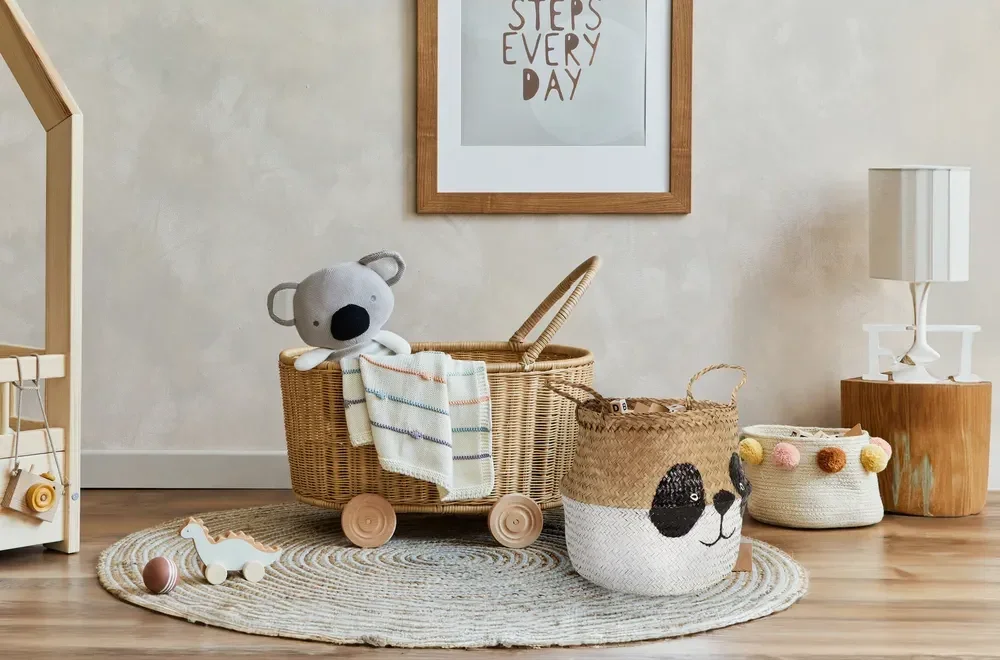
A child’s room is much more than just a place to sleep. It’s a safe haven, a playroom, a study space, and your child’s very first little kingdom. That’s why the decor does far more than just look nice — it’s a key element that shapes the space for play, learning, and rest, while also helping to build the personality of its young occupant. The right accessories can work wonders: they spark creativity, create a sense of security, and give your child room to show who they are.
Did you know that the colors in a child’s room can affect both your child’s mood and sleep quality? While warm, vibrant colors like yellow and orange encourage creativity and social interaction, cooler shades of blue and green have a calming effect and help with concentration. Choosing decorations therefore matters more than it may seem at first glance. Dive into the world of children’s decor with us and discover how to create the perfect space for your little ones.
Types of Decorations for Children’s Rooms
There’s a huge range of decorations on the market, and they can be divided into several main categories. Each one has its own specifics and is suited to a different purpose.
Wall Decor
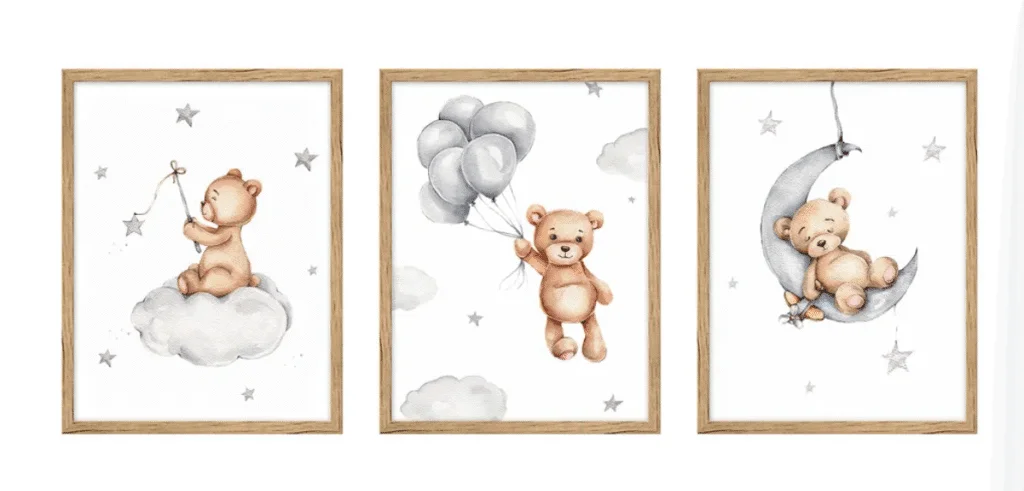
Stickers, wallpaper, canvas prints, posters, garlands, or hanging decorations are the quickest and most effective way to transform the feel of an entire room. They’re ideal for a fast and striking room makeover. With animal-themed stickers, you can easily create a jungle look, while posters with space rockets will take your child on an adventurous journey into outer space.
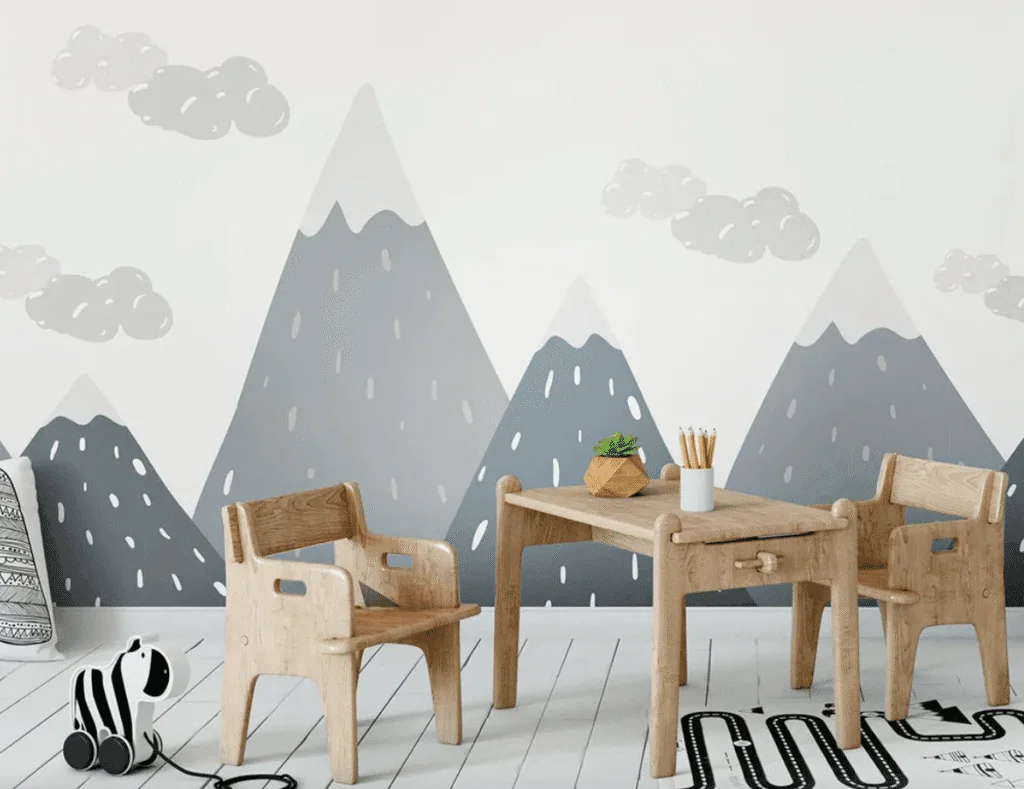
- Who it’s suitable for: For anyone who wants an easy way to define a room’s theme, brighten up bare walls, or quickly adapt to a child’s changing interests.
- Advantages: Easy to apply and remove (for stickers), a wide range of designs, and an affordable price.
- Disadvantages: Some cheaper stickers may damage the paint, and applying wallpaper takes more precision.
Textile Decorations
Decorative cushions, throws, rugs, curtains, and canopies are the heart and soul of a child’s room. They make the space feel cozier and add texture, warmth, and a sense of security. A soft rug invites play on the floor, curtains with a fairy-tale motif complete the overall look, and a canopy above the bed creates a magical little retreat for dreaming and rest.
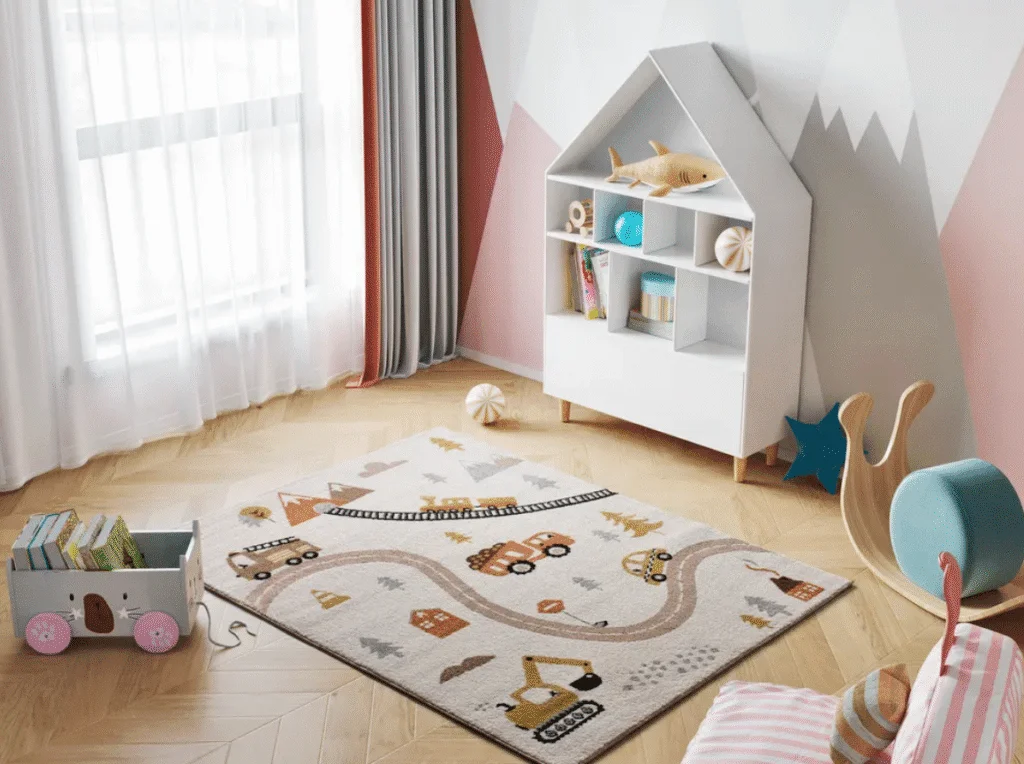
- Who it’s suitable for: For parents who want to create a comfortable, safe, and cozy space that’s ideal for floor play and relaxing.
- Benefits: They make the space feel much cozier, help reduce noise, and feel pleasant to the touch.
- Disadvantages: They attract dust and need regular upkeep (washing, cleaning).
Lighting as Decor
Animal-shaped night lights, string lights, lanterns, or starry-sky projectors serve not only a practical purpose but also an aesthetic one. They create a magical and soothing atmosphere, which helps children overcome their fear of the dark and makes falling asleep in the evening easier. The soft glow of a night light brings a sense of security, while string lights can brighten up a bed headboard or a play corner.
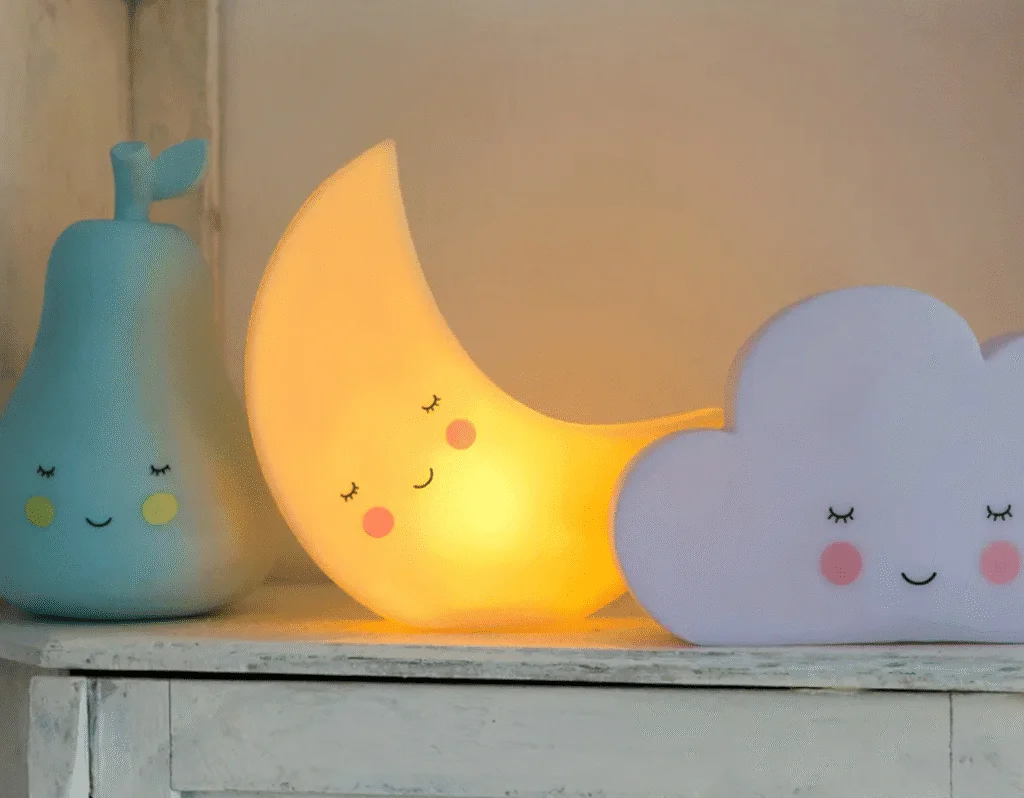
- Who it’s suitable for: Ideal for children who are afraid of the dark, or for parents who want to create a calming bedtime routine.
- Advantages: A blend of practical use and visual appeal, with a big impact on the room’s atmosphere.
- Disadvantages: Keep electrical devices within children’s reach safe.
Storage and Functional Decor
Designer storage boxes, house- or animal-shaped shelves, and cheerful hooks are a perfect example of how to combine practicality with playful design. Tidying up toys can turn into a fun game when a child has colorful boxes with their favorite motifs. A cloud-shaped shelf becomes not only a place for books, but also a stylish feature on the wall.
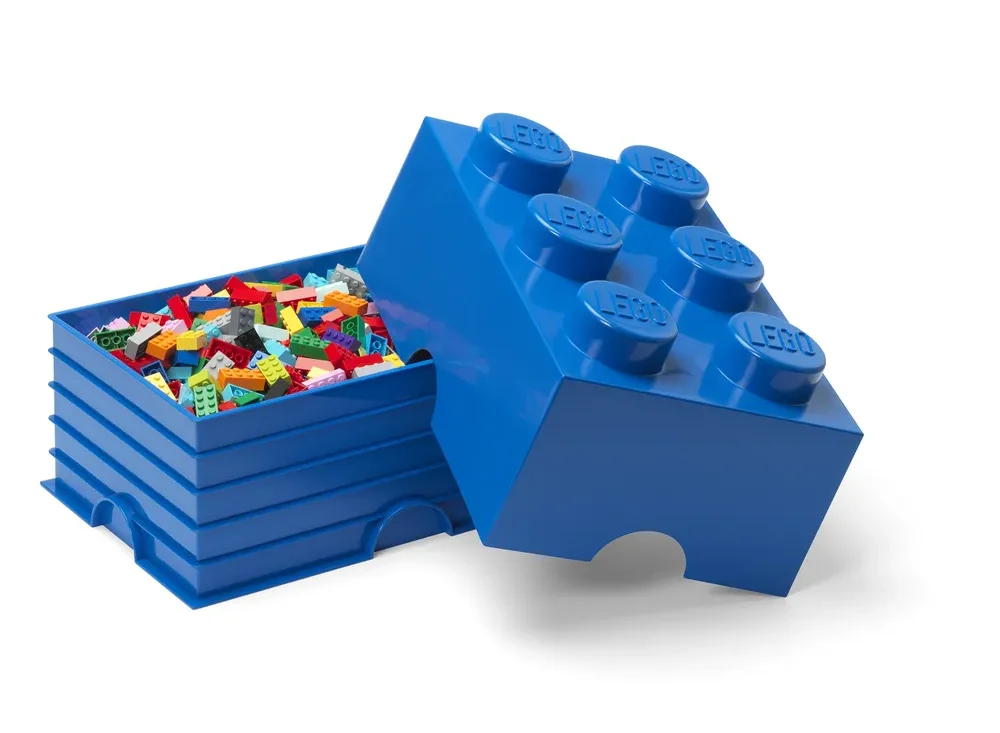
- Who it’s suitable for: For parents who want to encourage a sense of order in their children in a fun, gentle way.
- Benefits: It helps children stay organized, saves space, and also looks great.
- Disadvantages: Higher prices for designer pieces, and the need to consider load capacity and secure shelf mounting.
Educational decorations
World maps, alphabet posters, growth charts, or drawing boards help children learn new things in a natural, playful way. A children’s world map on the wall or floor can spark an interest in geography, while a drawing board encourages creativity and fine motor skills. A growth chart becomes a lovely keepsake of how your child grew.
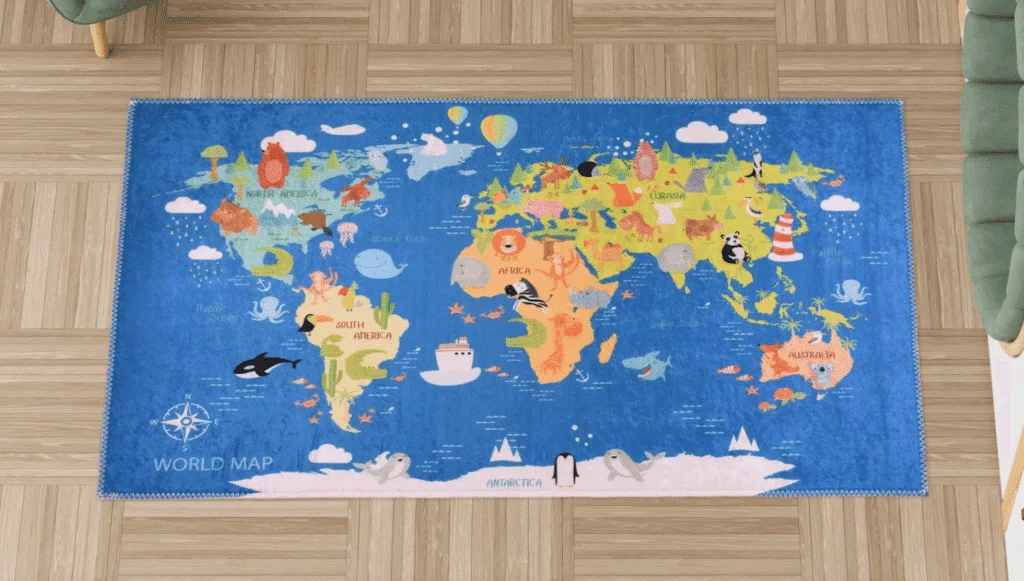
- Who it’s suitable for: Mainly preschoolers and younger school-age children, as a gentle way to encourage learning and discovery.
- Benefits: They support your child’s development and are interactive and practical.
- Disadvantages: Their relevance is often limited by the child’s age.
Key factors to consider when choosing
When choosing decorations, it’s important to consider a few key factors to make sure the room is not only beautiful, but also safe and practical.
Safety First
This is the absolutely key and most important factor. All decorations must be made from non-toxic, certified materials. Paints should be water-based, and the materials should meet strict safety standards, such as OEKO-TEX® certification for textiles or FSC for wood. With younger children, it is essential to watch out for the risk of small parts, which they could swallow. Hanging decorations must be securely fastened and placed out of reach of small children.
Child’s age
A child’s needs and perception change dramatically with age.
- Infants (0–2 years): High-contrast colors (black, white, red) and simple shapes work best, as they help support visual development. Different textures are also important for tactile stimulation.
- Toddlers (ages 2–5): At this age, interactivity is key. Stickers they can apply on their own, drawing boards, or play mats help develop their imagination and motor skills.
- School-age kids (6+ years): Decorations should reflect their personality and interests. Posters of favorite characters, world maps, pinboards for their own artwork, or shelves for collections give them room to express themselves.
Material and care
A child’s room is a lively space where little accidents happen easily. That’s why easy cleaning and washability are key. Common materials include wood, cotton, felt, or certified plastic. Wooden decorations can simply be wiped with a damp cloth, textile accessories should be machine washable, and wall stickers should ideally be wipe-clean.
Size and proportions
To keep the space from feeling cluttered or, on the other hand, too bare, it’s important to choose decorations that are in proportion to the size of the room and the furniture. In a small room, large and dark decorations can feel oppressive. On the other hand, a small picture will get lost on a large empty wall. Wall-mounted decorations are a great choice for smaller spaces because they don’t take up any floor space.
Theme and style
Decorations should match the overall style of the room. Popular themes include jungle, space, princesses, dinosaurs, woodland animals, or a minimalist Scandinavian look. It’s a good idea to choose a neutral base (paint, furniture) and build the theme with accessories that are easy to swap out.
Flexibility and Durability
Children’s interests change in the blink of an eye. That’s why it makes sense to invest in timeless, well-made pieces that will “grow” with your child, such as a quality rug or a designer lamp. The rest is best complemented with easy-to-swap decorations like posters, pillow covers, or stickers, which can be updated quickly and affordably when your child’s taste changes.
How to Choose Decorations Based on Your Child’s Age
For newborns and infants (0–2 years)
At this stage, the most important thing is sensory stimulation. Focus on:
- High-contrast colors: Black-and-white and red patterns on pictures, fabric books, or crib mobiles help support visual development.
- Different textures: Soft blankets, plush toys, and play mats made from different materials stimulate the sense of touch.
- Gentle sounds: Hanging mobiles with a soft melody or rattles help soothe your baby and support hearing development.
- Safety: All decorations must be kept out of the child’s reach and securely attached.
For toddlers and preschoolers (ages 2–5)
The room becomes a play space where the top priority is encouraging play and imagination.
- Interactive features: A play mat with a city design, a drawing board, or a magnetic wall offers endless ways to play.
- Themed decorations: Wall stickers with favorite animals, bedding with fairy-tale characters, or a teepee tent will create a magical world.
- Getting your child involved: Let your child choose some of the accessories themselves. That way, they’ll feel more connected to the room.
For school-age children (6+ years)
A room becomes a personal retreat, where it’s essential to respect personal taste and interests.
- A space for self-expression: Posters of music bands or movie heroes, a pinboard for photos and artwork, or shelves for collections of models or stones.
- Functional zones: Decorations should help define areas for studying (a world map, a periodic table), relaxing (comfortable cushions), and hobbies.
- Flexibility: Let your child regularly reshape the room to match their current interests.
Maintenance and Care of Decorations
To keep decorations looking beautiful for a long time and hygienically safe, regular care is essential.
- Textile decorations: Wash or clean pillows, blankets, rugs, and curtains regularly, following the manufacturer’s instructions. They tend to trap dust, which can be a problem for allergy sufferers.
- Wooden parts: Just wipe them regularly with a duster or a slightly damp cloth. Avoid harsh cleaning products.
- Wall stickers: Most high-quality stickers can be gently wiped with a damp cloth.
- Safety check: Regularly inspect the mounting of shelves, pictures, and hanging decorations, especially if you have little climbers and curious pets at home.
The Best-Known Brands and Stores
There are many brands on the market that specialize in children’s decor.
- Scandinavian design (e.g. Liewood, Bloomingville MINI, Kids Concept): These brands are known for their minimalist look, focus on natural materials (wood, organic cotton), and soft pastel colors. They’re ideal for creating a calm, stylish interior.
- Playful and budget-friendly collections (e.g. H&M Home Kids, IKEA, Sinsay Home): They offer a wide range of trendy, playful decor at wallet-friendly prices. Their collections change often, so it’s easy and affordable to freshen up a child’s room.
- Local and handmade: If you're looking for original, one-of-a-kind pieces, support local makers. Handmade wooden decorations, sewn cushions, or personalized artwork will give the room its own unique charm.
Prices: How Much Should You Spend on Decorations?
The price range is huge, so it really comes down to your budget.
| Cenová kategorie | Co očekávat |
|---|---|
| Nízká (stovky Kč) | Papírové girlandy, menší sady samolepek, plakáty tištěné doma, běžné povlaky na polštáře. |
| Střední (nižší tisíce Kč) | Kvalitnější textil (menší koberce, závěsy), designové lampičky, dřevěné dekorace, větší a kvalitnější samolepky. |
| Vysoká (tisíce Kč a více) | Designové ikonické kousky, ručně vyráběné dekorace na míru, velké hrací prvky (teepee, hrací sestavy), kvalitní kusové koberce z přírodních materiálů. |
Tip: It’s worth investing in quality basics, such as a good rug or timeless lighting. On the other hand, you can save on seasonal or themed accessories, which are easy to make at home too (DIY garlands, hand-painted pictures).
Summary and a Final Tip
When decorating a child’s room, keep in mind that decorations are not just for looks. They are a way to create a stimulating, safe, and loving space that supports your child’s imagination and healthy development. The key to getting it right is a balance of safety, practicality, and respect for the young resident’s taste. Remember that a child’s room is first and foremost your child’s own little kingdom, so the most important thing is that they feel comfortable and free in it. Whatever style you choose, what matters most is that the decorations help create a cheerful, creative atmosphere where your child will love spending time.
Frequently Asked Questions (FAQ)
How often should we update the decorations in a child’s room?
There’s no strict rule. The best approach is to follow your child’s developmental stage and changing interests. Smaller updates, such as swapping posters or cushions, can be done once a year, for example around their birthday. A bigger makeover is usually tied to the transition from toddlerhood to the preschool years, and later to school age.
How do you decorate a room shared by two children with different tastes?
The key is to create a neutral base (wall color, furniture) and give each child their own personal space they can make their own. You can do this, for example, by using different-colored bedding and accessories, or by giving each child their own pinboard or shelf. The beds can be separated by a low bookcase or a curtain, which helps create a sense of privacy. What matters most is that each child has their own little corner that feels completely theirs.
Are there any eco-friendly and sustainable décor options?
Yes, and they’re becoming more popular. Look for décor made from natural and renewable materials, such as FSC-certified wood, organic cotton (GOTS), linen, felt, or rattan. Many local makers specialize in handmade pieces from sustainable sources. Second-hand décor and DIY pieces made from recycled materials (upcycling) are also a great choice.