
Complete guide to bird food: how to choose the best one and feed correctly
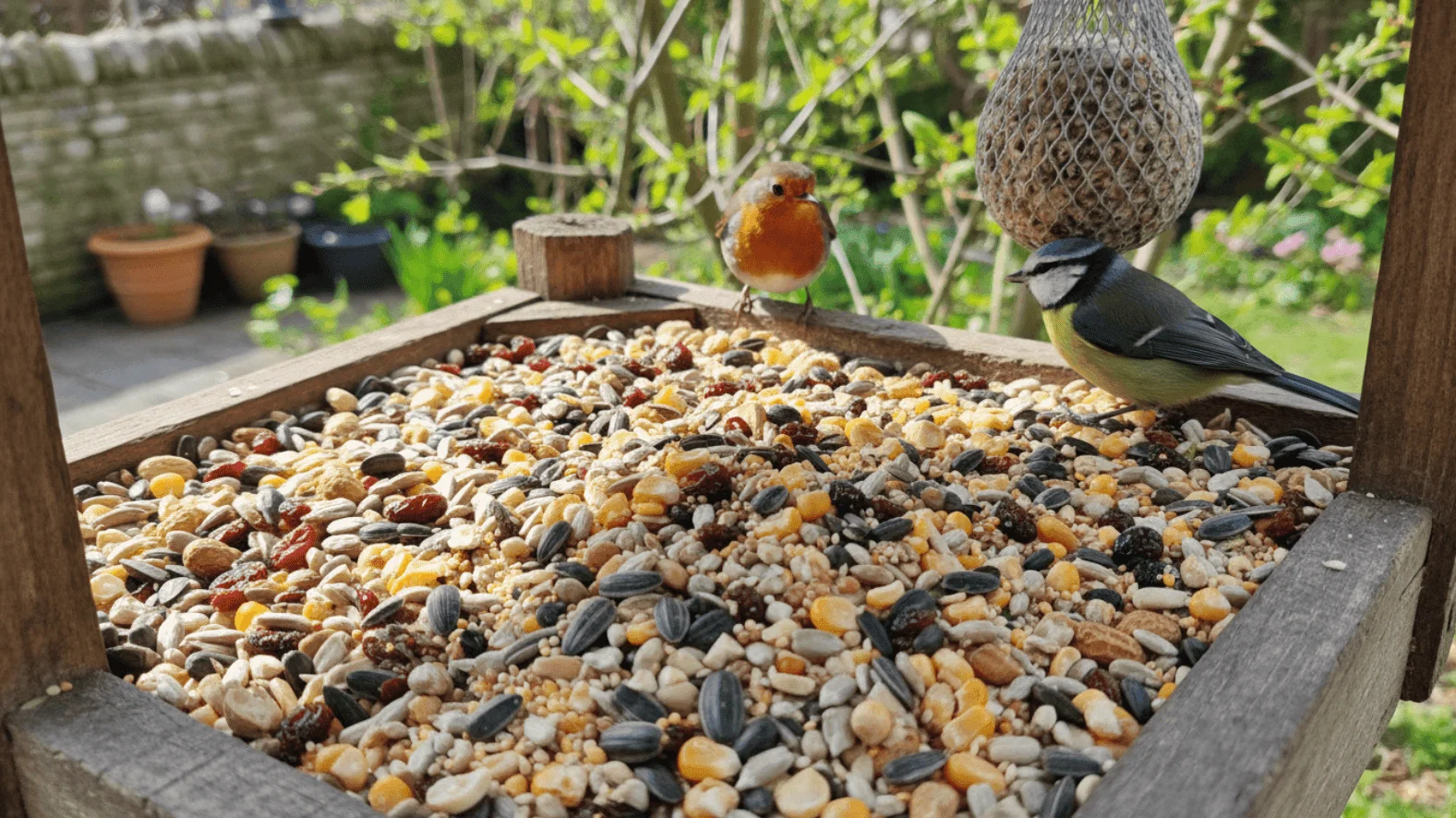
Bird feed is a specialized type of nutrition designed to give both captive and wild birds enough energy, vitamins, and minerals. It’s not just something to fill them up, but a key factor for maintaining health, proper moulting, and successful breeding. Feeding wild birds is especially vital in winter, when natural food is scarce, and in spring during the exhausting breeding season.
By choosing the right food, you can directly influence the condition and lifespan of your birds, or help local wild species get through critical periods.
Did you know that: Responsible, high-quality winter feeding of wild birds can locally increase their chances of survival by tens of percent, especially in smaller species that need to constantly top up their energy to maintain body temperature? The ethical aspect of feeding lies in offering only safe, nutritionally valuable food so that you actually help the birds instead of causing digestive problems or dependence on unsuitable food.
Overview of feed types: Seed mixes, fats and pellets
The modern market offers a huge range of feeds that differ in ingredients, form, and target species. Here is an overview of the most important options.
Grain and seed mixes (classic loose feeds)
This is the most common and oldest type of feed and forms the basis of the diet for most granivorous birds. Mixes usually contain various ratios of sunflower, millet, oats, canary seed and other grains. The key points are variety and cleanliness. When choosing a mix for wild birds, it pays to go for one with a higher share of sunflower seeds, which are a rich source of fats and energy.
Suet and fat balls (high-energy feed)
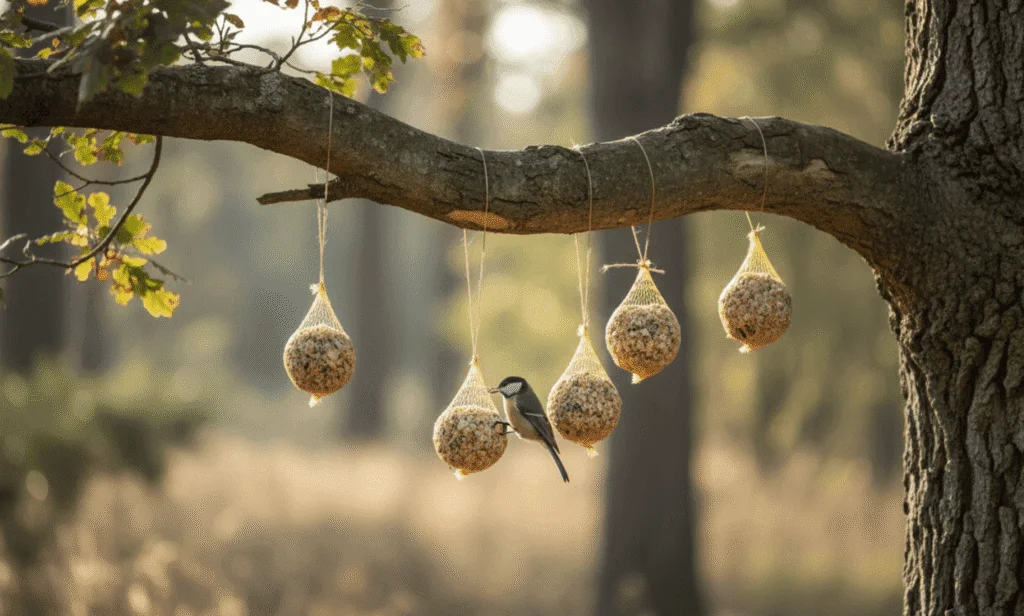
Fat-based feed is an essential energy boost, especially during freezing winter weather. These products are made from suet (usually beef, sometimes coconut fat) mixed with seeds, oats or dried insects. They provide birds with quickly available energy needed to maintain body temperature.
Always choose fat balls without plastic nets, as birds can get tangled in them or swallow them.
Supplements (nuts, dried insects, fruit)
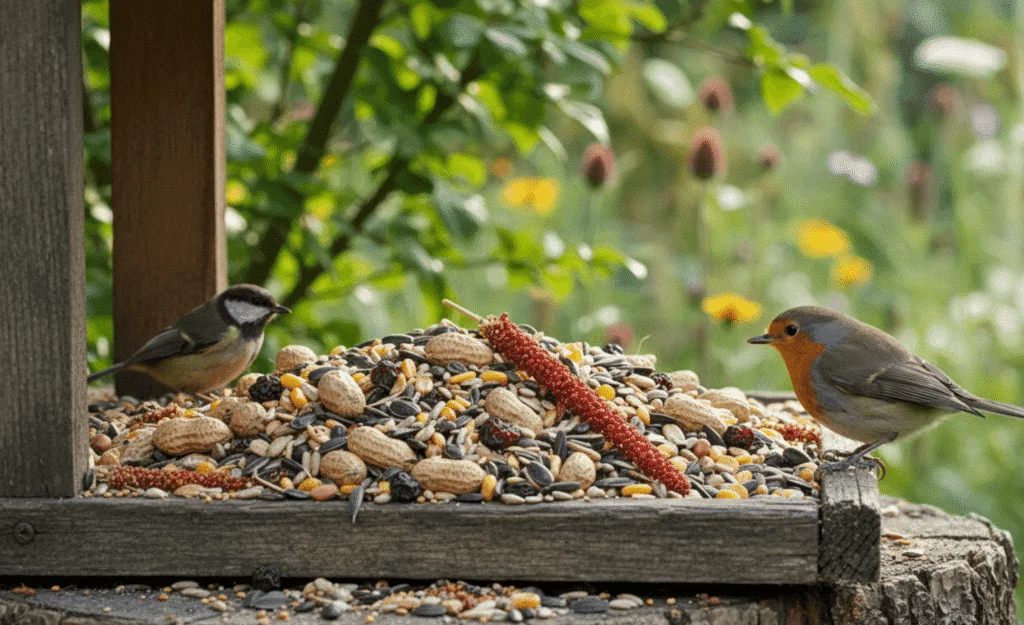
These supplements enrich the basic diet and provide specific nutrients. Nuts (always unsalted and unroasted) such as peanuts or walnuts are an excellent source of fats. Dried insects (e.g. mealworms) are a valuable source of protein, crucial for breeding birds, growing chicks and insectivorous species (blackbirds, tits, nuthatches). Dried or fresh fruit (apples, rowan berries) will be appreciated by blackbirds and thrushes.
Pellets and kibbles
This is the most nutritionally complete form of feed, usually intended for captive birds, especially parrots. Pellets are extruded, which means they are produced under high pressure and heat so that each piece has identical, balanced composition (vitamins, minerals, proteins). Pellets are ideal because they prevent selective feeding, where the bird picks out only the fattiest seeds.
Feed for waterfowl (special)
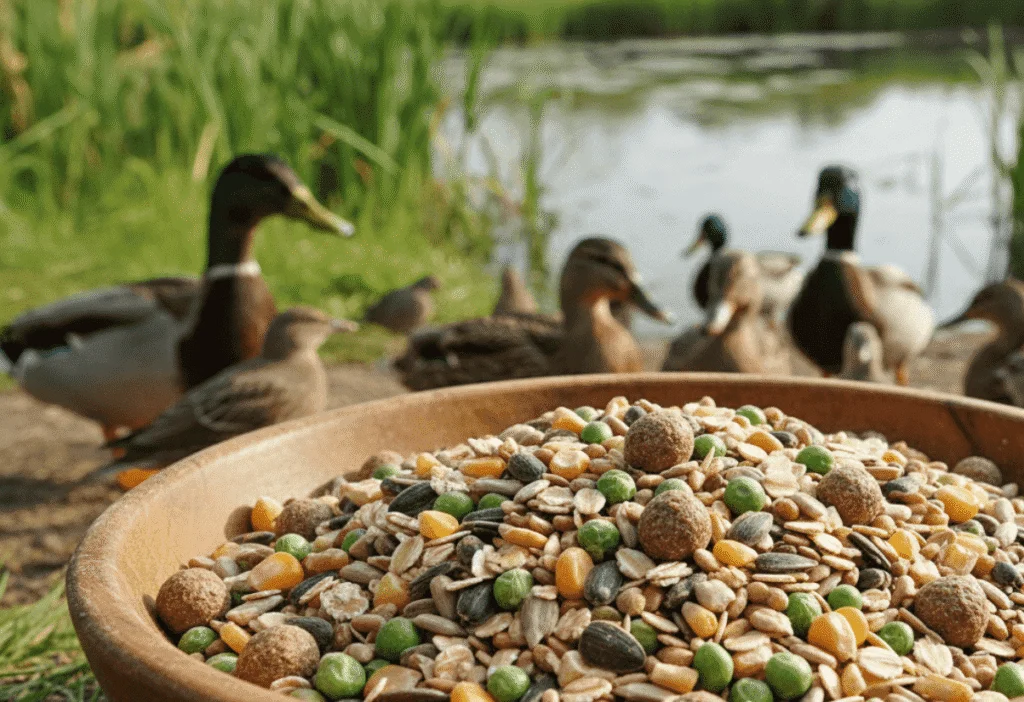
There are special floating kibbles for feeding ducks, swans and other waterfowl. They are designed to meet their nutritional needs and, most importantly, unlike bread they do not swell in the stomach and do not pollute the water. Feeding waterfowl with bread is completely inappropriate and harmful.
Feed tailored to species: From canary to macaw
Feed has to match both the beak size and the specific nutritional needs of each species.
Feed for small birds (canaries, zebra finches, estrildids)
The diet of these birds consists mainly of small seeds such as millet, canary seed and niger. Mixes should have a lower content of oil-rich seeds (sunflower) due to the risk of obesity. The key factors are perfectly clean grains and small pack sizes so the feed does not go stale. It is a good idea to supplement the diet with egg food to increase protein intake.
Feed for medium-sized birds (cockatiels, lovebirds, medium parrots)
These birds need a wider variety of seeds (different types of sunflower, safflower, oats, buckwheat). They are often prone to being overweight, so you need to watch the balance between fatty and leaner grains or switch to extruded pellets. You should also encourage the intake of fresh fruit and vegetables.
Feed for large parrots (macaws, cockatoos)
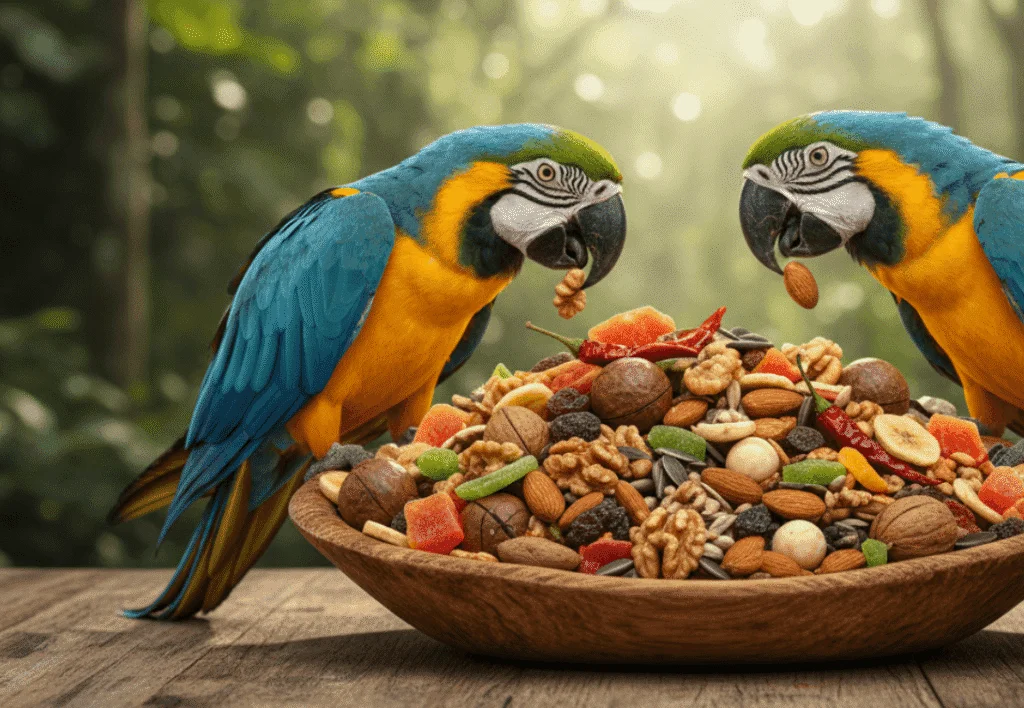
Large parrots have the most demanding requirements. Their diet must include a high share of large nuts (in-shell peanuts, walnuts), seeds and fats that match their high energy expenditure. Calcium supplementation is essential, as well as vitamin A, so they are often fed special pellets with added fresh food.
Feed for racing and breeding pigeons
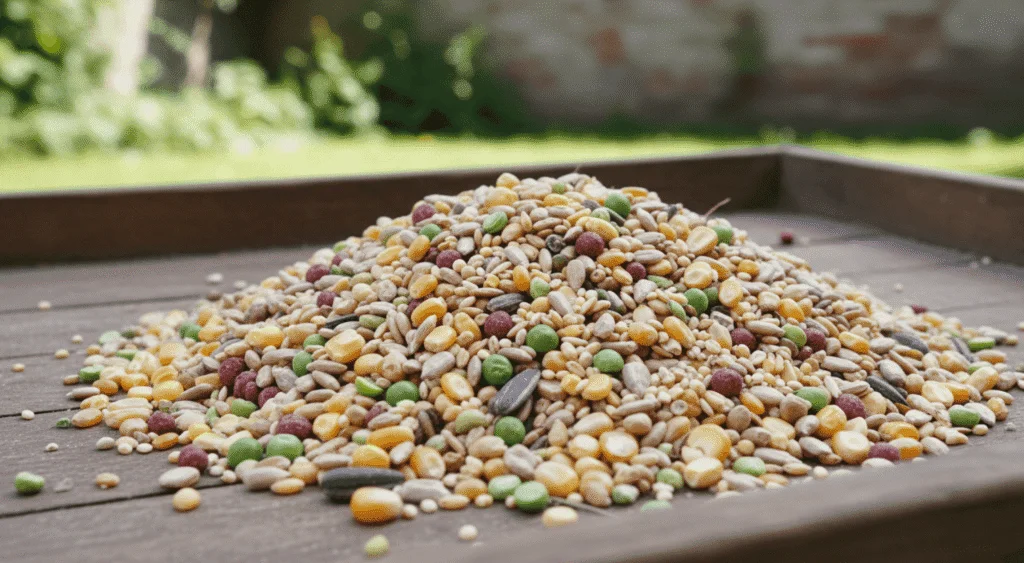
Pigeons need special mixes that change depending on the time of year. For racing performance, mixes with a higher content of legumes (peas, lentils) are used to increase protein and carbohydrates. During moulting, the focus shifts to seeds that support quality feather growth, and during the breeding season to highly nutritious starter mixes.
Feed for wild garden birds (outdoor birds)
Feed is divided into:
- Winter mixes: Very high in fat, with a large share of black sunflower seeds, crushed nuts and suet. The goal is to provide maximum energy to survive the frost.
- Year-round mixes: More varied, with a lower fat content. They often contain hulled sunflower seeds (less mess). Split by type: Blackbirds and thrushes need oats and fruit, tits and nuthatches need fats and seeds.
Other types of feed
Special diets include, for example, nectar and soft food for lories (which feed on nectar and pollen), hand-rearing formulas for parrot chicks (with very precise composition) or feeds for birds with health issues (liver, kidneys).
How to read the label: Ingredients, nutrition and additives
Don’t be fooled by colourful packaging. The quality of the feed is hidden in the details on the label.
Type and quality of seeds/ingredients
The biggest difference is between hulled and unhulled sunflower seeds. Hulled seeds are more expensive but easier for birds to digest and reduce mess and the risk of mould growth under the feeder. Avoid any feed that is dusty, damp or shows any signs of mould! Check that the mix does not contain too many cheap fillers (e.g. wheat in a parrot mix).
Nutritional value
- Fats: The main source of energy (especially in winter). Quality feed has a high content of oil-rich seeds (sunflower, rapeseed).
- Proteins: Essential for growth, regeneration, feather development and breeding. Requirements are higher in chicks and insectivorous species.
- Carbohydrates: A basic energy source. Mixes for exotic birds should have a balanced ratio of all three components.
Additives and preservatives
In quality feeds, added vitamins (A, D3, E) and minerals (calcium – for shell and bones) are welcome. Artificial colourants, unclear preservatives (such as BHT, BHA) and excessive sugars are undesirable. Good pellets often contain added probiotics and prebiotics to support digestion.
Pack size and price/weight ratio
Although large packs are usually cheaper per kilo, consider how quickly you will use them. For small collections of birds or occasional feeding of wild birds, choose smaller packs to keep the feed fresh and prevent fats from going rancid and mould from forming.
Salt content
Salt is very dangerous for birds and can be fatal in larger amounts! Their kidneys are inefficient and cannot process salt properly. For this reason, NEVER offer salted nuts, smoked meat or table scraps.
Smart feeding: How to choose and what does not belong in a feeder
Feeding birds is both a science and an art. The way you offer the food is just as important as its quality.
Choosing feed by feeder type
- Hopper feeder: Ideal for loose mixes and pellets. It keeps the feed dry and hygienic. Suitable for small seed-eating birds (tits, sparrows).
- Feeding tables/trays: Suitable for larger pieces of food (nuts, fruit, fat blocks). The downside is greater exposure to the weather and contamination.
- Suet cages/nets: Intended exclusively for fat balls and suet blocks. Always remove plastic nets from fat balls and place them in special metal holders.
Choosing feed by species in your area/aviary
The best approach is to watch which birds visit your garden and tailor the feed to them. Tits, nuthatches and woodpeckers prefer fat and sunflower seeds, while blackbirds and thrushes prefer oats, raisins and apples. Universal mixes work well, but targeted feeding is more effective.
Tips for making homemade feed
The simplest and most effective homemade feed is a suet mix. Melt pure beef suet (or coconut fat) and mix it with various seeds (sunflower, millet), crushed nuts, oats or dried insects. Pour the mixture into moulds (for example yoghurt cups) and let it set. You will get a highly concentrated and budget-friendly energy feed.
What you should NEVER feed
This is the most important warning: NEVER feed:
- Bread and bakery products (loaf bread, rolls): They swell in the stomach and have almost no nutritional value.
- Salty, smoked and heavily seasoned leftovers: Salt is toxic, and processed meats contain harmful preservatives.
- Chocolate and avocado: They contain substances that are toxic to birds.
- Rotten, mouldy or rancid food: A direct risk of poisoning and spreading mould.
Safety and freshness: Storing feed and maintaining feeders
Taking care of the feed and the feeding site is crucial for preventing the spread of bird diseases.
Proper storage
Store feed in a dry, cool and dark place, ideally in airtight plastic or metal containers. This prevents moisture, mould growth and infestation by pests (mice, insects). If you buy larger quantities, regularly check that the fats have not turned rancid.
Feeder and feeding area hygiene
Regular cleaning is the foundation of disease prevention (e.g. salmonellosis, trichomoniasis). Clean the feeder with hot water and, if needed, a mild disinfectant solution (for example with vinegar) at least once a week. Leftover food and droppings must not be allowed to build up. If you see a sick bird, stop feeding for a while and disinfect thoroughly.
Shelf life and best-before date
Always follow the recommended best-before date. Pellets and kibbles spoil faster after opening due to fat oxidation. If the feed is old, has no smell or is clumped together, it is better to throw it away.
Handling fat balls
They are ideal in winter, but in summer heat above 20 °C the fat can quickly melt and turn rancid, which is dangerous for birds. In summer, offer suet mixes only in the shade and in small amounts that the birds will eat quickly.
From tradition to conservation: History and ethics of feeding
Feeding birds is not a modern fad, but an activity with a long history.
Historical development of bird feeding
In the past, people used to feed birds kitchen scraps, often unsuitable ones (stale bread, flour). With the development of ornithology and ecology, this approach has changed. Today we focus on targeted feeding with nutritionally balanced commercial mixes that serve clear ecological goals.
Ecological and ethical importance
Feeding helps to maintain wild bird populations in increasingly urban landscapes, where natural food sources are limited. It is an active form of species conservation and a tool for public education. Winter is the most critical season, but support during the breeding period is also important, when parents need protein-rich food for their chicks.
Impact on bird populations
Quality feeding has a positive effect on survival. The potential risk is that birds may become too dependent on feeders and stop looking for natural food. If feeding suddenly stops during a critical period (for example in severe frost), the consequences can be disastrous. Feed regularly and responsibly.
How much does quality feed cost and when is it worth paying more?
The price of feed reflects the quality and cleaning of the raw ingredients, the content of vitamin supplements and the form of the feed.
Budget feed (Economy)
These mixes contain a high share of cheap fillers (wheat, unhulled oats, sorghum) and fewer expensive oil-rich seeds (hulled sunflower, safflower). They may be less well cleaned and dusty. Suitable only as a supplementary source for wild birds outside the coldest periods.
Mid-range feed (Standard)
Standard commercial mixes. They offer a good, practical nutrient ratio but usually without added vitamins. They typically contain a balanced share of sunflower seeds and grains. They are ideal for regular, year-round feeding of wild birds or for less demanding pet species.
Premium feed
Minimal fillers, hulled seeds, extruded pellets, often enriched with vitamins, minerals and probiotics. The higher price reflects the quality, cleanliness and precise formulation.
When it pays to spend more:
- Always for rare/large breeding parrots: To support long-term health and longevity.
- When feeding pellets: The extruded form is nutritionally the most complete for birds and prevents selective feeding.
- In critical periods (breeding, moulting): For egg foods or feeds with a high protein content.
Key tips before you buy
The most important factors when choosing are ingredient quality and cleanliness. Before you decide, check for salt content and any signs of mould, make sure the feed is suitable for the species you are feeding and that it is fresh.
Focus on:
- Target species: Buy feed formulated for the specific bird, not a generic mix.
- Best-before date: Especially for fatty seeds and pellets.
- Ingredient percentages: Prefer mixes with a higher content of hulled sunflower seeds and nuts (fats/energy) over wheat or oats (fillers).
With the right feed, you not only keep your birds healthy, but also enjoy a beautiful view and the pleasure of watching wildlife in your garden or aviary.
Frequently Asked Questions (FAQ)
How long does it take birds to get used to a feeder?
Birds tend to be cautious. It can take anywhere from a few days to several weeks for them to get used to a new feeder. The key is keeping the feeder in one place (without disturbance) and placing it near bushes or trees that provide safe cover. Patience is essential.
Do I need to feed wild birds all year round?
It’s not necessary, but it is recommended. Winter is the critical period and so is the breeding season in spring (due to the high demand for protein). In summer, natural food is generally more available, so feeding can be occasional. Just make sure the feeder is empty by evening and does not become a source of spoiled food.
Can I feed wild birds from my hand?
Hand-feeding wild birds is generally not recommended. It can disrupt their natural wariness and make them less able to cope in the wild (for example when facing predators). There is also a risk of disease transmission between humans and birds. Give them space and enjoy watching them from a distance.