
Fishing Rods: Complete Guide and Buying Encyclopedia
Introduction to the World of Fishing Rods
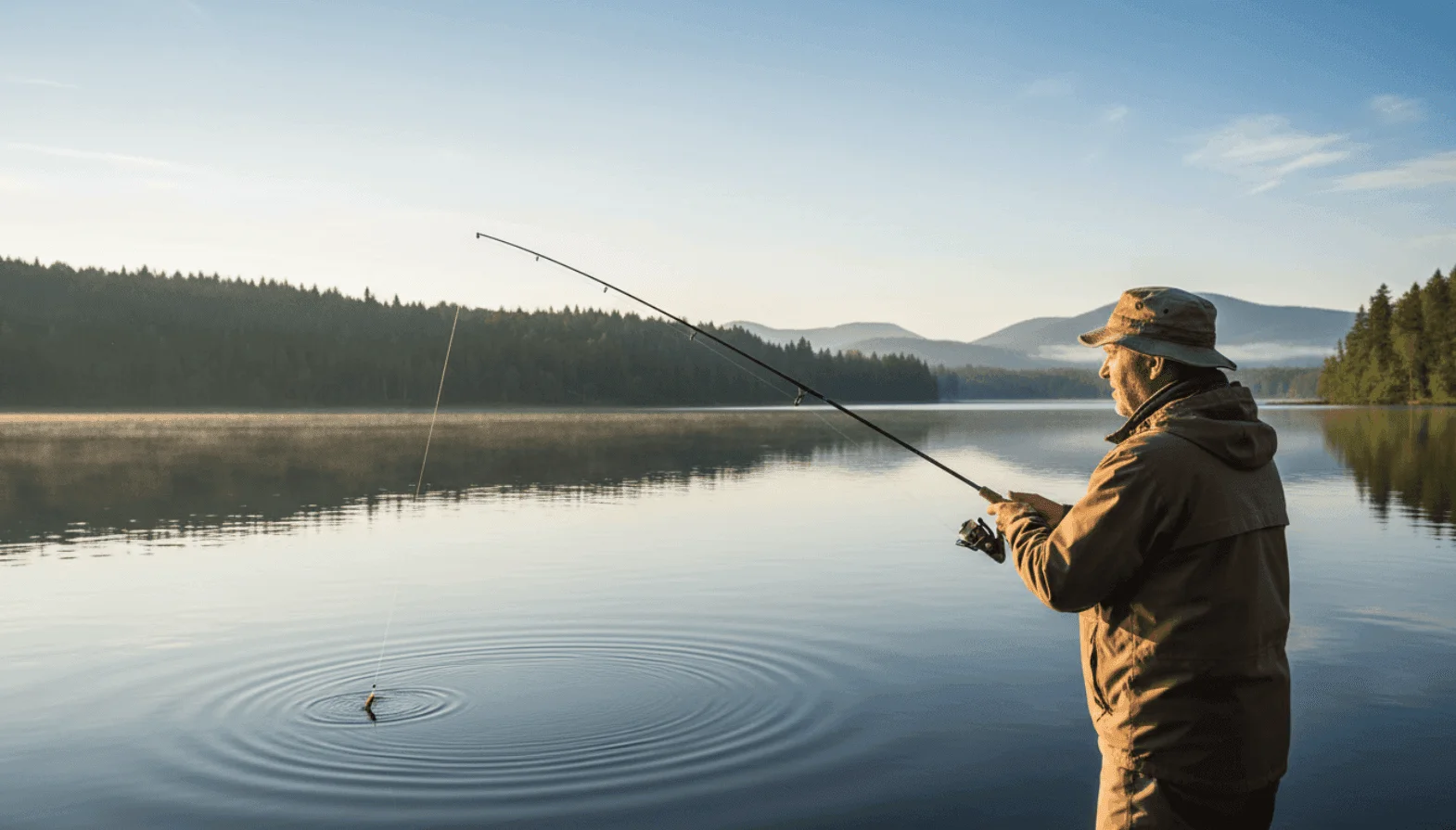
A fishing rod is the essence of sport and recreational fishing – it’s not just a tool, but an extension of every angler’s arm and senses. Put simply, a rod works as a sophisticated lever whose main job is to let you cast your lure far and accurately, and then absorb the shocks and pull of the fish during the fight.
The rod gives us control, feel, and power in one package. Whether you’re catching small roach close to the bank or battling a catfish in deep water, the right rod is the key to success.
Today, rods come in a huge range of types, from all-round telescopic models to highly specialized fly or catfish rods. This massive variety is driven by advances in materials and the growing specialization of fishing techniques.
Did you know: while the first rods were just simple wooden sticks and bamboo poles, modern graphite (carbon) rods are incredibly light and transmit even the slightest touch of a fish. Thanks to nanofiber technology, today’s rods can be very slim yet extremely durable.
From Bamboo to Carbon Fiber: History and Evolution of Rods
The history of fishing rods goes back thousands of years. The first documented rods were used in ancient Egypt and China, where anglers relied on simple bamboo or reed poles. These were very basic tools for fishing close to the bank, often without a reel.
A major turning point came in 17th-century England, when multi-piece rods appeared, followed later by rods made from different woods (such as ash or lime). These allowed for greater length and flexibility.
Key 20th-century innovations:
- Fiberglass: Emerged after World War II. It offered unprecedented durability and flexibility. Fiberglass rods are heavier and less sensitive, but they became famous for their “indestructibility” and low price, which helped make fishing accessible to the masses.
- Graphite/Carbon Fiber: The introduction of graphite in the 1970s was a revolution. Carbon rods are extremely light, stiff, and incredibly sensitive. They allow much longer and more accurate casts. The strength-to-weight ratio of carbon is hard to beat.
- Modern composites: Today’s rods often combine carbon fiber with other materials (such as resins or Kevlar) to achieve the best possible balance of low weight, sensitivity, and mechanical strength.
The development of guides and reel seats has also been crucial. The introduction of ceramic guide inserts (e.g. SiC) significantly reduced friction during casting and made it possible to use modern braided lines.
Physics in Action: How a Rod Works and How It’s Built
To choose the right rod, you need to understand what it’s made of and how it works.
How a Rod Works
A rod works on the principle of storing and releasing energy. During the cast it bends (it loads), storing kinetic energy in the body of the rod – the blank – and with proper timing it releases that energy to launch the lure. During the fight with a fish, the rod acts as a shock absorber and transfers the pull of a strong fish to the reel and the angler. The right bend (action) prevents the line from breaking and at the same time tires out the fish.
Main Structural Parts
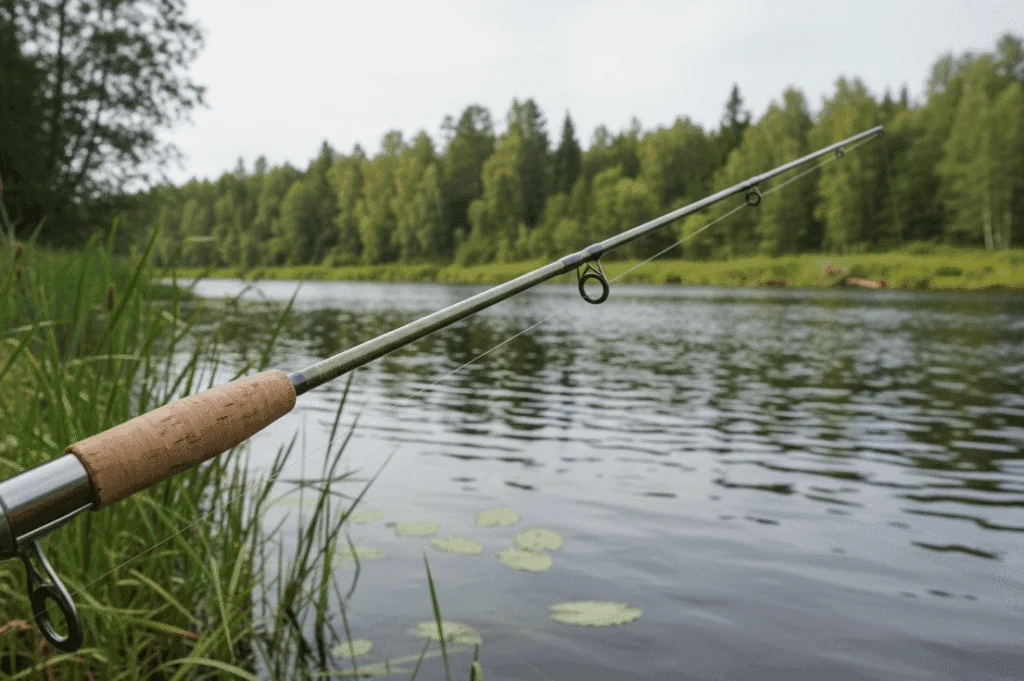
- Blank (Rod Body): This is the heart of the rod. It’s a tapered tube (narrowing from the handle to the tip), most often made from carbon fiber. The taper and wall thickness of the material determine the rod’s action (bending curve) and power.
- Handle (Grip): Designed for comfortable holding. The most common materials are cork (pleasant, light, sensitive) and EVA foam (durable, easy to maintain).
- Reel Seat: The mechanism that securely attaches the reel to the rod. It must be solid and properly sized. It’s important to check that the reel fits with no play.
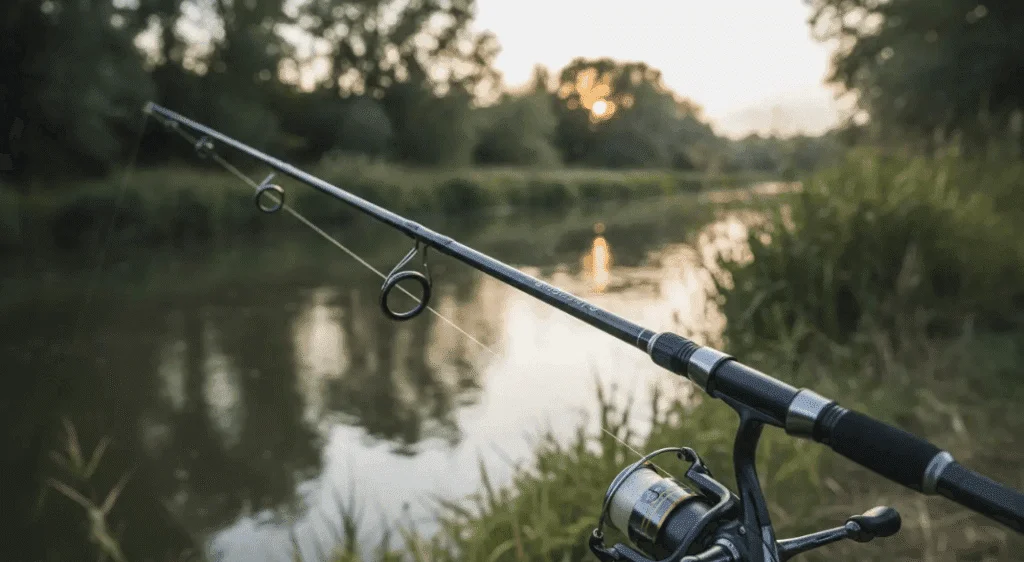
- Guides: Ring-shaped inserts with frames fixed to the blank. They distribute line pressure evenly along the rod and minimize friction. Quality guides (for example with SiC ceramic inserts) are crucial for long casting distance and for the life of braided lines.
Rod Types at a Glance: Which One Is Right for You?
The range of rods is huge, so it’s crucial to pick one that matches your preferred fishing style.
Telescopic Rods (Teleskopy)
Telescopic rods are synonymous with versatility and compact size. They consist of multiple sections that slide into each other like a telescope, giving them a very short transport length. They’re an ideal choice for traveling anglers and occasional fishermen who need a rod they can set up and pack away quickly, mainly for simple float or bottom fishing. Because of the many joints, their action is usually slow to medium, and typical lengths range from 1.8 m to 3.6 m. Their big advantage is unbeatable packability and quick setup, but the downsides are lower sensitivity and the fact that the joints can negatively affect the ideal bending curve of the blank.
Spinning Rods (Přívlačové)
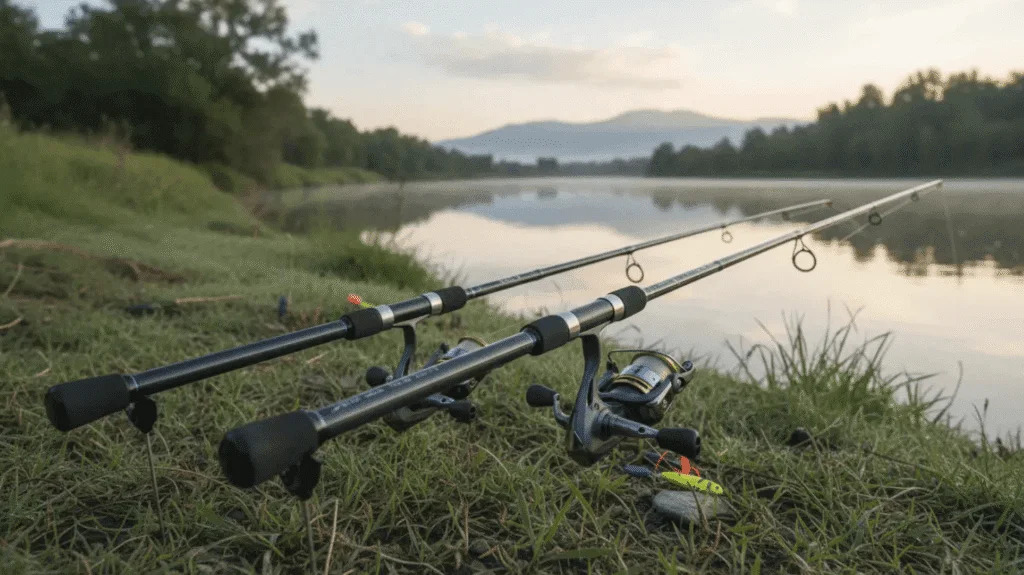
Spinning rods are designed for active predator fishing (pike, zander, perch) with constant casting and retrieving of artificial lures. For this style of fishing, low weight, high sensitivity, and especially a fast to extra-fast tip action (Fast/Extra Fast) are essential. This gives you instant, solid hook sets and precise lure control. Anglers who like to stay on the move and actively search for fish will really appreciate this type of rod. Lengths range from around 1.8 m (for boat fishing or small rivers) to 3.0 m (for long casting), and they come in a wide spread of casting weights, from ultralight (UL) models for delicate trout fishing to heavy rods.
Catfish Rods
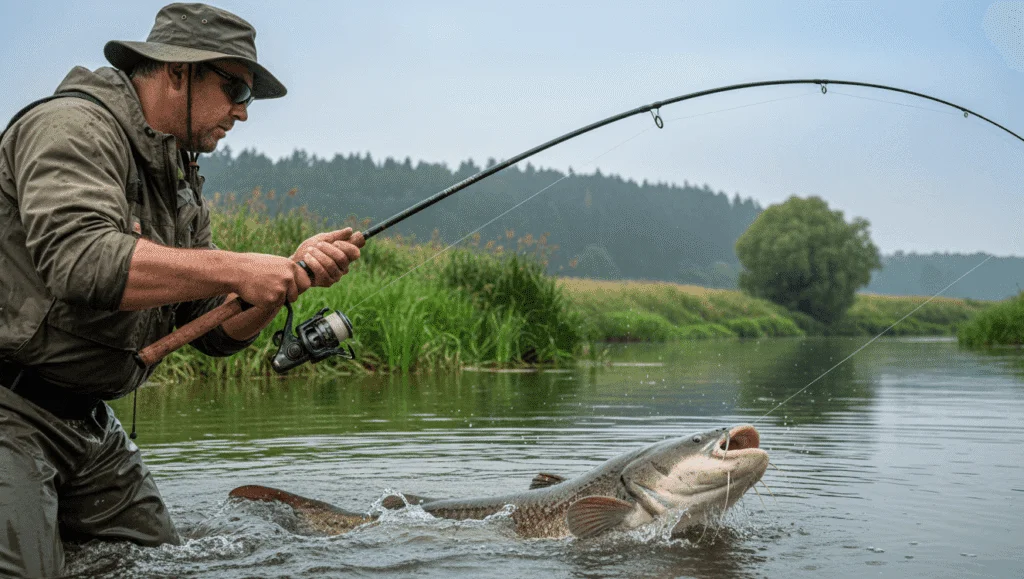
Catfish rods are among the strongest and most robust rods on the market, built specifically to handle the biggest and most powerful freshwater fish – catfish. Their construction must withstand brutal force and long, heavy runs. They are aimed mainly at dedicated catfish anglers. The action is usually medium-slow, but backed by massive power in the lower part of the blank, allowing you to put huge pressure on the fish. Typical lengths range from 2.4 m (for boat fishing) to 3.6 m (for bank fishing and long-distance bait placement). Extra-strong guides, a heavy-duty reel seat, and a tough, solid handle are all critical components.
Sea Rods (Pilker, Trolling)
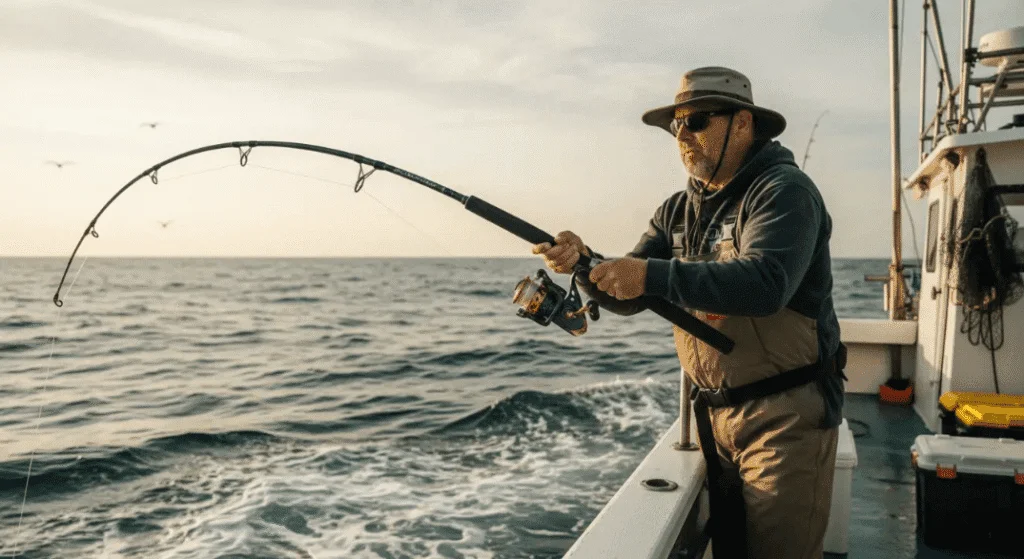
Sea rods are built to handle extreme loads and to withstand the aggressive saltwater environment, which is highly corrosive to metals. They are designed for shore or boat fishing in saltwater and often target large deep-sea predators. There are two main types: Pilker rods are shorter and very stiff, made for vertical fishing with heavy lures (pilkers) in deep water. Trolling rods are special rods, often fitted with roller guides, used for pulling lures behind a moving boat. Their key features are corrosion-resistant components throughout and extremely high casting or working loads, often exceeding 1,000 g.
Spod Rods
Spod rods form a specific category that is not designed for playing fish, but purely for accurate, heavy-duty baiting of your swim. They’re mainly used by carp anglers to deliver large amounts of bait with special rockets (Spomb) or groundbait balls at long range. Their action is extremely stiff and fast, with very high casting weights, often between 5 and 8 oz. To minimize line friction during the cast, these rods feature a reinforced blank and a noticeably large first guide. Typical lengths are between 3.6 m and 4.2 m to maximize casting distance.
Match and Bolognese Rods
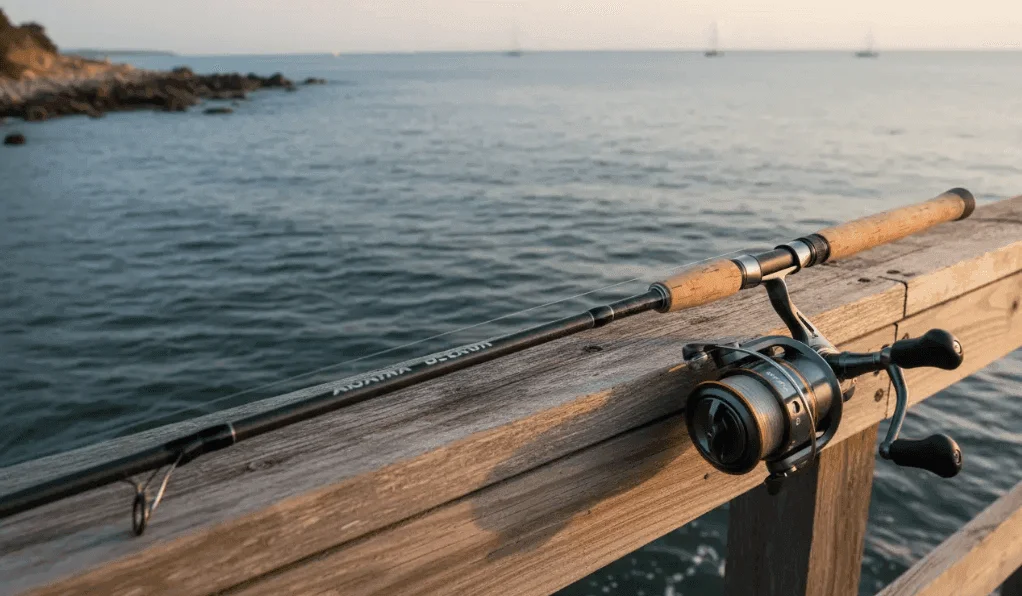
These rods are made for float fishing and are characterized by their length and slim blanks fitted with many guides to distribute power optimally. Match rods (usually multi-piece) are used for accurate casting and controlling a float at longer distances, typically between 3.9 m and 4.5 m. Bolognese rods are very long telescopic rods (up to 8–10 m), ideal for fishing on flowing water. Both types are popular with anglers who prefer delicate, sensitive fishing with a suspended bait. Their action is usually medium to parabolic, which allows controlled casting of light rigs while still providing enough cushioning during the fight.
Pike Rods
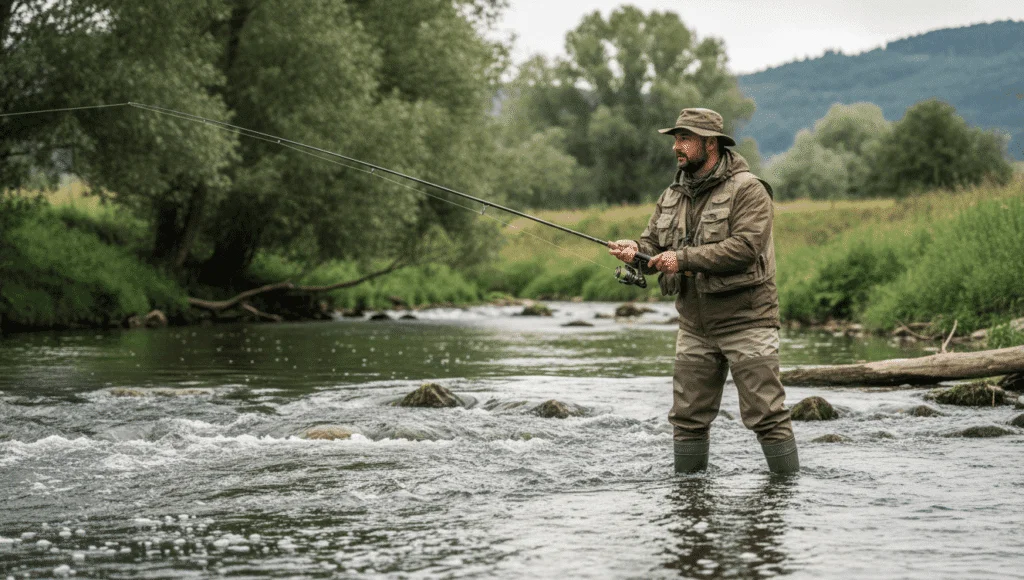
Pike rods are tailored for targeting pike and are therefore often very similar to medium to heavy spinning rods. The key is a strong backbone, which is essential for a solid, powerful hook set through the pike’s hard mouth and for controlling these predators during the fight. They’re ideal for anglers who fish with larger and heavier pike lures. Typically, they feature a fast action and casting weights most often in the 30–80 g range, which covers medium to heavy lures.
Ice Rods (Pruty na dírky)
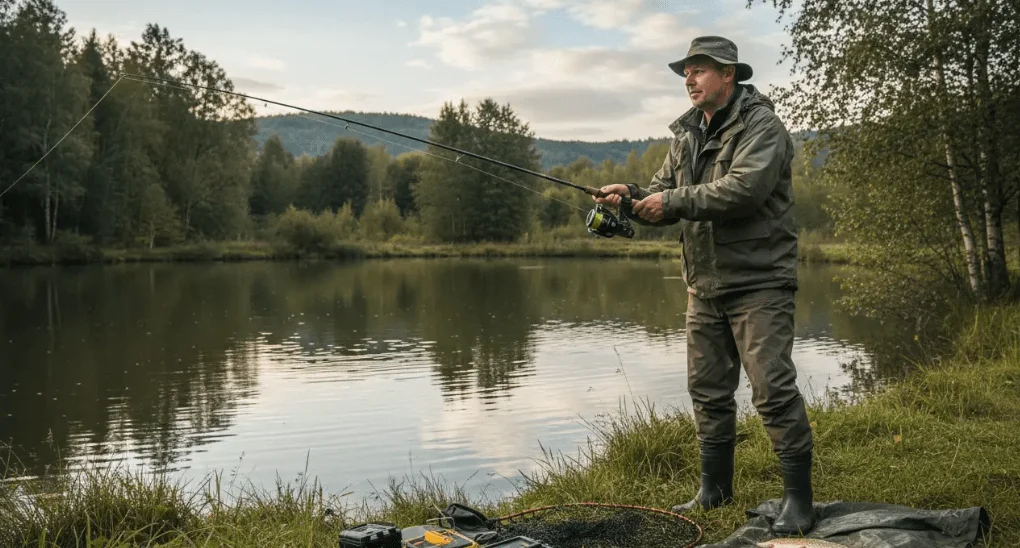
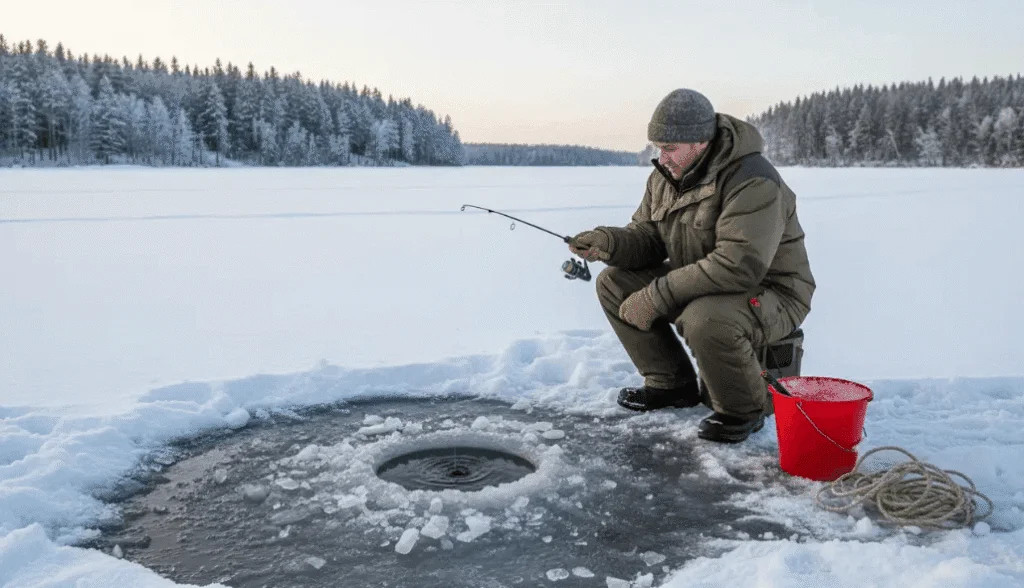
Ice rods are highly specialized, very short rods designed exclusively for winter fishing through small holes drilled in the ice. Their main role is to provide maximum sensitivity in a very confined space. Anglers use them while sitting down, often as a simple, ultra-light setup. Their length is typically under one meter, and they feature an ultra-sensitive tip that visually indicates even the slightest bite, which is crucial when fishing in freezing conditions.
Picker Rods
Picker rods are short, light rods that you can think of as a finer version of feeder rods. Just like feeders, they have a sensitive and often interchangeable tip to show bites, but the blank is not designed for casting heavy feeders. They are ideal for delicate coarse fishing at short range (up to about 30 meters) or on small waters, where powerful casting is not needed. Their main strengths are maximum sensitivity and very low casting weights, usually not exceeding 40 g.
Poles (Biče – Rods Without Reels)
Poles are the simplest form of a modern fishing rod, as they are long, lightweight rods without guides and without a reel. The line is attached directly to the rod tip, which makes them an ideal choice for fast fishing close to the bank and for beginners and children thanks to their easy handling and simplicity. The action is usually medium to fast, and lengths range from 3 m to 8 m. Their main advantage is that they allow very quick, repeated “casts” and immediate contact with the bait and the fish.
Fly Rods
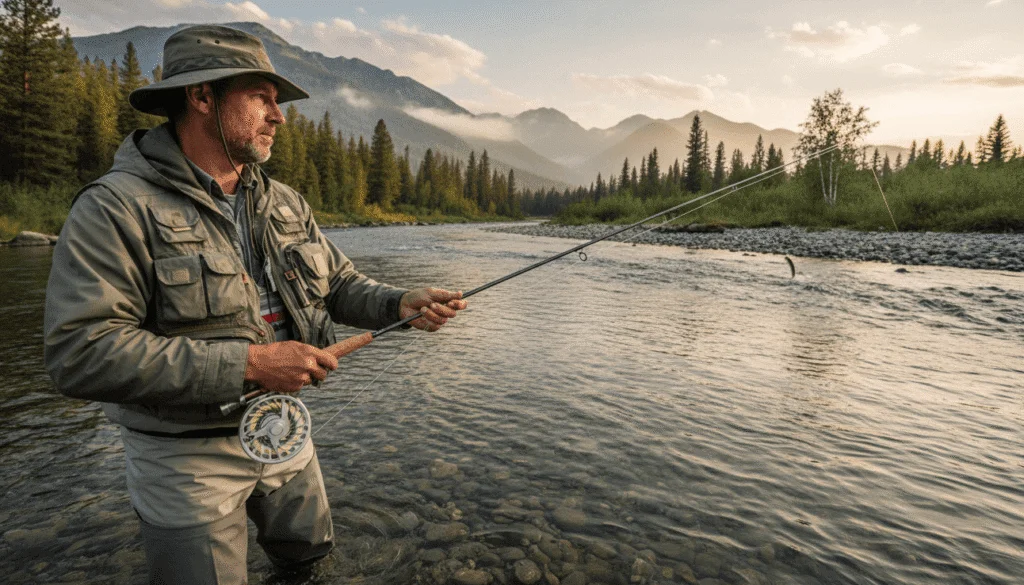
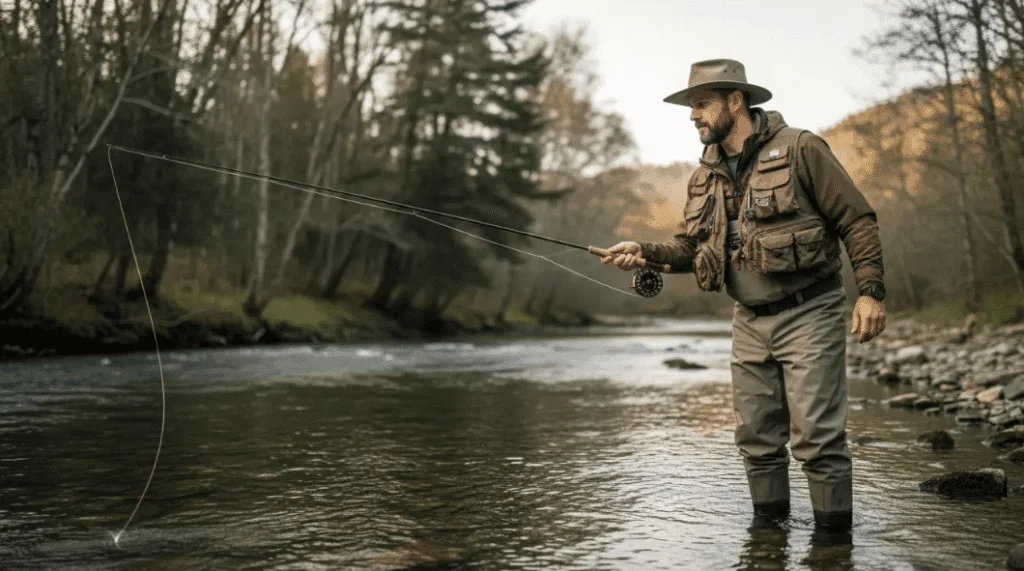
Fly rods form a unique and highly specialized category. They are designed for casting extremely light artificial flies, where the cast is driven by the weight of a special fly line and the casting technique itself. They are used by dedicated fly anglers who mainly target trout and grayling. The most important characteristic is their AFTMA line class rating (e.g. #5), which specifies the optimal line weight. Fly rods are known for their very smooth, progressive parabolic action along the whole blank, which is essential for proper fly casting.
Kids’ Rods
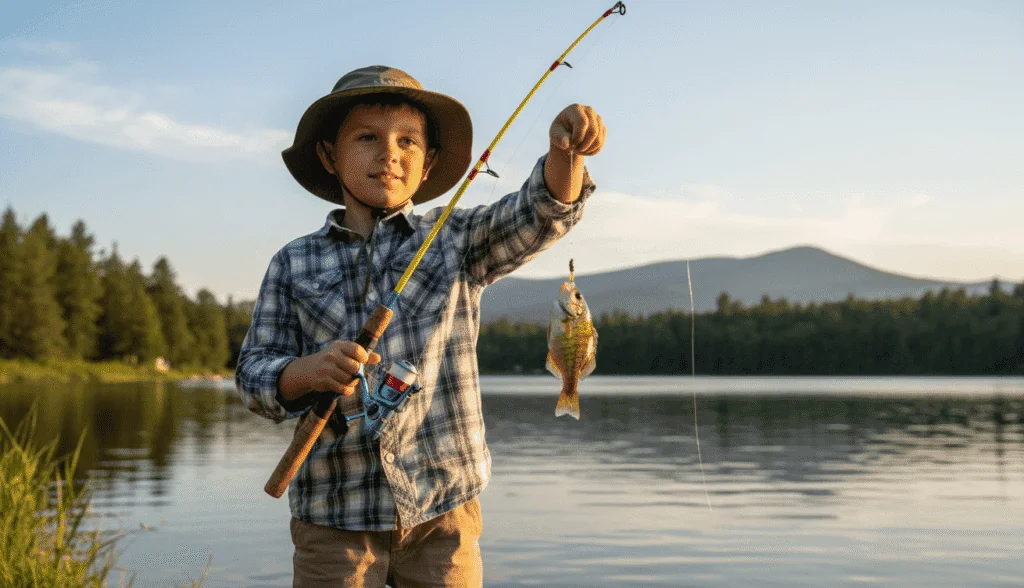
Kids’ rods are designed with a focus on safety, low weight, and durability to make the first steps into fishing enjoyable and straightforward for complete beginners. They are usually short, robust rods, often telescopic, made from fiberglass or composite for extra toughness. Their length usually does not exceed 1.5 meters and they’re often sold as sets with a simple, reliable reel. They’re ideal for those first sessions by the water with smaller fish.
Travel (Multi-piece) Rods
Travel rods are the answer for anglers who need to minimize transport length without making big compromises in rod action. They are made from 4, 5 or more sections, which lets them pack down to very compact sizes (often under 60 cm), ideal for air travel or hiking. Despite the higher number of joints, quality models retain very good action. Their defining feature is this minimal transport length, which makes them an ideal companion on the road.
The Technical DNA of a Rod: Key Specs for Choosing the Right One
The key specifications of a rod are printed on the blank and define how the rod behaves during casting and fighting fish.
Action
Action describes how much and where the rod bends under load. It’s the most important factor influencing sensitivity and hook-setting power.
- Fast/Extra Fast: Only the top third (the tip) bends. Delivers maximum sensitivity and a quick, powerful hook set. Ideal for spinning.
- Moderate/Medium: The upper half of the rod bends. A good compromise between casting distance and control. Great for all-round rods.
- Parabolic (Slow): The rod bends evenly along its entire length. Offers maximum shock absorption and cushioning. Ideal for fishing with fine lines and for big carp.
Casting Weight (CW)
Casting weight (usually given in grams – g, or ounces – oz) defines the optimal weight range of lures and leads the rod is designed to cast effectively.
- Too light a weight: The rod doesn’t “load” properly and the cast will be short.
- Too heavy a weight: You risk snapping the tip of the blank on a hard cast.
- Example: A 10–30 g rod is ideal for lures around 15–25 g.
Blank Material
The blank material is the foundation of the rod and determines its core characteristics:
- Carbon/Graphite: The most popular choice. Light, sensitive, and stiff. The higher the modulus (e.g. IM7, 40T), the lighter and more sensitive – and more expensive – the rod becomes, but it also gets more brittle.
- Fiberglass: Very durable and flexible, but heavy and less sensitive. A budget-friendly option for kids’ rods and rods meant for extreme abuse.
- Composite: A mix of carbon and fiberglass. Offers a solid compromise between toughness and weight at a reasonable price.
Length and Number of Sections
Rod length is measured from the end of the handle to the tip. The number of sections affects the transport length.
- Longer rods (3.6 m+): Provide longer casts and better line control (for example in carp fishing or float fishing).
- Shorter rods (up to 2.4 m): Offer greater accuracy and make it easier to fish from a boat or in overgrown banks (e.g. spinning).
- More sections: Shorter transport length, and usually better action than a telescopic rod.
Guides and Reel Seat
The quality of these components is crucial for durability and performance.
- Guides: The insert material is key. SiC (Silicon Carbide) or Alconite are top choices – they are hard, minimize friction and heat build-up on the line (important for braid), and reduce the risk of the line cutting into the insert. The number of guides is linked to the rod’s action; parabolic rods tend to have more guides.
- Reel Seat: Must hold the reel firmly. Avoid cheap plastic, wobbly seats. Better reel seats (e.g. Fuji) provide reliability and stability.
Handle Type and Material
The handle affects comfort and how well you feel bites.
- Cork: A classic choice. It’s light, pleasant to hold, and transmits vibrations well, increasing sensitivity. It does, however, need more care.
- EVA foam: A synthetic material. Durable and easy to clean, but usually less sensitive than cork. Popular on heavy-duty rods (catfish, sea).
How to Choose the Ideal Rod: Buying Guide
Your rod choice should always start with your fishing method and target species.
Based on Experience Level
| Angler Category | Recommended Rod | Why? |
|---|---|---|
| Beginner | All-round telescopic rod or light/medium spinning rod (CW up to 40 g) | Easy to handle, durable, versatile. Lets you try different methods. |
| Intermediate | Specialized rod (Feeder, Match, dedicated Spinning) | Focus on higher-modulus carbon (lighter weight) and precise action that fits your technique. |
| Specialist | Premium, dedicated models (Fly, Catfish, Carp with parabolic action) | Worth investing in top components (Fuji guides, reel seats) and high-end actions. |
By Target Species/Method
- For carp anglers: Look for longer rods (3.6 m+), with parabolic or medium action for cushioning lunges and a strong backbone for playing big fish. Test curve around 2.5 to 3.5 lb.
- For catfish anglers: The rod must be “bombproof”. Shorter (2.4–3.0 m), with massive power, a heavy-duty reel seat, and extremely tough guides. Casting weight often 300–600 g.
- For trout/ultralight spinning: A rod with the lowest possible casting weight (UL – up to 10 g). An extra-fast tip action and low blank weight are key for maximum sensitivity and fun.
What to Watch Out for When Buying
- Check the guides: Inspect all guides and make sure they are aligned and the inserts are not scratched or cracked. Quality thread wraps should be solid and even.
- Reel fit: Attach a reel and shake the rod gently. The reel seat should have no play and no wobble.
- Compare real action to the label: Take the rod in hand and gently load it. Many manufacturers describe action optimistically. A rod labeled as Extra Fast should only bend at the tip.
- Warranty and service: Buy from retailers who offer good service and support – even the best rod can break if mishandled.
Making Your Rod Last: Care and Maintenance
Proper care is the best way to make sure your rod lasts for years and keeps its performance.
Care and Use
- Cleaning guides and ferrules: Wipe the guides after every session. Ferrules on multi-piece rods should be clean and dry so they fit perfectly and don’t start to wobble or crack.
- After sea fishing: It is essential to rinse the entire rod thoroughly with fresh water (ideally under a shower). Saltwater causes corrosion on guide frames and the reel seat.
- Handle care: A cork handle can be cleaned occasionally with a soft brush and soapy water to restore grip and appearance. EVA foam just needs wiping down.
Storage
Store rods in a dry place, out of direct sunlight, ideally in a cloth bag or hard case. The rod should not be under continuous load (for example leaning at an angle where it’s bent), as this can damage the blank over time. Always use a protective case when transporting it in the car.
Repair vs Replacement
- Repair: A broken guide is a standard, relatively cheap repair (rewrapping and replacing the guide). It’s worth fixing the rod if the damage is limited to peripheral parts.
- Replacement: If the blank itself breaks (especially in the middle of the rod), repair is usually very expensive or will negatively affect the rod’s action and power. In that case, it’s often better to buy a new rod.
How Much Does a Quality Rod Cost? Price Ranges
The price of a rod is directly related to the quality of the blank material and the components used.
Price Category Overview
| Category | Approx. Price (CZK) | Expected Quality and Material | When Does It Make Sense to Buy? |
|---|---|---|---|
| Entry-level/Budget | 500 – 1,500 | Fiberglass/composite, basic guides, plastic reel seat. Heavier, less sensitive. | For beginners, kids, or as a general-purpose rod for a cottage. |
| Mid-range | 1,500 – 4,000 | Carbon fiber (medium modulus), quality reel seat, SiC guides. Good action and sensitivity. | For most hobby anglers; a strong price/performance ratio for specialized methods. |
| Premium | 4,000 and up | High-modulus carbon (light, thin, sensitive), branded components (Fuji guides and reel seats), AA-grade cork handle. | For specialists, big fish (catfish, sea) or techniques that demand extreme sensitivity (fly fishing, UL spinning). |
When is it worth paying extra?
If you target large, powerful fish (catfish, saltwater species, big carp), it’s worth paying more for strength and reliability in the reel seat and guides. Your rod must not fail at a critical moment. For specialized techniques like fly fishing or ultralight spinning, investing in a light, sensitive blank will significantly enhance your fishing experience.
Brand Overview: Which Manufacturer to Choose?
Each manufacturer has its own focus and heritage. Your brand choice often depends on your preferred technique and country of origin.
| Brand | Specialization and Reputation |
|---|---|
| Shimano | Global leader. Innovation, wide range (carp, spinning, sea). Known for quality and reliability. |
| Daiwa | Direct competitor to Shimano. Very strong in spinning and technical solutions (Japan style). |
| PENN | Traditional American brand. Focused on robust tackle and saltwater fishing. |
| Sportex | German heritage. Known for extremely durable blanks and powerful carp rods. |
| Mivardi, Delphin | Czech and Slovak brands. Strong in carp fishing and value-oriented gear. |
| Sage, Loomis | Premium brands, synonymous with top-end fly rods and high-grade carbon. |
Mini Glossary of Terms
| Term | Explanation |
|---|---|
| Blank | The body of the rod; a tapered tube that forms the main structural and working part of the rod (usually made from carbon or fiberglass). |
| Taper (Kónus) | The gradual narrowing of the blank from the handle to the tip, which is key to determining the rod’s action and power. |
| Action | Describes how much and in which part of the rod it bends under load (e.g. fast tip, parabolic). |
| Casting Weight (CW) | Indicates the optimal weight range of lures or leads (in g or oz) for which the rod is designed. |
| SiC (Silicon Carbide) | Ceramic material used for guide inserts. Extremely hard, reduces friction, and extends the life of line/braid. |
| Feeder | English term for fishing with a feeder and also the name for rods designed for this method. |
| Quiver tips | The interchangeable, very sensitive tips on feeder rods that act as bite indicators. |
| Parabolic Action (Slow Action) | An action where the rod bends evenly along the entire length of the blank. Provides maximum cushioning and an enjoyable fight. |
| EVA foam (Ethylen-vinyl-acetát) | A synthetic, durable, and low-maintenance material used for rod handles. |
| Trolling | A method of fishing by pulling a lure behind a moving boat (often in saltwater). |
| AFTMA class | International standard rating for fly rods and fly lines, indicating the recommended line weight (e.g. #5). |
| Spomb | The name of a bait rocket, and by extension a casual term for special rods designed to cast these rockets (Spod rods). |
Core Rule for Choosing and Final Thoughts
To sum up, the ideal rod for you is the one that best matches your method and fishing location. First decide whether you want to spin, fish on the bottom, or float fish, and only then start focusing on the details.
When making your final choice, focus on three key parameters: the right Type (e.g. Feeder, Spinning), a suitable Casting Weight for your lures, and a Rod Action that suits you (fast for firm hook sets, parabolic for playing fish). Never underestimate the quality of the guides and reel seat, as these determine durability and safety.
FAQ: Answers to the Most Common Questions
How often should I change the line or braided line on my reel?
You should change your monofilament line at least once per season, ideally before it starts, because it loses strength due to UV exposure and mechanical wear. Braided line lasts longer (often 2–4 seasons), but regularly check the first few meters and, if they are frayed, cut them off or reverse the braid onto the spool so the unused section is on top.
Can I just wipe the rod after sea fishing, or do I have to rinse it?
After sea fishing you must rinse the rod. Wiping it with a dry cloth is not enough. Salt crystals settle in the guides, reel seat, and ferrules, causing corrosion and damaging the line. Rinsing thoroughly with fresh water (ideally under a shower) is essential to remove all salt residue.
What is the main difference in maintenance between a cork and an EVA handle?
EVA foam is almost maintenance-free; just wipe it with a damp cloth. A cork handle does need more care, but over time it develops a nice patina. To keep cork in good condition, it’s recommended to clean it occasionally with soapy water and a soft brush to remove dirt and grease. This prevents it from crumbling too quickly and keeps it pleasant to hold.