
How to choose a pool that suits both your garden and your family
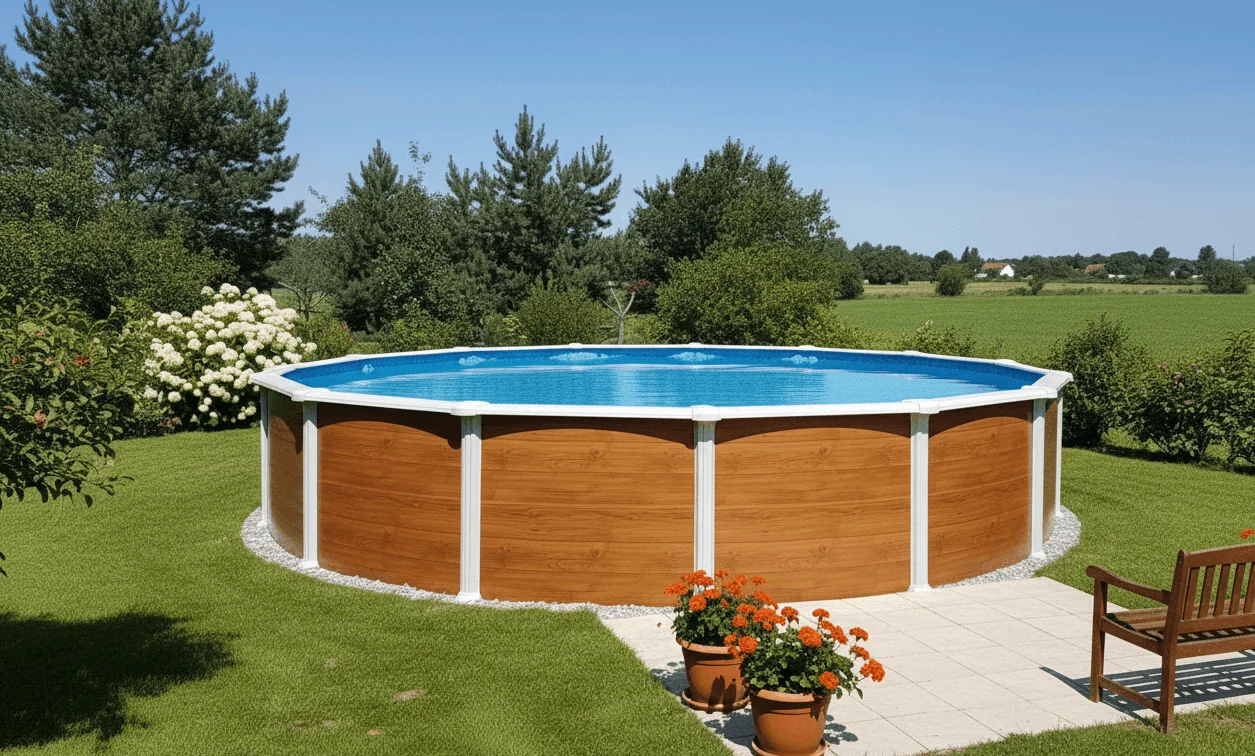
Imagine a hot summer day. The sun is blazing, the air is shimmering, and instead of looking for shade, you take a few steps across the sun-warmed paving and slip with relief into the crystal-clear water of your own pool. A pool is no longer just a place for the occasional cool-down. It’s becoming the heart of summer fun, relaxation, and unforgettable family get-togethers. It’s your own private oasis, where you can switch off after work, get some exercise, or simply unwind with friends.
There are countless options on the market, from simple and affordable above-ground pools to luxury custom in-ground solutions. This complete guide will help you navigate the range, understand the key factors, and choose a pool that you’ll enjoy for many years.
Interesting fact: Did you know that a properly chosen and well-maintained in-ground pool can increase your property's value by as much as a few percent?
Types of Pools: Find the Right One for You
The first step is choosing the right type of pool. Each category has its own specifics, along with its pros and cons. Let’s take a closer look at them.
Above-Ground Pools
An ideal choice for anyone looking for a quick, easy, and budget-friendly solution. Installation is usually straightforward and doesn’t require major building work.
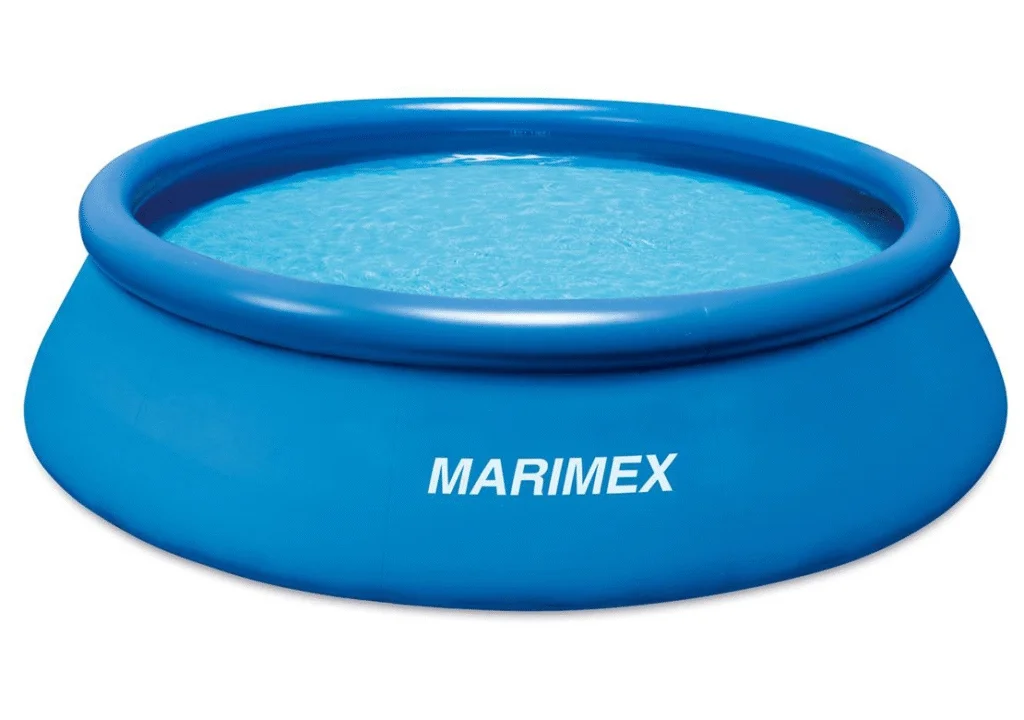
The simplest and cheapest option, perfect for small children or for anyone who just wants to try out a pool. Their main advantage is an extremely low price and easy storage – after the season, you simply deflate them and put them away. The downside, however, is the small size, limited depth, and above all a short lifespan. They are prone to punctures, and the material quickly breaks down in the sun.
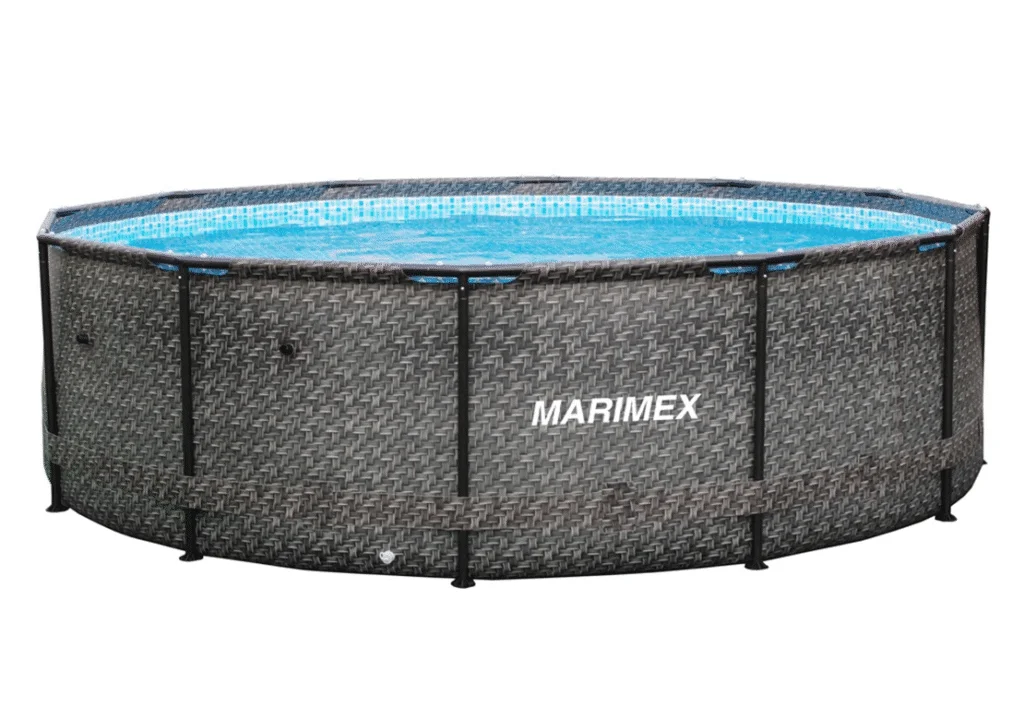
They strike a great balance in the above-ground pool category. They consist of a sturdy steel frame fitted with an inner PVC liner. They are significantly more stable and durable than inflatable models and offer larger dimensions and greater depth. It is still an affordable option, making it a good fit for families as their first “larger” pool. Assembly is a bit more demanding, but you can handle it yourself in the course of one afternoon.
In-ground pools
They offer a durable, visually clean solution that becomes a natural, fully integrated part of your garden. The upfront cost and construction demands are higher, but in return you get a much longer lifespan, greater comfort, and a wide range of add-on options.
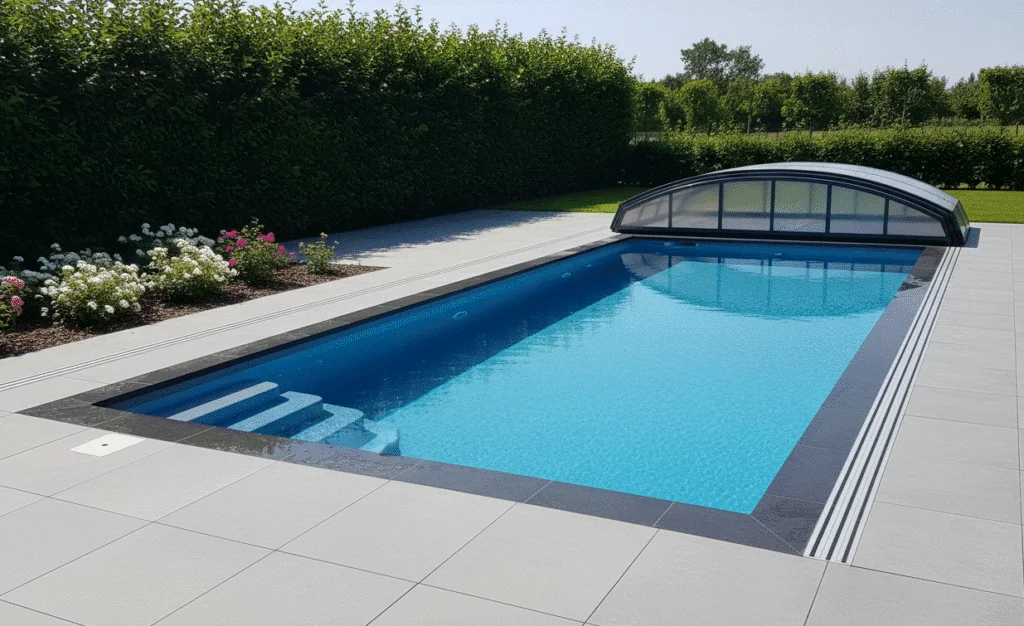
The most common and most popular choice for family homes in the Czech Republic. They are made from welded polypropylene panels that resist mechanical damage well. Their biggest advantage is excellent value for money and almost unlimited flexibility in shape and design. You can choose any dimensions as well as the shape of the steps. The downsides include visible welds and slightly lower resistance to UV radiation and pool chemicals compared with more expensive options.
These pools are made as a single-piece fiberglass shell (monocoque). Thanks to that, they have a perfectly smooth, seamless surface that is easy to maintain and feels very pleasant to the touch. They stand out for their long service life and lasting color stability. Installation is also very quick—the finished pool is placed in the garden by crane. The downside is the limited range of shapes and sizes due to transport constraints, as well as the higher purchase price.
This technology makes it possible to build a pool in practically any shape and size. The base is a concrete or block-built shell, which is lined on site with a special, highly durable and thick PVC liner (so-called heavy-duty liner). This solution is ideal for unusual plots or for renovating older concrete pools. The liner lasts 10 to 15 years, after which it needs to be replaced, and that is its main drawback.
They represent the absolute top tier in durability and customization. They make it possible to create virtually any shape, depth, or design, including infinity edges. The interior surface can be finished with ceramic tiles, mosaic, or a special coating. This is the most luxurious option, but also the most expensive and the most demanding in terms of construction, requiring both a professional design and expert installation.
Key parameters to consider when choosing
Several key factors come into play when making your decision. Weigh them carefully so the end result matches what you have in mind.
Size and Shape
How large a pool can you afford? Measure the space in your garden carefully, and don’t forget to leave enough room around the pool for easy movement, sun loungers, and other equipment. The most popular shapes are rectangular and oval, as they make swimming more comfortable. Round pools, on the other hand, are great for relaxing and water games.
Depth
For families with young children, an ideal depth is around 1.2 meters. It allows for safe play while still being deep enough for adults to swim. For fitness swimmers, a depth of 1.5 meters is a better fit. A great middle ground can be a multi-level pool floor, with a shallower section for kids and a deeper one for swimmers.
Material and Construction
As described above, the material has a major impact on durability, maintenance needs, and the overall look. Plastic and fiberglass pools offer a smooth surface that is easy to maintain. Concrete pools with mosaic finishes look luxurious, but their surface is more prone to dirt building up in the joints.
Placement in the garden
Proper placement is key. Choose the sunniest part of the garden to make the most of natural water heating and create a pleasant spot for sunbathing. Also keep privacy in mind, so you won’t be bothered by neighbors’ views. The distance from trees matters too because of falling leaves, as does access to electricity and water for connecting the equipment.
Filtration system: The heart of clean water
Filtration is by far the most important part of your pool system. Without it, the water will go bad within a few days. Its job is to remove debris and keep the water crystal clear. There are two main types.
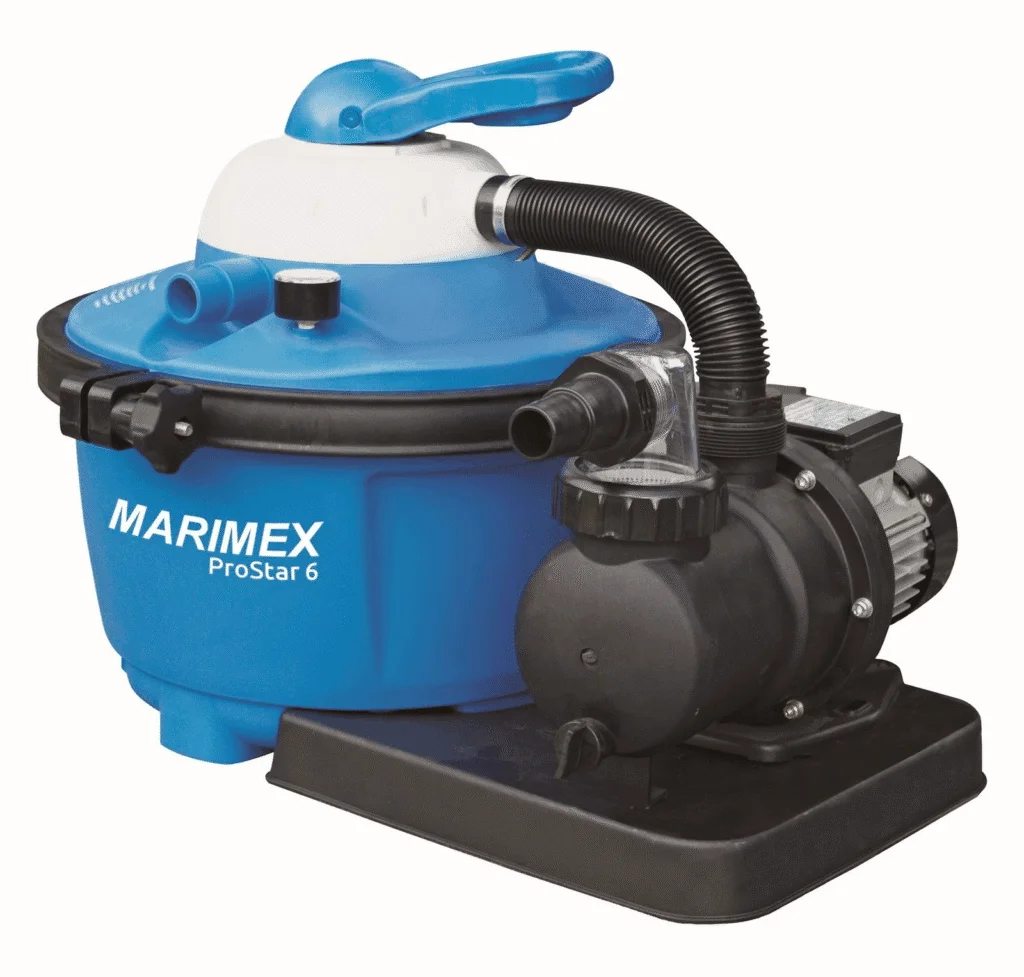
Sand Filter
Pool water is pumped through a tank filled with special silica sand, which traps dirt and debris. This type is the standard choice for all in-ground and larger above-ground pools. It is highly effective, and the sand media lasts for several years. Maintenance involves regularly “backwashing” the filter, which reverses the water flow and flushes the trapped dirt away to waste.
Cartridge Filtration
Water passes through a fine paper insert (cartridge) that traps impurities. It is used mainly for smaller above-ground and inflatable pools. Its main advantage is the low upfront cost. The downside is the need for frequent manual cleaning (rinsing with a hose) and regular cartridge replacement, sometimes even several times during the season.
| Typ filtrace | Vhodná pro | Údržba |
|---|---|---|
| Písková | Větší a zapuštěné bazény | Proplach písku jednou za 1–2 týdny |
| Kartušová | Menší nadzemní bazény | Čištění/výměna vložky i několikrát týdně |
How to Choose a Pool Step by Step
The whole selection process can be summed up in a few simple steps that will help you make the right choice.
Set your budget clearly
It’s not just about the price of the pool itself. You also need to factor the site preparation (excavation, concrete base), installation, accessories (pool enclosure, heating), and future running costs (chemicals, electricity) into the total cost.
Assess your needs
Who will use the pool most often? A family with children who will appreciate safe entry and a suitable depth? An athlete who needs enough room for lap swimming? Or will the pool be used mainly for relaxing and summer get-togethers with friends? The answers to these questions will help you decide which type, shape, and size to choose.
Measure the space in your garden
Carefully measure the available space and think through the best location with sunlight, privacy, and technical access in mind. Don’t forget that you’ll need a paved or otherwise solid surface around an in-ground pool.
Don’t forget the building permit
According to current legislation in the Czech Republic, for in-ground pools up to 40 m² of built-up area on the plot of a family home, you do not need a building permit or to file a construction notification, provided the pool is located at least 2 metres from the property boundary. For larger pools, or if the pool is placed closer to the boundary line, the situation must be addressed with the relevant building authority; in most cases, zoning consent or a construction notification is sufficient. Even so, it is always best to check with your local authority in advance.
Essential Accessories and Add-Ons
A pool on its own is just the start. The right accessories can take comfort, safety, and everyday usability to a whole new level.
Roofing
By far the most important accessory. It improves safety (protecting children and pets from falling into the water), helps keep the water warm (it works like solar heating), keeps out dirt and debris (leaves, insects, dust), and can extend the swimming season by several months, often from April to October.
Water Heating
Do you want to swim even in cooler weather? A heat pump is the most efficient and most popular option. It works by drawing heat from the surrounding air and transferring it to the water. It’s economical and effective. An eco-friendly alternative is solar heating (panels or pyramids), which depends on sunlight.
Pool Vacuum
A vacuum is essential for keeping the bottom and walls clean. Manual pool vacuums connect to the filtration system and are the most affordable option. Semi-automatic models move across the pool floor on their own. The highest level of convenience comes with automatic (robotic) pool vacuums, which work completely independently and clean the entire pool, including the walls and waterline.
Steps or staircase
They provide safe, comfortable access to the pool. For above-ground pools, removable steps are used. For in-ground pools, the standard option is built-in stairs (plastic or fiberglass), which can also double as a relaxation bench.
Solar and Pool Cover Tarps
Solar cover (bubble cover) floats on the water’s surface and helps warm the water using solar energy, while also reducing evaporation and heat loss overnight. Pool cover is mainly used to protect the pool from debris outside the season or during longer periods away.
Countercurrent
A great add-on for swimming enthusiasts. The powerful jet creates a strong water current that lets you swim for fitness even in a smaller pool. It also works as a fun feature or a massage element.
Water Maintenance and Care
Crystal-clear, safe water is the result of regular care. It’s not complicated — you just need to follow a few basic rules.
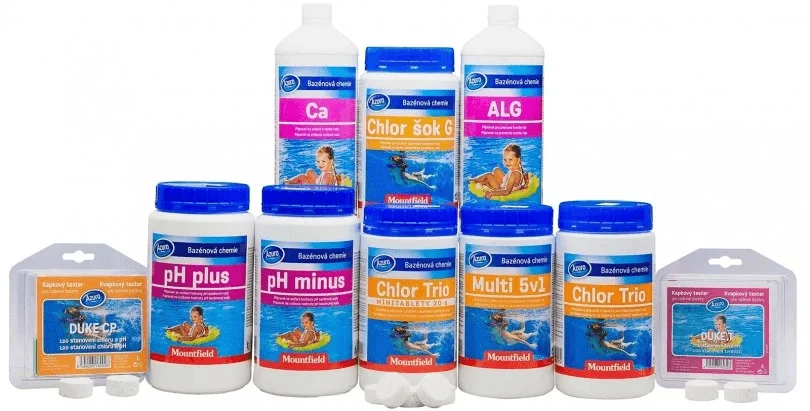
Pool Chemicals
The foundation is keeping the water’s chemical balance right. Check and adjust the pH level regularly (at least once or twice a week), ideally keeping it between 7.0 and 7.4, using pH increaser and pH reducer products. The right pH is essential for disinfection to work properly.
Disinfection is most often done with chlorine (tablets or granules), which reliably eliminates bacteria and microorganisms. An alternative is chlorine-free pool chemicals based on active oxygen. Saltwater treatment using a salt chlorinator is also becoming more and more popular. Through electrolysis, it turns the salt in the water into natural chlorine, which is gentler on the skin and doesn’t have a strong smell. It’s also important to prevent algae by using special products (algaecides).
Pool Cleaning
Regularly skim debris from the water surface with a net, scrub the walls with a brush, and vacuum the bottom with a pool vacuum. Don’t forget to clean the skimmer basket and backwash the filtration system as well.
Winterizing and Opening Your Pool
Proper winterization is absolutely essential to protect the pool and its equipment from frost damage. It includes lowering the water level, disconnecting and storing the equipment, treating the water with special pool chemicals, and covering the pool. In spring, when reopening the pool, the whole process is done in reverse.
The Best-Known Brands and Manufacturers
Several large, well-established companies operate on the Czech market, offering a broad range of products and services.
Mountfield
One of the best-known retailers, with a wide network of stores across the country. It offers a full range of services, from selling pools and accessories to providing servicing. It often runs special offers.
Albixon
A leading Czech manufacturer and one of the largest pool and pool enclosure makers in Europe. It is known as a technology leader that brings innovation to the market and places strong emphasis on quality.
Marimex
A specialist mainly in affordable above-ground pools and a wide range of accessories. It’s a popular choice for families looking for a reliable, budget-friendly way to cool off in summer.
Price and Budget Categories
Pool prices vary widely. To make things easier to navigate, we can divide them into three main categories.
Affordable option (up to $870)
In this category, you’ll mainly find inflatable and smaller above-ground liner pools. They’re ideal for the occasional cool-down or for small children. Keep in mind that they come with basic equipment and a shorter lifespan.
Mid-range ($4,350–$17,400)
Here you’ll find the widest selection of high-quality in-ground plastic and fiberglass pools. The price usually includes a pool set with the basic equipment (filtration, skimmer, jets), and often installation as well. Most pools at family homes fall into this category.
Premium category ($21,739 and up)
This category includes custom-built concrete pools, luxury fiberglass overflow models, stainless steel pools, and the use of advanced technologies (smart controls, top-of-the-line counter-current systems). The price here can exceed $43,000, depending on the size and features.
Summary and a Final Tip
Choosing a pool is a long-term investment that can bring years of enjoyment to the whole family. That’s why it’s important not to focus only on the purchase price, but to weigh every aspect—from the type and material to running costs and maintenance demands. Take the time to think through your needs, assess what your garden can accommodate, and don’t hesitate to ask professionals for advice. The right pool won’t just enhance your garden—it will become the place where unforgettable summer memories are made.
Whichever pool you choose, we hope it becomes a place of endless summer fun and relaxation for your whole family.
💬 Frequently Asked Questions (FAQ)
Do I need a building permit for an in-ground pool?
For pools on the grounds of a family house with a built-up area of up to 40 m² and located at least 2 metres from the property boundary, no building permit or construction notification is required. For larger pools, or in more complex situations, you should consult the building authority, where zoning consent or a construction notification is usually sufficient.
Is saltwater or chlorinated pool water better? What are the main differences?
Both systems use chlorine for disinfection, but in different ways. With chlorinated water, you add chlorine manually, for example in tablet form. With salt water, a system called a salt chlorinator uses electrolysis to generate chlorine directly from lightly salted water. Salt water (the salt concentration is about 10 times lower than in the sea) is gentler on the skin and eyes, has no strong chlorine smell, and is easier to maintain. The upfront cost of a salt chlorinator is higher, but ongoing chemical costs are lower. The downside of salt water is its slightly corrosive effect on stainless steel components.
How long does it take to build an in-ground pool, from excavation to filling it with water?
The whole process depends on the type of pool and how complex the construction work is. The actual building work itself (excavation, pouring the base slab) takes about one week, but the concrete then needs to cure for ideally 2–4 weeks. Installing the pool and connecting the equipment is then a matter of a few days. Overall, it’s fair to say that from the first dig in the ground to filling it with water, it takes 3 to 6 weeks in the best-case scenario. The entire process, from ordering to completion, usually takes 8–12 weeks on average.