
A smart mower that cuts the grass for you – everything you need to know before buying
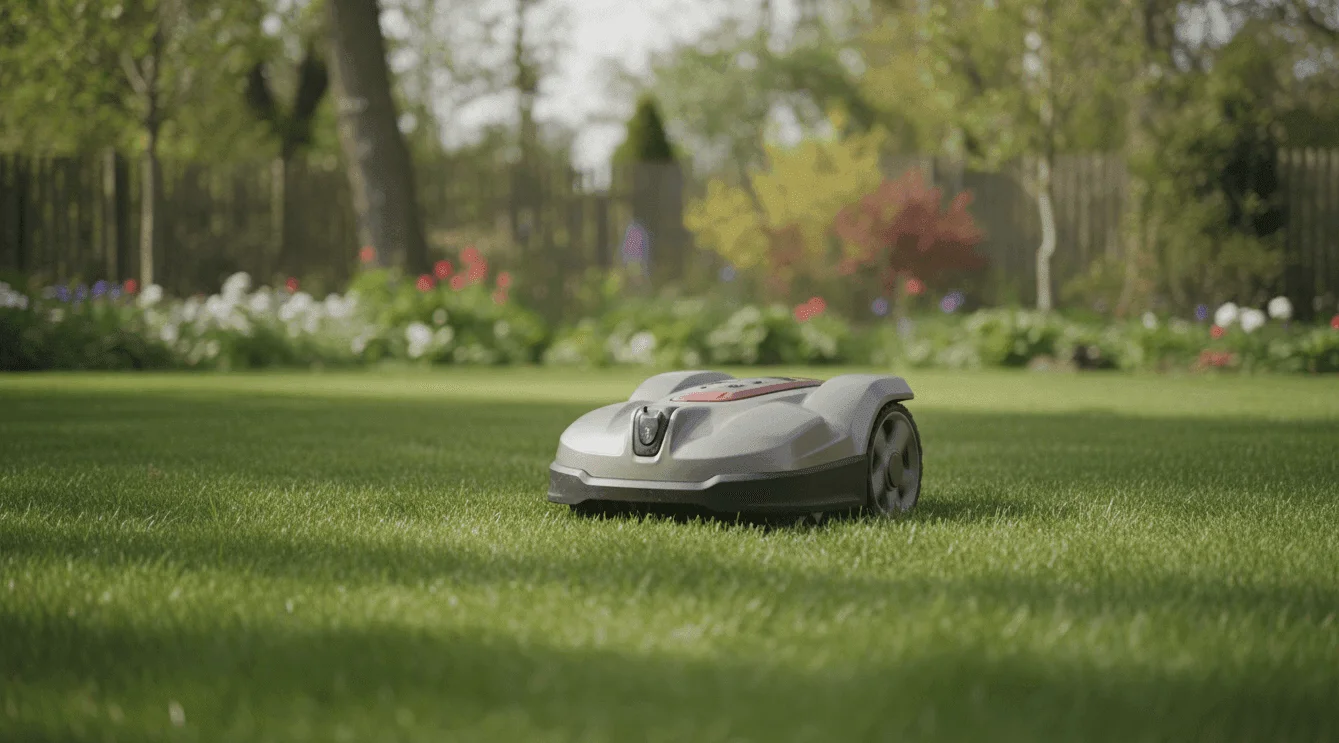
A robotic lawn mower is no longer a futuristic toy, but a standard part of a modern smart garden. In short, it’s a fully autonomous machine that takes care of regular, precise mowing without any need for human intervention. While you relax, the robot keeps your lawn trimmed to the ideal height.
The main reason for its growing popularity lies in the combination of time savings, eco-friendly operation, and a flawless result.
Benefits that will change how you care for your garden
The key advantages include time savings, because instead of spending hours mowing, you just set a schedule and the mower works for you. Another benefit is efficient mulching, as the mower cuts the grass very often and into tiny pieces, so the fine clippings break down and act as a natural fertilizer (mulch). Last but not least, there is full automation: most models recharge themselves and return to mowing according to a set schedule, often controlled via a mobile app.
Did you know that… Regular mowing provided by a robotic mower has a proven positive impact on lawn quality? Frequent, light trimming promotes density and stronger root growth, which leads to a thicker, healthier, deeper green lawn without the need for large amounts of chemical fertilizers.
How a robotic mower works: Principle and construction
A robotic mower works on the principle of autonomous or semi-autonomous mowing. It moves within a defined area and covers the whole lawn either systematically or in a random pattern.
Drive unit and wheels
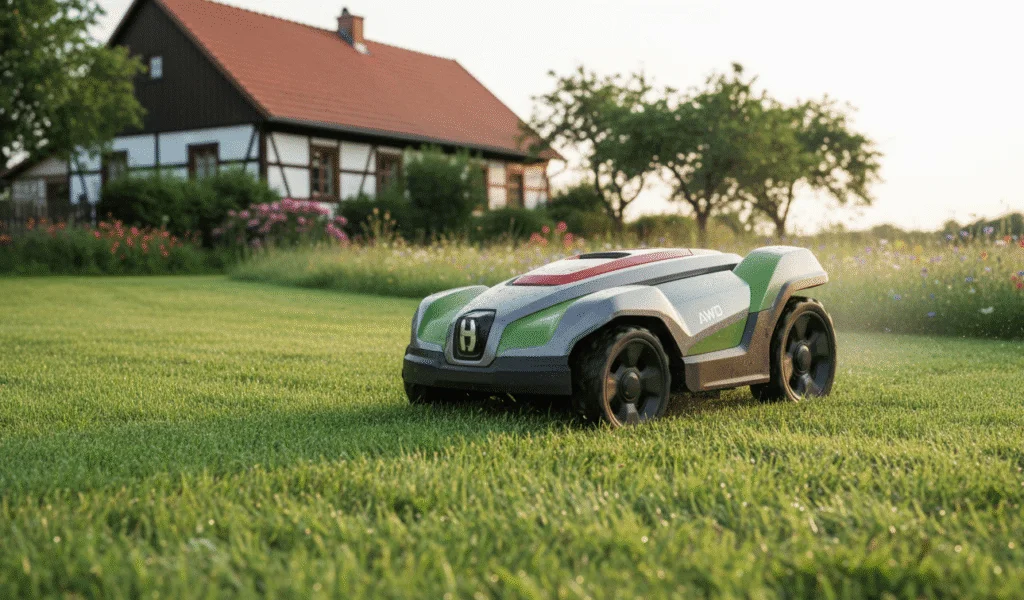
Most modern mowers use brushless motors for longer service life, higher efficiency, and quieter operation. The drive is typically handled by two independent wheels, which allows sharp turns and easy maneuvering. For demanding terrain with slopes or complex gardens, there are models with all-wheel drive (AWD) that provide maximum traction.
Cutting mechanism
There are two main types of cutting mechanisms. The most common and safest option is a floating disc with small, sharp blades. These blades are lightweight and fold back under the disc when they hit an obstacle (stone, toy), which minimizes damage and the risk of injury. The second type is a robust fixed blade, usually found on more powerful, professional models that handle dense and tall grass better. The cutting width typically ranges from 15 to 30 cm, while the cutting height is usually easy to adjust (manually or electronically) between 20 and 60 mm.
Sensors and safety features
Safety is crucial and is ensured by various sensors. A Bump Sensor detects collisions and immediately changes the driving direction. A lift/tilt sensor instantly shuts off the cutting mechanism if the mower is lifted or overturned – this feature is essential for protecting children and pets. A rain sensor lets the mower return to the station in bad weather. Protection against theft and unauthorized use is handled via a PIN code and Alarm.
Charging station
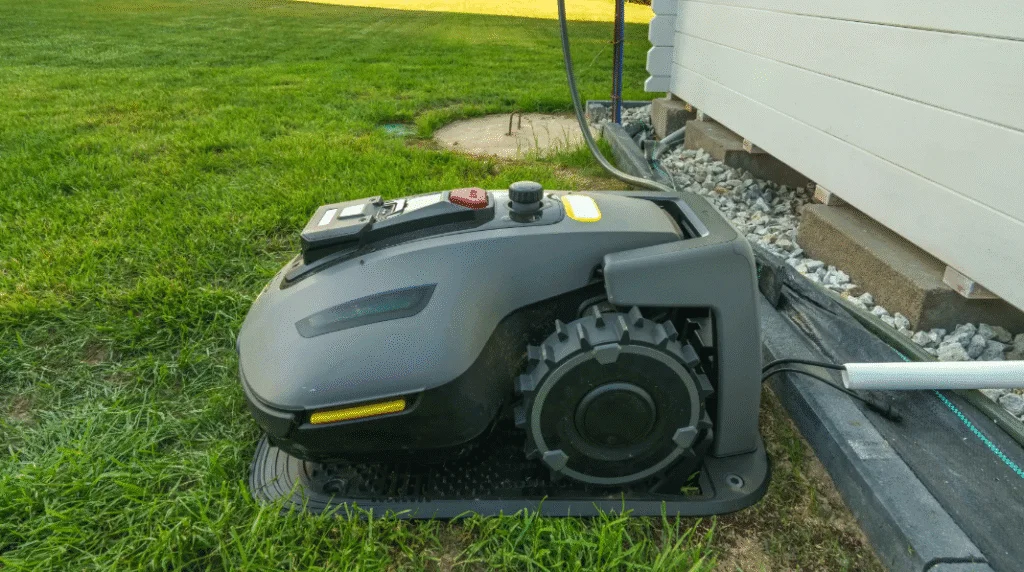
The charging station serves as the mower’s home base. Most mowers return to it automatically when the battery level drops or after finishing a scheduled cycle. Correct placement of the charging station (on a flat, shaded spot near a power outlet) is essential for smooth operation.
Types and variants: How the models differ
Robotic mowers are divided according to key criteria that determine how suitable they are for a specific garden.
By navigation method
The system with a perimeter wire is the most common and most affordable option. A wire is installed along the lawn edges and around obstacles so the mower can detect the signal and know where it is allowed to go and where not.
The second option is wireless / GPS / RTK technology, which is the newest and most premium solution. Systems using GPS (Global Positioning System) map the area, while the more precise RTK (Real-Time Kinematic) technology, often combined with visual sensing, achieves accuracy down to 2 cm and completely removes the need for a boundary wire. This allows precise mapping and zone definition in the mobile app. This is the future of autonomous mowing.
By garden size
Mowers for small areas (up to 500 m²) are usually entry-level models with smaller battery capacity and narrower cutting width. They are ideal for simple city gardens with minimal slope.
The category for medium areas (up to 1500 m²) is the sweet spot. These models offer a better battery, more robust construction, a more advanced navigation system (often with multi-zone capability), and control via Wi-Fi/Bluetooth.
Models for large and professional areas (over 1500 m²) are top-of-the-line machines with maximum capacity, fast charging, a robust chassis (often with AWD), and they most commonly use wireless navigation (RTK/GPS) for large properties and commercial grounds.
By features
On the market you’ll find basic models with only manual settings, simple perimeter-wire navigation, and no app support. On the other hand, models with advanced features can mow separate lawn sections thanks to Multi-zones, offer full control, scheduling, and remote diagnostics via IoT connectivity, and include special features such as Edge Cutting, which greatly reduces the need for additional trimming by hand.
Key parameters for choosing: What you need to know
When choosing a mower, you need to focus on the technical specifications that define its performance and suitability for your garden.
Recommended mowing area
This parameter indicates the maximum lawn area the mower can maintain effectively. We always recommend choosing a model with a margin (20–30% larger recommended area) than your actual lawn size. The mower then doesn’t have to run at full capacity all the time, which extends the life of the battery and motors.
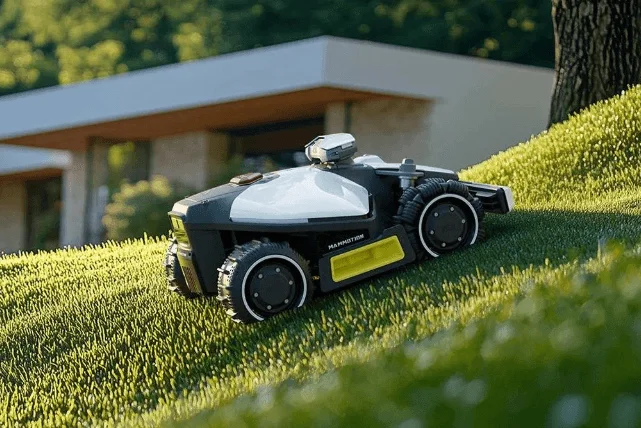
Maximum slope
This is given in percent (%) or degrees (°). Standard models handle slopes up to 25% (about 14°), but for steeper hills you need a model with a higher motor torque, better wheels, or all-wheel drive (AWD), which can manage even 45–70% (24°–35°).
Battery type and capacity
The standard today is Lithium-Ion (Li-Ion) batteries thanks to their high energy density, fast charging, and long lifespan. What matters is not only the mowing time (e.g. 60–120 minutes) but also the ratio of mowing time to charging time. Ideally, the charging time should be shorter than the mowing time.
Cutting width and height
The cutting width affects how quickly the mower covers the area – a wider deck is faster but the mower is usually less agile. The cutting height is crucial for lawn care, and you should make sure it can be adjusted manually and, ideally, electronically via the app for quick changes of settings.
Navigation system
The choice between a perimeter wire, GPS, or a precise RTK system is critical and affects mowing efficiency and reliability. RTK delivers the highest efficiency and systematic mowing, which is important for complex and large areas.
Durability and protection (IP rating)
The IP (Ingress Protection) rating indicates resistance to water and dust. For mowers, IPX4 is common (protection against splashing water from any direction), which is sufficient for mowing in the rain and routine cleaning.
Noise level
Most robotic mowers are extremely quiet, typically between 58 and 65 dB, which is comparable to a quiet conversation. You can let the mower run at night without disturbing yourself or your neighbors, though it’s still a good idea to check local regulations on night-time noise.
Control and connectivity
A mobile app is now practically essential. It allows easy schedule setup, no-go zones (for wireless models), battery status monitoring, remote diagnostics, and firmware updates to keep the mower in top condition.
How to choose the right robotic mower: Recommendations by needs
The choice of model has to be tailored to your garden and your preferences. Don’t underestimate the terrain and complexity.
Assessing garden complexity
Complex, irregular gardens with many obstacles (beds, trees) or narrow passages (e.g. between the house and garage) require a model that supports smart navigation for efficient coverage, often with the option to set multiple starting points or Multi-zones. It’s also important to check that passages are wide enough so the mower and its charging station can move through comfortably.
Choosing by slope
For gentle slopes (up to 25%), a standard model with good-quality wheels is enough. On steep slopes (25% and more), you’ll need a model with all-wheel drive (AWD) and a robust, often sprung chassis. These mowers are more expensive, but they’re the only ones that can guarantee stability and an even cut.
Most common buying mistakes (expert tips)
One of the most common mistakes is underestimating the lawn size. If you buy a model rated exactly for your area, it will have to run constantly, which leads to faster wear. That’s why you should always choose a model with at least a 20% margin. Another frequent mistake is ignoring the slope. A mower without enough power or AWD will get stuck, slide, or tip over on a steep hill. It’s also important to avoid poor station placement: it shouldn’t be in direct sunlight (risk of battery overheating) or at the lowest point in the garden (risk of moisture).
What to focus on when installing the perimeter wire
Proper installation is key to reliability. The wire must be laid tight and as accurately as possible to avoid navigation errors, and you need to keep the correct distance from the edge (usually 10–30 cm) so the mower can cut right up to the border without driving over it. The mower will work even with the wire fixed to the surface with pegs, but burying the wire (about 5 cm below the surface) is far more discreet and protects it from damage during scarifying.
Price ranges: What to expect for different budgets
The price of a mower closely correlates with its recommended area, battery capacity, and especially the complexity of its navigation system.
Basic models (approx. 435–1 090 $)
In this price range, the typical mowing area is up to 500 m². These are simpler models with smaller battery capacity and basic features that rely on manual setup and standard perimeter-wire navigation. They are ideal for smaller, simple gardens without major obstacles or steep slopes, where the user doesn’t insist on control via a mobile app.
Mid-range (approx. 1 000–2 200 $)
The mid-range covers typical lawns up to 1500 m² and offers the best balance of price and performance. Here you’ll find mowers with higher battery capacity, faster charging, and a more robust build. Connectivity is a key feature, usually via Wi-Fi or Bluetooth, which enables full control and multi-zone setup through a mobile app. These models are suitable for medium-sized and slightly complex gardens where the user wants comfort and a good overview of what’s happening.
Premium models (approx. 2 200 $ and above)
The premium class is designed for areas over 1500 m² (up to about 5,000 m²) and brings top-tier technology. You can expect wireless navigation (RTK/GPS/Vision), which removes the need for a perimeter wire, AWD for handling steep slopes, and maximum durability. These mowers achieve the highest mowing speeds and come with a full set of IoT features. They are worth the extra investment for very complex terrain, large and irregular gardens, and if you want to avoid wire installation altogether.
Overview of the most important brands and manufacturers
The robotic mower market is dominated by a few key players, each focusing on different aspects of technology and customer needs.
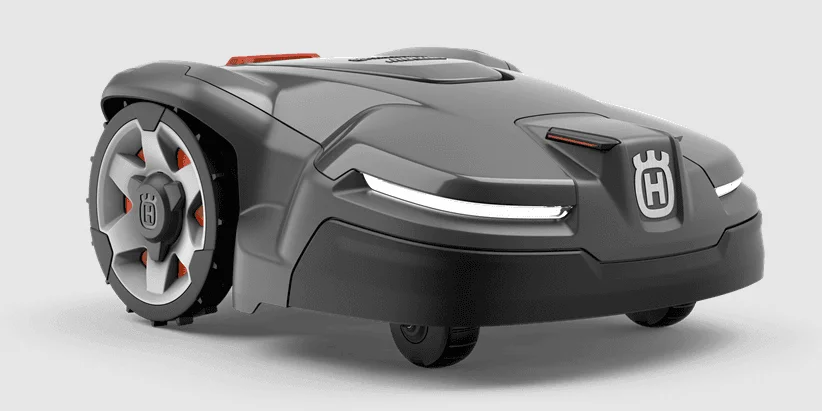
Husqvarna Automower
Husqvarna Automower is considered a pioneer in the field and offers the widest range of models. The brand’s mowers stand out for their excellent durability and reliability, and in the premium segment you’ll find models with all-wheel drive (AWD) and advanced GPS navigation.
Gardena
The Gardena brand, within its “smart systems”, focuses mainly on maximum user-friendliness and easy integration into a complete smart garden system. It offers models with a very good price-to-performance ratio, ideal for the mid-range and for users who want an easy-to-use ecosystem.
Segway Navimow and ECOVACS
Brands such as Segway Navimow and ECOVACS are strongly oriented towards modern technologies and excel in wireless RTK navigation, often combined with visual systems (Vision+GPS). Their main advantage is precise mowing without the need to install a perimeter wire.
Ambrogio and Stiga
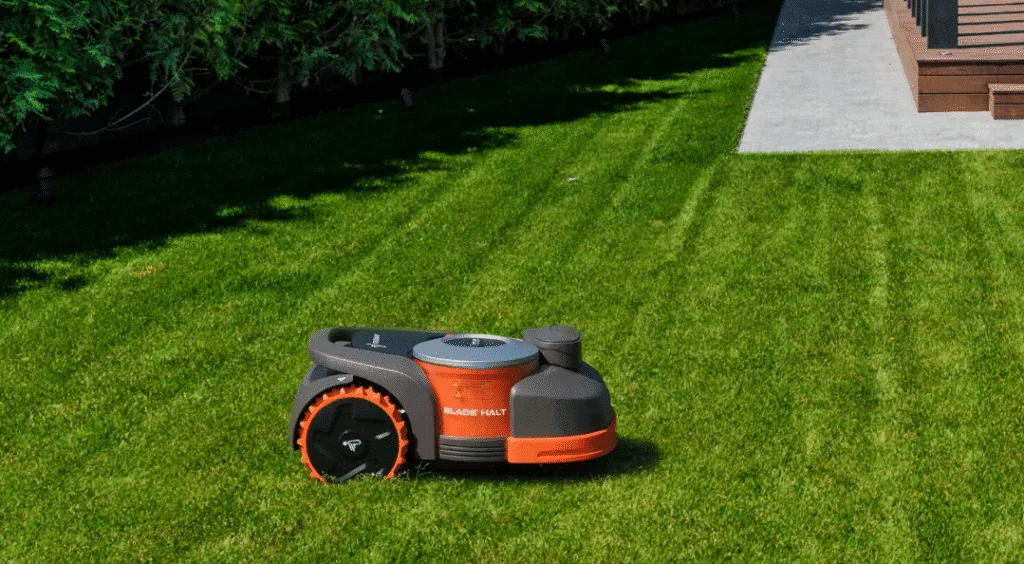
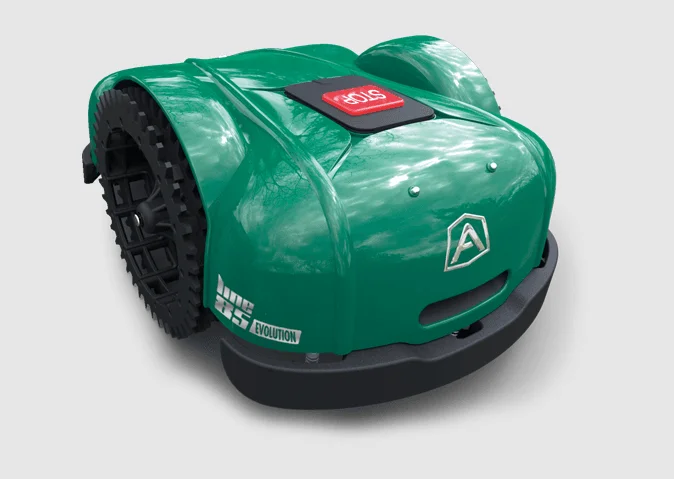
Ambrogio and Stiga offer robust machines typical of Italian and Swedish manufacturers. They often provide higher performance, making them ideal for demanding and extensive areas. Their innovations focus mainly on battery technology and mowing efficiency.
Maintenance, operation, and extending service life
Regular and proper maintenance is essential for a long service life, efficient operation, and keeping your warranty valid.
Routine mower care
At least once every two weeks, ideally after every heavy use, check and clean the chassis. Remove grass and soil using a brush – never use a pressure washer or hose unless the mower is explicitly designed for washing. Also check that the wheels spin freely.
Replacing cutting blades
The cutting blades are consumable parts and should be replaced every 3 to 8 weeks, depending on how often you mow and how clean the lawn is. Sharp blades are crucial for a clean cut and a healthy lawn; dull blades tear the grass and increase energy consumption.
Winter maintenance and storage
Winter care is critical for the battery. First, clean the mower thoroughly and let it dry. Charge the battery to about 50–80% and store the mower in a dry, frost-free place (such as a cellar or garage. Ideally, remove the charging station as well and store it indoors.
Tips for efficient and safe operation
Set a mowing schedule for times when the grass is dry, ideally in the morning. Avoid night-time mowing to reduce the risk of harming nocturnal wildlife such as hedgehogs, which are active at night. Always check the lawn before mowing and remove toys, fallen fruit, or stones.
History and development
The history of robotic mowing dates back to the 1990s, when Husqvarna (then Electrolux) launched the first commercial Automower model in 1995. These early machines were quite simple and worked on a random movement principle with limited capacity.
Key innovations
A major breakthrough was the perimeter wire, which defined the working area and allowed the machine to operate unattended. Another key step was the move from older batteries to Lithium-Ion batteries, which dramatically improved mowing time, charging speed, and overall lifespan. The integration of sensors and connectivity, such as tilt and lift sensors and the option to control and update the mower via a mobile app, significantly improved user comfort. The latest and biggest revolution is wireless navigation (RTK), which, in combination with GPS and visual systems, has enabled a shift from random to systematic, map-based mowing without a wire.
Frequently asked questions and answers
Can the mower handle wet grass?
Most robotic mowers are rain-resistant and can mow wet grass. However, it’s not ideal, because wet grass is harder to cut, sticks to the chassis, makes mulching less effective, and increases energy consumption. That’s why most models have a rain sensor that sends them back to the station in wet conditions. It’s best to set the mowing schedule for dry days.
What should I do if the mower loses the perimeter wire signal?
The most common cause is a break or damage to the wire. If the mower reports a lost signal, first check the contacts at the charging station. If the problem is in the wire, there are special cable locators that help you pinpoint the break so you can repair or replace the damaged section.
Can I leave the mower outside over winter?
While some manufacturers offer durable covers for charging stations, the mower itself should be stored away for winter. Frost and moisture can damage the battery and electronics. Before storage, clean the mower thoroughly, charge it to 50–80%, and place it in a dry, frost-free space. The perimeter wire and its cabling can usually stay in or on the ground.
Summary and final tip
The choice of a robotic mower comes down to three key factors: area, slope, and navigation complexity. When it comes to lawn size, don’t forget to allow for a performance margin (20–30%). For steep slopes (over 25%), it doesn’t pay to cut corners – you need an AWD model. For maximum comfort and to avoid dealing with wire installation, focus on models with RTK/GPS.
Final tip: Don’t invest only in the mower itself, but also in a quality, well-planned installation, especially if you choose a system with a perimeter wire. A properly laid wire will save you years of frustration with navigation errors.
With a modern robotic mower, you’ll get not only a perfect lawn, but above all the most valuable thing of all: time for yourself and your family. Enjoy your newfound freedom!