Containers that keep food fresh and organized – practical tips for choosing V5
Choosing the right food container might seem trivial, but the opposite is true. It’s a cornerstone of an organised and efficient kitchen that saves not only space, but also money. Proper storage keeps food fresh for longer, helps reduce waste and makes everyday cooking much easier. This complete guide will walk you through the wide range of materials, sizes and brands and help you choose containers that will serve you well for many years.
Did you know that with proper food storage, the average household can save several thousand crowns a year and cut food waste by more than 20%? Investing in quality containers pays off quickly, not only in fresher food, but also in money saved.
Types of food containers by material: Which one is right for you?
The material is the be-all and end-all of your choice. Each type has specific properties that make it suitable for different uses. Let’s look at the most common options, with their pros and cons.
Glass containers
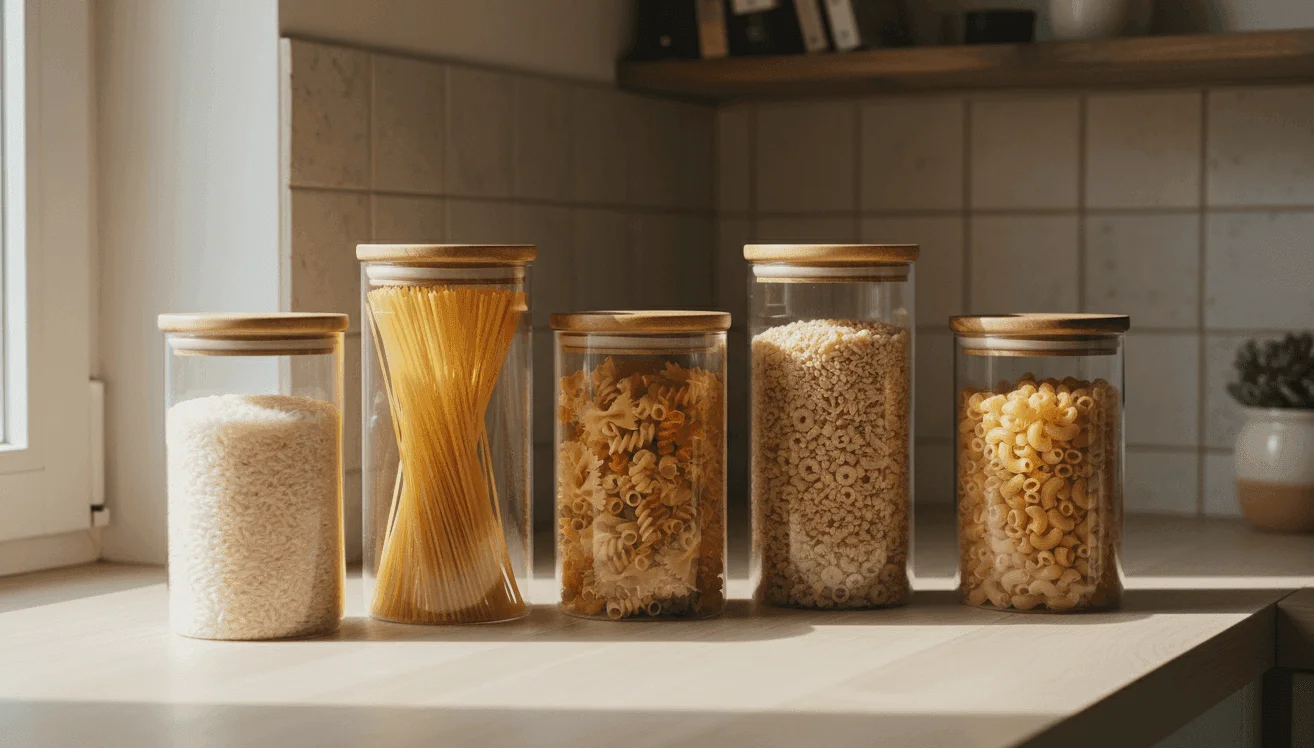
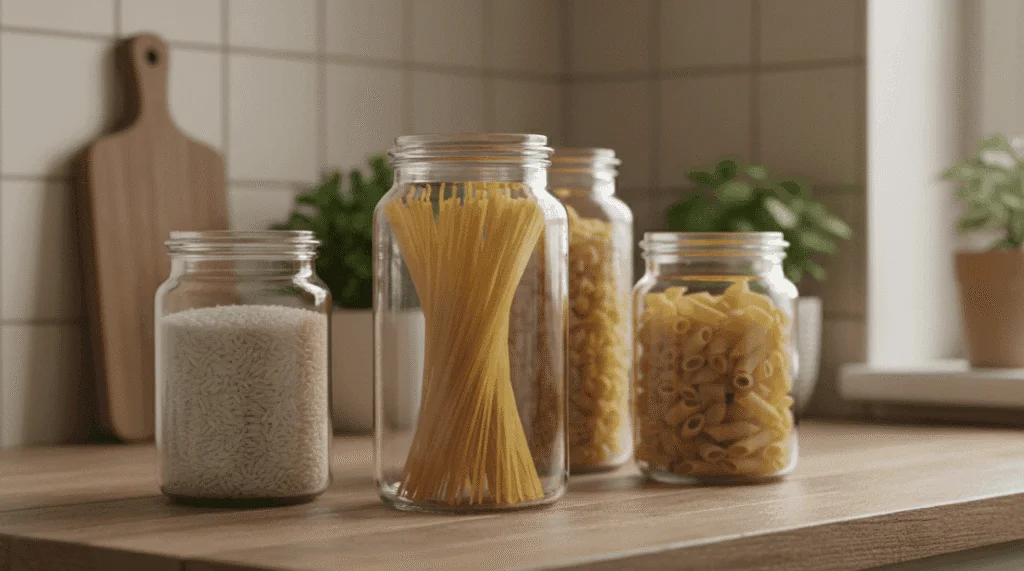
Glass is a classic that’s back in style, and for good reason. It’s a clean, hygienic and eco-friendly material that does not absorb smells, flavours or colours from stored food. That makes glass containers ideal for strongly aromatic dishes like curry sauces, or for foods whose taste you don’t want to alter in any way. Most of them are made from tempered or borosilicate glass, so you can safely use them for baking in the oven or heating in the microwave (without the lid, of course). The downside is their higher weight and risk of breaking, so they’re not ideal for frequent carrying around. They’re best suited for anyone who wants a versatile container for storing leftovers in the fridge that can go straight into the oven, and for those who prefer safe, long-lasting and sustainable materials.
Plastic containers
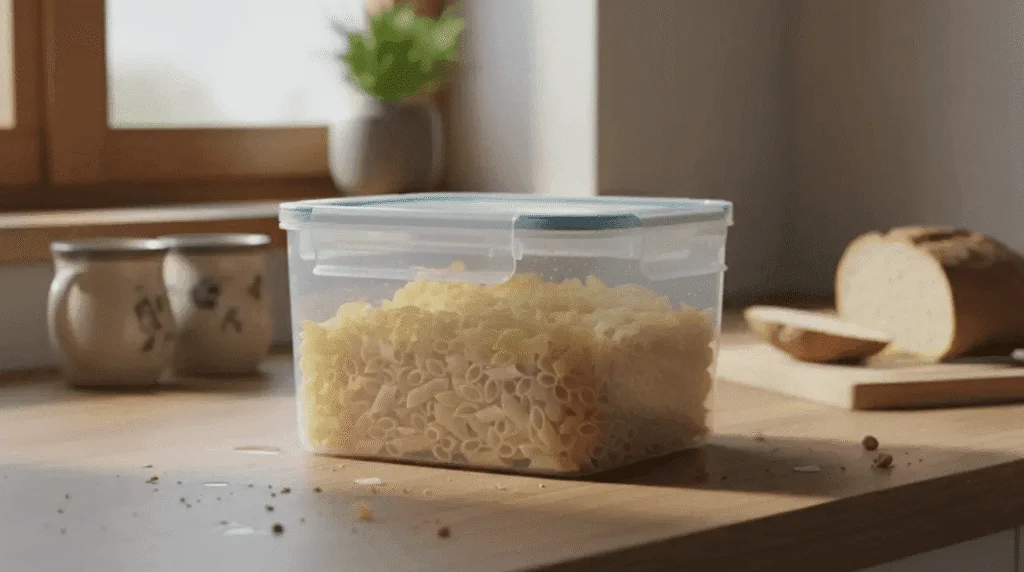
Plastic containers are probably the most common type thanks to their low weight, resistance to breaking and affordable price. They come in a huge variety of shapes and sizes, which makes them great for organising both your pantry and fridge. They’re ideal for taking lunches and snacks with you or for storing dry goods. Their main drawback is that over time they can absorb smells and colours from food, especially from ingredients like carrots, tomato sauce or turmeric. When choosing, it’s crucial to look for the BPA-free label, which guarantees that the plastic does not contain harmful Bisphenol A. They’re especially useful for students, families with children, people who bring food to work, or for organising dry pantry staples.
Stainless steel containers
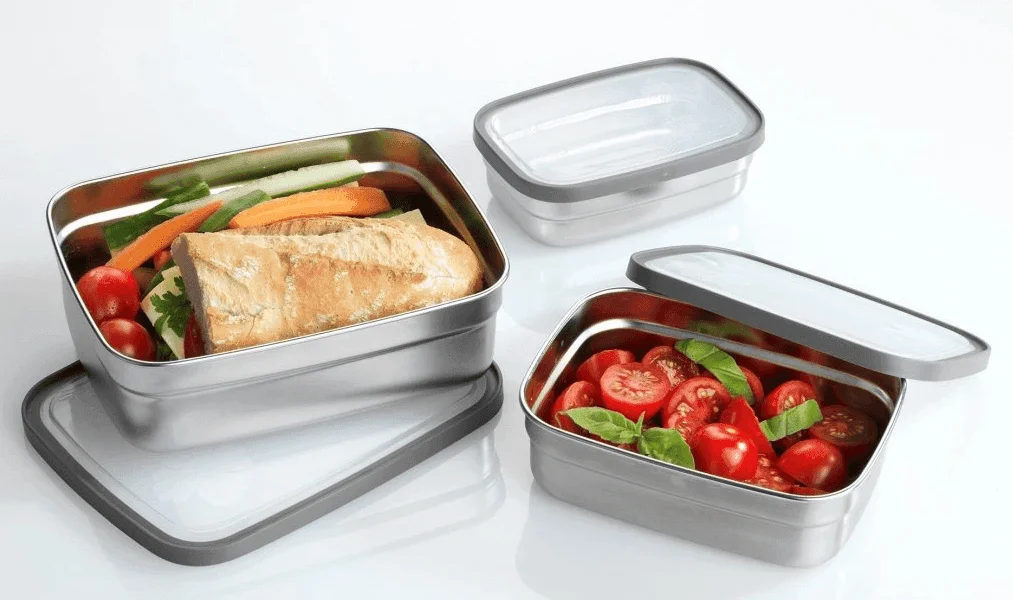
Stainless steel is synonymous with durability and long service life. These containers are practically unbreakable, very light and do not affect the taste or smell of food. They’re great as lunch boxes for trips or for work, because they can handle rougher treatment. Some models are double-walled and work like flasks, keeping food hot or cold for several hours. The downsides are that they’re not transparent, so you can’t see what’s inside, and they must never be used in a microwave. They’re an excellent choice for hikers, commuters and anyone who wants a highly durable, long-lasting solution for carrying food.
Silicone containers
Silicone is a modern, flexible material that’s becoming more and more popular. Its biggest advantage is how compact it is – many silicone containers are collapsible, so once empty they take up very little space in a bag or cupboard. They’re light, unbreakable and withstand a wide range of temperatures, so they’re suitable for the freezer, microwave and dishwasher. However, they can be more prone to absorbing smells from strongly aromatic foods and their surface can sometimes feel slightly “tacky”. They’re a great alternative to plastic and are ideal for small kitchens, camping, travelling or as space-saving lunch boxes.
Key parameters to consider
Besides the material, there are a few other factors that determine how well a container will work for you. Pay attention to them and you’ll avoid disappointment and bad purchases.
Type of lid and seal
The lid is just as important as the container itself. It’s what keeps everything securely inside.
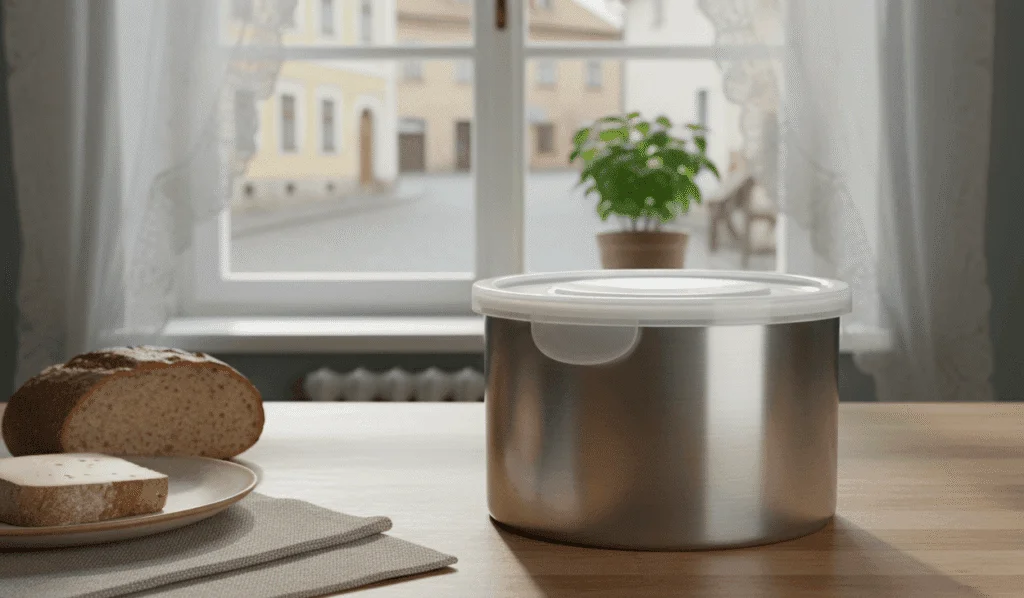
- Clip-lock lids: Generally considered the most reliable. Four-sided clips combined with a silicone seal ensure 100% water- and airtightness. Ideal for soups and sauces.
- Screw-on lids: Seal very well and are perfect for storing liquids such as smoothies, soups or homemade stocks.
- Loose lids: Usually found on containers for dry ingredients (flour, sugar). They protect the contents from dust, but are not airtight.
The key to freshness is a silicone seal. Always check if it’s part of the lid when you need a container that won’t leak a drop and will keep aromas locked inside.
Capacity and size
The right size depends on how you plan to use the container. It’s always better to have several different sizes on hand.
- Small containers (up to 0.5 l): Perfect for nuts, seeds, dips, baby food or small portions of leftovers.
- Medium containers (0.8–1.5 l): Ideal size for a work lunch, a portion of soup or a salad.
- Large containers (3 l and more): Essential for storing bulk items like flour, sugar, pasta, rice or muesli.
Stackability and modularity
If you’re short on space, stackability is crucial. Containers that nest into each other or stack securely on top of one another save valuable space in your pantry, fridge and cupboards. Some brands, such as Curver or Tescoma, offer full modular systems where the different sizes fit together perfectly and create a compact, well-organised storage setup.
Use in microwave, freezer and dishwasher
Before buying, always check what the container is designed for. Look for specific symbols on the bottom or on the packaging (usually a snowflake for the freezer, wavy lines for the microwave and plates with water drops for the dishwasher). It’s important to remember that while the glass base can usually go in the microwave or oven, the plastic lid often cannot. With plastic containers, you should also loosen or remove the lid when heating in the microwave so that steam can escape.
Special features for demanding users
Modern containers come with a range of smart features that can make food storage even more effective.
Vacuum containers: Using a pump, you remove air from the container and significantly extend the freshness of the food. Great for coffee, cold cuts or cheese.
Containers with date dials: You can set the date when the food was stored directly on the lid, so you always know how long it has been there.
Containers with draining inserts: They keep fruit and vegetables above any condensed water, which helps prevent them from spoiling quickly.
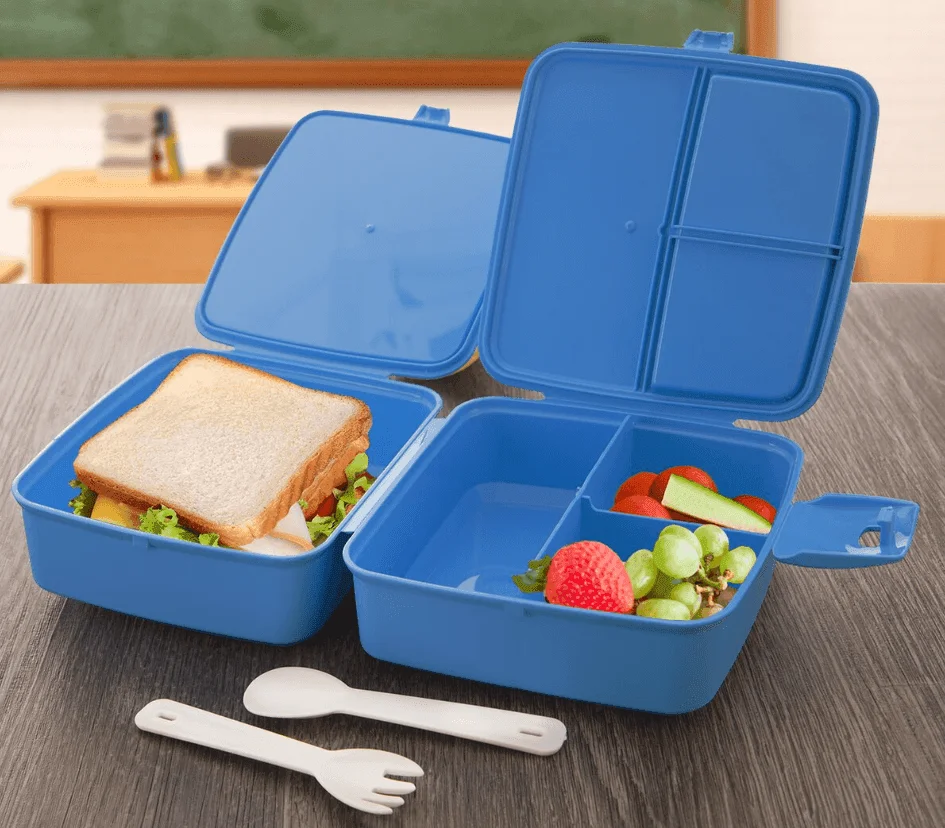
Containers with dividers: Ideal as lunch boxes, they let you separate the main dish from the side or salad.
How to choose a container by use case? A practical guide
Now that we’ve covered the theory, let’s look at which containers work best in specific situations.
For storing dry goods (flour, sugar, pasta)
For these, the best choice is stackable, transparent containers, whether plastic or glass. Clear walls give you an instant overview of your stock levels. Reliable sealing is essential to protect the contents from moisture and pantry moths.
For leftovers in the fridge and freezer
Here, glass containers clearly come out on top. They’re hygienic, don’t retain smells and can go straight from the fridge into the microwave or conventional oven. For freezing, high-quality plastic containers certified for low temperatures are also a great, lighter alternative.
For meal prep and lunches to go
The best options are light plastic or robust stainless steel boxes. Look for models with internal dividers so you can neatly separate different parts of your meal. A 100% leakproof lid with clip locks is an absolute must to avoid spills in your bag.
For kids’ snacks
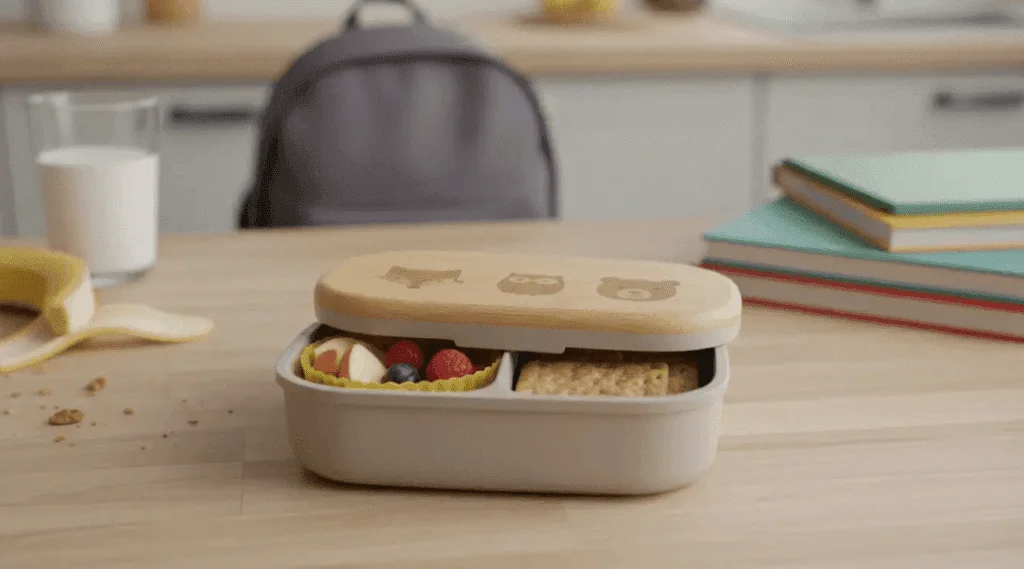
Snack boxes for children need to be above all durable, light and safe (BPA-free plastic or stainless steel). The design matters too – it should appeal to kids – and the box must be easy to open so that small hands can manage it on their own.
Care, use and lifespan: How to make your containers last
Proper care will extend the life of your containers and keep them looking like new.
How to remove stains from plastic containers?
Stains from tomato sauce or turmeric can be stubborn. Try a paste made from baking soda and water – apply it to the stain, leave it to work and then wash it off. Another option is to fill the container with a 1:1 mixture of water and vinegar and leave it for a few hours.
How to get rid of bad smells?
If a container has absorbed strong odours, pour dry baking soda inside, close it and leave it overnight. The soda will absorb the smell. Alternatively, wash the container with vinegar water or place a scrunched-up sheet of newspaper inside overnight – that also helps draw out odours.
When is it time to replace an old plastic container?
A plastic container should go into recycling once it’s deeply scratched, permanently stained, warped by heat, or if the seal or locking mechanism is damaged. Deep scratches can harbour bacteria that are difficult to remove.
Overview of the most popular brands on the market
Several established brands on the Czech market offer high-quality, well-tested products.
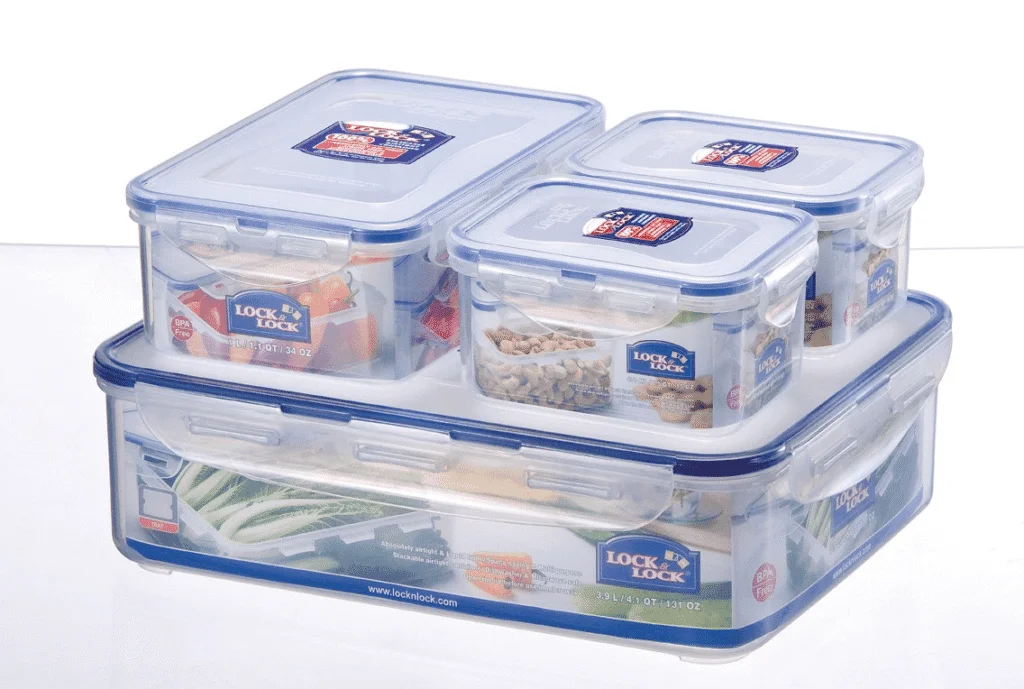
Lock & Lock
This brand is known for its patented system of four-sided clip-lock lids with silicone seals. Its containers are completely air- and watertight, making them top of the line for keeping food fresh and transporting liquid dishes.
Tescoma
A traditional Czech brand with an exceptionally wide range of products for the entire kitchen. Tescoma containers offer a great price-to-performance ratio and cover virtually every need – from basic plastic containers to specialised vacuum systems.
Curver
A specialist in plastic products that puts strong emphasis on design and functionality. Curver offers many design-led ranges, including containers made specifically for storing cold cuts and cheese in the fridge, or practical lunch boxes with cutlery.
Orion
A Czech homeware wholesaler that offers a wide selection of affordable containers made from different materials. Orion is a good fit for anyone looking for functional, reliable solutions without having to spend a lot.
Final tip: Buying a full set of containers is often better value than purchasing individual pieces. You’ll also get a matching, well-stackable solution that looks neat and cohesive.
Summary and last piece of advice
Choosing the right food container isn’t rocket science, but it’s worth taking a moment to think it through. Start by deciding what you’ll use the container for most often, and then pick the material and lid type accordingly. A light, leakproof plastic box is great for lunches on the go, while a glass container is invaluable for storing leftovers in the fridge and reheating them later. Investing in high-quality, practical containers pays you back many times over in longer-lasting food, less waste and a perfectly organised kitchen. Whatever you choose, remember that the best container is the one that spends as little time empty as possible and constantly helps you cut down on food waste.
💬 Frequently asked questions (FAQ)
What exactly does BPA-free mean and why is it important?
BPA-free means that the product does not contain the chemical Bisphenol A. This substance used to be commonly used in the production of polycarbonate plastics. Some studies suggest that BPA can leach from plastic into food, especially when heated, and may negatively affect the hormonal system. By choosing products labelled BPA-free, you can be sure the plastic used is safe for food contact.
Can I put hot food straight into a plastic or glass container?
You can safely put hot food into a glass container (especially borosilicate glass). With plastic containers, it’s better to let the food cool down at least partially first. A sudden change in temperature can damage the plastic and, with lower-quality plastics, may increase the risk of chemicals leaching into the food. Always follow the manufacturer’s instructions.
What is the difference between regular and borosilicate glass in food containers?
Borosilicate glass is much more resistant to thermal shock than standard soda-lime glass. This means you can safely move a borosilicate glass container from the fridge straight into a preheated oven without it cracking. It’s also generally stronger and more scratch-resistant. For baking and frequent temperature changes, it’s clearly the better choice.