Portable fridges – from picnics to camping without compromise
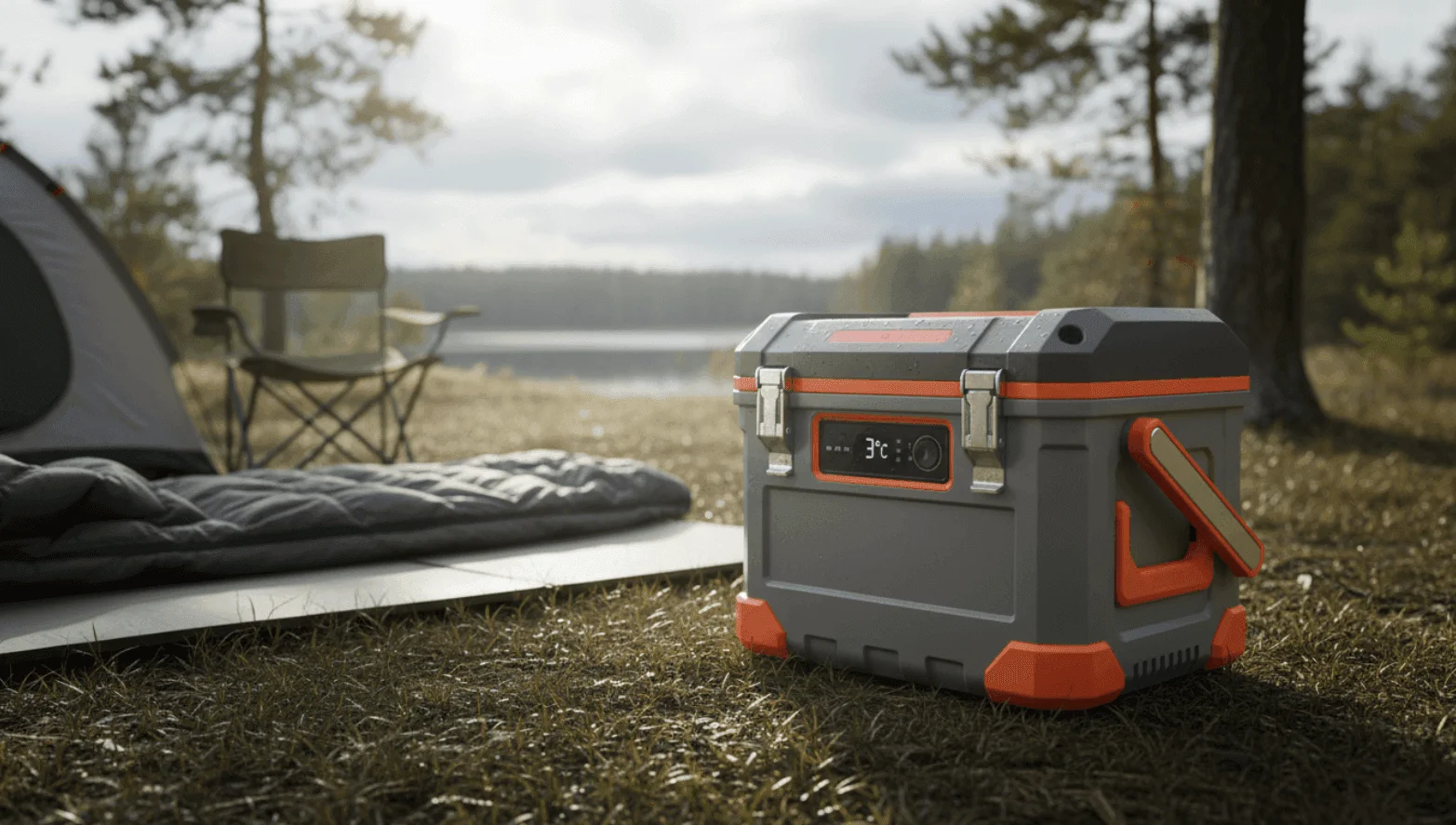
Whether you’re a passionate camper, truck driver, family on holiday, or just someone who loves day trips into nature, a portable fridge is a partner that gives you freedom and comfort. Forget about melted cheese, lukewarm drinks and constantly hunting for ice. A modern portable fridge keeps your food fresh and your drinks nicely chilled wherever you are. It cools and freezes food on the go and is a great helper for camping, road trips, at the cabin or for professional drivers.
Did you know that a modern compressor fridge can deep-freeze even in a baking hot car while using less power than a classic light bulb?
Main cooling technologies: How they work and which one suits you
To choose the right fridge, you first need to understand what “heart” is beating inside. The cooling technology is absolutely key and affects everything – from cooling performance and power consumption to noise levels. Each type is suited to a different use.

Compressor fridges: Performance without compromise
How do they work? Compressor technology works on the same principle as your household fridge. The compressor compresses the refrigerant, which in a closed circuit absorbs heat from the inside of the fridge and releases it outside. This process is extremely efficient and its main advantage is that the cooling performance is completely independent of the ambient temperature. Even if it’s 40 °C outside, you can easily keep the temperature well below freezing inside the fridge.
Who are they ideal for: They are a perfect choice for anyone who needs reliable and consistent performance. They are especially appreciated by families on longer holidays, caravan owners, anglers, professional drivers and anyone who needs to not only cool, but also reliably freeze food. Thanks to their low power consumption, they are also ideal for use with solar panels.
Advantages: Their main strengths include high cooling and freezing performance, typically reaching down to -20 °C. Because the compressor runs only in cycles when the unit needs to cool down, they have very low power consumption. A key feature is that their performance is not affected by the surrounding temperature.
Disadvantages: On the other hand, you have to count on a higher purchase price and higher weight compared to other technologies. When the compressor is running, they produce a slight noise similar to a home fridge, which some people may find disturbing.
Typical specs: They usually offer a wide temperature range from +10 °C down to -20 °C. As standard, they can be powered from a 12 V or 24 V car socket as well as from a regular 230 V mains outlet.
Thermoelectric fridges: Affordable classics for day trips
How do they work? They use a Peltier element. When an electric current passes through this element, one side cools down and the other heats up. Heat from the hot side is carried away from the fridge by a fan. However, the performance of this cooling is directly dependent on the ambient temperature – typically they cool 15–25 °C below the surrounding temperature. In a hot car they will never reach such low temperatures as compressor models.

Who are they ideal for: These models are a great choice for day trips, picnics, summer shopping runs or for drivers who just want to keep their lunch and drinks cool. They work perfectly for keeping pre-chilled items cold for several hours.
Advantages: Their biggest draws are the low purchase price and very low weight, which makes them easy to carry. Many models also offer an additional heating function. Thanks to their simple design with no moving parts (apart from the fan), they run quietly.
Disadvantages: The main weakness is the cooling performance, which is completely dependent on ambient temperature, and the inability to freeze. They also have higher power consumption compared to compressor fridges, because they need to run almost constantly to maintain a low temperature.
Typical specs: The temperature range is defined by cooling about 15–25 °C below the ambient temperature. If they have a heating function, they can heat the interior up to around +65 °C. They are usually powered from a 12 V car socket and often also from a 230 V mains outlet.
Absorption fridges: A silent companion off the grid
How do they work? This unique system uses heat as its energy source. Using heat (from a gas burner or electric heating element), the refrigerant (usually ammonia) evaporates from a solution in a closed circuit and in the process absorbs heat from inside the fridge. The process is completely silent, because there are no moving parts such as a compressor or fan.
Who are they ideal for: They are irreplaceable for cottage owners, caravan users and anyone who spends longer periods in places without a reliable power supply. Their ability to run on gas is invaluable in these situations and gives you real independence.
Advantages: Their unique advantage is the triple power option – they can run on 12 V, 230 V and gas. Their operation is completely noiseless, which guarantees an undisturbed sleep. With no moving parts, they also offer a long service life and high reliability.
Disadvantages: For proper operation they must stand on a perfectly level surface, otherwise their performance drops. When running on 12 V from a car battery they have high power consumption, so this mode is better suited only for maintaining temperature while driving. They also have lower cooling performance than compressor models and a slower cool-down time.
Typical specs: Cooling performance is usually around 25–30 °C below ambient temperature. They offer universal power options from 12 V, 230 V and propane-butane.
Key parameters to look at when choosing
Once you know which technology is right for you, it’s time to focus on the specific parameters.
Capacity and internal layout
Capacity in litres is a basic figure, but what does it really mean in practice?
- Up to 25 litres: Ideal for one person or a couple on a day trip. There’s room for a few bottles and some snacks.
- 25–40 litres: The most common size for a couple on a weekend away or a small family on the road. You can comfortably store food for two to three days.
- 40–60 litres: A great choice for a family on a week-long holiday or for anyone who needs more space.
- Over 60 litres: Designed for large families, longer expeditions or professional use.
Besides total capacity, pay attention to the internal layout. Some models offer removable dividers, baskets or even two separate zones (dual fridges), where you can cool in one compartment and freeze in the other.
Power sources
Most portable fridges are designed to work both in a car and from a standard power outlet.
- 12 V / 24 V (car socket): Standard for use in passenger cars (12 V) and trucks or motorhomes (24 V).
- 230 V (standard mains socket): Lets you pre-cool the fridge at home or use it at a campsite or cabin.
- Gas (propane-butane): Typical for absorption fridges, giving you independence from electricity.
Cooling performance and temperature range
As mentioned earlier, for thermoelectric models look at how many degrees below ambient temperature they can cool. For compressor fridges, the key figure is the adjustable temperature range, which gives you the freedom to switch between standard cooling and deep freezing (e.g. down to -20 °C).
Power consumption and battery protection
Running from a battery is crucial. Consumption is often given in amps (A) or watts (W). Compressor fridges have low consumption because the compressor only runs intermittently. In contrast, thermoelectric fridges run continuously and use more power.
An absolutely essential feature is protection against draining the car battery. Most quality fridges offer three-level protection, where you can choose at what voltage the fridge should switch off automatically so there is still enough power left to start the engine.
Noise level
Noise, measured in decibels (dB), matters if you plan to sleep close to the fridge (for example in a campervan or tent).
- Absorption: Almost completely silent (around 0 dB).
- Thermoelectric: Quiet, you’ll only hear the fan running (around 30–40 dB).
- Compressor: Audible hum of the compressor while it’s running (around 40–50 dB), but modern models are very quiet.
Material, insulation and durability
Quality insulation (usually PU foam) is the key to low power consumption and a stable internal temperature. The better and thicker the insulation, the less often the fridge needs to switch on the cooling cycle. The outer shell is usually made from durable plastic, while some premium models use a metal body for maximum durability in tough conditions.
Weight and portability
If you’ll be moving the fridge around often, its weight is an important factor. A lightweight thermoelectric fridge weighs just a few kilos, while a large compressor unit can weigh over 20 kg. Practical features such as sturdy handles, wheels or telescopic handles make handling much easier.
Extra features and controls
Modern fridges offer a number of smart features that make everyday use more comfortable:
- Digital display for precise temperature control.
- Control via mobile app over Bluetooth.
- USB port for charging your phone or other devices.
- Internal LED lighting.
- Dual zones with independent temperature settings.
How to choose the right fridge for your travel style
For occasional car trips
If you just need to keep snacks and drinks cool during a day trip or drive to the cottage, a thermoelectric car cooler will be more than enough. It’s affordable, lightweight and does the job very well.
For camping and caravans
For longer stays in nature where you need to keep fresh food reliably chilled, a compressor fridge is ideal. It offers strong performance, low power consumption and the option to freeze. If you plan to stay off-grid for longer periods without access to electricity, consider an absorption fridge, which gives you freedom thanks to gas operation.
For professionals (drivers, tradespeople)
For those who spend all day in their vehicle, durability, reliability and efficiency are crucial. Here, a quality compressor fridge is the clear winner. It easily handles daily use and always keeps your food fresh and drinks cold.
What to watch out for when buying
Underestimating power consumption: Make sure your car battery or solar system can handle the fridge’s power draw.
Wrong technology: Don’t buy a thermoelectric fridge if you want to freeze food in the middle of summer by the Adriatic.
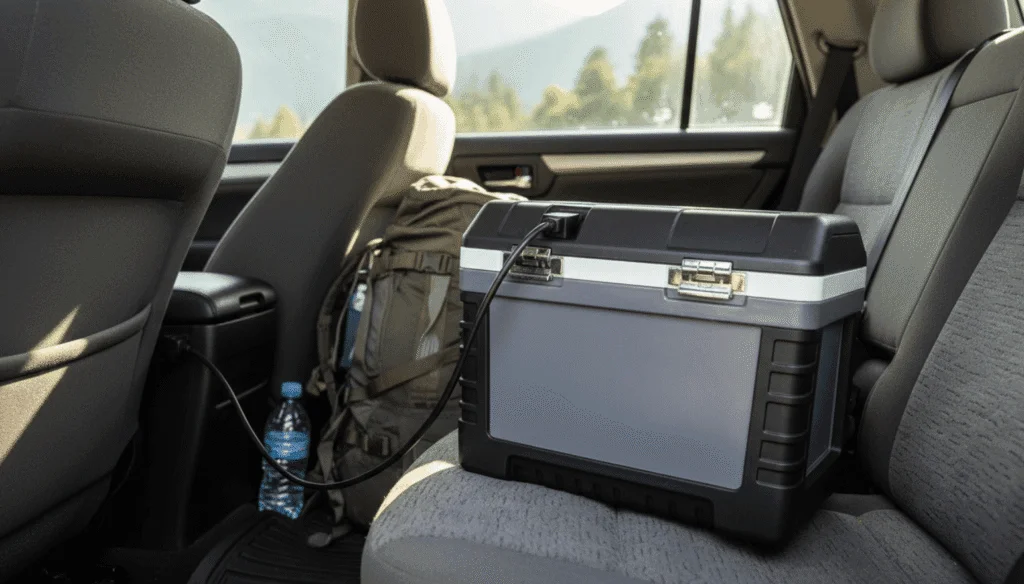
Dimensions: Carefully measure the space in your car where you plan to place the fridge. Don’t forget about room to open the lid and enough space for ventilation.
Maintenance and practical usage tips
Cleaning and storage: Before and after each season, wash the fridge thoroughly with lukewarm water and a mild detergent and let it dry completely with the lid slightly open to prevent mould growth.
Efficient operation:
- Pre-cool both the food and the fridge at home on 230 V before you set off.
- Avoid opening the fridge more often than necessary.
- Ensure good ventilation around the fridge so it can get rid of heat efficiently.
- Place the fridge in the shade, not in direct sunlight.
Battery protection: Set the protection level correctly. For a starter battery, choose the highest protection level (switch-off at a higher voltage). For a leisure (second) battery in a caravan, you can safely choose a lower level.
Most popular brands and manufacturers
| Brand | Focus |
|---|---|
| Dometic | Premium quality, wide range for caravanning and professionals. Leaders in both compressor and absorption technologies. |
| Indel B | Italian specialist in compressor fridges, often used as factory equipment in vehicles. |
| Alpicool | Popular brand with a very good price-to-performance ratio in compressor models. |
| Yeticool | Modern compressor fridges, often with innovative features such as app control and dual zones. |
| Sencor / Compass | Manufacturers of budget-friendly thermoelectric car coolers for casual, occasional use. |
How much do portable fridges cost?
Prices vary widely and directly reflect the technology used and overall quality.
- Up to 3,000 Kč: In this range you’ll mainly find basic thermoelectric car coolers. They are ideal for occasional use and undemanding users.
- From 5,000 to 10,000 Kč: This is where you enter the world of quality small and mid-sized compressor fridges. For most users, this is the ideal balance between price, performance and quality.
- Over 10,000 Kč: Here you’ll find premium compressor and absorption models with large capacity, dual zones, top-notch build quality and advanced features for the most demanding users.
With compressor fridges, investing in a higher-quality model often pays off. More expensive units usually have more efficient compressors, better insulation and lower power consumption, which you’ll really appreciate when running from a battery.
Summary and a final tip
Choosing the right portable fridge is straightforward once you know what to focus on. The most important step is to pick the right cooling technology for how you’ll use it. For short trips, a thermoelectric model is enough. For real independence and freezing, you need a compressor unit, and for life without electricity, the absorption fridge is king. After that, focus on the right capacity, power options and practical features that will make travelling easier.
An investment in a quality compressor fridge will pay for itself many times over in comfort, reliability and money saved on food and drinks at roadside restaurants.
Frequently asked questions (FAQ)
Can I run a portable fridge from a solar panel?
Yes, compressor fridges are ideal for this because of their low power consumption. However, you need a properly sized system – a sufficiently powerful solar panel and a suitable battery (ideally deep-cycle or lithium) that will cover the consumption even when the sun isn’t shining.
What’s the difference between cooling and freezing in dual models?
Dual (two-zone) fridges have two separate compartments with their own temperature settings. For example, you can cool drinks and vegetables at +5 °C in one section and freeze meat at -18 °C in the other, smaller section. Each zone works independently.
Why doesn’t my thermoelectric fridge cool enough in hot weather?
Thermoelectric technology cools relative to the ambient temperature, usually 15–25 °C below it. If it’s 40 °C inside a car parked in the sun, the fridge can only cool the interior to about 15–25 °C, which is not enough to safely store some types of food. For reliable cooling on hot summer days, a compressor fridge is clearly the better option.
Kategorie: