Complete guide to workshop heaters: How to choose, compare, and safely use a heat generator
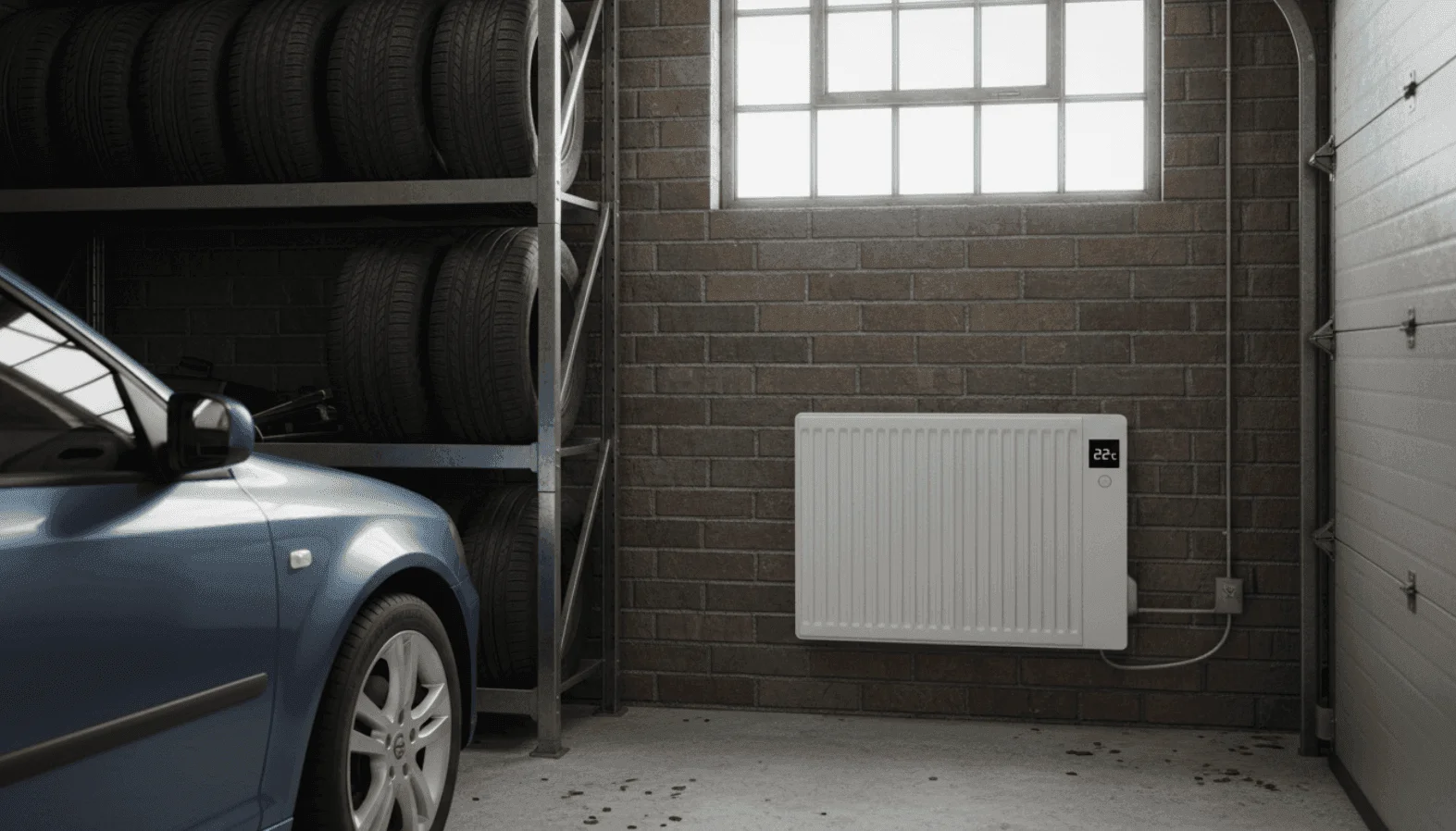
Heating workshops and garages: From compromises to efficient work
A workshop heater (often called a space heater, hot air generator or diesel cannon) is not just an ordinary heater. It is a key tool for maintaining a functional and safe working environment in demanding, uninsulated or large spaces such as garages, warehouses, building sites or car repair shops. Without efficient heating, not only comfort drops, but also productivity and work quality, especially in trades that are sensitive to cold.
While home heating focuses on stability, workshops and building sites need maximum output, mobility and durability. That is why we rely on specialised equipment, which differs significantly depending on the energy source (electric, gas, diesel) and the heating principle.
Did you know that workshop heaters are divided into direct and indirect units? This difference is absolutely crucial, because it determines whether toxic exhaust gases are vented outside or released directly into the heated space. Choosing the right option is literally a matter of health and money well spent. The goal of this guide is to help you choose the ideal heating partner for your workshop.
How workshop heaters work: Different heating principles
To choose the right heater, you first need to understand how it generates and distributes heat. Each principle has its own specific advantages and limitations.
Electric resistance (convection)
Convection heaters rely on the principle of electrical resistance. Electric current passes through a heating coil (wire), which glows red hot. Then, either naturally or with the help of a fan, cold air is pushed across the coil, heats up and rises. This gradually sets the entire volume of air in the room in motion. It primarily heats the air. Operation is clean, with no exhaust gases and no ventilation requirements, apart from the need for fresh air for breathing.
Fuel combustion (gas/diesel)
Here, an intensive combustion reaction takes place. The fuel (propane-butane, diesel) mixes with air and ignites in the combustion chamber. The main advantage is that it produces an extreme amount of heat in a short time. The main downside is the formation of exhaust gases, especially dangerous carbon monoxide (CO). That is why effective ventilation or flue gas extraction via a flue is absolutely essential for most of these heaters.
Radiation (infrared)
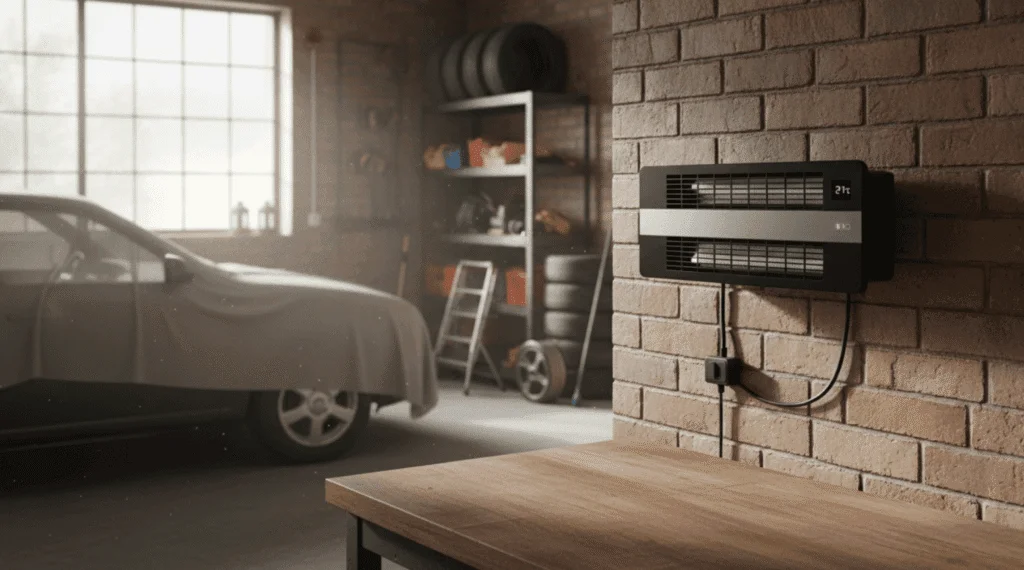
An infrared heater works like the sun – it does not heat the air, but objects and people it is aimed at using electromagnetic radiation. You feel the heat instantly as soon as you step into the path of the radiant beams. It is an ideal solution for heavily ventilated, open or very large spaces where heating the entire air volume would be uneconomical. The heat is focused and immediate.
Types and variants by energy source and design
Electric heaters (hot air / infrared)
Electric heaters are the simplest and cleanest option for heating smaller workshops, garages or labs where mains power is easily available. Their operation is clean, with no exhaust gases, quiet and easy to control. The big advantages are instant use and high safety. You do, however, need to count on limited output (especially with 230 V models) and, above all, higher running costs due to the price of electricity.
Gas heaters (propane-butane)
Gas heaters running on propane-butane offer an excellent balance of output and portability, which makes them popular for fast and intense heating of well-ventilated spaces and building sites. They can instantly deliver very high heat output with relatively cheap fuel and are usually independent of mains power. However, effective ventilation is absolutely essential when using them because of the risk of CO. You also need to keep in mind that combustion produces a large amount of water vapour (H2O), which is a problem for drying jobs or spaces with high humidity.
Diesel and oil heaters
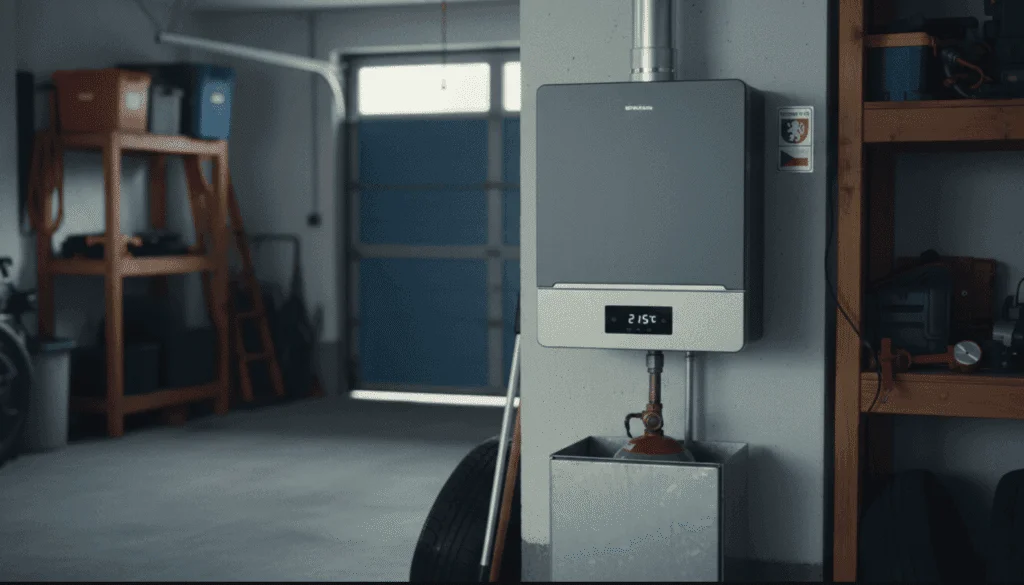
Diesel heat generators are the champions in output and long-term operation and are essential for heating large industrial halls, warehouses or extensive construction sites. Their fuel (diesel, heating oil or kerosene) allows them to achieve the highest available output and run continuously. Advantages also include high mobility and low fuel consumption per generated kWh. The downsides are a higher purchase price and, with direct-fired models, the need to tolerate smell and smoke.
Direct vs indirect heaters (a crucial difference)
This difference is critical for your safety. Direct-fired heaters deliver heat together with exhaust gases straight into the space, reach almost 100% efficiency, but require very strong ventilation. They are suitable for building sites or open halls. In contrast, indirect-fired heaters vent exhaust gases outside through a flue (chimney) and blow only clean hot air into the room. This option is essential for indoor areas where people work (car repair shops, joineries, paint shops), because it keeps the air clean and safe.
Overview of workshop heater types
| Feature / Type | Electric heaters | Gas heaters | Diesel indirect-fired |
|---|---|---|---|
| Best for | Small, insulated workshops | Ventilated spaces, building sites | Enclosed interiors, halls |
| Exhaust gases | None | Yes, high CO and H2O | No (vented through flue) |
| Running costs | High (price per kWh) | Low (price per kg/h) | Medium (price per l/h) |
| Purchase price | Low | Medium | High |
Key parameters to consider
Choosing the right heater starts with understanding what the numbers on the label actually mean. These parameters determine whether the heater is suitable for your needs.
Heat output (kW)
Heat output tells you how much heat the heater can produce per unit of time. It is the most important parameter. In uninsulated workshops and garages you can roughly count on 1 kW of output for every 10 to 15 m³ of room volume. Well-insulated spaces need less. It is always wise to choose a heater with a slight power reserve.
Airflow (m³/h)
This figure shows how quickly the heated air is distributed around the space. The higher the airflow, the faster the heat reaches the far corners of the room. In large halls, high airflow is crucial so that heat does not build up only near the heater and overall distribution stays efficient.
Fuel/energy consumption (kg/h, l/h, kWh)
Consumption has a direct impact on your running costs. Always look at consumption in relation to output. Remember that even a high-output heater can be efficient if it produces heat with low fuel consumption.
Safety features and certification
Safety features are absolutely crucial, especially for fuel-fired heaters. A quality heater should include:
- Flame monitoring (thermoelectric safety device): Immediately shuts off the gas/fuel supply if the flame goes out for any reason. This is key to preventing gas leaks.
- Overheat protection: Switches the heater off if the temperature reaches a dangerous level.
- IP rating: Resistance to dust and moisture, essential for building sites and dusty workshops.
Control and thermostat
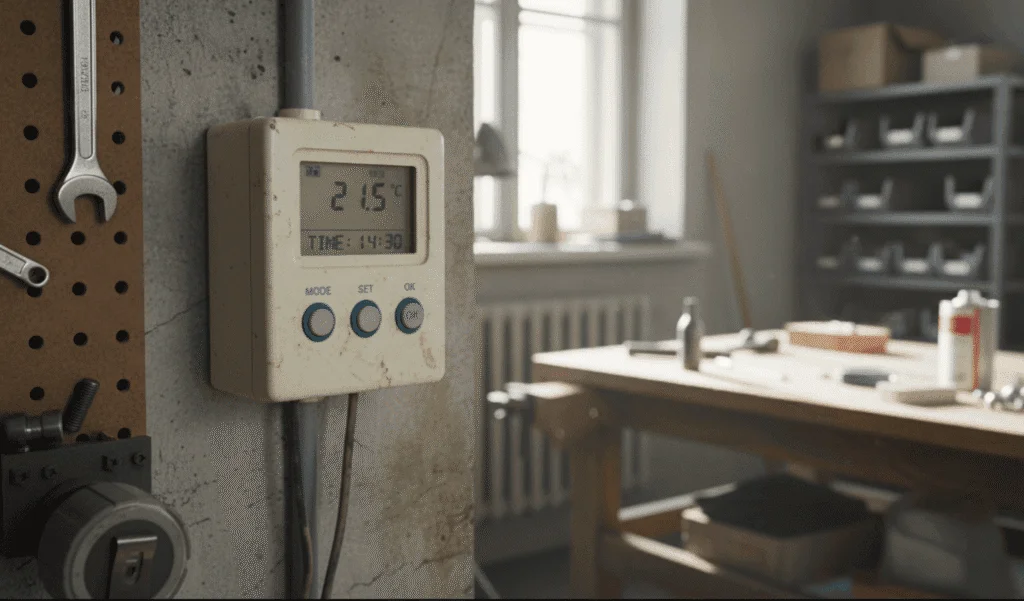
The gap between manual and automatic control is huge. Automatic control with a thermostat is key because it lets you set the desired temperature and the heater then turns on and off by itself. This saves a lot of fuel/energy and keeps the temperature stable, which is far more efficient than manually switching the heater on and off at full power.
Design and portability
A workshop heater needs to be robust. With fuel-fired heat generators in particular, you will appreciate solid, often rubber-coated wheels and sturdy handles for easy handling. On a building site, the frame should be resistant to impacts and dust.
Choosing the right heater: Advice and recommendations
Your choice depends on three main factors: size, insulation and ventilation of the space.
Heater based on room size and insulation
Always choose according to the volume of the room. Never pick a heater that has to run constantly at its absolute limit, as this leads to rapid wear.
| Type of space | Recommended output (kW) | Preferred heater type |
|---|---|---|
| Small, insulated garage (<50 m³) | 2–5 kW | Electric hot air or infrared |
| Medium, uninsulated workshop (50–150 m³) | 9–20 kW | Gas (good ventilation) or indirect-fired diesel |
| Large hall, building site (>150 m³) | 20–100 kW | Diesel (direct-fired for building sites, indirect-fired for interiors) |
Heater based on fuel availability and ventilation
When to choose electric: Whenever you have a socket available and want clean operation without exhaust gases, noise and refuelling.
When to choose gas/diesel: When you need high, fast heat output, or when you cannot rely on a mains connection (only for ignition and fan). It is crucial to distinguish between:
- Ventilated spaces: Choose a direct-fired fuel heater.
- Enclosed spaces (with people): Always choose an indirect-fired heater with flue gas extraction.
What to watch out for when buying
- Underestimating ventilation: The most critical mistake. Gas and diesel direct-fired heaters produce exhaust gases. Never use them without a supply of fresh air.
- No thermostat: Without automatic control the heater wastes a lot of energy and overheats the room. Investing in a thermostat pays for itself very quickly.
- Buying cheap, uncertified brands: Do not cut corners with fuel-fired heaters. No-name models may have poor or non-functioning safety features.
Maintenance, safety and extending service life
Regular maintenance ensures efficient operation and, above all, safety.
Checking and cleaning nozzles / heating coils
With diesel heaters, you need to regularly check and clean fuel filters and nozzles. A clogged nozzle worsens combustion quality, increases consumption and produces more smoke and smell. With electric heaters, dust needs to be removed from the heating coils and fan on a regular basis so that heat transfer does not deteriorate and there is no risk of overheating.
Safety tips: Risk of CO poisoning and fire
The risk of CO is real. Carbon monoxide has no smell or colour. Ensure constant air exchange whenever you use any fuel-fired heater without a flue, and consider buying a reliable CO detector. Place the heater on a non-combustible, level surface and keep the recommended distance from flammable materials such as walls or fabrics.
Correct fuel and heater storage off-season
Before a longer downtime, drain the fuel from the diesel tank or add a fuel stabiliser. Old fuel can degrade over the summer and clog the nozzles. With gas heaters, always close the valve on the bottle and store cylinders in line with safety regulations.
Prices and budget ranges
Low price range (up to 3,000 Kč)
Here you will find reliable basic electric heaters (up to 3 kW) or smaller propane-butane burners. These are often models with limited output and without precise thermostat control, but they are sufficient for quickly heating a small garage.
Mid-range (3,000 – 15,000 Kč)
This range offers reliable gas heaters with higher output (10 – 30 kW) and basic direct-fired diesel heaters (up to 20 kW). In this segment you can already expect better safety features and a more robust build, including thermostat control.
Premium range (from 15,000 Kč)
This category is dominated by professional indirect-fired diesel heaters with high output and the option to connect hot air hoses. They offer top-level durability, reliability and precise electronic control and are designed for continuous operation in demanding conditions.
Most popular brands and manufacturers
Master
Master ranks among the very best in diesel and gas heat generators. The brand focuses on premium quality, robustness and high output and is often the first choice for industrial heating and professional construction sites.
Güde
The German brand Güde offers a broad range of products and, in heaters, focuses on a good price-to-performance ratio in the gas and smaller diesel direct-fired segment. They are an ideal choice for hobby users and medium-sized workshops.
Remko
Remko is synonymous with professional and industrial solutions. Their heaters stand out with high efficiency and advanced control and are often used for demanding drying and construction projects where maximum reliability is required.
Einhell
The brand Einhell offers affordable electric and smaller gas heaters. They are a good choice for users on a tighter budget who still want a basic, yet functional and safe solution.
Final summary
When making the final decision about a workshop heater, always think in three dimensions: output, fuel type and ventilation.
Always choose a heater with enough power reserve. It will help you reach the desired temperature faster and then maintain it at a lower, more economical output, which in the end reduces running costs. Never compromise on safety features and invest in an external carbon monoxide detector if you use a fuel-fired heater. The right heater will keep your workspace comfortable and efficient even in the harshest winter conditions.
Frequently asked questions
What is the difference between convection and radiant heat in a workshop?
Convection heat (hot air) warms the air in the room, which is suitable for overall heating of an enclosed space. Radiant heat (infrared) heats objects and people directly within the reach of the beams. If you work in an open or heavily ventilated workshop and only need heat at a specific workstation, radiant heat is more efficient because the air would cool down almost immediately. In terms of comfort, infrared heat often feels nicer because it warms you up straight away.
Can you run a diesel heater indoors without a flue?
No, that is extremely dangerous. A diesel heater without a flue is a direct-fired unit and releases exhaust gases (including carbon monoxide, CO) directly into the room. If you do not have strong and constant ventilation (e.g. open doors on a building site), you are putting yourself at risk of poisoning. For indoor spaces with people, use only an indirect-fired heater that vents exhaust gases outside, or an electric heater.
How long does it take for a heater to warm up a space? How does air humidity affect heating speed?
Heating speed depends on the heater output and the room volume. As a rule of thumb, a heater with enough power reserve should raise the temperature in an uninsulated workshop by a few degrees Celsius within the first hour. As for humidity, gas heaters slow the heating process down. Burning propane-butane produces a large amount of water vapour, which increases air humidity. Humid air has a higher specific heat capacity and is heavier, so it takes more energy to heat it up. From this point of view, a diesel (direct-fired) heater delivers noticeable heat faster.
Kategorie: