How to Choose a Generator?
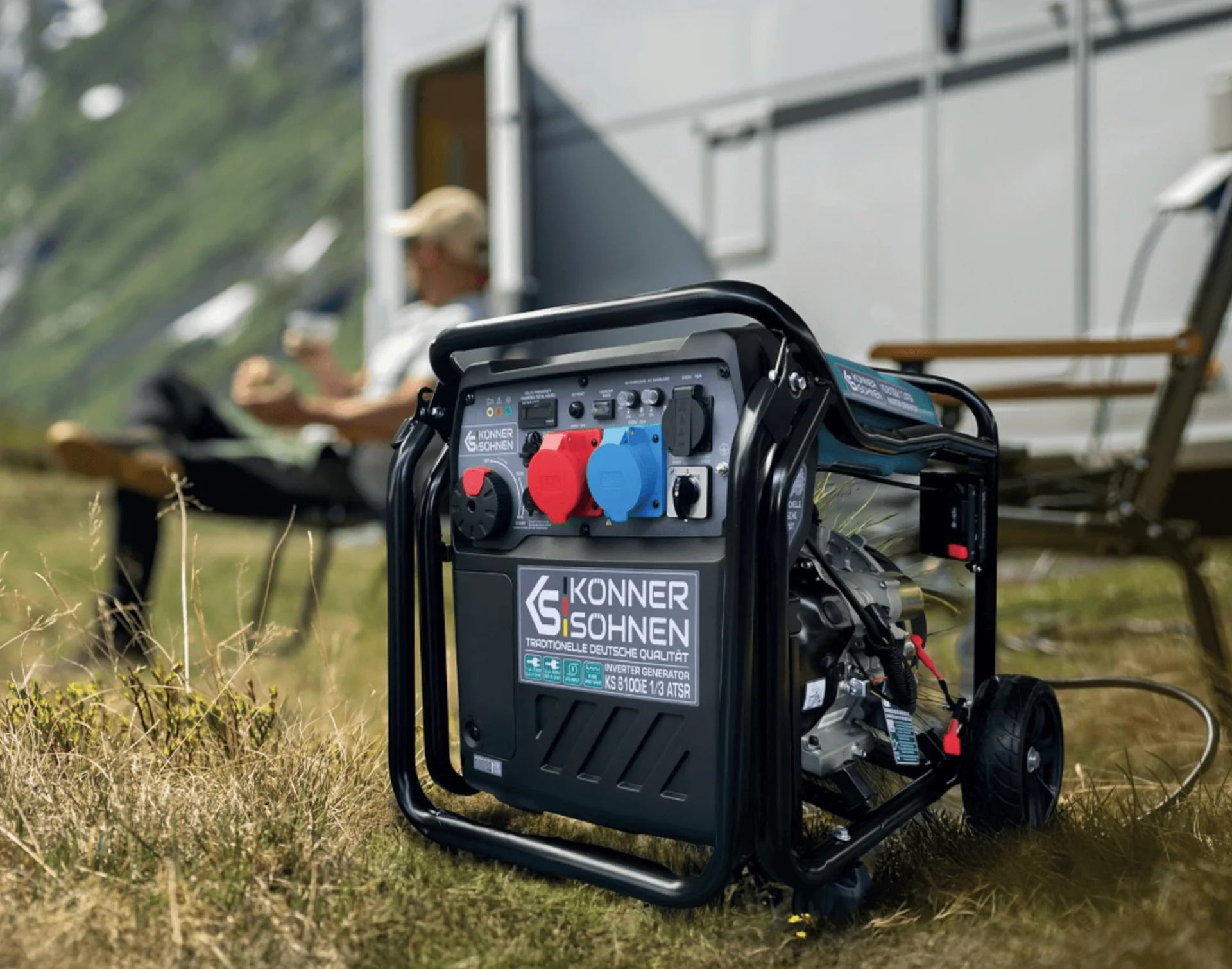
Whether you own a remote cabin, work as a tradesperson out in the field, or simply want to be ready for unexpected power outages at home, a power station, also known as a generator, is an invaluable piece of equipment. These days, as power cuts are becoming more common and the need for energy independence keeps growing, it matters more than ever. There is a wide range of models on the market, differing in technology, fuel type, and intended use. This complete guide will help you make sense of the options and choose the generator that best fits your needs.
The aim of this article is to explain why a generator matters for households, cottage owners, tradespeople, and businesses, and to bring together everything you need to know in one place—from an overview of the different types and key parameters to maintenance and safety tips.
Did you know?
Modern inverter generators can power even the most sensitive electronics, such as laptops or TVs, without any risk of damage.
How a generator works
The way a generator works is simple at its core, yet brilliantly effective. An internal combustion engine drives an alternator, which produces electrical power. At the heart of the whole unit is the engine, which converts fuel energy into mechanical force that spins the shaft. The alternator is connected directly to the engine and turns that mechanical energy into electricity. The entire process is managed by the unit’s brain—the control system with voltage regulation (AVR or inverter)—which keeps the output current stable and safe for connected appliances. All components are then protected and reinforced by a sturdy frame or a sound-insulated enclosure.
Types of Generators
You’ll come across several main types of generators on the market. Each one has its own specific features, pros and cons, and is better suited to different uses.
Frame Generators
Who they’re suitable for: This type is an ideal choice for tradespeople on construction sites, workshop owners, and for powering less demanding appliances and tools, such as drills, saws, or lighting.
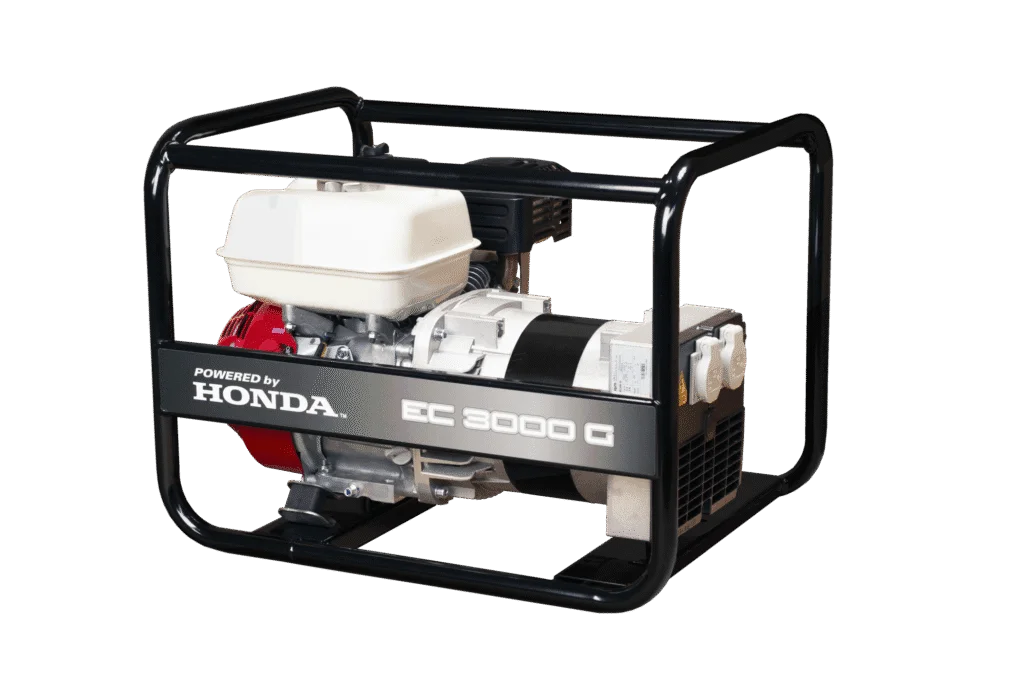
Features, pros and cons: Their main strengths are rugged construction, higher output, and a lower purchase price. They are built to withstand demanding conditions. On the downside, they are noisier (often 70–95 dB) and provide less stable output voltage. For that reason, they are not suitable for powering sensitive electronics without additional voltage regulation.
Inverter generators
Who are they suitable for: They’re perfect for cottage owners, caravanners, market vendors, boat owners, and anyone who needs to reliably power sensitive electronics, such as computers, TVs, mobile phones, or drones.
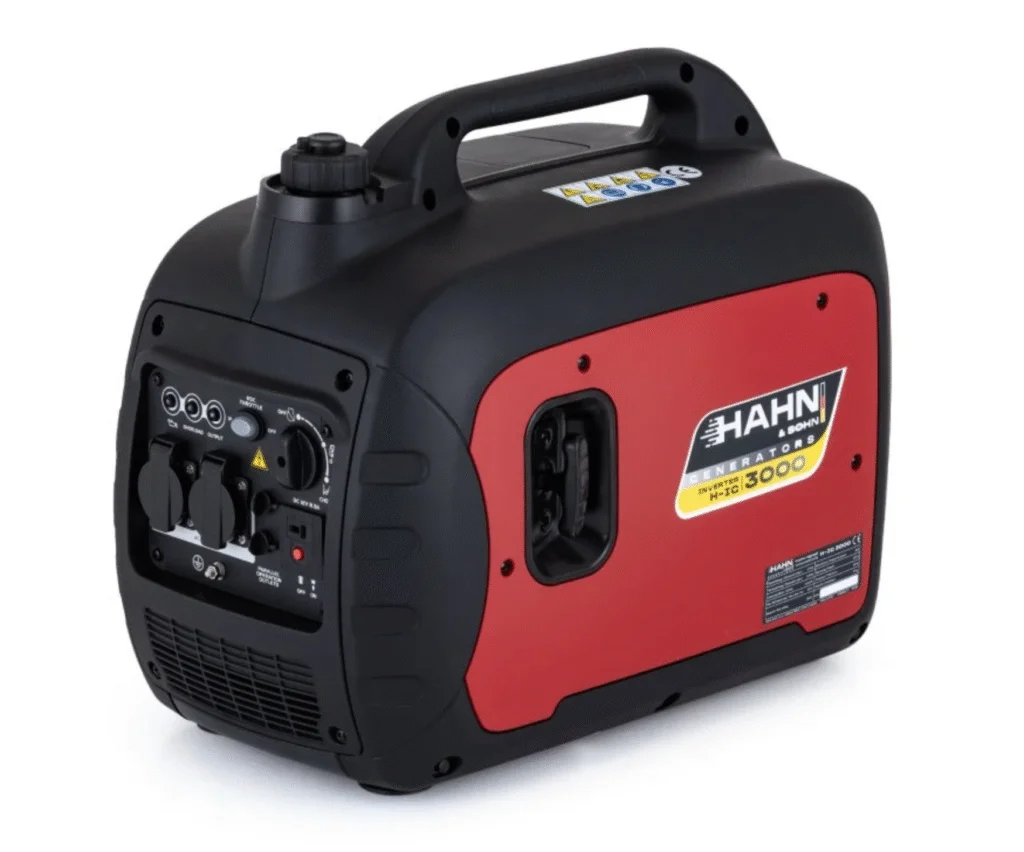
Features, pros, and cons: Inverter technology delivers stable, “clean” power output (a pure sine wave), making it safe even for the latest electronics. These generators are compact, lightweight, noticeably quieter (often around 60 dB), and more fuel-efficient because they can adjust engine speed to match the current power demand. Their main drawback is a higher upfront cost and usually lower maximum output compared to frame models.
Diesel generators
Who they are suitable for: They are mainly used by businesses, in industrial facilities, or as powerful backup power sources for entire buildings and family homes.
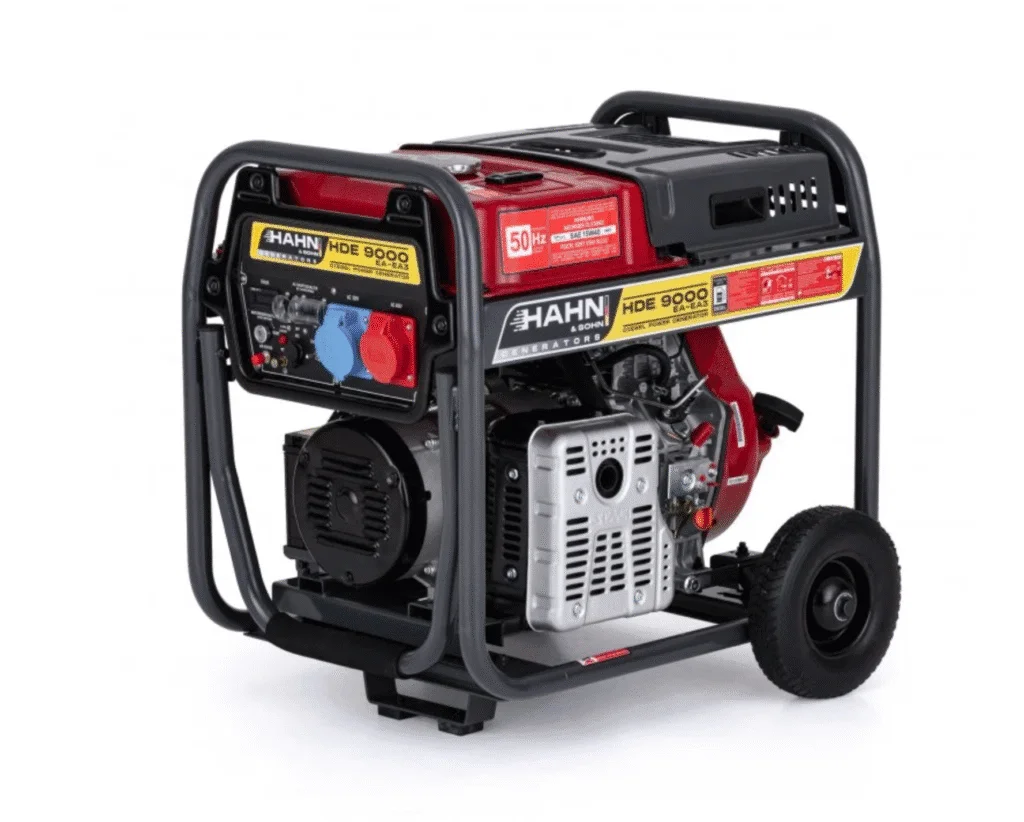
Features, pros and cons: They stand out for their high performance, long service life, and lower running costs thanks to cheaper fuel and better efficiency. They are built for long-term, demanding use. The downsides include higher weight, larger dimensions, more noise, and a higher purchase price.
Gas / Dual-Fuel Generators (LPG/Petrol)
Who are they suitable for: They’re ideal for users looking for a more eco-friendly and flexible solution, for example as a home backup power source with the option to connect to a propane-butane cylinder.
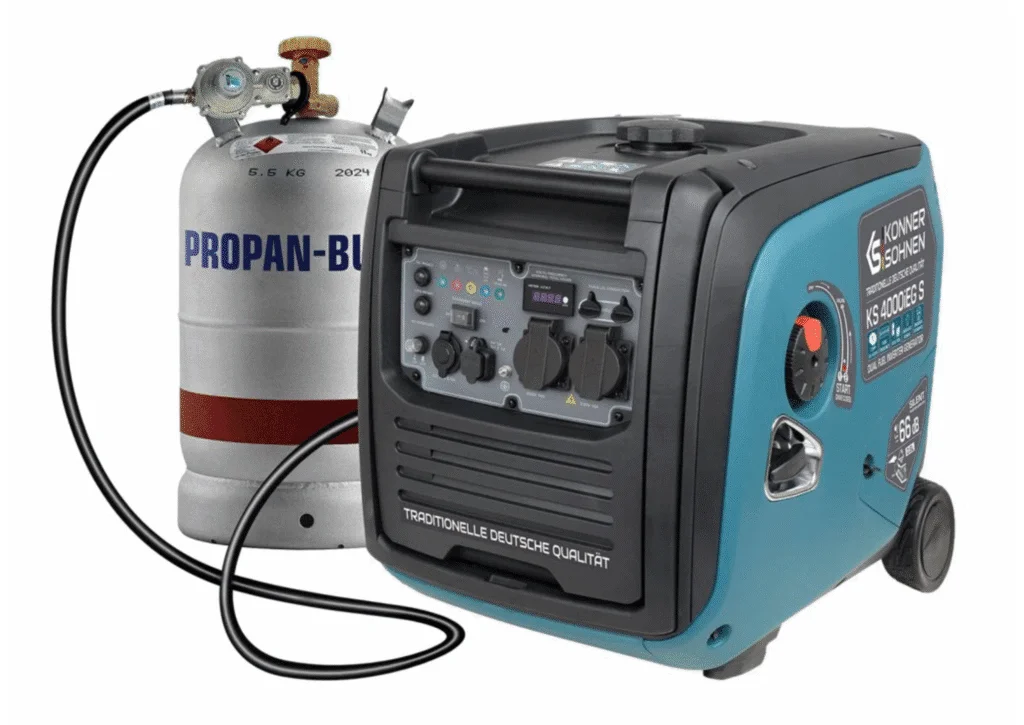
Features, pros and cons: Running on LPG is cleaner and produces fewer emissions. Gas is also easier to store than petrol. The option to switch between fuels offers a great deal of flexibility. When running on gas, performance may be slightly lower than when using petrol.
Key parameters to consider when choosing
When choosing a generator, you’ll come across a range of technical specifications. Understanding the most important ones is the key to picking the right model.
Power (rated and peak)
Power is an absolutely crucial parameter, expressed in watts (W) or kilowatts (kW). It is important to distinguish between the running (continuous) output, which indicates the load the generator can supply nonstop, and the maximum (peak) output. The generator can deliver that only for a very short time, for example when starting appliances with an electric motor. It is strongly recommended to keep a power reserve of at least 20–30%, because running a generator at the limit of its capacity significantly shortens its service life.
- Power input: The amount of electrical energy the appliance needs to operate. You can find it on the label of every device.
- Starting power: Appliances with an electric motor (fridges, pumps, compressors) need 2–3 times more power to start up than their normal running wattage. You need to factor this in when choosing a generator.
Examples of power consumption for common appliances:
| Spotřebič | Průměrný příkon (W) |
|---|---|
| LED žárovka | 5–15 W |
| Nabíječka mobilu | 5–18 W |
| Notebook | 45–85 W |
| LED televize | 30–100 W |
| Lednice | 100–200 W (start až 1500 W) |
| Rychlovarná konvice | 1800–2200 W |
| Vrtačka / Bruska | 500–2000 W |
| Ponorné čerpadlo | 800–1500 W |
Voltage Regulation (AVR vs. Inverter)
This is one of the most important parameters, as it determines which appliances you will be able to power safely. The standard technology in most open-frame models is AVR (Automatic Voltage Regulation), which keeps the output voltage within a stable tolerance and is sufficient for regular power tools or lighting, but it is not suitable for sensitive electronics. To power computers, TVs, or measuring equipment, inverter technology is essential. It converts the current into a perfectly smooth and clean output, ensuring complete safety for the most advanced devices.
Engine Type and Fuel
Your choice of fuel affects running costs, availability, and environmental impact.
- Petrol: The most common option and easy to get. Petrol generators are usually lighter and more affordable, making them ideal for shorter run times.
- Diesel: Lower running costs, higher efficiency, and a longer engine lifespan. Diesel generators are more powerful, but also heavier and noisier.
- Gas (LPG): More eco-friendly and quieter to run, and the fuel can be stored long term without degrading.
Today, the standard is four-stroke engines, which are more reliable, quieter, and produce lower emissions than older two-stroke models.
Noise level
Noise level, measured in decibels (dB), can be a deciding factor, especially in residential areas or when camping. While quiet inverter generators produce noise of only around 58–65 dB, which is comparable to a louder conversation, standard open-frame generators can reach noise levels of up to 95 dB, similar to the sound of a lawn mower.
Weight and Portability
Weight ranges from around 33 lb for small portable inverter generators to hundreds of kilograms for high-output diesel generators. If you plan to move the generator around often, look for models with wheels and handles, which make transport much easier.
Fuel consumption and tank capacity
Together, these two parameters determine the runtime – how long the generator can run on a single tank. Fuel consumption is usually given in litres per hour (L/h) and depends on the current load.
Outputs and sockets
Check which types of outlets the generator is equipped with:
- 230 V: Standard single-phase outlet for most household appliances and tools.
- 400 V: Three-phase socket for high-powered construction equipment (concrete mixers, circular saws) and industrial appliances.
- 12V DC: Output for charging lead-acid batteries (for example, car batteries).
- USB ports: Modern inverters often also include USB ports for convenient charging of phones and tablets.
How to Choose the Right Generator
Now let’s go through a few practical scenarios to help you make the final decision.
For cabin owners and campers
For recreational use, where peace and comfort come first, the obvious choice is a quiet, lightweight inverter generator. An output of 1–2 kW is more than enough to power lights, a laptop, a small fridge, a radio, or to charge mobile phones.
For construction tradespeople
On a construction site, what you need most is durability and strong performance. The best choice is a frame generator with an output of 3–7 kW and AVR voltage regulation. If you use equipment with a three-phase motor, such as concrete mixers or large saws, you’ll need a model with a three-phase socket (400 V).
As a backup power source for the home
For home backup during a power outage, sufficient output and reliability are essential. Choose a model with 5 kW of power or more that can handle the most important appliances, such as the fridge, freezer, boiler circulation pump, and lighting. An electric starter is very practical, as is the ATS (Automatic Transfer Switch) function, which automatically starts the generator when it detects a mains outage and shuts it off again once power is restored. For longer runtime and lower operating costs, consider a diesel or gas generator.
💸 The most common mistakes when shopping
- Undersized power output: Don’t forget to allow for a power reserve and the high startup currents of some appliances.
- Ignoring the type of voltage regulation: Connecting expensive electronics to a frame generator without an inverter can end up destroying them.
- Buying a model that’s too noisy: A loud generator can easily cause problems at a campsite or in a densely built-up area.
Use, Safety, and Maintenance
Proper use and regular maintenance are key to the long service life and safe operation of your generator.
Safety First
- Never use a generator in enclosed or unventilated spaces! The combustion engine produces poisonous carbon monoxide, which is odorless and can be fatal.
- Place the generator in a flat, dry, and well-ventilated outdoor area, at least several feet away from windows, doors, and vents.
- Protect the device from rain and snow.
- Always switch off the engine and let it cool down before refueling.
- Ensure proper grounding according to the manufacturer's instructions.
Regular maintenance
To extend its lifespan and keep it running reliably, regular maintenance is essential:
- Checking and changing engine oil: Check the oil level regularly and change it at the intervals recommended by the manufacturer.
- Cleaning the air filter: A clogged filter reduces engine performance and increases fuel consumption.
- Checking and cleaning the spark plug.
Storage
If you won’t be using the generator for a longer period of time (for example, over the winter), it’s important to prepare it properly:
- Drain the fuel from the tank and carburetor to prevent it from breaking down and clogging the system.
- Store it in a dry, clean place out of the reach of children.
The Best-Known Brands and Manufacturers
A number of well-established manufacturers operate in the market, and their names are a mark of quality and reliability.
Honda
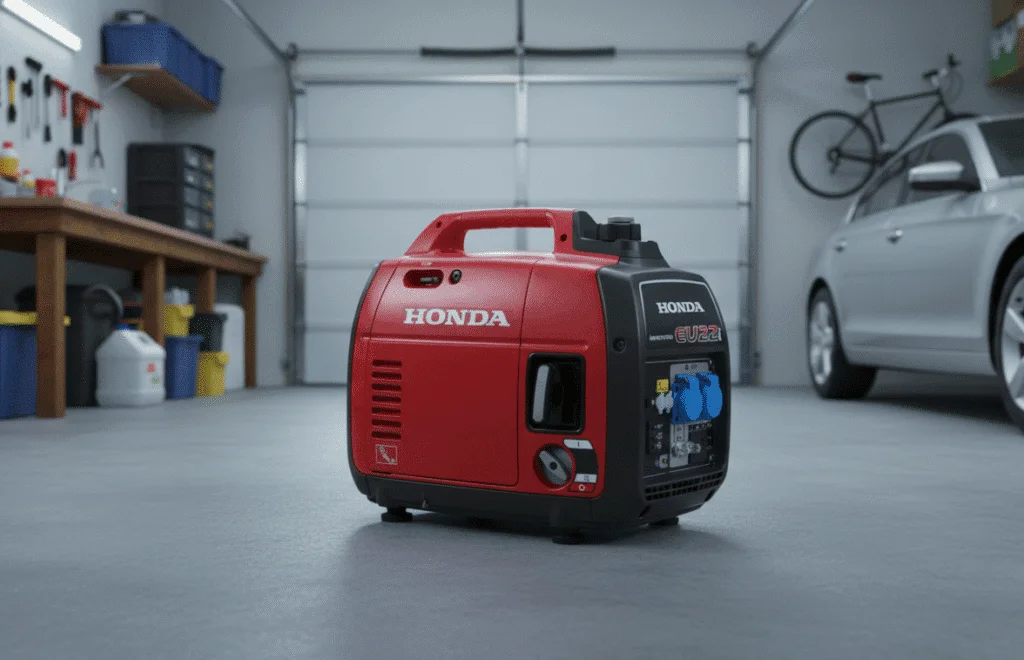
Considered a premium brand in the industry. Its generators, especially the inverter models, are known for their excellent reliability, quiet operation, and solid build quality. The downside is the higher purchase price.
HERON
A brand known for its excellent price-to-performance ratio. It offers a wide range of models for both hobby and professional use, from small inverter units to powerful open-frame generators.
Scheppach / Einhell
These brands mainly focus on affordable hobby and workshop tools. Their generators are suitable for light-duty, occasional use where the main priority is a low price.
BEAR
A traditional Czech manufacturer of robust, reliable professional power generators designed for demanding use in construction and industry.
FOGO
A Polish manufacturer specializing in professional and industrial generators. It often equips its machines with proven engines from well-known brands such as Honda.
Prices and Budget
The price range of generators is broad and depends on output, technology, and brand.
| Cenová kategorie | Co očekávat |
|---|---|
| Do 10 000 Kč | Základní rámové nebo malé invertorové modely pro občasné hobby použití s nižším výkonem. |
| 10 000 – 30 000 Kč | Kvalitní invertory pro kemping a chataření, výkonnější rámové centrály pro řemeslníky s AVR regulací. |
| Nad 30 000 Kč | Výkonné profesionální a záložní zdroje, naftové agregáty, modely s elektrickým startem a funkcí ATS. |
🧰 Expert tip
Investing in a quality brand and the right type of voltage regulation pays off in the long run. A reliable machine and solid protection for your appliances are worth every penny.
Summary and a Final Tip
Choosing the right generator doesn’t have to be complicated. The most important step is to be clear about what you need to power and where you’ll be using it. Based on that, choose the output you need with enough headroom, and above all, the right voltage regulation technology—an inverter for sensitive electronics, AVR for power tools and everyday appliances. Don’t forget to consider noise level and portability as well, since both have a big impact on ease of use. Whatever model you choose, keep in mind that proper maintenance and safe operation are the key to making sure your generator serves you reliably for many years.
Frequently Asked Questions (FAQ)
Can I use a generator to power sensitive electronics like a TV or computer?
Yes, but only if you use a generator with inverter technology, which ensures stable voltage without fluctuations (a pure sine wave). With a standard open-frame generator with AVR regulation, there is a risk of damaging sensitive electronics.
How do I figure out what generator output I need?
Add up the power ratings of all the appliances you plan to run at the same time. For motor-driven appliances (fridges, pumps, saws), allow for 2–3 times higher startup power. Add at least a 20% safety margin to the total so you don’t overload the generator.
What does a three-phase generator mean, and when do I need one?
A three-phase generator provides 400 V voltage and is necessary for powering appliances with a three-phase motor, such as large circular saws, construction mixers, or high-performance compressors and pumps. For standard household appliances that plug into a regular outlet, a single-phase generator (230 V) is enough.
Kategorie: