Hair Oils: A Complete Guide to Healthy Hair and Styling
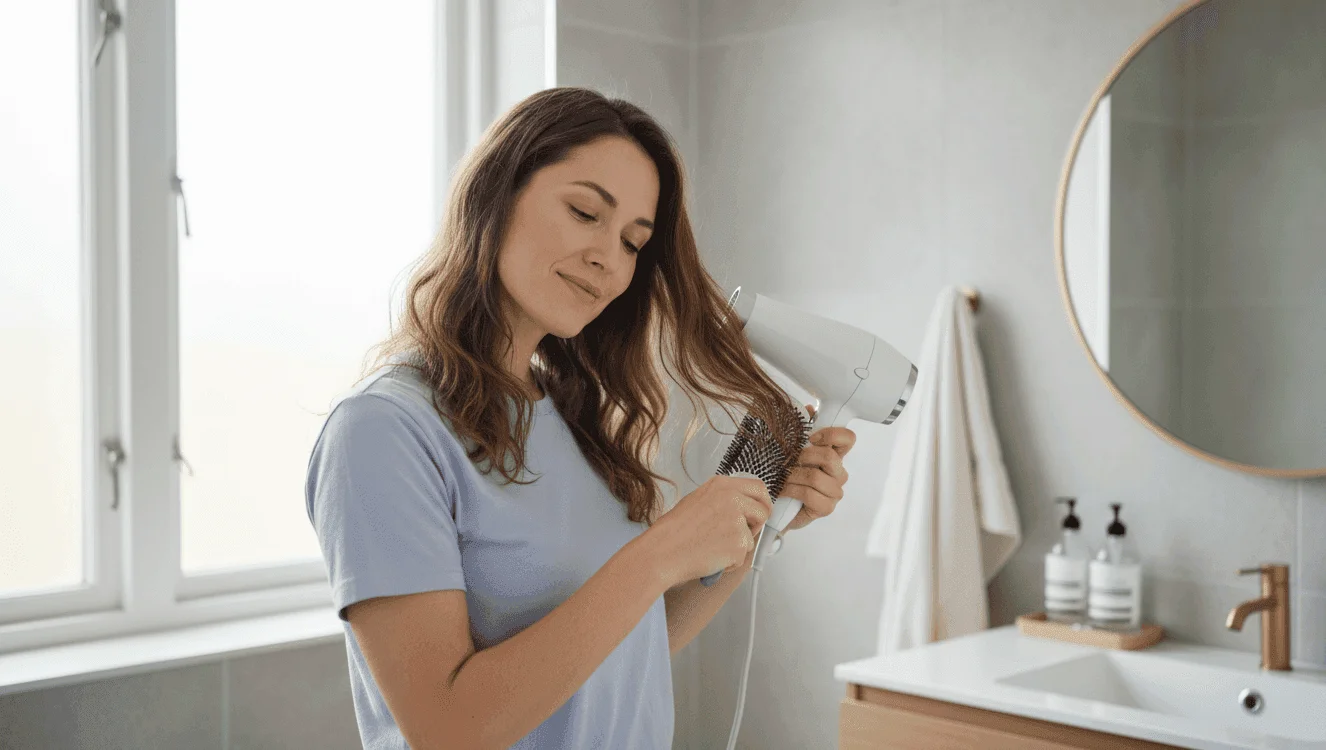
A hair dryer is an essential tool for fast drying, but its role goes far beyond simply removing water. The right dryer is crucial for protecting the hair structure, adding volume, and setting your style. It’s important to remember that wet hair is extremely fragile, so fast and gentle drying with a quality dryer helps minimise the risk of damage. When choosing a dryer today, you need to focus on key technologies such as the motor type and ionisation, which have a major impact on the final result and the overall health of your hair.
Did you know that: The most advanced hair dryers use brushless (BLDC) motors that can reach up to a hundred times higher speeds than standard dryers, which means they dry hair faster and at a lower temperature. This makes the whole process gentler and more efficient for your hair.
How a hair dryer works and its key technologies
The basic principle of a hair dryer is simple physics. A fan draws air in through the rear grille, pushes it over the heating element where the air is warmed up, and then blows it out in a strong stream. The main components are the motor, the heating element, and the technology that controls the quality of the airflow.
Standard metal heating element
This is the cheapest and most common type of heating element. However, these systems can distribute heat unevenly, which can overdry some sections of hair and are generally less gentle on the hair cuticle.
Ceramic technology
Ceramic ensures more even and stable heat distribution throughout the entire drying process. The ceramic surface often generates infrared heat that warms the hair from the inside out. This allows for faster drying at a lower temperature, which is kinder to the hair. Ceramic dryers are very suitable for fine and damaged hair.
Tourmaline technology
Tourmaline is a semi-precious stone that becomes a natural source of negative ions when heated. It combines the benefits of ceramic with intense ionisation. Tourmaline dryers are ideal for reducing frizz and significantly speeding up drying, especially on thick hair, because they generate a very high amount of negative ions.
Ionic technology (Ionisation)
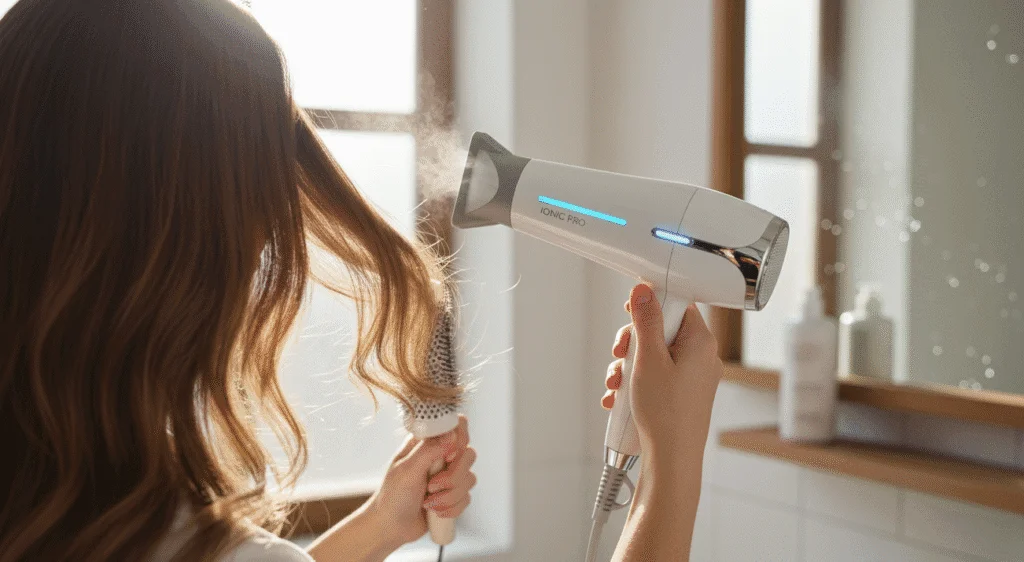
A hair dryer with an ioniser releases millions of negatively charged ions into the airflow. Wet hair is naturally positively charged, so negative ions neutralise static electricity and help eliminate frizz. Negative ions also break water molecules into smaller particles that evaporate more quickly. The result is faster drying, better hydration, more shine, and hair that’s free of annoying static.
Types and variants of hair dryers for different needs
You’ll come across several basic types of hair dryers on the market, which differ mainly in their intended use, performance, and lifespan.
Travel hair dryers are ideal for people who travel often and need a lightweight, compact device. They have lower power, usually under 1200 W, and a compact design, often with a folding handle. Their drawback is slower drying, but you’ll appreciate how little space they take up and the fact that many models offer dual voltage with a 120/240 V switch.
Standard (home) hair dryers are the most common and are designed for everyday home use. They usually offer 1500–2000 W and are equipped with an AC or DC motor. Their features are fairly universal, but they may lack advanced technologies such as strong ionisation or a BLDC motor. Their main advantage is a good price-to-performance ratio.
Professional hair dryers are designed for hairdressers and demanding users with thick or long hair, where drying speed really matters. They typically offer 2000 W or more, long service life thanks to AC or BLDC motors, and robust ergonomics for all-day use. Their disadvantages are a higher price and often higher weight, but they deliver outstanding speed and a wide range of settings.
Special types, such as “all-in-one” stylers or hot air brush dryers, are multifunctional tools that combine drying and styling. Examples include hot air brushes that dry the hair while adding volume or waves, or modern all-in-one stylers that use the Coanda effect and shape hair with airflow rather than extreme heat. These devices are ideal for users who want volume and waves with less damage to their hair.
Key parameters and features for a smart choice
When buying a hair dryer, focus on features that directly affect efficiency and the health of your hair.
Motor type
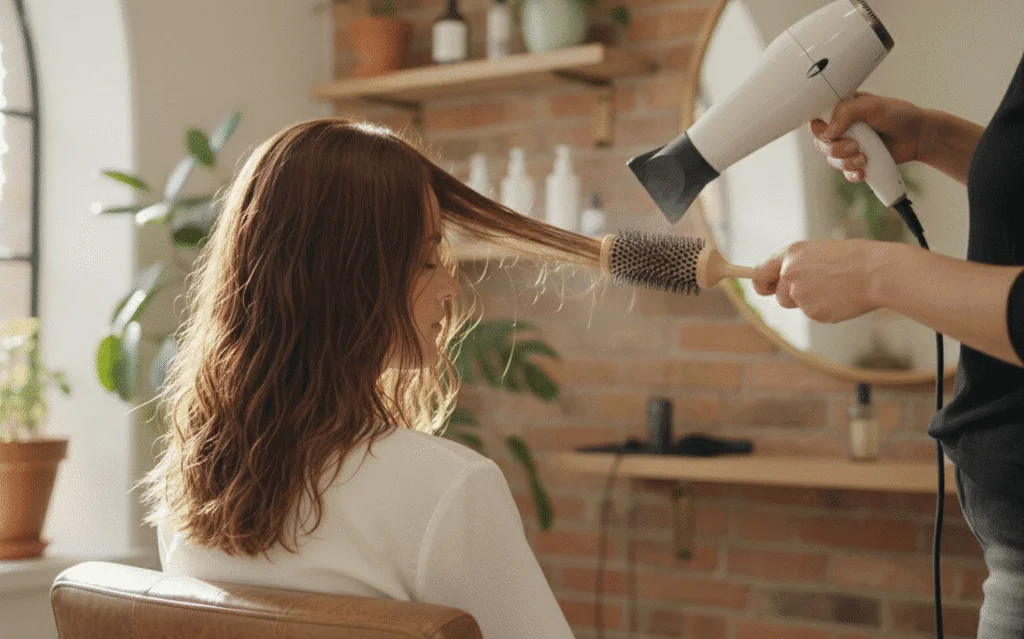
There are three main motor types. A DC (direct current) motor is light and inexpensive, but has a shorter lifespan (around 500 hours) and lower performance. An AC (alternating current) motor is heavier but offers a longer lifespan (around 1500 hours) and higher power, which is why it’s the standard in professional dryers. A BLDC (brushless) motor is the newest option, with an extremely long lifespan (up to 10,000 hours). It’s light, quiet, and generates very fast airflow while keeping energy consumption low.
Power (W) and airflow speed
Power usually ranges from 1200 W to 2400 W. Higher wattage means the heating element reaches high temperatures faster and the motor can generate a stronger airflow, which shortens drying time. For thick hair, 2000 W or more is ideal, but the real key is the actual airflow speed. Modern BLDC dryers often rely on very fast airflow rather than extremely high wattage.
Temperature and speed settings
The ideal hair dryer should offer at least three temperature levels (low for fine hair, medium for regular drying, and high for quick drying on thick hair) and two airflow speeds. However, the most important feature is the Cool Shot (cold air) button. Cold air is essential for sealing the cuticle after drying, which sets the style, adds shine, and helps prevent frizz.
Weight and ergonomics
Weight is crucial, especially if you have long hair or dry multiple people’s hair. A heavy dryer with an AC motor can quickly tire out your arm. The lightest and most ergonomic models usually have a BLDC motor. The handle shape and the placement of the control buttons also matter so that the dryer feels natural and comfortable in your hand.
Attachments
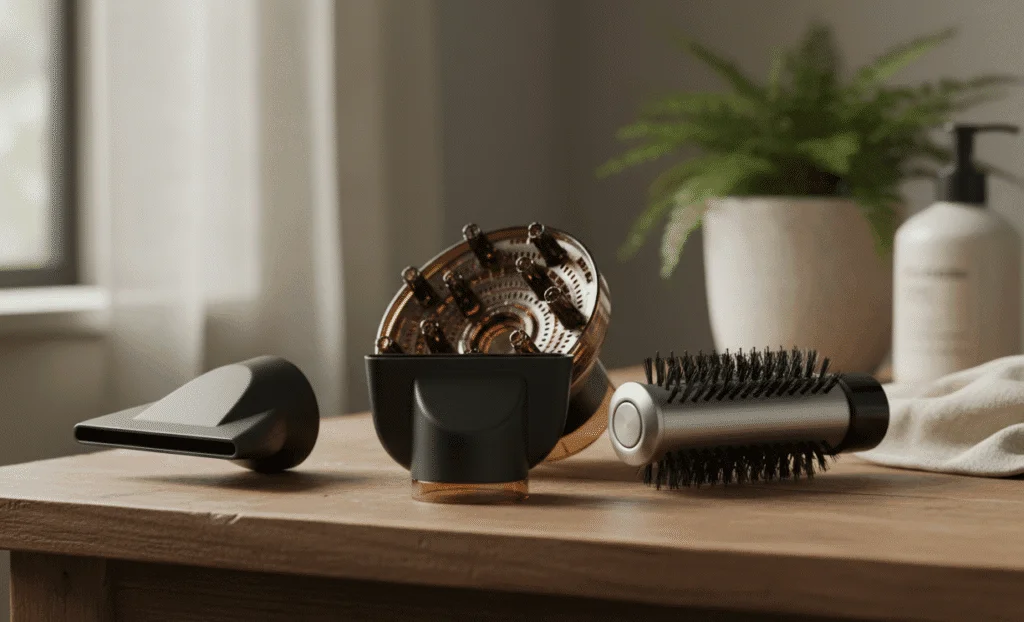
The two most important attachments are the concentrator and the diffuser. The concentrator is a narrow nozzle that focuses the airflow on a specific area, which is ideal for precise styling with a brush and for smoothing the hair. The diffuser is a large round attachment with prongs that disperses the air, reducing airflow speed and helping to minimise frizz. It’s essential for drying curly or wavy hair.
Cord length and type
For home use, an optimal cord length is 1.8 to 2.5 metres. Professional dryers often come with a longer cord, up to 3 metres, and a swivel end, which makes handling easier even in a cluttered or busy space. The cord should be thick and durable enough so it doesn’t twist or tangle easily.
Choosing a hair dryer by hair type and usage
The right hair dryer is the one that matches your hair structure and how often you use it.
How to choose a dryer for fine/damaged hair
The key is a low temperature and ionisation. Focus on ceramic or tourmaline dryers that provide gentle, stable heat. Always use low or medium temperature settings and the highest possible airflow speed to shorten drying time. A BLDC motor is ideal, as it delivers a strong but cooler airflow.
How to choose a dryer for thick/long hair
Here you need high power of 2000 W or more and high airflow speed. An AC or BLDC motor is a must, as weaker DC motors simply won’t cope. Tourmaline technology helps speed up drying, and a good concentrator is important for directing heat and smoothing the hair.
How to choose a dryer for curly hair
For curly hair, the most important thing is even drying without disturbing the natural curl pattern. That’s why you need a diffuser and low airflow speed with a medium temperature. The goal is to dry the hair with gentle warmth rather than a strong blast of air. Ionic technology is highly recommended to keep frizz under control.
What to watch out for when buying
The most common mistake is focusing too much on wattage. High power without good temperature control and ionisation can literally burn your hair. Don’t pay extra for very high wattage (for example 2400 W) if the dryer only has a cheap metal heating element and a DC motor – you’ll just get very hot, slow, and noisy airflow. It’s always better to choose lower wattage with ceramic or tourmaline technology and a BLDC motor.
Maintenance, use, and lifespan of a hair dryer
Proper maintenance is essential if you want your dryer to last. The most important task is regularly cleaning the rear filter (the grille) where the dryer draws in air. If this filter gets clogged with dust, hair, or debris, airflow is reduced, which forces the heating element and motor to work under strain and can cause them to burn out. Ideally, clean the filter once a month. For safe use, never wrap the cord around the dryer while it’s still hot and always store the device in a dry place. Consider replacing your dryer if you notice a significant drop in motor performance or if it overheats and frequently shuts off – that’s a clear sign of a clogged filter or a motor nearing the end of its life.
Most well-known hair dryer brands
The market is dominated by several brands that focus on different price ranges and user needs.
| Brand | Specialisation |
|---|---|
| Dyson | Premium innovation, BLDC motors, extremely fast drying, low weight. |
| Parlux | Professional market, AC/BLDC motors, high reliability and long lifespan. |
| BaByliss PRO | Traditional professional and home market, good performance/price ratio, ionic technology. |
| Remington/Philips | Home market, good price/performance ratio, DC motors, wide selection. |
Dyson represents premium quality and innovation with brushless BLDC motors, delivering extremely fast drying at a low weight. Parlux is a long-standing favourite among professional hairdressers, known for high reliability and the long life of its AC and BLDC motors. Brands like BaByliss PRO offer solid solutions that bridge the professional and home segments, with a good performance/price ratio and a strong focus on ionic technology. In contrast, Remington and Philips primarily target the home market, offering a wide range of models with DC motors and a good balance of price and essential features.
Prices and budget categories
Hair dryers can be divided into three price categories. Budget models up to 800 Kč usually have a DC motor and a standard metal heating element without ionisation. Expect slower, noisier drying and a shorter lifespan here. The mid-range from 800 to 2,500 Kč offers DC or basic AC motors, often with ceramic technology and ionisation, which is ideal for everyday home use. Premium and professional dryers above 2,500 Kč are equipped with BLDC or powerful AC motors, tourmaline or ceramic technology, precise temperature control, and a rich set of accessories. It’s worth paying extra for a BLDC motor because it saves you time, reduces noise, and significantly extends the dryer’s lifespan to a professional level.
Summary and final tip
When you’re making the final decision, focus on three key factors: motor type, heating technology, and temperature control. Consider investing in a dryer with a BLDC motor for its speed, quiet operation, and long lifespan. Choose a ceramic or tourmaline heating element and make sure the dryer offers ionic technology to minimise frizz. Always use the Cool Shot function at the end of drying to set your style and boost shine. Remember that a hair dryer is an investment in the health of your hair, so quality shouldn’t be overlooked. The right dryer will save you time and help your hair look salon-fresh every day.
Most common questions and answers
Can I blow-dry my hair every day?
Blow-drying your hair every day is fine as long as you stick to gentle drying principles. Always use a heat protectant spray, choose a lower temperature setting, and try to keep the drying time as short as possible. For daily use, a dryer with ceramic or tourmaline technology is recommended, as it’s kinder to the hair cuticle.
Is a plastic or metal heater cover better?
Most modern hair dryers have plastic covers, which are lighter and made from special heat-resistant plastics. Metal covers are more robust, but they unnecessarily increase the overall weight of the dryer, which becomes uncomfortable during longer drying sessions. In terms of performance, the crucial factor is the material of the heating element itself – ceramic or tourmaline – not the cover around it.
What noise level is still acceptable for a hair dryer?
Standard dryers with DC or AC motors typically generate around 80–90 dB of noise, which is similar to a passing lorry. Dryers with BLDC motors, which usually operate in the 65–75 dB range, are considered quiet. For frequent or long drying sessions, it’s better to choose a quiet BLDC motor, which is easier on your hearing and more comfortable overall.
Kategorie:
Články (Nejnovější / Podobné)
Do You Know the Difference Between Vitamin D2 and D3?
6/26/2026
Kefir vs. Acidophilus Milk: The Complete Guide to Probiotics, Choosing, and Health
6/19/2026
Protein without the confusion: from choosing the right one to proper dosing
5/15/2026

Amino acids that drive performance – how they work and why they matter
5/8/2026
The Ultimate Guide to Automatic Coffee Machines
4/1/2026