Comprehensive guide to welding equipment – how to choose, use, and maintain the right machine
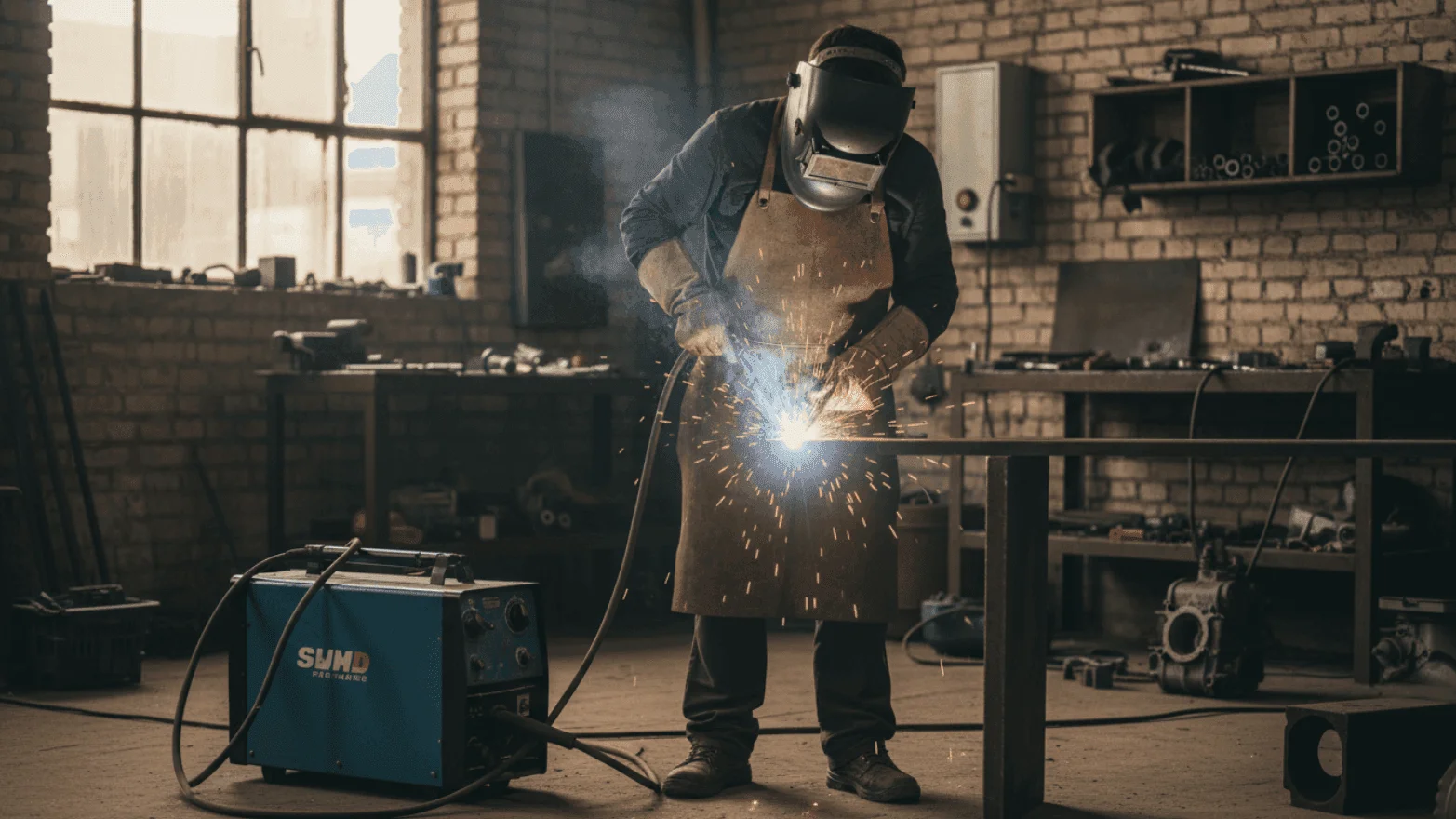
We’re stepping into a world where separate pieces of metal become one. A welder is not just a tool; it’s your gateway to strong, long‑lasting structures, whether you’re building bridges, fixing a car, or creating a piece of art.
Welding is a process where heat (most often an electric arc) melts the material, forming a weld pool that solidifies into a strong joint. Similarly, cutting uses intense heat (such as plasma) to separate material cleanly.
Thanks to modern technology there are countless methods today – from simple shielded metal arc welding (MMA) through fast gas‑shielded welding (CO2 / MIG/MAG) all the way to precision processes like TIG and cutting‑edge laser welding. Welding and cutting equipment is essential in every field, from heavy industry and engineering to body shops and home workshops.
The current trend clearly shows a rise in the popularity of inverters – lightweight, digitally controlled and versatile machines that have brought professional‑level welding within reach of hobby users.
Brief history and a major technological leap
The first arc welders appeared back in the 19th century, when people began experimenting with electric current to melt metal. These early machines were huge, inefficient, and relied on simple transformers.
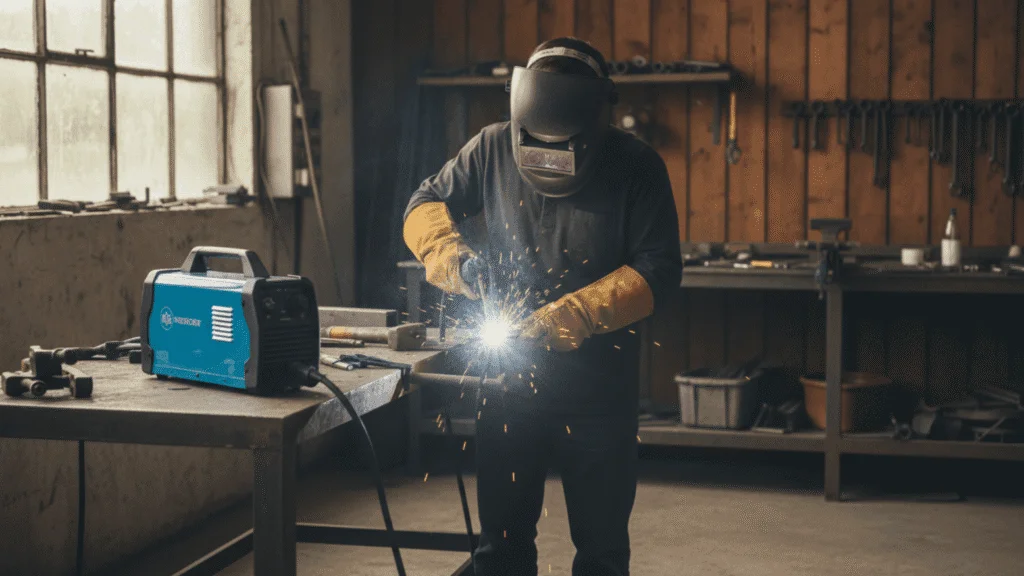
A real turning point came in the second half of the 20th century with the arrival of modern methods. MIG/MAG (gas‑shielded welding with continuously fed wire) dramatically boosted productivity, while TIG (using a tungsten electrode) made it possible to weld stainless steel and aluminium with top‑tier quality.
The true revolution arrived with inverter technology. It replaced heavy transformer welders with light, efficient machines that can control the welding process precisely and digitally. The latest trends include laser welding and robotic systems with digital control that guarantee repeatable results and minimal heat distortion of the material.
How welding works: Core principles you should know
Every arc welding process is based on creating an electric arc between the electrode and the workpiece. This heat melts both the base metal and the filler material (electrode or wire), forming a weld pool.
Protecting the weld pool is crucial
To prevent the molten metal from reacting with oxygen and nitrogen in the air, which would weaken the weld, the weld pool must be protected. There are two main ways to do this: with a shielding gas (for example in TIG and MIG/MAG) or with slag (in MMA with coated electrodes), which is created by burning the electrode coating and is removed after it solidifies.
Inverter vs. transformer welder
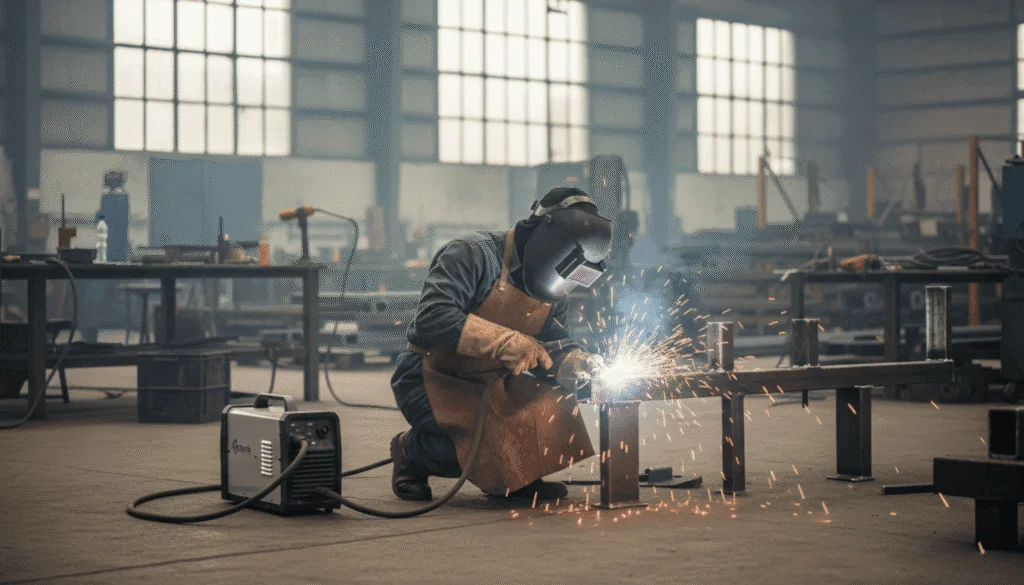
A traditional transformer welder uses a simple transformer to reduce mains voltage and increase current. These units are heavy, less efficient, and often provide a less stable arc. In contrast, an inverter uses high‑frequency current conversion, which makes it lightweight, energy‑efficient and capable of precise digital control of special welding functions. They are far more comfortable and flexible to weld with.
Key concept: Polarity (AC/DC)
Polarity determines the direction of current flow and is critical when choosing a process for a given material. DC (direct current) is used to weld steel, stainless steel and copper. AC (alternating current) is essential for welding aluminium, because AC current breaks up and cleans the aluminium oxide layer that would otherwise prevent a sound weld.
Main types and variants of welding and cutting machines
Inverters: Versatile, powerful machines (MMA / TIG / Multi‑process)
Inverters work on the principle of high‑frequency current conversion, which gives them compact dimensions and high efficiency. They are typically used for shielded metal arc welding with coated electrodes (MMA), which is ideal for outdoor work and on‑site jobs. The same inverter platform is also used for precision TIG welding with a tungsten electrode in an argon atmosphere, delivering the highest weld quality and accuracy. Inverters are great for beginners thanks to their easy controls and stable arc, and for professionals in the form of multi‑process models.
CO2 (MIG/MAG) welders: Speed and productivity
The MIG/MAG process is based on continuous feeding of welding wire, which melts in the electric arc protected by shielding gas. For welding steels, an active gas is used (MAG, most often CO2 or a CO2/argon mix). This method is commonly used for steel fabrication, bodywork and general engineering, because it is extremely fast and highly productive. The key factors are speed, continuous wire feed and the right choice of gas.
Plasma cutters
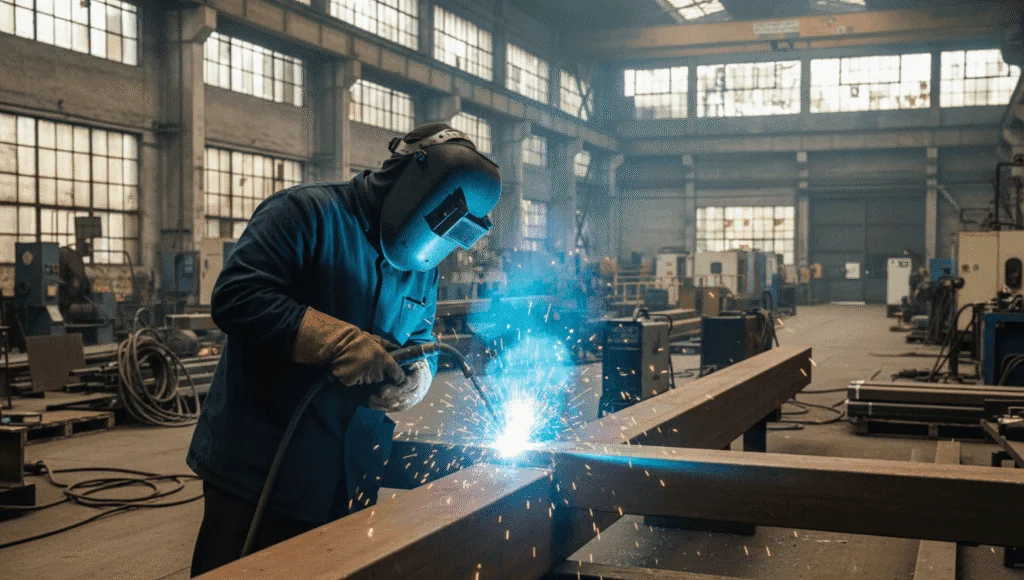
Plasma cutters use an electric arc that is constricted and heated into plasma using compressed air. The plasma jet reaches extremely high temperatures and can cut any electrically conductive material quickly and cleanly. The key specs are the maximum cutting thickness the machine can handle and the cutting speed it can maintain.
Spot welders
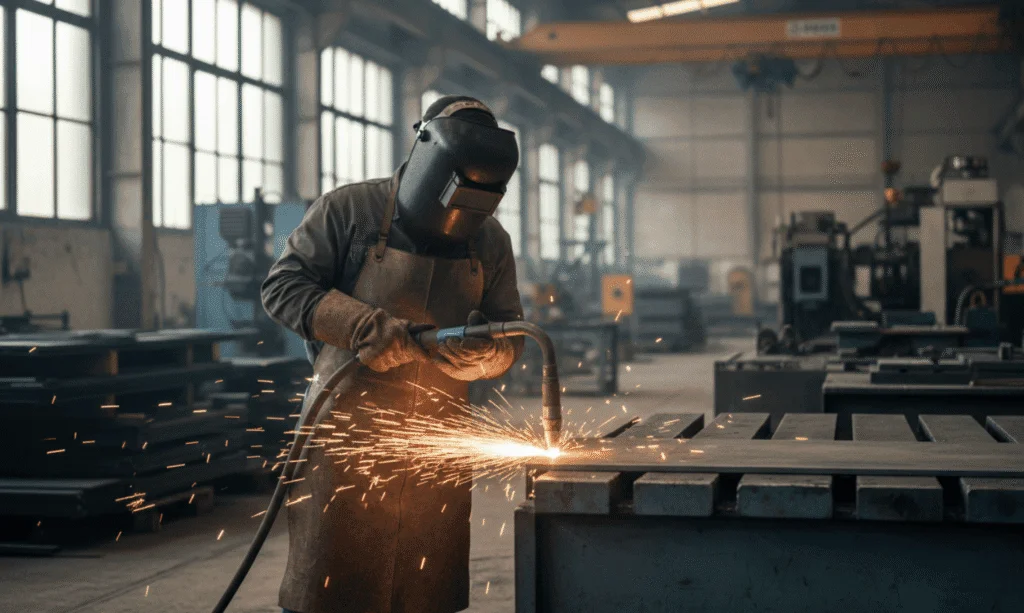
Spot welders use resistance welding, where the materials are joined by electrode pressure and a short pulse of high current. This method is typically used for body repairs and joining thin sheet metal. It produces a quick, strong joint without the need for filler material.
Transformer welders (classic)
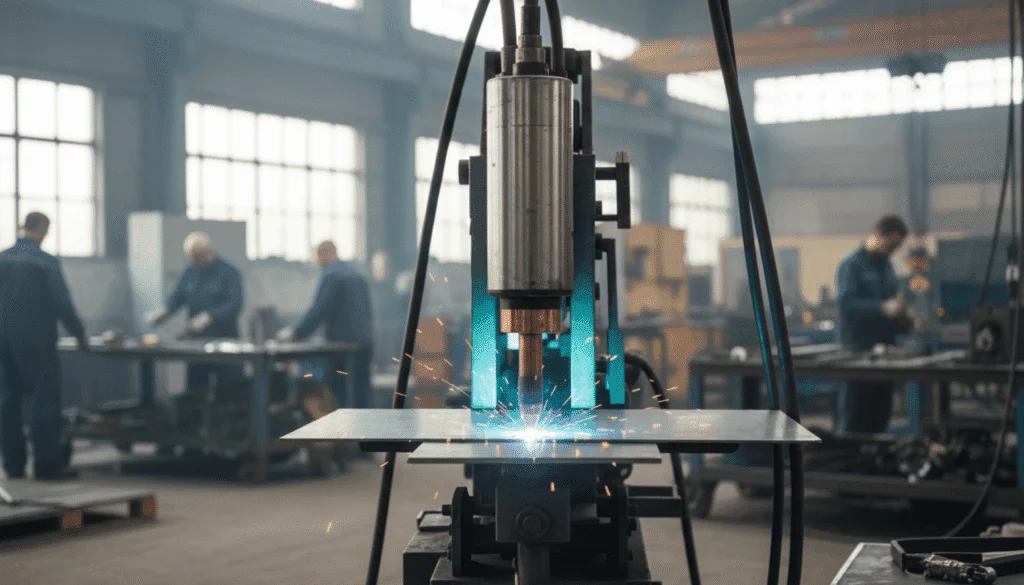
Classic transformer welders use a simple transformer to reduce voltage and increase current. Their main drawbacks are high weight and bulky size, along with lower electrical efficiency. Today they are on the way out and are used mostly for basic, slower MMA jobs.
Laser welders (quick overview)
Laser welders represent the most advanced trend, where materials are joined by a focused laser beam. The main benefits and selling points of this technology are extreme precision and welding speed, plus minimal material distortion thanks to a very narrow heat‑affected zone. Although this is primarily an industrial technology, handheld versions are becoming more accessible.
Comparison of main welding and cutting technologies
| Type of Welder / Cutter | Best use case |
|---|---|
| MMA Inverter | General‑purpose steel welding with coated electrodes. Ideal for on‑site work and outdoor jobs where shielding gas is not available. |
| TIG Inverter | Welding stainless steel, titanium, thin materials and aluminium (requires an AC/DC model), where top‑tier weld quality and appearance are essential. |
| MIG/MAG Welder (CO2) | Fast, productive welding of steels, bodywork, production work and thicker materials where speed is key. |
| Plasma Cutter | Fast, clean and safe cutting of any electrically conductive material (steel, stainless, aluminium) with high accuracy and minimal distortion. |
| Spot Welder | Joining thin sheet metal, body repairs and applications that need quick, strong spot welds using resistance welding. |
| Transformer Welder | Basic, low‑demand MMA work. Due to its heavy weight and lower efficiency it is suitable only for occasional, non‑critical use. |
| Laser Welder | Jobs that require extreme precision, minimal heat input and high speed. Ideal for automated as well as manual high‑volume production. |
Key technical parameters
Duty cycle – A CRITICAL PARAMETER
The duty cycle tells you how long you can weld within a ten‑minute period before the machine overheats. For example, 60% at 150 A means 6 minutes of welding and 4 minutes of cooling. For continuous, professional work, it’s important that the machine has a high duty cycle (ideally 60% or more) at the current you use most often. If you underestimate this, you’ll end up constantly waiting for the welder to cool down.
Welding current (amperage) and voltage (V)
Current (amperage) determines key weld properties – penetration depth and, directly, the thickness of material you can weld. Thicker metals require higher current. Voltage matters mainly for MIG/MAG, where it affects arc stability and the final shape of the weld bead.
Current range and adjustment
The current range defines the minimum and maximum material thickness the machine can handle. Stepless adjustment (common with modern inverters) is important, as it lets you fine‑tune the current for different materials and welding positions, unlike less accurate stepped settings.
Type and diameter of wire / electrode
The machine must be compatible with the specific type and diameter of consumables. Thicker wire or electrodes need higher current and give deeper penetration, but are less suitable for thin sheet metal. Choosing the right consumable is critical for weld quality.
Special functions (Hot Start, Anti Stick, Arc Force)
These functions are standard on modern MMA inverters and make welding much easier. Hot Start briefly boosts current for easy arc ignition. Anti Stick automatically reduces current if the electrode sticks, preventing it from burning up. Arc Force stabilises the arc and compensates for operator error (changes in arc length).
Shielding gas requirements (CO2, Argon, mixtures)
The choice of gas depends on the method and material. TIG requires pure argon (Ar). For welding steel with MIG/MAG you can use pure CO2 (active gas, cheap but with poorer arc stability) or, more commonly, an argon/CO2 mix (better stability and weld quality). Gasless welding (for example with flux‑cored wire) is possible, but weld quality is lower.
How to choose the right machine
Your choice of welding machine should always balance your skill level, the materials you’ll be working with, and how often you plan to use it.
Choosing by user level
For beginners and hobby users, a simple MMA inverter is ideal – it’s easy to carry, straightforward to use, or you can opt for a small CO2 welder for thin sheet metal. DIYers and workshop owners should look for more robust, versatile machines such as multi‑process inverters (MMA/MIG/TIG) or a more powerful CO2 unit with digital control and a better duty cycle. Professionals and industry need three‑phase machines with maximum duty cycle and specialised technology, such as TIG AC/DC for critical applications.
Choosing by material
For structural steel, MIG/MAG with CO2 or a mixed gas is usually the most efficient option. For aluminium and stainless steel, where cleanliness and precision are crucial, TIG is the best choice. For aluminium in particular, you’ll need an inverter with AC (alternating current) capability.
Typical buying mistakes
A common mistake is underestimating the duty cycle – a machine with a low duty cycle will slow you down with constant breaks during intensive work. Another frequent issue is buying a welder with insufficient amperage for the material thickness you want to weld, or forgetting about the need for a gas cylinder with MIG/MAG and TIG. Always make sure the machine matches your future projects, not just your first one.
Accessories, consumables and safety
Safety must always come first when welding. Quality accessories and proper maintenance extend the life of both the machine and the welder.
Essential accessories and protection
Protecting the welder from radiation, heat and spatter is absolutely essential.
| Item | Description / Importance |
|---|---|
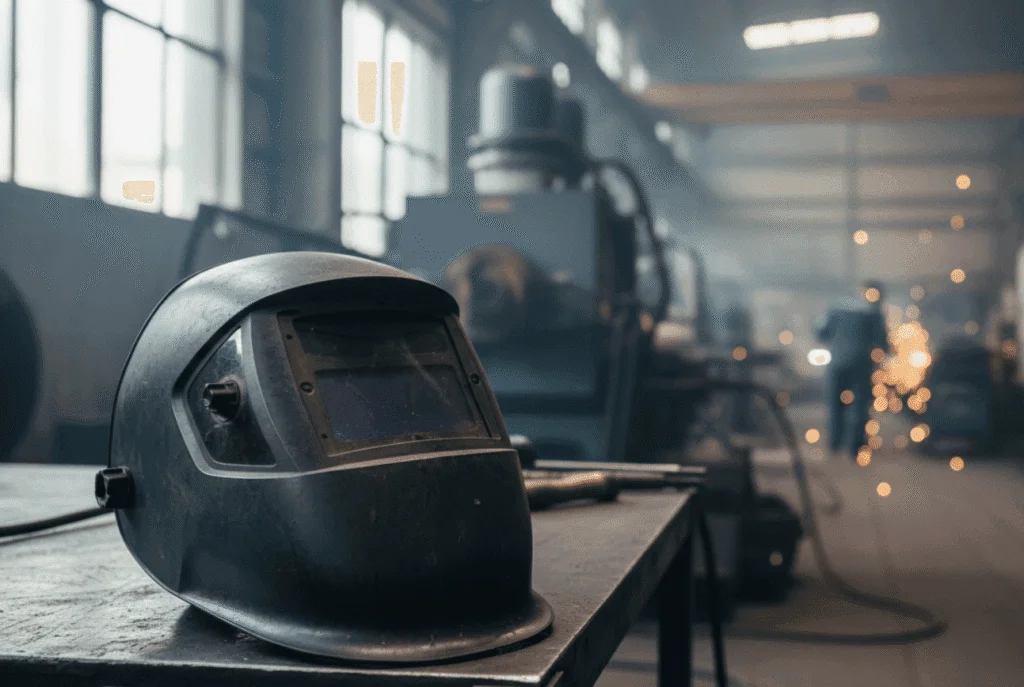
| Auto‑darkening helmet | CRITICAL. Automatically darkens when the arc strikes. Keeps your hands free and your view clear. Check the reaction speed of the filter. |
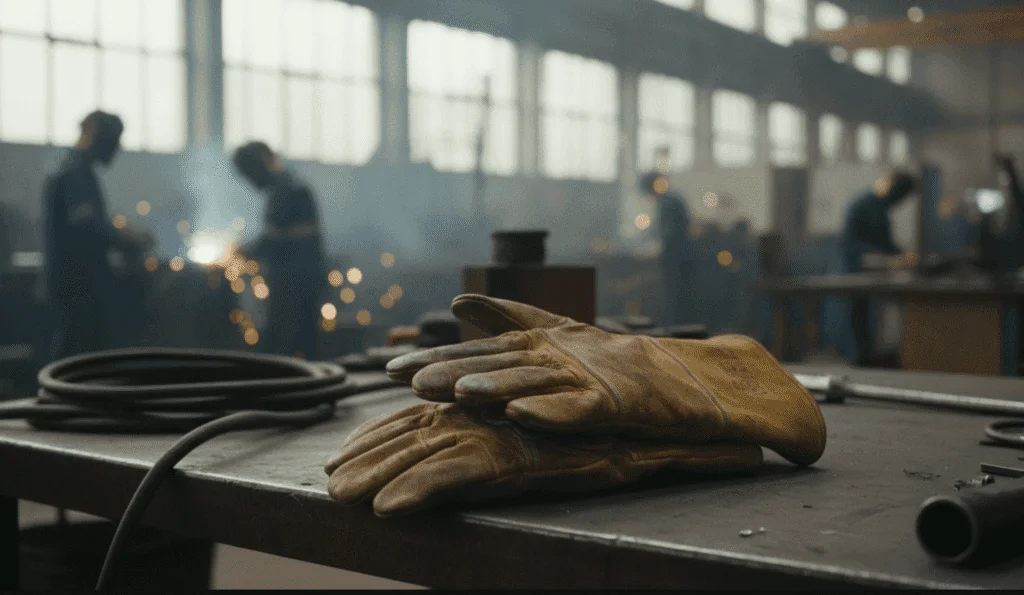
| Welding gloves | Protect your hands from heat, UV radiation and spatter. Use heavier (combined) gloves for MMA and lighter, more sensitive ones for TIG. |
| Leather apron / clothing | Shields your body and clothes from burns caused by molten metal spatter and the UV radiation from the arc. |
| Fume extraction / ventilation | Essential for removing harmful welding fumes from the work area. |
Consumables and their care
Consumables must match the material you’re welding. MMA electrodes must be stored dry, ideally in a rod oven, because moisture dramatically worsens their welding behaviour. For MIG/MAG it’s crucial to keep everything clean and to replace the contact tip and gas nozzle regularly to maintain stable arc and wire feed. TIG tungsten electrodes must be ground correctly and kept free from contamination.
Maintaining your welding equipment
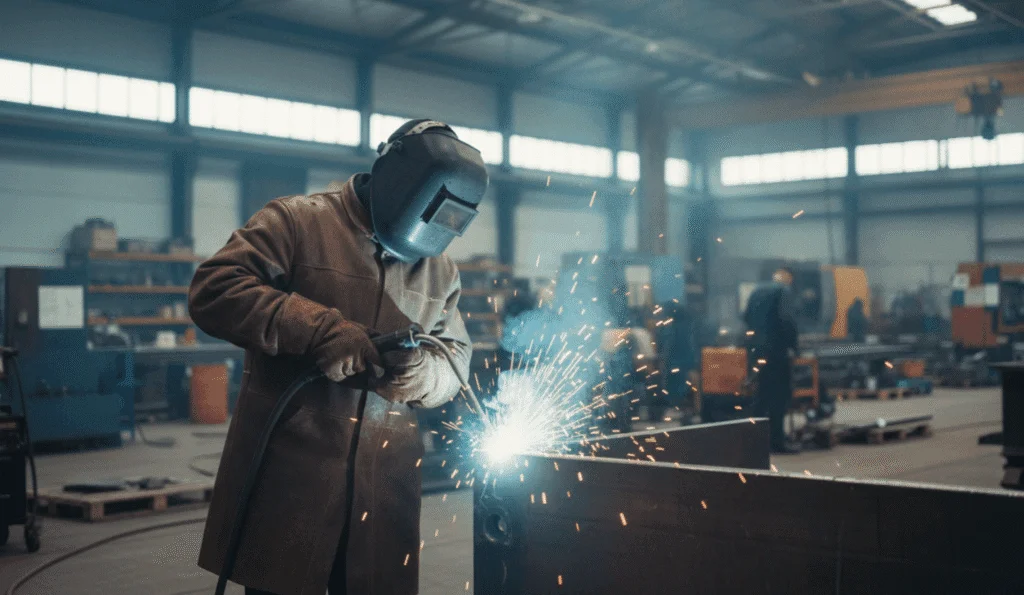
Regular maintenance will significantly extend the life of your machine. Clean the unit with dry compressed air to prevent dust build‑up and overheating of the electronics. Checking the condition of cables and torches is vital for safety. Always follow basic safety rules – ensure good ventilation and never weld near flammable materials.
Which brands are worth it and what budget to expect
Spending more on a reputable brand usually goes hand in hand with better build quality and reliability.
Overview of popular brands
The market is split into several segments. Brands like Fronius and Kemppi represent premium quality and industrial‑grade machines with maximum reliability and the latest digital technology. The mid‑range with the best price‑to‑performance ratio, suitable for tradespeople and demanding workshops, includes brands such as Kuhtreiber and Esab. For hobby use, there are cheaper inverters (for example Parkside, Einhell) that provide enough power for occasional home projects, usually with a lower duty cycle.
Prices and budget brackets
Your budget should reflect how often you’ll be using the machine and whether you need special features.
| Price range | What to expect |
|---|---|
| 4 000 – 6 000 Kč | Basic MMA inverters for hobby use. Low duty cycle, occasional work. |
| 6 000 – 20 000 Kč | Quality MMA/TIG inverters, solid MIG/MAG machines. Good duty cycle, digital control, suitable for demanding DIYers and tradespeople. |
| 20 000 Kč and above | Professional three‑phase machines, TIG AC/DC, pulsed MIG/MAG. High duty cycle, maximum reliability and accuracy. |
Recommendation: It pays to invest in a higher duty cycle and multi‑process capability. Better machines offer a more stable arc, which is a huge advantage for beginners, and they can run much longer without cooling breaks.
Summary
Choosing the right welder is straightforward if you start by defining what you’ll be welding (material type and thickness) and how often. For steel, MIG/MAG is usually the fastest and most practical option, while for stainless steel and aluminium, TIG is hard to beat.
When making your final decision, focus on three key points: duty cycle (to keep you working without constant breaks), welding process (MIG/MAG, TIG, MMA) and material compatibility (for example, the need for AC current when welding aluminium). Don’t cut corners on safety gear – it protects your health. The right welder will open the door to many new, solid projects that will last for years.
Frequently asked questions (FAQ)
What are the real running costs of welders?
Besides the initial investment in the machine, the biggest ongoing cost is shielding gas (argon, CO2 or a mix), especially for TIG and MIG/MAG. Power consumption is relatively low with modern inverters. For MMA, your costs are basically just electrodes and electricity. If you weld a lot, choosing the right gas cylinder setup (own vs. rental) is crucial to keep refilling costs down.
Can I weld aluminium with a standard DC inverter?
In short: No, not if you want quality welds. A standard DC inverter can weld aluminium with coated electrodes or LIFT TIG only with major compromises (thin material only and poor weld quality). For aluminium welding at a professional level, you need a TIG AC/DC inverter, because AC breaks up the tough aluminium oxide layer and allows a clean weld.
Can I use a plasma cutter without a compressor?
No, plasma cutters need a compressor, because compressed air is required to create the plasma jet. The compressor must have enough output and volume (litres per minute) to maintain the constant pressure needed for cutting; otherwise, cut quality will drop. Always check the air consumption required by the specific plasma cutter.
Kategorie:
Články (Nejnovější / Podobné)

What Is a VPN and How Can It Change Your Online Life?
11/14/2025

Hair Oils: A Complete Guide to Healthy Hair and Styling
11/12/2025
Portable fridges – from picnics to camping without compromise
11/11/2025

The Ultimate Guide to Automatic Coffee Machines
10/27/2025
Complete Guide: How to Choose, Use, and Maintain a Wood-Burning Stove
10/27/2025