AdBlue made simple and clear: What every driver should know
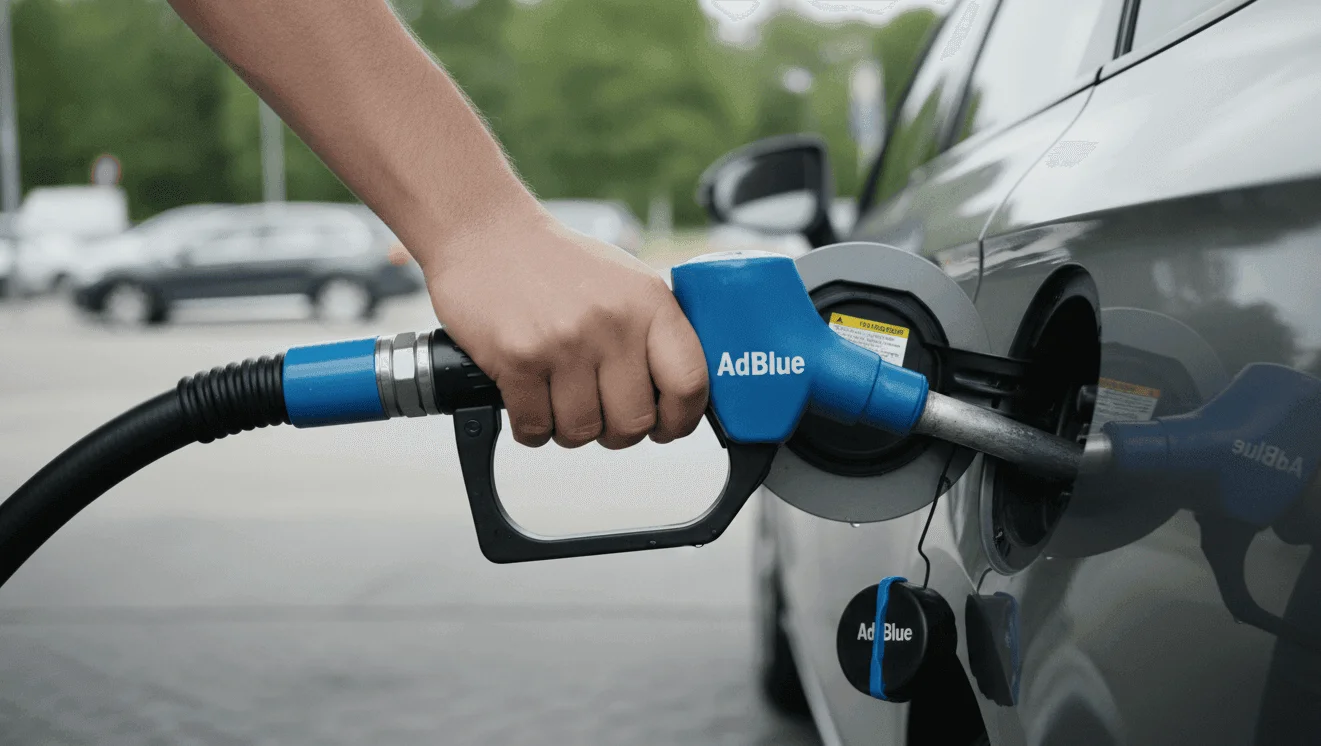
If you own a modern diesel car, you’ve most likely come across the term AdBlue. This clear liquid has become an essential part of diesel vehicles in the push for cleaner air. In this complete guide, you’ll find everything that really matters – from what AdBlue is and how it works, through tips on choosing and using it correctly, to prices and the most common questions.
What is AdBlue and why is it so important?
AdBlue is the trade name for a high-quality solution made of 32.5% urea and 67.5% demineralised water. Despite its name and urea content, it is not a fuel additive that you pour into the diesel tank. It is a separate operating fluid designed for the SCR (Selective Catalytic Reduction) system, whose job is to significantly reduce harmful nitrogen oxide (NOx) emissions from diesel engines.
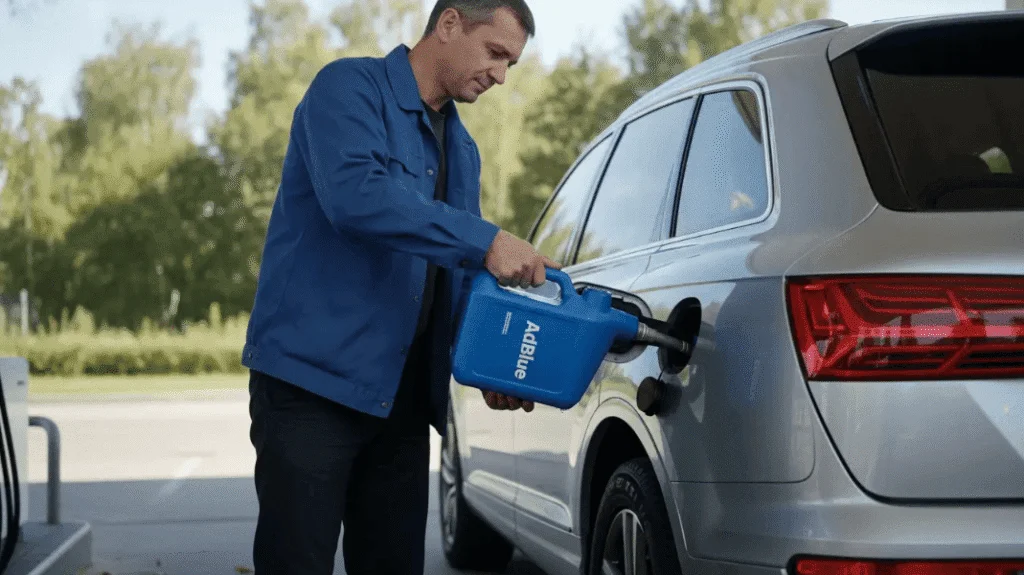
Thanks to AdBlue, modern diesel vehicles can meet strict emission standards such as Euro 6 and above. These standards limit the amount of pollutants a car can release into the air, and AdBlue is a key technology to achieve these targets.
Did you know that without AdBlue, a modern diesel car will either not start at all or switch to limp mode with heavily reduced power? For legal reasons, the vehicle is set up so that it cannot be driven without this fluid, which ensures compliance with emission limits.
So what exactly is the urea in AdBlue?
When people hear “urea”, many picture biological waste, which is understandable, but in the case of AdBlue this is completely off the mark. The urea in this fluid is a synthetically produced, highly pure chemical compound with no animal origin whatsoever.
Industrially, it is produced by reacting synthetic ammonia and carbon dioxide under high pressure and temperature. The result is a white crystalline solid (granules or pellets), which is then dissolved in demineralised water to create AdBlue solution.
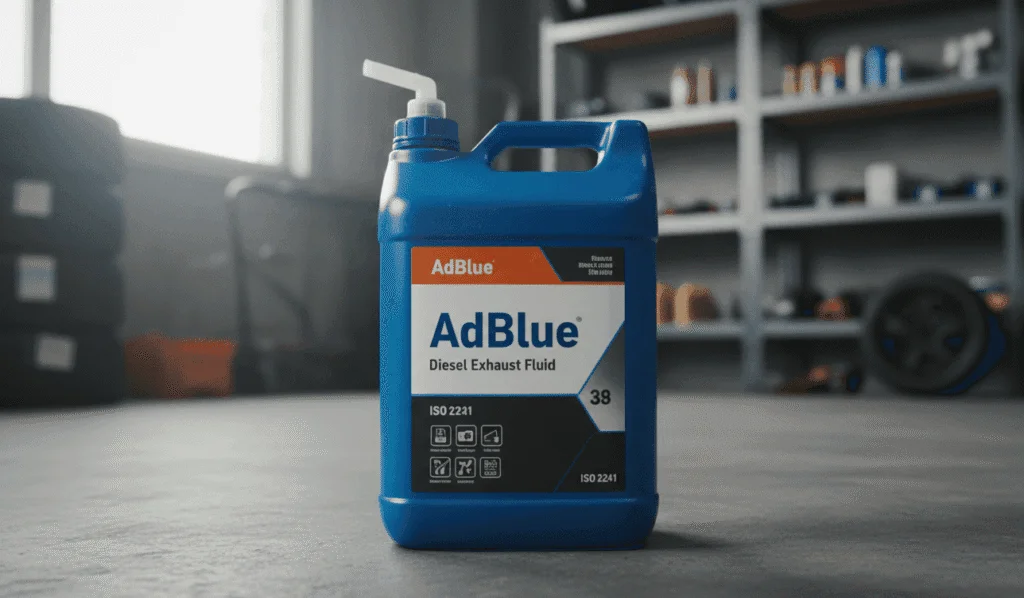
The key difference is between technical (automotive) urea and agricultural urea used as fertiliser. While fertiliser-grade urea contains various additives and anti-caking agents, urea for AdBlue has to meet extremely strict purity standards (ISO 22241). Any contamination, even in tiny amounts, can irreversibly damage the sensitive and expensive SCR system in your vehicle. So there’s no need to worry – the fluid in your car is the result of a precise chemical process, not a natural biological cycle.
How AdBlue works: a small chemical miracle in your exhaust
The way AdBlue works is based on a chemical reaction inside the SCR system. The process can be summed up in a few simple steps:
- Injection into the exhaust: A small, precisely metered amount of AdBlue is automatically drawn from a separate tank and injected into the exhaust pipe before the exhaust gases reach the special SCR catalyst.
- Decomposition into ammonia: Due to the high temperature of the exhaust gases, AdBlue immediately breaks down into two components: ammonia and carbon dioxide.
- Chemical reaction in the catalyst: In the SCR catalyst, ammonia then reacts with harmful and toxic nitrogen oxides (NOx) formed during diesel combustion.
- Conversion into harmless substances: The result of this chemical reaction is the conversion of harmful NOx into harmless nitrogen and water vapour – substances that are a natural part of the atmosphere.
For proper operation and protection of the entire, often very expensive, SCR system, the quality and purity of the AdBlue used is absolutely crucial. Any contamination or incorrect concentration can lead to serious and costly damage.
How to choose the right AdBlue: key criteria
When buying AdBlue, focus on a few essential parameters to make sure you are giving your car the best possible care.
ISO 22241 certification
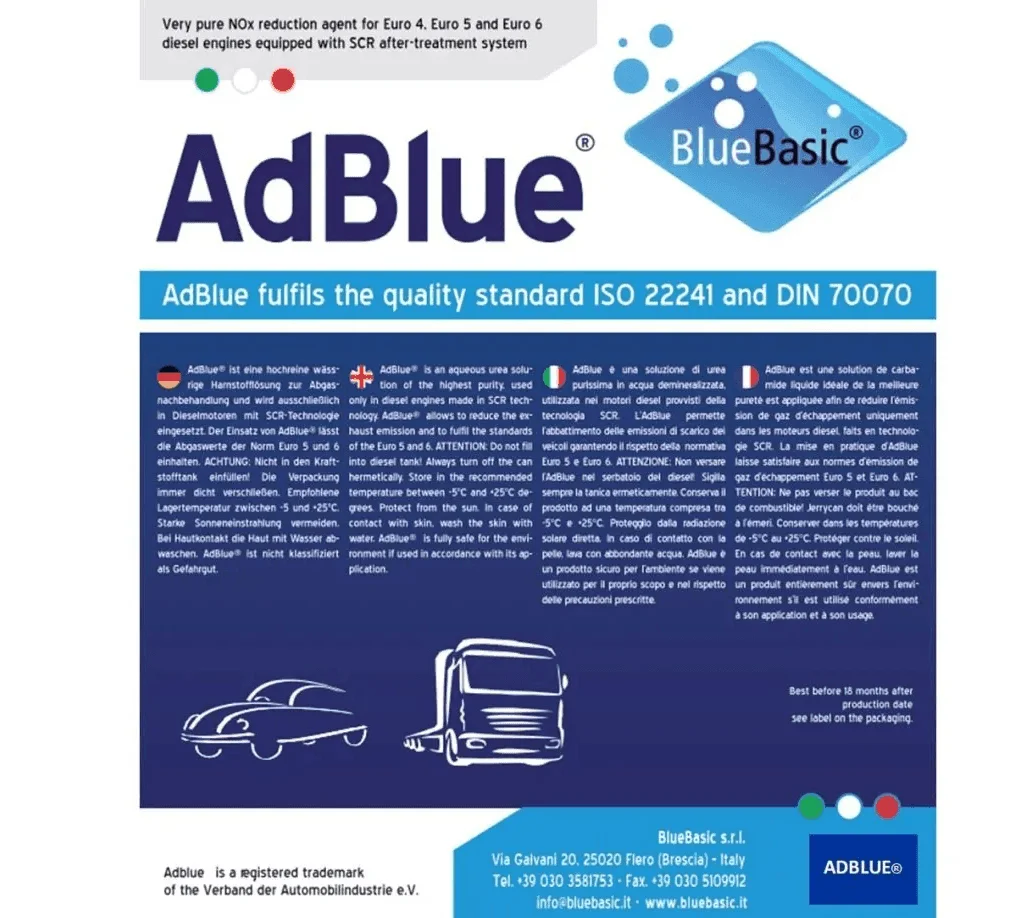
This is the most important parameter you need to watch. The ISO 22241 standard guarantees that the product has the correct urea concentration (32.5%) and the required high purity without any contaminants or minerals. Only certified AdBlue will ensure flawless operation of the SCR system. Using uncertified, suspiciously cheap product can clog and irreversibly damage sensitive components such as injectors, the pump and the catalyst itself, whose replacement can cost tens of thousands of crowns.
Use-by date
AdBlue does not last forever. Its typical shelf life is 12 to 18 months from the production date. After that, the solution starts to lose its chemical properties, the urea can degrade and form crystals that may clog the system. Always look for the expiry date on the packaging and buy the freshest product you can, especially if you drive little and use up the fluid slowly.
Storage conditions
The service life of AdBlue is heavily affected by the temperature at which it is stored. Ideally, keep it cool and in the dark, away from direct sunlight, at temperatures up to 25 °C. The freezing point of AdBlue is about -11 °C. If the fluid freezes, it’s not a problem – once thawed, it is fully functional again and does not lose its properties. Modern vehicles are also equipped with heating for the AdBlue tank and lines.
Where to buy AdBlue and which packaging to choose
AdBlue is now available in many places and in different types of packaging. The right choice mainly depends on your preferences, the type of vehicle and how often you need to top it up.
Pump nozzle at fuel stations
For drivers who refill AdBlue frequently (especially trucks, vans, but also high-mileage cars), filling up from a pump is the cheapest and most convenient option. The price per litre is significantly lower than for pre-packed products. The downside is that not every fuel station has a pump nozzle suitable for passenger cars – truck nozzles have a higher flow rate and may not fit into a smaller filler neck.
Canisters (5, 10, 20 litres)
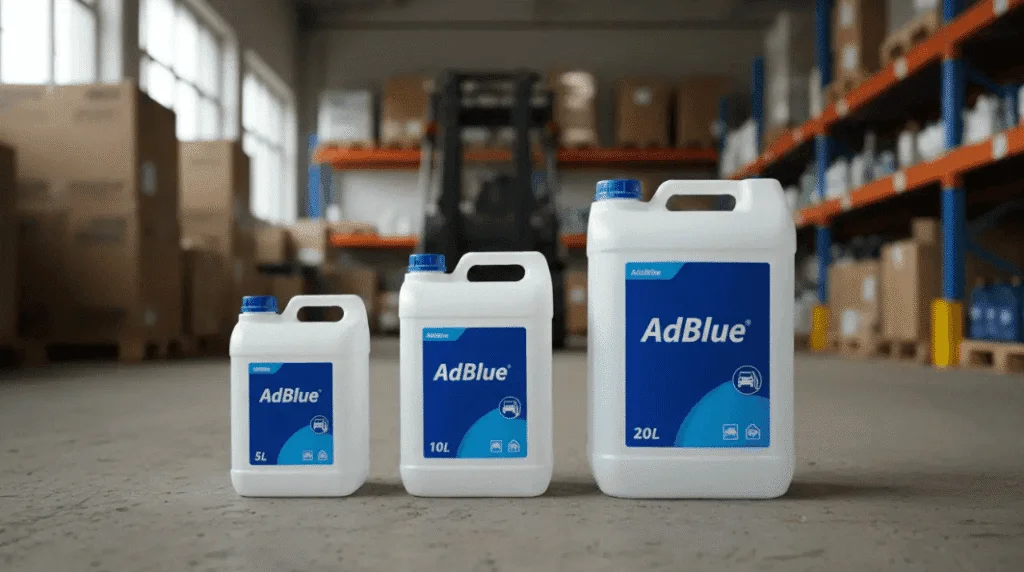
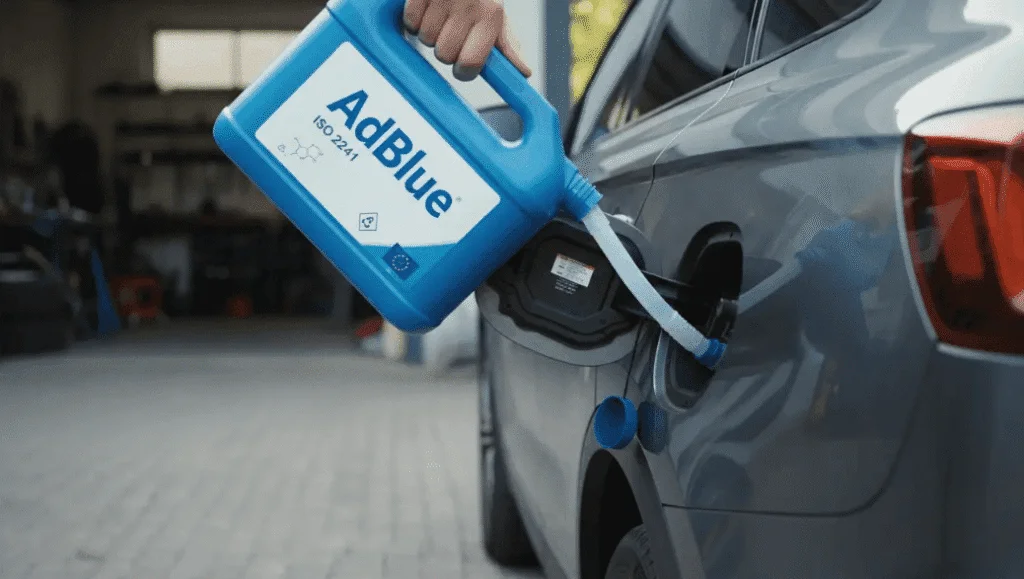
Canisters are the most common packaging format and you can find them at fuel stations, car parts stores, DIY stores and even some supermarkets. They are ideal for passenger car drivers who top up AdBlue every few thousand kilometres. Their advantage is excellent availability; the downside is a higher price per litre and slightly more awkward handling when refilling.
Bottles with filling spout (1.5–2 litres)
Small bottles with a special filling spout are perfect as an emergency solution on the road. They are very easy and clean to use, with virtually no risk of spillage. However, they are the most expensive option per litre and are mainly intended to add a small amount so you can safely reach a place where you can refill a larger volume.
Drums and IBC containers
For companies with a large fleet, such as transport operators, construction companies or farmers, drums or IBC containers are the most economical solution, allowing bulk AdBlue purchases at the best price per litre.
How to choose AdBlue for your specific vehicle
The right packaging and refilling strategy depends on several factors.
By vehicle type
AdBlue consumption and tank size differ from vehicle to vehicle.
- Passenger cars: Typically have a tank capacity of around 12 to 22 litres and average consumption of about 1–2 litres per 1,000 km. For most drivers, a 10-litre canister is the ideal purchase.
- Vans and trucks: Have much larger tanks and higher consumption (3–7% of diesel consumption). Here, filling up at fuel station pumps is clearly the most cost-effective option.
By annual mileage
- High mileage (over 20,000 km/year): If you drive a lot, it’s best to use fuel station pumps. You’ll save both money and time.
- Low mileage (up to 10,000 km/year): In this case, it is better to buy smaller canisters (e.g. 5-litre) so you can be sure you’ll use the AdBlue before it ages and loses its properties.
What to watch out for when buying
Avoid suspiciously cheap products without clear ISO 22241 labelling. Watch out for damaged or already opened containers. Never buy “loose” AdBlue from unverified and non-original containers where there is a high risk of contamination.
Proper storage, handling and refilling
Correct handling of AdBlue is crucial for its effectiveness and for protecting your vehicle.
How to store AdBlue correctly
If you keep AdBlue at home in a canister, always store it in the original, tightly closed container. Place it in a cool, dark spot away from direct sunlight. The ideal storage temperature range is between -5 °C and +30 °C.
Refilling step by step
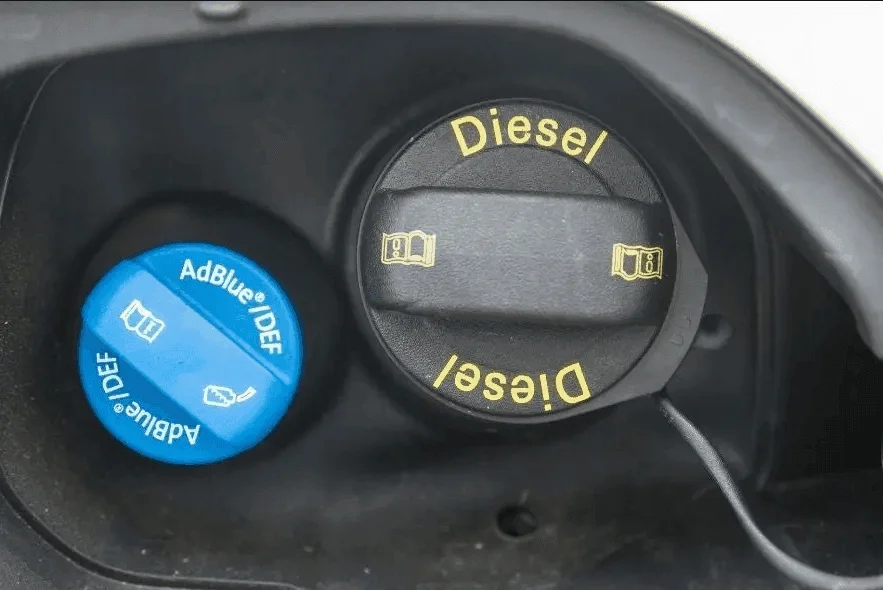
- Find the filler neck: The AdBlue tank always has a blue cap and is usually located right next to the fuel filler neck. On some models, it may be in the boot or in the engine bay.
- Keep everything clean: Before opening the cap, carefully clean the area around it to prevent any dirt from entering the tank.
- Refill carefully: Use a funnel (often included with the canister) and pour the AdBlue in slowly. Be careful not to overfill the tank.
- Add a sufficient amount: Some cars may not register a very small top-up (for example less than 4 litres). It’s therefore recommended to add at least 5–10 litres, or fill the tank completely.
What to do if you spill it
AdBlue is a non-flammable and non-toxic fluid, but once it dries it crystallises and can be aggressive towards some materials, especially aluminium and bare metals, where it can cause corrosion. If you spill it on your car’s paint, clothing or skin, rinse the affected area immediately with plenty of clean water.
Prices and where you should (not) save
The price of AdBlue varies significantly depending on how you buy it. While saving money is tempting, cutting corners on quality really doesn’t pay off.
Price comparison table
| Type of purchase | Approximate price per litre |
|---|---|
| Fuel station pump | Lowest (e.g. 15–25 CZK) |
| Canister (10 l) | Medium (e.g. 30–50 CZK) |
| Small bottle (up to 2 l) | Highest (e.g. 100 CZK and more) |
The prices shown are indicative and may vary.
The cost of certified AdBlue is negligible compared to the risk of damaging the SCR system. Repair or replacement of a damaged catalyst, pump or injectors can easily reach tens of thousands of crowns. This amount far exceeds any savings you might gain by buying a cheap, unverified product.
Most popular brands and manufacturers
There are many AdBlue manufacturers and distributors on the market. Among the best-known and most trusted are the brands available at major fuel station networks, such as:
- Total
- Shell
- OMV
- MOL
There are also specialised chemical product manufacturers, such as GreenChem or the Czech producer ZEVAR.
However, it’s important to remember that certification to ISO 22241 is always more important than the specific brand. If the product meets this standard, you can be sure it is safe and effective for your vehicle, regardless of who makes it.
Summary and final tip
Taking care of the AdBlue system is not complicated; you just need to follow a few basic rules. Always buy only certified AdBlue that meets ISO 22241, check the use-by date and store it in a cool, dark place. Never ignore the low-level warning light, because you won’t get far without AdBlue. When choosing the packaging, consider your annual mileage and go for the most cost-effective option that you will use up before it expires. This way, you’ll ensure a long and trouble-free life for your car’s entire SCR system.
💬 Frequently asked questions (FAQ)
Can I use just water or urea fertiliser solution instead of AdBlue?
Absolutely not. Using plain water, fertiliser-grade urea or any other substitute will cause the SCR system to fail and be destroyed. AdBlue must have a very precise concentration and extremely high purity, which these substitutes never meet. The sensors in the system can also detect the wrong fluid and will prevent the engine from starting.
My car uses very little AdBlue and one canister lasts me more than a year. Is it still safe to use?
It’s not recommended. After the use-by period (usually 12–18 months), AdBlue starts to break down chemically, loses its effectiveness and solid crystals can form. These can then clog delicate parts of the system, such as the pump or injector, leading to an expensive repair. In this case, it is always better and safer to buy smaller, fresh packs.
Kategorie: