What Is a VPN and How Can It Change Your Online Life?
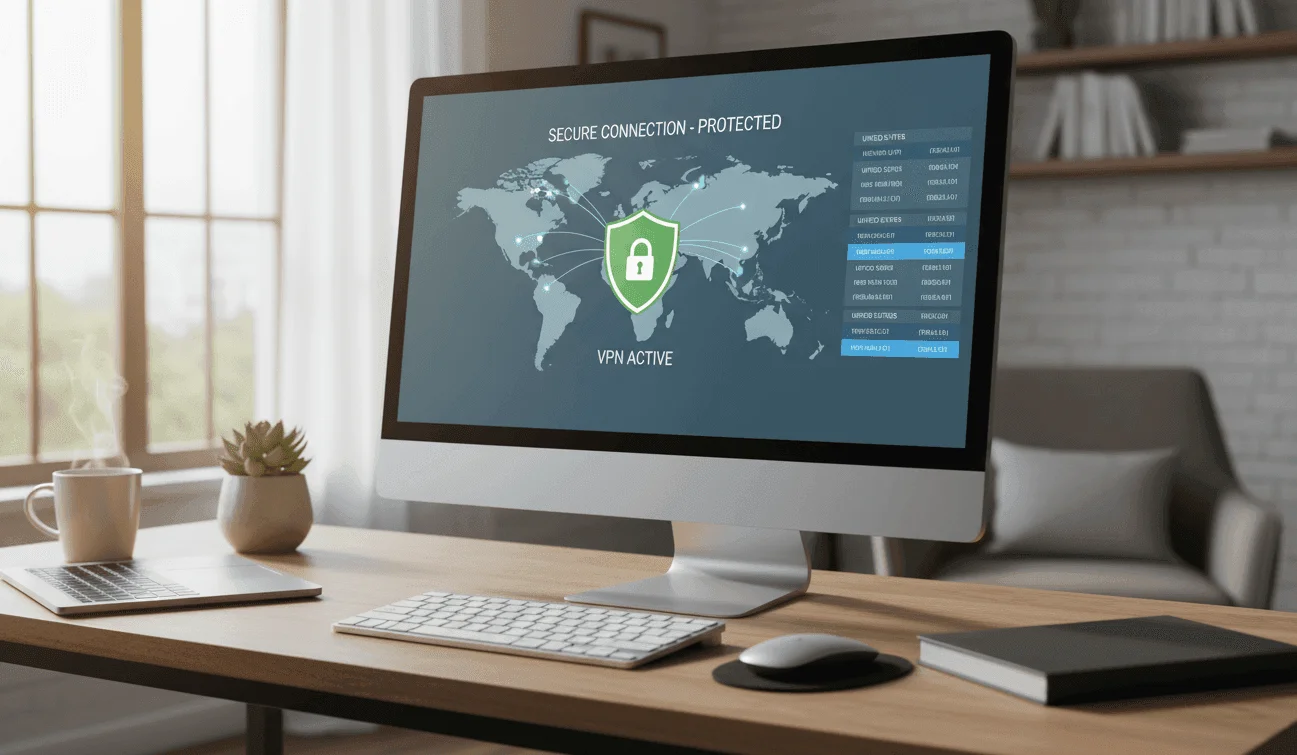
In today’s digital world, where tracking online activity is standard practice, a Virtual Private Network, or VPN (from the English term Virtual Private Network), is one of the most important tools you can use for your online security and privacy. It’s not some complicated technology, but a simple yet extremely effective way to protect yourself from prying eyes.
Think of a VPN as a digital shield for your internet connection. Its main job is to hide your real IP address – the unique identifier of your device on the internet – and encrypt all data you send and receive. Instead of your internet traffic traveling openly and in plain text, it flows through a secure and private tunnel.
Why should you care? In everyday life, you protect your house with an alarm, your car with a lock, and your personal data with a password. A VPN is protection for your digital footprint. Without it, your internet service provider (ISP), marketing companies, and potentially even cybercriminals can track your every move online. A VPN makes sure that what you do stays your business only.
Did you know that without a VPN, anyone in the same café on public Wi‑Fi could potentially see what you’re doing online?
How a VPN works and what it actually does
To understand the power of a VPN, it helps to know what’s going on “under the hood”. At its core, how a VPN works is not complicated. Put simply, a VPN routes your internet connection through a remote server operated by your VPN provider.
The encrypted tunnel principle
Imagine you’re sending a message. A standard connection is like sending a postcard – anyone along the way can read it (your ISP, the Wi‑Fi owner, a hacker).
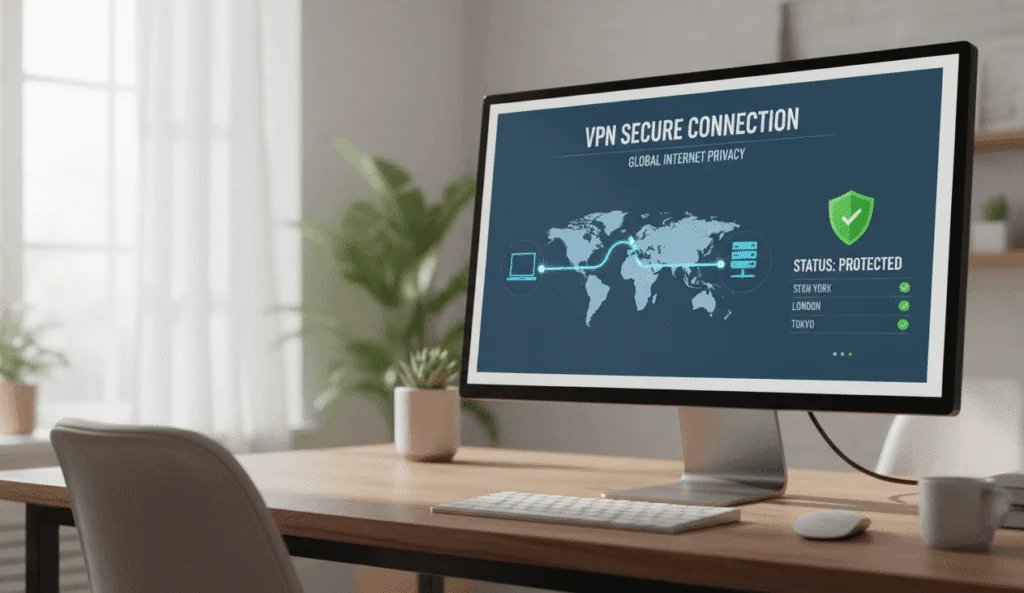
A VPN instead creates an encrypted virtual tunnel between your device and the VPN server. Your message is placed in a sealed, opaque envelope. Anyone on the route can only see that a sealed envelope is traveling, but no one can see its contents or the original sender, because all communication appears to come from the VPN server.
Key technologies and features
Thanks to this tunnel, you get three layers of protection:
- Encryption: Your data is encoded. Even if a third party (ISP, hacker) intercepts it, they only see a meaningless jumble of characters. The data is unreadable and unusable.
- IP address masking: The VPN server becomes your representative. Your real IP address is hidden and replaced with the VPN server’s address. Online you “appear” to be physically located where the server is (for example in New York, Berlin, or Prague), even if you’re sitting on your couch at home.
- Traffic anonymization: A VPN protects your digital footprint. Since all traffic comes from the VPN server’s IP address, it’s difficult, if not impossible, for anyone to link your online activity back to you as an individual user.
Why use a VPN? Main reasons and benefits
VPNs are no longer used only by IT professionals. Today they’re a practical tool that solves a wide range of issues every internet user runs into.
Security on public Wi‑Fi networks
Public Wi‑Fi in cafés, airports, or hotels is the weakest link in your digital life. These networks are often poorly secured. Without a VPN, it’s easy for any hacker on the same network to eavesdrop on your traffic – this is called packet sniffing or a Man‑in‑the‑Middle attack. A VPN encrypts all your communication on a public network, effectively eliminating this risk. You can comfortably check your email or log in to your bank at the airport.
Privacy protection
In many countries, your internet service provider (ISP) is legally required to keep logs of your activity and hand them over to authorities on request. At the same time, advertisers constantly track what you do so they can target ads at you. A VPN prevents your ISP, the government, and marketing giants from seeing which websites you visit or which services you use, giving you back your digital freedom.
Access to geo‑restricted content (geoblocking)
Changing your IP address has a huge practical benefit: bypassing geoblocking. Streaming platforms like Netflix, YouTube, or iVysílání offer different content depending on the country you connect from. By connecting to a VPN server in the US, you can watch the American Netflix library. On the flip side, if you’re on holiday abroad, you can connect to a Czech server and watch Czech streaming services that would otherwise be blocked.
Safe downloading and file sharing (torrenting)
With peer‑to‑peer (P2P) file sharing (torrenting), your IP address is visible to everyone else on the network. In some cases, organizations that monitor copyright can log your IP address and start legal action. A VPN protects your identity during P2P activity by hiding your real location and traffic.
Bypassing censorship
In countries with authoritarian regimes (such as China, Russia, or Iran), access to global social networks, news sites, or tools like Google is often blocked. A VPN lets users there connect to a server outside the country and freely access information, making it a key tool for freedom of speech.
What to focus on when choosing a VPN? Key parameters
There are many VPN services on the market. To pick the right one, you need to focus on a few essential parameters that determine the quality and trustworthiness of the service.
Security and encryption protocols
The foundation is AES‑256 encryption. This is the current industry standard used in banking and the military. It’s practically impossible to crack. Protocols are also crucial, as they determine the speed and stability of your connection.
- OpenVPN: A long‑standing, well‑tested standard. It’s open‑source and considered very secure.
- WireGuard: A newer protocol that’s significantly faster and more efficient than OpenVPN, and most modern VPNs offer it as the primary option.
No‑Logs Policy
This is the most important criterion for privacy protection. A No‑Logs policy means the provider does not track or store any data about your online activity (websites visited, IP addresses, connection times). Even if authorities requested data, the provider would have nothing to hand over. The best services have this policy independently audited by reputable firms, which is a key proof of trustworthiness.
Number and geographic spread of servers
A sufficient number of servers in many countries ensures two things: speed and flexibility. The more servers there are, the less overloaded they are, which translates into higher speeds. A wide range of locations also gives you more options for bypassing geoblocks and accessing foreign content.
Kill Switch (emergency disconnect)
A Kill Switch is a basic safety net. If your VPN connection drops unexpectedly (for example, your phone loses signal), this feature instantly disconnects your device from the internet. This prevents your real IP address or unencrypted data from leaking onto the network. It’s a must‑have for anyone who takes privacy seriously.
Connection speed and stability
Every VPN slows your connection down slightly because encrypting data takes time. With high‑quality modern services, this drop is minimal (usually 10–20%) and for everyday use (streaming, browsing) it’s barely noticeable. If the speed loss is dramatic, you’ve probably chosen a low‑quality or free service.
Number of devices connected at the same time
Most households own multiple devices – a phone, tablet, PC, Smart TV. One subscription with a good VPN should cover several devices (typically 5 to 10), or even an unlimited number, which is a great option for the whole household.
How to choose a VPN that fits your needs
Your choice of VPN should always be based on how you plan to use it most of the time.
For everyday users and Wi‑Fi protection
If your main goal is protection on public Wi‑Fi and basic privacy, focus on ease of use, stable connections, and a reliable Kill Switch. Make sure the service has servers in the Czech Republic if you want to use local services.
For movie and TV lovers (streaming)
For streaming, the key factors are high speed, low latency, and the ability to reliably unblock global streaming platforms (especially Netflix, BBC iPlayer, Hulu). Some VPNs are much better at this than others – look for reviews that confirm it.
For online gamers
Gamers should primarily focus on low latency (ping), as this affects in‑game response time. Choose services that offer gaming‑optimized servers and also provide DDoS protection, which is a common issue in the gaming world.
For users who want maximum anonymity
If anonymity is your top priority, look for VPNs based in countries outside the so‑called “14 Eyes” jurisdiction (an intelligence‑sharing alliance – USA, UK, EU countries). You should also demand a strict, independently audited No‑Logs policy and advanced features such as Multi‑Hop (double encryption) or Tor over VPN.
What to watch out for: Paid vs. free VPNs
Free VPN services are extremely risky and you should generally avoid them. Running a robust, fast network is expensive. If you’re not paying for the service, there’s a high chance that you are the product. Free VPNs often:
- Sell your data to advertisers or third parties.
- Use weak encryption and protocols.
- Are extremely slow and have strict data caps.
- Lack key features such as a Kill Switch.
The simple rule is: a quality VPN always costs something. Investing in it means investing in your digital security.
The best‑known VPN providers and a quick comparison
When choosing a VPN, it pays to rely on established market leaders. These companies invest heavily in speed, security, and independent audits.
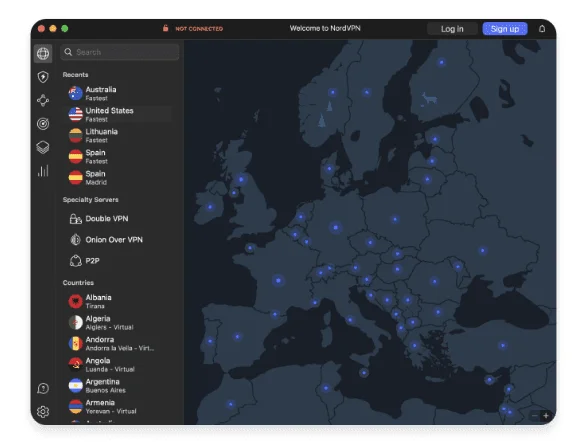
Leading players on the market
NordVPN: A very popular choice that stands out thanks to strong security (including a Double VPN feature for double encryption). It offers a huge server network and high speeds. It’s known for its user‑friendly apps on all major platforms.
ExpressVPN: Often considered the top choice for maximum speed and reliability, especially for streaming and travel. It has an audited no‑logs policy and is known for its consistently strong ability to unblock streaming services.
Surfshark: A great option in terms of value for money. Its main advantage is that it lets you connect an unlimited number of devices under one account, making it ideal for a whole family or a small business.
| Poskytovatel | Hlavní výhoda | Pro koho je ideální |
|---|---|---|
| NordVPN | Špičkové zabezpečení a pokročilé funkce (Double VPN) | Uživatelé, kteří chtějí maximální ochranu |
| ExpressVPN | Vysoká rychlost a spolehlivost pro streaming | Cestovatelé a fanoušci filmů/seriálů |
| Surfshark | Neomezený počet zařízení v rámci jednoho účtu | Rodiny a uživatelé s mnoha zařízeními |
How much do VPNs cost?
VPN prices vary depending on the length of the subscription and the feature set. Keeping an eye on promotions and choosing a long‑term plan can save you a lot of money.
Free VPNs
As mentioned earlier, they’re usually heavily limited in data, speed, and server choice, and they also pose a risk to your privacy. They’re only suitable for occasional, low‑stakes use where privacy is not critical.
Cheap VPNs (around 50–100 CZK/month with a long‑term plan)
This is the ideal category for most users. It includes full‑featured services that offer great value for money, high speeds, dozens of countries to choose from, and all the key features such as a Kill Switch and strong encryption. This price usually applies when you commit for one to two years.
Premium VPNs (around 150–300 CZK/month)
This category includes the very best services, offering the highest speeds, the widest range of advanced features, and often better 24/7 customer support via live chat. They’re ideal for gamers, heavy streamers, or anyone who wants the absolute maximum in features. Tip: Premium services offer long‑term subscriptions that often bring the effective monthly price down into the cheaper category.
A safe conclusion
A VPN is not just a tool for IT specialists or “hackers”, but a basic, practical helper for everyday internet use. At a time when tracking online activity is the norm, a VPN is your personal bodyguard for privacy, digital freedom, and security, whether you’re at home or on the road. It’s not only about what you want to hide, but about who you give the right to watch you.
When choosing a VPN, the most important thing is to focus on the provider’s trustworthiness (an audited No‑Logs policy) and on the features you’ll actually use, such as speed for streaming or a Kill Switch for reliable protection. Don’t save money at the expense of security – an affordable but fully featured solution is always better than a free, risky one.
Final tip: Most quality providers offer a money‑back guarantee, usually for 30 days. It’s worth taking advantage of this and testing the service risk‑free on all your devices and for all your regular activities (streaming, gaming, work) before you commit to a long‑term plan.
Kategorie:
Články (Nejnovější / Podobné)

Mauritius: A Guide to Paradise with White Beaches and Turquoise Water
12/20/2025

Seychelles: An Island Paradise in One Guide
12/16/2025

Thailand: A Complete Guide to the Land of Smiles
12/14/2025

Japan: A Guide Between Geisha and Robots
12/13/2025

Vietnam: The Secrets of Phở, Strong Coffee, and Chaotic Streets
12/11/2025