Tunisia: A Complete Travel Guide to North Africa
Tunisia is a fascinating country in the north of the African continent, offering a perfect blend of several worlds at once. Mediterranean beaches with bright white sand sit side by side with the endless dunes of the Sahara, the millennia-old history of Roman temples and Punic cities contrasts with the lively bazaars of Arab medinas, and modern Berber culture connects the past with the present. The Tunisian Republic gives travelers a truly unique experience—within a relatively small area, you’ll find an impressive variety of landscapes, landmarks, and ways of life.
Did you know that Tunisia was the birthplace of ancient Carthage, one of the most powerful empires of the ancient world that rivaled Rome? Or that the Berber homes in Matmata were used as filming locations for the legendary Star Wars?
Tunisia is an ideal destination for anyone who wants to combine beach relaxation with culture and history. You’ll find eight UNESCO World Heritage sites, national parks filled with migrating birds, mountain oases in the middle of the desert, and lively fishing ports. Whether you’re drawn to lazy days on some of the Mediterranean’s prettiest beaches in Hammamet or Djerba, a history trip to ancient Carthage, a camel adventure across the Sahara’s sand dunes, or exploring mysterious Berber villages, Tunisia offers unforgettable experiences within easy reach. In this country, the influences of Berber tribes, Arab culture, the Ottoman Empire, and French colonialism come together, creating a one-of-a-kind mix you won’t find anywhere else.
History of the country
Tunisia’s history is exceptionally rich and stretches back thousands of years. The original inhabitants of this region were the Berbers, who lived here as far back as prehistoric times and developed their own culture shaped by the tough conditions of North Africa. Berber communities still keep some of their traditions today, especially in the southern mountain regions and desert oases.
A turning point in Tunisia’s history came with the arrival of the Phoenicians around 1100 BCE. They founded trading colonies along the coast and in 814 BCE built Carthage, which would become one of the most powerful cities of the ancient world. Over the centuries, Carthage controlled a large part of the Mediterranean, including Sicily, Sardinia, and Corsica, and grew into a thriving economic and cultural hub. But this rise brought Carthage into direct conflict with the Roman Empire.
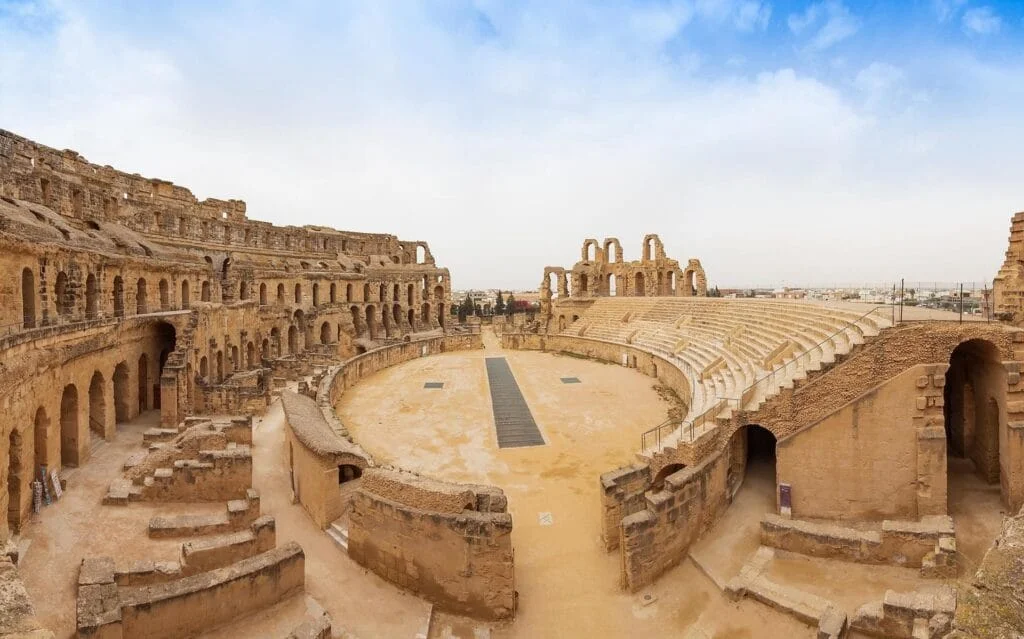
The Punic Wars between Carthage and Rome are among the most dramatic chapters of ancient history. After three major wars from 264 to 146 BC—during which the famous Carthaginian commander Hannibal came close to defeating Rome—Carthage was ultimately completely destroyed and razed to the ground in 146 BC. The Romans later resettled the area and built a thriving province of Africa. During the Roman era, a number of architectural masterpieces were created here, many of which have survived to this day, including the amphitheatre in El Djem—the third-largest colosseum in the world.
After the fall of Rome in the 5th century, the region was taken over by the Vandals, a Germanic tribe that established an independent kingdom here. Their rule, however, lasted only a century before the area was conquered by Byzantium in the 6th century. The real turning point came in the 7th century with the arrival of the Arabs, who founded the holy city of Kairouan in 670 and began the Islamisation of the region. Local Berbers gradually adopted Islam and the Arabic language, which fundamentally reshaped the country’s character. This was followed by a period of Arab dynasties such as the Aghlabids, Fatimids, and Hafsids, under whose rule Tunisia reached a golden age and Tunis grew into an important city.
In the 16th century, Tunisia became part of the Ottoman Empire after the invasion of 1574. The following century was marked by semi-autonomous rule by local beys, who formally recognised the sultan but in practice governed independently. In the 19th century, however, an economic crisis and debt to France provided a pretext for colonial expansion. In 1881, France occupied Tunisia and established a protectorate that lasted until the mid-20th century.
The struggle for independence peaked after World War II, when the nationalist movement led by Habib Bourguiba achieved major successes. France was forced to recognise Tunisia’s independence on 20 March 1956. A year later, on 25 July 1957, the country was declared a republic and Habib Bourguiba became its first president. French troops did not fully withdraw until 1963. Bourguiba steered the country toward Western-style modernisation and pushed for a more secular society.
In December 2010, Tunisia became the place where the so-called Arab Spring began, when a young street vendor set himself on fire in protest against poor living conditions and unemployment. This event triggered a wave of protests that led to the resignation of long-time president Zine El Abidine Ben Ali and to subsequent democratic changes across the Arab world.
Location, geography, and climate
Location and geography
The Republic of Tunisia is located in the northwestern part of the African continent on the Mediterranean coast. With an area of 163,610 km², it ranks among the smaller African countries—roughly twice the size of the Czech Republic. Even though Tunisia is in Africa, only a narrow stretch of sea separates it from Europe. It’s just 130–150 km from Sicily in Italy and only 160 km from Sardinia, making it one of the closest African destinations for European travelers.
Tunisia borders Algeria to the west (a 965 km border) and Libya to the southeast (a 459 km border). Together with these countries and Morocco, it forms the region known as the Maghreb, which means “west” in Arabic. The remaining border is the Mediterranean Sea coastline, stretching roughly 1,150–1,300 km, and it’s also home to the northernmost point of the entire African continent—Cape Blanc (White Cape).
Geographically, Tunisia is exceptionally diverse. The northern part of the country is dominated by the Dorsale mountain range, an extension of the famous Atlas Mountains. Tunisia’s highest point is Jabal ash-Shanabi (Jebel ech Chambi), rising to 1,544 m above sea level. The north is the most fertile part of the country and is home to the only permanent river, the Medjerda (all others are seasonal). The northern coastline is defined mainly by cliffs and coral reefs.
The central part of the country is made up mostly of steppe landscapes and plateaus with salt lakes known as “chotts” (Arabic: chott). The farther south you go, the drier and more parched the scenery becomes. The southern third of the country is covered by the Sahara Desert, with a wide range of landforms—from classic sand dunes and dried-out valleys to vast rocky plains and mountains. Tunisia also includes several islands, with the largest being tourist-favorite Djerba off the southeastern coast.
Climate and weather for travelers
Tunisia lies in the subtropical zone, and its climate varies noticeably by region. The northern part of the country has a typical Mediterranean climate, with hot, dry summers and mild, wetter winters. In July and August, average summer temperatures in the north reach 30–35 °C, while the sea warms up to a comfortable 27–28 °C. Winters are mild, with temperatures around 15–18 °C. Rainfall falls mainly from October to March, but it’s never persistent.
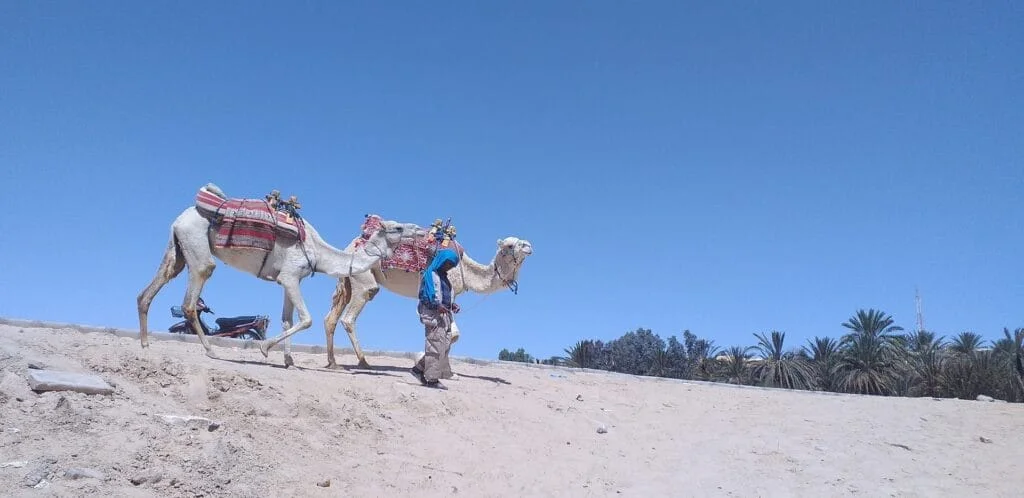
Southern Tunisia shifts into a desert climate, with extremely hot summers and warm winters. In summer, daytime temperatures commonly hover around 35 °C but can climb as high as 50 °C, while at night they can surprisingly drop to around freezing. Winter temperatures in desert areas are typically around 13–18 °C during the day, with much colder nights. Rainfall in this region is minimal.
The best time for a beach holiday is from June to September, when the weather is settled and sunny, and the sea is warm enough for swimming. July and August are the hottest months, with temperatures climbing above 35 °C. June and September are a bit more comfortable, usually around 27–30 °C. You’ll also get very pleasant weather in May and early October, with temperatures roughly 23–26 °C. For visiting the desert, on the other hand, the ideal time is the winter season (November to March), when temperatures aren’t as extreme.
Tunisia enjoys a high number of sunny days all year round— even in winter you can count on a few hours of sunshine a day, and in summer it’s practically sunny all the time. The rainy period runs from October to March, with December usually being the wettest month, bringing 8–10 days of rainfall, especially in the northern regions.
| Month/Season | Typical weather and what to expect |
|---|---|
| Spring (March–May) | Gradual warming, temperatures 18–26 °C, great for sightseeing and spring trips, fewer tourists |
| Summer (June–August) | Hot and dry, temperatures 29–37 °C, warmed-up sea 24–28 °C, best for the beach, peak tourist season |
| Autumn (September–November) | Pleasant temperatures 18–30 °C, sea still warm until October, fewer crowds, ideal for mixing beach time with trips |
| Winter (December–February) | Mild winters in the north 15–18 °C, cooler nights, more rainfall, ideal for desert visits and lower prices |
Regions and types of destinations
Tunisia offers remarkable geographic variety, making it easy to choose a region that matches your travel style. Each part of the country has its own distinct charm and delivers a different kind of experience.
The northern coast and the Cap Bon Peninsula
The northern Tunisian coast is the most developed tourist area in the country, with the prettiest beaches and the best infrastructure. You’ll find popular resorts here such as Hammamet, Nabeul, Gammarth, and Tabarka. The Cap Bon Peninsula juts out into the Mediterranean and serves up scenic landscapes that blend mountains, fertile plains, and beautiful beaches.
Hammamet is considered the most important tourist hub in all of Tunisia. Thanks to its location on the southern edge of the Cap Bon Peninsula, it’s an ideal base for trips across northern Tunisia. Nearby is the capital, Tunis, with historic Carthage and the picturesque Sidi Bou Said; just 76 km away you’ll find the famous colosseum in El Jem. Hammamet itself offers a rich history, with a charming old town—its medina—that’s perfect for romantic evening strolls.
The Central Coast – Sousse, Monastir, and Port El Kantaoui
The central stretch of coastline is another key tourist region, with cities such as Sousse, Monastir, Mahdia, and Port El Kantaoui. This area delivers an excellent mix of long sandy beaches, historic landmarks, and modern tourist facilities.
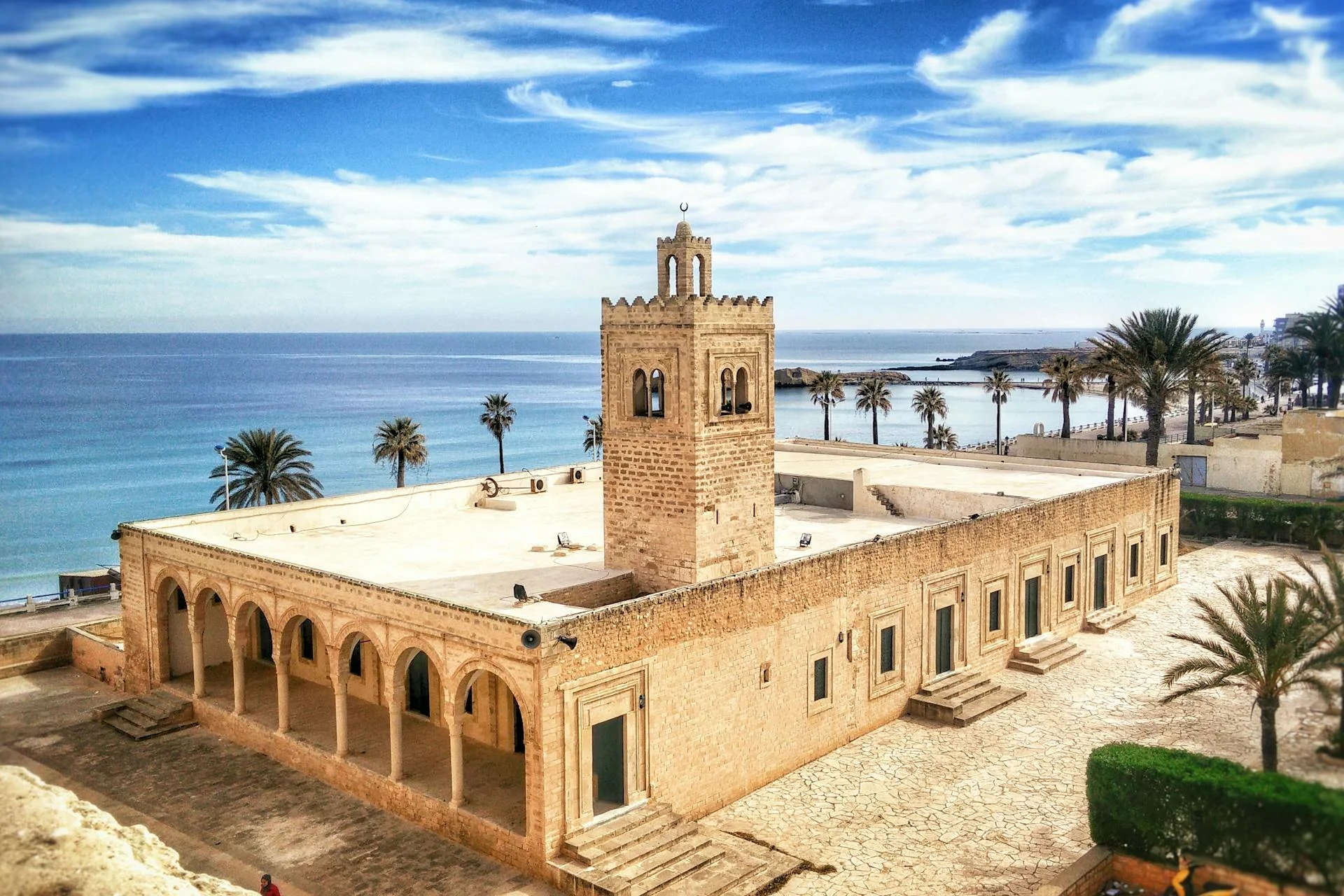
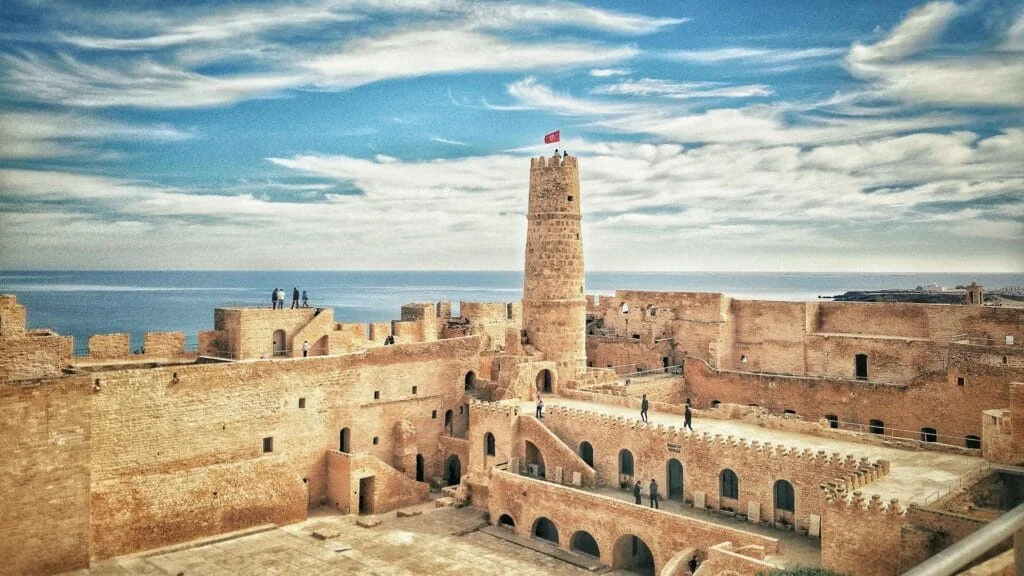
Sousse is Tunisia’s third-largest city and a major holiday hub with nearly 10 kilometers of sandy shoreline. The city has a rich history reaching back to the Punic era, and its medieval medina is listed as a UNESCO World Heritage Site. Monastir, the birthplace of Tunisia’s first president Habib Bourguiba, offers not only beautiful beaches but also a historic fortress (ribat) and a mausoleum.
The Island of Djerba
Djerba is the largest island in North Africa and a standalone holiday destination with a distinctive vibe. The island is famous for its exceptionally beautiful beaches with white sand and crystal-clear water that feel almost Caribbean. The best known is Sidi Mahrez Beach on the northeast coast, lined with luxury resorts and palm trees. The water here is so shallow that you can walk dozens of meters from the shore and it will still only be waist-deep.
Djerba is both a Mediterranean and a Saharan island, and it has fascinated visitors since the time of Homer. According to legend, Odysseus tasted “lotus” fruit here—said to make him forget his longing to return home. The island combines holiday clubs, outdoor activities, and a one-of-a-kind cultural heritage.
The Southern Desert and Oases
Southern Tunisia is a completely different world—the world of the Sahara Desert, oases, and Berber villages. This region is ideal for adventurous travelers looking for an authentic experience. The main gateways are the towns of Douz, known as the “Gateway to the Sahara,” and Tozeur, home to Tunisia’s largest oasis.
Douz sits on the edge of the Grand Erg Oriental desert and serves as a launch point for trips into the true Sahara, with its vast sand dunes. Every November, the town hosts the traditional Sahara Festival, featuring camel races and showcases of Bedouin traditions. Tozeur is a green town in the middle of the desert, surrounded by extensive date palm groves. From here, jeep excursions head to the mountain oases of Chebika and Tamerza, where scenes were filmed for “The English Patient” and “In Desert and Wilderness.”
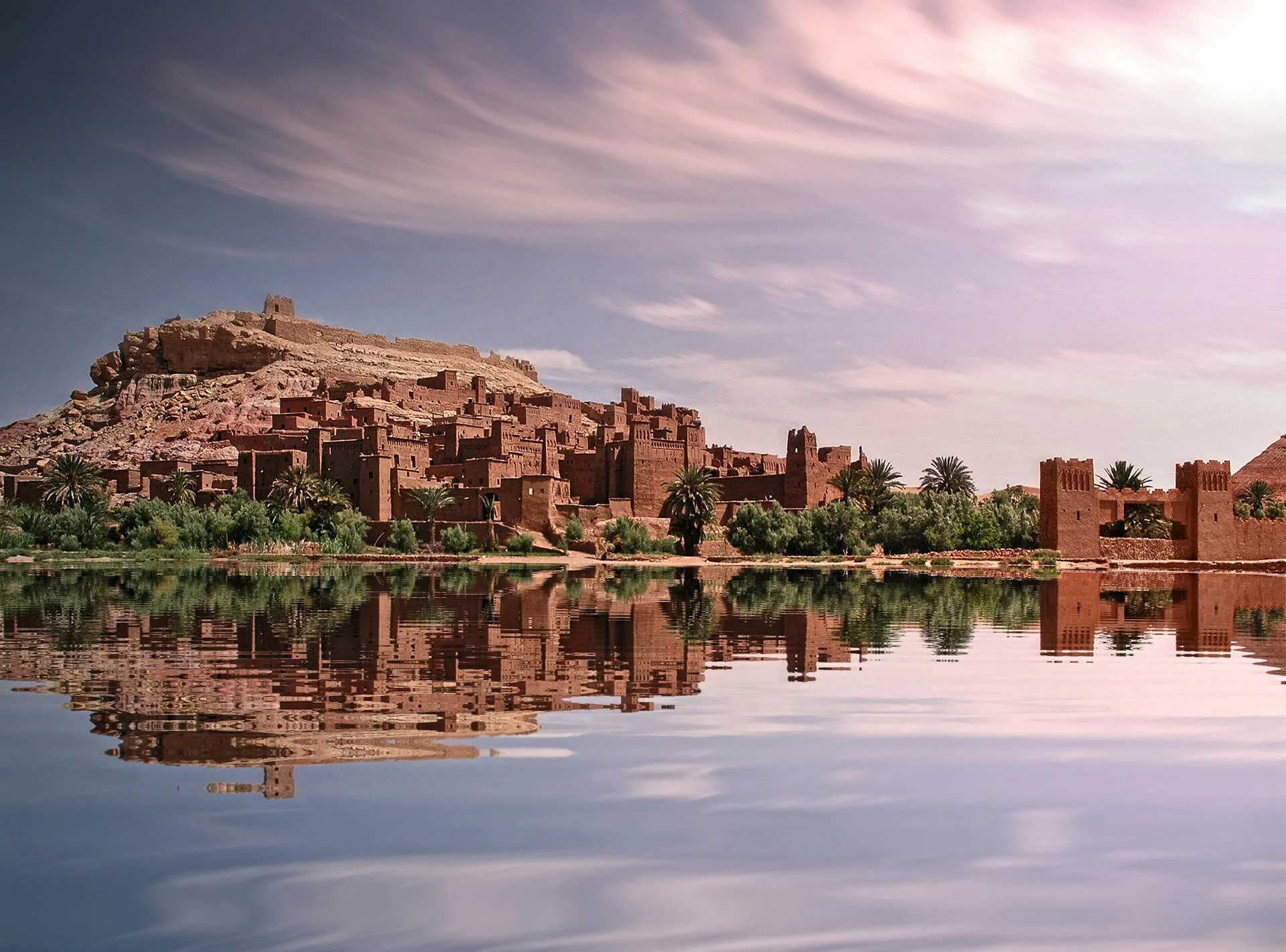
A special place belongs to Matmata, with its unique underground Berber homes. These cave dwellings with a central courtyard likely emerged during the Punic Wars, when villagers hid from enemies. Some of these homes were used as sets for Star Wars—this is where Luke Skywalker lived on the desert planet Tatooine.
The Most Famous Sights and Cities
Carthage is one of the most important archaeological sites in the entire Mediterranean. This ancient city, founded by the Phoenicians in 814 BC, became one of the symbols of North Africa. Although it was completely destroyed by the Romans in 146 BC, it regained its faded glory in the 2nd century AD as one of the most powerful cities in the world.
Carthage lies just 15 km from the capital, Tunis and is listed as a UNESCO World Heritage Site. Among the most impressive landmarks are the massive Baths of Antoninus from the 2nd century AD—the largest surviving Roman baths outside Rome itself. Their operation depended on the construction of a 90 km-long aqueduct. The site also includes remains of a school, a brothel, and partially reconstructed Roman villas. A truly memorable experience is a walk through the Roman amphitheatre, which could hold up to 36,000 spectators, and a visit to the newly restored Roman theatre, which now hosts international festivals.
The capital city of Tunis is home to nearly two million people and is a lively metropolis that blends ancient history with modern life. The heart of the city is the medina, the old town listed by UNESCO, which truly feels like a city within a city. As you wander through a maze of narrow alleyways, you’ll pass beautiful palaces that house major museums, countless mosques, and the ever-present bazaars (souks).
A highlight is the Great Mosque of Zitouna from 732, which was the first university in the Arab world and is now the most important religious building in Tunis. The souks (markets) run every day and offer a one-of-a-kind taste of the Orient. The modern part of the city stretches along Avenue Habib Bourguiba, separated from the medina by the historic Sea Gate.
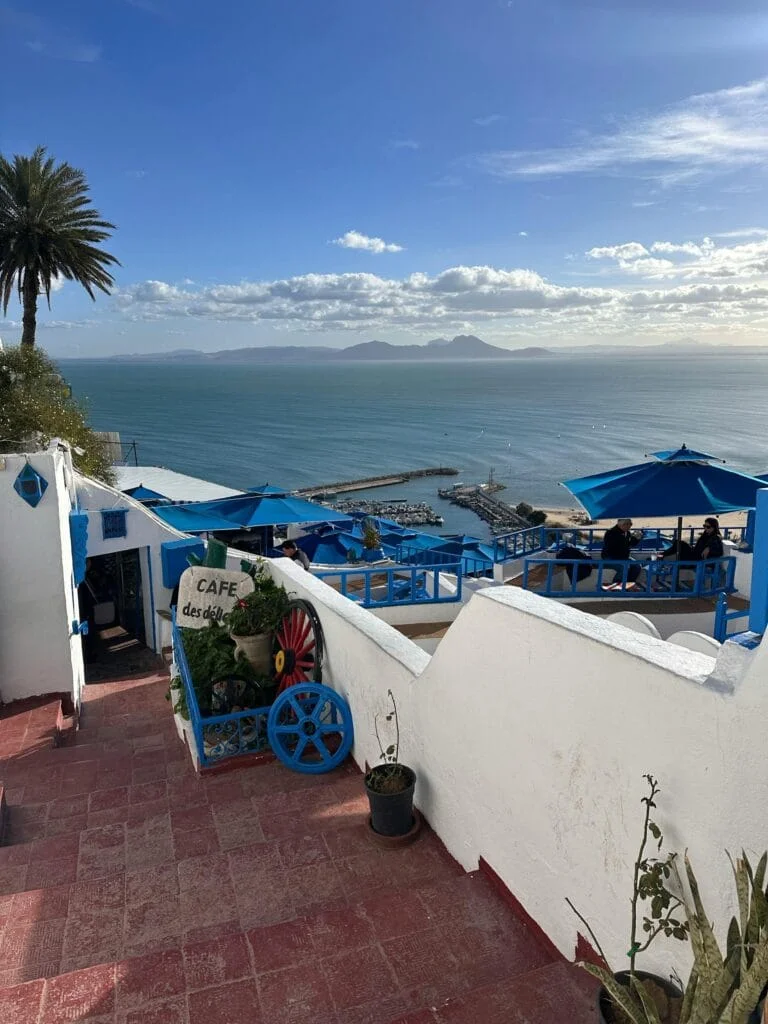
The charming village of Sidi Bou Said is one of the most photogenic places in all of Tunisia. It lies about 20 km from Tunis on a cliff overlooking the Mediterranean Sea. The village is famous for its white-and-blue houses, which look like sugar cubes with doors and shutters painted a deep blue. This colour pairing isn’t random—white represents jasmine (Tunisia’s national flower), and blue symbolises the sky and the sea.
As you stroll through the village, you’ll be swept up not only by its unmistakable charm, but also by sweeping views of the sea and parts of Tunis. No visit to Sidi Bou Said is complete without stopping at one of its two famous cafés. Café des Nattes sits on a small square where scenes from the film Angelique and the Sultan were shot, while Café Sidi Chabaane arguably offers the most breathtaking view of the sea and harbour anywhere in Tunisia.
The small town of El Jem in northeastern Tunisia is home to the world’s third-largest Roman amphitheatre. This 3rd-century AD colosseum, with room for 35,000 spectators, is the largest amphitheatre the Romans built outside Italy and ranks among the most important monuments Rome left on African soil. Built from massive sandstone blocks, its striking look also made it a filming location for the Oscar-winning movie Gladiator.
At its peak around the 3rd century, the local Roman city of Thysdrus was a thriving hub for the olive oil trade. Today, the amphitheatre is a UNESCO-listed site and one of the most visited landmarks in all of Tunisia.
Kairouan is the fourth-holiest city for Muslims after Mecca, Medina, and Jerusalem. The city was founded by Arabs in 670 AD as the first Arab city in North Africa and remained an important Islamic centre until the 11th century. According to tradition, seven visits to Kairouan equal one visit to Mecca.
The city is home to the Great Mosque (Jami el-Kebir), one of the most important Islamic buildings in North Africa. Kairouan’s historic medina is listed by UNESCO and offers an authentic glimpse into a medieval Islamic city. Beyond its religious importance, Kairouan is also known for traditional crafts, especially carpet making.
Natural beauty and national parks
Ichkeul is Tunisia’s most important and best-equipped national park, listed by UNESCO since 1979. The park lies about 25–30 km southeast of the city of Bizerte in northern Tunisia. At its heart is Lake Ichkeul, covering 50–120 km² (the size changes with the season), which in winter becomes home to as many as 200,000 migrating birds.
The park is home to more than 300 animal species, including storks, flamingos, wild ducks, wild geese, buffalo, wild boar, porcupines, jackals, and rare lemurs. A network of hiking trails of varying difficulty runs through the surrounding wetlands. One route heads up to the summit of Jebel Ichkeul (511 m above sea level), where you’ll get a great view across the whole park. Entry to the park is free.
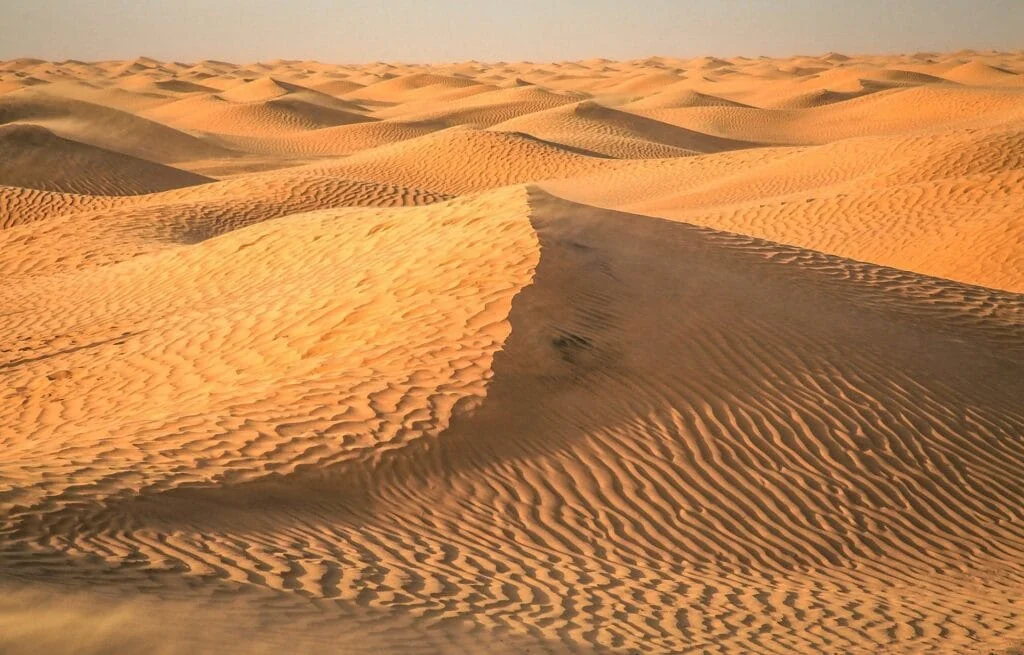
Although the Sahara reaches into Tunisia only in a tiny slice of its vast expanse, seeing the world’s largest desert up close is genuinely captivating. The Tunisian Sahara isn’t just rolling sand dunes—it’s also life-giving oases surrounded by sprawling date palm groves. The region is home to salt lakes too, and the best-known, Chott el Djerid, shifts color throughout the year; scenes from Star Wars were filmed there.
Desert trips most often start from the towns of Douz and Tozeur. Visitors can ride camels between the towering dunes of the Grand Erg Oriental, head out by 4x4 across a lunar-like landscape, or visit the mountain oases of Chebika and Tamerza in the Atlas range. If you’re after an adrenaline hit, you can opt for quad biking or paragliding flights over the salt lakes.
Among Tunisia’s standout natural attractions are its many lagoons along the Mediterranean coast. These shallow waters are home to flocks of flamingos, and some offer excellent conditions for kitesurfing or windsurfing. One well-known spot is Flamingo Island near the island of Djerba.
Best beaches
Tunisia is famous for its outstanding beaches, with fine golden-to-white sand and clear, sparkling sea. Many beaches stretch for several kilometers and slope very gently into the water, which is especially appreciated by families with children.
El Mansoura Beach in Kelibia, on the Cap Bon Peninsula, was named the seventh most beautiful beach in the world. Its pride isn’t just the bright white sand, but also the crystal-clear turquoise water. Many travelers compare it to the beaches of the exotic island of Mauritius. On top of that, the beach offers an impressive view of a Byzantine fortress perched on a nearby cliff.
The beaches in Hammamet regularly top popularity rankings. They run for more than 14 km along the east coast and are known for their scenic shoreline, cleanliness, and wonderfully soft sand. All beaches are public, with solid facilities and a wide range of water sports. Hammamet and nearby Yasmine Hammamet make up a modern resort area with one of the most beautiful beaches in Tunisia.
The beach in the resort town of Mahdia is considered one of the most beautiful natural beaches in all of Tunisia. It stretches almost 10 km south of the town and is known for its exceptionally fine white sand and crystal-clear water, whose color feels more like the Caribbean than North Africa. The gentle entry into the sea and sandy bottom are especially great for families with small children.
Sidi Mahrez Beach on the island of Djerba is the definition of Tunisia’s beach best. The area is nicknamed the “Caribbean of the Mediterranean” thanks to crystal-clear water and fine white sand that’s so bright it can almost dazzle in the midday sun. The beach stretches for several kilometres along the island’s northeast coast. The shallow shoreline is perfect for families with kids—you can walk dozens of metres out and the water will still only be waist-deep, with a sandy bottom and no rocks or sea urchins.
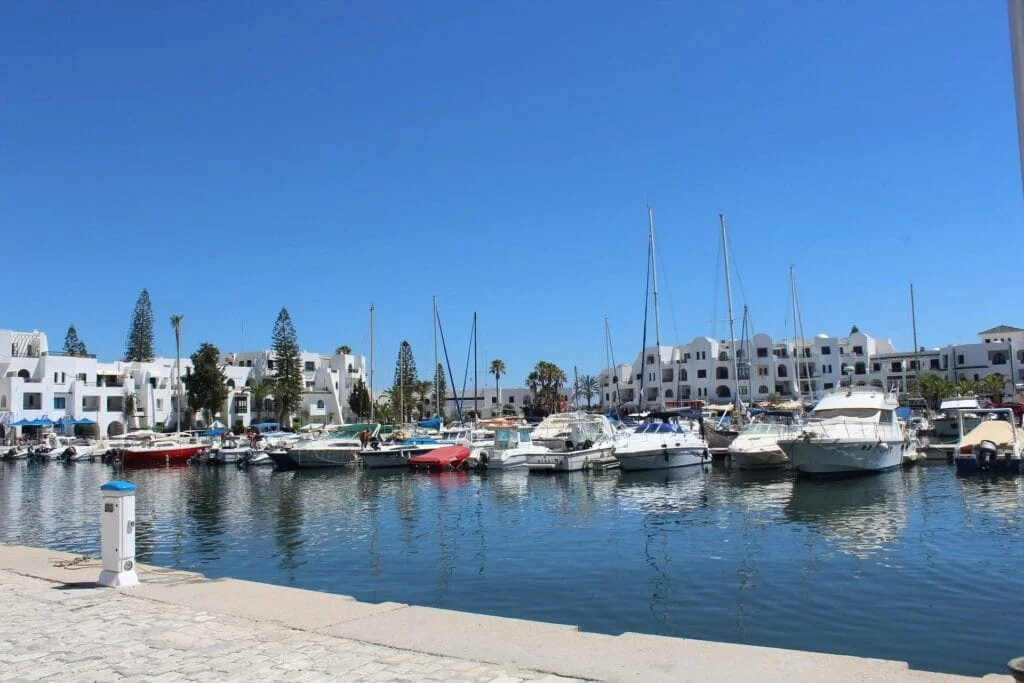
The city beach in Sousse runs almost 10 kilometres from the city centre to the port of El Kantaoui. It’s one of the liveliest stretches of Tunisia’s coastline, where the tourist buzz blends with real local life. The beach in Monastir offers a similar vibe, with a gentle entry into the sea and solid infrastructure.
Activities and entertainment
Tunisia offers a wide range of activities for every type of traveller. If you’re into water sports, the coast is a great fit—you can try windsurfing, jet skis, catamarans, banana boat rides, or paragliding. You’ll find water sports centres on pretty much every tourist beach.
Diving and snorkelling are among the most popular activities. The Mediterranean off Tunisia’s shores hides a fascinating underwater world, with coral reefs, World War II shipwrecks, underwater caves, and rich marine life. The turquoise water offers excellent visibility down to 30 metres. The most popular diving spots are the Hammamet area on the mainland and the island of Djerba. Djerba also has sites like Chobotnice Rocks, where you can dive along a 1 km canyon at a depth of 16 metres.
For fans of outdoor activities, there are camel treks into the desert, jeep trips across the dunes, and quad biking. Hiking mountain trails in national parks or Berber villages delivers stunning views and a truly authentic experience. Families with kids can visit zoos such as the crocodile farm on Djerba and the Friguia safari park near the town of Enfidha.
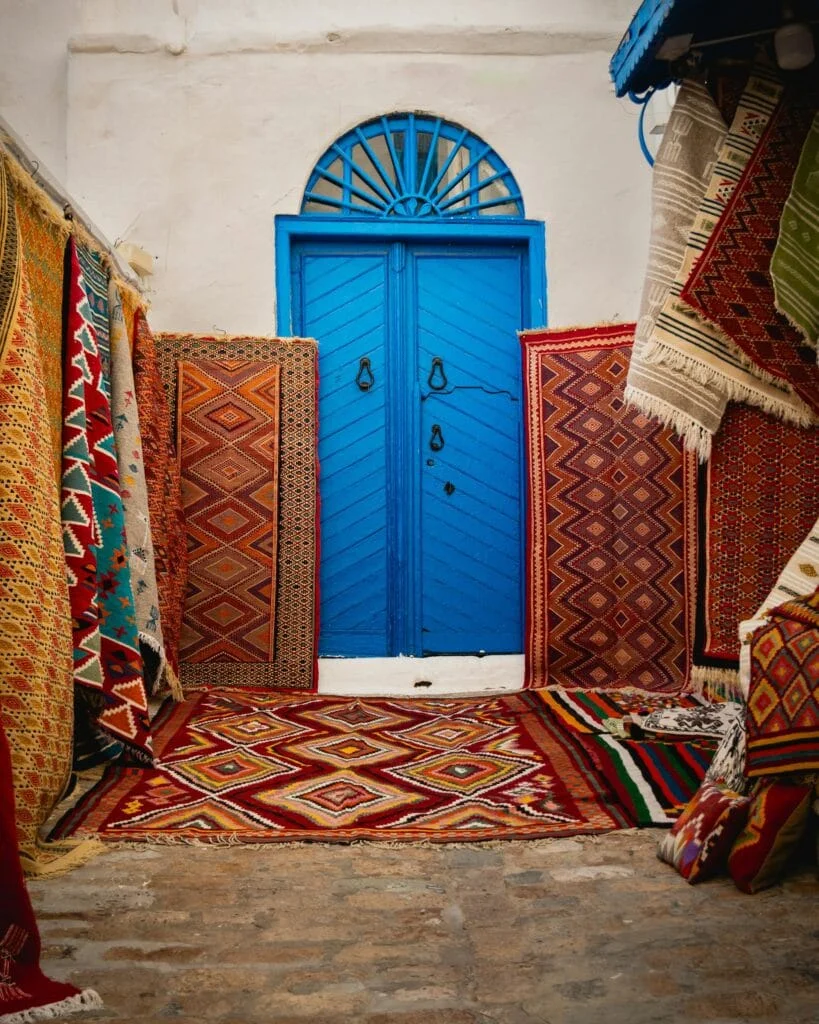
Cultural activities include visits to historic medinas with their lively markets (souks), where you can shop for traditional crafts, spices, ceramics, leather goods, and famous Tunisian carpets. A memorable experience is visiting one of Tunisia’s festivals, which take place throughout the year.
Cuisine and culture
Typical food and drink
Tunisian cuisine is a fascinating blend of Arab, Berber, and French influences. Typical Tunisian dishes are known for their spiciness—they’re often boosted with the hot harissa paste made from chili peppers, garlic, and olive oil.
Couscous is without a doubt Tunisia’s national dish and a cornerstone of the local cuisine. It’s made from tiny balls of semolina (durum wheat groats), steamed in a special pot called a “couscoussier”. Couscous has a long history that goes back to ancient times. Traditionally, it’s served with vegetables and meat (most often lamb, beef, or fish), slow-cooked and generously seasoned with spices. Couscous is loved for its fluffy texture and the way it soaks up sauces, which gives it an outstanding flavor. It’s fragrant, juicy, and still light—filling enough to keep you satisfied for a long time without feeling overly heavy.
Brik is a classic Tunisian appetizer you really shouldn’t miss. It’s a crispy, deep-fried pastry pocket made from a thin dough similar to filo. The pastry is filled with a mix of egg, tuna, potatoes, capers, or minced meat, then fried until golden and crunchy. Brik is crisp on the outside and tender and juicy inside. It’s popular as a starter or quick street-style bite, especially on festive occasions. Once you try brik, it’s hard to stop—it’s seriously addictive.
Chorba is a light soup that looks a bit like a goulash-style soup. It’s cooked with toasted green wheat and served with lemon. Tajine refers both to the dish and the clay pot it’s made in—it’s a stew similar to Moroccan tagine. Mechouia is a traditional salad made from grilled vegetables with tuna and eggs. Lablabi is a hearty chickpea soup with spices, served with bread.
Tunisian food is quite calorie-dense, which is why locals like to drink mint tea to help with digestion. Another popular drink is coffee, which is part of a traditional hospitality ritual. When you visit a Tunisian friend, they’ll almost certainly offer you something to drink—it's a sign of respect and friendship.
For desserts, you can try fresh dates, prickly pear (cactus fruit), or date liqueur. Local fruit such as fresh dates, pomegranates, figs, or melons is a healthy, tasty alternative to heavy desserts.
In Tunisia, meals are eaten at set times, much like in France. Breakfast (fotor) is usually light, lunch (gheda) is the main meal of the day, and dinner (asha) is served later in the evening. In restaurants, a tip of 5–10% of the bill is generally expected, although it’s not strictly required.
Food prices in Tunisia are much lower than in the Czech Republic. In a budget restaurant, you’ll pay around $2–$3 for a main dish; in a mid-range place, about $6–$8 per person. A local beer (0.5 l) costs around $1, a cappuccino about $0.70, and a Coca-Cola roughly $0.50.
Cultural customs and festivals
Tunisian culture is a fascinating blend of Berber, Arab, and French influences. You can see it in local customs, language, food, and clothing. Tunisia is a very tolerant country and tends to be understanding of foreign tourists’ habits, but it’s still a good idea to respect a few local rules.
Drinking mint tea or coffee is a welcome ritual and a symbol of hospitality. If you’re visiting someone, offering a drink is a sign of respect. Traditional Berber weddings stand out for their color and rich symbolism—both the groom and the bride wear traditional outfits with delicate embroidery and jewelry that reflect their cultural identity.
It is strictly forbidden to photograph or film uniformed personnel, government buildings, bridges, airports, military sites, and equipment. Women are advised not to sunbathe topless. Bringing Tunisian dinars into or out of the country is prohibited.
Tunisia is known for its festivals, held throughout the year, celebrating local culture, traditions, and the arts. Ramadan is the most important Islamic holiday, when Muslims fast from dawn to sunset for one lunar month. After sunset, streets and restaurants fill with people joining evening meals known as iftar.
The International Festival of Carthage (July–August) is one of the country’s biggest cultural events. It offers a varied program of music concerts, theater performances, and art exhibitions. The Sahara Festival in Douz is a four-day event celebrating Berber and desert heritage. You can see camel races, traditional sword dances, folk music, poetry, and craft demonstrations.
The Odysseus Festival of music and dance and the Falconry Festival take place in June, while the Tabarka Festival, featuring folk crafts and music, runs in August. In April, the Flower Festival in Nabeul is held as a celebration of spring, and the Oasis Festival in Tozeur highlights traditional culture and life in the oases of southwestern Tunisia.
Key practical information
Currency and payments
The official currency in Tunisia is the Tunisian dinar (TND), which is divided into 1,000 millimes. One dinar is roughly $0.30–$0.35 (the exchange rate may vary). Bringing Tunisian dinars into the country or taking them out is strictly prohibited. If you have some local currency left over, you can exchange it back into foreign currency at the airport, so it’s best to exchange money gradually as needed and keep your exchange receipts.
You’re allowed to bring foreign currency up to a value of 10,000 TND into Tunisia. If you’re carrying more, you must declare it during customs and currency checks on arrival. You can exchange money in most hotels at the reception desk, at exchange offices, or in banks. US dollars and euros are also accepted in many places, but sellers often make up their own exchange rates. Cards are widely accepted in hotels, larger restaurants, and shops, but you’ll need cash at markets and in smaller businesses.
Tipping is standard—restaurants typically expect 5–10% of the bill. At markets and in shops, bargaining is common. There are a few places with fixed prices (so-called “fix price”) where haggling isn’t appropriate—typically in hotels, museums, and similar services.
Entry requirements and visas
To travel to Tunisia, you need a passport valid for at least 6 months after your return from the destination. For package holidays with a tour operator, a passport valid for 3 months before entry into the country is sufficient. No visa is required for tourist stays shorter than 90 days.
Tunisia has a mandatory tourist tax, which is payable after you arrive at your accommodation. The tax depends on the category of the property and is charged only for guests over 12 years old. The amount may change during the season, but it’s usually around 1–3 TND per person per night, for a maximum of 7 nights.
Safety and local customs
After recent terrorist attacks, Tunisia tightened its security measures, and holidays here are now safe. In general, Tunisia and other tourist areas are relatively safe. Even so, it’s wise to follow basic safety rules—keep an eye on your belongings, don’t show off valuables, and stay alert in less busy areas.
The embassy has recorded cases where EU women are repeatedly contacted by Tunisian men for the purpose of getting acquainted via social media. It’s recommended to be cautious when making online connections.
Healthcare and vaccinations
No vaccinations are mandatory for entry into Tunisia. Recommended vaccinations include typhoid, hepatitis A, and hepatitis B. It’s a good idea to have travel insurance that covers medical treatment as well as possible repatriation.
Tap water isn’t safe to drink—it's best to buy bottled water in shops. The quality of healthcare is good in tourist areas, but outside the main cities it may be limited.
Fauna and flora
Tunisia is home to more than 360 bird species, including eagles, which you’ll spot especially in national parks. Tunisia is also a popular destination for migratory birds—during the winter months, storks, flamingos, wild ducks, wild geese, kingfishers, and many other species arrive here.
In the wild and in national parks, you can see mouflons, jackals, porcupines, lynx, deer, mouflons, ostriches, gazelles, hyenas, and tortoises. A very rare representative is the lemur, which lives in Ichkeul National Park. Desert dwellers include dromedaries (they always have an owner), fennecs (desert foxes), monitor lizards, various species of snakes, scorpions, and insects.
Marine life along the coast includes octopuses, spiny lobsters, moray eels, sardines, mackerel, and tuna, and in summer you can also spot bottlenose dolphins close to shore. For divers, there are sites with a vibrant underwater world featuring sea fans, groupers, cuttlefish, giant clams, and bivalves.
Tunisian nature is incredibly diverse. The northern Dorsale mountains are covered with forests made up mainly of cork oaks and pines, complemented by heathland vegetation. The valleys of northern Tunisia have green meadows and oak woods.
Fertile plains provide great conditions for growing vegetables, grains, olive trees, and grapevines. Fruit farming is also widespread—oranges, lemons, mandarins, almonds, figs, pomegranates, peaches, apricots, mulberries, strawberries, and melons. Aromatic plants are grown too, such as thyme, bay laurel, mint, rosemary, and eucalyptus.
In steppe areas, agaves and prickly pear cacti grow. Southern Tunisia is famous for its oases with date palms, with the total number estimated at up to 5 million. Tunisia’s national flower is jasmine, and oleanders, roses, and lilies are also common.
Desert vegetation includes various species of cacti and grasses, wormwood with its bitter scent, and the cork oak, an important tree for Tunisia’s economy. Unique Tunisian plants also include the so-called strawberry tree, whose fruit resembles strawberries, and the prickly pear (opuntia), whose fruit is suitable for eating.
Transport and logistics
How to get there
Tunisia is easy to reach from the Czech Republic by air. The main international airports are in Monastir (near Sousse) and Tunis-Carthage. From Prague, you can fly to Monastir in roughly 2.5 to 3 hours. The average round-trip ticket typically costs around $300–$390 (depending on the season and how far in advance you book).
Tunis-Carthage (TUN) Airport is about 8 km from the city center. From the airport, you can get into town by taxi, via the Bolt app, by public bus, or you can rent a car.
Getting around the country
Taxis are a cheap and convenient option across Tunisia for shorter trips. They have meters with a fixed per-kilometer rate, but officially drivers are also allowed to negotiate the fare, which they often do. That’s why it’s smart to ask for an estimated price upfront. Between 9 pm and 5 am, a 50% surcharge applies. Luggage is charged separately.
From Tunis-Carthage Airport to the city center, a taxi via Bolt costs on average 14 TND (about $5). The base fare for a regular taxi is $0.20, and 1 km costs $0.35.
A Tunisian classic is the shared taxi with a red stripe, known as a “louage”. These minibuses run between cities and pick up passengers along the way. Riding one usually works out cheaper than a regular taxi. The louage system is simple: you go to the minibus stand, wait by the sign for your destination, and once there are 8 of you, you set off. City minibuses with a blue stripe work in a similar way.
Urban buses operate in larger cities such as Hammamet, Sousse, and Monastir. They’re not especially comfortable and don’t run on fixed timetables, but the fares are very low— a one-way ticket costs around $0.25.
For longer distances, go for the more comfortable intercity buses. The most comfortable and reliable coach service between cities is run by the national bus company SNTRI. You can book tickets online in advance on their easy-to-use website, where you’ll find timetables, prices, distances, and journey times. Coaches run several times a day between larger cities, while smaller towns and villages are served only occasionally.
As a legacy of the French colonial era, Tunisia has a solid rail network connecting major cities. Train travel is especially useful for longer routes. You can comfortably get between Tunis, Sousse, Sfax, El Jem, Monastir, and Gabès. Trains are operated by the national company SNCFT and are fairly modern with pleasant air conditioning. Train travel costs roughly the same as taking the bus. However, you may end up waiting longer for a train, without a precise timetable.
If you’re planning to explore Tunisia independently and want to head into the mountains or rural areas, renting a car is the best—and in practice the only—option. Many well-known international car rental companies operate at airports and in larger cities. Prices for 1 week start at 220 EUR (about $240). Renting a car requires a minimum age of 21 and comes with extra fees and expensive insurance.
Driving rules are similar to those in Europe, but it’s worth staying alert for unpredictable behavior from some drivers. Parking in tourist areas is generally available, but it can be limited in historic city centers.
Prices and travel budget
Compared to the Czech Republic, prices in Tunisia are significantly lower for food, transport, and entry fees, while accommodation is only slightly cheaper.
Estimated daily budget for 2 people
| Category | Low budget | Mid-range budget | Luxury budget |
|---|---|---|---|
| Accommodation | $18 | $35 | $130 |
| Transport | $4 | $4 | $22 |
| Food | $9 | $18 | $35 |
| Attractions and entertainment | $0 | $9 | $44 |
| Total per day | $31 | $66 | $231 |
Accommodation
The average price of a double room in a hotel ranges from $23 (a simple hotel) up to $310 (a luxury 5* hotel) per night. A mid-range (3*) hotel typically costs around $60–$78 per night, while an upper mid-range (4*) hotel comes to about $91–$104 per night.
Dining
Food prices in Tunisia are 55% lower than in the Czech Republic. A meal at a budget restaurant costs $2–$3 per person. A three-course meal at a mid-range restaurant comes to $7–$9 per person. A local beer (0.5 l) costs around $1, a cappuccino $1, a Coca Cola (0.33 l) $0.50, and water $0.20.
In shops, you can pick up especially good deals on bakery items (a loaf of bread $0.10), chicken ($4/kg), dairy (milk $0.40/l), eggs ($1 for 12), and some types of fruit (oranges $1/kg, tomatoes $0.60/kg, potatoes $0.50/kg).
Transport
A one-way ticket on a city bus costs around $0.30. A taxi starts at $0.20, 1 km costs $0.30, and an hour of waiting is $4. Car rental for 24 hours costs on average $48.
Attractions and admission
Admission to museums and sights is 38% cheaper than in the Czech Republic. Average entry to a museum or historic site is around $3–$6. A one-week rental of sports equipment (windsurfing, etc.) costs about $39 on average, and a monthly fitness membership $50.
Tips for saving money
For truly frugal, low-maintenance travelers, it’s possible to get by in Tunisia on as little as 20 TND a day (about $6). A solid middle ground—enough for a good hotel and decent meals—is 40 TND, and with 60 TND a day you’ll have a buffer so that unexpected costs shouldn’t throw you off.
Package holidays with a travel agency can start at around $280 per person for a week, depending on the hotel’s quality and how far it is from the beach. After that, you can plan day trips and travel adventures on your own for less.
How to plan the perfect trip
Choosing a region based on your travel style
For families with kids, Hammamet, Sousse, or the island of Djerba are great choices. These areas offer a gentle entry into the sea with a sandy bottom, high-quality hotels with all-inclusive packages, and plenty of kid-friendly activities. The beaches are safe and clean, and the shallow water makes swimming safer for children.
For young couples and active travelers, Hammamet or Sousse are a solid fit. Along with beautiful beaches, they offer lively nightlife, water sports, and make an ideal base for day trips across Tunisia. Hammamet is within easy reach of the capital Tunis, Carthage, El Jem, and other major sights.
For history and culture lovers, a trip to northern Tunisia is a must, with the capital Tunis, Carthage, Sidi Bou Said, and Kairouan. You can mix sightseeing with downtime on the beaches in Hammamet or Gammarth.
For adventurers and nature lovers, head to southern Tunisia, with the Sahara Desert, the oases of Douz and Tozeur, Berber villages, and national parks. This region pairs well with a stay on the island of Djerba.
For seniors and couples looking for peace and quiet, the island of Djerba or Mahdia are ideal. These areas have a calmer vibe, beautiful beaches without big crowds, and comfortable hotels.
What to watch out for when planning
Booking ahead is especially worth it in peak season (July–August), when the best hotels and flights can sell out fast. In the shoulder season (May, June, September, October), you’ll get better prices and fewer crowds.
Common planning mistakes include underestimating distances in the desert (Sahara trips take a full day), not using enough sun protection (the hot summer calls for a high SPF), and ignoring local customs (more conservative clothing away from the beach).
Myths about Tunisia include the idea that it’s unsafe—after tighter security measures, the country is safe for tourists. Another myth is that you can’t get by without Arabic—in tourist areas, French, English, and German are widely spoken.
Sample itineraries
- Day 1–3: Hammamet – relax on the beach, explore the medina
- Day 4: Day trip to Tunis, Carthage, and Sidi Bou Said
- Day 5: Visit the Colosseum in El Jem and the city of Kairouan
- Day 6–7: Return to Hammamet, water sports, relaxation
- Day 1–3: Sousse or Monastir – beach, medina
- Day 4: Transfer to Tozeur via El Jem
- Day 5: The mountain oases of Chebika and Tamerza, the salt lake Chott el Djerid
- Day 6: Douz – camel ride in the Sahara
- Day 7: Matmata – Berber homes, Star Wars filming locations
- Day 8–10: The island of Djerba – unwind on the most beautiful beaches
- Day 1–4: The north – Tunis, Carthage, Bizerte, Ichkeul National Park
- Day 5–7: Hammamet – beach time, day trips nearby
- Day 8–9: The center – Sousse, Monastir, El Jem, Kairouan
- Day 10–12: The south – Tozeur, Douz, the Sahara, Matmata
- Day 13–14: Djerba – beach relaxation
Summary and a final tip
Tunisia is a fascinating destination that packs an exceptional variety of experiences into a relatively small area. In a single holiday, you can mix downtime on Mediterranean beaches with powder-white sand, exploring centuries-old landmarks from Punic Carthage and a Roman amphitheatre to Arab medinas, adventures on the Sahara’s sand dunes, and getting to know authentic Berber culture. Tunisia is ideal for anyone who wants a taste of the Orient in a safe, great-value setting just a three-hour flight from the Czech Republic.
The country’s biggest draws include eight UNESCO-listed sites, including ancient Carthage and sacred Kairouan; some of the most beautiful beaches in the Mediterranean such as El Mansoura or Sidi Mahrez on Djerba; standout natural scenery from Ichkeul National Park with 200,000 migrating birds to the endless dunes of the Sahara; and rich cuisine that blends Arabic spices with French finesse. On top of that, it’s budget-friendly, with noticeably lower prices than in the Czech Republic—especially for food and transport.
When making your final decision about a trip to Tunisia, think about what kind of holiday you’re after. If your main goal is beachside downtime with great hotels and all-inclusive comfort, focus on Hammamet, Sousse, or Djerba. For a mix of beach time and culture, choose the north, with easy day trips to Tunis and Carthage. If you’re craving adventure and a more authentic feel, don’t plan your trip without visiting the southern desert and Berber villages. A multi-stop tour that covers several regions is often the best choice—it lets you experience the country’s many different sides.
No matter which region or travel style you choose, Tunisia delivers an unforgettable getaway packed with sunshine, exotic charm, and warm hospitality. The key is to go with the flow: try local couscous and brik, haggle at the souk, ride a camel across the sand dunes, and soak up the magic of Sidi Bou Said’s blue-and-white houses as the sun sets over the Mediterranean.
Kategorie: