South Africa: From Safari to the Ocean in One Guide
South Africa is one of the most fascinating and diverse destinations on the African continent. It offers a unique blend of untamed nature with modern infrastructure, rich cultural heritage with today’s cosmopolitan vibe, and lively city hubs with stunning natural scenery.
Whether you’re drawn to a starlit safari, whale watching, strolling through historic towns, or unwinding on famous beaches, South Africa delivers everything a traveler could want.
The country’s history – From ancient times to a modern state
South Africa has one of the longest records of human presence on Earth. The oldest archaeological finds date back 70,000 to 80,000 years, when modern humans (Homo sapiens) lived around Walker Bay at the De Kelders site, leaving behind stone tools, bones, and traces of hearths. These remains are among the oldest evidence of modern humans and are housed in the Cape Town Museum. Later, the area was settled by the Khoekhoen and the San (originally referred to as Bushmen), who lived here as hunter-gatherers with a rich culture and language.
The arrival of Europeans changed the country’s history in a fundamental way. In 1652, Jan van Riebeeck founded a Dutch settlement in Cape Town as a supply station for ships heading to Asia. This settlement gradually expanded and led to the displacement of the indigenous population. It was followed by a period of British rule, shaped by colonization and conflicts between European settlers and local tribes, especially the Zulu. In 1879, the pivotal Anglo-Zulu War took place, after which the British ultimately broke Zulu power and forced them to live in reserves under British control.
The best-known and darkest chapter of more recent history is apartheid—an official state policy of racial segregation that lasted from 1948 to 1994. Apartheid legally separated people by skin color and stripped Black and mixed-race communities of basic rights, including access to education, healthcare, restaurants, cinemas, and public spaces reserved for white people. This era brought extreme physical and psychological suffering, which was challenged through mass protests and international sanctions.
Nelson Mandela, a symbol of the fight for freedom and equality, spent 27 years in prison, including 18 years on Robben Island, before being released in February 1990. His election as president in 1994 marked the end of apartheid and the start of South Africa’s transformation into a democratic state. Since then, the country has evolved into an open, multicultural society with global influence.
Location, geography, and climate
South Africa lies at the southern tip of the African continent and is bordered by two oceans: the Atlantic Ocean to the west and the Indian Ocean to the east and south. The country covers roughly 1.22 million square kilometers and borders six countries: Namibia, Botswana, Zimbabwe, Mozambique, Eswatini, and it completely surrounds Lesotho. South Africa has three capital cities: Pretoria (the seat of government), Cape Town (the seat of Parliament), and Bloemfontein (the seat of the Supreme Court).
The country’s geography is incredibly varied. The Drakensberg, also known as the Dragon Mountains, stretch across the east and form a mountain range with a maximum elevation of 3,482 meters. Table Mountain, rising above Cape Town to 1,086 meters, is one of the New Seven Wonders of Nature. The Blyde River Canyon in Mpumalanga is one of the largest canyons in the world, reaching depths of up to 750 meters. The “God’s Window” viewpoint offers a breathtaking look out over the African landscape.
South Africa also has an extensive network of national parks and protected areas. The largest is Kruger National Park, covering about 19,500 square kilometers, and home to the Big Five: lions, elephants, leopards, rhinos, and buffalo. Other key natural highlights include Addo Elephant National Park, which protects more than 550 elephants, and Table Mountain National Park with its unique flora and fauna.
Climate and weather for travelers
South Africa is in the Southern Hemisphere, so its seasons are the reverse of Europe’s. The climate is mostly subtropical, with a clear split between summer and winter. When it’s winter in the Europe, it’s summer in South Africa, and vice versa.
The west of the country around Cape Town has a Mediterranean climate, with warm, dry summers and mild winters. In the Western Cape, summer (December to March) is very warm with temperatures around 26 to 30 °C, while winter (June to August) is mild with temperatures of 10 to 18 °C. The ocean water here is cool, staying around 15 to 18 °C year-round. The air often feels especially fresh thanks to winds known as the “Cape Doctor,” which clear the air and help disperse city pollution.
In the east and north, the climate is warmer and more humid. Summer temperatures can climb to 35 °C, while in winter they usually sit around 20 °C. The Indian Ocean along the east coast is warmer, creating comfortable conditions for swimming and water sports.
If you like warm weather and low rainfall, visit during our winter—November to March, when it’s summer locally. The weather is beautiful: sunny and dry. If you’d rather have milder temperatures without intense heat, go from April to May or from September to October. That’s the spring and autumn shoulder season, with pleasant temperatures around 18 to 22 °C.
The season for whale watching in Hermanus runs from June to November, with the peak in September and October, when whales come in to mate and give birth. If you’re planning a safari in Kruger National Park, the best time is May to September (the dry season), when animals gather around water sources and are easier to spot.
Average temperatures in Cape Town (Atlantic Ocean)
This city has a Mediterranean climate, with warm, dry summers and mild, wetter winters.
| Month | Average daytime temperature | Average nighttime temperature | Sea temperature |
|---|---|---|---|
| January | 26 °C | 18 °C | 19 °C |
| February | 27 °C | 18 °C | 18 °C |
| March | 25 °C | 16 °C | 18 °C |
| April | 23 °C | 14 °C | 17 °C |
| May | 20 °C | 12 °C | 16 °C |
| June | 18 °C | 10 °C | 16 °C |
| July | 17 °C | 9 °C | 15 °C |
| August | 17 °C | 9 °C | 15 °C |
| September | 19 °C | 11 °C | 15 °C |
| October | 21 °C | 13 °C | 16 °C |
| November | 24 °C | 15 °C | 17 °C |
| December | 25 °C | 17 °C | 18 °C |
Regions and destination types
Western Cape – Cape Town and surroundings
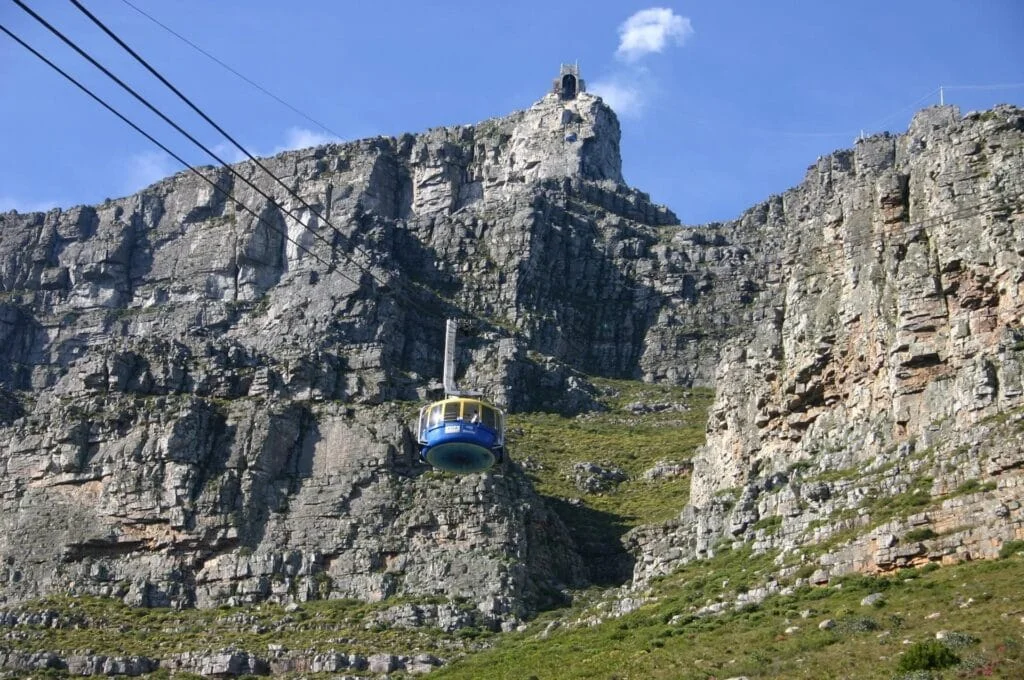
Cape Town is the second-largest city in South Africa and one of the most beautiful cities in the world. This cosmopolitan hub draws travelers from all over. The main highlight is Table Mountain, which you can reach by a rotating cable car with 360° panoramic views. The ride takes just 5 minutes, but in peak season you may run into queues. Another option is to take one of the hiking trails, such as the famous Platteklip Gorge (about 2 hours) or the gentler Skeleton Gorge route that goes through the botanical garden.
Near Cape Town you’ll also find the Cape Peninsula, which stretches south and ends at the Cape of Good Hope and Cape Point. The area around the cape is part of the Cape of Good Hope Nature Reserve and offers stunning coastal scenery, penguins, seals, and beautiful beaches.
Northeast of Cape Town lies the Winelands region, home to the famous wine towns of Stellenbosch, Franschhoek, and Paarl. You’ll find wine tastings at local estates, beautiful mountain valleys, colonial architecture, and outstanding food. Franschhoek is the heart of South Africa’s premium wine scene, with vineyards dating back to the mid-17th century.
Along the southern Cape coast runs the famous Garden Route, a 200-kilometer drive from Mossel Bay to Storms River that’s often ranked among the most scenic road trips in the world. On the way, you can stop at Tsitsikamma National Park, with its lush forest, hiking trails, and adrenaline-packed activities, including bungee jumping from Bloukrans Bridge. At 216 meters, it’s the highest commercial bungee bridge in the world.
Eastern Cape and KwaZulu-Natal
This region is rich in historical and cultural heritage, especially tied to the Zulu people and the Anglo-Zulu conflict. The town of Hermanus in the west is a global hotspot for southern right whale watching. From June to November, whales migrate here from Antarctica to breed, and you can often spot them straight from the cliffs without binoculars. The season peaks in September and October, when the Hermanus Whale Festival takes place, with music, food, and educational programs.
Farther east is the Drakensberg (Dragon Mountains) region, with stunning mountain valleys and hiking trails that lead to ancient San rock paintings. The dramatic landscape of deep valleys and steep cliffs is truly breathtaking.
Mpumalanga and the Panorama Route
North of Kruger National Park, you’ll find the Panorama Route in Mpumalanga Province, one of the most spectacular drives in Africa. The route follows the edge of the Drakensberg and delivers several iconic viewpoints:
- God's Window (God’s Window) – a jaw-dropping view over the lowveld below
- Three Rondavels – iconic rock formations that resemble traditional huts
- Blyde River Canyon – one of the largest canyons in the world, with a spectacular valley
- Bourke's Luck Potholes – water-carved hollows in red sandstone
The route also passes through the historic village of Pilgrim's Rest, which now operates as a gold-rush museum, and continues through a wooded landscape with pine and eucalyptus plantations.
Kruger National Park – The biggest safari in Africa
Kruger National Park is the largest and best-known national park in South Africa, founded back in 1898. This vast park stretches along the Limpopo and Luvuvhu rivers in the north and offers one of the best safari experiences in Africa.
The park is home to the Big Five: lions, elephants, leopards, rhinos, and buffalo, as well as another 150 mammal species, including giraffes, zebras, antelopes, wildebeest, and cheetahs. Birdwatchers will be amazed by more than 500 bird species and 33 amphibian species.
What makes Kruger unique is that it has no internal fencing, allowing animals to migrate freely and gather at watering holes. On top of that, you can drive your own vehicle on marked roads or join walking tours with an armed ranger, which delivers a truly authentic safari experience.
The best time for a safari is the dry season from May to September, when animals are easier to spot around water sources. The park also has more rhinos than any other protected area in the world, which is crucial for their conservation.
Durban – A coastal metropolis
Durban is the third-largest city in South Africa and is often seen as the friendliest city in the country. It boasts beautiful beaches with warm Indian Ocean water thanks to the Mozambique Current, which keeps the sea temperature comfortable for swimming year-round.
Durban is also a hub of Afro-Indian culture, where African traditions blend with the heritage of Indian immigrants. The city is popular for its outdoor activities, including surfing, swimming, and diving.
The most famous landmarks and cities
Table Mountain and Cape Town
Table Mountain is an iconic South African landmark and one of the New Seven Wonders of Nature. Its flat summit rises 1,086 metres above sea level and offers 360° panoramic views of the city, the Atlantic Ocean, and the surrounding landscape. The mountain is part of Table Mountain National Park, which is listed as a UNESCO natural heritage site thanks to its unique biodiversity.
Around the mountain, you’ll find a network of around 400 hiking trails with different difficulty levels. The easiest option is the modern cable car with a rotating floor, which takes you to the top in just 5 minutes. The views from the summit are so breathtaking that the mountain is South Africa’s most photographed landmark.
Robben Island – A Place of Resistance and Freedom
Robben Island is a small island 10 kilometers from Cape Town that was added to the UNESCO World Heritage list in 1999. The island has a tragic history as a prison for political prisoners.
The most famous prisoner was Nelson Mandela, who spent 18 of his 27 years in prison here. His cell is now part of the museum exhibition. Visitors can tour the original prison complex, including the quarries where prisoners worked and the cells, and their guides are often former political prisoners who were held here.
The island is an essential place to understand the history of apartheid and the fight for freedom in South Africa. Every year, hundreds of thousands of people visit this powerful, symbolic island.
Cape of Good Hope and Cape Point
Cape of Good Hope is a famous natural landmark at the southern tip of the Cape Peninsula. The name dates back to the Age of Discovery, when European ships sailed around Africa on their way to Asia. The area is part of the Cape of Good Hope Nature Reserve and offers stunning scenery with diverse flora and fauna.
Cape Point is a rocky headland with a lighthouse, offering spectacular ocean views. Although it’s often said that the Atlantic and Indian Oceans meet here, geographically this happens at Cape Agulhas, the southernmost point of Africa.
De Kelders Caves – The Cradle of Humankind
De Kelders Caves are located in the Walker Bay area and are one of the most important archaeological sites in Africa. The caves here, especially Klipgat Cave, contain evidence of human presence dating back 70,000 to 80,000 years—long before Neanderthals appeared in Europe.
Archaeological excavations have uncovered stone tools, animal bones, traces of hearths, and human remains, which are now displayed in the Cape Museum. These sites are crucial for understanding human evolution and Africa’s prehistory.
Natural Beauty and National Parks
Kruger National Park
As mentioned earlier, Kruger National Park is the largest national park in South Africa, covering nearly 20,000 square kilometers, and it’s home to the Big Five and more than 150 other mammal species. The park delivers some of the best safari experiences in Africa, with the option to self-drive along clearly marked roads.
Drakensberg (Dragon Mountains)
The Dragon Mountains stretch for over 1,000 kilometers and form the highest mountain range in Southern Africa. The name comes from vivid descriptions: the Zulu people called them “uKhahlamba” (wall of upright spears), while European settlers named them “Drakensberge” (dragon mountains) because of their towering cliffs and deep gorges.
The mountains offer stunning hiking trails, access to ancient San rock paintings in caves, and spectacular panoramic views. The region is also known for rich biodiversity, with many endemic plant and animal species.
Blyde River Canyon
Blyde River Canyon in the Mpumalanga province is one of the largest canyons in the world, reaching depths of up to 750 meters. The canyon was carved by the Blyde River as it cut into red sandstone and shale.
The canyon delivers jaw-dropping views from several lookout points, including “God's Window” and “Three Rondavels”—distinctive rock formations. The area is part of the Panorama Route, one of Africa’s most scenic road trips.
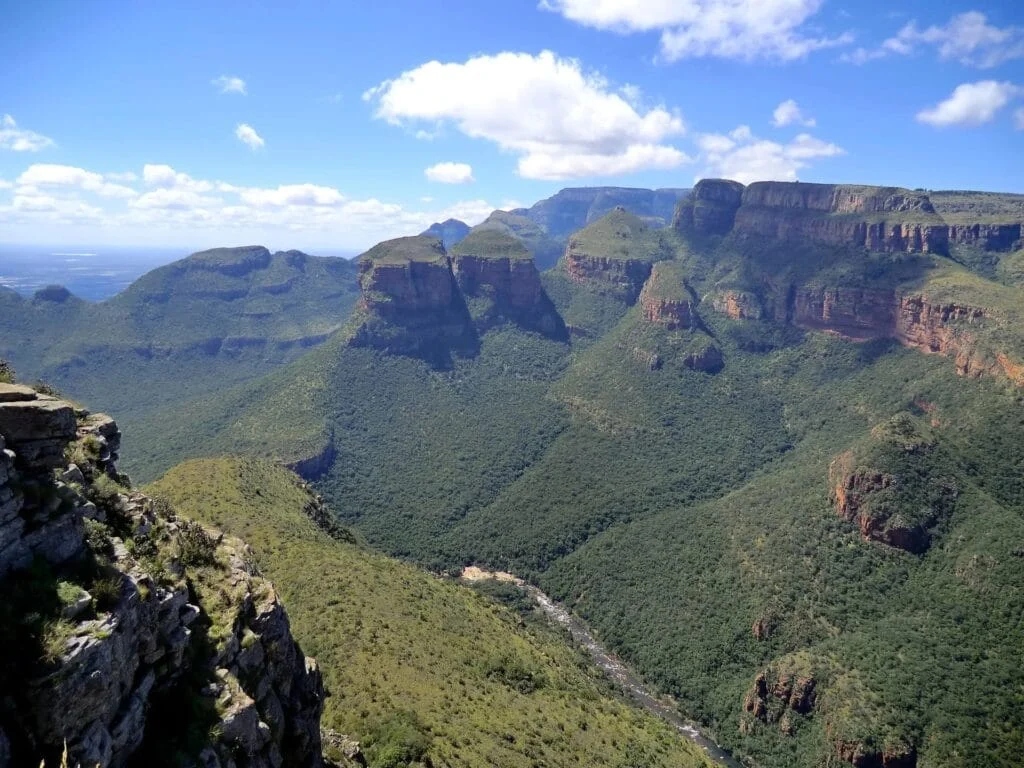
Table Mountain National Park and Kirstenbosch
Table Mountain National Park stretches around the mountain of the same name and protects a unique ecosystem known as the “Cape Floral Region”. This area is one of the richest botanical hotspots in the world, with 9,000 plant species, many of them endemic.
Kirstenbosch Botanical Garden on the lower slopes of Table Mountain is considered one of the most beautiful botanical gardens in the world. It features a collection of South African plants and gorgeous mountain views. The garden is a perfect spot for a relaxed walk or a picnic surrounded by nature.
The Most Beautiful Beaches
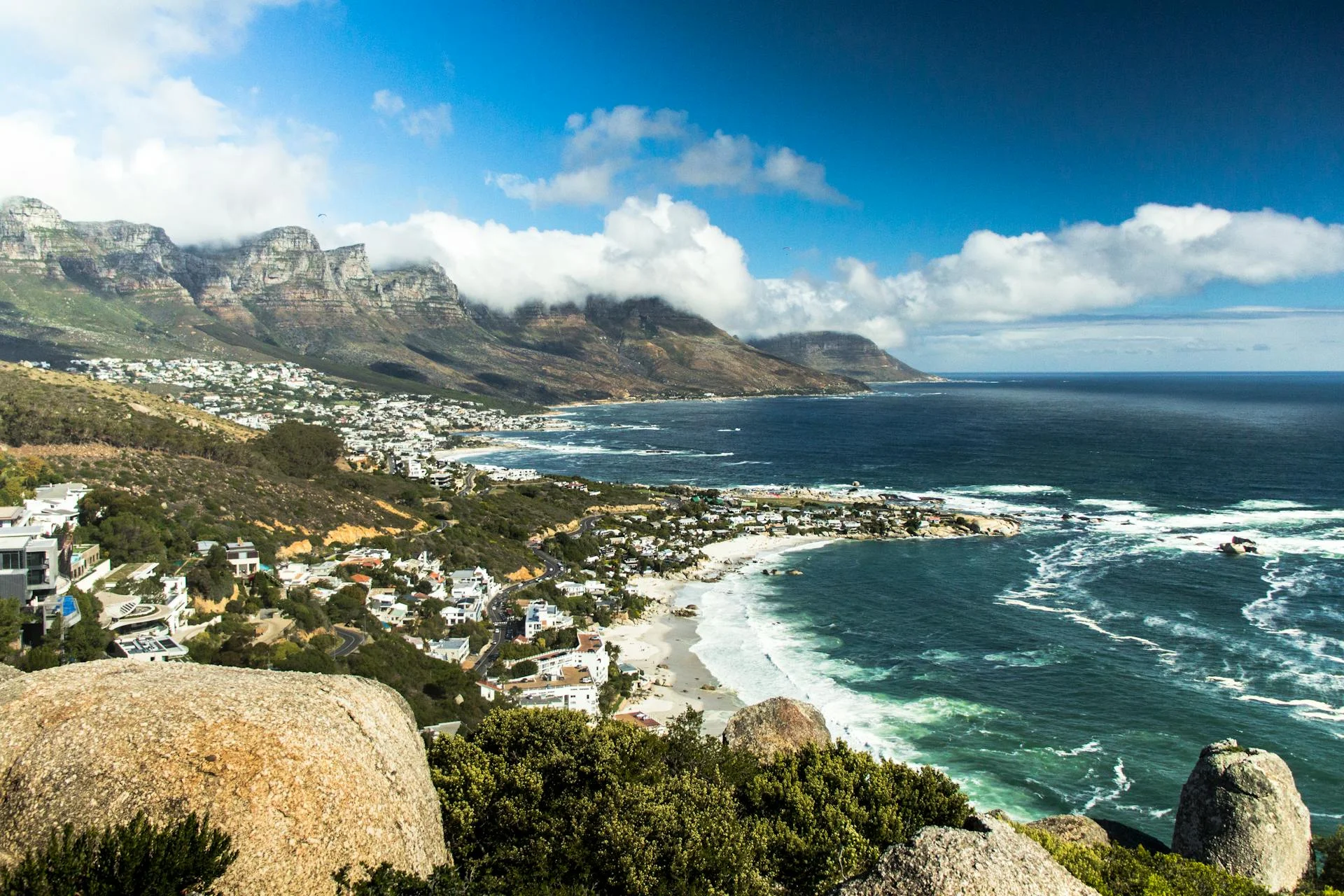
Clifton Beaches (Cape Town)
Clifton Beaches are a set of four picturesque beaches in Cape Town, with Clifton 4th Beach being the most popular. The beaches are sheltered from the wind by rocky cliffs and are perfect for sunbathing and unwinding with stunning ocean views. The water can be quite chilly, though, because of the cold current.
Boulders Beach (Cape Town)
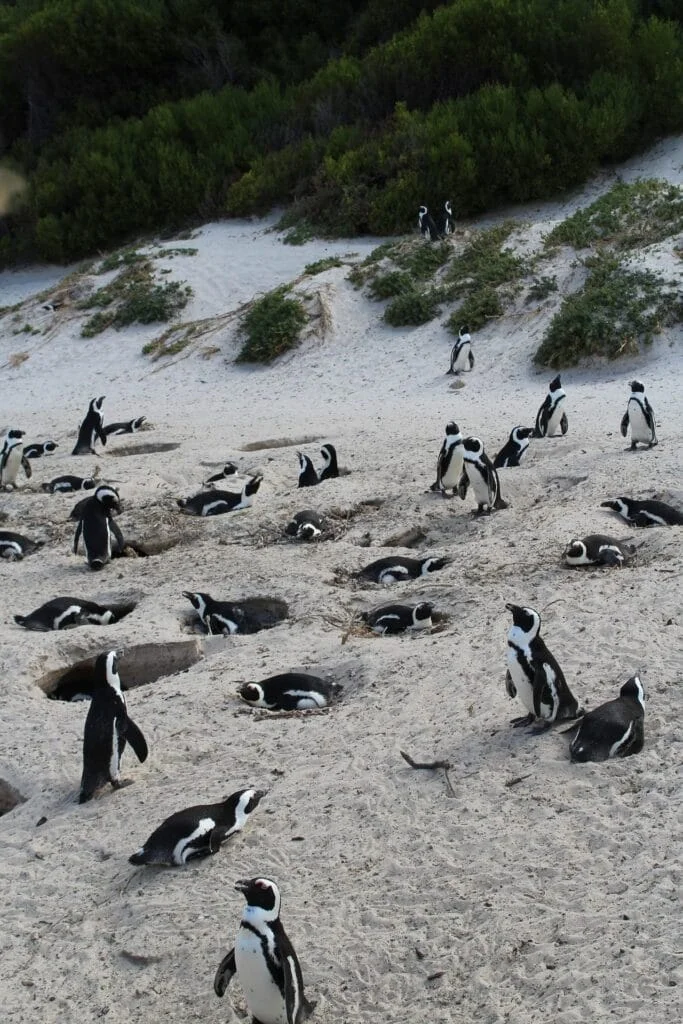
Boulders Beach is famous for its colony of African penguins. The penguins live here in the wild, and visitors can watch them from wooden boardwalks at a safe distance. The beach is scenic, with huge granite boulders and crystal-clear water.
Grotto Beach (Hermanus)
Grotto Beach in Hermanus is one of the longest beaches in the area, with clean sand and beautiful ocean views. During whale-watching season (June to November), you can enjoy swimming in the Indian Ocean while spotting whales in the distance.
Durban Beach
Durban’s beaches are known for the warm Indian Ocean water thanks to the Mozambique Current, which keeps temperatures comfortable year-round. The beachfront strip, known as the Golden Mile, is safe and well maintained, with plenty of cafés and restaurants nearby.
Activities and things to do
Safari and wildlife viewing
A safari in Kruger National Park is the highlight of any trip to South Africa. You can spot the Big Five from your own car, or join a guided game drive or take walking safaris with an armed ranger.
The best time for a safari is early morning and late afternoon, when animals are most active. Besides Kruger, there are also smaller private reserves with more upscale lodging and a more intimate experience.
Whale watching and marine life
Hermanus is one of the best places in the world for shore-based whale watching. In season (June to November), you can see southern right whales from the cliffs, or join a boat trip for a closer look.
Beyond whales, you can also enjoy spotting dolphins, seals, sea lions, and other marine life, including sea kayaking trips or diving.
Hiking and trekking
South Africa offers plenty of stunning hiking trails for all fitness levels. Table Mountain has around 400 marked routes, from easy loops to demanding climbs. The Drakensberg Mountains are ideal for full-day or multi-day treks, with the chance to see ancient San rock art in caves.
Hiking in Tsitsikamma National Park, for example along the Mouth Trail, which winds through an ancient forest, is a truly memorable experience.
Bungee jumping and adrenaline sports
Bloukrans Bridge sits 216 metres above the ground and offers one of the highest commercial bungee jumps in the world. For thrill-seeking travellers, it’s an unforgettable adrenaline rush with sweeping views into the valley.
Other activities include rafting, zip-lining, paragliding and rock climbing.
Wine tastings
In the Winelands around Stellenbosch, Franschhoek and Paarl, you can enjoy a relaxed afternoon at a local winery with a wine tasting. Many estates also offer excellent food and restaurants with views over the valley.
Nightlife and culture
Cape Town has a buzzing nightlife with clubs, bars and live music. Many venues are along Long Street, where you’ll find everything from indie bands to cocktail bars.
Cultural highlights include a visit to the Iziko South African Museum, the Heart of Cape Town Museum, and places connected to the tragic history of apartheid.
Food and culture
Typical food and drink
Bobotie is South Africa’s national dish, with roots dating back to the 17th century. It’s spiced minced meat baked with an egg topping, inspired by Asian flavours. Every family has its own recipe, passed down from generation to generation.
Sosaties are traditional grilled skewers made from pieces of lamb or chicken marinated in a sweet-and-sour sauce, often layered with dried apricots and vegetables.
Pap is a traditional porridge made from maize meal, served as a side dish with meat-based meals and a staple in many communities.
Wines from South Africa are recognized worldwide for their quality. The country is the ninth-largest wine producer in the world. Franschhoek is a hub for premium wine, home to hundreds of vineyards.
The best-known red variety is Pinotage (bred in 1925), known for its bold aroma with notes of smoke, roasted coffee, and chocolate. The leading white variety in South Africa is Chenin Blanc, which stands out for its floral and honeyed notes with tropical fruit flavors.
Dining tips
Restaurants in South Africa are generally very good, and prices are reasonable. Top-tier restaurants are usually in city centers, while more affordable spots with excellent food are often tucked away on smaller side streets.
It’s customary to tip 10% of the meal price. The server will usually bring you the bill, where you can add the tip amount. Taxi drivers typically get a small tip by rounding up.
Many restaurants close early (around 10 p.m.), so it’s a good idea to book a table in advance. For hygiene reasons, avoid food from street stalls in areas that don’t feel safe or reliable.
Cultural customs and festivals
South Africa has 11 official languages and a highly diverse culture. The most widely used languages are English, Afrikaans, and Zulu, but you’ll also hear Xhosa, Sotho, Tswana, and others.
The Hermanus Whale Festival takes place every year at the end of September and celebrates the whale migration with live music, art stalls, and environmental talks. It’s considered one of the largest eco-festivals in Africa.
Cape Town’s culture is incredibly varied, with art galleries, theaters, and music that reflect the rich heritage of different communities.
Locals appreciate it if you greet them with the African greeting “Sawubona” (from Zulu) and say thank you with “Dankie” (from Afrikaans), which shows you’re making an effort to understand their culture.
Key practical information
Currency and payments
In South Africa, you pay with the South African rand (ZAR), which is divided into 100 cents. Check the current exchange rate before your trip.
Banknotes come in 10, 20, 50, 100, and 200 rand denominations and feature local wildlife. Coins are available in 5, 10, 20, and 50 cents, as well as 1, 2, and 5 rand.
Card payments are widely accepted in most supermarkets and restaurants, but in smaller businesses and rural areas you’ll often need cash. Entrance fees for national parks are sometimes cash-only.
It’s recommended to carry some cash and use ATMs in shopping malls or at banks rather than street ATMs.
Entry requirements and visas
Citizens Europe can enter visa-free for up to 90 days for tourism and business. Your passport must be valid for at least 30 days after your planned departure date from South Africa and must include at least two blank pages for entry and exit stamps.
If you’re entering with minors, special rules apply and you’ll need additional documents, such as the child’s birth certificate and, in some cases, consent to travel from the other parent. Always confirm the current requirements with the South African embassy or consulate.
On arrival, yellow fever vaccination may be checked if you’re traveling from high-risk areas.
Safety and local customs
South Africa has a high crime rate, especially in major cities. It’s important to follow these safety rules:
- Don’t display valuables (jewelry, expensive watches, cameras).
- Avoid townships, especially after dark.
- When driving, keep your doors locked and windows only slightly open.
- Stop only in safe places, such as gas stations.
- In case of a robbery: don’t resist, hand over what’s demanded, and try to stay calm.
In city centers, it’s best to get around during daylight hours. Downtown Cape Town is gradually becoming safer, but some areas still require extra caution.
Healthcare and vaccinations
Before traveling to South Africa, it’s recommended to consult a doctor who specializes in travel medicine for guidance on recommended vaccinations and malaria prevention.
Required vaccinations: The yellow fever vaccine is required if you’re arriving from high-risk areas. You’ll need an international vaccination certificate.
Recommended vaccinations: Consider getting vaccinated against hepatitis A and B, and typhoid fever.
Malaria: Malaria occurs in some areas, especially in the Limpopo and Mpumalanga provinces (including Kruger National Park) and northern KwaZulu-Natal. For these areas, antimalarial prophylaxis is recommended. Use insect repellent and mosquito nets.
Travel insurance with sufficient medical cover is absolutely essential due to the high cost of healthcare.
Fauna and flora
South Africa is one of the most biodiverse places on Earth.
Animals:
- The Big Five: lion, elephant, leopard, rhinoceros, African buffalo
- Other big cats: cheetah, serval, caracal
- Hoofed animals: giraffe, zebra, many species of antelope
- Other mammals: hippo, crocodile, wildebeest, meerkat, hyena
- Birds: over 850 species, including ostriches, penguins, and eagles
Plants:
- Cape Floral Region is one of the richest botanical areas on Earth, with thousands of plant species—many of them endemic.
- Fynbos: a unique type of vegetation typical of the Cape, made up of shrubs and herbaceous plants.
- Savanna: acacias, baobabs, and various grass species.
- Forests: native forests can be found in mountainous areas.
Essential phrasebook
| Czech phrase | English translation | Local language (example) |
|---|---|---|
| Good day | Hello / Good day | Sawubona (Zulu) |
| How are you? | How are you? | Hoe gaan dit? (Afrikaans) |
| Thank you | Thank you | Dankie (Afrikaans) |
| Please | Please | Asseblief (Afrikaans) |
| Yes / No | Yes / No | Ja / Nee (Afrikaans) |
| Where is...? | Where is...? | Where is...? |
| How much is it? | How much is it? | How much is it? |
| Help! | Help! | Help! |
Transport and logistics
How to get to the country
The easiest way to get to South Africa is by plane. There are no direct flights from Prague or nearby airports, so you should plan on one layover. The trip usually takes 12–15 hours. Airfare varies a lot depending on the season.
The main international airports are:
- O.R. Tambo International Airport (Johannesburg) – the largest
- Cape Town International Airport (Kapské Město)
- King Shaka International Airport (Durban)
Getting around the country
Renting a car is the easiest and most flexible way to travel around South Africa. You can rent cars from international companies like Avis, Europcar, or Budget.
It’s worth considering a 4x4 rental if you plan to travel on unpaved roads or into remote parts of national parks.
Driving rules:
- Drive on the left
- Seat belts are mandatory
- The maximum speed on highways is 120 km/h
Long-distance buses run by Intercape or Greyhound offer comfortable and safe travel between major cities. It’s best to buy tickets in advance.
Trains: The only truly good options are luxury tourist trains, such as the Blue Train between Pretoria and Cape Town or Rovos Rail. Regular trains aren’t recommended for safety reasons.
Public transport:
- In Cape Town: MyCiTi buses are modern, safe, and affordable.
- In Johannesburg and Pretoria: There’s a network of buses and the Gautrain rapid rail, but you need to be extra cautious.
Tips for renting a car
- Always get full insurance.
- Stick to main roads, and avoid unfamiliar side roads at night.
- Drive with the car locked and keep the windows only slightly open.
- Refuel only at official gas stations.
- Don’t stop for vehicles with an alleged breakdown – it could be a trap.
- Use a map and GPS to avoid dangerous areas.
Prices and travel budget
How much does a trip cost?
You can travel on all kinds of budgets. The estimates below are for guidance only (prices may vary):
Budget travel (around $40 per person/day):
- Accommodation: Hostel or campsite – from $16/night
- Food: Self-catering, supermarket meals – from $12/day
- Transport: Long-distance buses
- Activities: National park entry fees, hiking
Mid-range budget (around $100 per person/day):
- Accommodation: Guesthouse or B&B – from $50/night
- Food: Mid-range restaurants – from $25/day
- Transport: Small car rental – from $30/day + fuel
- Activities: Paid entry fees and some hikes
Higher budget (from $170 per person/day):
- Accommodation: Hotel or safari lodge – from $105/night
- Food: Good-quality restaurants – from $40/day
- Transport: Larger car or SUV rental
- Activities: Private safari, adrenaline experiences
Where to save money
- Accommodation outside city centres is usually cheaper.
- Eating at smaller restaurants and local bistros is better value.
- Book your car rental well in advance.
- Make the most of free activities: hiking, beach visits, city walks.
- Shopping at supermarkets like Pick n Pay, Checkers, or Woolworths is priced similarly to Czechia.
How to plan the ideal trip
Choosing the right region based on your travel style
Beginner or first-time visit:
- Focus on Cape Town (3–4 days) and the surrounding area: Table Mountain, Robben Island, the wine regions, and the Cape of Good Hope.
- This area has excellent infrastructure and is very tourist-friendly.
Family with kids:
- Cape Town and the Garden Route offer plenty of kid-friendly attractions (penguins, monkeys, elephant parks).
- Hermanus for whale watching.
- Safari in malaria-free reserves (e.g., Addo Elephant NP or Pilanesberg).
Couple or adventurer:
- Safari in Kruger National Park for an authentic experience.
- Panorama Route for breathtaking scenery.
- Drakensberg Mountains for trekking and hiking.
- Adrenaline-packed activities along the Garden Route.
Seniors:
- Cape Town and the winelands at a more relaxed pace.
- Car rental for comfortable travel between places.
- Table Mountain cable car instead of hiking up.
- Consider a guided organized tour for maximum comfort and safety.
Common planning mistakes
- Not enough time: South Africa is huge, so plan at least 10–14 days.
- Overpacked itinerary: Don’t try to see everything—enjoy fewer places, but experience them properly.
- Underestimating distances: Drives between destinations are long, so allow plenty of time for travel.
- Traveling alone at night: For safety reasons, it’s best to avoid this.
- Not booking accommodation and activities in advance: In peak season, popular places fill up quickly.
Sample itineraries
7 days – Cape Town and the surrounding area:
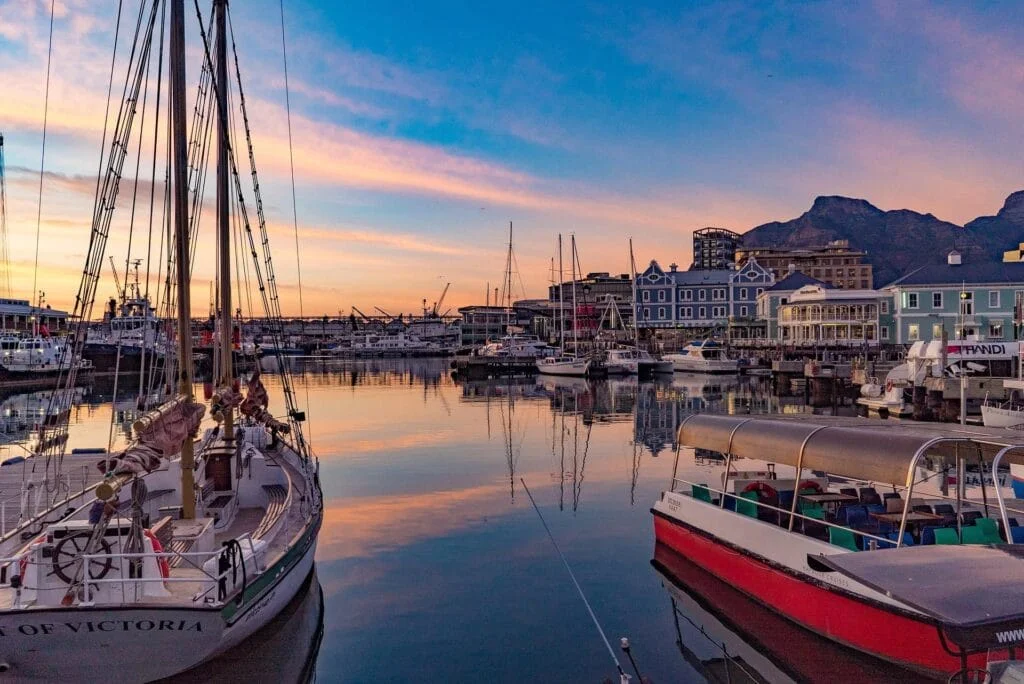
- Day 1–3: Cape Town – Table Mountain, V&A Waterfront, Robben Island.
- Day 4: Day trip to the winelands (Stellenbosch, Franschhoek).
- Day 5: Cape Peninsula day trip – Cape of Good Hope, Boulders Beach.
- Day 6: Hermanus (whale season) or a relaxed beach day.
- Day 7: Take it easy, do some shopping, and fly home.
14 days – The best of South Africa:
- Day 1–4: Cape Town and the surrounding area (see above).
- Day 5–7: Travel along the Garden Route (Oudtshoorn, Knysna, Tsitsikamma NP).
- Day 8: Flight from Port Elizabeth to Johannesburg.
- Day 9: Panorama Route (Blyde River Canyon, God’s Window).
- Day 10–12: Safari in Kruger National Park (or a nearby private reserve).
- Day 13: Johannesburg (Apartheid Museum).
- Day 14: Departure.
Summary and final tips
South Africa is a destination with incredible variety: from Big Five safaris to beaches with penguins and whales, from apartheid-era landmarks to breathtaking natural scenery. Whether you go for budget backpacking, a comfortable road trip with a rental car, or a luxury safari, you’ll find an experience that fits your style and budget.
The key is solid planning, a strong focus on safety, and respect for local culture. Double-check visa requirements, review health recommendations, and get up to speed on the safety situation before you leave. While traveling, try to use English and a few basic phrases in local languages—people really appreciate it.
Most importantly, enjoy your time and let yourself be surprised by this remarkable place where continents, cultures, and natural wonders come together.
Kategorie: