Mauritius: A Guide to Paradise with White Beaches and Turquoise Water
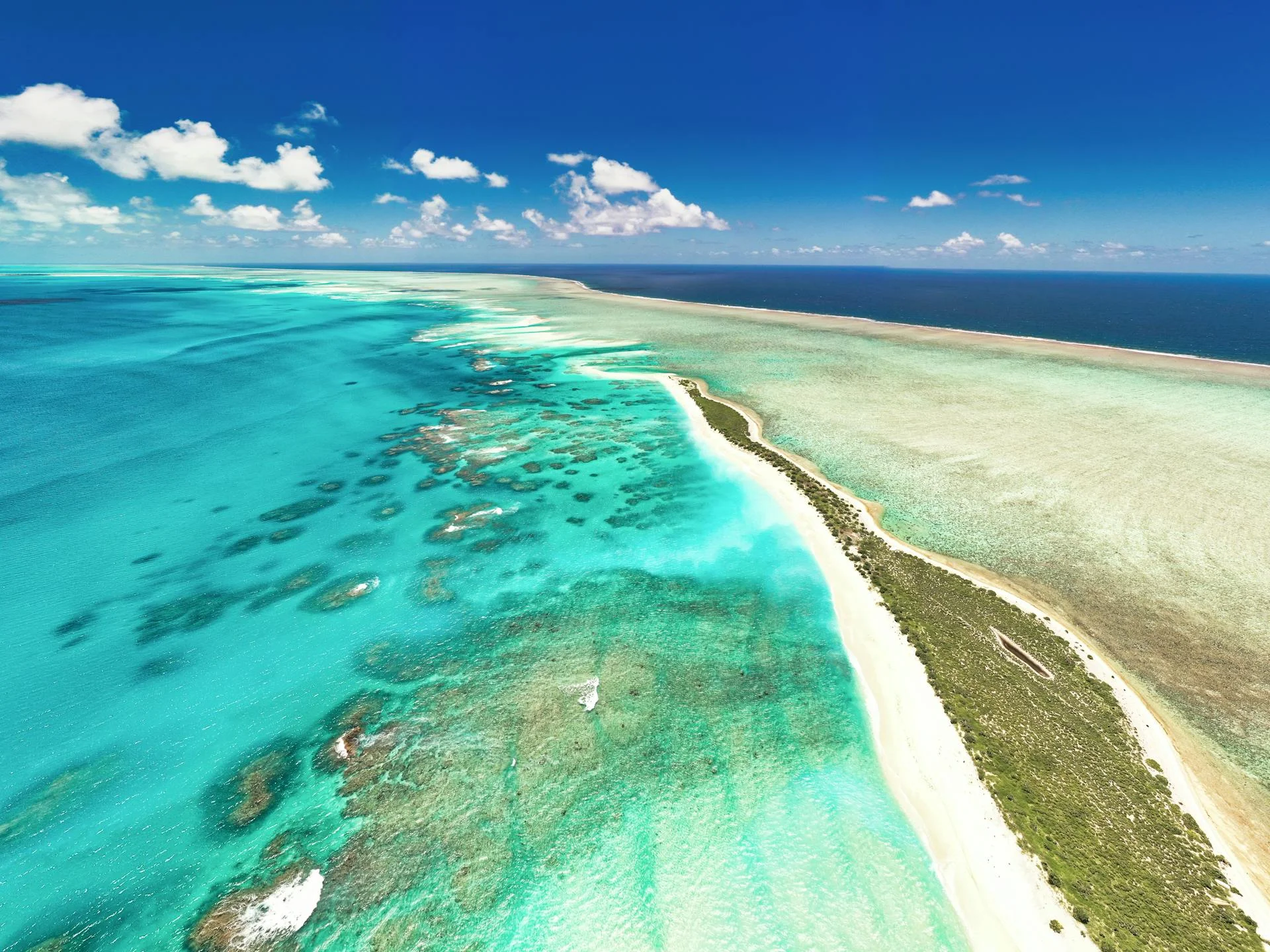
Mauritius is one of the most magical islands in the Indian Ocean and offers an ideal mix of stunning beaches, rich culture, and natural wonders. Did you know that Mauritius is home to the third-largest coral reef in the world? On an island that covers just 1,865 square kilometers, you’ll find incredible variety – from white sandy beaches wrapped around turquoise waters to towering mountains, dense lowland forests, and enchanting waterfalls hidden in wild nature.
Being in Mauritius means experiencing several worlds in one place: laid-back beach relaxation, the thrill of water sports, exploring natural gems, discovering a fascinating culture, and tasting authentic local food. Whether you’re an adventurer, a romantic looking for the perfect getaway, or a senior who values comfort and safety, Mauritius offers something unique that can completely change the way you think about travel.
History of the country – From discovery to a modern state
Mauritius has one of the most remarkable histories among African island destinations. For centuries, the island was completely uninhabited – when the Portuguese arrived here at the beginning of the 16th century, followed by Arabs and men in the service of the East India Company, they were the first to leave their mark. No one lived here permanently until 1598, when the Dutch arrived and named the island in honor of Prince Maurice of Orange. Dutch colonization, however, was short-lived – natural disasters and cyclones that repeatedly devastated the island in the 17th and 18th centuries eventually forced the colonists to leave.
The real development of Mauritius began in 1715, when the French claimed the island and renamed it Île de France. Under Governor Mahé de La Bourdonnais in the 18th century, Mauritius was transformed into a thriving French colony. The French introduced sugar plantations and, since slavery was common practice, brought in thousands of slaves from Africa and later from Madagascar. The years of French rule left a lasting imprint on the island – from architectural styles to the language still spoken here today.
In 1810, during the Napoleonic Wars, the British seized Mauritius and turned it into a key outpost of the British Empire in the Indian Ocean. Britain built naval bases and fortifications that were strategically important for controlling trade routes. When British abolitionist movements led to the abolition of slavery in 1835, it created a major social and economic vacuum. The solution came in the form of a system of indentured labor – between 1834 and 1920, around 450,000 Indian workers from different regions of India arrived in Mauritius. These workers and their descendants gradually became the dominant part of the population and helped shape modern Mauritian society with their traditions, food, religion, and culture.
Mauritius gained independence from Britain in 1968. This was a turning point – the island evolved from a purely agricultural colony into a modern, peaceful, multicultural state. In recent decades, Mauritius has become one of the most progressive and stable African countries, mainly thanks to sensible economic policies and exceptional tolerance between different ethnic and religious communities. Today, Mauritius is a model of stability, prosperity, and social harmony on the African continent, while still preserving its pleasant climate, natural beauty, and unique culture through all its historical changes.
Location, geography and climate
Location and geography
Mauritius lies in the Indian Ocean, roughly 2,400 kilometers southeast of the African coast, with the island of Madagascar about 800 kilometers away. Together with Réunion and Rodrigues, Mauritius forms the Mascarene Islands group (Îles Mascareignes), created millions of years ago by volcanic activity. Mauritius was shaped by submarine volcanic eruptions around 10 million years ago and there are no active volcanoes today. The island has the shape of an irregular diamond and covers an area of 1,865 square kilometers.
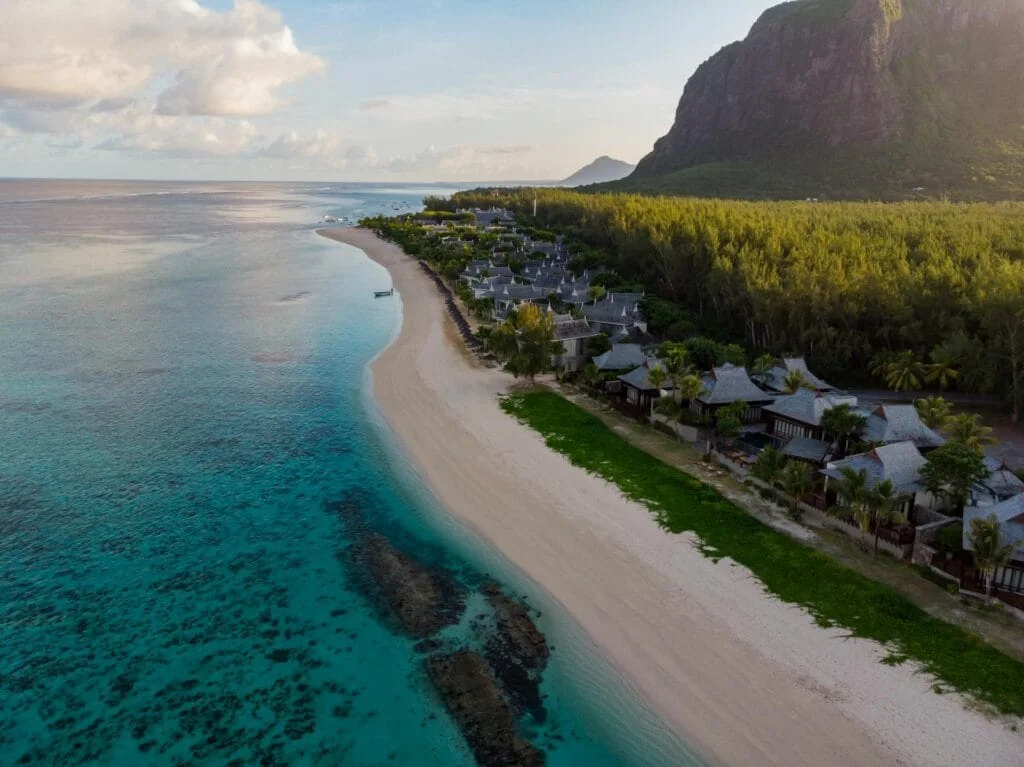
The landscape of Mauritius is varied and dramatic. Near the center of the island lies a central plateau rising from about 270 to 730 meters above sea level. This plateau is surrounded by smaller mountain ranges – remnants of an ancient volcanic crater – which create a stunning terrain. The highest peak, Piton de la Petite Rivière Noire, reaches 828 meters. From these mountains, the land slopes down to the coast and turns into white sandy beaches stretching for more than 150 kilometers. A key element of the island’s natural protection is its coral reef – the third largest in the world – which encircles the island and forms breathtaking turquoise lagoons with crystal-clear water.
The island’s interior is dotted with dense tropical forests, rivers and waterfalls, while coastal mangroves form natural barriers against erosion and serve as invaluable wildlife habitats. The south and east of the island are generally more diverse in terms of scenery – here you’ll find more dramatic coastal cliffs, rugged rocks and fewer settlements. The northwest, on the other hand, is flatter and better sheltered.
Climate and weather for travelers
Mauritius has a maritime subtropical climate, which means the weather stays pleasant almost all year round. The island does not experience the classic four seasons – instead, it has two main seasons: a hot, humid summer and a cooler, drier winter. Conditions vary a lot by location – the central plateau is cooler and wetter than the coastal areas, and the north and west of the island are generally warmer and drier than the south and east.
Summer (November to April) is the hottest and most humid time of year. Average daytime temperatures are around 30 to 35 degrees Celsius, with nights staying at about 22 to 25 degrees. Summer brings higher humidity and more rainfall, but showers usually don’t last all day. The main risk comes from cyclones, which can occur in January and February – they are rare, but when they hit, they can be serious. February and March are the wettest months on Mauritius.
Winter (June to September) is the opposite season – daytime temperatures range between 22 and 28 degrees Celsius, and at night they can drop below 20 degrees. This period is generally drier and more comfortable. Winds tend to be stronger, especially in July and August, which can create bigger waves on less sheltered beaches. This is the ideal time for travelers who prefer milder temperatures without intense heat and humidity.
Shoulder months (May and October) are a great compromise. May is considered one of the best times to visit – temperatures are pleasant, rainfall is low and the risk of cyclones is minimal. October marks the transition from winter to summer, with rising temperatures but still very agreeable weather.
| Month | Average daytime temperature (°C) | Average night-time temperature (°C) | Sea temperature (°C) | Typical weather |
|---|---|---|---|---|
| January | 30-34 | 24-25 | 27 | Hot, very humid, risk of cyclones |
| February | 30-34 | 24-25 | 27 | Hottest month, peak rainfall |
| March | 30-32 | 23-24 | 27 | Hot, but with less rain |
| April | 28-30 | 22-23 | 26 | Transition period, pleasant weather, temperatures start to drop |
| May | 25-27 | 20-21 | 25 | Ideal weather, cooler, dry, light winds |
| June | 23-25 | 18-19 | 24 | Cooler, dry, stronger winds |
| July | 23-24 | 17-18 | 23 | Coolest month, dry, strongest winds |
| August | 24-25 | 17-19 | 23 | Still cool, dry and windy |
| September | 25-27 | 19-21 | 24 | Temperatures start to rise |
| October | 27-29 | 21-22 | 25 | Shift into summer, temperatures climbing |
| November | 29-31 | 22-24 | 26 | Start of summer, humidity increasing |
| December | 30-33 | 23-25 | 27 | Hot, humid, start of cyclone season |
Regions and types of destinations
Mauritius can be divided into five main regions, each with its own charm and experiences. The right region for you depends on the kind of holiday you have in mind.
North Mauritius – Perfect mix of beaches and nightlife
The northern part of the island, which includes the districts of Pamplemousses and Rivière du Rempart, is the busiest and most popular area for visitors. The north offers the best-maintained beaches, the most reliable weather, the highest number of sunny days per year and a huge range of modern facilities including restaurants, bars, shops and nightclubs. In short, the north is ideal if you want to combine a luxury beach break with a lively atmosphere and easy access to activities.
The main hub in the north is Grand Baie, a stylish coastal town with long white-sand beaches, upscale hotels and countless options for dining and entertainment. Here you’ll find the island’s top restaurants, bars and nightclubs. The second key spot is Pamplemousses, home to the famous botanical garden packed with tropical plants, a real paradise for nature lovers.
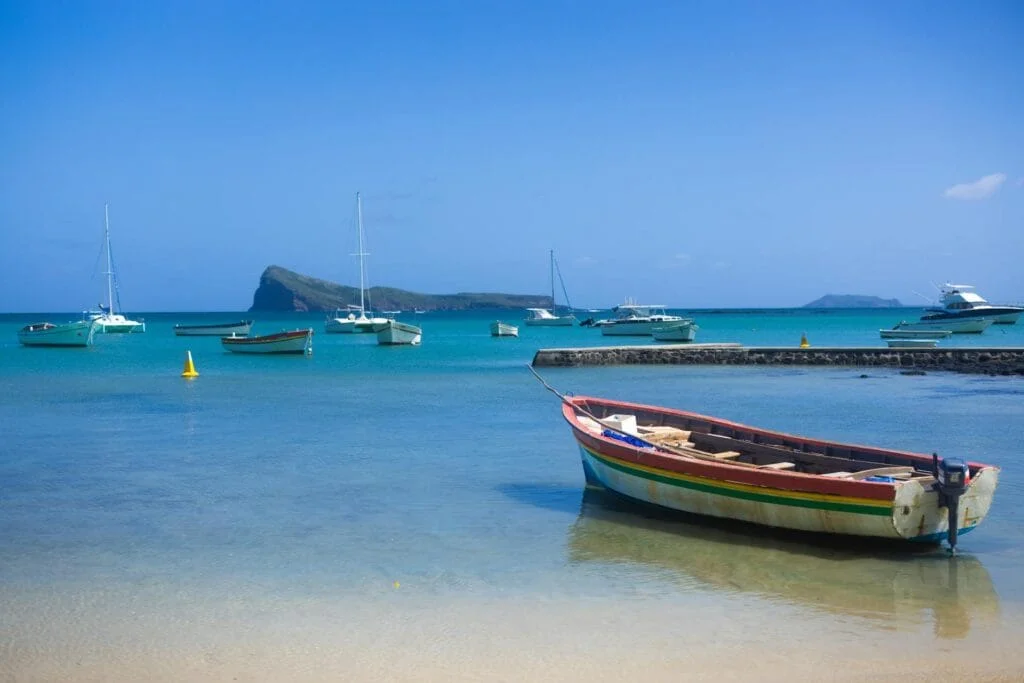
The northern beaches – Mont Choisy, Trou-aux-Biches, Pereybere, Cap Malheureux and Bain Boeuf – rank among the most beautiful on the island. All of them have soft white sand, a protective coral reef and calm lagoons that are perfect for swimming. Cap Malheureux is especially famous for its iconic red-roofed church and postcard-perfect setting, while Mont Choisy beach stretches for an impressive 3 kilometres and is popular with both locals and tourists.
West Mauritius – Romance and natural beauty
The west coast, known as the “sunset coast” for its spectacular evening skies, is home to the capital city Port Louis and a string of secluded villages with a genuinely Mauritian feel. The west is generally warmer and more sheltered than the east, as it is protected from the strong winds that hit the opposite side of the island.
Port Louis, although it is the capital city and the most industrialized place on the island, has a lot to offer travelers. Here you’ll find historic sites such as the Citadel (Fort Adélaïde), a bustling central market with an authentic atmosphere, colorful temples and mosques reflecting the island’s multicultural heritage, and the Caudan Waterfront with modern shops and restaurants. The city can be noisy and hectic, but this raw authenticity is exactly what makes it so charming.
On the west coast you’ll find Flic-en-Flac, one of the most famous beaches in Mauritius. It stretches for several kilometers and offers soft sand, a protective coral reef, and spectacular sunsets. The atmosphere is lively, with plenty of restaurants and bars right on the beach. Other notable destinations in the west include Balaclava and Turtle Bay, luxurious spots for those seeking maximum comfort and stunning views.
The most important natural attraction in the west is the Black River Gorges National Park, which we’ll describe in more detail below.
Southwest Mauritius – Natural wonders and adrenaline
The southwestern part of the island, dominated by the Chamarel area and Black River Gorges Park, is a mecca for nature lovers and adrenaline seekers. This region offers the most dramatic scenery, with mountains, deep canyons, waterfalls, and unique natural phenomena.
The most famous landmark is Le Morne Brabant, a dramatic mountain massif on the southwestern tip of the island. The mountain is more than just a summit to conquer – it is also a UNESCO World Heritage Site with a powerful history linked to slavery and the struggle for freedom. Thrill-seekers can enjoy paragliding with sweeping views over the entire island or try hiking to the top, where a breathtaking panorama awaits.
Not far from here you’ll find Chamarel and its most famous attraction – the Seven Coloured Earths. This unusual geological phenomenon creates small dunes of multicolored soil in shades of red, yellow, purple, and blue. The effect was formed by the gradual transformation of volcanic rock into clay-rich minerals.
Close by are the Chamarel Waterfalls, a 100-meter cascade plunging into the forest, and the Tamarind Falls (Sept Cascades), seven smaller waterfalls in a valley with natural pools that are perfect for swimming.
East Mauritius – Island paradise and water sports
The eastern coastline, including areas such as Belle Mare, Trou d'Eau Douce, and Mahébourg, has long been considered one of the most unspoiled parts of Mauritius, with quieter, less crowded beaches and a more laid-back feel. This side of the island is ideal for those who want better conditions for water sports and fewer tourists, although the waves can be bigger here in winter.
Belle Mare is a long, seemingly endless beach with fine sand and some of the best conditions for swimming and water sports on the island. It is also less crowded than its northern counterparts.
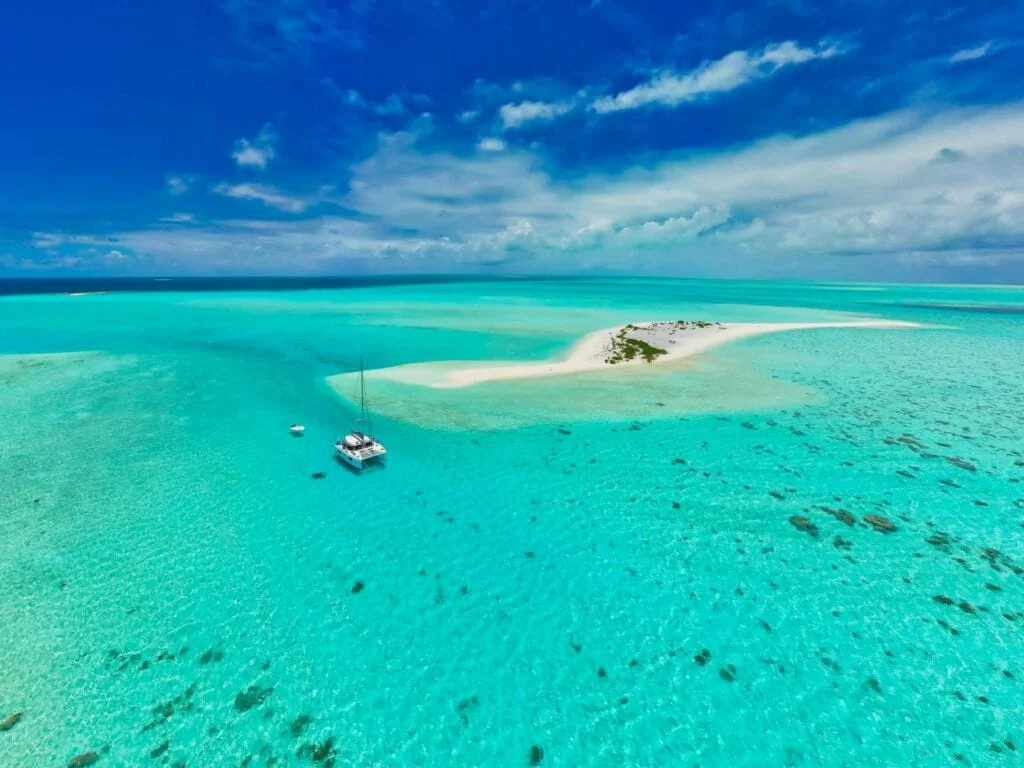
The biggest attraction in the east is Île aux Cerfs, a picturesque islet accessible only by boat. This small island offers dreamlike scenery – white sandy beaches, turquoise waters, palm trees, and beautiful lagoons perfect for swimming. Here you can enjoy parasailing, water-skiing, diving, or simply relax on the beach and swim in the clear turquoise sea. Day trips to the island are extremely popular and it’s a favorite getaway for locals as well.
Nearby lies Île aux Aigrettes, a small island and nature reserve that plays a key role in protecting endangered bird and tortoise species. Conservation projects here focus on restoring the original Mauritian flora.
Mahébourg, a historic port in the southeast, is a small town with a rich past and a National History Museum. Nearby you’ll find Blue Bay, which is the best snorkeling spot on the island, with a stunning coral reef and abundant marine life.
Central Mauritius – Mountains and the lake
The central region of Mauritius, including the town of Curepipe and its surroundings, is a less typical destination for mainstream tourists, but it offers unique natural attractions for mountain lovers and travelers looking for peace and quiet. Here you’ll find the volcanic crater with Grand Bassin lake, a sacred site for Hindus from all over the world. The lake is surrounded by lush mountain scenery with a beautiful temple of the god Shiva on its shore.
Trou aux Cerfs, an extinct volcanic crater, is another natural wonder in the center of the island, where you can see original volcanic formations and look down into a crater filled with dense vegetation.
Most famous landmarks and towns
Port Louis – The heart of the country
Port Louis, the capital of Mauritius, stretches across the northwest of the island and is the only real city in Mauritius, with a long history and colonial architecture. While it may feel chaotic and a bit run-down compared with the polished beach resorts, Port Louis has huge value for travelers who want to understand real Mauritian culture beyond the tourist bubble.
In the city center you’ll find the Central Market (Port Louis Central Market), a colorful and hectic market where locals buy fruit, vegetables, fish, and souvenirs. The market is lively, noisy, and authentic – it’s the perfect place to try local street food such as dholl puri and gateaux piment (chili fritters).
Another key site is Aapravasi Ghat, a UNESCO World Heritage Site that commemorates the arrival of thousands of Indian indentured laborers in the 19th century. The museum here offers insight into this chapter of Mauritian history and helps you better understand how modern Mauritius came to be.
The Citadel (Fort Adélaïde) is a 19th-century fortress that offers beautiful views of the harbor and the city. Climbing the steps up to the fort is well worth it, especially at sunset.
Caudan Waterfront is a modern shopping and entertainment district with stores, restaurants, and bars overlooking the sea. If you’re after a more Western-style environment, this is the place to go.
Pamplemousses – A botanical garden for nature lovers
Pamplemousses Botanical Garden (Sir Seewoosagur Ramgoolam Botanical Garden) is one of the oldest botanical gardens in the Southern Hemisphere and a must-visit for anyone traveling to Mauritius. Founded in 1767 as a royal garden, it has gradually grown into one of the largest collections of tropical plants in the world.
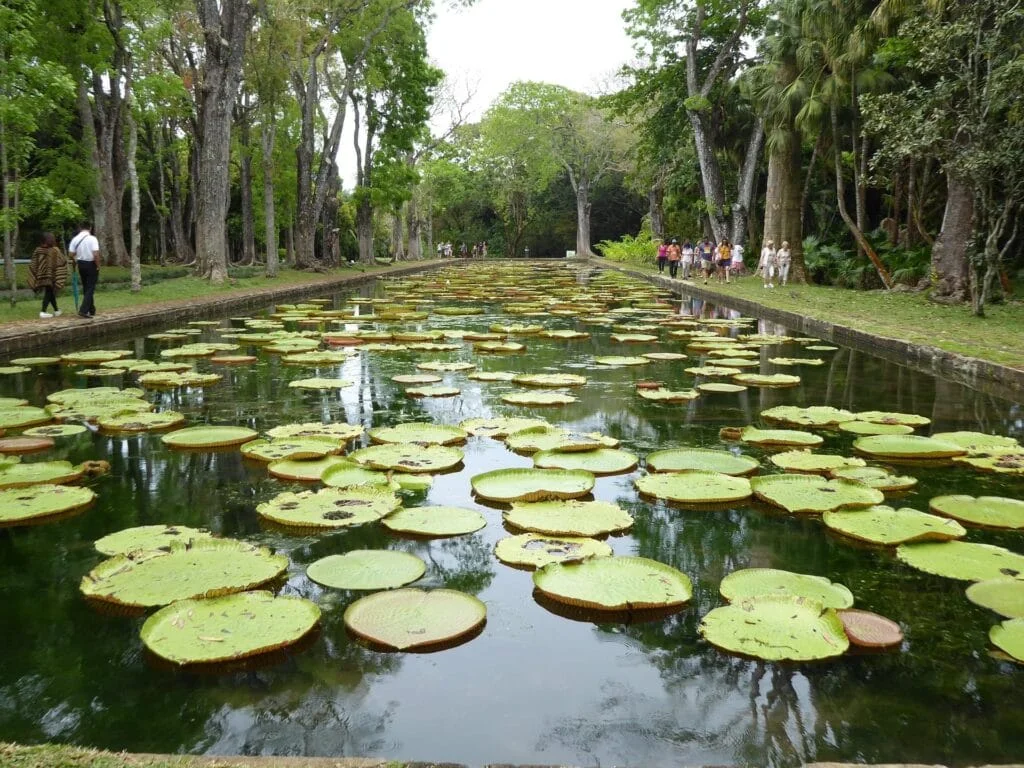
As you walk through the garden, you’ll come across giant Victoria amazonica water lilies with leaves up to two meters across. The garden is also home to 85 species of palms from Africa, Asia, and nearby islands, fragrant spices such as nutmeg and cloves, and countless exotic plants from around the globe.
You’ll often come across giant tortoises here. They’re used to people now and freely roam around the garden. A visit usually takes 1 to 2 hours, and you can either hire a guide or join a guided tour with commentary.
Mahébourg – Historic Port Town
Mahébourg is a small but historically important port town in the southeast that used to be a key trading hub. The National History Museum here gives you a complete overview of Mauritian history from the first contact with Europeans, covering the entire period of colonization by the Dutch, French, and British.
The museum is housed in an original 18th-century French building and features artifacts from different historical periods, including items from shipwrecks and personal belongings of historical figures. The surrounding harbor is still very much alive and full of fishermen bringing in their daily catch.
Natural Wonders and National Parks
Black River Gorges National Park – The Wild Heart of Mauritius
Black River Gorges National Park is the largest national park in Mauritius and home to some of the most spectacular natural scenery on the island. It stretches across the southwest and includes dense tropical forest, deep gorges, cascading waterfalls, and unique vegetation with many endemic bird and plant species.
The park offers over 60 kilometers of marked trails with varying difficulty. The most popular routes lead to Alexandra Falls, the Macchabée viewpoint with stunning valley views, and the Gorges viewpoint overlooking the depths of the canyon. The most ambitious hikers can tackle Piton de la Petite Rivière Noire, the highest peak in Mauritius, which rewards you with a 360-degree view of the island.
The park’s wildlife and plant life are exceptional. You can spot Mauritian flying foxes (an endemic mammal), Mauritius kestrels (an endangered species protected by captive-breeding programs), echo parakeets, various endemic birds such as the Mauritius bulbul, and many other threatened species that have been successfully saved here. The park is also renowned for its native forest with endemic trees and plants that grow nowhere else.
A visit to the park usually takes the whole day and is ideal for visitors who are reasonably fit and enjoy hiking in nature. There are two visitor centers with information, picnic areas, and restrooms.
Trou aux Cerfs – A Glimpse into the Volcanic Past
Trou aux Cerfs is an easily accessible dormant volcanic crater in the center of the island near the town of Curepipe. Today, the crater is filled with lush vegetation, creating a beautiful green oasis set deep below the surrounding terrain. Walking along the rim gives you a unique insight into the island’s geological history and a peaceful place to slow down for a moment.
Entry to the crater area is free and a visit takes around 15 to 30 minutes. The best time to come is early in the morning, when there are fewer people and the mist adds a mystical feel to the place.
Grand Bassin – Sacred Lake of the Hindu Community
Grand Bassin, also known as Ganga Talao, is a sacred lake surrounded by mountains and the most important pilgrimage site for Hindus in Mauritius. By the lake stands an enormous statue of Lord Shiva, visible from far away and dominating the landscape. Every year during the Maha Shivaratri festival (February/March), thousands of Hindus come here on pilgrimage, bringing flowers, incense, and prayers.
A visit to Grand Bassin is not just a religious experience – it is also a deep cultural dive that helps you understand the Hindu tradition in Mauritius and see how this centuries-old faith shapes local life. Entry is free and open to everyone.
Most beautiful beaches
Mauritius is world-famous for its beaches – there are more than 300 of them scattered along its long coastline. Each beach has its own character and charm.
Flic-en-Flac – A safe haven for relaxation
Flic-en-Flac stretches along several kilometres of white sandy shore and is one of the longest and most popular beaches on the island. It is ideal for swimming – the coral reef protects it from most waves and creates perfect spots for beginners and children. The water is usually calm and crystal clear.
The atmosphere is lively – along the beach you will find dozens of restaurants, bars and cafés with sea views, where you can grab a drink, have lunch or simply relax under a parasol. The beach is also known for its stunning sunsets, which attract hundreds of people every day. At night, it turns into a hotspot with a buzzing nightlife.
Note: the beach can be crowded in peak periods, especially on weekends and during the main season (December to February).
Belle Mare – Quiet elegance
Belle Mare on the east coast is a long beach with fine sand and one of the calmest settings on the island. It is less crowded than Flic-en-Flac and offers more peace and space for anyone looking for privacy. The water is great for snorkelling and swimming.
Belle Mare is also ideal for families with children and older travellers, because there are fewer waves, access is easier and the whole area feels more relaxed. The restaurants and bars here are stylish, more spread out and less hectic.
Cap Malheureux – Magical north
Cap Malheureux in the north is a small, picturesque beach famous for its iconic red-roofed church on the shore – one of the most photographed spots in Mauritius. The beach is peaceful, with soft sand and crystal-clear water. The atmosphere is romantic and serene, perfect for couples looking for quiet and inspiration.
Île aux Cerfs – Island utopia
Île aux Cerfs is not a single beach but a small island ringed by several beaches. You can only get there by boat (catamarans and speedboats regularly depart from Trou d'Eau Douce and other ports). The beaches here are incredibly beautiful – white sand, turquoise water and countless palm trees.
The island offers water sports such as parasailing and water-skiing, a golf course and several places to eat and drink. If you have at least one full day, a trip to Île aux Cerfs is an absolute must. Catamaran tours usually cost between $35 and $55 per person and often include lunch and drinks.
Pointe d'Esny and Blue Bay – A snorkelling paradise
Blue Bay in the southeast is a marine national park and the best place in Mauritius for snorkelling and diving. Visibility is excellent, down to 10–15 metres, and the coral reef is especially colourful, with countless fish and other marine life. You can spot corals, colourful fish, starfish and, if you are lucky, sea turtles.
The Blue Bay beach itself is small and can get crowded, but it’s the underwater world that really makes it worth the trip.
Activities and entertainment
Mauritius offers countless activities and experiences for every type of traveler. Whether you’re an adrenaline junkie, a nature lover, a culture seeker, or you simply want to unwind, you’ll find plenty to enjoy here.
Water sports are the main draw – diving, snorkeling, surfing, windsurfing, kitesurfing, paddleboarding, parasailing, and jet skiing are available almost everywhere. The best dive spots are around Flic-en-Flac, Belle Mare, and Île aux Cerfs, with stunning marine biodiversity. Kitesurfing is most popular at Le Morne, considered one of the best spots in the world for this sport. The water is warm and the wind is steady for most of the year.
On land, you can enjoy hiking, especially in Black River Gorges National Park, where beautiful trails lead to waterfalls and viewpoints. Paragliding from Le Morne Brabant is also popular and offers breathtaking views of the island and the ocean. Quad biking and off-road safaris are available in several areas.
Cultural activities include visiting temples, mosques, and churches to better understand local religious traditions, touring museums and historical sites to learn about the island’s past, and joining local festivals if you happen to be there at the right time.
The nightlife in Grand Baie and Flic-en-Flac is lively, with dozens of bars, clubs, and restaurants. You’ll find live music, DJ sets, and dancing late into the night.
Gastronomy and culture
Typical food and drinks
Mauritian cuisine is a showcase of multicultural harmony – Indian, French, African, and Chinese dishes blend here into a unique food culture that is distinctly Mauritian. The food is full of spices, fresh seafood, rice, and flatbreads.
Dholl puri is the most famous Mauritian dish – it’s a thin flatbread stuffed with cooked yellow split peas, served with curry sauce and a vegetable pickle mix (achard). You can buy it from street vendors for just a small amount of money.
Rougaille is a traditional Mauritian meal – a thick tomato-based sauce with onions, garlic, ginger, and chili, often served with salted fish or meat. It’s a homestyle dish that Mauritian families cook almost every day.
Biryani is a richer Mauritian take on the Indian classic – fragrant rice with meat (chicken, lamb, or beef), spices, and potatoes. Biryani is especially popular during the Eid festival among Muslim families.
Fried noodles (Mine frit) are a Chinese-Mauritian staple – stir-fried noodles with carrots, cabbage, meat, and soy sauce. It’s an inexpensive dish and very popular at street food stalls.
Other well-known Mauritian dishes include fish vindaye (fish marinated in turmeric and mustard seeds), poudine maïs (sweet corn pudding), and gateau piment (spicy chili fritters made from chickpeas).
Mauritius is also famous for its fresh fruit and vegetables – mango, pineapple, papaya, coconut, and many other tropical fruits are sold at markets at very low prices.
From local drinks, make sure you try Mauritian rum, which is produced on the island and is known for its top-notch quality. Alouda is a traditional chilled drink made from milk, agar and syrup – it’s delicious and very refreshing. Local Phoenix and Blue Marlin beers are available in every bar.
Cultural customs and festivals
Mauritius is a multicultural country where Hindus, Muslims, Christians and Buddhists live together in harmony. This peace and tolerance is reflected in a rich calendar of festivals and celebrations held throughout the year.
Diwali (October/November) is the Hindu festival of lights – homes are decorated with small lamps, people buy new clothes and prepare traditional sweets. The illuminated houses create stunning night-time views.
Maha Shivaratri (February/March) is the biggest Hindu pilgrimage in Mauritius, when thousands of devotees walk to Grand Bassin to bring offerings and pray to the god Shiva.
Eid al-Fitr and Eid al-Adha are Islamic festivals – during these days families gather, traditional dishes are prepared and gifts are exchanged.
Chinese New Year (January/February) is celebrated by Chinese families with firecrackers, parades and lion dances in the streets. The colours and sounds in the streets are spectacular.
Christmas (December) is celebrated in Mauritius much like in Europe – with decorations, shopping and family gatherings, just without snow and freezing temperatures.
Mauritius Independence Day (12 March) is marked by a large parade, flag-raising ceremonies, people in traditional dress and festivities across the island.
Sega is traditional Mauritian music and dance with African roots – men and women dance to the beat of drums and it’s the most authentic way to experience Mauritian culture. Sega is danced during festivals, in bars and on the beach.
Key practical information
Currency and payments
The currency of Mauritius is the Mauritian rupee (MUR). One euro is roughly 50 MUR (the rate changes). It’s best to exchange rupees at exchange offices at the airport or at banks in towns – rates are usually best there.
ATMs are widespread across the island, so you can withdraw rupees as soon as you arrive at the airport. Cards (Visa, MasterCard) are accepted in most hotels, restaurants and shops, but in smaller shops, markets and street stalls cash in rupees is required. Tipping is not mandatory, but if you’re happy with the service, it’s common to leave 5 to 10 percent of the bill.
Paying by card is safe, but you should still carry some cash for everyday expenses when you’re outside the main tourist areas.
Entry requirements and visas
Tourists from the Czech Republic can travel to Mauritius without a visa for up to 90 days. The only requirements are a valid passport (it must be valid for at least the duration of your stay), a return flight ticket and proof of accommodation.
Before you arrive, you must fill in the Mauritius All-In-One travel form online, which will let you generate a QR code. Save this code on your phone or print it out and show it to the immigration officers at the airport. If you do not complete the form online, you will have to fill it in at the airport (the process is slow, so it is better to do it in advance).
Children must have their own passport.
The entry process is free and fast – you will usually get a stamp for the permitted length of stay.
Safety and local customs
Mauritius is generally a very safe island – the rate of serious crime is very low. However, as in any tourist destination, it is wise to follow basic safety precautions:
Avoid carrying large amounts of cash in public. Do not leave valuables unattended on the beach. Keep your passport, money, and other valuables in the hotel safe. Watch your belongings at markets, on beaches, and on public transport, where pickpockets can operate.
Do not walk alone after dark, especially outside well-lit and populated areas – the risk is higher in some parts of Port Louis at night and on remote beaches. If you want to go out at night, it is better to go with friends or take a taxi.
Respect local customs – Mauritius is tolerant, but it is appropriate to respect religious traditions. When visiting a temple or mosque, take off your shoes and dress modestly (cover your shoulders and knees).
Be careful of sea urchins when swimming in the ocean on some beaches (for example Flic-en-Flac) – wear water shoes. Shark sightings close to shore are very rare, but only swim on supervised beaches.
Healthcare and vaccinations
No mandatory vaccinations are officially required to enter Mauritius, but the following vaccinations are recommended:
- Hepatitis A – transmitted through contaminated food and water.
- Typhoid fever – recommended if you plan to eat frequently at street food stalls.
- Tetanus – you should check that your vaccination is up to date.
Yellow fever is not a risk in Mauritius, but vaccination may be required if you are arriving from a country where the disease occurs. Malaria is not present here, so antimalarial medication is not needed.
Healthcare in Mauritius is of good quality in the private sector – there are modern private clinics on the island. However, private healthcare can be expensive, so it is strongly recommended to have comprehensive travel insurance that will cover any medical costs.
Fauna and flora
Mauritius is home to countless endemic species – plants and animals that live only here. This makes the island especially valuable for naturalists and nature lovers.
In the forests and nature reserves you can find the Mauritian flying fox (the only endemic mammal), the Mauritius kestrel (a critically endangered bird of prey), the Mauritius parakeet (also critically endangered), the Mauritius bulbul (an endemic songbird), and the Mauritius day gecko (a green gecko with red spots).
Endangered species are bred in captivity and then released back into the wild – for example, the Mauritius kestrel was on the brink of extinction, but a captive breeding program saved it.
The flora is unique as well – the island has endemic ebony trees (very valuable and now protected), olive trees, and various species of palms and orchids.
Basic glossary
People in Mauritius speak both English and French, but locals mainly use Mauritian Creole (Kreol Morisien) – a mix of French with elements of English, Hindi and other languages. Here are some useful phrases:
| Czech phrase | Mauritian Creole | English |
|---|---|---|
| Hello | Bonzour | Hello/Good morning |
| Good evening | Bonswar | Good evening |
| Thank you | Mersi | Thank you |
| Please | Si ouplé | Please |
| How are you? | Ki manyer? | How are you? |
| I'm fine | Mo bien | I'm fine |
| What's your name? | Kouma ou apélé? | What's your name? |
| My name is... | Mo apel... | My name is... |
| I don't speak Creole | Mo pa koz kreol | I don't speak Creole |
| How much is this? | Komie sa? | How much is this? |
| Where is the restaurant? | Kot restorant-la? | Where is the restaurant? |
| Where is the beach? | Kot laplaz-la? | Where is the beach? |
| Water | Dilo | Water |
| Food | Manze | Food |
| Beer | Labier | Beer |
| Excellent! | Mari bon! | Delicious/Great! |
| Goodbye | Orevwar | Goodbye |
Transport and logistics
How to get to the country
Mauritius is accessible by air via Sir Seewoosagur Ramgoolam International Airport (MRU), which is the only main international airport on the island. The airport is located about 50 kilometers southeast of Port Louis (the drive takes roughly 1 hour by car).
Direct flights to Mauritius are available from some major European cities (Paris, London, Frankfurt), Dubai and African cities (Johannesburg). From Prague you will usually need to change planes. Total travel time from the Czech Republic is typically 12 to 16 hours including the layover.
After landing, you can reach your hotel by bus, taxi or rental car. The bus is the cheapest option, but also the slowest. A taxi or transfer service (booked through your hotel) is more expensive, but much more comfortable.
Getting around the island
Buses are the most common way to get around for both locals and visitors. The bus network is fairly extensive and rides are very cheap – a typical journey costs 20 to 50 MUR. Buses run frequently on the main routes between towns. The downside is that they stop at every stop, so journeys take longer. Some routes are marked as “express”; these are faster and have air conditioning.
Taxis are everywhere, but relatively expensive – you should always agree on the price in advance. Drivers are usually friendly and happy to suggest places to visit.
Car rental is the most flexible option and lets you explore the island at your own pace. Rental companies are available at the airport and in the main towns. Prices start from 25 euros per day for a small economy car. Driving is on the left here, just like in the UK. Main roads are in good condition, but side roads can have potholes. Parking is usually easy outside city centers.
Metro Express (light rail) connects Curepipe with Port Louis and is modern, clean, and fast. The journey takes about 40 minutes and a ticket costs around 40 MUR. This metro is ideal for traveling between these two cities.
Boat transport – if you want to visit Île aux Cerfs or other nearby islands, you can take catamarans or motorboats that depart from various ports several times a day.
Costs and travel budget
Budget travel (backpacker)
Budget travelers can get by on roughly 45 to 70 euros per day, including accommodation, food, and basic activities. At this level you can enjoy:
- Accommodation in a hostel or budget guesthouse for 15 to 30 euros per night. Rooms are basic but clean and safe.
- Food from street stalls and small local eateries for 1 to 3 euros per meal. You’ll enjoy authentic Mauritian dishes and eat very well.
- Getting around by bus for just a few rupees per ride.
- Entry to natural attractions is cheap or free – for example, beaches are free and entry to Black River Gorges National Park is also free.
Mid-range (comfortable level)
Mid-range travelers should plan on roughly 100 to 150 euros per day, which allows you to:
- Stay in a 3-star hotel or a nice guesthouse for 50 to 80 euros per night.
- Eat in local restaurants for 5 to 10 euros per meal and occasionally treat yourself to a nicer restaurant.
- Rent a car for a few days.
- Enjoy some paid activities, such as a snorkeling trip for 40 to 60 euros or a diving course.
Luxury travel
Travelers with a higher budget can spend 250 to 400 euros per day or more, which allows them to:
- Stay in a 5-star resort for 150 to 300 euros per night. Rooms are stylish, often with sea views, and the resorts offer every comfort including a spa, pools, and several restaurants.
- Dine in top-end restaurants for 30 to 50 euros per meal.
- Use private taxis and transfers.
- Book paid activities and excursions with private guides.
Luxury stays offer a truly exceptional level of comfort and service.
How to plan the perfect trip
Choosing the right region for your travel style
- For families and first-time visitors: The north of Mauritius (Grand Baie, Mont Choisy) is ideal. You’ll find plenty of facilities, safe beaches, and easy access to major attractions.
- For adventurers and couples: The south and southwest (Le Morne, Chamarel, Black River Gorges) offer dramatic landscapes, adrenaline activities, and authentic local experiences.
- For seniors: The north coast is quieter, has better infrastructure, and fewer physically demanding activities.
- For nature lovers and photographers: The south and southwest (Black River Gorges, Chamarel) and the central regions are the best choice.
What to watch out for when planning
Book your accommodation and flights well in advance – during peak season (December to February) prices go up and places sell out quickly. Avoid travelling during cyclone season (January to March) if you want to steer clear of bad weather and potential disruptions. If you do travel at this time, it’s essential to have reliable travel insurance.
A common mistake is planning an overly packed itinerary – Mauritius may be a small island, but getting around can take longer than you expect. Stay flexible and leave enough time in your schedule to relax.
Myth: Mauritius is the most expensive destination in the world. That’s not true – if you travel smart, you can enjoy a fantastic holiday for a reasonable amount of money. Street food is cheap and delicious, transport is affordable, and entry to most attractions is low-cost or even free.
Sample itineraries
A week of nature and history (7 days)
- Day 1–2: North (Grand Baie, Pamplemousses Botanical Garden)
- Day 3–4: South and southwest (Le Morne, Chamarel, Black River Gorges)
- Day 5–6: East (Île aux Cerfs, Blue Bay, Mahébourg)
- Day 7: Relax and departure
10 days – Complete exploration
- Day 1–2: Arrival, north (Grand Baie)
- Day 3–4: Pamplemousses, Port Louis, culture
- Day 5–6: Southwest (Le Morne, Chamarel, waterfalls)
- Day 7–8: East (Île aux Cerfs, Blue Bay, snorkelling)
- Day 9: Centre of the island (Trou aux Cerfs, Grand Bassin)
- Day 10: Relax and departure
14 days – Luxury holiday with plenty of downtime
- Day 1–4: North in a 5-star resort, beach relaxation
- Day 5–7: Southwest with a guide, diving course
- Day 8–10: East, private catamaran trip to Île aux Cerfs
- Day 11–13: Resort downtime, wellness, cultural discoveries in the centre of the island
- Day 14: Last day before departure
Summary and final tip
Mauritius is a destination that truly has it all – natural beauty, history, culture, safety, and comfort. The island is ideal for travelers of all ages and travel styles – whether you’re after pure relaxation, adventure, or a bit of both. What really sets Mauritius apart is its ability to blend traditional charm with modern comfort and European-level service, making it one of the safest and most accessible places to visit in the Indian Ocean.
When you’re deciding where to go, keep in mind that the main attraction of Mauritius isn’t just its beaches – it’s the people, the culture, the landscapes, and the feeling of being in a place where different cultures and traditions come together in harmony. Whether you spend your Saturday morning at a bustling local market or your evening in a luxury resort, the most important thing is that your time on Mauritius gives you the rest you need and the inspiration you’re looking for. Mauritius is waiting – all you have to do is book your flight and create your own adventure.
Kategorie: