Egypt: From the Pyramids to the Red Sea in One Clear Guide
Egypt is one of the most fascinating destinations every traveler should experience at least once. This ancient land offers an incredible mix of the world’s most famous historical landmarks, stunning Red Sea beaches, captivating underwater life, and authentic oriental culture.
Whether you’re a history buff, someone looking for relaxation, sunshine and the sea, or a mountain hiker, Egypt has something special for everyone. Did you know that Egypt is home to the only surviving wonder of the Seven Wonders of the Ancient World? The Pyramids of Giza are a testament to the extraordinary engineering and architectural skills of humankind more than 4,500 years ago. Let’s take a closer look at everything that makes this country so unique.
History of Egypt: From pharaohs to the present day
Ancient Egypt is the cradle of one of the oldest and longest-lasting civilizations in human history. Egyptian civilization officially emerged around 3000 BC, when Upper and Lower Egypt were unified by the pharaoh Menes (also known as Narmer). He became the first pharaoh of the Old Kingdom and laid the foundations of one of the most remarkable civilizations humanity has ever known.
During the Old Kingdom (2700–2180 BC), Egypt reached the height of its glory. Pharaoh Djoser sparked a revolution in construction when he ordered the building of the first step pyramid at Saqqara, a groundbreaking step towards the development of the classic pyramids. The following centuries brought more monumental projects – the Great Pyramids of Giza, the most famous structures of the ancient world. These massive buildings served as tombs for the pharaohs, meant to secure their afterlife and to showcase the absolute power and immense wealth of the rulers.
Over the centuries, Egypt went through many rises and falls. One of the most important eras was the New Kingdom (1580–1077 BC), ruled by famous pharaohs such as Tutankhamun, Ramesses II and Hatshepsut. This period is considered the peak of Egyptian civilization, marked by the richest constructions, the most elaborately decorated temples and the most significant historical achievements. It also brought a new approach to art, writing and religious traditions, which strongly influenced cultures all over the world.
However, the history of Egypt is not only about ancient times. The Arab conquest of Egypt in the 7th century led to a dramatic transformation – the country gradually became Islamic and Arabic replaced the Egyptian language. Later, Egypt came under the rule of the Ottoman Empire and in the 19th century under British influence. It was only in 1952 that Egypt freed itself from colonial rule and became an independent modern state. President Gamal Abdel Nasser led a revolution that fundamentally reshaped the country.
Egyptian culture has been shaped by the influence of pharaohs, Romans, Arabs, Ottomans, and Europeans. This diversity creates a unique blend of ancient traditions and modern thinking that travelers notice at every turn.
Location, geography and climate
Location and geography
Egypt lies in the northeast of Africa, with part of its territory extending into Asia – specifically, the Sinai Peninsula belongs to Southwest Asia. This strategic position at the crossroads of two continents has made Egypt a hub of trade and political activity for thousands of years.
To the west, Egypt borders Libya, to the south Sudan, and to the east Israel and the Gaza Strip. The northern part of the country is lined by the Mediterranean Sea, which brings milder weather and was home to ancient cities such as Alexandria. On the eastern side lies the Red Sea, whose coastline has, in recent decades, become known as one of the world’s top destinations for diving and snorkeling.
Egypt has a very distinctive geographical structure – 96% of the country is desert, while only 4% is made up of the fertile Nile Valley and Delta. These numbers explain why the Nile is absolutely vital for Egypt. The river runs for roughly 800 km from Aswan to Cairo, and its valley stretches along both banks as a narrow ribbon of green in the middle of an arid landscape.
The Egyptian desert is divided into three main parts: the Libyan Desert in the west, the Arabian (Nubian) Desert in the east, and the Sinai Peninsula in the northeast. The Qattara Depression, which lies 137 meters below sea level, is located in the Libyan Desert and is the lowest point in Egypt. Further north, the Sinai Peninsula rises into mountainous terrain with the Sinai mountain range, where the rugged landscape continues all the way to the border with Israel.
The mouth of the Nile – the Nile Delta – forms one of the most fertile regions on Earth. This area is home to Egypt’s largest cities, including Cairo (over 10 million inhabitants) and the ancient city of Alexandria (around 5 million inhabitants). Further south lies Aswan, the center of Nubia, from where Lake Nasser stretches out – a vast artificial reservoir created by the High Aswan Dam, extending for 500 kilometers and reaching into neighboring Sudan.
Climate and weather for travelers
Egypt has a very hot and dry climate. In the north, the climate is Mediterranean – with a gentle summer sea breeze and cooler, wetter winters. In the south, the climate is hot and arid, typical of desert regions. In higher elevations, such as the Sinai Mountains, temperatures can change dramatically, especially at night.
Average temperatures in the winter months (December, January, February) are around 20 °C during the day, but at night they can drop to as low as 8 °C. In the summer months (June, July, August, September), daytime temperatures commonly reach 35–40 °C, sometimes even up to 50 °C, especially in the southern part of Egypt in the middle of the desert. At night, temperatures drop sharply, which is typical for desert climates.
On the Red Sea coast, the climate is a bit milder – temperatures stay between 20–40 °C all year round, while the sea keeps a relatively high temperature thanks to its depth and location. In spring (March and April), a hot desert wind called “chamsin” often blows in southern Egypt, covering everything with a fine layer of sand and making the weather quite uncomfortable.
One of Egypt’s most striking features is that it almost never rains – only about 6 days a year, and even then only in the northern part of the country. The rest of Egypt is practically rain-free, so you don’t really need to worry about bad weather ruining your holiday.
When to go and weather by month
Each season in Egypt has its pros and cons. The best time to visit is from March to May and from September to November – in other words, spring and autumn. During these months, temperatures are ideal, sitting around 26–29 °C, which is comfortable for sightseeing and exploring historical sites.
For those who mainly want to relax by the sea, the best time is from May to November, when sea temperatures are around 22–29 °C and very pleasant for swimming. The winter months (November to February) are better suited for travellers who want to avoid extreme heat – it’s cooler, hotels are less crowded, and prices tend to be lower. However, nights are still chilly, especially in the desert and in the mountains.
The months of July and August are among the least suitable for a visit – temperatures are extremely high, the heat is exhausting, and it’s hard to spend time outdoors without risking overheating. Most travellers therefore try to avoid these months.
| Month | Average daytime temperature (°C) | Typical weather | Best for |
|---|---|---|---|
| January | 20 | Cool nights, sunny days | Relaxation, sightseeing |
| February | 22 | Similar to January, slightly warmer | Relaxation, sightseeing |
| March | 26 | Start of spring, ideal temperatures | Sightseeing, beach |
| April | 30 | Evenings still cool, hot days | Sightseeing, activities |
| May | 32 | Hot, but manageable | Sea, diving |
| June | 35 | Very hot during the day | Relaxing by the sea |
| July | 37 | Extreme heat | Not recommended |
| August | 37 | Extreme heat, very dry | Not recommended |
| September | 35 | Slightly cooler, still hot | Sea, beach |
| October | 30 | Autumn, pleasant temperatures | Sightseeing, beach |
| November | 24 | A bit cooler, comfortable | Sightseeing |
| December | 21 | Coldest month | Relaxation, culture |
Regions and types of destinations
Egypt is not a uniform destination – different regions offer completely different experiences. You should choose the area based on the type of holiday you’re looking for.
Cairo and Northern Egypt: The heart of Egypt
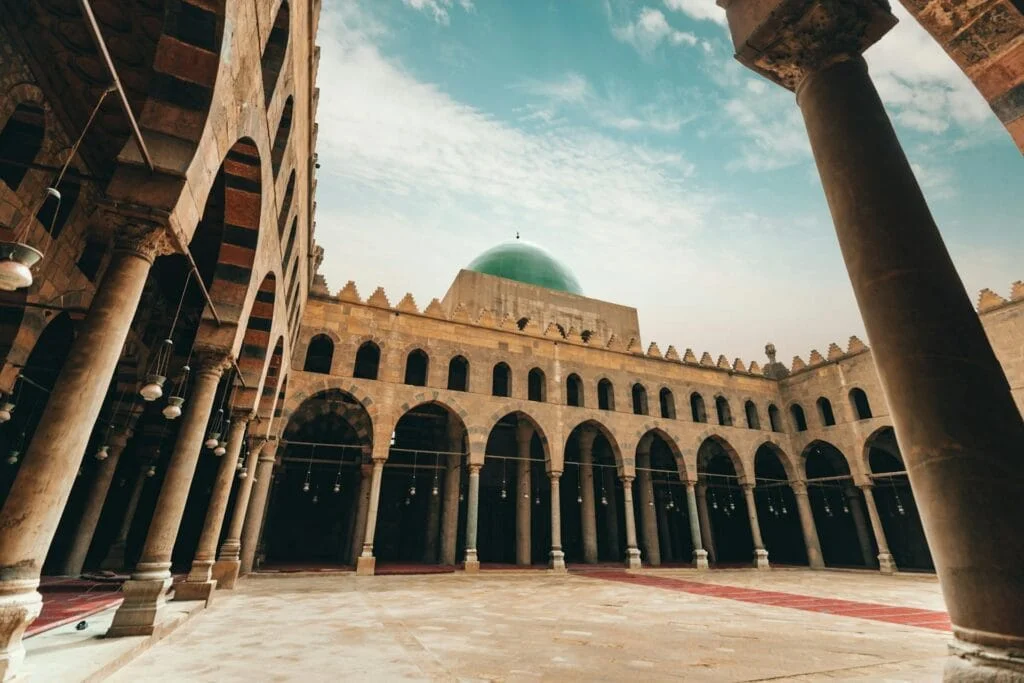
Cairo is Egypt’s largest city and its capital, with around 10 million inhabitants. This chaotic, energetic metropolis is home to some of the country’s most important historical and cultural institutions. Cairo is perfect if you want to dive into history, art, and local culture. The city is full of life – bustling markets (bazaars), traditional cafés, restaurants with varied cuisine, and stunning architecture from ancient temples to modern buildings.
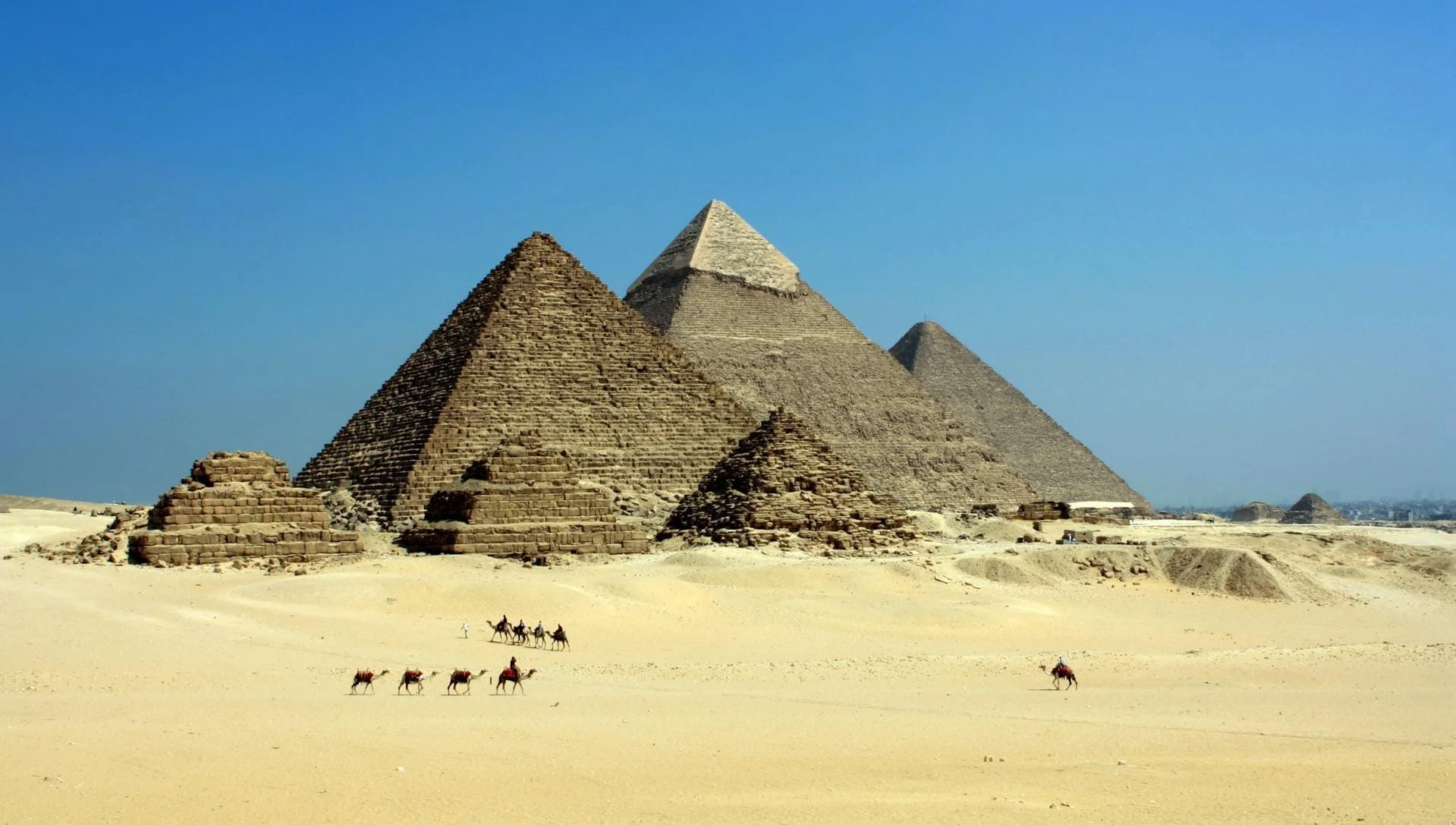
From Cairo, you can easily visit the necropolis of Giza with the Great Pyramids, Egypt’s most famous attraction. Here you’ll find the Great Pyramid of Khufu (also called Cheops), the only surviving wonder of the ancient world, as well as the Pyramid of Khafre and the third Pyramid of Menkaure. Close to these monuments stands the legendary Great Sphinx, carved from a single block of stone, with the body of a lion and a human head.
Alexandria is Egypt’s second-largest city, with a rich history as the former capital under the Ptolemaic dynasty. This romantic city stretches along the Mediterranean Sea, and you can visit the Citadel of Qaitbay, the modern Bibliotheca Alexandrina, and the Catacombs of Kom El Shoqafa – fascinating underground burial complexes.
Upper Egypt: Luxor and the Valley of the Kings
Luxor (formerly known as Thebes) is one of the largest open-air museums in the world. It lies in the very heart of Upper Egypt on the banks of the Nile and is home to some of the most remarkable and important ancient monuments on the planet.
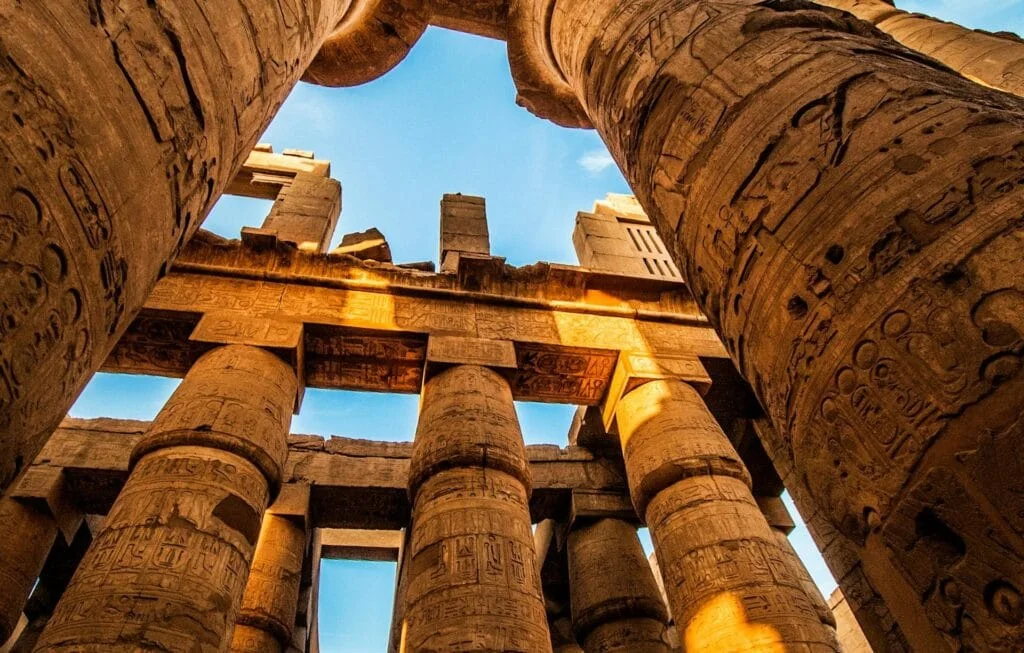
The most famous attraction in Luxor is the Karnak Temple Complex, the largest ancient religious site in the world, built over a period of more than 1,500 years. Karnak is absolutely vast – a forest of giant columns, hieroglyphic inscriptions, and towering obelisks creates a surreal feeling of walking through the ancient world. Visitors are blown away by the sheer scale and decoration of the complex.
Equally important is the Luxor Temple, dedicated to the god Amun, located on the east bank of the Nile right in the center of Luxor. When the sun bathes the temple in golden light, it’s a truly magical moment.
But the greatest treasures of Luxor are without a doubt the Valley of the Kings on the west bank of the Nile. This ancient burial ground hides more than 60 tombs of pharaohs and high officials from the New Kingdom period. The most famous is the tomb of Tutankhamun, whose discovery in 1922 sparked unprecedented interest around the world. The tombs are decorated with stunning frescoes and reliefs that tell stories of the pharaohs’ afterlife according to ancient Egyptian beliefs.
Near the Valley of the Kings you’ll also find the Temple of Queen Hatshepsut, the most beautiful structure in the western Thebes. The temple consists of three terraced levels connected by sloping ramps, and every corner is adorned with works that recount the history of one of Egypt’s most famous rulers.
Aswan and Southern Egypt: Gateway to Nubia
Aswan is the last major city on the Nile in Egypt and serves as the gateway to the historic region of Nubia. The city is less hectic than Cairo, but just as captivating. A popular experience is a Nile cruise from Aswan to Luxor, which is one of the most romantic journeys a traveler can take.
From Aswan you can visit the Temple of Philae, a religious center dedicated to the god Osiris and his wife Isis. The temple stands on an island in the middle of the Nile and looks almost mystical at sunset. Another impressive site is the High Aswan Dam, built by Egyptian president Nasser in the 1960s. This dam is a marvel of modern engineering and created Lake Nasser – a huge reservoir stretching some 500 kilometers in length.
The most remarkable attraction in southern Egypt is without a doubt the Abu Simbel Temple, located almost on the border with Sudan. This temple was carved directly into the rock and is dedicated to Pharaoh Ramesses II. Its most amazing feature is the so‑called “solar miracle” – twice a year (on February 22 and October 22) the sun’s rays reach right into the deepest part of the temple and illuminate the main sanctuary. The temple originally stood elsewhere, but it was moved in the 1960s so it would not be flooded by the waters of Lake Nasser. This operation was one of the largest archaeological rescue projects in history.
Red Sea Coast: Corals and the Sea
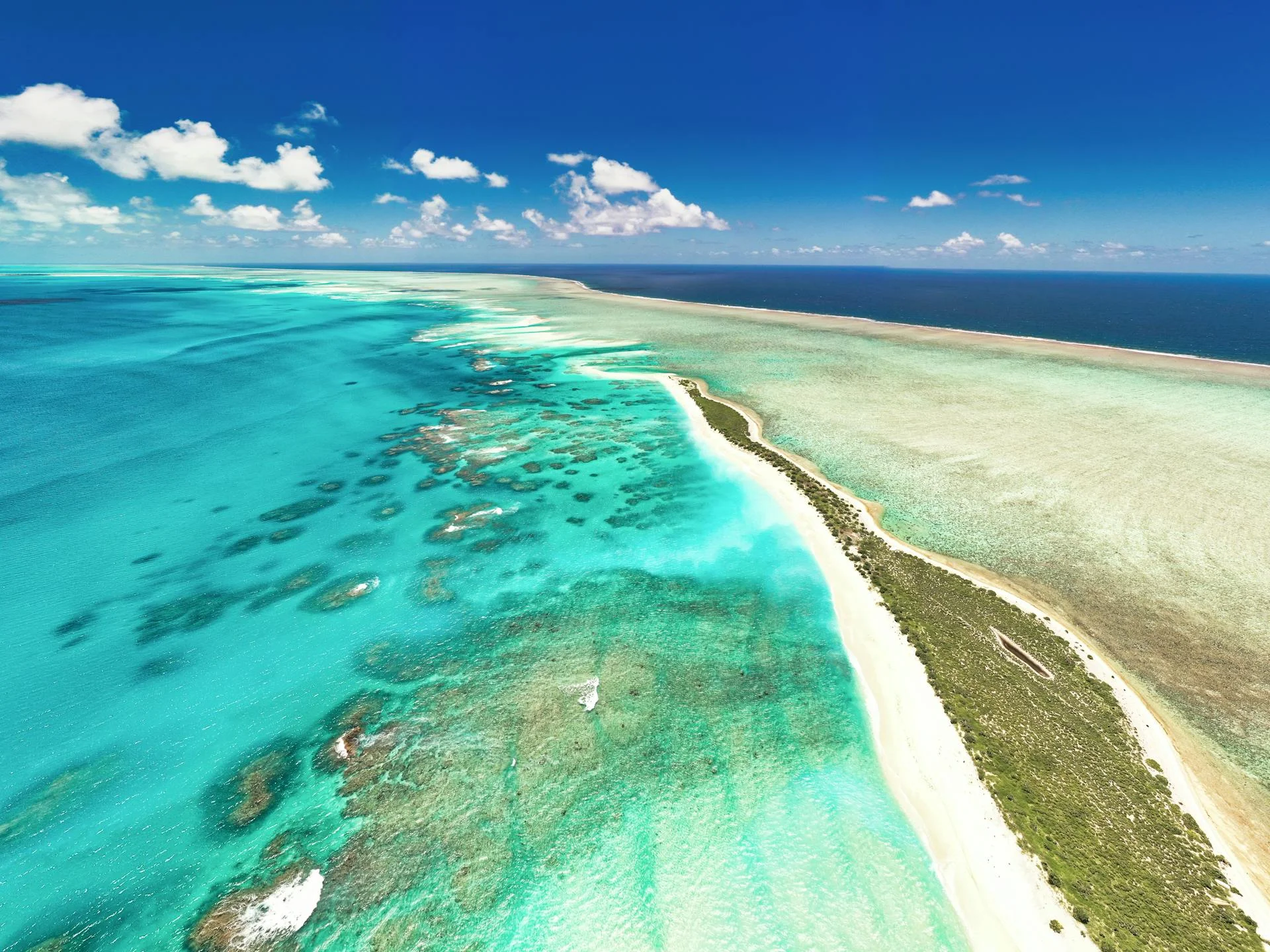
For those who mainly want relaxation, beaches, and water sports, the Red Sea coast is ideal. This region offers some of the most beautiful beaches and the best conditions for diving and snorkeling in the world.
Hurghada is the most popular resort on the Riviera, which stretches for 90 kilometers along the Red Sea. Hurghada is home to dozens of luxury hotels, restaurants, and bars. The shoreline is covered with fine white sand and the sea is incredibly beautiful – crystal‑clear water full of colorful fish and coral reefs. The best‑known beaches in Hurghada are Dream Beach and Old Vic Beach.
The area around Hurghada also includes other attractive spots such as El Gouna (with canals reminiscent of the Italian Venice), Makadi Bay with fantastic snorkeling, Soma Bay with great sports facilities, and Sahl Hasheesh with long sandy beaches.
Sharm El Sheikh is the largest resort on the Sinai Peninsula. This town has 35 kilometers of sandy beaches and is home to some of the best dive sites in the Red Sea. Naama Bay is the tourism hub, offering every kind of entertainment and relaxation. Near Sharm El Sheikh lies Ras Muhammad National Park, the oldest protected area in Egypt and a spectacular diving location with more than 1,000 species of fish, crustaceans, and mollusks.
Marsa Alam is a newer and less developed resort compared with Hurghada and Sharm El Sheikh. It attracts travelers looking for a quieter, less touristy setting and a closer connection to nature. Near Marsa Alam you will find the legendary Sharm El Luli beach – with powder‑soft white sand and crystal‑clear turquoise water that looks like it belongs in the Caribbean.
Sinai Peninsula: Mountains and Deserts
The Sinai Peninsula is still relatively undeveloped, but it offers unique natural beauty. The Sinai Mountains with the peak of Mount Sinai (2,285 meters) are traditionally associated with the biblical place where Moses received the Ten Commandments. Climbing Mount Sinai early in the morning to watch the sunrise is one of the most romantic experiences you can have here. At the foot of the mountain stands the Monastery of Saint Catherine, an ancient monastery built on the site where, according to tradition, God spoke to Moses.
Near Sharm El Sheikh on the Sinai Peninsula you’ll also find the oasis of Nuweiba, and further on Taba right on the Israeli border. Compared to the other resorts, this area feels more natural and far less developed.
Most famous landmarks and their historical significance
Giza Necropolis and the Great Pyramids
The Giza Necropolis is the most famous and most important archaeological site in Egypt, and one of the most remarkable places on Earth. This “City of the Dead” lies on the outskirts of Cairo and is home to the most iconic structures of ancient Egypt – the three Great Pyramids.
The Great Pyramid of Khufu (also known as the Pyramid of Cheops) is the largest of the three. It originally stood 146.6 meters tall and is the only one of the Seven Wonders of the Ancient World that has survived to this day. The structure is made up of roughly 2.3 million stone blocks, each weighing around 2.5 tons on average. How it was built without modern technology remains one of the greatest mysteries of the ancient world.
The Pyramid of Khafre is the second largest, and the Pyramid of Menkaure is the smallest of the three. Close to these monuments stands the Great Sphinx – a statue with a lion’s body and a human head, considered one of the oldest large-scale monuments in human history.
Entry to the Giza Necropolis costs around 120 Egyptian pounds (about $12), and the experience is well worth it. If you want to go inside the Great Pyramid of Khufu, you’ll need to pay an additional fee.
Temples of Karnak and Luxor
Karnak is the largest temple complex in the world, built over more than 1,500 years by different pharaohs. The site is a vast maze of columns, capitals, reliefs, and hieroglyphic inscriptions. Its main highlight is the Great Hypostyle Hall with 134 massive columns, 12 of which are taller, making it one of the most awe-inspiring places on the planet. Every column in Karnak tells a chapter of Egypt’s story.
The Luxor Temple on the opposite bank of the Nile is just as captivating. It was dedicated to a triad of deities – Amun, Mut, and Khonsu. Arriving here at sunset, when the temple is bathed in golden light, feels truly magical.
Valley of the Kings and the Mortuary Temple of Hatshepsut
The Valley of the Kings is the most important burial site of ancient Egypt. It lies in the heart of the desert on the west bank of the Nile and is home to more than 60 tombs of pharaohs and high officials. The tombs are carved deep into the rock, and their interiors are decorated with stunning frescoes and hieroglyphs.
The most famous is the tomb of Tutankhamun, whose discovery in 1922 by archaeologist Howard Carter sparked unprecedented worldwide interest. The tomb remained untouched by looters for thousands of years and contained an incredible collection of artistic and everyday objects. Even though most of the treasures are now in a museum, visiting the tomb itself is still a captivating experience.
Near the Valley of the Kings stands the mortuary temple of Queen Hatshepsut, the most beautiful monument in the western Thebes area. The temple consists of three terraced levels connected by sloping ramps. Each terrace is lined with pillars that hold statues of the queen. At sunset, when the temple falls into shadow, it looks extraordinarily beautiful.
Abu Simbel: Temple of Ramesses II
Abu Simbel is one of the most remarkable temples in Egypt, located close to the border with Sudan. The temple was carved directly into the rock and is dedicated to Pharaoh Ramesses II.
The façade of the Great Temple is dominated by four colossal statues of Ramesses II, each 20 meters tall. Seeing these colossi for the first time is a truly breathtaking moment for any traveler.
The most impressive astronomical phenomenon here is the so‑called “solar miracle” – twice a year (on 22 February and 22 October) the sun’s rays reach right into the deepest part of the temple and illuminate the main sanctuary. The original temple stood in a different location, but it was completely relocated in the 1960s to save it from being flooded by the waters of Lake Nasser. This operation was one of the largest engineering and rescue projects in history and took place under the auspices of UNESCO.
Philae Temple: Temple of the Goddess Isis
Philae Temple stands on an island in the middle of the Nile in Aswan and is dedicated to the god Osiris and his wife Isis. The temple is one of the most beautiful sights in Egypt, especially at sunset, when it reflects on the water’s surface and creates a magical scene.
The temple was also moved in the 1960s to protect it from flooding. Today you can reach it by boat from Aswan, which is an experience in itself.
Natural beauty and national parks
Ras Muhammad National Park
Ras Muhammad National Park lies at the very southern tip of the Sinai Peninsula near Sharm El Sheikh and is the oldest protected area in Egypt. The park includes both land and marine zones and is one of the world’s best‑known diving destinations.
The marine part of the park is defined by lush coral reefs with more than 1,000 species of fish. Sea turtles, barracudas, manta rays, dugongs and several species of sharks live here as well. The seabed is covered with colorful corals and sponges, creating one of the most diverse underwater worlds.
The land part is mostly desert, but you’ll also find mangrove belts and rich birdlife. The park is home to many different bird species that stop here during migration. Even if you don’t dive, a simple walk along the shore is a wonderful experience.
Lake Nasser and the High Aswan Dam
Lake Nasser is an artificial reservoir created in the 1960s behind the High Aswan Dam. The lake stretches for 500 kilometers, is 35 kilometers wide at its broadest point and reaches a maximum depth of 180 meters.
The lake is home to rich aquatic fauna and flora. For travelers, the most attractive experience is a boat trip on the lake, where you can get close to the wild landscape and watch eagles, herons and other water birds. Along the shores you can also see archaeological remains of ancient Nubian structures that were not completely flooded.
The lake is also an important water reservoir for Egypt, protecting the country from droughts and floods. Building the dam in the 1960s was one of the largest construction projects in history and was carried out with the help of the Soviet Union.
The Sinai Mountains and Mount Sinai
The Sinai Mountains are located in the northern part of the Sinai Peninsula and offer beautiful natural scenery and sites of great historical importance. The main peak is Mount Sinai (2,285 meters), traditionally linked to the biblical story of Moses, who is said to have received the Ten Commandments from God here.
Climbing Mount Sinai is a popular activity, usually done at night so travelers can watch the sunrise from the summit. The hike to the top takes about 2–3 hours. At the foot of the mountain stands the Monastery of Saint Catherine, the oldest Christian monastery in the world, built in the 6th century. The monastery is considered one of the holiest places in Christianity.
Nearby you’ll also find the Firan Oasis, traditionally associated with the route taken by the Israelites through the desert. The landscape around the mountains is stunning, with multicolored rock formations and striking natural features.
The best beaches for swimming and relaxation
Hurghada and its Riviera
The Hurghada coastline stretches for 90 kilometers and is lined with dozens of attractive beaches. Hurghada is the most popular resort in Egypt and offers a perfect mix of sea, sunshine and modern comfort.
- Dream Beach and Old Vic Beach are the best-known beaches right in the center of Hurghada. Dream Beach is more rugged and has more clubs and restaurants, while Old Vic is longer and narrower.
- Sahl Hasheesh is a luxury resort complex near Hurghada with 12 kilometers of white sand and panoramic views. The beaches here are stunning with a gentle entry into the water, perfect for families with children.
- Makadi Bay mainly attracts those who want to snorkel – the coral reefs are very close to the shore and the water is crystal clear. This is also where you’ll find Sharm El Naga, a beach with fantastic marine life.
- Soma Bay offers some of the best sandy beaches with plenty of sports – kitesurfing, beach volleyball, diving and golf. The beach is long with a gradual entry into the sea, ideal for families.
- South of Hurghada you’ll also find El Mahmya and Orange Bay, with the clearest water and the whitest sand.
Sharm El Sheikh and Sinai
Sharm El Sheikh has 35 kilometers of sandy beaches and 80 kilometers of coral reefs, making it a superb diving destination. Naama Bay beach is the hub of tourist life, packed with restaurants and bars.
Near Sharm El Sheikh there are also islands with beaches such as Mahmya and Orange Bay, which are accessible by boat and offer some of the most beautiful sea views.
Marsa Alam and Sharm El Luli
Marsa Alam is a less developed resort compared to Hurghada, but it offers a calmer atmosphere with fewer tourists. The Sharm El Luli beach near Marsa Alam is considered one of the most beautiful beaches in Egypt. Fine white sand and turquoise water make it feel like the Caribbean. The beach is quite remote and has very little infrastructure, which makes it truly special.
Activities, fun and adventure
Diving and snorkeling
The Red Sea is one of the best places in the world for diving and snorkeling. The coral reefs are stunning and incredibly diverse. Many hotels offer diving courses, including certified PADI courses for beginners.
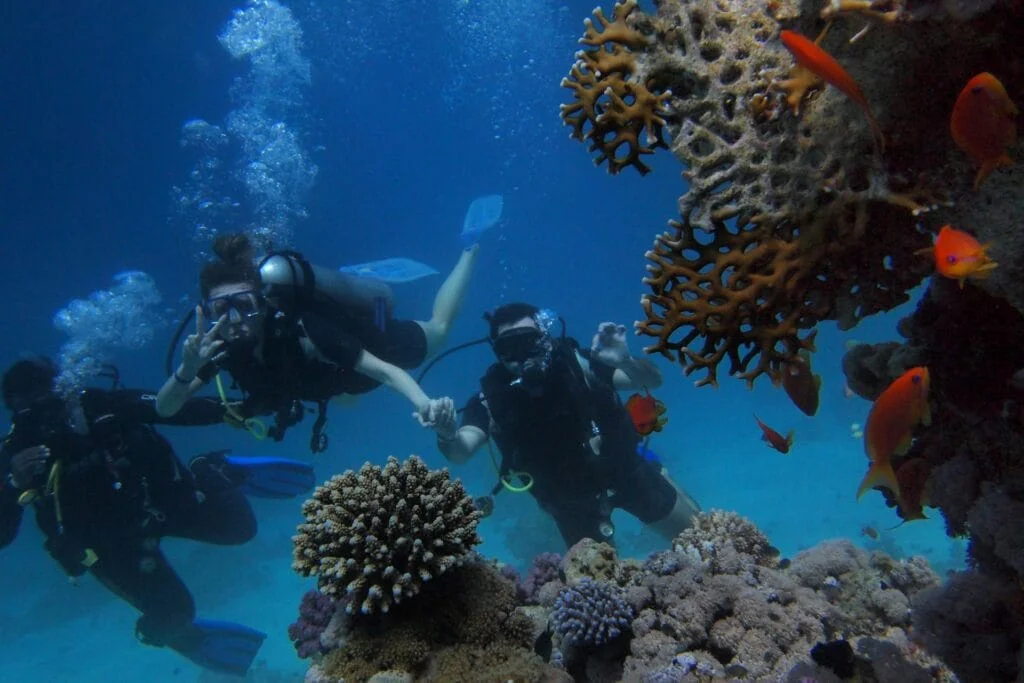
In Hurghada, you can rent equipment for about 6–25 EUR per day, depending on what you hire. Dive depth and difficulty vary – from shallow sites for beginners to deep locations with higher risk.
Popular snorkeling spots in Hurghada include Giftun Island, Makadi Bay and Orange Bay. In Sharm El Sheikh, the main highlight is Ras Muhammad, and in Marsa Alam it’s Sharm El Luli.
Nile cruises
A Nile cruise is one of the most romantic experiences in Egypt. There are several options – from short one-day cruises to multi-day trips.
The most popular option is a cruise from Aswan to Luxor, which takes 4–5 days. This route takes you past some of the most important archaeological sites, including the temples at Edfu and Kom Ombo. Many boats offer all-inclusive packages with meals and a guide.
From Hurghada you can also book day cruises to nearby islands with snorkeling and lunch included. Prices are usually around 40–70 EUR per person.
Balloon flight over Luxor
One of the best and most scenic experiences is a hot air balloon flight over Luxor early in the morning. From the balloon you’ll see the Nile, the surrounding valleys and the Valley of the Kings. Watching the sunrise over the Nile from a balloon is simply stunning. The price is higher though – roughly 150–200 EUR per person.
Trips to Cairo from the Red Sea coast
From Hurghada or Sharm El Sheikh you can take one-day or multi-day trips to Cairo and the Pyramids of Giza. These tours usually include the flight, transfers, a guide and entrance fees. Expect to pay around 150–200 EUR per person for a one-day trip.
Trips to Luxor
From the Red Sea resorts (Hurghada, Marsa Alam) you can book one-day or multi-day trips to Luxor that include the Valley of the Kings and the temples of Karnak and Luxor. Prices are usually around 85–150 EUR per person.
Quad biking and desert safaris
If you’re after an adrenaline rush, a quad bike or jeep trip through the desert is ideal. These safaris usually include a ride over sand dunes with the chance to meet Bedouins and get a feel for their traditional way of life. Prices are typically around 30–60 EUR per person.
Breakfast on a felucca
The traditional Egyptian boat called a felucca is a small sailing boat that has been used on the Nile for thousands of years. A felucca cruise early in the morning or at sunset is very romantic and a great way to watch everyday life along the Nile.
Gastronomy and local culture
Typical Egyptian food
Egyptian cuisine is a unique blend of Arabic, Mediterranean, Turkish, and Syrian influences. The food is generally simple but full of flavor, and people eat late – Egyptians traditionally have lunch around 2 p.m. and dinner around 9 p.m.
- Ful medames is Egypt’s national dish – slow-cooked fava beans with onion, garlic, and spices. It is usually served for breakfast and is a staple of the Egyptian diet. It tastes great, is inexpensive, and is a fantastic way to start the day.
- Koshari is another popular national dish – a mix of rice, lentils, pasta, and onions with a spicy tomato sauce. It is usually eaten from a bowl and is often sold as street food. It is a favorite cheap dinner for locals.
- Kebab is meat (usually chicken or beef) roasted on a skewer. In Egypt, it is typically served with bread, salad, and yogurt.
- Tagine is a traditional stew made with meat and vegetables or fruit. It is cooked in a clay pot and has a very distinctive taste.
- Aish baladi is traditional Egyptian bread similar to pita. The word “aish” means life, so “aish baladi” translates as “bread of life” – this food is extremely important for Egyptians.
- Baba ghanoush is an eggplant dip with tahini, garlic, and lemon. It makes a great snack or starter.
Egyptians love what is known as mezze, where many small dishes are placed on the table and guests help themselves to whatever they like. This is a typical way of serving food in restaurants.
Drinks
- Shai (tea) is the most common drink in Egypt and is traditionally served very strong and sweet. Shai is usually served in small glasses.
- Qahwa (Arabic coffee) is very strong, almost thick coffee with cardamom. It is drunk in small amounts and is quite an intense experience.
- Pomegranate lemonade is a very refreshing summer drink.
- Beers such as Stella and Sakara are available in restaurants and bars, but alcohol is less common in Egypt due to the Islamic faith.
Meal times and restaurant etiquette
In Egypt, lunch is usually eaten around 2:00 p.m. and dinner around 9:00 p.m. Some restaurants do not open until later in the day. Fast food is available almost all day long.
When you visit an Egyptian restaurant, it is customary to leave a tip (baksheesh) of about 5–10% of the meal price. In more upscale restaurants, 10–15% is expected.
In Egyptian culture, people often eat with their hands, so when food is served in a traditional way (without cutlery), it is normal to eat with your right hand. In modern restaurants, cutlery is of course used.
Muslims (who make up the vast majority of Egypt’s population) do not eat or drink from sunrise to sunset during the month of Ramadan. As a tourist, you should respect this tradition and avoid eating and drinking in public during these hours.
Cultural customs and traditions
Egyptian culture is deeply rooted in the Islamic faith. Prayers take place five times a day and it is normal to see people praying in mosques or out on the streets.
- Ramadan is the most important holiday in Egypt. During this month, Egyptians refrain from food, drink, and other physical pleasures during the day. After sunset, people gather with their families for large dinners called iftar. The streets are full of lights, stalls with traditional dishes, and a festive atmosphere.
- Eid al-Fitr is the holiday that marks the end of Ramadan. It lasts several days and people gather at home with their families. During these days, they exchange greetings, give gifts, and enjoy special traditional meals.
- Another important holiday is Eid al-Adha, which commemorates Abraham’s sacrifice and also lasts several days. During this festival, animals are slaughtered and the meat is shared between the poor and the wealthy.
- The Sun Festival at Abu Simbel is an astronomical celebration held twice a year (on 22 February and 22 October), when the sun enters the temple and lights up the main sanctuary.
Egyptian tradition also places a strong emphasis on family and respect for others. Speaking more loudly is common and shows interest and warmth. When Egyptians meet a friend, they usually shake hands and sometimes exchange a kiss on the cheek as a sign of friendship.
Key practical information for travelers
Currency and payments
The Egyptian pound (EGP) is Egypt’s official currency. The exchange rate is roughly 1 EUR = 50 EGP (rates change), but it is always a good idea to check the current rate before you travel.
You can exchange money at banks, hotels, and exchange offices. Banks usually offer the best rate, but they have limited opening hours. Hotels are more convenient, but their rates are usually worse. Exchange offices are open all day, but their rates are also less favorable than in banks.
ATMs are available in larger cities and resorts, and you can withdraw cash using your credit or debit card. The withdrawal fee is usually around 2–3 EUR.
Credit cards (Visa, Mastercard) are accepted in restaurants, hotels, and shops, but not everywhere. Traditional markets and smaller shops usually accept cash only.
Tipping (baksheesh) is very common in Egypt and is expected in restaurants (5–10%), taxis (rounding up the fare), hotels (for housekeeping), and for guides. Tips are usually given in cash.
Entry requirements and visas
Your passport must be valid for at least 6 months from the date you enter Egypt. For citizens of the Czech Republic, a visa is mandatory to enter Egypt.
The visa is usually arranged on arrival at the airport, not in advance. The current price of the visa is 25 USD (approximately $26), but it may change. Payment is only possible in cash in USD, not by card.
If you are travelling with a tour operator, they will usually help you with the visa. Sometimes travel agencies charge a handling fee for the visa, which is around $34.
Safety and local customs
The security situation in Egypt is generally stable, especially in tourist areas. Still, it is a good idea to follow a few basic rules.
- Be careful with your personal belongings in crowded places, markets, and near major tourist sights.
- Walking alone at night is not recommended, especially if you are a woman. It is better to go with a guide or with friends.
- Respect local customs – Egypt is a Muslim country with conservative values. Your clothing should be modest, especially when visiting religious sites. Men should wear long trousers and shirts with sleeves, and women should cover their shoulders and knees.
- Nudism or topless sunbathing is not allowed in Egypt. It is considered offensive to local culture.
- Drinking alcohol in public is not common and may be seen as inappropriate.
- Photography can be sensitive, especially when it involves local people. Always ask for permission first.
- Bargaining is standard practice in markets and when buying souvenirs. Prices are not fixed and haggling is expected.
Healthcare and Vaccinations
The healthcare system in Egypt consists of public and private hospitals. Private hospitals are recommended for foreigners because they usually offer better care, but they are also more expensive.
It is essential to have travel insurance that covers medical care abroad. Without insurance, treatment in Egypt can be very expensive.
An international vaccination certificate is not required on arrival, but the following vaccinations are recommended: against hepatitis A and B, typhoid fever, and tetanus.
Travel-related illnesses – it is recommended to:
- Drink only bottled water.
- Avoid ice in drinks.
- Eat only well-cooked and fresh food.
- Avoid raw fish and undercooked meat.
- Use mosquito repellent.
Traveller’s diarrhoea is a common issue. It’s a good idea to pack anti-diarrhoeal medication and oral rehydration salts.
Sun exposure in Egypt is very intense. Use a sunscreen with high SPF and stay out of direct sun, especially around midday.
Fauna and Flora
Nature in Egypt is typical of desert and subtropical regions. Among the animals, you may see eagles, herons, dolphins, sea turtles, and occasionally sharks in the Red Sea. In the desert, there may be scorpions and snakes.
Typical plants in Egypt include date palms, acacias, and water lilies on the Nile.
Basic Egyptian Phrasebook
| Czech phrase | Egyptian Arabic | Pronunciation |
|---|---|---|
| Good morning / Good day | Sabáh el-chér | sabáh el-chér |
| Good evening | Masaa el-chér | masáa el-chér |
| Hello | Ahlan | áhlan |
| Goodbye | Maa salama | maá salamá |
| Thank you | Šukran | šukrán |
| Please | Min fadlak | min fadlák |
| Yes | Ajwa | ájva |
| No | La | lá |
| My name is... | Ismí... | ismí... |
| What is your name? | Ismak é? | ismak é? |
| I don't speak Arabic | Ana miš batkalam arabí | ána miš batkállem arabí |
| Do you speak English? | Bititkallim inglízí? | bititkálim inglízí? |
| Where is the toilet? | Fén el-hammám? | fén el-hammám? |
| How much is it? | Bikám? | bi-kém? |
| Too expensive | Ghálí áwí | ghálí áwí |
| Cheaper | Archas | árchas |
| Water | Majja | májja |
| Beer | Bíra | bíra |
| Help! | Ilha'úní! | ilha'úní! |
Transport and logistics
How to get to Egypt
Airports – The main entry point is Cairo International Airport. Other key airports are Hurghada, Sharm El Sheikh and Marsa Alam for travellers heading to the Red Sea. From Prague, there are both direct and connecting flights, for example with EgyptAir.
Getting around Egypt
- Domestic flights – Domestic flights (e.g. EgyptAir) operate between Cairo, Alexandria, Hurghada, Luxor and Aswan. They are fast and reasonably priced.
- Trains – The railway network in Egypt is an important way to get around. The busiest routes are Cairo–Alexandria and Cairo–Luxor–Aswan. There are also overnight sleeper trains.
- Buses – Long-distance buses connect all major cities. The main operators are Go Bus and Super Jet. Buses are comfortable and air-conditioned.
- Taxis – Taxis are inexpensive, but usually do not have a meter, so you need to agree on the price in advance. As an alternative, you can use apps like Uber and Careem (in large cities).
- Cairo Metro – Cairo has a metro system, which is a cheap and efficient way to move around the city.
- Car rental – Renting a car is generally not recommended because of chaotic traffic and different driving rules. A better option is to hire a car with a driver.
Prices and travel budget
Egypt is a very affordable destination where you can enjoy a holiday on a tight budget as well as in high-end luxury hotels.
Budget for different types of travelers
- Low-budget trip ($9–$18/day): Hostel accommodation, meals in local restaurants, public transport.
- Mid-range budget ($27–$45/day): Accommodation in a three-star hotel, mix of local eateries and nicer restaurants, taxi/bus transport, entrance fees and excursions.
- Luxury budget ($90–$180/day): Accommodation in a five-star hotel, dining in better restaurants, private transfers, special guided activities.
Indicative prices
- Visa: 25 USD (about $27)
- Three-star hotel: 80–150 EUR ($90–$180) per night
- Meal in a local restaurant: 20–50 EGP ($0.90–$2.30)
- Entrance fee to the Pyramids of Giza: 120 EGP (about $5.50)
- One-day trip to Luxor from Hurghada: 85–150 EUR ($99–$175)
- Hot air balloon flight: 150–200 EUR ($175–$233)
How to plan the perfect trip
Choosing the right region for your travel style
- For history and archaeology lovers – The best option is a combination of Cairo, Luxor and Aswan. (At least 10–14 days)
- For sea and beach lovers – Stay by the Red Sea (Hurghada, Sharm El Sheikh, Marsa Alam). (7–10 days)
- For a combined trip – Combine the sea with history. For example, one week on the Red Sea and one week visiting historical sites. (14–21 days)
- For families with children – Hurghada, with family-friendly facilities and easy beach trips. (7–10 days)
What to watch out for when planning
- Book in advance – It’s best to reserve Nile cruises and hot air balloon flights ahead of time.
- Avoid peak season – The hottest (July–August) and coldest (December–February) months are usually the busiest. Spring and autumn are ideal.
- Don’t overpack your schedule – Egypt is a large country and getting around takes time. It’s better to visit fewer places and have time to relax and explore properly.
- Consider the timing of Ramadan – During Ramadan (the dates change every year), fewer restaurants may be open during the day.
- Get travel insurance – Very important, especially if you’re planning activities like diving.
Sample itineraries
- A week by the sea (7 days):
- Day 1–2: Arrival in Hurghada, rest
- Day 3–4: Red Sea boat trip with snorkeling
- Day 5: Day trip to Luxor
- Day 6: Relaxing on the beach
- Day 7: Shopping and departure
- Day 1–2: Arrival in Hurghada, rest
- Day 3–4: Red Sea boat trip with snorkeling
- Day 5: Day trip to Luxor
- Day 6: Relaxing on the beach
- Day 7: Shopping and departure
- Ten days: Sea and history (10 days):
- Day 1–2: Hurghada, beach
- Day 3: Day trip to Luxor
- Day 4–6: Nile cruise from Luxor to Aswan with temple visits
- Day 7: Aswan, Philae Temple
- Day 8: Day trip to Abu Simbel
- Day 9: Return to Hurghada
- Day 10: Departure
- Day 1–2: Hurghada, beach
- Day 3: Day trip to Luxor
- Day 4–6: Nile cruise from Luxor to Aswan with temple visits
- Day 7: Aswan, Philae Temple
- Day 8: Day trip to Abu Simbel
- Day 9: Return to Hurghada
- Day 10: Departure
- Fifteen days: Complete Egypt (15 days):
- Day 1–2: Cairo, Giza Pyramids
- Day 3–4: Cairo, museums and bazaars
- Day 5–8: Nile cruise from Luxor to Aswan
- Day 9: Aswan, Abu Simbel
- Day 10–12: Hurghada, sea
- Day 13: Return to Cairo or domestic flight
- Day 14–15: Last-minute shopping and departure
- Day 1–2: Cairo, Giza Pyramids
- Day 3–4: Cairo, museums and bazaars
- Day 5–8: Nile cruise from Luxor to Aswan
- Day 9: Aswan, Abu Simbel
- Day 10–12: Hurghada, sea
- Day 13: Return to Cairo or domestic flight
- Day 14–15: Last-minute shopping and departure
Conclusion: Why Egypt is a destination you simply have to visit
Egypt is a country that blends history, natural beauty, and culture into a truly unique destination. Whether you’re drawn to ancient temples, relaxing on the beaches of the Red Sea, or diving into local culture and traditions, Egypt has something for every traveler.
The monuments and landmarks are living proof of one of the oldest and most influential civilizations on Earth. Pyramids, temples, and hieroglyphic inscriptions offer a glimpse into the mindset, beliefs, and social structure of people who lived thousands of years ago. The sea, with its colorful underwater world and stunning beaches, gives you a break from everyday life and a chance to unwind. The local culture, with its traditions, food, and warm hospitality, will make your trip truly unforgettable.
Whichever region you choose, the main thing is that Egypt gives you space to relax, explore, and grow on a personal level. This country, visited by millions of travelers over thousands of years, is waiting to share its treasures with you.
Kategorie: