Thailand: A Complete Guide to the Land of Smiles
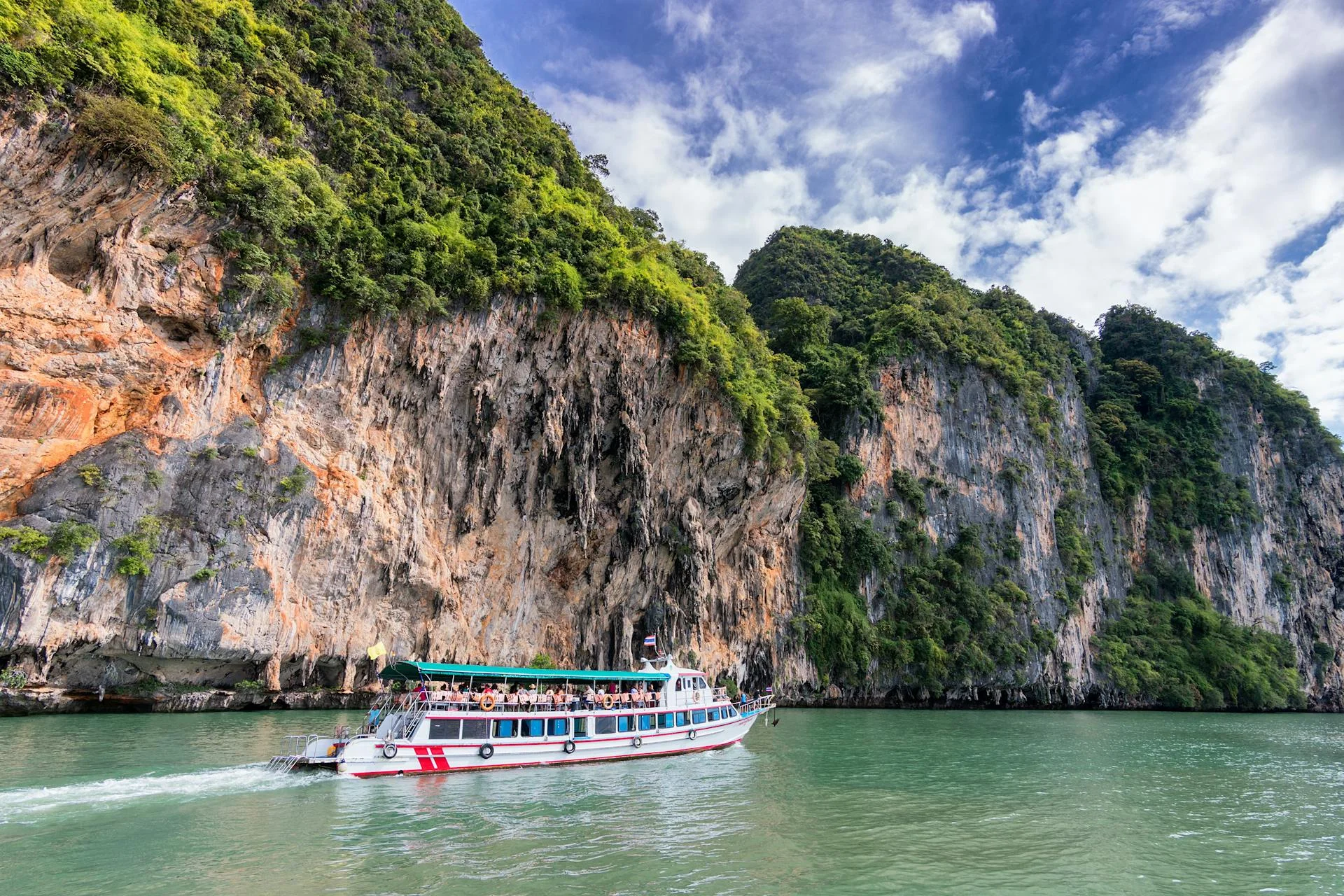
Thailand is one of the most visited destinations in the world, and it’s no coincidence. This fascinating country, stretching across the Indochinese Peninsula and the Malay Peninsula, offers incredible variety – from ancient temples and jungles to golden beaches and the vibrant, buzzing capital of Bangkok. Did you know that Thailand has never been colonized? It’s the only country in Southeast Asia that has kept its full independence, which has shaped its unique culture.
Thailand blends tradition and modern life, making it an ideal destination for every type of traveler – from backpackers and families with children to holidaymakers looking for luxury. So if you’re after a place where you get maximum experiences for a reasonable price in a culturally rich setting with welcoming people, Thailand is the answer.
History of Thailand – from ancient kingdoms to a modern nation
Thai history is one of the most fascinating in Southeast Asia. The area of today’s Thailand has been inhabited since ancient times, but the turning point came with the arrival of the Thai people from southwest China around the 11th century. The first truly independent Thai kingdom was the Sukhothai Kingdom, which flourished in the 13th and 14th centuries. It was founded in 1238 by two princes – Pha Mueang and Bang Klang Hao – who led an uprising against the then-powerful Khmer Empire. Under King Ramkhamhaeng (1279–1298), considered one of the greatest Thai rulers, Sukhothai became a center of art, architecture, and Buddhism. Interestingly, it was King Ramkhamhaeng who created the Thai script by adapting Indian writing into a form that Thais still use today.
In the mid-14th century, the more powerful Ayutthaya Kingdom emerged, gradually taking over and shifting the center of power. Ayutthaya served as the capital of the Siamese kingdom from 1350 until 1767, when it was almost completely burned and looted by Burmese invaders. At its peak, Ayutthaya was one of the largest and richest cities in the world, with a strong trading hub and a sophisticated culture. After Ayutthaya was destroyed, the capital was briefly moved to Thonburi, but soon shifted to present-day Bangkok, where a new capital was declared in 1782. Since then, Bangkok has ruled and become the country’s main hub – for politics, the economy, culture, and spirituality.
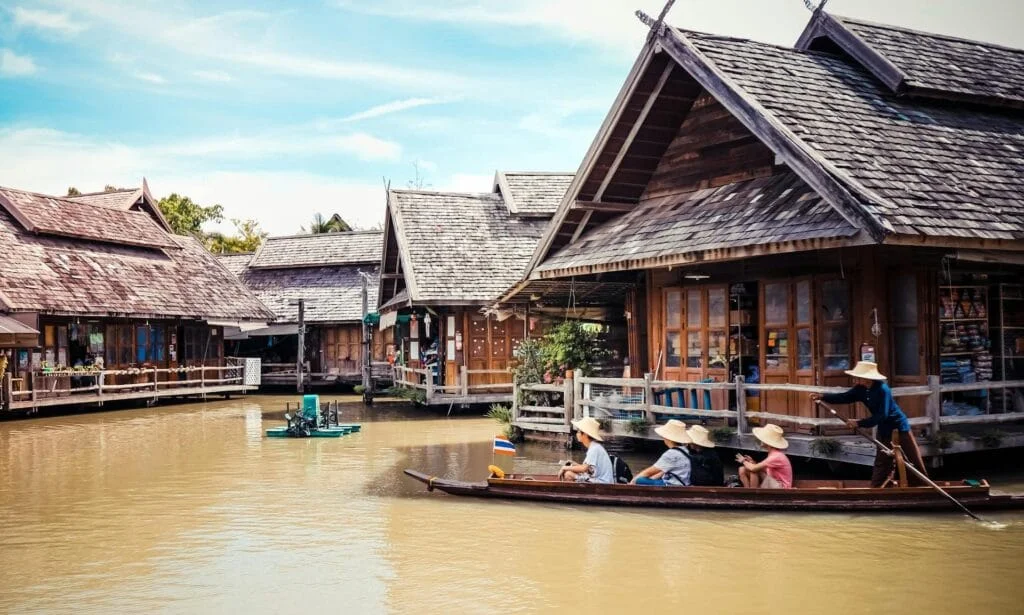
The Chakri Dynasty, which still rules Thailand today, was founded in 1782 by King Rama I. Since then, Thailand has gradually modernized and adapted to a changing global world, while still holding on to its roots and traditions. Buddhism, which arrived from Sri Lanka, slowly became the backbone of Thai culture and spirituality. Thais deeply respect their history and traditions, which you can see everywhere – in their reverence for the monarchy, religious tolerance, and the calm, laid‑back lifestyle that defines the country. This continuity of tradition and strong sense of history is exactly what makes Thailand such a unique and fascinating destination.
Location, geography and climate
Location and geography of Thailand
Thailand lies in the heart of Southeast Asia, more precisely on the Indochinese Peninsula and extending down onto the Malay Peninsula. The country has a very distinctive shape – people often say it looks like an elephant’s head, with the Malay Peninsula forming its “trunk”. Thailand borders Myanmar (Burma) to the west and northwest, Laos to the northeast, Cambodia to the east, and Malaysia at its southern tip. Its land borders stretch for about 4,860 kilometers and the country covers roughly 513,000 square kilometers, which makes it the 50th largest country in the world.
The geography of Thailand is highly varied. The northern and northwestern parts of the country are mountainous – this is where you’ll find well‑known mountain ranges with many waterfalls and wild, untouched nature. The highest mountain in Thailand is Doi Inthanon, with an elevation of 2,565 meters. It is located in northern Thailand and is often called the “Roof of Thailand”. The central region is formed by the fertile plain of the Chao Phraya River (Menam), considered the country’s lifeline – it flows through the entire central area and ends in Bangkok, where it empties into the Gulf of Thailand. The northeastern part of the country is occupied by the high Khorat Plateau, which makes up about one third of Thailand’s territory. The southern part of Thailand on the Malay Peninsula is the smallest, but the most famous for its stunning beaches stretching along both the Andaman Sea to the west and the Gulf of Thailand to the east.
Thailand has a long coastline – more than 3,000 kilometers – and its southern regions are surrounded by countless islands of all sizes. Islands such as Phi Phi, Krabi, Samui, Phangan, Tao and many others create a true “island paradise” that attracts travelers from all over the world. Thanks to its north–south span of more than 1,600 kilometers, Thailand offers an unusually wide range of climate zones and landscapes.
Climate and weather for travelers
Thailand lies in the tropical belt, which means it has a tropical monsoon climate with high temperatures and humidity all year round. The difference between summer and winter temperatures is minimal – it stays fairly hot throughout the year. Because the country stretches north to south across 16 degrees of latitude, Thailand has more climate zones than any other country in Southeast Asia. This leads to significant weather variations between regions, depending on altitude and local geography.
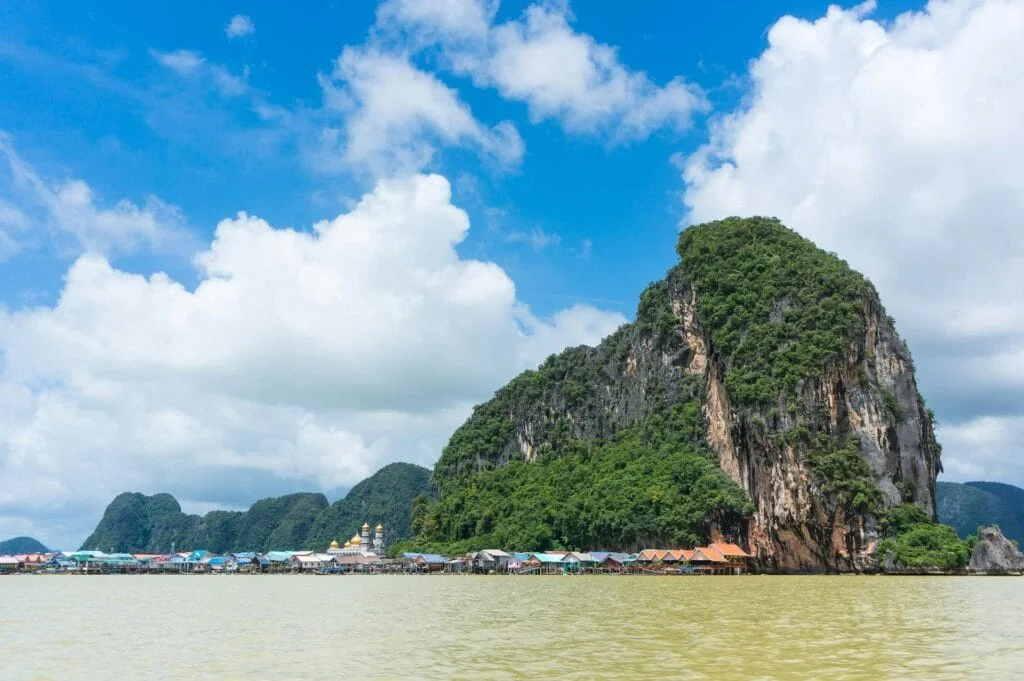
Thailand is traditionally divided into three main seasons. The first is the cool, dry season (November to February), considered the best time to visit and also the peak of the tourist season. During this period, temperatures are pleasantly warm, around 25–30 °C, with very little rain and lower humidity. It’s ideal both for exploring cities and temples and for relaxing on the beach. The second season is the hot and dry period (March to May), when temperatures climb to 35–36 °C, making it the hottest time of the year. April and May are usually the peak heat months – for many travelers this stretch can feel uncomfortably hot and exhausting. The third season is the monsoon rainy season (June to October), when heavy showers arrive, usually concentrated at certain times of the day. Even though humidity and rainfall are higher, this time has its own charm – the landscape turns lush and green, accommodation prices tend to drop, and in some areas you’ll find far fewer tourists.
It’s important to keep in mind that weather in Thailand varies a lot by region. Northern areas such as Chiang Mai see cooler conditions in the winter months (December to February) – around 15–20 °C at night and 25–30 °C during the day. It’s still comfortable, but noticeably cooler than in the south. In contrast, the southern parts of the country, especially the islands, stay hot year-round. You should also know that from March to May the north goes through the burning season, when local farmers burn crop residues in the fields and air quality drops sharply – it’s best to avoid the north during this time.
Weather and when to go – month‑by‑month overview
For most travelers, the best time to visit Thailand is from November to March. During these months, temperatures are pleasant, rainfall is low and the weather is generally stable and predictable. If you’re looking for more specific timing for different regions and activities, the table below gives a detailed month‑by‑month overview of average temperatures and typical conditions.
| Month | Average daytime temperature | Average night-time temperature | Sea temperature | Characteristics |
|---|---|---|---|---|
| January | 26–32 °C | 19–23 °C | 27–28 °C | Ideal dry season, peak tourist period |
| February | 27–33 °C | 20–24 °C | 28–29 °C | Dry weather continues, still very busy |
| March | 28–34 °C | 21–26 °C | 29–30 °C | Hot season begins, the North enters burning season |
| April | 29–35 °C | 23–27 °C | 29–30 °C | Hottest month of the year, challenging conditions all day long |
| May | 28–34 °C | 23–26 °C | 29–30 °C | Last month of intense heat, start of rains in the west |
| June | 27–31 °C | 23–25 °C | 29–30 °C | Monsoon starts, heavy rain on the west coast |
| July | 26–30 °C | 23–25 °C | 28–29 °C | Monsoon peak, lush green landscape, lower prices |
| August | 26–30 °C | 23–25 °C | 28–29 °C | Monsoon continues, eastern islands still a good choice |
| September | 26–30 °C | 23–24 °C | 28–29 °C | Monsoon persists, start of the transition period |
| October | 26–31 °C | 22–25 °C | 28–29 °C | Monsoon ends in the west, eastern islands come into season |
| November | 25–32 °C | 20–23 °C | 28–29 °C | Ideal season kicks off, weather becomes more stable |
| December | 25–31 °C | 18–22 °C | 27–28 °C | High season, most pleasant temperatures |
Regions and types of destinations – options for every traveler
Thailand is so large and diverse that it really pays to choose which areas you want to visit. You can’t see everything in a single week, but every region offers something unique that’s worth your time. It’s also good to know that Thailand is bigger than it looks on the map – the straight-line distance from north to south is over 1,600 kilometers.
Bangkok – a vibrant metropolis of contrasts
Bangkok is the capital of Thailand and the largest metropolis in Southeast Asia. It’s a city that almost every traveler passes through – either as a first stop or as a major transit hub. Bangkok is an impressive blend of tradition and modernity, and there’s a clear reason for that. The city stretches along the Chao Phraya River and is home to more than 10 million people. Old Bangkok is packed with temples, palaces and traditional boats, yet just a few kilometers away you’ll find ultra-modern shopping malls, skyscrapers and cutting-edge infrastructure. It’s exactly this clash of eras that makes Bangkok such a magnetic place.
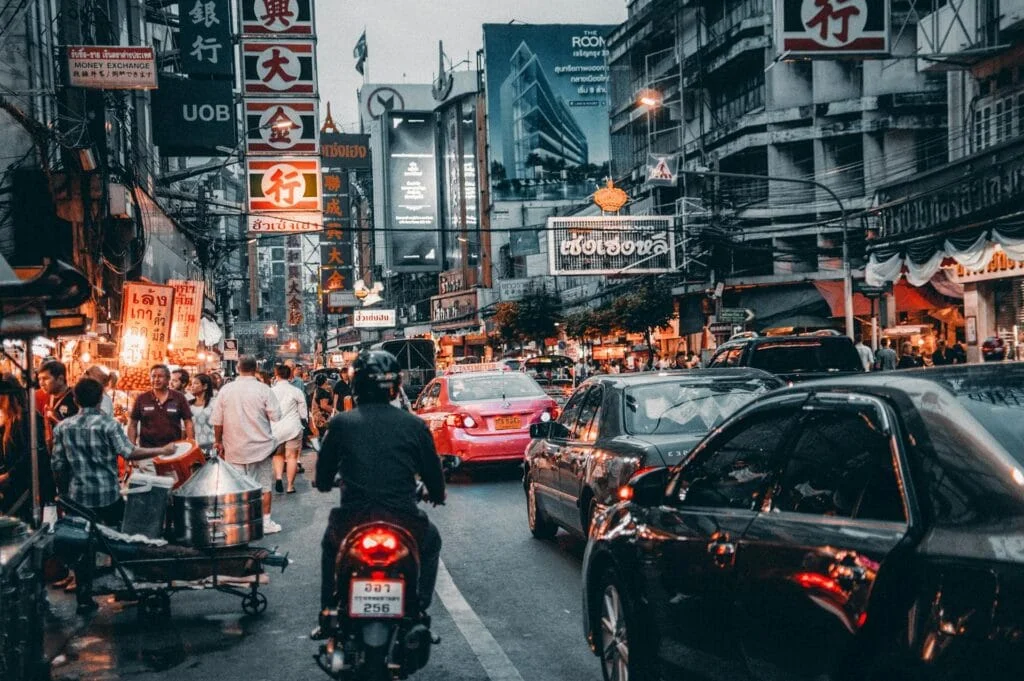
The most famous attractions are the Royal Palace, a dominant golden complex with a gilded roof, home to the current king and the center of political power in the country; Wat Phra Kaew, the temple that houses the Emerald Buddha, the most sacred Buddhist statue in Thailand; Wat Pho, the oldest and one of the largest temples in Bangkok, featuring a stunning 46-meter-long reclining Buddha; and Wat Arun, a photogenic riverside temple with a patterned Khmer-style tower that looks as if it were carved from porcelain. The Chao Phraya River is the heart of old Bangkok and a boat ride along it is a must, just like a visit to the traditional Chinatown with its colorful chaos of restaurants, shops, and markets.
When it comes to shopping, Bangkok is a paradise – Central World, one of the largest shopping malls in Asia, offers over 500 stores; Chatuchak Market, the largest weekend market in the world, has more than 15,000 vendors; and the more traditional Talad Rot Fai, an old market set along a railway line, delivers a truly authentic shopping experience. The nightlife is legendary – from fine-dining restaurants and quiet bars to high-energy clubs, Bangkok has something for everyone. Khao San Road, although its fame has faded a little, is still an iconic meeting point for travelers from all over the world. Bangkok is also the birthplace of traditional Thai massage, and a visit to the Wat Pho Massage School is an ideal way to experience this wonderful craft for yourself.
Northern Thailand – mountains, temples, and authentic hill villages
Northern Thailand feels like a completely different world compared to chaotic Bangkok. The region around Chiang Mai and Chiang Rai is mountainous, lush, and much calmer than the south. Chiang Mai, the second-largest city in Thailand, is the cultural heart of the north and is often called the “Rose of the North.” The city has more than 300 temples (some sources mention over 1,000 in the whole province) and is a hub for local art, crafts, and traditional culture. The historic center is surrounded by old walls and is a beautiful place to wander through narrow lanes where you come across everyday local life – monks, market vendors, artists, and local families with children. The most famous temple is Wat Phra That Doi Suthep, perched high on a mountain and offering a breathtaking view over the entire city. Sunsets from here are unforgettable, which is why crowds of travelers flock to this spot, especially in peak season.
Chiang Mai is not just about temples – the surrounding area is full of natural and cultural experiences. You can visit hill tribe villages, such as a Karen village, where you can learn about the lives of the indigenous people. There are also elephant camps, where you can get close to these magnificent animals – it’s important to choose an ethical camp that genuinely cares for them. Near Chiang Mai you’ll also find Pai, a small town with a laid-back hippie vibe that has become popular with backpackers. On the way to Pai you drive through stunning mountain passes and villages with traditional architecture. To the northeast lies Chiang Rai with the White Temple (Wat Rong Khun), a futuristic, surreal temple that was rebuilt for more than a million dollars and is one of the most photogenic spots in Thailand. It’s also close to the Golden Triangle, the historic region where the borders of Thailand, Laos, and Myanmar meet.
Northern Thailand is also home to Doi Inthanon National Park, where you’ll find the highest mountain in the country. This park is perfect for trekking, birdwatching, and exploring the mountain jungle. In winter (from December to February), beautiful Siamese cherry blossoms cover the trees in pink. In the north you’ll also find Doi Inthanon National Park with the Mae Ya and Mae Klang waterfalls. Northern Thailand is a major producer of rice, tea, and other crops, and the villages of Mae Kampong and Mon Cham offer homestays with local farmers, where you can take part in everyday rural life.
Historic cities in the heart of Thailand – Ayutthaya and Sukhothai
In central Thailand, between Bangkok and the north, you’ll find two of the country’s most important archaeological sites – Ayutthaya and Sukhothai, both listed as UNESCO World Heritage Sites. Ayutthaya lies just 90 kilometers north of Bangkok and can easily be visited as a day trip from the capital. This historic city was once the third-largest city in the world and the heart of the powerful Siamese Kingdom from 1350 to 1767. After the Burmese invasion, only ruins remained, but they are still breathtaking – scattered across a lush green landscape crisscrossed with waterways. Key monuments include Wat Phra Si Sanphet with its three massive chedis, which originally housed a large gilded Buddha statue; Viharn Mongkol Bophit with one of the largest bronze Buddha statues in Thailand; and Wat Na Phra Men, one of the few temples that survived without being destroyed. The best way to explore Ayutthaya is by bicycle or on an elephant ride – this is where many travelers try riding an elephant for the first time.
Sukhothai, the former capital of Thailand from the 13th to 15th century, lies further north in the middle of the country and is home to the Sukhothai Historical Park, which is even more impressive than Ayutthaya in terms of architectural artistry. Sukhothai is considered the “classical period” of Thai art and architecture, and it set the template for how Thai temples and traditional art look today. The most famous temple is Wat Mahathat with its iconic lotus-bud-shaped stupa. Unlike Ayutthaya, which feels more like a field of ruins, Sukhothai is more restored and well maintained, and the park is very clean and neatly organized. Sukhothai also includes the Sawankhalok Museum, which displays refined artifacts from the Sukhothai era.
Southern Thailand – islands and world‑class beaches
Southern Thailand is a paradise for anyone who loves beaches, the sea, and small islands. The region is split into two parts – the western side along the Andaman Sea and the eastern side around the Gulf of Thailand. Phuket, the largest island in Thailand, is the gateway to the south and the most common first stop for a beach holiday. Phuket is packed with resorts, bars, and restaurants, and Patong Beach is the liveliest and busiest spot – perfect if you’re after action and nightlife. Phuket also has nicer and quieter beaches – Kata Beach is a family‑friendly beach with white sand and is popular with surfers, while Karon Beach is even more peaceful.
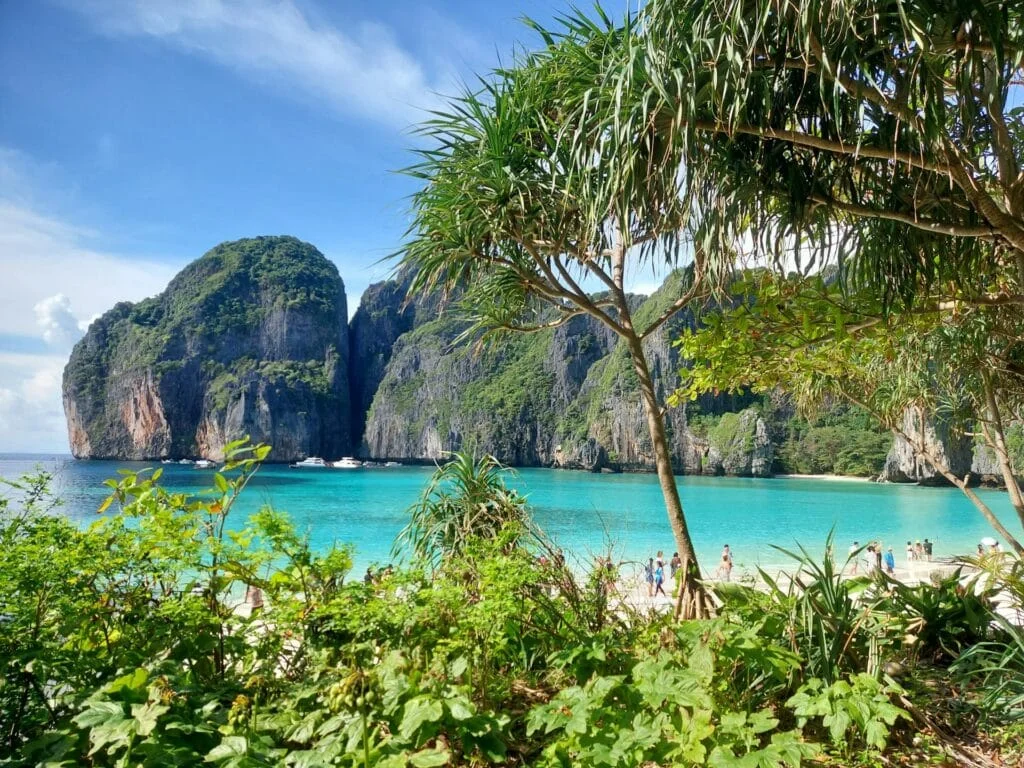
Not far from Phuket is Krabi, which is actually on the mainland, but serves as a gateway to the islands and stunning beaches. In Krabi you’ll find Railay Beach, accessible only by boat and often ranked among the most beautiful beaches in the world – it’s surrounded by dramatic limestone cliffs and crystal‑clear water. Railay is also Thailand’s rock‑climbing hub. Close by is Ao Nang Beach with a slightly busier vibe. Wherever you stay in Krabi, you can visit Koh Phi Phi, a group of islands with turquoise waters and amazing marine life – the island of Phi Phi Leh hides Maya Bay, the filming location of the famous movie “The Beach” with Leonardo DiCaprio.
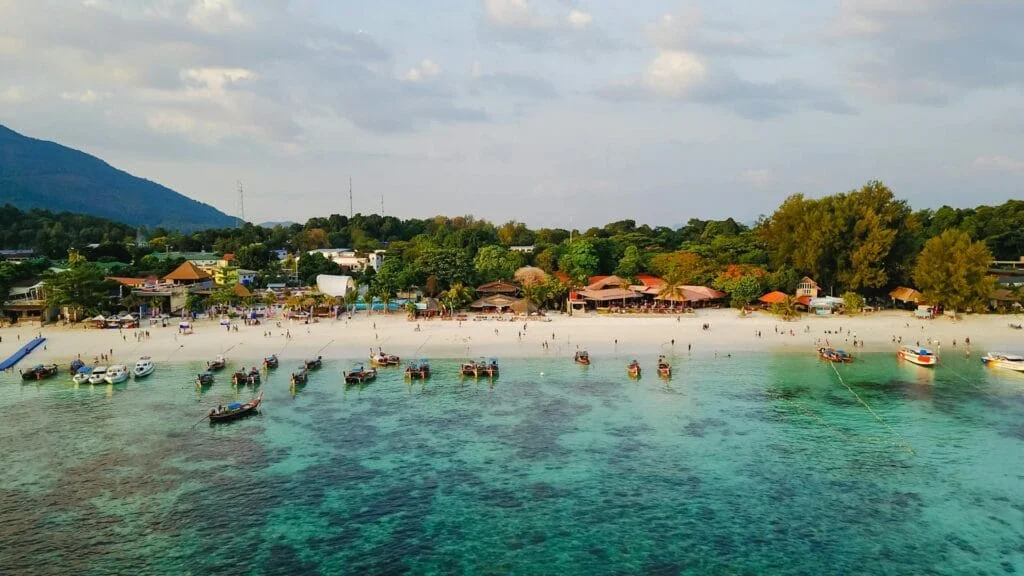
On the eastern side of the Gulf of Thailand lies Koh Samui, the second‑largest island in the country with excellent resort facilities. Samui has plenty of beaches – Chaweng is the most vibrant and crowded, while Lamai is a bit quieter. Samui is especially good for travelers who want a mix of relaxation and entertainment. Nearby is Koh Phangan, famous for its party scene – the legendary Full Moon Party takes place every month during the full moon and attracts thousands of people. If you’re looking for peace and quiet, head to Koh Tao, a small island with a laid‑back dive‑village feel – it’s world‑renowned for its dive schools and friendly community vibe. On the northern part of the eastern coast you’ll find Koh Chang, the “Elephant Island,” with long sandy beaches and fewer tourists than many other islands.
For anyone looking for authenticity and peace without the crowds, Ko Lanta is an ideal choice. This long, narrow island has wide sandy beaches on both coasts – Long Beach is perfect for families, while Kantiang Bay is surrounded by wild nature and is almost deserted. Ko Lanta has kept a more traditional feel, with fewer hotels and big chains. Another calm destination is Hua Hin, the oldest Thai beach resort, which still retains the elegant, laid-back atmosphere of days gone by. Hua Hin is popular with the Thai royal family – King Rama VII had the Klai Kangwon palace built here back in 1926. Hua Hin is ideal if you want an authentic Thai vibe without too many tourists.
Eastern Thailand – less-visited regions and natural wonders
Eastern Thailand, often overlooked by travelers, offers authenticity and natural beauty without mass tourism. This is where you’ll find Isaan, the northeastern region that is home to the Mekong River and a very traditional way of life. The city of Nakhon Ratchasima (Korat) is the gateway to the northeast and a place where you encounter the real Thailand, not the tourist version. Nearby lies Khao Yai National Park, one of the oldest and most visited national parks in Thailand, home to elephants, gibbons, macaques, wild boars and countless bird species. The park is perfect for nature lovers and photographers – you can hike the trails or head out on a jeep safari. It’s only a few hours from Bangkok, so it works very well as a weekend trip.
Most famous landmarks and cities
Wat Pho – home of the Reclining Buddha
Wat Pho in Bangkok is the oldest temple in the capital and one of the largest in all of Thailand, dating back to the 16th century. The temple complex was almost completely rebuilt by King Rama I between 1781 and 1789. The main attraction is the huge 46-metre-long and 15-metre-high golden statue of the Reclining Buddha, which shows Buddha at the moment he attained nirvana. The statue was created in the 19th century during the reign of Rama III from bricks covered with lacquer, plaster and gold leaf. The soles of the statue’s feet are decorated with mother-of-pearl inlays showing 108 auspicious signs of the Buddha – tradition says that if you drop a coin into each of the 108 bronze bowls found in the temple, you gain special Buddhist merit. The beautiful central ordination hall (bot) is decorated with finely carved sandstone panels depicting stories from the Indian epic Ramayana. The complex is also home to a school of traditional Thai medicine, which teaches traditional Thai massage that originated here. Wat Pho is therefore not only a spiritual site, but also a centre of learning and the arts.
Wat Arun – the Temple of Dawn
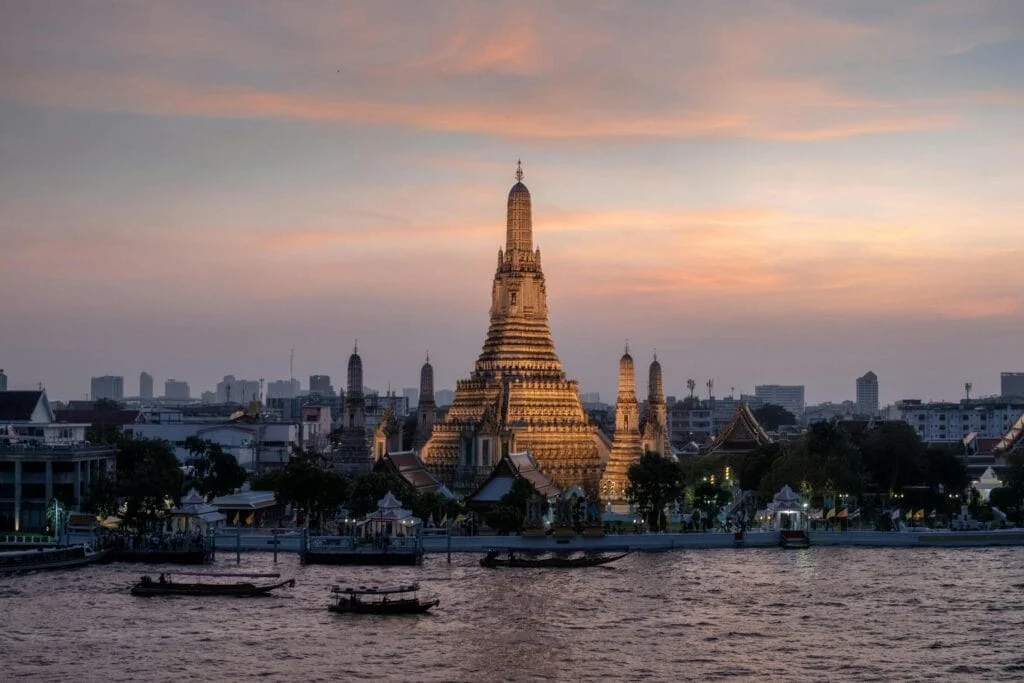
Wat Arun, a Khmer-style tower temple, is one of Bangkok’s icons and one of the most photogenic spots in Thailand. The temple was originally built in the 16th century, but it was extensively rebuilt during the reign of King Rama II. The main tower (prang) rises to about 79 meters and is decorated with intricate stonework inlaid with porcelain fragments. The best time to visit is at sunset, when the temple is bathed in golden light. It sits on the banks of the Chao Phraya River, so you can admire it from the opposite shore or from a river cruise.
The Grand Palace and the Emerald Buddha
The Grand Palace in Bangkok is one of the most important places in Thailand and also one of the most visited. Built in 1782, the palace has served as the main residence and administrative center for the King of Thailand. The complex includes the Wat Phra Kaew Temple, home to the Emerald Buddha, the most sacred Buddhist statue in the country. Despite its name, the statue is not made of emerald but of jade – it is only 66 centimeters tall and probably dates back to the 15th century. The temple is visually stunning, with everything you would expect – beautiful colorful roofs, golden details, and intricate architecture. Visitors must dress appropriately (modest clothing with covered shoulders and knees), and shoes must be removed. Entry is only allowed during specific hours and the ticket costs around $14.
Chiang Mai – the cultural gem of Northern Thailand
Chiang Mai, home to more than 300 temples, is the cultural heart of Northern Thailand. The city was founded in 1296 by King Mengrai and served as the capital of the Lanna Kingdom for several centuries. The historic center of Chiang Mai is surrounded by walls and is one of the best-preserved medieval cities in the region. The most famous temple is Wat Phra That Doi Suthep, perched on a mountain and offering a stunning view of the city. The staircase (over 300 steps) can be tiring, but there is also a cable car. Another important temple is Wat Chedi Luang, once one of the largest temples in Asia, now partly in ruins after an earthquake in 1545. Wat Phra Singh is another beautiful temple with elaborate teak architecture. Chiang Mai is also known for its vibrant arts scene – you can take classes in traditional Thai cooking, as well as traditional arts and crafts.
Natural beauty and national parks
Doi Inthanon National Park – the roof of Thailand
Doi Inthanon National Park lies north of Chiang Mai and is named after Thailand’s highest mountain, which rises to 2,565 meters. The park covers 482 square kilometers and forms part of the Himalayan foothills. Unlike the lowland areas of Thailand, Doi Inthanon is cooler and more humid thanks to its elevation. The park is home to more than 500 bird species – the highest concentration of birds in the whole country – as well as wild boar, gibbons, deer and muntjac. In the past, tigers and elephants also lived here, but due to poaching they have disappeared from the park. The biggest draws are the stunning Mae Ya and Mae Klang waterfalls, trekking trails and mountain jungle. You can reach the summit of Doi Inthanon by car – it’s an easy drive with scenic viewpoints along the way. If you visit between January and February, you’ll see the beautiful blossoms of Siamese cherry trees, which cover the branches in pink and make for unforgettable photos. The park is perfect for trekking, birdwatching and exploring nature.
Khao Yai National Park – wilderness within easy reach
Khao Yai National Park is only a 2–3 hour drive from Bangkok and is one of the most visited national parks in Thailand. It’s famous for its rich wildlife – you can often spot elephants, gibbons, macaques and wild boar. At night you can hear the calls of gibbons and the cries of wild animals, which creates a truly immersive experience in nature. Khao Yai is ideal for anyone who wants to see wildlife without demanding trekking – the park offers trails of varying difficulty as well as jeep safari options. The park’s flora is just as impressive – there are forests with trees over 40 meters tall, waterfalls and clear streams. On weekends it’s a popular escape for Bangkok residents looking to get out of the city.
Other natural areas and conservation
Thailand has a total of 102 national parks and many other protected areas. Other key parks include Kaeng Krachan National Park, the largest continuous park in Thailand, which is ideal for birdwatching and enjoying unspoiled nature; Khao Sam Roi Yot National Park in the Hua Hin region, known for its limestone mountains and caves; and Khao Yai, located not far from Bangkok. Northern Thailand is also home to many mountainous protected areas with old-growth forests and traditional villages.
The best beaches in Thailand
Thailand offers some of the most beautiful beaches in the world, with white sand, turquoise sea and stunning natural scenery. The right beach for you depends on what you’re after – nightlife, peace and quiet, sports and activities, or raw natural beauty.
Phuket – Patong Beach and more
Patong Beach in Phuket is the liveliest and busiest beach in Thailand – there’s constant buzz, bars, restaurants, and nightlife. It’s ideal if you’re looking for action. Kata Beach is calmer, with white sand and a relaxed vibe, great for families and surfers. Karon Beach is even quieter and very family‑friendly.
Railay Beach – dramatic limestone cliffs
Railay Beach in Krabi is considered by many to be one of the most beautiful beaches in the world. It’s only accessible by boat and is surrounded by dramatic limestone cliffs that make it stunning and truly unique. The beach has three parts – Railay West is the main stretch with white sand, Railay East is where the boats anchor, and Phra Nang is a quieter area with a cave. Railay is also a major rock‑climbing hub.
Koh Phi Phi – tropical islands
Koh Phi Phi is a group of islands with gorgeous blue water and white sandy beaches. The island of Phi Phi Leh hides Maya Bay, famous for its role in the movie “The Beach” with Leonardo DiCaprio. The sea here is crystal clear and perfect for snorkeling and diving.
Ko Lanta – peace without the crowds
Ko Lanta is a long, narrow island with long sandy beaches on both coasts. Long Beach is ideal for families and laid‑back days, while Kantiang Bay is surrounded by wild nature and is almost deserted. Ko Lanta has kept a more traditional feel, without too many tourist facilities.
Hua Hin – royal beaches
Hua Hin is the oldest beach resort in Thailand and offers long sandy beaches with an elegant, calm atmosphere. The beach is split into two parts – the northern section has a fishing harbor, while the southern section is a 3‑kilometer stretch of bright white sand. It’s an ideal spot if you want an authentic Thai setting combined with plenty of relaxation.
Activities and entertainment
Thailand offers a fantastic mix of activities for every type of traveler. If you’re after adrenaline and excitement, you’ll find plenty of water sports like surfing, windsurfing, kayaking, and diving. Diving is especially popular around the islands and coral reefs – Koh Tao is world‑famous for its dive schools and affordable PADI courses. If you prefer a more active style of travel, you can go trekking in the mountains, rock climbing, zip-lining through the treetops, or cycling. Mountain treks around Chiang Mai and Pai let you explore rugged nature and visit local hill tribes. For travelers focused on culture, there are Thai cooking classes, traditional Thai massage, and courses in traditional arts and crafts. Muay Thai, or Thai boxing, is the national sport, and you can experience it either as a spectator in one of the legendary stadiums or try it yourself at a training camp. Thailand’s nightlife is vibrant – in Bangkok, Phuket, and Pattaya you’ll find countless bars, discos, and clubs. And last but not least, there’s the simple pleasure of relaxing on the beach with a cold drink and a stunning view.
Gastronomy and culture
Typical food and drinks – taste the essentials
Thai cuisine is one of the most famous and most loved in the world, and for good reason. It’s a brilliant blend of flavors – sweet, salty, sour, spicy – often all in one dish. The best‑known meal is Pad Thai, stir‑fried noodles with egg, tofu, shrimp, peanuts, and lime, served with lime and condiments on the table so you can season it to your taste. Tom Yum is a hot and sour soup with shrimp or chicken, flavored with lemongrass, kaffir lime leaves, galangal (similar to ginger), and chilies – it’s bright, aromatic, and refreshing. Tom Kha Gai is a coconut soup with chicken, creamy and just downright delicious. Massaman Curry (Gaeng Massaman) is a curry with beef, onion, potato, and nuts – it’s the mildest of the curries, but also one of the richest in flavor.
Other popular dishes include Som Tum, a spicy green papaya salad with garlic, lime, fish sauce, and chilies; Satay (Moo Satay), grilled meat skewers served with peanut sauce; Spring Rolls (Poh Pia Tod), deep‑fried spring rolls with various fillings; Khao Pad, fried rice with egg and meat; and Morning Glory, the Thai name for “water spinach”, a leafy green usually stir‑fried with garlic and soy sauce. A particularly interesting specialty is Durian, the “king of fruits” with a very strong smell and a bold taste that people tend to either love or hate – it’s not for the faint‑hearted, but for some it’s a must‑try.
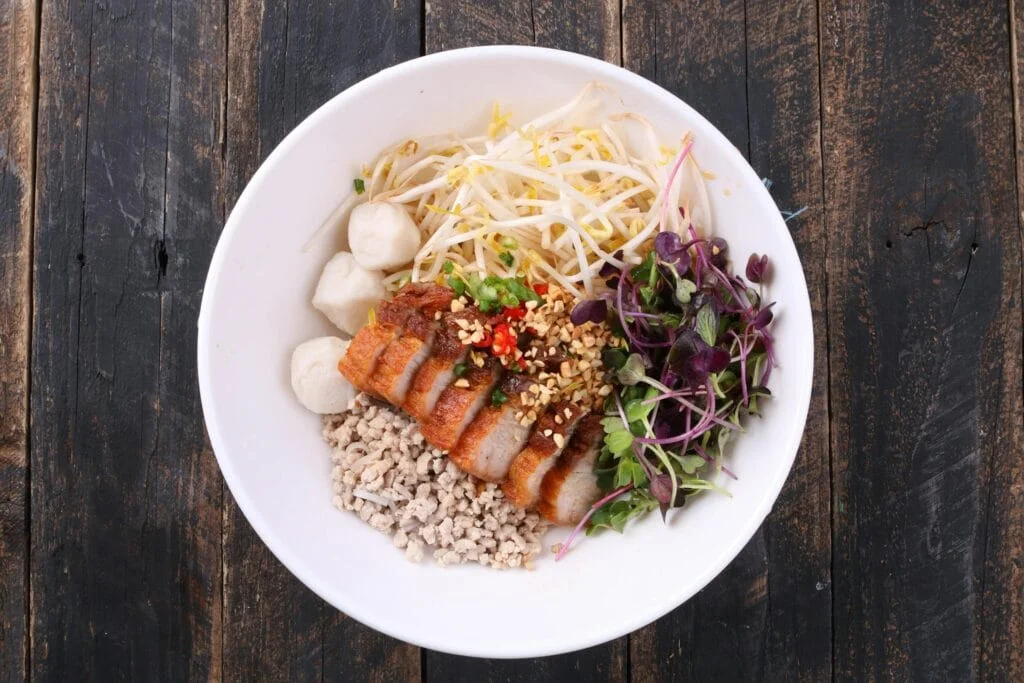
For dessert, there is Mango Sticky Rice (Khao Niew Mamuang), the most popular Thai sweet – sticky rice cooked in coconut milk, served with slices of fresh ripe mango and a sweet coconut sauce. It’s a simple yet brilliant combination, and if you’re not in the mood for something very sugary, it’s a great way to finish your meal. Other desserts include tapioca pearls in syrup, sticky rice with custard, and various ice creams made from local fruit.
Alcoholic drinks include Chang and Singha, the most popular Thai beers, which are light and refreshing. Thai whisky (usually Mekong or SangSom) is served with ice and soda. Non-alcoholic options include tea with sweetened condensed milk (Cha Yen, served iced and bright orange), coffee (Gafae), fresh fruit smoothies, and various homemade lemonades. Tap water is not recommended for travelers – buy bottled water instead, which is cheap and available everywhere.
Meal times, etiquette and tips
Thai people usually eat three main meals a day, but they prefer to snack on several smaller dishes throughout the day. Breakfast is usually around 7–8 a.m. – typically a rice-based dish, soup, or noodles. Lunch is around 12–1 p.m. and is usually the biggest meal of the day. Dinner is around 6–7 p.m., but in tourist areas you can eat at almost any time. Street food is everywhere and available all day – street vendors start in the morning and finish in the evening. Thais are very hospitable and food is often shared from common plates – eating together is a social event.
Table manners in Thailand matter. Chopsticks are used only for noodles; for rice and curry you use a spoon in your right hand and a fork in your left. Taking more food than you can finish is seen as wasteful. Do not leave chopsticks stuck upright in a bowl of rice, as it resembles a funeral ritual. Tipping is not mandatory, but in restaurants people usually round up the bill or leave about 5–10 percent. In more conservative restaurants, dress and behave respectfully.
Cultural customs and festivals
Thai culture is deeply rooted in Buddhism, family, and respect for authority. Buddhism in Thailand is not just a religion, but a way of life – more than 95 percent of Thais identify as Buddhist, and religious values shape everyday routines. Monasteries and temples are the heart of every community, and every man is expected to spend at least a short period as a monk – it is considered an important stage in a man’s life.
The most important festivals include Songkran (Thai New Year), celebrated in mid-April and usually lasting 3 days. During Songkran, water is seen as a ritual cleansing element, and traditionally people pour blessed water over elders as a sign of respect and to ask for blessings. In modern Thailand, Songkran has turned into the world’s biggest water festival – everyone splashes everyone else, and the streets are full of water and fun.
Another major festival is Loi Krathong (November), one of the most romantic and beautiful Thai festivals. During Loi Krathong, people gather by rivers, lakes, and the sea and release krathongs (small boats), usually made from banana leaves and decorated with flowers, candles, and incense sticks. Tradition says that together with the krathong they let go of their past sins and sorrows – the krathong floats away and carries the negativity with it. In Chiang Mai, alongside Loi Krathong, people also celebrate Yee Peng, when paper lanterns with written wishes are released into the sky. Watching thousands of lights drift across the night sky is a truly unforgettable sight.
Other festivals include Makha Bucha (February), which celebrates the Buddha’s teachings; Visakha Bucha (May), marking the Buddha’s birth, enlightenment, and nirvana; and Asahna Bucha (July), which signals the start of the rainy season and is traditionally the time when many men become monks. Every city and province also has its own local festivals – the Chiang Mai Flower Festival takes place in February and is famous for its stunning floral displays; and the Phuket Vegetarian Festival (September/October) is a striking event with processions where participants pierce their cheeks as part of religious rituals.
Key practical information for travelers
Currency and payments – money in Thailand
The official currency in Thailand is the Thai baht (THB), marked with the symbol ฿. One baht is divided into 100 satang. Banknotes in circulation are 20, 50, 100, 500, and 1,000 baht, and coins are 1, 2, 5, and 10 baht, plus 25 and 50 satang. The king is depicted on the banknotes – never damage money, as this is considered a serious insult. The current exchange rate is roughly $0.02 for 1 THB.
Where should you exchange money? The best option is to exchange money at Bangkok airport, where you get a good rate and a safe environment. Alternatively, you can use banks and exchange offices in major cities, which also offer decent rates. Hotels usually have worse rates. Traveler’s cheques are rarely accepted and exchanging them is complicated. The easiest approach is to bring US dollars or euros, which are easy to exchange, or simply withdraw Thai baht from an ATM. ATMs are everywhere in big cities – you can withdraw cash with your card, but expect fees from both your home bank and the local bank.
Card payments – In Bangkok, Phuket, and Chiang Mai, VISA and Mastercard are accepted almost everywhere, but in smaller towns and villages this is not standard – you should always carry cash. Watch out for DCC (Dynamic Currency Conversion) – if the terminal offers to charge you in your home currency instead of baht, always choose baht, otherwise the merchant will apply a much worse exchange rate. Platforms like Wise or Revolut can also give you very competitive rates.
Tipping – Unlike in the USA, tipping in Thailand is not mandatory, but it’s common and appreciated. In restaurants, people usually round up to the nearest whole number or leave 5–10 percent. If your bill is 145 baht, you round it up to 150 baht. Street vendors don’t expect tips, but a smile is always welcome.
Entry formalities and visas
Passport – To enter Thailand, you need a passport that is valid for at least 6 months from the date of entry. Without this validity, you may be denied entry. Citizens of the Czech Republic do not need a visa for tourist stays of up to 60 days. If you want to stay longer, you must arrange a visa in advance at the Thai Embassy in Prague.
Arrival form – A new system called the Thailand Digital Arrival Card (TDAC) is being introduced. This is an electronic arrival card that must be completed on the website https://tdac.immigration.go.th/ within 72 hours (3 days) before your arrival in Thailand. The form is mandatory for all foreign travelers, including children. After completing it, you will receive a QR code, which you must show at airport check-in and at passport control in Thailand. Filling it out only takes a few minutes, but it’s best to do it in advance from home.
Financial means – At border control, you may be asked to prove that you have funds of 20,000 baht per person or 40,000 baht per family. You don’t have to carry this amount in cash (although it’s recommended), but you should be able to show proof that you can access this money – for example a credit card, traveler’s cheques, or bank statements. In practice, this is checked only rarely, but it’s wise to be prepared.
Safety and local customs – what to watch out for
Thailand is generally considered a safe country, and travelers usually don’t run into problems as long as they behave respectfully and follow local customs. Still, there are a few things you should be aware of. Theft is relatively common in tourist areas and big cities, especially pickpocketing on the metro, in markets, and on busy streets. Be careful in nightclubs and bars – there are reports of bill scams and sometimes drinks being spiked. Motorcyclists may try to snatch a handbag off your shoulder, so stay alert. Always keep valuables in the hotel safe and carry only what you really need.
Behavior and culture shock – Thai people are generally very calm and kind, but they expect respect for traditions and authority. Never speak negatively about the royal family – this is a very serious matter and can be a criminal offense. Never touch a Thai person on the head – the head is considered the most sacred part of the body and touching it is seen as a major sign of disrespect. On the other hand, feet are considered the lowest and least clean part of the body – you should not point your feet at people or put them up on the table. Raising your voice, shouting, or losing your temper is very inappropriate – in Thailand, everything is handled calmly and with a smile. If you argue with someone, you lose face, and that is taken very seriously in Thailand. Handle any problems quietly, politely, and patiently – that is the key. When greeting, people use the wai – palms pressed together as if in prayer and a slight bow – not a handshake.
Drugs – Thailand has a zero-tolerance policy on drugs. Possession or use of drugs can lead to long prison sentences, heavy fines, and deportation. Drug trafficking can be punished by the death penalty. The worst mistake you could make is buying drugs on the street – it is not safe.
Women – Thai women are usually very independent and emancipated, but traditionally they are seen as the guardians of the family. Respect their personal space and everything will be fine. Men should avoid any physical contact with Buddhist monks. Likewise, women should not touch a monk.
Sunbathing on the beach – Women should not sunbathe topless. Regular swimwear is fine. Thais do not sunbathe naked – you will often see them sunbathing in long sleeves and long trousers to protect themselves from the sun, because darker skin has traditionally been seen in Thailand as a sign of a lower social class.
Motorcycles – If you rent a motorcycle, never ride without a helmet (it is illegal and dangerous). Riding without a driving license is also illegal. They drive on the left. Be careful with local “motorbike taxis”, which often ride in a risky way.
Healthcare and insurance
Thailand does not have an agreement on free healthcare with EU member states, so travel insurance is absolutely essential. Healthcare in Thailand is high quality, especially in international hospitals in big cities, but the costs can be high – from tens of thousands of baht up to several hundred thousand baht for more serious procedures. Without insurance or enough funds, you may be refused medical treatment.
Public hospitals are cheaper, but the service is not as comfortable as in private hospitals. Private hospitals such as Bangkok Hospital and Bumrungrad Hospital are very advanced and comparable to European standards. Doctors in international hospitals speak English, which is a big advantage for foreign patients. In smaller facilities and outside tourist areas, the language barrier can be more of an issue.
Vaccinations – There are no mandatory vaccinations for Thailand, but it’s recommended to get vaccinated against hepatitis A and B, typhoid and tetanus. Also consider a Japanese encephalitis shot, especially if you plan to stay in rural or farming areas. If possible, get vaccinated 4–6 weeks before departure. Malaria is not present in Bangkok or Chiang Mai, but it does occur in some remote border regions. While you’re there, protect yourself from mosquitoes by using repellent and wearing long sleeves and trousers, especially at night.
Common issues – Travellers often experience diarrhoea, usually due to a change in food and water. Drink only bottled water and avoid ice from unknown sources. Pack a small first-aid kit with anti-diarrhoea medicine (for example Imodium or activated charcoal). The sun in Thailand is very strong – use high SPF sunscreen and stay in the shade during the hottest part of the day.
Fauna and flora – animals and plants you’ll come across
Thailand is home to an incredible variety of animals and plants. Among the animals you might see are Asian elephants, a national symbol of Thailand that you can encounter in national parks, elephant sanctuaries and sometimes even in towns; monkeys – macaques, gibbons and langurs are common in forests and occasionally in cities; tigers are rare, but still live in some protected areas; cobras and other venomous snakes live in the wild, though you’re unlikely to run into them; crocodiles are found in some regions, especially in the northeast; and birds – Thailand is a birdwatcher’s paradise with hundreds of species. Natural highlights include tropical rainforests packed with lush vegetation and wildlife; mangrove forests along the coast; coral reefs with stunning marine life; and mountains with their own unique ecosystems. For the best chance to see wildlife, head to national parks. Avoid activities where animals are fed, chained or exploited for entertainment – they’re common, but they’re not humane.
Basic phrasebook – useful phrases for travellers
Thai is a complex language with tones and its own script, but learning a few basic phrases will help you a lot. Locals really appreciate it when you try to speak their language. In Bangkok and major tourist areas, people often speak English, but in less visited regions English is not widely used.
| Czech phrase | Thai translation (phonetic) |
|---|---|
| Hello / Good day | Sa-wat-dee krap (man) / ka (woman) |
| Thank you | Khop khun krap / ka |
| Please | Karuna |
| Yes | Chai |
| No | Mai chai |
| How much is it? | Thao rai? |
| Help! | Chuay duay! |
| Where is the toilet? | Hong nam yu ti nai? |
| Water | Nam |
| Food | Ahaan |
Transport and logistics
How to get to Thailand
The easiest way to reach Thailand is by plane. The main and largest airport is Bangkok Suvarnabhumi International Airport (BKK), which handles dozens of international flights every day and is one of the most modern airports in Asia. Flights from the Czech Republic to Bangkok usually take 10–12 hours with one layover (there are no direct flights, but several airlines offer routes with one short connection). Prices vary by season – in peak season (December to February) tickets are more expensive, while during the quieter months (June to August) they tend to be cheaper.
Other airports in Thailand include Don Mueang International Airport (DMK) in Bangkok, which is older and used for domestic and some international flights; Chiang Mai International Airport (CNX) in the north; Phuket International Airport (HKT) in the south; and smaller airports in Krabi, on Samui and in other locations. You can also enter Thailand overland – from Laos, Cambodia, Myanmar and Malaysia – but you must have the appropriate visas.
Getting around Thailand
Transport within Thailand is very accessible and inexpensive. Buses are the most common option and connect almost every town and village. There are different classes – with and without air conditioning. Bus travel is cheap (for example, Bangkok–Chiang Mai costs around $14–$23) and buses usually run 24 hours a day. Bus terminals are the usual starting points – in Bangkok, the Northern Bus Terminal serves routes to the north, the Eastern Bus Terminal to the east, and the Southern Bus Terminal to the south.
Trains are another option – the State Railway of Thailand (SRT) runs services across the country. Trains are more comfortable than buses and are ideal for overnight journeys – for example, the night train from Bangkok to Chiang Mai is very popular and offers sleeper cars. Trains are divided into classes – second class with sleepers is the most popular among travelers. Tickets can be bought at stations or online. Train travel is relatively cheap and safe.
Domestic flights are used to travel between major cities – several airlines operate these routes, including Thai Airways, AirAsia, Bangkok Airways and others. Domestic flights are cheap and fast – Bangkok–Chiang Mai takes only 1 hour 20 minutes. If you want to rent a car or motorbike, you should have a valid international driving licence and be prepared for chaotic traffic in Bangkok and other cities. Parking in cities is difficult and often paid.
Tuk-tuks are three-wheeled motorbikes and a popular way to get around Bangkok and other cities – always agree on the price before you get in, as there is no taximeter. Moto-taxis (motorbike taxis) are another option – the driver takes you on their motorbike for a fixed price. Boats and ferries are used for river trips and island hopping. In Bangkok, you can cruise along the Chao Phraya River, which is a great way to see the city. Different types of boats run between the islands – from cheap ferries to more expensive speedboats.
Bangkok’s metro (BTS Skytrain) is a modern and efficient way to move around the city. It’s clean, safe and inexpensive – tickets range from 15 to 60 baht. There is also an underground metro (MRT) that runs across the city. Other cities don’t have a metro system, but buses and tuk-tuks are widely available.
Prices and travel budget
Thailand is very budget-friendly and you can travel here on all kinds of budgets. Prices vary depending on where you are and what type of place you choose. Backpackers on a low budget can get by on 600–1,000 baht (about $12–$20) per day. This covers basic accommodation (hostels from 300 baht), simple meals (street food from 40–60 baht per dish), transport and basic activities. With a mid-range budget ($50–$100 per day), you can stay in 3-star hotels (800–1,500 baht), eat in nicer restaurants (200–400 baht per meal), use cheap domestic flights and enjoy more activities. With a luxury budget ($150+ per day), you can stay in 4–5-star hotels (5,000–20,000 baht), dine in top restaurants and book premium experiences.
| Category | Accommodation (THB/night) | Food (THB/day) | Transport (THB/day) | Activities (THB/day) | Total budget (THB/day) |
|---|---|---|---|---|---|
| Budget | 300–500 | 200–300 | 100–150 | 50–100 | 650–1,050 |
| Mid-range | 800–1,500 | 400–600 | 150–250 | 200–400 | 1,550–2,750 |
| Luxury | 5,000–20,000 | 800–1,500 | 300–500 | 500–1,000 | 6,600–23,000 |
When planning your budget, keep in mind that some places (Phuket, Krabi, Bangkok) are more expensive than others (Chiang Mai, Sukhothai). Prices go up in peak season (December–February), while in the shoulder months (April, May, September, October) prices are lower and there are fewer tourists.
How to plan the perfect trip
Choosing the right region for your travel style
Thailand has something for everyone. Beginners and first-time visitors should start in Bangkok to get a feel for the country, then head south to Phuket or Krabi for beaches, and finally visit Chiang Mai in the north for culture. This gives you an easy introduction without too many surprises. Families with children should consider Hua Hin for calm beaches and family-friendly facilities, Ko Lanta for a longer, laid-back stay without crowds, or Bangkok for a mix of culture and fun. Kids usually love elephant camps, beaches, and simple food. Solo travelers and younger visitors should look at Chiang Mai for its cultural scene and chance to meet other travelers, islands like Koh Tao or Phi Phi for parties and social life, or Pai in the northern mountains. Couples looking for romance should consider sunset at Railay Beach, a dinner cruise on the Chao Phraya River, or a stay in a luxury resort. Seniors should plan for a slower pace, avoid the hottest months, and choose places with good healthcare such as Bangkok and Chiang Mai.
What to watch out for when planning
Common mistakes when planning a trip to Thailand include an overly ambitious itinerary – trying to see everything in one week leads to burnout. Thailand is bigger than it looks, and getting from place to place takes time. Plan to spend more time in each destination. Do not ignore the monsoon season – did you know that the rainy season (June–October) can be dangerous on the west coast, with big waves and beach closures? Check the weather before you go.
Do not overestimate how long you need in Bangkok – Bangkok is amazing, but 3–4 days is usually enough. Do not underestimate travel times – getting around takes longer than you might think. The trip from Bangkok to Chiang Mai takes 1 hour by plane, but 11 hours by bus. Allow enough time in your schedule. Ignoring cultural norms – Thai culture is different from what we are used to, and disrespecting local customs is unpleasant and sometimes even illegal. Learn the basics before you travel.
Sample itineraries
One week in Thailand – classic route:
- Day 1–2: Bangkok – Grand Palace, Wat Pho, Wat Arun, Khao San Road, night markets
- Day 3–4: Ayutthaya – historical ruins, elephant ride
- Day 5–7: Phuket or Krabi – beach, relaxation, snorkeling, sunset
10 days – north and south:
- Day 1–2: Bangkok – as above
- Day 3–5: Chiang Mai – temples, night market, trekking, elephant camp
- Day 6–10: Phuket or Krabi – beaches, islands, downtime
14 days – Thailand in full:
- Day 1–2: Bangkok
- Day 3–5: Ayutthaya and surroundings
- Day 6–8: Chiang Mai and the northern regions
- Day 9–14: Southern islands – Phuket, Krabi, Samui or Phi Phi
Summary and final recommendations
Thailand is a destination that blends history, culture, nature and modern life in a way that truly offers something for everyone. Whether you’re after adventure in the mountains of northern Thailand, the buzz of temples and city life in Bangkok, or the peace and beauty of small islands and beaches, you’ll find it here. It’s important to remember that Thailand is not just about beaches – it has a rich history, stunning natural landscapes and deep cultural roots that deserve your time and attention.
When planning your trip, keep a few key points in mind – the best time to visit is from November to March, you should arrange travel insurance, respect local culture and customs, and avoid rushing. Many travellers return to Thailand again and again, because there is always something new to discover and every visit feels different. Whichever region you choose, the main thing is that it gives you space to relax and explore new things. Thailand will open your eyes, your heart and your taste buds – and that’s exactly what great travel is all about.
Kategorie:
Články (Nejnovější / Podobné)
Mauritius: A Guide to Paradise with White Beaches and Turquoise Water
12/20/2025
Cape Verde: Islands of Sun, Sand and Wind
12/18/2025
Seychelles: An Island Paradise in One Guide
12/16/2025
Japan: A Guide Between Geisha and Robots
12/13/2025
Vietnam: The Secrets of Phở, Strong Coffee, and Chaotic Streets
12/11/2025