Dream garden shed – tips on how to choose it and maintain it
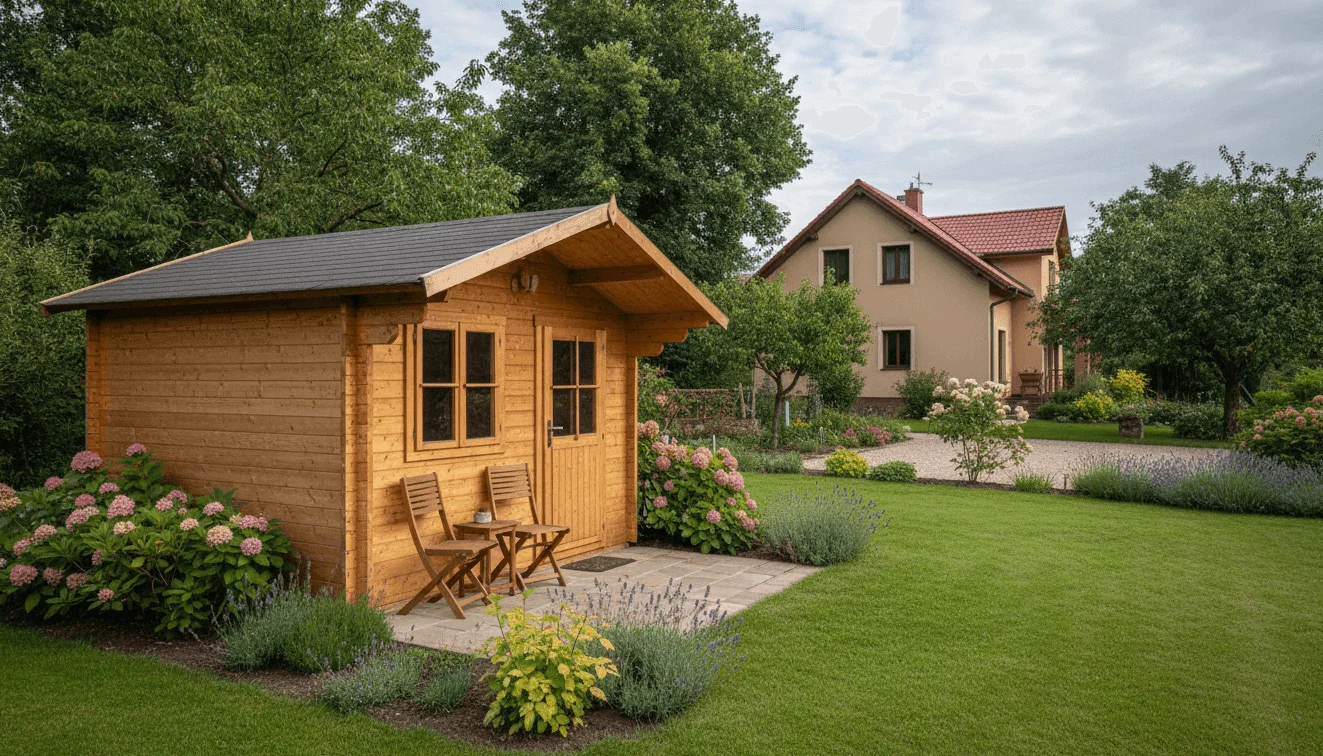
A garden shed is no longer just a simple tool store. In a modern garden it becomes a fully fledged space that can serve as a DIY workshop, a quiet relaxation zone, a practical summer kitchen, or a secure storage area for garden equipment and furniture. The market offers three main types – wooden, plastic, and metal – and each comes with its own specifics. This guide will help you navigate the options and choose a shed that fits your needs perfectly and becomes a functional feature of your garden.
The right shed will not only bring order and structure to your garden, it will also extend your home’s living space outside, into the fresh air. It is an investment in comfort, practicality, and your overall outdoor lifestyle.
Did you know that a well-chosen and properly built garden shed can increase the value of your property?
Basic types of garden sheds by material
The material is an absolutely key factor that determines the look, lifespan, maintenance requirements, and price of the shed. Let’s take a closer look at the three main options.
Wooden garden sheds
Wood is a classic that never disappoints. Thanks to its natural look it blends beautifully into any garden and creates a cosy, warm feel. Wooden sheds are ideal for fans of natural aesthetics, DIY enthusiasts who want to customise the space, and anyone looking for a place to relax or a fully equipped workshop.
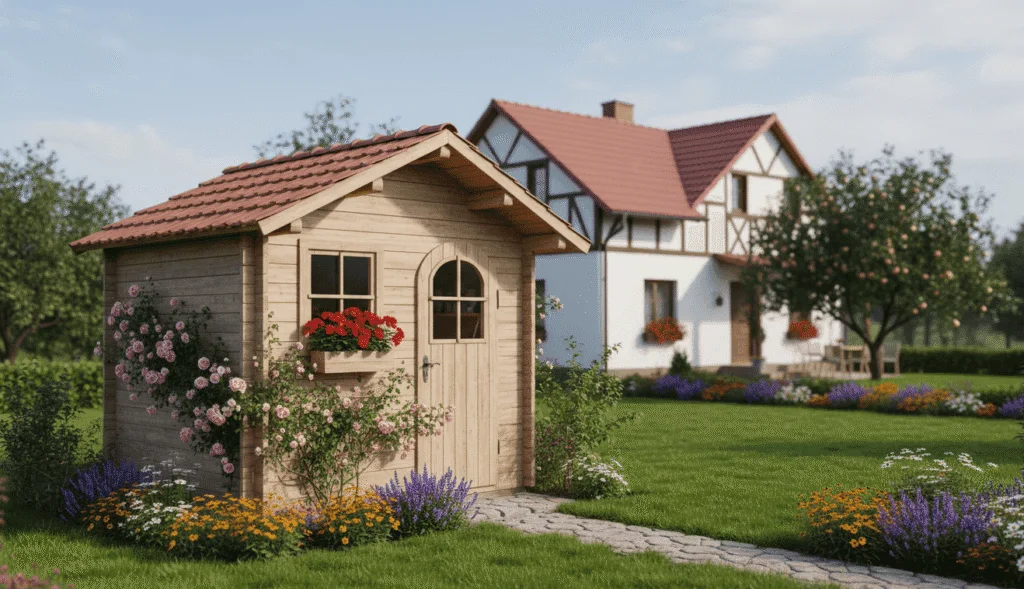
Wood has natural insulating properties, which means it doesn’t overheat as much in summer and holds heat better in winter than metal. A big advantage is how easy it is to modify – you can paint the shed any colour, easily fix shelves or racks to the walls, or run electricity inside. The downside is the need for regular maintenance, including protective coatings against moisture, pests, and UV radiation, which need to be renewed every few years.
Plastic garden sheds
Plastic sheds are synonymous with a low-maintenance solution. They are ideal for people who want a practical, functional store for garden tools, furniture, bikes, or sports gear and don’t want to deal with repainting. Modern plastic sheds are made from durable, reinforced polypropylene with UV protection, often supported by a metal frame. Thanks to this, they are resistant to moisture, mould, insects, and harsh weather.
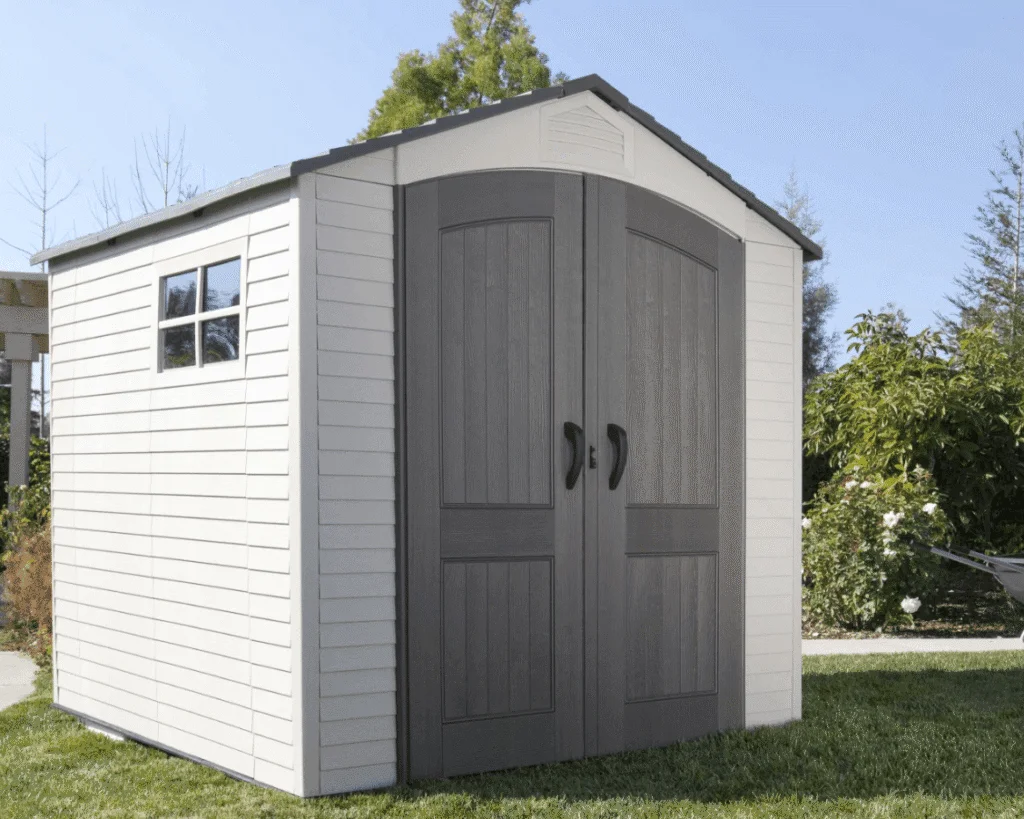
Their assembly is usually very simple and quick. On the downside, the walls have a lower load capacity, which limits the installation of heavy shelving, and there are fewer options for further modifications. Although they are stable, it is important to anchor them firmly to the ground because of their lower weight.
Metal garden sheds
Metal sheds offer the best value for money in terms of price and usable floor space. They are an ideal choice if you mainly need a safe and durable store for tools, a lawn mower, building materials, or bikes. Quality models are made from galvanised steel sheet with a powder-coated finish, which ensures a long service life and high resistance to corrosion and mechanical damage.
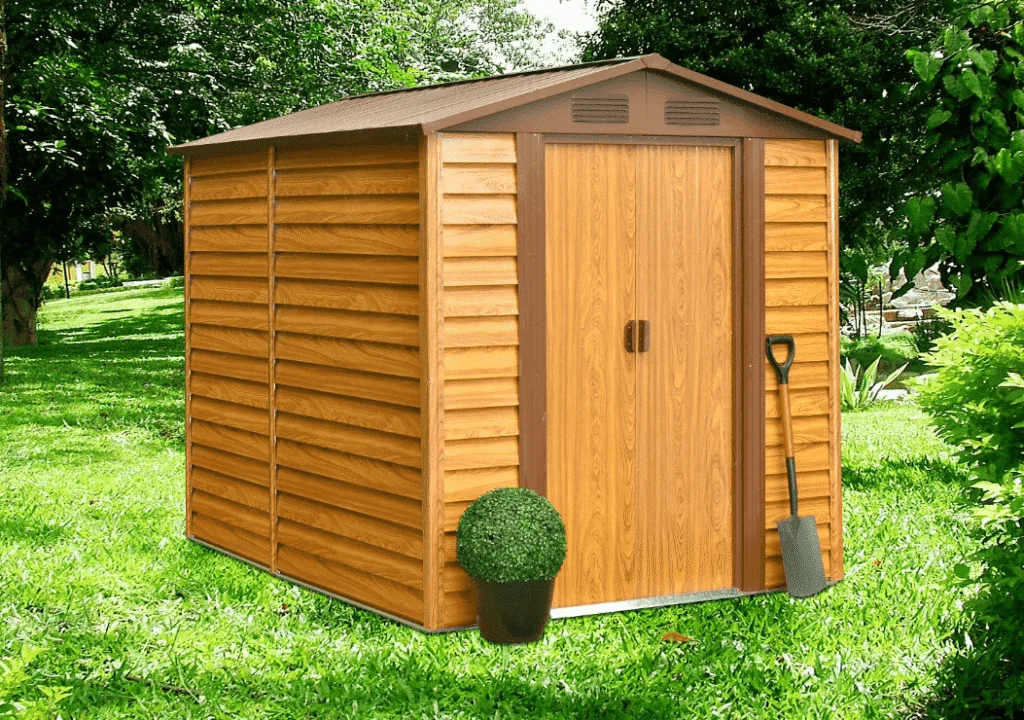
They are maintenance-free and secure. Their main drawback is that they can overheat in direct sunlight and get very cold in winter, which may lead to condensation forming inside. That’s why proper ventilation is absolutely essential.
Key parameters to consider
When choosing a shed, it’s not enough to look only at the material. Technical parameters that affect its usability and lifespan are just as important.
Dimensions and usable floor area
Before buying, think carefully about everything you want to store in the shed. It is always better to choose a slightly larger size than you currently need. Pay attention to the difference between external and internal (usable) dimensions, which can vary due to wall thickness. For basic tool storage, a shed up to 6 m² is enough; for a workshop or storing larger equipment, choose an area of over 10 m².
Wall thickness
This parameter is crucial especially for wooden sheds. It affects their stability, insulation properties, and overall durability.
- Up to 19 mm: Suitable for small tool sheds where very high strength is not required.
- 28–34 mm: The sweet spot for most garden sheds. Offers good stability and enough strength for recreational use.
- 40 mm and more: Intended for larger garden cabins, workshops, or sheds for year-round use. Provides excellent stability and better thermal insulation.
Roof material and type
The roof is the most exposed part of the shed. There are two basic roof shapes: pent roof (single slope) and gable roof (classic “A” shape). The choice depends on your personal taste and garden design. More important is the roofing material. The most common option is bitumen felt, which provides basic protection. For a longer lifespan and better appearance, it’s worth investing in quality bitumen shingles or a metal roof.
Floor
Some sheds are sold without a floor, others include one. If the shed has no floor, it needs a perfectly prepared, level, and insulated base, most often a concrete slab. A shed with its own wooden floor is a complete solution that protects the contents from ground moisture and cold, but it still has to stand on a solid, level foundation.
Doors and windows
For storing larger items such as a lawn mower, garden tractor, or bulky furniture, you’ll need double doors. For smaller tool sheds, a single door is enough. Windows provide natural light and allow ventilation, which is especially important in workshops or relaxation cabins.
Security
A garden shed often hides items worth tens of thousands of crowns. That’s why it’s essential to have quality doors with a solid lock. When buying a shed, check the quality of the lock and hasp. For extra security, you can add additional bolts, security film on the windows, or a simple motion-sensor alarm.
How to choose a garden shed step by step
Follow these steps and you’ll avoid most common mistakes.
According to how you plan to use it
- Tool shed: A smaller metal or plastic model (up to 6 m²) without windows is enough, with the focus on security and practicality.
- Workshop: Choose a more spacious wooden shed (over 10 m²) with a wall thickness of at least 28 mm and windows for plenty of daylight.
- Playhouse for children: A wooden shed is ideal thanks to its look and safety. Rounded edges and eco-friendly coatings are important.
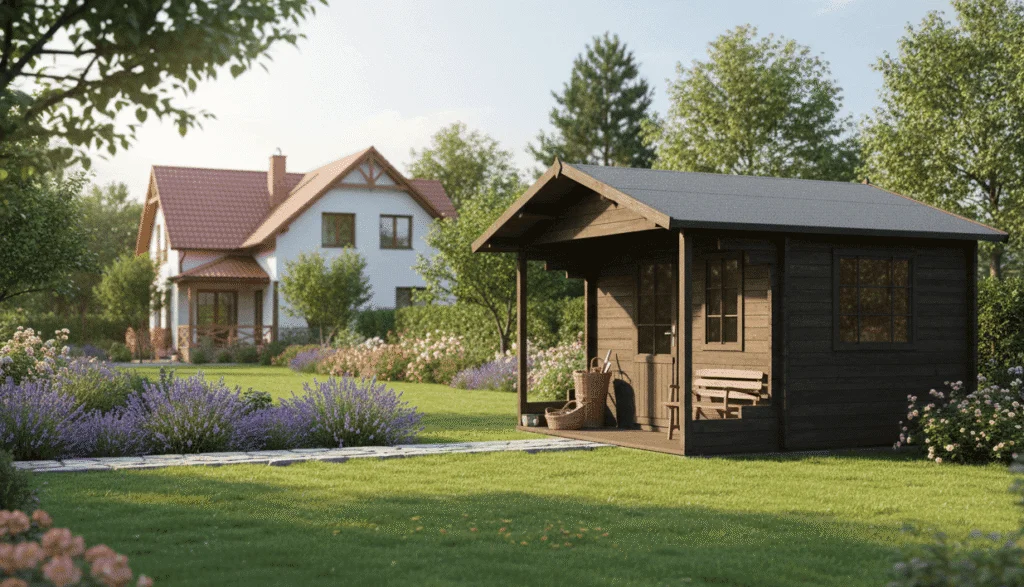
- Relaxation cabin or summer kitchen: Look for larger wooden sheds, ideally with a terrace, thicker walls, and large glazed doors.
According to garden size and location
Place the shed on a flat, dry spot, ideally with plenty of sunlight (this is especially important for wooden sheds, which dry out faster). Think about easy access – the path to the shed should be firm and stable. Don’t forget to check the required distance from the boundary of the neighbouring plot, which is usually at least 2 metres.
What to watch out for when buying
The most common mistake is underestimating the size – always go one size bigger than you think you need. Another frequent problem is neglecting the foundations, which leads to the shed warping and a shorter lifespan. For cheaper models, check the quality of the fixings and hinges.
Construction and regulations – what to know in advance
Before you buy, you need to sort out two essential things: the foundations and any required paperwork.
Building permit and notification
The good news is that for most garden sheds you don’t need a building permit or notification. The new Building Act, valid from 2024/2025, defines so-called minor structures. Without contacting the authorities you can build a shed that meets all of the following conditions:
- Built-up area of up to 40 m².
- Height of up to 5 metres.
- Distance from neighbouring plots of at least 2 metres.
- The shed is not used for living or recreation and is an auxiliary structure to the main house.
If you don’t meet any of these conditions, you must deal with the project through the building authority.
Preparing the foundations
A stable, perfectly level base is absolutely essential for the shed to work properly and last for many years. A poorly prepared base can cause doors to jam, leaks, and the whole structure to warp.
- Concrete slab: The most durable and stable solution, ideal for larger and heavier sheds. However, it is the most demanding in terms of cost and labour.
- Paving blocks: A good compromise that is cheaper and easier to build. The base under the paving must be well compacted.
- Ground screws: A modern, quick, and eco-friendly solution. The screws are driven into the ground and a supporting frame is fixed to them. Ideal for sloping terrain and as an alternative to concrete.
Maintenance and lifespan by material
Caring for a wooden shed
The key to a long lifespan is regular renewal of the protective coating (stain or topcoat), ideally every 3–5 years. Before the first coat, the wood must be treated with an impregnation against fungi and pests.
Caring for a plastic shed
A plastic shed is practically maintenance-free. To keep it looking good, it’s enough to wash it occasionally with water and a standard cleaning agent. It’s also important to regularly check the joints for leaks and tighten any loose screws.
Caring for a metal shed
For a metal shed, it is crucial to check that the surface finish is intact. Any scratches or scuffs should be treated with touch-up paint as soon as possible to prevent rust. It’s also a good idea to check and tighten all fixings from time to time.
Prices and budget ranges
The price depends mainly on the material, size, and build quality.
- Budget sheds (up to 15,000 CZK): In this range you’ll find smaller metal tool sheds or basic plastic models. They are suitable for simple, undemanding storage.
- Mid-range (15,000 – 40,000 CZK): This is the sweet spot. You can get quality, spacious plastic sheds, smaller wooden sheds with wall thickness around 19–28 mm, or large metal storage units.
- Premium category (over 40,000 CZK): This group includes large wooden sheds and cabins with thick walls (40 mm and more), designer models with a terrace, or versions suitable even for occasional overnight stays.
Most popular brands and manufacturers
The Czech market offers a number of quality manufacturers who specialise in different types of sheds.
- Keter & Duramax: These manufacturers are leaders in low-maintenance plastic sheds. They offer a wide range of designs, from simple storage boxes to spacious sheds with a wood-look finish.
- G21 & Arrow: Popular brands of affordable metal sheds known for easy assembly and practicality.
- Delta & Palmako: European specialists in wooden sheds and cabins. They offer a huge selection of models, from small tool sheds to large holiday cabins.
| Brand | Focus |
|---|---|
| Keter / Duramax | Premium low-maintenance plastic sheds |
| G21 / Arrow | Affordable metal storage sheds |
| Delta / Palmako | Traditional wooden sheds and cabins |
Summary
Choosing a garden shed is an important decision that will affect how your garden works for many years. The main thing is to be clear about what you will primarily use the shed for, and then choose the right material and size accordingly. Don’t underestimate the preparation of solid, level foundations – they are absolutely crucial for the durability of the whole structure. Before you buy, grab a tape measure and carefully measure the space where the shed will stand, and think about everything you might want to store there in the future. Remember that a garden shed is not just a store, but a fully fledged part of your garden that can enhance it both visually and functionally.
💬 Frequently asked questions (FAQ)
Do I need a building permit for a garden shed?
In the vast majority of cases, no. If your shed does not exceed a built-up area of 40 m², a height of 5 metres, and is located at least 2 metres from the boundary with your neighbours, you don’t need any permit or notification under the new Building Act.
Is it better to choose a shed with a floor or without one?
That depends on the prepared base. A shed without a floor needs a perfectly level and ideally insulated foundation, such as a concrete slab. In this case, the slab itself acts as the shed floor. A shed with its own (usually wooden) floor is a complete solution that insulates the contents better from ground moisture, but it still requires a solid, level base (e.g. concrete pads, paving, or ground screws) to stand on.
Can I assemble a garden shed by myself?
Yes, most smaller plastic and metal sheds are designed as kits that two adults should be able to assemble in a single day. For larger wooden sheds and cabins, the assembly can be more demanding and requires more experience and time. If you’re not confident, many retailers offer professional installation services.