Find a suitcase that will last through all your adventures
A travel suitcase is much more than just a box for carrying your stuff. It’s your quiet companion at airports, hotels, and train stations. Choosing the right one is key to stress-free travel – it protects your valuables, makes handling easier and saves you a lot of unnecessary hassle. Whether you’re flying to Paris for a weekend or heading to Asia for three weeks, a quality suitcase is the foundation of a successful trip. The market is packed with options, from hard-shell models and flexible soft-sided cases to specialized cabin luggage. This guide walks you through everything you need to know to pick the best suitcase for your needs.
Did you know the first wheeled suitcase wasn’t patented until 1972 – and it completely changed the way we travel? Today it’s hard to imagine a trip without it.
Types and variants of suitcases
Every traveler has different needs. That’s why there are several main types of suitcases, each with its own strengths. Let’s take a closer look at them.
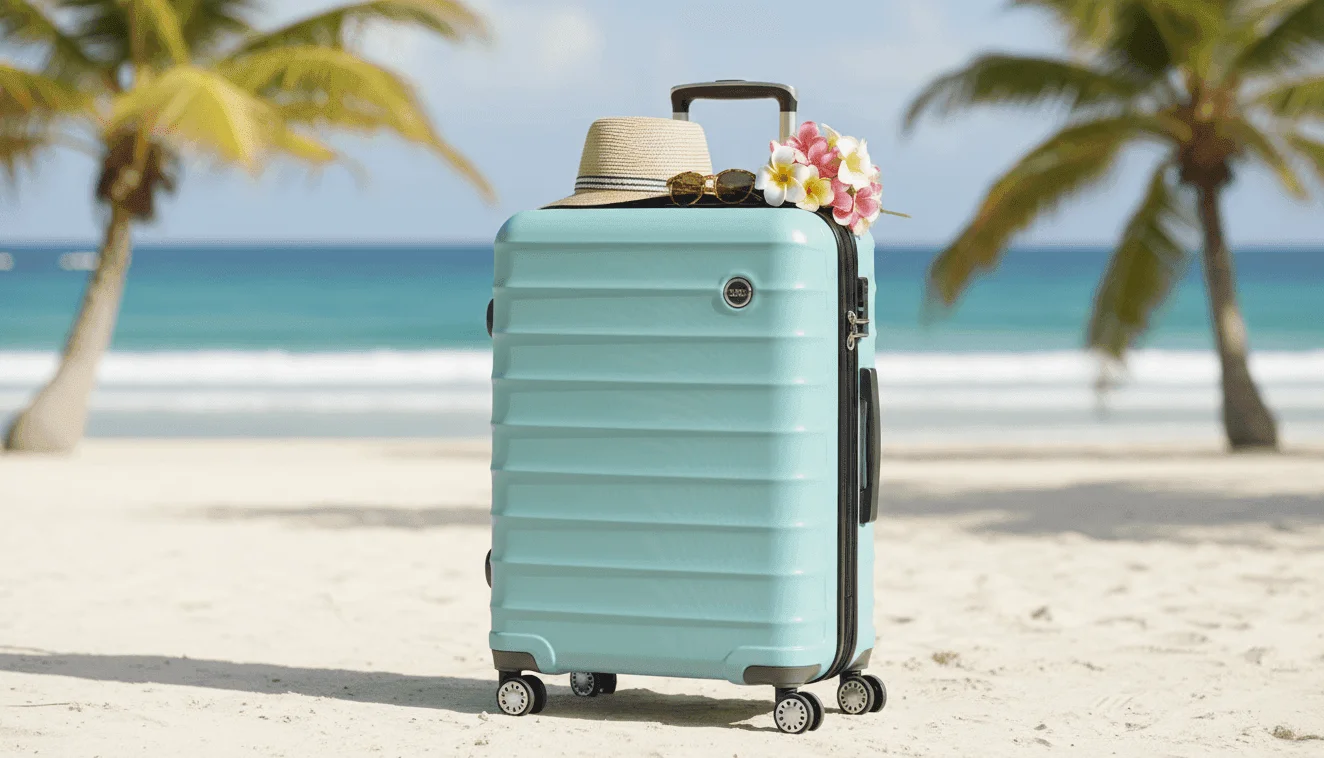
Hard-shell suitcases
Hard-shell suitcases are ideal for frequent flyers who need maximum protection for their belongings, especially when carrying fragile items such as electronics, glass souvenirs, or cosmetics.
Their key feature is a rigid outer shell that acts like armor. This hard surface offers excellent resistance to impacts, pressure, and water, helping keep the contents safe and dry even with rough handling or in bad weather.
The biggest advantage is excellent protection and easy maintenance – you usually just wipe the surface clean. On the downside, they’re less flexible: you can’t stretch them or “overstuff” them. The hard surface is also more prone to visible scratches.
Soft-sided suitcases
This type works best for people who value flexibility, lower weight, and practical external pockets. They’re a great choice for car and train travel, or for anyone who wants quick access to documents or a book without opening the whole suitcase.
Soft-sided suitcases are made from flexible fabrics, typically nylon or polyester. Their key benefit is an often expandable capacity thanks to an expander zip that increases the depth of the case. They almost always come with easily accessible outer pockets.
The main advantages are the flexible capacity, lower empty weight, and handy external pockets. On the other hand, they offer less protection against heavy impacts and are more prone to soaking through and getting dirty than hard-shell models.
Hybrid suitcases
Hybrid suitcases are designed for indecisive travelers who want a compromise between hard-shell protection and the practicality of soft-sided luggage. They want their belongings to be safe, but they don’t want to give up external pockets.
These models feature a combination of a rigid back panel and a soft, fabric front. The hard back protects the most vulnerable contents, while the soft front with pockets adds flexibility and quick access to your essentials.
Their biggest strength is the balanced mix of both main suitcase types. They combine protection with flexibility, making them a very versatile option. The downside is usually a slightly higher price and weight compared to fully soft-sided cases.
Cabin (carry-on) suitcases
A carry-on suitcase is essential for anyone who flies low-cost, takes short trips such as weekend breaks, or goes on a few-day business trip and doesn’t want to pay for checked baggage.
Its main feature is compact dimensions tailored to airline cabin baggage limits. Thanks to this, you can take it on board and keep your belongings with you at all times.
The huge advantage is the time you save at the airport because you don’t have to wait at baggage claim, plus the peace of mind of having all your important items by your side. The only obvious downside is the very limited space, which calls for smart, disciplined packing.
Wheeled duffel bags
This option is especially popular with athletes, adventure travelers, and anyone carrying bulky or awkward gear that wouldn’t fit into a standard suitcase. They’re ideal for ski gear, diving equipment, or musical instruments.
They’re defined by a large, easily accessible interior and a soft, flexible construction. They combine the huge capacity of a sports bag with the convenience of wheels and a telescopic handle.
Their main advantage is great packing flexibility and easy storage, as you can simply fold an empty bag flat. The trade-off is minimal protection for the contents against impacts and heavy pressure.
Key parameters to consider
When choosing a suitcase, color alone is not enough. What really matters are the technical parameters that determine how functional, durable, and comfortable it will be in everyday use.
Material
Material is the be-all and end-all of any suitcase. For hard-shell models, the highest-quality and most flexible option is polycarbonate (PC), which bends under pressure instead of cracking. Polypropylene (PP) is very light and highly scratch-resistant. The most budget-friendly choice is ABS, which is heavier and less durable, so it’s often blended with polycarbonate to improve performance. For soft-sided luggage, the most durable and robust fabric is nylon, while polyester is a cheaper and lighter alternative. With polyester, the higher the fiber density (Denier, D), the better the quality.
Size and capacity
Choose the size of your suitcase based on the length and type of your trips. The smallest size S (up to 40 l) works as a carry-on for a weekend away. The most versatile is size M (approx. 60–90 l) for a one-week holiday. For longer, two-week stays or for a couple, go for size L (approx. 90–120 l). The largest size XL (over 120 l) is designed for families or very long trips. Important: Before every flight, always check the allowed dimensions and weight limits with your airline, especially for cabin baggage.
Wheels: 2 vs. 4
The number of wheels has a big impact on how easy the suitcase is to handle. Two-wheeled suitcases are pulled behind you, and their larger, partially recessed wheels cope better with uneven surfaces. Four-wheeled suitcases, known as spinners, can roll upright at your side and rotate 360°, which is a huge advantage on smooth airport floors and makes it easier to maneuver in crowds.
| Typ koleček | Výhody |
|---|---|
| 2 kolečka | Lepší stabilita na nerovnostech (dlažební kostky), odolnější konstrukce. |
| 4 kolečka (Spinner) | Snadná manipulace do všech směrů, není nutné kufr naklánět, menší zátěž na ruku. |
Telescopic handle
A good handle is crucial for comfortable handling. It should be made from a light yet strong material, ideally aluminum, and it shouldn’t wobble. It’s also important that it can lock into several height positions so everyone can set it to a comfortable length regardless of their height.
Security: locks and zips
Your belongings are protected by a reliable lock and sturdy zips. For trips to the USA, Canada, the UK, and other countries, a TSA lock is essential. This special lock can be opened by airport security with a master key without damaging your suitcase. Pay attention to the quality of the zips as well. The best protection comes from secure double zips that cannot be easily pierced and forced open.
Interior layout
A well-thought-out interior makes packing easier and keeps everything in place. Look for practical features such as compression straps to hold clothes down, a zippered divider to split the suitcase into two compartments, and various internal pockets to organize smaller items and toiletries.
Suitcase weight
The weight of the empty suitcase is a very important parameter. Every pound counts, especially with airlines that have strict weight limits. The lighter the empty suitcase, the more you can pack. Modern materials make it possible to build very light yet durable luggage.
How to choose a suitcase that suits you
Everyone travels differently. Here’s what works best for different types of travelers.
For the occasional holidaymaker
If you travel once or twice a year for a standard beach or city holiday, you don’t need to buy the most expensive model on the market. Look for a sweet spot – a durable suitcase in size M or L at a fair price. Focus on the quality of the wheels and handle, as these are the most stressed parts. A hard-shell ABS case with added polycarbonate or a good-quality polyester suitcase will be a solid choice.
For frequent business travelers
If you’re constantly on the move, reliability and efficiency come first. Your best bet is a light, durable carry-on suitcase (4-wheel spinner) that meets most airlines’ cabin limits. Key features include high-quality ball-bearing wheels for a quiet, smooth roll, a sturdy telescopic handle, an integrated TSA lock, and ideally a padded laptop compartment.
For families with children
Family travel calls for plenty of space and good organization. It’s worth buying one large suitcase (size L or XL) or a value set of suitcases in different sizes. Prioritize low weight so the suitcase is easy to lift, and a durable shell or fabric. Colorful or patterned suitcases are also very practical – both you and your kids will spot them quickly on the baggage carousel.
What to watch out for when buying
Try to avoid common mistakes that can spoil the experience of a new suitcase. The most frequent ones are underestimating the quality of wheels and zips (the parts that fail most often), buying an unnecessarily heavy suitcase that “steals” weight from your packing allowance, and ignoring the warranty and service options. Even the best suitcase may need a repair at some point, and a good brand will offer post-warranty service and spare parts.
Care and lifespan
With the right care, you can significantly extend the life of your suitcase. Hard-shell cases just need wiping down with a damp cloth; for fabric ones, use a soft brush and soapy water. After a trip, leave the suitcase open to air out and store it in a dry place. Never overpack it, as this can damage the zips, and handle it with care. Replacing a wheel or handle is usually worth it on a quality suitcase; with a cheap one, you’ll likely throw it away. However, if the shell is cracked or the fabric body is badly torn, it’s time to look for a new suitcase.
Top brands and manufacturers
There are several established players in the luggage market that set the tone for the whole industry.
Premium brands
These brands are synonymous with luxury, top-notch quality, and innovation. They use the best materials and often offer lifetime warranties. This group includes market leader Samsonite, known for its durable and innovative materials, and the iconic German brand Rimowa, famous for its luxury aluminum suitcases.
Brands with great value for money
This segment is ideal for most everyday travelers. It offers high quality at a reasonable price. Excellent options include American Tourister with its playful designs, German brand Travelite focused on functionality and low weight, and French brand Delsey, which combines elegance with innovative security features.
Prices and budget ranges
The price of a suitcase depends mainly on the brand, material, and features. In the entry-level range up to $90 you’ll find basic models suitable for occasional travel. The mid-range ($90 – $220) is the best choice for most travelers, offering better materials, higher-quality wheels, and a TSA lock. In the premium category above $220 you pay for top-tier materials, low weight, design, and superior service – a worthwhile investment for those who travel very often.
Summary and final tip
Choosing the right suitcase may seem complicated, but it really comes down to three key points: the right size for your trips, a high-quality, durable material, and reliable, smooth-rolling wheels. Remember, you’re not buying a suitcase for just one season. A quality piece of luggage is an investment that will serve you for many years and save you a lot of trouble. Your final decision should always reflect how often you travel, how far you go, and which mode of transport you use most.
Whether you’re heading away for a weekend or planning a trip around the world, we hope your new suitcase becomes a reliable partner on all your journeys.
Frequently asked questions (FAQ)
Is a hard-shell or soft-sided suitcase better for air travel?
For air travel, where baggage is often handled roughly, a hard-shell suitcase is generally the better choice. It offers much better protection against impacts, pressure, and moisture, which is ideal for fragile items. A soft-sided suitcase is more flexible but more prone to damage – both to the contents and the case itself.
How can I tell if a suitcase has really good wheels?
High-quality wheels should be rubberized to ensure a quiet, smooth roll. They should be mounted on metal bearings, not just plastic axles. Test the suitcase in the store – it should glide easily, without catching, and with minimal noise. On spinners (4 wheels), all wheels must rotate smoothly in every direction.
Is it worth investing in a luggage set, or is it better to buy each suitcase separately?
Luggage sets (usually in sizes S, M, L) are often better value than buying each piece separately. They pay off for families or couples who will use all sizes for different types of trips. If you mostly travel alone and alternate between short and longer trips, it may be more practical to buy just two individual suitcases (for example, a carry-on and a medium-sized one) that match your exact expectations for quality and features.