How cooker hoods work and what to look out for when buying one
The cooker hood, also known as a range hood, is often underestimated, but it’s an absolutely essential appliance in any modern kitchen. Its job goes far beyond getting rid of cooking smells. Most importantly, it captures grease and steam, actively protecting your furniture, walls and electronics from sticky residue and moisture. It helps keep your home cleaner and the air healthier. It’s time to bust the myth that a cooker hood is just “a noisy, pointless box”.
Did you know that an average family of four produces up to 10 liters of greasy vapors per year when cooking, which, without a cooker hood, end up on your furniture and walls?
How it works: Extraction or recirculation?
This is the first and most important decision you need to make when choosing a cooker hood. The operating mode affects not only efficiency, but also how demanding the installation will be.
Ducted (extraction) cooker hood
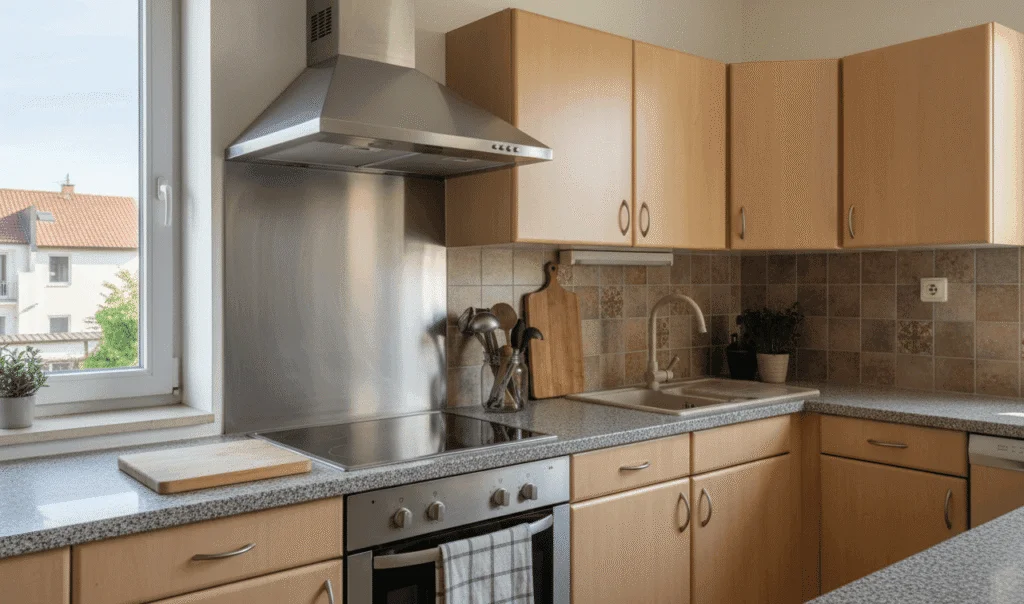
The principle is simple and highly effective. The hood draws in air with steam and odors, passes it through a metal grease filter that traps the fat, and then vents it through ducting directly outside – into a chimney, ventilation shaft or through an exterior wall. This is the best possible solution, if the layout and construction of your house or apartment allow it.
| Advantages | Disadvantages |
|---|---|
| Maximum efficiency in removing steam and odors | Requires building work for the ducting |
| Removes moisture from the room | Heat loss can occur in winter |
| No need to buy additional filters | Higher initial cost (including ducting) |
Recirculating cooker hood
This option is ideal wherever it’s not possible to install ducting to the outside, typically in apartment blocks or historic buildings. The hood draws in air, pushes it through the grease filter and then through a special carbon filter that absorbs odor particles. The filtered air is then returned back into the room.
| Advantages | Disadvantages |
|---|---|
| Very easy installation with no building work | Lower efficiency (removes about 80% of odors) |
| Lower purchase price | Does not remove moisture (steam) from the room |
| No heat loss | Carbon filters need to be replaced regularly |
Types of cooker hoods by placement and design
Once you know which operating mode you need, it’s time to choose a type that fits your kitchen both functionally and visually.
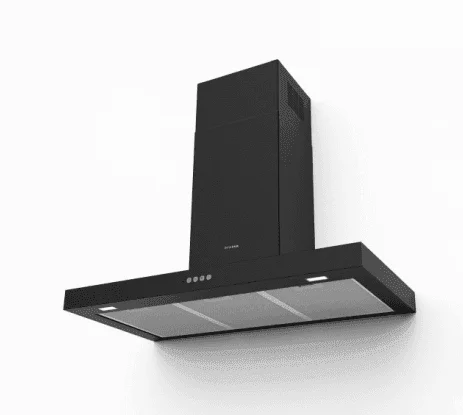
Chimney cooker hoods
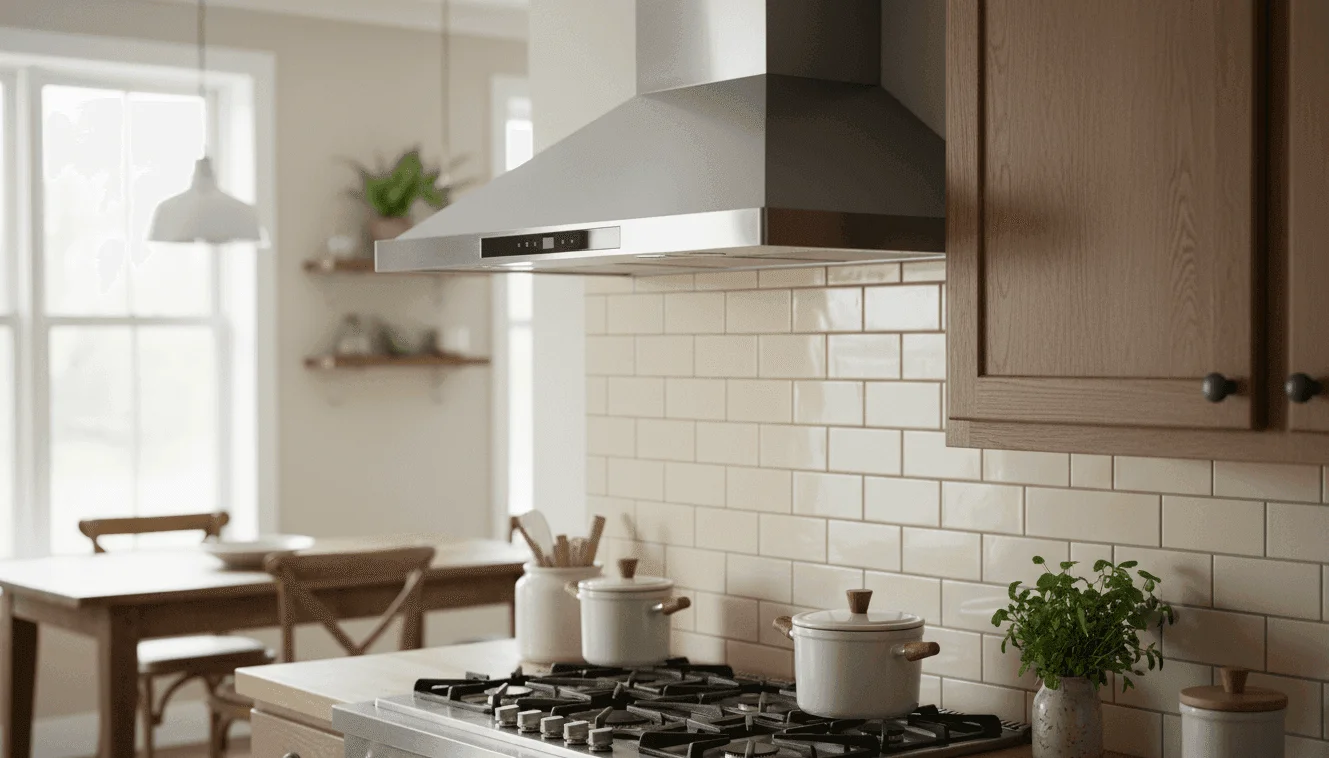
This is a classic and still very popular type. They are mounted on the wall between the upper cabinets or on a free wall, and their chimney neatly hides the ducting. They often become a strong design feature of the kitchen.
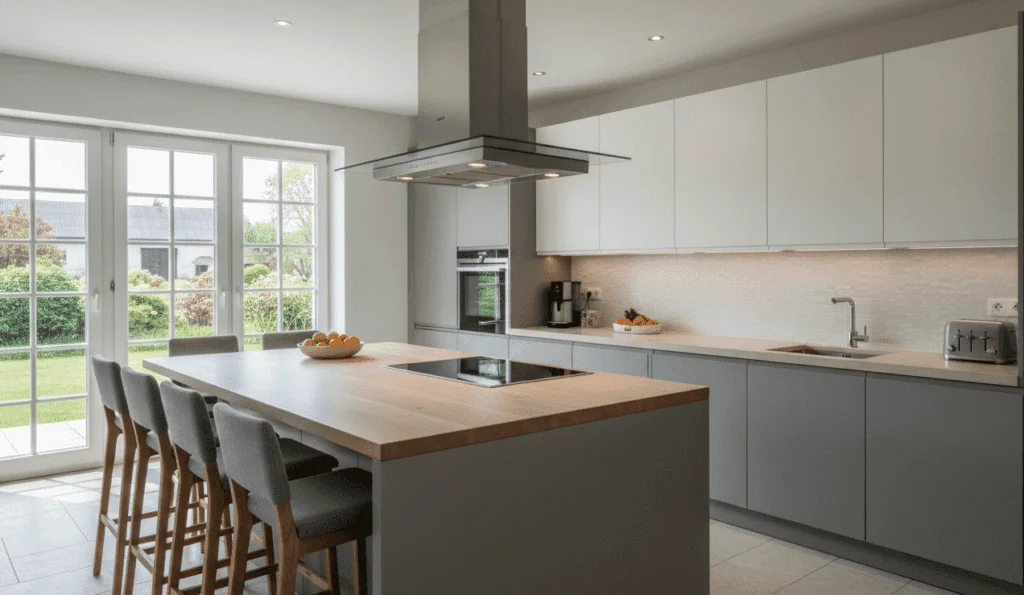
Island cooker hoods
These are designed for kitchens with a cooking island. They hang directly from the ceiling and are visible from all sides, so design plays a huge role here. They tend to be more expensive and more demanding to install.
Under-cabinet cooker hoods
These are simple, compact and budget-friendly solutions. They are mounted directly under the upper kitchen cabinet, which saves space. They’re ideal for smaller kitchens.
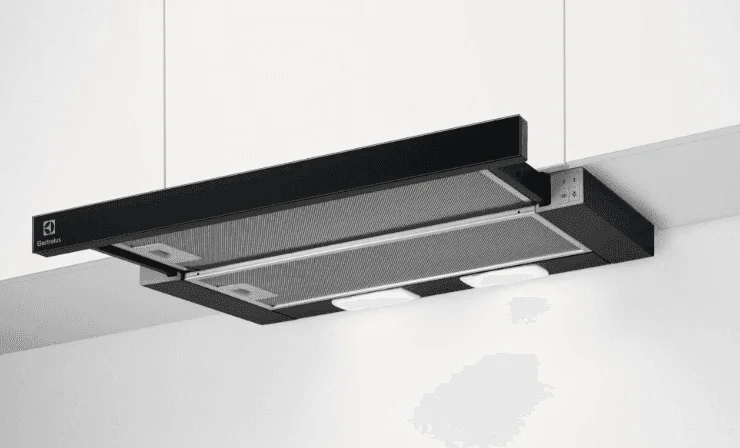
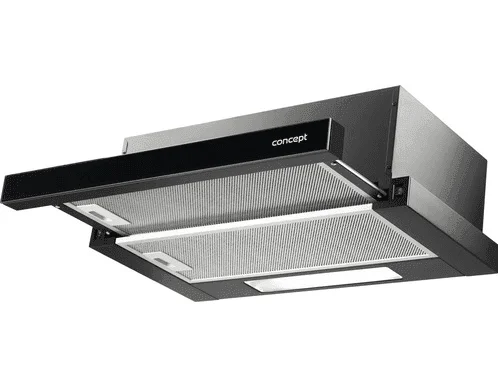
Pull-out (telescopic) cooker hoods
They are brilliantly discreet. They are built into the bottom of the upper cabinet and only a slim front strip is visible. Before you start cooking, you simply pull out the front section, which increases the extraction area, and the hood often switches on automatically.
Built-in cooker hoods
Perfect for fans of minimalist design. They are fully integrated into the upper cabinet, so they don’t disrupt the clean line of your kitchen units. Only the underside with filters and lighting remains visible.
Downdraft (rising from the worktop)
A modern, high-end solution that’s becoming increasingly popular. The hood is hidden in the worktop right behind the hob and rises up at the touch of a button. It’s effective, but it’s also one of the most expensive options.
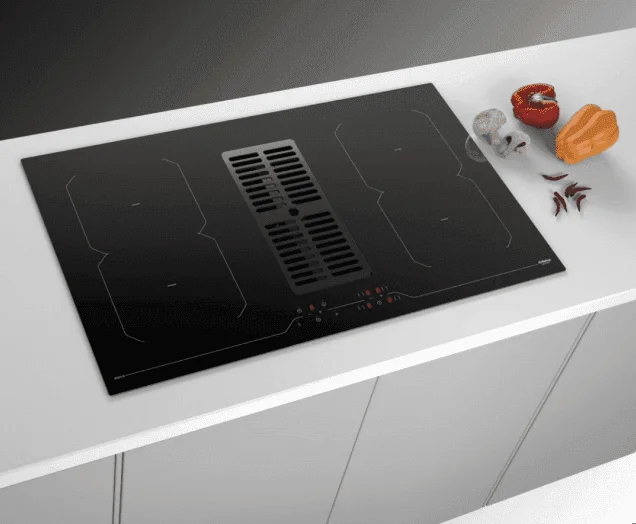
Cooker hoods integrated into the hob
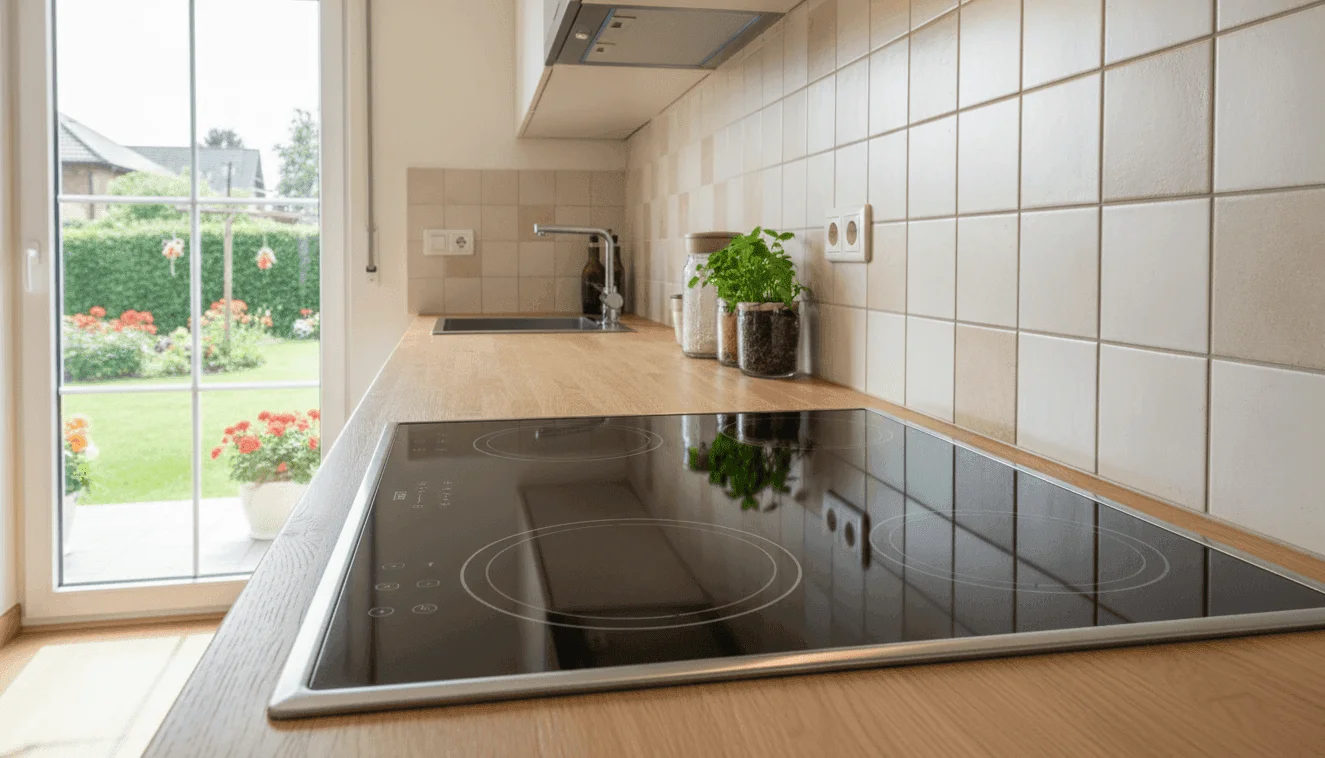
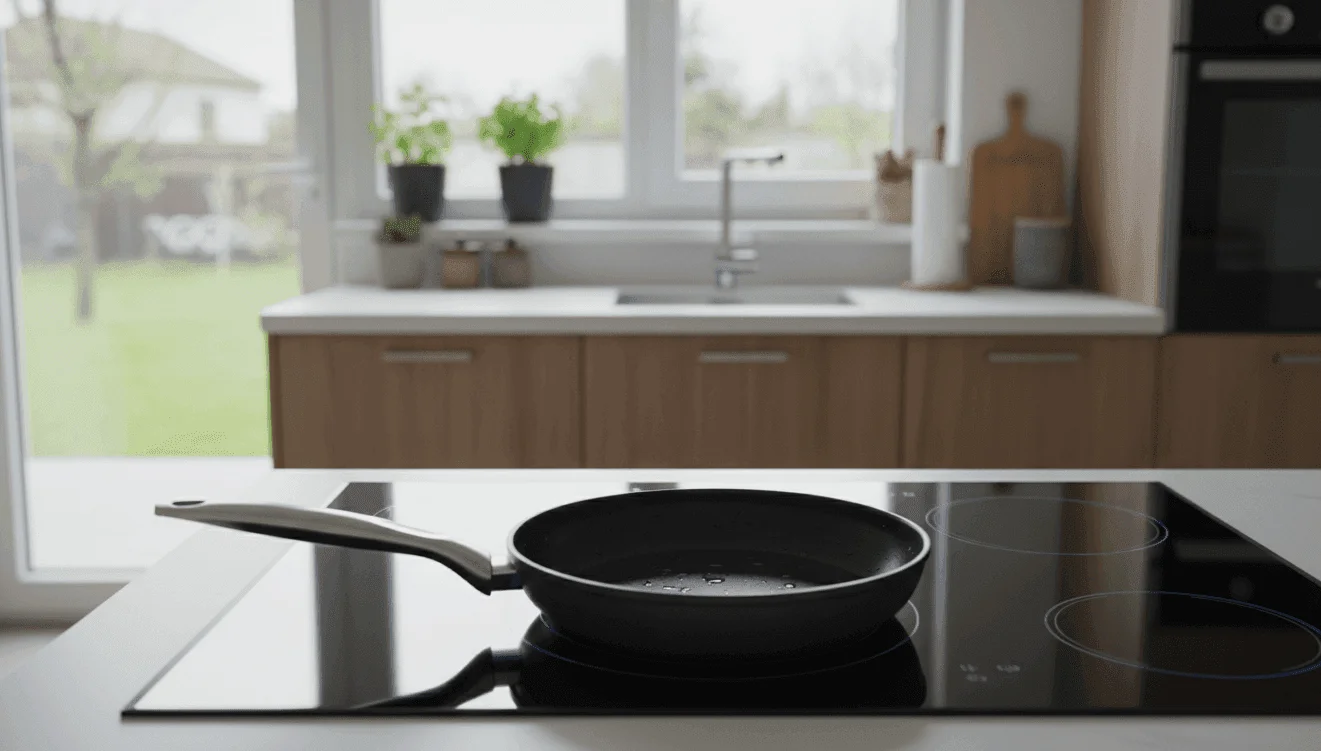
This is the absolute top tier and the latest trend. Extraction is built directly into the induction hob, where steam and odors are drawn away through an opening in the middle of the glass. It’s a very clean, minimalist solution, but also one of the most expensive.
Key parameters to compare (What to look for in the specs)
Technical specifications are crucial for the hood to work properly. Let’s go through the most important ones.
Extraction rate (m³/h)
This is the most important parameter. It tells you how many cubic meters of air the hood can extract per hour. You can easily calculate the required extraction rate: work out the volume of your kitchen (length × width × height) and multiply the result by ten. This gives you the recommended extraction rate in m³/h that the hood should reach at its highest setting.
Example: A kitchen 4 m × 5 m with a ceiling height of 2.5 m has a volume of 50 m³. The required extraction rate is 50 × 10 = 500 m³/h.
Noise level (dB)
Noise has a big impact on how comfortable it is to cook. If the hood is too loud, you simply won’t want to use it. Look for models whose noise level at the normal (medium) setting does not exceed 60 dB, which is roughly the volume of a normal conversation. Premium models can go below 50 dB.
Width of the cooker hood
The rule is simple: the hood should be at least as wide as your hob, ideally slightly wider. For a standard 60 cm hob, choose a hood that’s 60 or 90 cm wide. A wider hood captures steam from pots on the outer burners more effectively.
Type of filters
Metal grease filters are standard on all cooker hoods. Their job is to trap grease. They are usually made of aluminum or stainless steel and their big advantage is that they are washable – you just clean them from time to time, either by hand or in the dishwasher. Carbon filters are used only in recirculation mode and are designed to absorb odors. These filters cannot be washed; they must be replaced regularly, usually every 3 to 6 months.
Lighting
Modern cooker hoods are fitted with LED lighting, which is the best option. Compared to older halogen bulbs, it uses much less power, lasts far longer and provides pleasant, bright light across the whole worktop.
Extra features
Smart features can make everyday use a lot more comfortable. A run-on (timer) function keeps the hood running for a few minutes after you finish cooking at a low speed to remove any remaining steam. A filter saturation indicator lets you know when it’s time to clean the grease filter or replace the carbon filter. Perimeter (slot) extraction increases air speed and improves extraction efficiency.
How to choose a cooker hood step by step
- Choose the operating mode: First find out whether you can install ducting to the outside. If you can, a ducted hood is the obvious choice. If not, you’ll be choosing from recirculating models.
- Pick the type: Based on your kitchen layout and design preferences, decide whether you need a chimney, island, built-in or another type of hood.
- Calculate the required extraction rate: Work out the volume of your kitchen and multiply it by ten. Look for a model that can deliver at least this extraction rate.
- Consider noise and budget: Set a maximum acceptable noise level and a price limit. This will help you narrow down your shortlist to specific models.
Maintenance and cleaning for maximum performance
To keep your cooker hood efficient and quiet, you need to look after it regularly.
How and how often should you clean grease filters?
Metal grease filters should be cleaned roughly once a month, depending on how often you cook. You can wash them by hand in warm, soapy water or simply pop them in the dishwasher. A clogged filter significantly reduces performance and increases noise.
When is it time to replace the carbon filter?
If you use recirculation mode, you’ll need to replace the carbon filter regularly. Its service life is limited, typically 3 to 6 months. As soon as you notice that the hood isn’t removing odors as well as it used to, it’s time to fit a new one.
Cleaning the hood surface
Clean the surface of the hood with a soft cloth and products suitable for the specific material. For stainless steel, use dedicated cleaners that don’t leave streaks. Glass surfaces are easy to clean with a standard window cleaner.
Most popular brands and manufacturers
There are dozens of brands on the market. Here’s a quick overview of the most important ones:
- Faber, Elica: Italian specialists widely seen as innovators in both design and technology.
- Mora, Gorenje: Offer great value for money and are very popular in Central European households.
- Bosch, Siemens, AEG: Proven German and Swedish quality with a wide range of reliable models.
- Cata, Klarstein: Brands focused on affordable hoods for users with basic requirements.
Prices and budget categories
- Entry-level hoods (up to $180): In this range you’ll mostly find under-cabinet and basic chimney models. They’re suitable for less demanding users, but expect higher noise levels and lower performance.
- Mid-range ($180 – $450): The sweet spot and the best choice for most households. You’ll get a wide selection of all types of cooker hoods with solid performance, acceptable noise levels and often useful extra features.
- Premium range (over $450): Here you’ll find designer pieces, island and downdraft models, quiet and efficient motors, smart features and top-tier performance.
Summary and final tip
The right cooker hood depends mainly on whether you can vent to the outside, on the size of your kitchen and on how much you care about quiet operation. Don’t skip the extraction rate calculation, but at the same time keep an eye on noise levels, which are crucial for everyday comfort.
Final recommendation: If you’re choosing between two models with similar performance, always go for the quieter one. A powerful but noisy hood is something you’ll end up avoiding.
Most common questions and answers (FAQ)
How high above the hob should I install the cooker hood?
As a rule of thumb, the minimum recommended distance is 65 cm above an electric hob and 75 cm above a gas hob. You’ll always find the exact figures in your hood’s manual, and it’s important to follow them for proper performance and safety.
What is a backdraft damper and why is it important for a ducted hood?
A backdraft damper is a small component installed in the ducting. It works like a one-way valve: when the hood is on, air pressure opens the flap. When you switch it off, the flap closes and prevents cold air from flowing back in from outside, and also stops insects or dust from entering the kitchen. It’s absolutely essential for ducted cooker hoods.
Why does the hood keep running after I switch it off (run-on function)?
This smart feature, often called “run-on” or “timer”, lets the hood run for a few more minutes (usually 5–15) at a low speed even after you press the off button. This ensures all remaining steam and odors are extracted from the kitchen after you finish cooking, so you can leave the room with perfectly clean air.