How to understand face masks and find the right one for you
A face mask is much more than just an excuse to relax with cucumber slices on your eyes. It is an intensive targeted treatment that can give your skin, in a concentrated form, exactly what it is missing. Whether you need deep hydration, thorough pore cleansing, soothing, or an instant glow, the right mask can work small miracles. But there are so many types that finding your way around them can be tricky.
The goal of this guide is to show you that a mask is not just pampering, but a highly effective tool for tackling specific skin concerns. We will help you find the right one.
Did you know that…
…the tradition of face masks goes all the way back to ancient Egypt? Cleopatra herself is said to have used masks made from Dead Sea clay to maintain her legendary beauty.
First get to know your skin: The key to choosing correctly
Before you start looking for a mask, you need to know who you are buying it for. Identifying your skin type is an absolutely crucial step.
Dry skin: Often feels tight, may flake, and looks dull. Its main goal is nourishment and hydration.
Oily skin: Shows excessive shine, enlarged pores, and a tendency to develop acne and blackheads. It needs deep cleansing and sebum control.
Combination skin: Typically has an oily T-zone (forehead, nose, chin), while the cheeks are normal or drier. It requires balanced, targeted care.

Sensitive skin: Easily turns red, itches, and is prone to irritation. It mainly needs soothing and very gentle formulas without harsh ingredients.
Mature skin: Struggles with wrinkles, loss of elasticity, sagging contours, and dark spots. It is looking for lifting, firming, and anti-age actives.
Types of face masks by texture and format
Each type of mask offers different benefits and suits a different skin type. Get to know the most common ones.
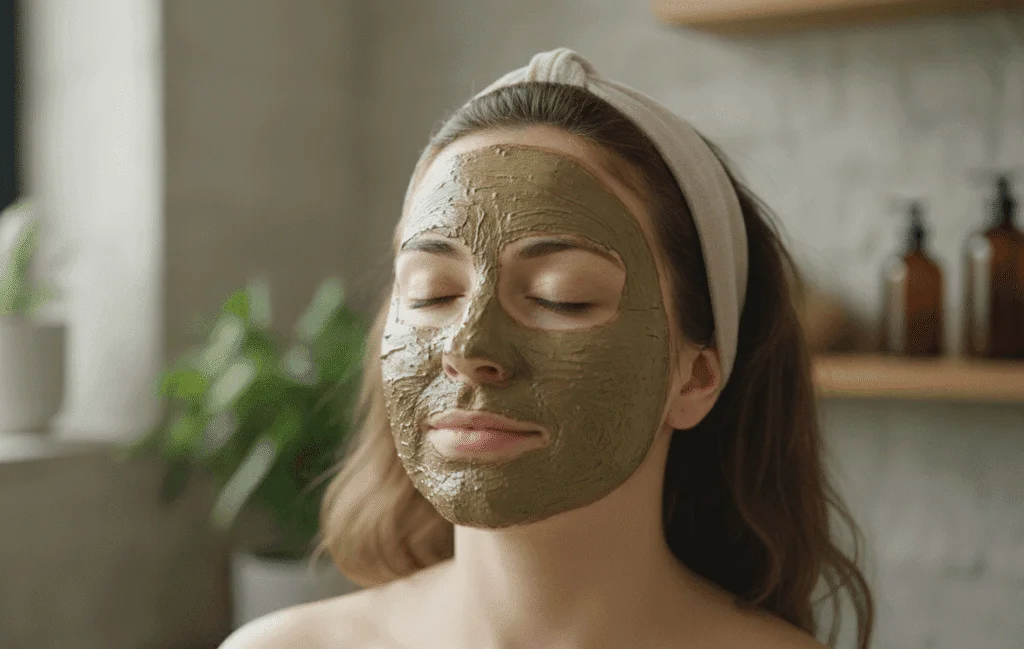
Clay and mud masks
Their main job is to deeply cleanse the skin, absorb excess sebum, and tighten enlarged pores. They are absolute favorites for oily, combination, and blemish-prone skin that tends to break out.
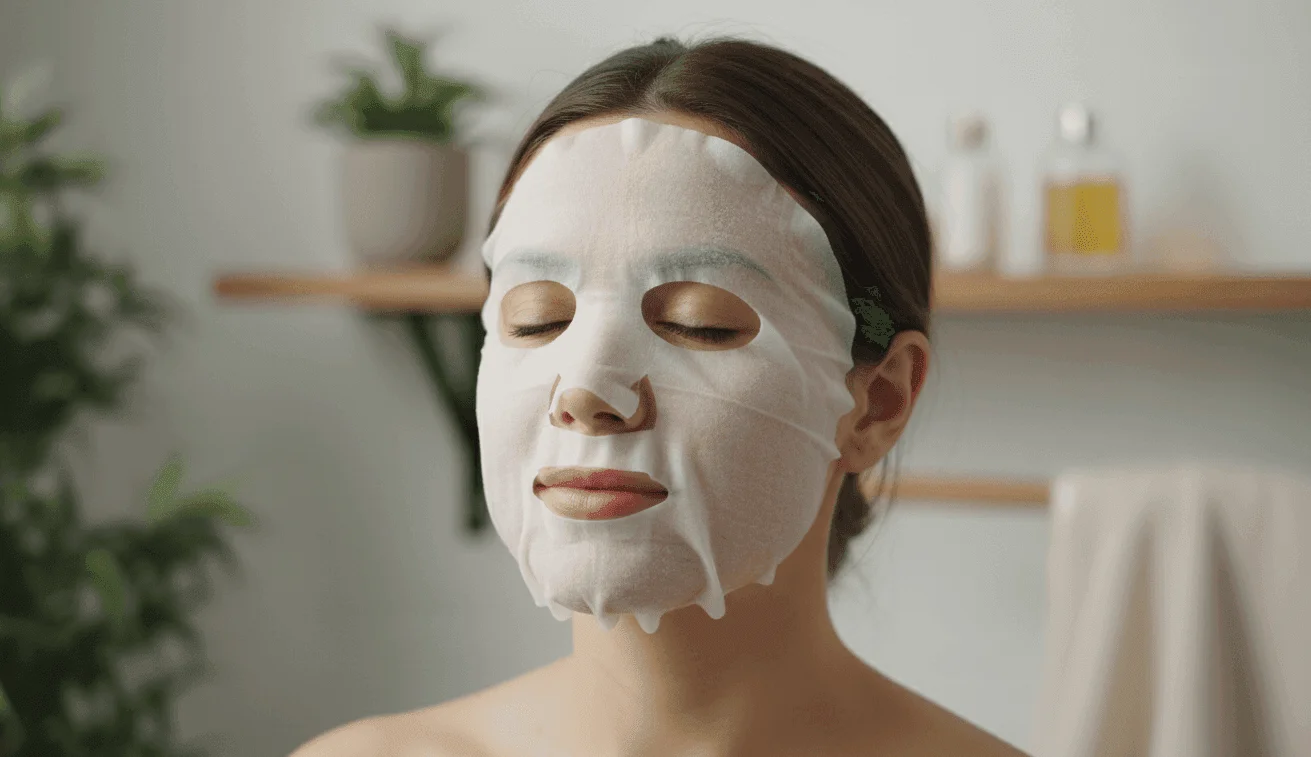
Sheet masks
These single-use masks soaked in active serum are stars of Korean skincare. Their main strength is intensive hydration and a quick hit of active ingredients. They are incredibly convenient, easy to use, and work for almost all skin types, especially dry and dehydrated skin.
Peel-off masks
As the name suggests, once dry they peel off the skin in one piece. Their aim is to mechanically remove dead skin cells and impurities from the pores, including blackheads. They are best suited to oily skin and the T-zone. On sensitive or dry skin, however, they can be too harsh and may cause irritation.
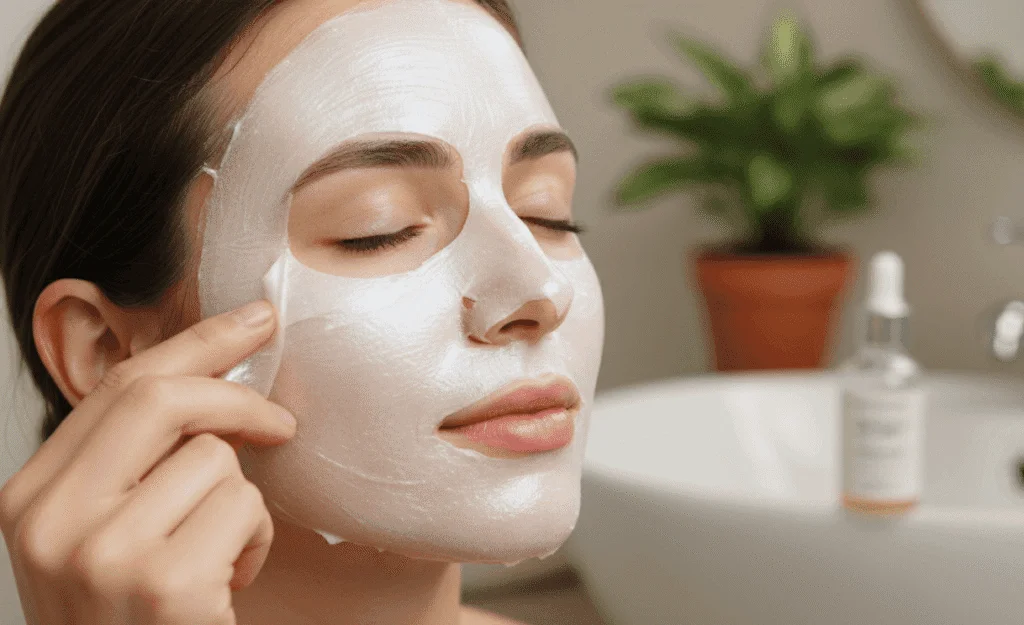
Cream masks
They have a rich, thick texture and are packed with nourishing and hydrating ingredients. Their mission is to deeply nourish, hydrate, and support the skin’s regeneration. They are a real lifesaver for dry, dehydrated, and mature skin.
Gel masks
With a light, often cooling texture, they bring instant relief. Their main role is to lightly hydrate, cool, and calm irritation or redness. They are a perfect choice for sensitive, normal, and even combination skin that does not need heavy textures.
Overnight (sleeping) masks
This type of mask is applied as the last step of your evening routine instead of night cream and is left to work all night. During sleep, when your skin regenerates the most, it delivers a maximum dose of active ingredients. It is ideal for all skin types that need an extra boost and long-lasting hydration.
Key active ingredients: What to look for on the label
The power of a mask lies in its formula. Learn how to read ingredient lists and look for actives that target your specific concern.
For hydration
To quench thirsty skin, look for ingredients like hyaluronic acid, which works like a moisture magnet and plumps the skin on contact. It pairs perfectly with glycerin, which keeps the skin soft and supple. For restoring the skin barrier and locking in moisture, ceramides are essential. This hydrating cocktail is often rounded out with aloe vera, which not only delivers water to the skin but also helps to soothe it.
Against acne and blackheads
In the fight against clogged pores and breakouts, the main heroes are clays (bentonite, kaolin) and activated charcoal. These ingredients act like a sponge – they soak up excess oil and impurities, leaving the skin clean and matte. For deep pore cleansing from the inside, salicylic acid (BHA) is irreplaceable, as it can dissolve built-up sebum.

For brightening and pigmentation
To bring back radiance and even out skin tone, the star ingredient is vitamin C, a powerful antioxidant that visibly brightens and helps fade dark spots. Close behind is niacinamide (vitamin B3), which not only evens out tone but also refines skin texture and reduces the look of pores. This duo is perfectly supported by fruit acids (AHA), which gently remove dead cells from the surface and reveal fresher, more luminous skin underneath.
For wrinkles and firming
Mature skin needs intensive care focused on boosting renewal. The gold standard is retinol (vitamin A), which is proven to stimulate collagen production and speed up cell turnover. Peptides work in a similar way by signaling cells to make more collagen, helping to firm and strengthen the skin. These actives are often complemented by collagen itself, which hydrates on the surface and temporarily smooths the skin, and the antioxidant coenzyme Q10, which protects against external factors that accelerate aging.
For soothing
For irritated and sensitive skin, calming ingredients are a real game changer. Look for panthenol (provitamin B5), which supports regeneration, reduces redness, and helps repair a damaged skin barrier. Also highly effective is extract from Centella Asiatica (CICA), known for its strong healing and anti-inflammatory properties. This duo is often supported by chamomile extracts, which efficiently ease irritation.
This handy table will help you find your way quickly.
| Skin type | Recommended mask type | Look for in the formula |
|---|---|---|
| Dry | Cream, Sheet, Overnight | Hyaluronic acid, shea butter |
| Oily | Clay, Peel-off (locally) | Clay, salicylic acid, activated charcoal |
| Combination | Clay on T-zone, hydrating on cheeks | Combination of actives (so-called "multimasking") |
| Sensitive | Gel, Cream (fragrance-free) | Panthenol, Aloe Vera, CICA |
| Mature | Cream, Sheet, Overnight | Retinol, Peptides, Vitamin C |
How to use a face mask properly (and get the most out of it)
Correct application is just as important as choosing the right product. Follow these steps for the best results.
- Step 1: Prep
Always apply a mask to thoroughly cleansed, makeup-free skin. Only then can the active ingredients reach where they need to go. - Step 2: Application
Apply an even layer to your face, neck, and if you like, your décolleté. Carefully avoid the delicate eye area and lips. - Step 3: Leave-on time
Always follow the time stated on the packaging. This is especially important with clay masks: do not let them dry out and crack completely on the skin. Once the mask hardens, it actually starts drawing moisture out of the skin. - Step 4: Removal
Rinse the mask off thoroughly with lukewarm water. You can use a soft towel or sponge to help. Work gently, without unnecessary rubbing. - Step 5: Follow-up care
After removing the mask, your skin is perfectly prepped for further care. Use a toner to rebalance pH, then apply your favorite serum and moisturizer. This way you "lock in" the hydration and active ingredients from the mask.
Overview of popular brands
You will find excellent masks on the market across a wide range of price points.
| Category | Examples |
|---|---|
| Drugstore and budget-friendly | Garnier, Nivea, L'Oréal Paris, Ziaja, Balea |
| Korean beauty (specialists) | COSRX, Benton, Holika Holika, Skin79 |
| Dermocosmetics from pharmacies | La Roche-Posay, Avène, Bioderma, Vichy |
Summary and final tip
The key to success is to choose a mask not only according to your skin type, but also its current condition. Sometimes it needs more hydration, other times a deeper cleanse. Do not be afraid to keep several types at home and rotate them. Regular use, ideally once or twice a week, brings visible, long-term results.
Turn applying a face mask into a relaxing ritual. It is a moment just for you that not only improves how your skin looks, but also helps you unwind and recharge.
💬 Frequently asked questions (FAQ)
How often should I use a face mask?
It depends on the type of mask and the condition of your skin. You can safely use hydrating and soothing masks 2–3 times a week. Purifying, clay, and exfoliating masks are usually enough once a week, so you do not overdry the skin or disrupt its protective barrier.
Can I use several masks at the same time?
Yes! This popular technique is called "multimasking" and it is ideal for combination skin. For example, you can apply a deep-cleansing clay mask to the oily T-zone and at the same time use a nourishing cream mask on dry cheeks. This way, each part of your face gets exactly what it needs.
Do I need to rinse my face after a sheet mask?
You do not have to, and you definitely should not. The remaining essence left on the skin after you remove the sheet is full of active ingredients. Gently pat or massage it into the skin of your face, neck, and décolleté. It works like a highly concentrated serum.