From Cotton to Bamboo: Choose a Towel That Pampers Your Skin
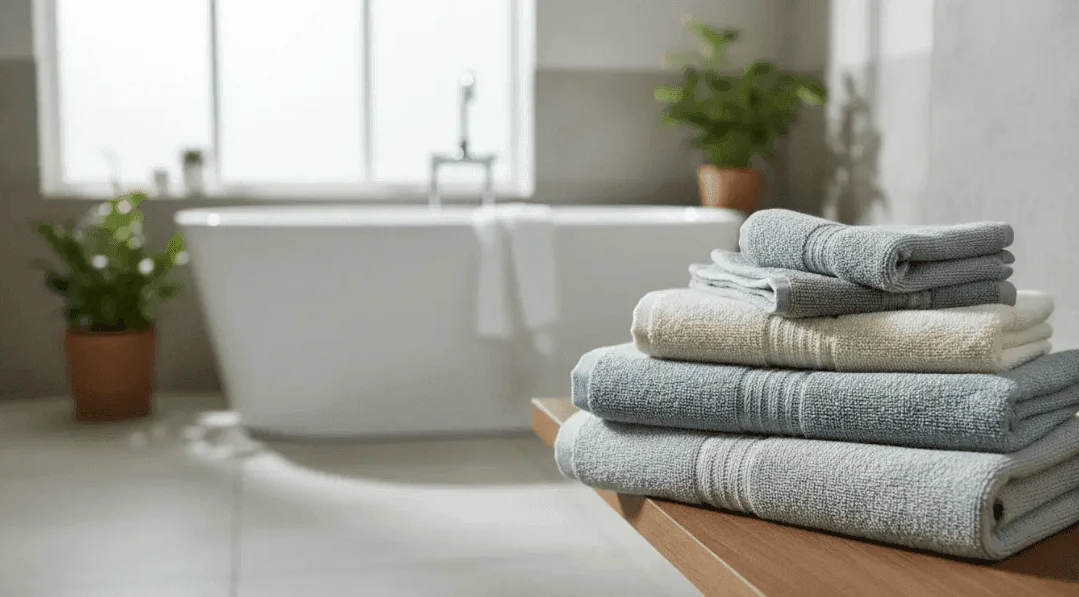
A towel is much more than just a piece of fabric. It’s the first thing that touches your skin after a refreshing shower or a relaxing bath. Choosing the right one is key for your everyday comfort, hygiene, and even the health of your skin. There are countless types that differ in material, size, and weave density, and this guide will walk you through everything that matters so you can pick the best towel for your needs.
Did you know that a well-chosen towel not only absorbs better, but also dries faster, which helps reduce bacterial growth?
Types of towels by size and use
Before we dive into materials and technical specs, it’s good to be clear about what size you’re actually looking for.
Guest towel
A small, practical towel measuring roughly 30x50 cm. Its place is in the toilet or guest bathroom, where it’s used only for drying hands. It’s a small detail, but it shows your care and hospitality.
Hand and face towel
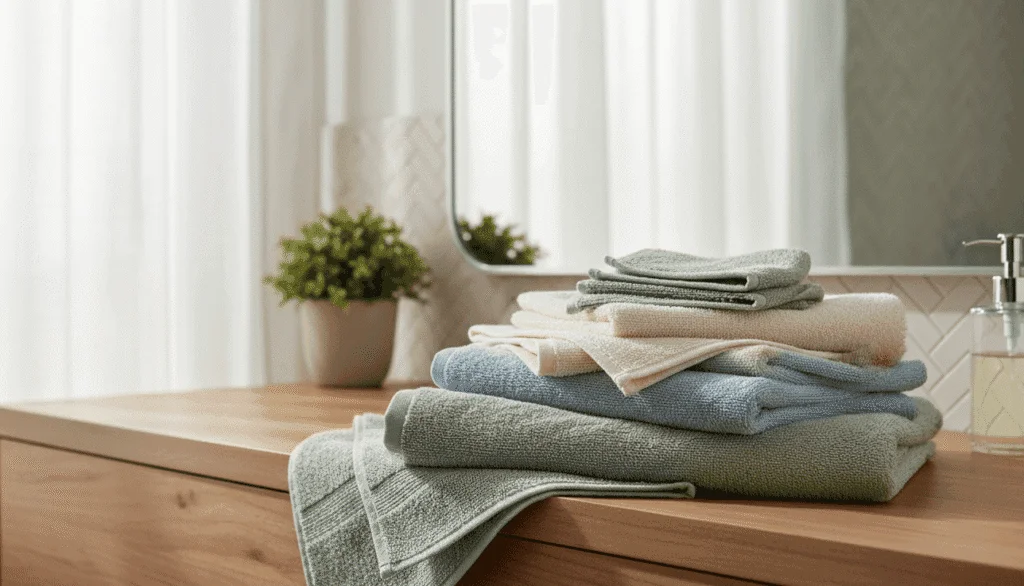
The standard size of around 50x100 cm is an absolute staple in every bathroom. We use this towel daily to dry our hands and face, and it should always be within easy reach by the sink.
Bath towel
A classic bath towel for drying your whole body after a bath or shower. Its size is usually around 70x140 cm, which is an ideal compromise between enough surface area for comfortable drying and a practical size for washing and drying.
Beach towel
It’s noticeably larger than a classic bath towel, usually around 100x180 cm. It’s used not only for drying off, but also as a mat on the sand or a lounger. It often has a lower GSM so it can dry faster in the sun and is usually decorated with bold summer patterns.

Kids’ towel/poncho
Designed with sensitive children’s skin in mind. It often comes with a practical hood that protects a child’s wet head from the cold. A kids’ poncho is great by the water because it keeps them warm while still allowing them to move freely. Always make sure it’s made from safe, certified materials.

Key parameters to consider
These are the most important features that determine the quality, performance, and lifespan of your new towel.
Material – the heart of every towel
The most common and most popular material thanks to its natural absorbency, breathability, and durability. Most cotton towels are woven using froté terry, which creates the characteristic loops that increase the absorbent surface. But not all cotton is the same:
- Egyptian cotton: Considered the queen of cotton. Its extra-long fibers provide exceptional absorbency, incredible softness, and a long lifespan. Towels made from it are both luxurious and hard-wearing.
- Pima cotton: Very similar to Egyptian cotton, grown mainly in the USA and Peru. It also offers above-standard softness and absorbency.
Towels with bamboo content are silky soft to the touch, highly absorbent (they absorb up to 4x more than cotton), and naturally antibacterial, which helps prevent odors. To improve strength and durability, they are most often blended with cotton.
A synthetic material made from very fine fibers. It’s extremely light, compact, and incredibly fast-drying. That makes it an ideal partner for sports, the gym, or travel. For everyday home use, some people may find it less pleasant to the touch than cotton.
A traditional natural material that is very strong, durable, and highly absorbent. A new linen towel can feel rough at first, but it softens beautifully with every wash. It’s ideal for fans of natural fabrics and has a gentle massaging effect.
GSM (g/m²) – key for absorbency and feel
GSM is a crucial indicator of quality. It shows the weight of the fabric per square meter (grams per square meter). Put simply, the higher the GSM, the denser, fluffier, and more absorbent the towel is.
- Lightweight (up to 400 g/m²): Thinner towels that dry very quickly. They’re ideal for sports, travel, or as summer towels by the water.
- Medium (450–600 g/m²): The sweet spot for everyday home use. They offer a great balance between absorbency, softness, and reasonable drying time. They last a long time and work well in daily rotation.
- High (over 600 g/m²): Luxurious, very dense, fluffy, and extremely absorbent towels that give you that five-star hotel feel. They’re heavier and their only real downside is a longer drying time.
Weave type (loops)
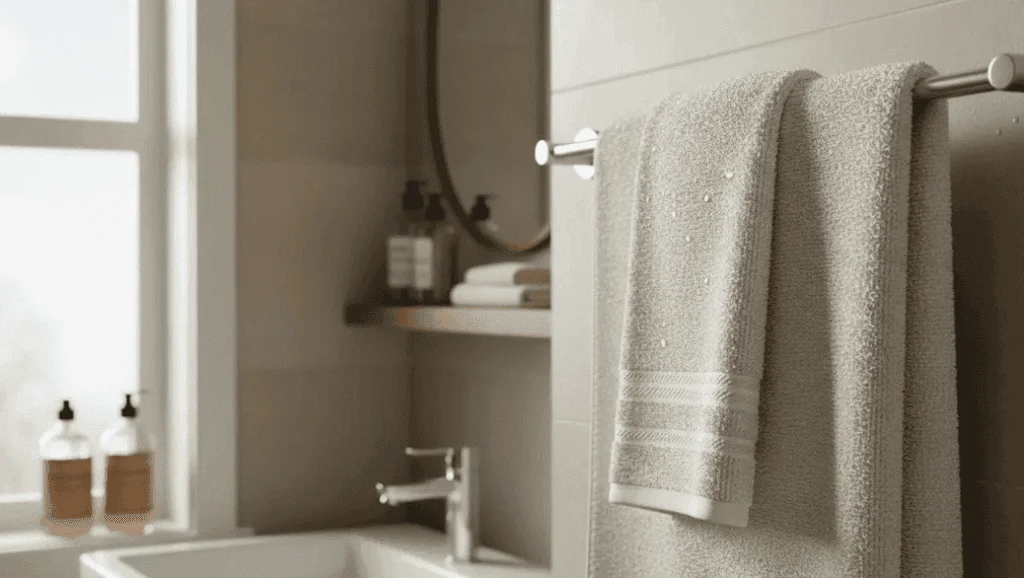
The absorbency of a terry towel depends on the length and density of the loops. The longer and denser the loops, the larger the towel’s surface area and the more water it can hold. Quality towels have loops that are firm and evenly woven.
How to choose the right towel for you
Everyone’s needs are different. Here are a few tips to help you choose the right one.
Go for towels made from 100% cotton with a medium GSM (around 500 g/m²). They’re durable enough for frequent washing, absorb well, and still dry fast, which is crucial in a busy household. Look for the OEKO-TEX® certification.
If you want maximum comfort, reach for bath towels made from Egyptian cotton or a bamboo blend with a high GSM (over 600 g/m²). They’re incredibly soft, fluffy, and give you a spa-like pampering feel after every bath.
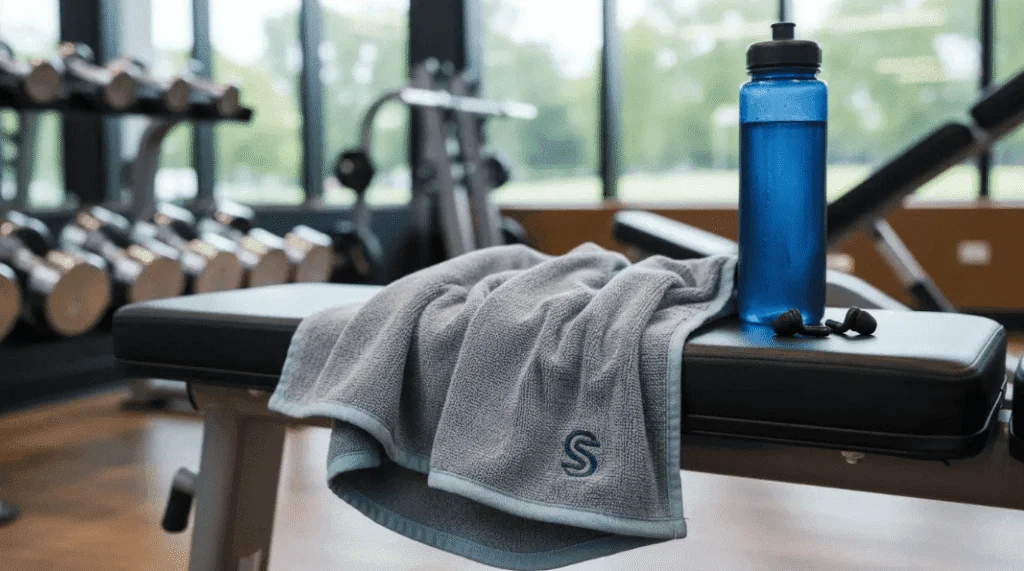
The clear choice is a microfiber towel. It’s feather-light, packs down into a tiny bundle, and after use it dries faster than you can get changed.
What to watch out for when buying
- Too much softness in the store: Some manufacturers use chemical softeners to make the towel feel more luxurious. This effect disappears after the first wash.
- Crooked seams and loose weave: Check the edges and hold the towel up to the light. If it’s see-through, the fabric is too thin and won’t last long.
- Don’t buy based on color alone: Design matters, but functional features like material and GSM are absolutely crucial. A beautiful towel that doesn’t absorb is useless.
Care, use, and lifespan
With proper care, your towels will serve you well for many years.
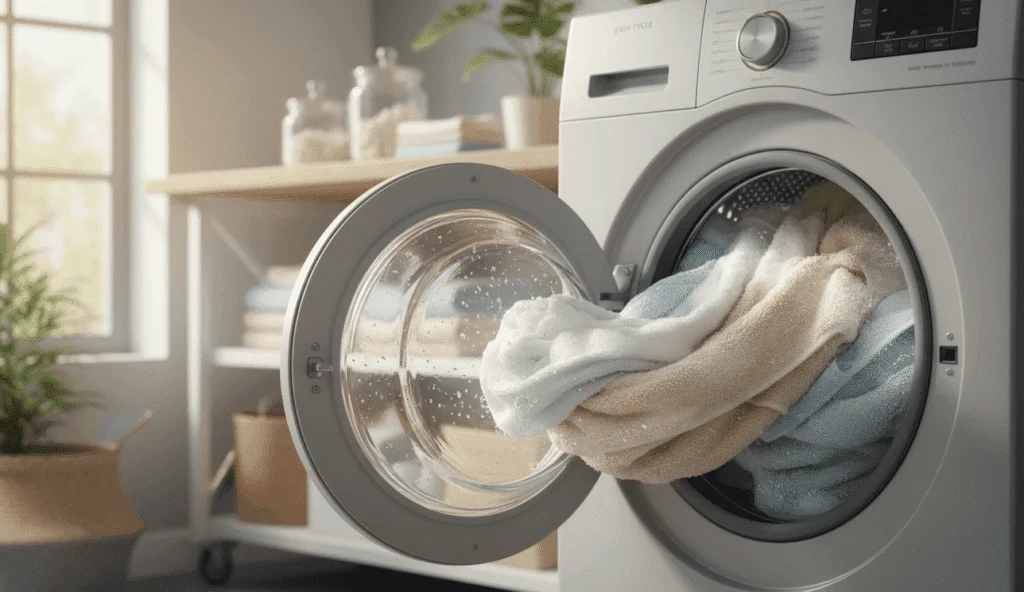
- The first wash is the most important: Always wash new towels before the first use, ideally twice. This tightens the fibers, removes any manufacturing residues, and most importantly, activates their absorbency. To help set the colors, you can add a little vinegar to the first wash.
- How to wash: Wash at 40–60 °C according to the care label. White towels can handle higher temperatures, but it’s better to wash colored towels at 40 °C. Higher temperatures unnecessarily damage the fibers.
- Don’t use fabric softener: Fabric softener may make laundry smell nice, but it also coats the fibers with a thin film that drastically reduces their absorbency. Instead, you can pour a shot of white vinegar into the softener compartment – it softens the water, revives colors, and prevents detergent residues from building up.
- How to dry: A tumble dryer on low heat will serve you best. The circulating air fluffs up the fibers, so towels stay soft and lofty. When dried on a line, they can become stiff due to hard water.
- When to replace a towel: When it no longer absorbs well, feels rough, smells even after washing, or is visibly worn and torn.
Prices and budget ranges
How much should you invest in a quality bath towel (approx. 70x140 cm)?
- Basic range (up to 250 Kč): These are usually towels with a lower GSM (around 400 g/m²) and a shorter lifespan. Suitable for occasional use or places where they’re likely to wear out quickly.
- Mid-range (250–700 Kč): Here you’ll find the best value for money. These are quality cotton towels with an optimal GSM (450–600 g/m²) that will serve you well for many years. The ideal choice for most households.
- Premium range (over 700 Kč): In this category you can expect luxury materials like Egyptian cotton or bamboo, high GSM (over 600 g/m²), and excellent workmanship. It’s an investment in maximum comfort.
Summary and final tip
When choosing a towel, focus mainly on two key parameters: material and GSM. These are what determine absorbency, softness, and how the towel feels on your skin. Remember that investing in a quality towel pays off many times over in the form of a long lifespan and everyday comfort. Before you start shopping, be clear about what you need the towel for, and don’t be afraid to invest in the mid-range, which offers the best everyday value for money.
Frequently asked questions (FAQ)
Why is my new towel shedding lint?
This is completely normal, especially with new cotton terry towels with a high pile. During the first few wash cycles, leftover short fibers from production are released. This should stop on its own after 2–3 washes.
Why are my towels stiff after washing?
The most common cause is a combination of hard water and detergent residues that build up in the fibers and glue them together. Try reducing the amount of detergent and add a little white vinegar to the fabric softener compartment – it helps dissolve deposits and soften the water. If you have a tumble dryer, that’s the best cure for stiff towels.
What is the difference between terry and waffle towels?
The main difference is in the structure. Terry has typical looped piles on the surface, which makes it very absorbent, fluffy, and soft. A waffle towel has a textured, grid-like structure that looks like waffles. It’s much lighter, more compact, and dries far faster than terry, but it’s not as fluffy and soft to the touch.