The Ultimate Guide to Bedding: Your Key to Perfect Sleep
Bedding is not just a decorative cover for your duvet and pillow. It’s a fabric that stays in close contact with your skin all night long and strongly affects the quality of your sleep, bed hygiene, and the overall feel of your bedroom. Choosing the right bedding is a small, but very important step towards better rest.
Did you know that the average person spends up to a third of their life in bed? The right bedding therefore affects a huge part of our lives.
Key parameters when choosing
Before we dive into the specifics of each material, it’s good to clarify a few basic technical parameters that determine whether the bedding will suit you perfectly.
Material
This is the single most important parameter. It influences how you feel in the bedding, how breathable it is, whether it feels warm or cool, and how demanding it is to care for. We’ll look at each material in detail in the next chapter.
Dimensions
It sounds obvious, but the wrong size is one of the most common mistakes. Before you buy, always carefully measure your duvet and pillow. Standard sizes are:
Single bed: 140x200 cm (+ pillow 70x90 cm)
Double bed / French duvet: 200x220 cm or 220x240 cm (+ 2x pillow 70x90 cm)
There are also extended lengths (e.g. 140x220 cm) and smaller pillow sizes.
Fabric weight (g/m²)
Fabric weight shows the weight of the fabric per square metre and is a great indicator of its density and quality. In general, the higher the weight, the denser, more durable, and longer-lasting the fabric will be. For quality cotton bedding, a fabric weight of around 120–145 g/m² is recommended. Lower values can mean a loose weave with a shorter lifespan.
Type of fastening
Your comfort when changing the bedding and while sleeping also depends on details such as the fastening.
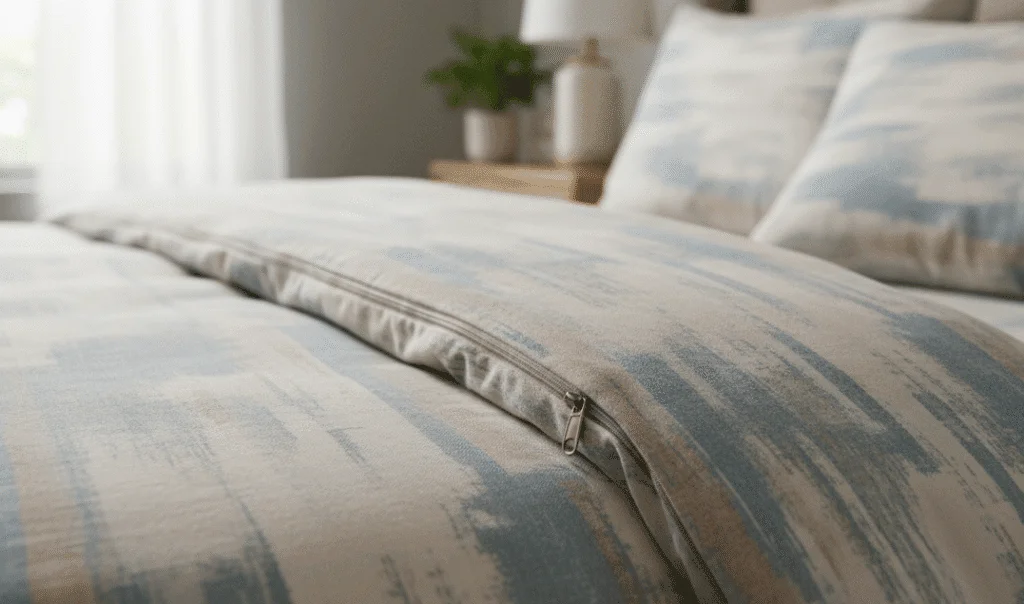
Zip fastening: Currently the most popular option. It is practical, quick, and keeps the duvet safely inside. A quality zip is hidden and does not get in the way while you sleep.
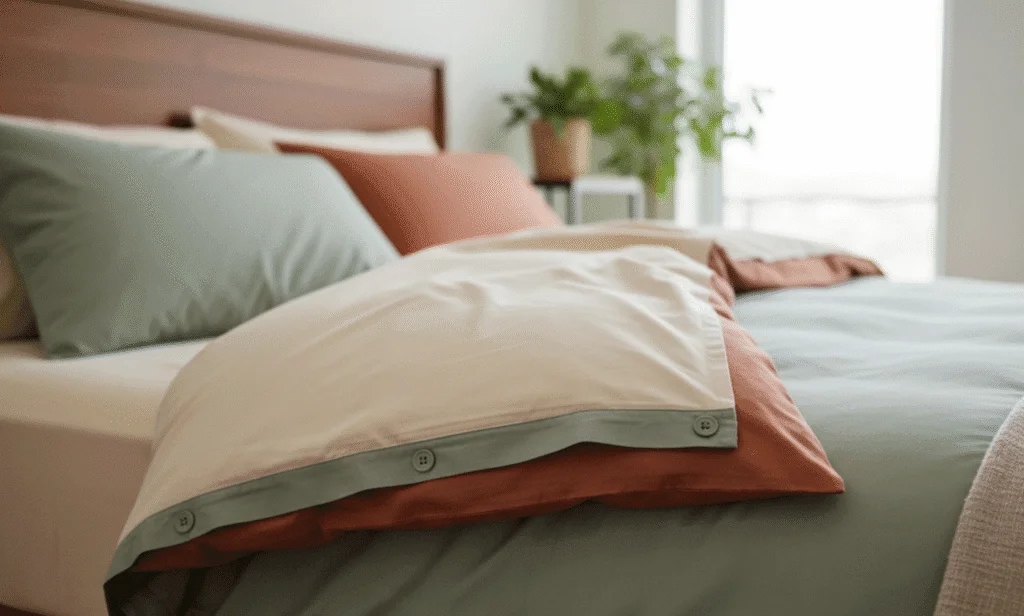
Button fastening: A traditional and elegant choice that creates a cosy look. However, fastening is more time‑consuming and the buttons can come off over time.
Hotel envelope (overlap): A fabric flap at the end of the cover where you tuck in the duvet. It’s very easy to put on and maintain, which is why hotels like it. The duvet, however, may tend to slip out.
Most popular bedding materials
Let’s take a closer look at the materials you’ll come across most often on the market.
Cotton (smooth, renforcé)
Smooth cotton is an absolute classic and a versatile choice that works year‑round and suits almost everyone. It’s affordable, breathable, absorbs sweat very well, and feels very pleasant to the touch. Thanks to its durability, it can handle frequent washing at higher temperatures, which makes it a hygienic and practical option. Its only downside is that it creases more, so it usually needs ironing.
Cotton satin
If you’re after a touch of luxury, cotton satin is the way to go. It’s made from 100% long‑staple cotton with a special sateen weave that gives it a distinctive sheen, incredible softness, and a smooth surface. This material has excellent temperature‑regulating properties – it feels pleasantly cool in summer and doesn’t feel cold in winter. Its biggest advantages include an elegant look and minimal creasing. The downside is the higher purchase price.
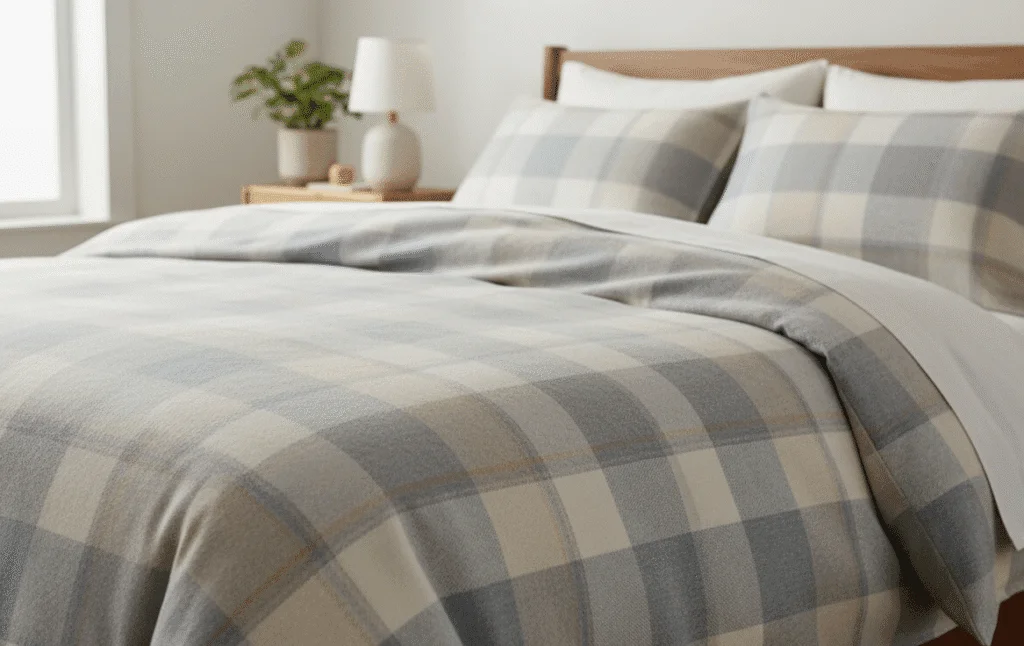
Flannel (cotton)
Flannel bedding is a synonym for winter comfort and is ideal for anyone who is often cold. It’s made from cotton whose surface is specially brushed to create a soft, warm nap. This layer insulates heat very well and feels incredibly soft and cosy to the touch. Its main advantage is its outstanding insulation, which keeps you warm even on the coldest nights. Naturally, it’s not suitable for the summer months.
Crepe
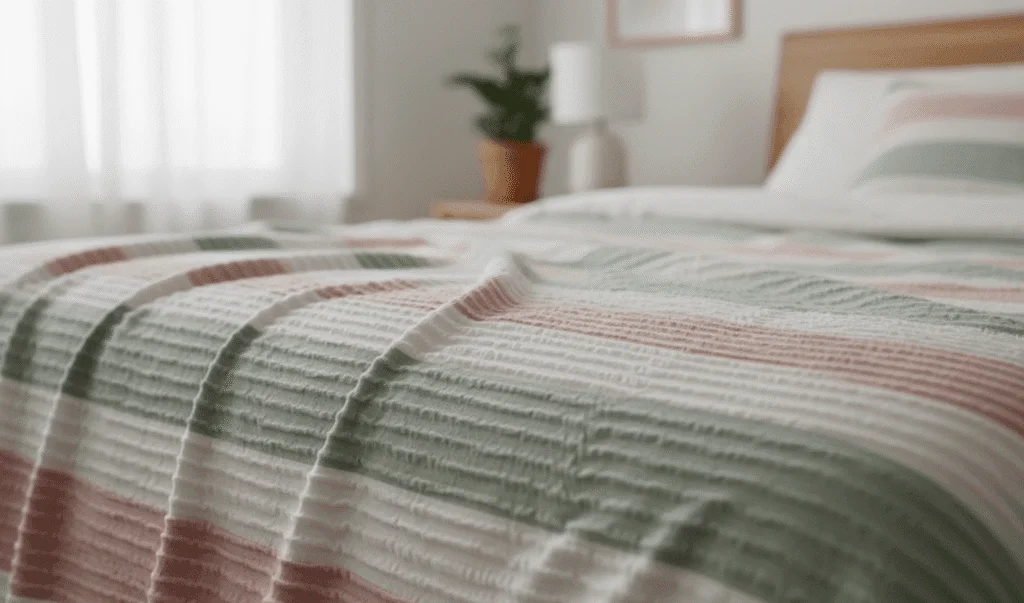
Crepe bedding is perfect if you want something highly practical and almost maintenance‑free. Its surface is defined by a distinct pattern of alternating smooth and crinkled stripes created by a special fabric treatment. Its main and unbeatable advantage is that it does not need ironing at all. However, its slightly rougher texture may not suit everyone who prefers a perfectly smooth surface.
Linen
Linen bedding is a great choice for fans of natural, sustainable, and functional materials. Linen is extremely breathable, cooling, and wicks away moisture very well, which makes it ideal for hot summer nights. It is naturally antibacterial and hypoallergenic, so it’s a great option for people with sensitive skin. Although it may feel a bit stiff at first, it softens beautifully with every wash. Its drawbacks are heavy creasing – typical for linen – and a higher purchase price.
Microfiber / Microplush
This is a synthetic material (100% polyester) that is especially popular for the winter season. Microplush bedding is very soft, incredibly velvety, and wonderfully warm. It dries quickly and doesn’t need ironing. Its main advantages are a low price and easy care. Compared to natural materials like cotton, however, it’s much less breathable and almost non‑absorbent.
How to choose bedding tailored to you
Choosing by season
For summer, go for cool and breathable materials. Choose linen, cotton satin, or classic smooth cotton. In the colder months, you’ll stay warmest in cosy flannel or soft microplush.
Bedding for allergy sufferers and sensitive skin
For allergy sufferers, it’s crucial to be able to wash bedding at 60 °C, which kills dust mites. Ideal options include materials such as densely woven cotton (percale), linen, or special hypoallergenic fabrics with certification. Avoid synthetic materials that can irritate the skin.
Bedding for children
Children’s skin is very delicate, so health safety comes first. The best choice is durable and breathable 100% cotton that can handle frequent washing. Safe fastening is also important, ideally a concealed zip.
What to watch out for when buying
- Ignoring fabric weight: Low weight means a thin fabric that won’t last long.
- Wrong dimensions: Always measure your duvet and pillow beforehand.
- Cheap polyester satin: Don’t be fooled. Unlike luxurious cotton satin, cheap polyester satin is not breathable, it slips, and builds up static.
Care and maintenance
- Washing: Always wash new bedding before first use. Wash it inside out with the zips closed to protect the colours and the drum of the washing machine. Follow the recommended temperature on the label (usually 40–60 °C).
- Drying: Tumble drying on a gentle cycle makes bedding nicely soft and fluffy. Air drying gives it a natural scent. Do not dry coloured bedding in direct sunlight.
- Lifespan: You’ll best preserve the colours and shape by washing inside out and using quality detergents. Rotate your bedding regularly (ideally every 1–2 weeks).
- When is it time to replace it? When the fabric is visibly thin, worn through, the colours are faded, or there are stains that no longer wash out.
Prices and budget ranges
- Budget bedding (up to 500 Kč): In this range you’ll mostly find microfiber bedding or cotton with a lower fabric weight. Expect a shorter lifespan and less comfort.
- Mid‑range (500 – 1 500 Kč): The sweet spot and the best value for money. Here you’ll find quality cotton bedding (smooth, crepe, flannel) with good fabric weight and long durability.
- Premium bedding (over 1 500 Kč): A category for demanding users. You can expect luxurious materials such as high‑weight cotton satin, linen, or damask, precise workmanship, and original designs.
Summary and a final tip
When choosing bedding, focus on three key parameters: material, dimensions, and fabric weight. Match the material to your personal preferences and to the season so you stay comfortable all year round. Remember that investing in quality bedding is not just about buying fabric – it’s mainly an investment in your health, rest, and good sleep, which is absolutely crucial for a full and active life.
Frequently asked questions (FAQ)
What is percale and how does it differ from satin?
Both materials are made from quality cotton but differ in the type of weave. Percale has a dense plain weave (one thread over, one under) that is strong, matte, and feels refreshingly cool and slightly “crisp” to the touch. Satin has a sateen weave (e.g. four threads over, one under), which creates a smooth, soft, and slightly shiny surface.
Should you wash new bedding before first use?
Yes, absolutely. The first wash removes residual dyes, manufacturing chemicals, and any dirt. The fabric also softens, the fibres tighten, and the bedding becomes much more comfortable and hygienic to sleep in.
What is the difference between microfiber and microflannel bedding?
Both materials are made from 100% polyester. Microfiber is a general term for fabric made from very fine fibres with a smooth surface. Microflannel (or microplush) is a specific type of microfiber whose surface is brushed to create a longer and denser nap. It is therefore even softer, plusher, and warmer than standard smooth microfiber.
Kategorie: