Flooring that fits you – tips, advice, and material comparisons
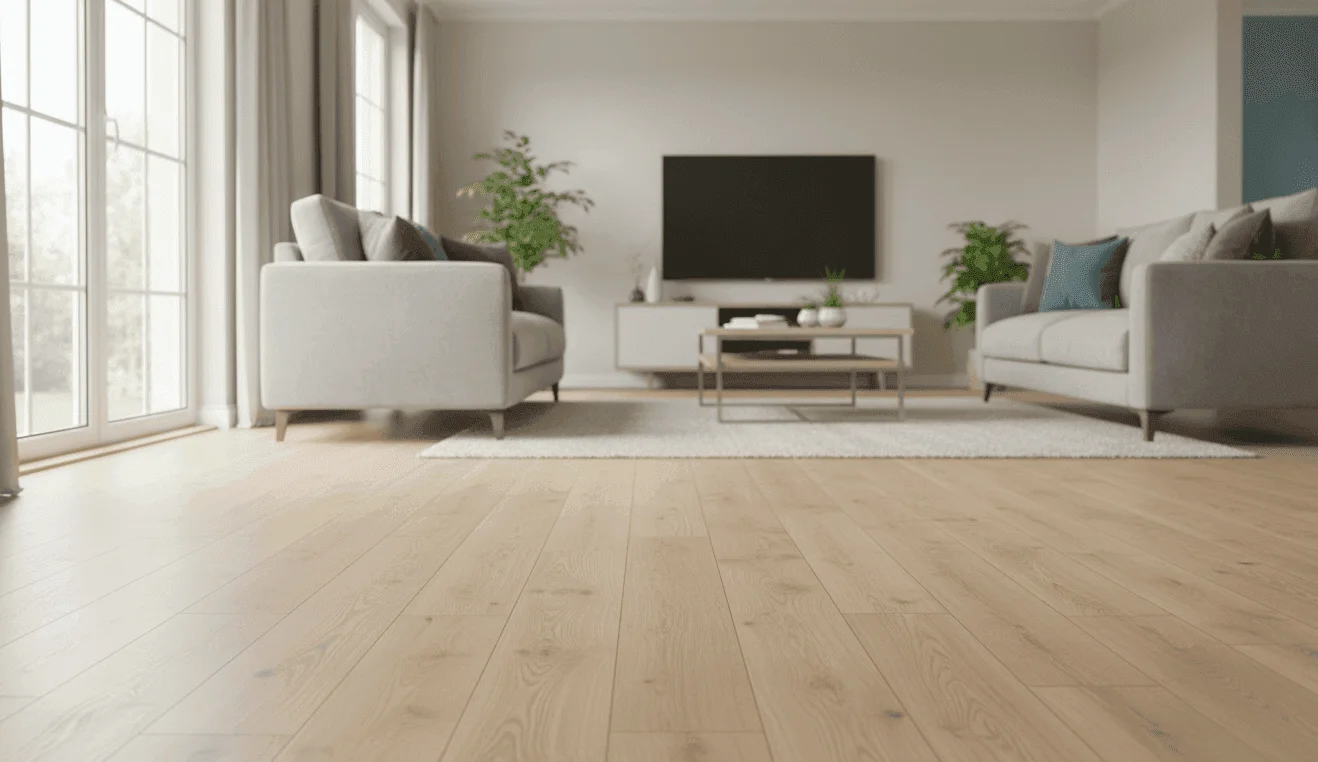
Welcome to a complete guide to the world of flooring that will help you turn your house into a dream home. Flooring is not just a necessary part of the interior; it is a fundamental element that sets the mood of a room, affects your everyday comfort, and largely determines how functional the whole space will be.
Flooring serves many key functions: primarily aesthetic, but just as important is its thermal insulation performance, sound absorption, and resistance to wear and tear. Choosing the right floor covering is therefore one of the most important decisions during a renovation or new build. The market offers a huge range of basic types – from wood, laminate and vinyl to tiles or carpet – and each of them has its own specific characteristics.
Did you know that… your choice of flooring has a major impact on how efficient underfloor heating will be? Materials with low thermal resistance, such as vinyl or tiles, transfer heat into the room much better and faster than thick carpets or some types of wood. With the right choice, you can significantly cut your energy bills and at the same time increase thermal comfort.
Overview of the main types of floor coverings
When deciding, it is crucial to understand the differences between the most commonly used materials. Each type of flooring excels in a different area and is suitable for a different environment.
Wooden floors (solid, three-layer)
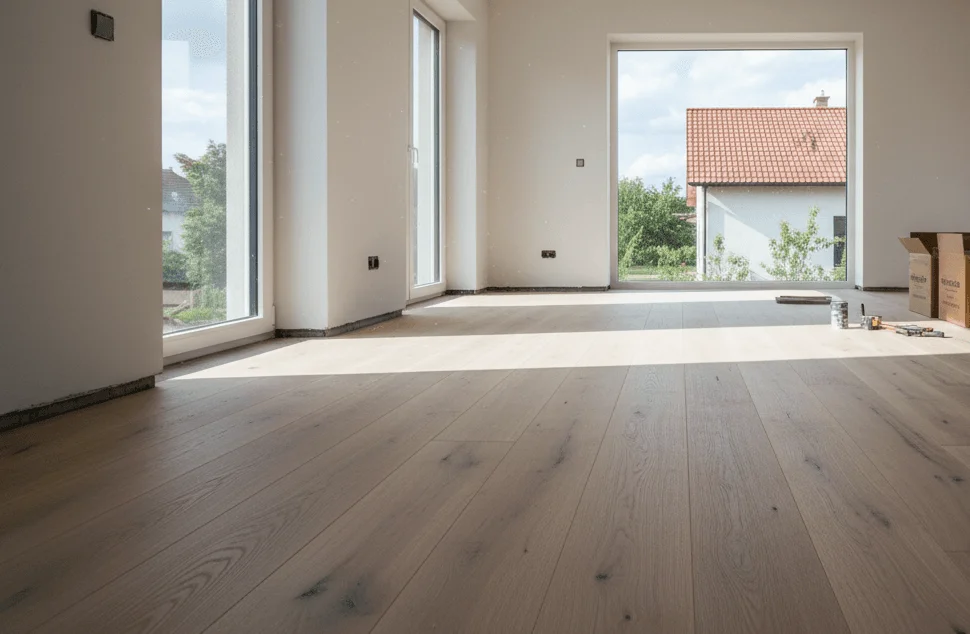
A wooden floor is a timeless classic. It offers an unbeatable warm and natural look, improves the indoor climate, and is a long-term investment. It is ideal for anyone looking for a luxury, refurbishable and eco-friendly floor for living rooms, bedrooms or representative spaces. Its key feature is durability and the option of multiple sanding. The downsides are a higher purchase price, more demanding maintenance (especially with oiled surfaces), and sensitivity to humidity and temperature changes, which can lead to swelling or shrinking.
Vinyl floors (LVT/SPC)
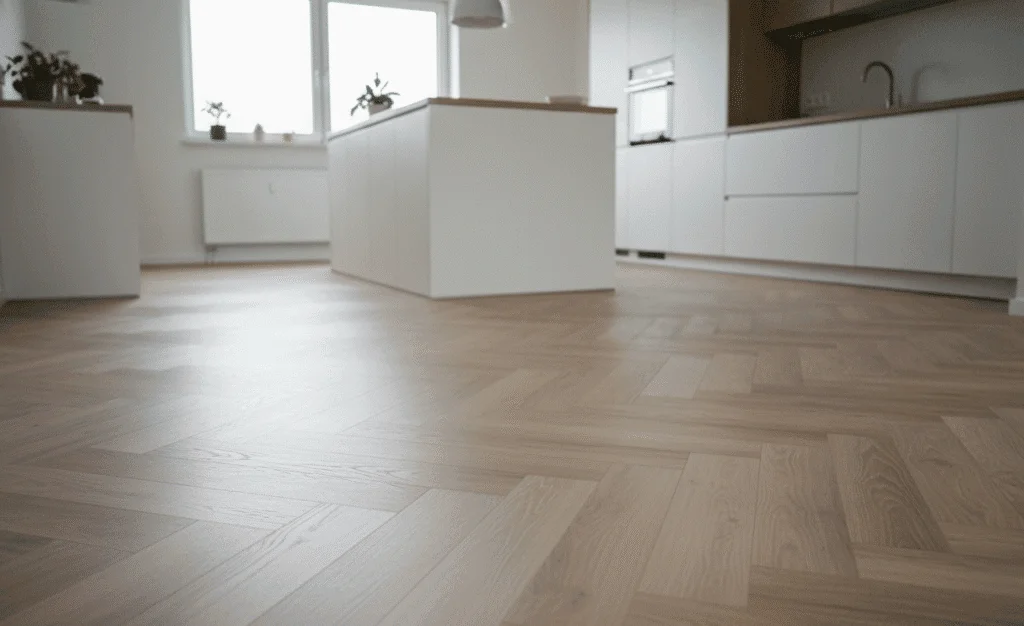
Vinyl flooring has seen a huge boom in recent years. It is especially popular with families with children and pets, but also in commercial spaces where high durability, water resistance and minimal maintenance are required. It is thin, flexible and therefore has low thermal resistance, which makes it ideal for underfloor heating. The main advantages are a wide range of designs (realistic wood and stone decors), a pleasant feel underfoot and excellent sound insulation. The drawbacks include a higher price for quality products and the need for a perfectly level subfloor to prevent any unevenness from showing through.
Laminate floors
Laminate is the most budget-friendly option for imitating wood, stone or tiles. It suits anyone who wants quick and easy installation and good durability at a low price. Its main feature is high abrasion resistance (AC classes). Advantages include high hardness, easy maintenance and resistance to sunlight. The biggest disadvantages are its sensitivity to moisture (edge swelling in cheaper variants), a colder feel underfoot and higher noise levels (footfall noise), which need to be addressed with a quality underlay.
Ceramic and stone tiles
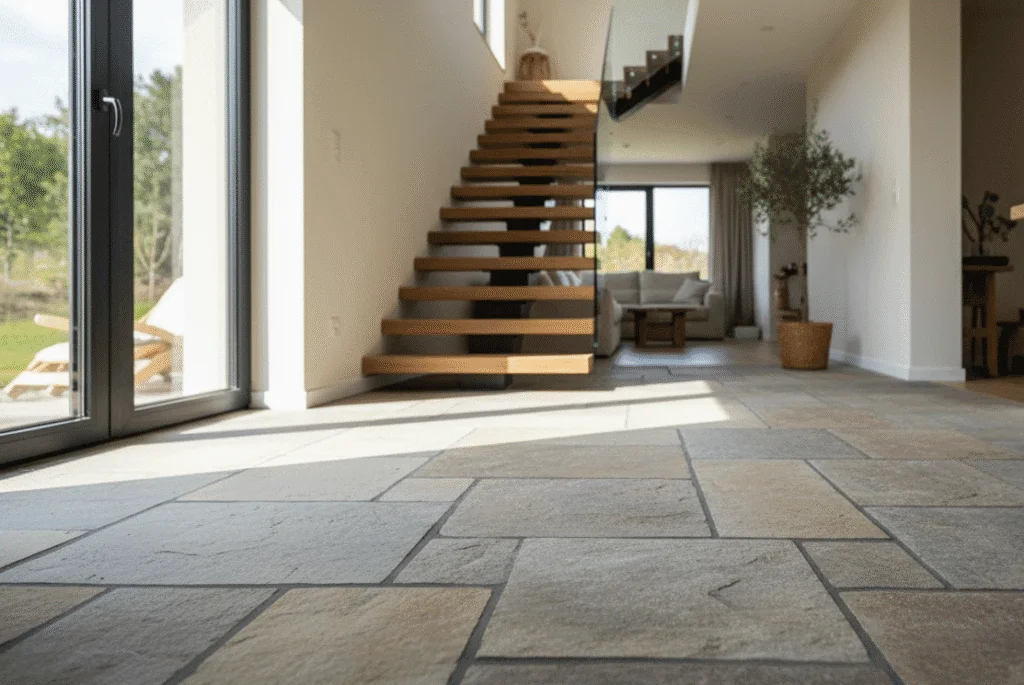
Tiles are the most hard-wearing floor covering, especially suitable for heavily used, damp and thermally stressed areas – kitchens, bathrooms, hallways, outdoor terraces and spaces with underfloor heating. Their main advantages are zero water absorption, non-combustibility and excellent thermal conductivity. Tiles are ideal for anyone who values hygiene and absolute durability. On the other hand, they are very hard (higher risk of breaking glass or dishes), feel cold without underfloor heating, and require more demanding but very precise installation.
Carpets (area rugs, wall-to-wall)
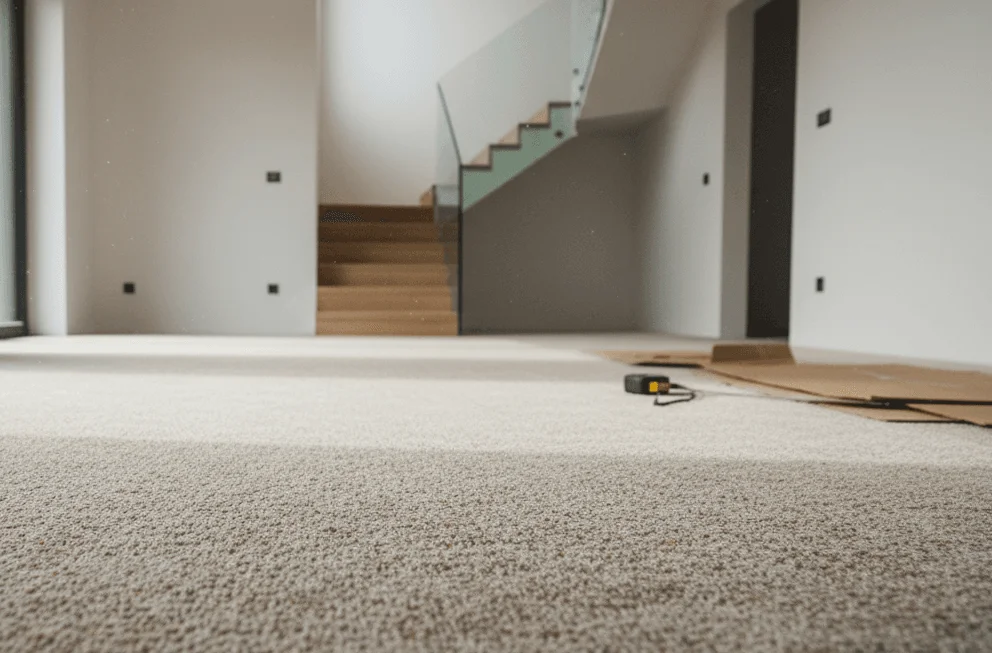
Carpet is synonymous with comfort, warmth and good acoustics. It suits anyone who wants a soft, quiet and warm surface – perfect for bedrooms, children’s rooms and spaces where sound needs to be reduced. Its main feature is excellent thermal and acoustic insulation. Advantages include high walking comfort and a wide variety of colours and textures. The disadvantages are more demanding maintenance (especially stain removal), lower hygiene (traps dust and allergens) and a shorter lifespan compared to hard floors.
Linoleum and marmoleum
Linoleum (and its modern, eco-friendly version marmoleum) is a natural floor made from linseed oil, resins, wood flour and jute. It is mainly chosen by environmentally conscious users and public spaces where antibacterial properties and long lifespan are important. The main advantages are renewable raw materials, high wear resistance and resistance to castor chairs and many chemicals. The downsides are a higher purchase price and the need for professional installation.
Table: Quick comparison of the most popular floor types
| Type of floor | Brief description of properties and suitability |
|---|---|
| Vinyl (LVT/SPC) | 100% waterproof, highly abrasion-resistant, quiet and warm to the touch. Ideal for kitchens and bathrooms. |
| Laminate | Good durability at the lowest price, easy to install, wide range of decors. Not waterproof, suitable for medium-traffic living areas. |
| Wood (three-layer) | Natural, warm and refurbishable surface with a great look. Sensitive to moisture, higher price, suitable for living rooms and bedrooms. |
| Tiles | Maximum durability, non-combustible, excellent heat transfer for underfloor heating, hygienic. Cold to the touch, brittle (for dishes), demanding grouting. |
Key parameters when choosing flooring: technical features that matter
Besides design and material, you also need to focus on the technical specifications. These parameters tell you how long the floor will last, how it will behave in daily use and what level of comfort it will provide.
Wear class (usage class)
The wear class (a two-digit number, e.g. 32 or 41) is a key indicator of durability and lifespan. The first digit indicates the type of area (2=residential, 3=commercial, 4=industrial) and the second indicates the load level (1=low, 2=medium, 3=high). The higher the number, the more durable the floor. For a typical household, class 23 is common (high traffic in living areas such as hallways), for offices it is 32. Choosing the wrong wear class is the most common mistake and leads to fast wear of the floor.
Thickness and construction of the material
The thickness of the floor (e.g. 4 mm for vinyl, 8–12 mm for laminate, 14 mm for wood) affects its stability, lifespan and walking comfort. For thin floors (such as glued vinyl), precise subfloor preparation is crucial. For thicker floors (laminate, wood), the quality of the click system plays a big role. More expensive floors often offer greater thickness and a more advanced construction, for example with an integrated underlay or a stabilising SPC (Stone Plastic Composite) core in vinyl planks.
Abrasion resistance (e.g. AC for laminates)
This parameter indicates the resistance of the surface to scratching and wear caused by walking, furniture or dirt. For laminates, it is marked with the AC (Abrasion Class) code, where AC3 is the basic level and AC5–AC6 are the highest classes for commercial use. For households, you should choose at least AC4, especially for hallways and kitchens, so that the floor looks like new for as long as possible.
Waterproofing and moisture resistance
Waterproofing (for example 100% in vinyl and tiles) means that the floor does not let water through. Moisture resistance (for example in laminate) means that the floor can handle short-term contact with moisture without damage. When choosing a floor for a bathroom, laundry room or kitchen, you should insist on full water resistance to prevent permanent damage from spilled water.
Thermal resistance and suitability for underfloor heating
Thermal resistance (R-value) is critical if you have underfloor heating. The lower the value, the better the floor conducts heat and the more efficient the heating will be. Ideal floors (vinyl, tiles, thin wooden floors) have an R-value below 0.15 m²K/W. Floors with high resistance (such as thick carpets or solid wood) can significantly reduce heating performance.
Acoustic performance (footfall noise)
Acoustic performance determines how sound travels. We distinguish between noise within the room (echo) and footfall noise (noise heard by neighbours below you). Floors with an integrated or separate underlay (for example special vinyls) can significantly reduce footfall noise. Soft floors (carpet, vinyl) are naturally quieter, while hard floors (laminate) require a high-quality acoustic underlay.
Installation method (floating vs. glued)
The installation method affects stability, durability and heat transfer. Floating installation is quick and easy and involves clicking the planks together without fixing them to the subfloor. Glued installation is more stable, ideal for underfloor heating and high-traffic areas, but it is more demanding on both the subfloor and the installation itself.
Fire resistance and slip resistance
These safety parameters are especially important in commercial spaces, but homeowners should pay attention to them as well. Slip resistance (R-rating) is crucial for bathrooms and hallways (R10 and higher is recommended). Fire resistance indicates how the floor reacts to fire – non-combustible tiles are the safest option in this regard.
How to choose flooring by room and lifestyle
The right choice has to reflect the purpose of the room, the expected level of use and your lifestyle.
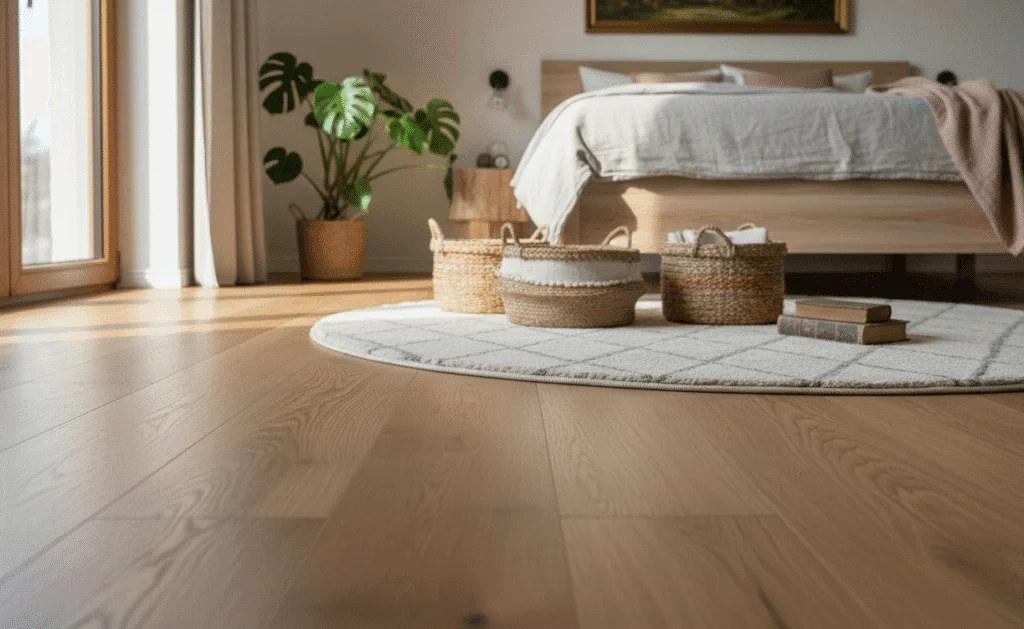
Flooring for the living room and bedroom
These rooms put the emphasis on looks, comfort and thermal insulation. Since you usually walk here in socks or barefoot, the pleasant feel underfoot is crucial. The ideal options are a wooden floor (for luxury and warmth), a quality vinyl floor (for durability and easy care) or carpet (for maximum acoustic and thermal comfort. Good thermal insulation is essential here so the floor does not feel cold.
Flooring for the kitchen and bathroom
Here the key properties are water resistance, easy maintenance, hygiene and slip resistance. In the kitchen there is also a risk of heavy objects falling. The top choices are ceramic tiles or 100% waterproof vinyl floors (LVT/SPC). It is better to avoid laminate here. Focus on slip resistance (R10 and higher in the bathroom) and on a non-porous surface for easy cleaning of grease and dirt.
Flooring for hallways and commercial areas
These areas are the most heavily used (tracked-in dirt, sand, frequent walking, castor chairs). A high wear class (23/33) and top abrasion resistance (AC5 and above) are therefore essential. The best choices are durable vinyl, tiles or heavy-duty laminate. Darker colours or decors are also recommended as they hide dirt and wear more effectively.
How to choose flooring for underfloor heating
Underfloor heating needs materials with low thermal resistance (below 0.15 m²K/W) so that heat can pass into the room quickly and efficiently. The best options are tiles (thanks to excellent thermal conductivity), thin glued vinyl floors and special multi-layer wooden floors (not solid wood, which acts as an insulator). Always check with the manufacturer that the floor is compatible with underfloor heating and use glued installation or high-quality underlays designed for heated floors.
Expert tips: What to watch out for when buying (typical mistakes)
- Underestimating subfloor preparation: Even the best vinyl will fail if the subfloor is not perfectly level, dry and clean. Leveling the subfloor with a self-levelling compound is an investment that always pays off.
- Poor acclimatisation: The flooring material must acclimatise in the room before installation (ideally 48 hours) at the temperature and humidity at which it will be used. Otherwise, tension and deformation can occur after installation.
- Cutting corners on accessories: Low-quality underlays under laminate cause noise and fast wear of the click joints. Skimping on a vapour barrier can lead to moisture rising from the subfloor and damaging the entire floor.
Installation and subfloor preparation: the most important step to a long lifespan
Floor installation is a process that should be carried out with maximum care, because mistakes made during installation usually cannot be fixed without taking the floor up again.
Why subfloor preparation matters
The subfloor is 80% of the success. It must be solid, dry, clean and above all level. Most flooring manufacturers (especially for vinyl and glued floors) allow a maximum deviation of 2 mm over 2 metres. If the subfloor is uneven, it must be levelled with a self-levelling compound. Moisture needs to be checked with a proper meter – excessive moisture can cause mould, cupping of wood or delamination.
Floating installation vs. glue-down installation
Floating installation is quick and less invasive. The planks click together (Click-Clack system) and the floor lies freely on the subfloor with expansion gaps left at the walls. It is suitable for laminates, three-layer wood floors and some types of vinyl.
Glue-down installation means fully bonding the material (typically glued vinyl or parquet) to the subfloor with a special adhesive. The result is a very stable, quiet floor with low thermal resistance. However, it requires a perfectly level subfloor and professional installation.
Essential accessories
- Underlays: Essential for laminate and floating vinyl. They reduce footfall noise, compensate for small uneven areas and improve thermal insulation.
- Vapour barriers (PE foil): Necessary when installing floating floors on concrete or anhydrite where residual moisture is likely. They protect the floor from moisture coming from below.
- Skirting and transition profiles: They cover the expansion gap between the floor and the wall and hide transitions between rooms or different types of flooring.
Maintenance and lifespan: how to keep your floor looking great for longer
Proper and regular care is essential for preserving the appearance of the floor and extending its lifespan.
Care tips for wood (oil vs. lacquer)
- Lacquered wooden floors have a hard surface layer that resists stains well, but if it gets damaged, the whole room usually needs to be sanded and re-lacquered. Cleaning is done with a damp cloth and neutral cleaners.
- Oiled wooden floors have a more natural look and are easy to repair locally (you only treat the damaged area if scratched), but they require regular re-oiling. They are less resistant to stains, but repel water better.
Caring for laminate and vinyl
Both types of floors are very easy to maintain. Regular sweeping or vacuuming and occasional mopping with a damp cloth are enough. Never use abrasive cleaners and keep water to a minimum (especially with laminate). Special floor cleaners that do not leave streaks are ideal.
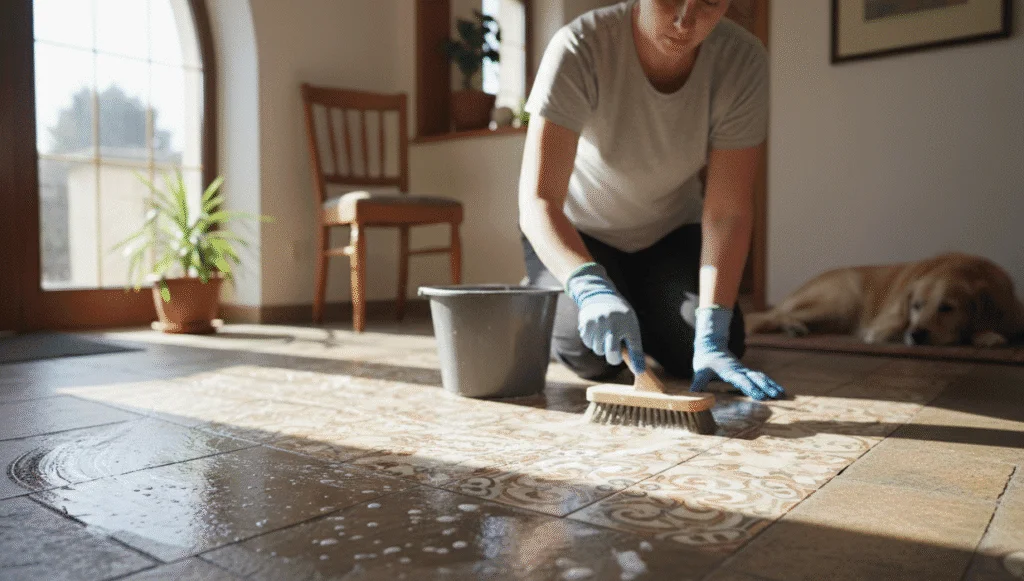
Cleaning tiles
Tiles are very durable. For routine cleaning, warm water with a general-purpose cleaner is sufficient. The main challenge is cleaning the grout, where dirt and mould tend to build up. Use acidic or special alkaline cleaners and a brush for the grout. Note: glazed tiles require a gentler approach to avoid scratching the glossy surface.
Renovation
Wooden floors (solid parquet, some three-layer floors) can be sanded and re-lacquered or re-oiled, which can extend their lifespan by several decades. Laminates and vinyls cannot be sanded. Renovation here means either replacing a damaged plank locally (with click systems) or replacing the entire floor.
Prices and budget ranges: how much flooring costs and when it pays to spend more
The price per m² is only the starting point. You also need to factor in the cost of accessories, subfloor preparation and installation.
| Category | Indicative price per m² (excl. VAT and installation) | Typical materials and properties |
|---|---|---|
| Low | 9–20 $ | Basic laminates (AC3), cheap glued vinyl. Lower thickness and durability, weaker click systems. |
| Mid-range | 20–52 $ | Quality laminates (AC4/AC5), click vinyl (LVT/SPC), entry-level three-layer wood. Good lifespan, suitable for most homes. |
| High | 52–152 $ | Premium vinyl with integrated underlay, quality three-layer wood, marmoleum, ceramic tiles. High durability (wear class 33), option to renovate. |
| Exclusive | 152 $ and above | Solid wood floors, designer tiles, special industrial floors. Virtually unlimited lifespan, top comfort and aesthetics. |
The price is mainly influenced by thickness and construction (more material = higher cost), wear class (higher durability = higher price) and surface finish (for example synchronised texture on laminate, special lacquers on wood).
When it pays to spend more: It always makes sense to invest in a higher wear class (AC5, class 33) for high-traffic rooms (hallway, kitchen) or commercial spaces. It is also worth paying extra for quality vinyl or wood if you have underfloor heating, to ensure low thermal resistance and long-term stability.
Which flooring brands are worth it? Overview of the biggest names
The flooring market is broad, but a few brands have stayed at the top for a long time thanks to their quality, innovation and wide product range.
Quick-Step and Pergo
Quick-Step and Pergo are among the world leaders in laminate and vinyl flooring. They are best known for their high-quality patented click systems (such as Uniclic), which make installation very easy and extremely strong. They offer premium quality with a focus on realistic wood decors and high water resistance (HydroSeal range).
Fatra and Tarkett
Fatra (a Czech manufacturer) and Tarkett (an international giant) are often associated with vinyl flooring and PVC (often referred to as Lino/Linoleum). Tarkett is strong in wood, vinyl and marmoleum segments, while Fatra is a leader in the Czech vinyl market. Both brands focus on high durability for commercial use and an excellent price-to-performance ratio.
Kährs and Magnum
Kährs is synonymous with premium wooden floors. The brand is renowned for its three-layer construction with cross-laid layers, which minimises movement in the wood and ensures excellent stability, making these floors more suitable for underfloor heating than traditional solid wood floors. Magnum focuses on highly durable, modern SPC vinyl floors.
Summary and final recommendations
Choosing a floor is not a sprint, it is a marathon. Before making the final decision, be sure to weigh up all the key factors: how the room will be used (is it a living room or a damp bathroom?), wear class (will the floor cope with a busy family home?), and last but not least the quality of the subfloor. The biggest mistake is choosing flooring based on looks alone. Invest in the highest wear class you can afford within your budget and never underestimate subfloor preparation. If you follow these guidelines, you will get a floor that will serve you reliably and keep you happy for many years.
Frequently asked questions (FAQ)
Can I install a new floor directly over the old one?
Yes, it is possible, but with significant limitations. A new floor should only be laid over the old one if the existing floor is solid, level, dry and undamaged (for example glued vinyl over old tiles). Never install a new floating floor over an old carpet or loose-laid PVC, as this can cause instability and damage the click joints. You also need to take the added thickness into account so that doors still open properly and transitions remain flush.
What is impact sound insulation and do I really need it?
Impact sound insulation is a material (usually an underlay or integrated layer) under a hard floor that reduces sound transmitted through the structure to the rooms below (such as footsteps, dropped objects, etc.). It is crucial especially for floating floors (laminate, click vinyl) in multi-storey houses or apartments, where noise without it would be very disturbing for neighbours. Quality impact sound insulation can reduce noise by 18 to 22 dB.
How do I choose the right skirting (perimeter) boards?
Skirting boards should fulfil three main functions: cover the expansion gap between the floor and the wall, protect the wall from damage and dirt during cleaning, and ideally provide space for routing cables. It is important to choose skirting from the same or a compatible material and decor as the floor. To visually enlarge the space, choose a skirting colour as close as possible to the wall colour; to highlight the floor, choose a colour close to the floor. Do not forget to check whether the skirting offers enough space for the cables you plan to run (internet, audio).
Kategorie: