How to Choose an Elliptical Trainer: Tips, Comparisons and Recommendations
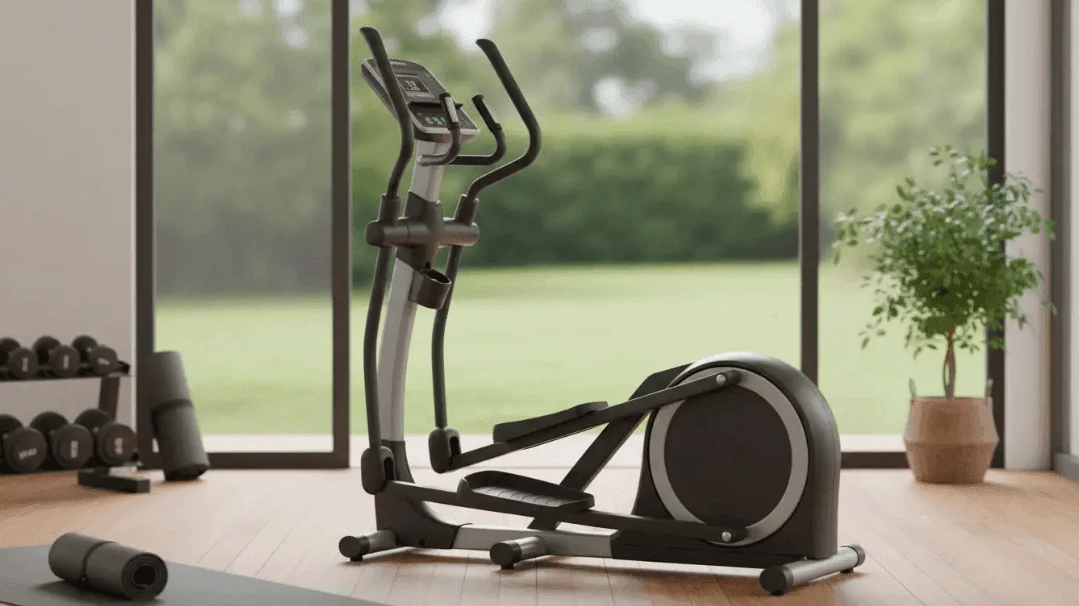
Elliptical trainer, often called a cross trainer, is one of the most versatile and popular home exercise machines. And for good reason. It cleverly combines the motion of running, cycling and cross-country skiing into one smooth movement that effectively works your whole body. Its absolutely key advantage, however, is its joint-friendly design, because unlike running it eliminates all impact. It’s an ideal machine for weight loss, improving fitness and rehabilitation.
Did you know that training on an elliptical can engage up to 80% of your muscles and burn up to 600 calories per hour, all with minimal stress on your joints?
How an elliptical trainer works and what it’s made of
The principle of an elliptical is based on a smooth elliptical motion of the legs, guided by the frame of the machine. This movement is complemented by active work of the arms using moving handles, so the upper body is involved in the workout as well. Every elliptical trainer consists of several key parts:
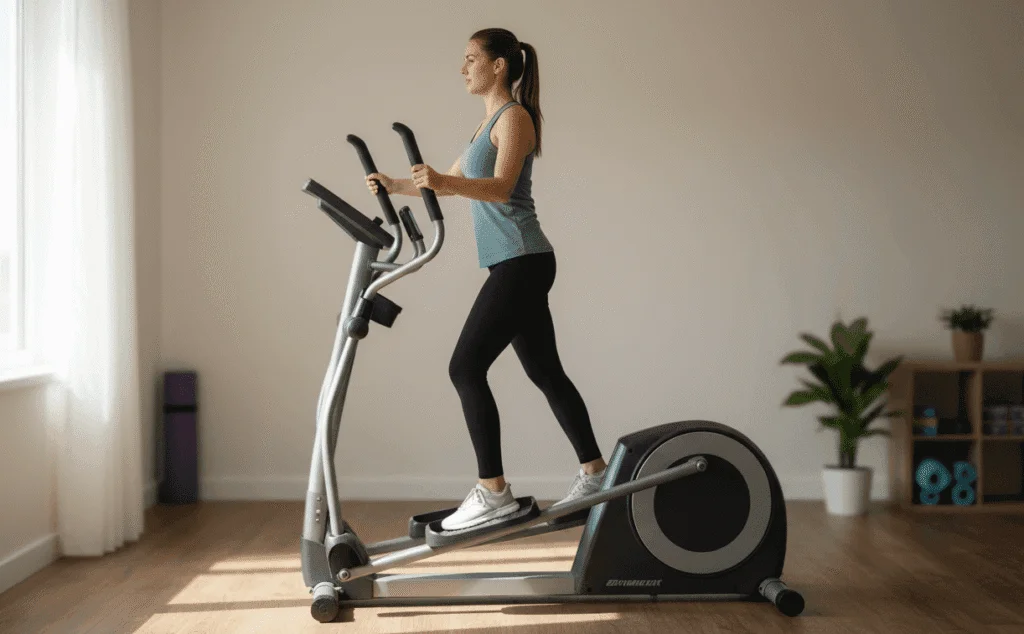
- Frame: The main supporting structure that determines the overall stability, robustness and maximum user weight of the machine.
- Flywheel: A heavy resistance wheel whose weight and quality of bearings have a major impact on how smooth and natural the motion feels.
- Resistance system: The heart of the trainer, which controls the resistance and therefore the difficulty of your workout.
- Moving handles: Long grips that let you actively engage the muscles of your arms, shoulders, chest and back.
- Footplates: Platforms for your feet. Their size, spacing and especially the stride length they define are crucial for comfortable, ergonomic training.
- Computer (console): The brain of the trainer. It displays all key workout data (time, speed, calories, etc.) and is used to control resistance levels and programs.
Key parameters for choosing the right machine
This is the most important part of the entire guide. Choosing based on these parameters will decide whether your workouts are comfortable and effective, or turn into a chore you dread.
Flywheel weight and position
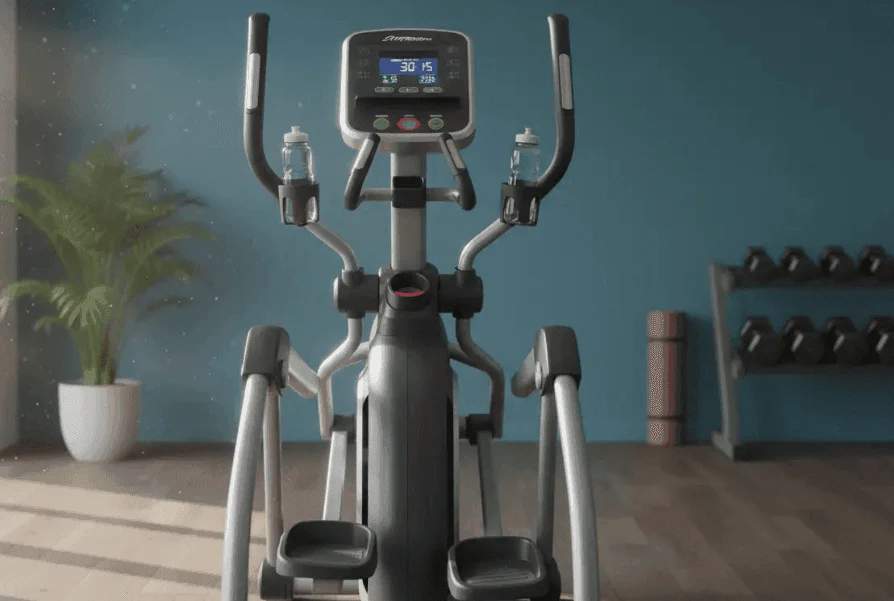
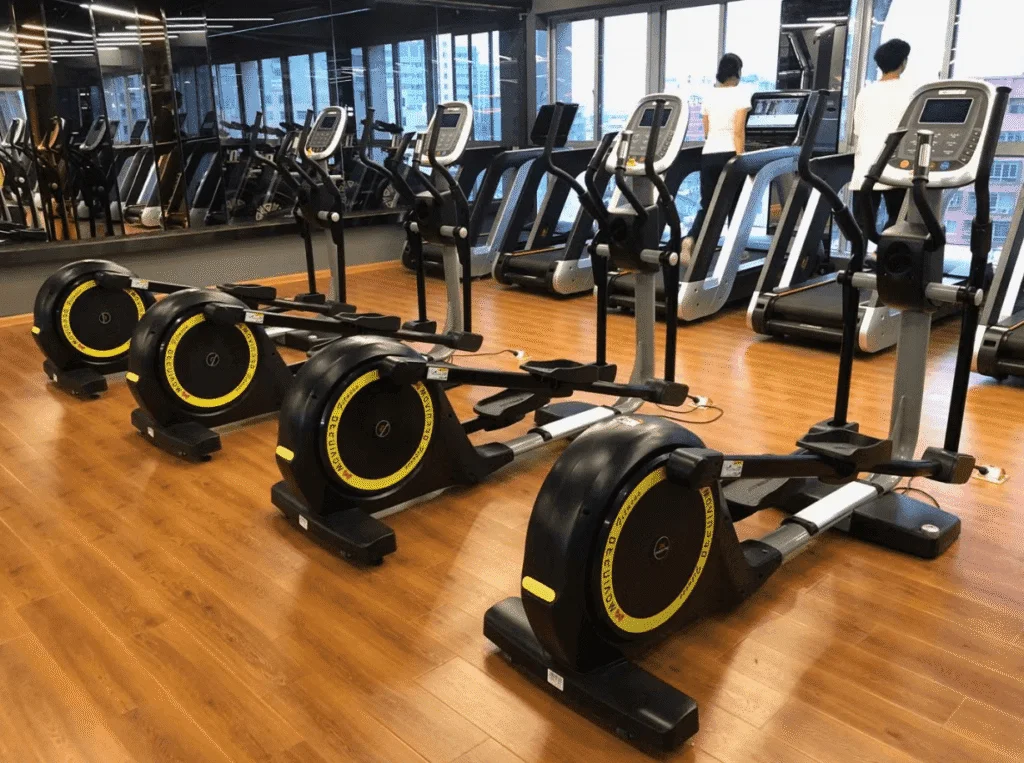
The flywheel (resistance wheel) is crucial for smooth motion. A simple rule applies: the heavier the flywheel, the smoother and more natural the pedalling, without unpleasant jerking. For regular home use, we recommend machines with a flywheel weighing at least 7 kg. Its position is also important. Trainers with the flywheel at the front usually offer a longer, flatter stride, which is more comfortable for taller users. Machines with the flywheel at the back tend to have a shorter, steeper stride that feels more like running or climbing stairs.
Stride length
This is an absolutely crucial parameter for your comfort and training efficiency. Stride length has to match your height. If it’s too short, you’ll be forced into choppy, shuffling steps, while a stride that’s too long will overload your joints.
- Height up to 170 cm: Look for a stride length of around 40 cm.
- Height 170–185 cm: The ideal stride length is 40–50 cm.
- Height over 185 cm: You’ll need a machine with a stride length of more than 50 cm.
Maximum user weight and frame stability
The stated maximum user weight is not just about whether the trainer can hold you. It’s mainly an indicator of the overall quality, strength and stability of the frame. Always choose a model whose maximum user weight is at least 20% higher than the heaviest user in your household. A machine with this safety margin will be more stable, quieter and will last longer.
Resistance system
The resistance system creates the load you pedal against. There are two main types:
- Magnetic (manual control): Resistance is set manually using a dial that moves a permanent magnet closer to or further from the flywheel. It’s a simple, reliable and more affordable system. Its downside is the lack of automatic training programs.
- Induction / Electromagnetic (electronic control): Resistance is controlled electronically directly from the console. This system is more precise, quieter and allows you to use a wide range of programs, such as interval workouts or HRC programs that automatically adjust resistance according to your heart rate. It’s the standard on higher-quality machines.
Footplate spacing (Q-factor)
This parameter indicates the distance between the inner edges of the footplates. From an ergonomic standpoint, the smaller the spacing, the more natural your stance, closer to normal walking or running. Too wide a stance puts unnecessary strain on your hips and knees. Quality trainers have a Q-factor under 10 cm.
Computer, features and connectivity
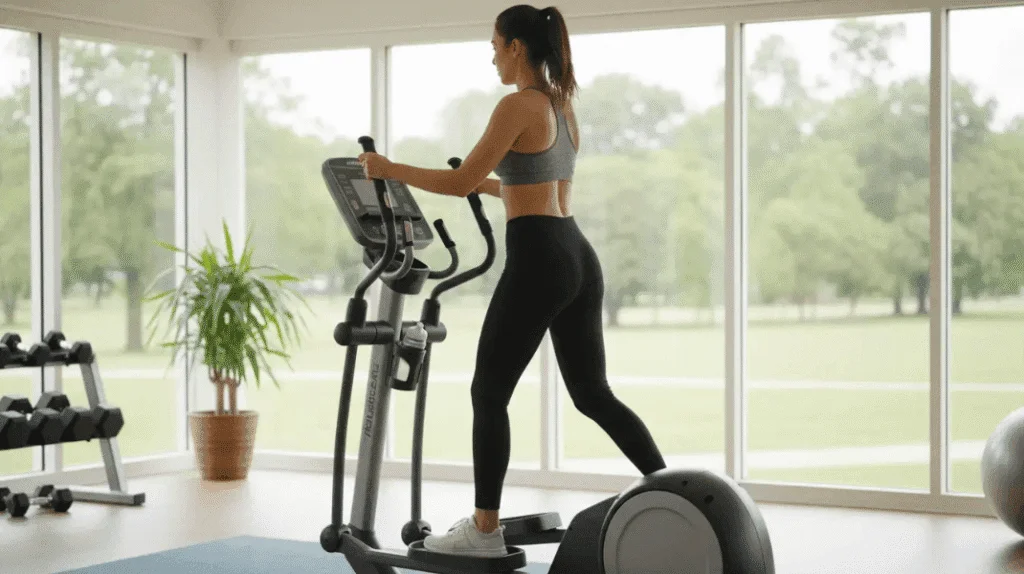
A basic computer shows data such as time, speed, distance, calories burned and heart rate (measured via handle sensors or a chest strap). More advanced models offer preset programs that make your workouts more varied and help you reach your goals. HRC programs are especially useful, as they automatically adjust resistance to keep your heart rate in the optimal zone (for example for fat burning). Modern machines often come with Bluetooth connectivity, which lets you connect to training apps (e.g. Kinomap, iConsole+) and run virtual routes all over the world.
Choosing and recommendations
For beginners and basic fitness
If you plan to work out only occasionally (2–3 times a week) to maintain your fitness, a good entry-level model will be enough. Focus mainly on the right stride length and sufficient maximum user weight. A machine with manual magnetic resistance and a flywheel weighing around 7–9 kg will do the job.
For regular training and weight loss
For effective, regular workouts with the goal of losing weight, it’s best to choose a trainer with an electronically controlled resistance system and a rich selection of programs. Being able to vary resistance and use different programs keeps you motivated and helps you progress. Go for a flywheel weighing 9 kg or more for the smoothest possible ride.
For tall users and demanding athletes
Taller users and active athletes need a robust, stable machine. Look for models with a maximum user weight over 130 kg, stride length over 50 cm and a heavy flywheel (ideally over 15 kg). An induction brake and advanced features for intensive training should be a given.
What to watch out for
Be wary of suspiciously cheap machines from supermarkets that often advertise unrealistically high maximum user weights but have a light, unstable frame. If you can, try the trainer before you buy it – check its stability and how smooth the motion feels.
Maintenance and proper use
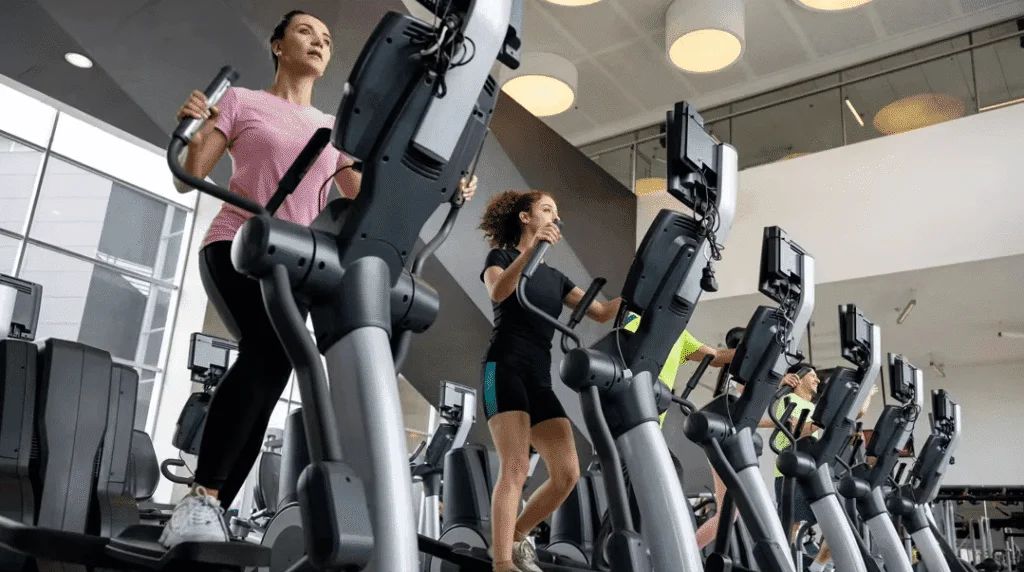
To keep your elliptical working well for many years, you need to take care of it. Place it on a flat, solid floor, ideally on a special protective mat to absorb vibrations. Regularly wipe off dust and sweat and from time to time check and tighten all bolts and screws. For effective training, keep an upright posture, don’t hunch your back, look straight ahead and actively use your arms by pushing and pulling on the moving handles. To get the best weight-loss results, make use of heart rate monitoring.
Most popular brands and manufacturers
| Brand | Focus |
|---|---|
| inSPORTline | Wide range from basic to semi-professional models, very good value for money, a popular choice for home fitness. |
| Kettler | Traditional German brand known for precise engineering, high build quality and long service life. |
| NordicTrack | Premium American brand focused on innovation, interactive training (iFit platform) and high performance. |
| Tunturi | Finnish manufacturer with an emphasis on Scandinavian design, refined ergonomics and quality components. |
Approximate prices
- Entry-level category (up to 10,000 CZK): Machines for very light and occasional use. You often have to accept compromises in stride length, smoothness and overall robustness.
- Mid-range (10,000 – 25,000 CZK): The sweet spot and the best choice for most home users. In this category you’ll find quality machines with electronic resistance control, a good selection of programs, sufficient maximum user weight and solid ergonomics.
- Premium category (over 25,000 CZK): Machines for demanding users and frequent, intensive training. They offer a robust frame, long stride, advanced features, high reliability and often an extended warranty.
Summary
When choosing an elliptical trainer, focus mainly on three key parameters: stride length matched to your height, sufficient frame capacity and an adequate flywheel weight for smooth motion. For regular training, it’s definitely worth investing in a machine with electronic resistance control and programs that keep you motivated. If you can, try the trainer in a specialist store before buying. The right elliptical will become a reliable partner on your journey to better fitness and health.
Frequently asked questions (FAQ)
Is an elliptical or an exercise bike better for weight loss?
Both machines are great cardio tools, but an elliptical is generally more effective for weight loss. It engages the whole body (legs, glutes, back, arms), so you burn more calories in the same amount of time. An exercise bike focuses mainly on the lower body. Thanks to the standing position, an elliptical also feels more intense for your body.
How noisy is an elliptical trainer and is it suitable for an apartment?
Modern elliptical trainers with magnetic or induction resistance are very quiet. They use contactless braking, so the only sound you hear is a soft whoosh of the flywheel and the movement of mechanical parts. They are therefore perfectly suitable even for apartment buildings. To keep neighbours below you happy, it’s ideal to place the machine on a rubber mat.
Can I use an elliptical if I have knee problems?
Yes, an elliptical is one of the most suitable activities for people with joint issues. Thanks to the smooth elliptical motion, there are no impacts that would stress the joints (unlike running). Training on an elliptical actually strengthens the muscles and ligaments around the joints, which can even improve their condition. However, if you have health problems, it’s always best to discuss any exercise plan with your doctor or physiotherapist first.