Treadmill that keeps you on pace – your trainer at home
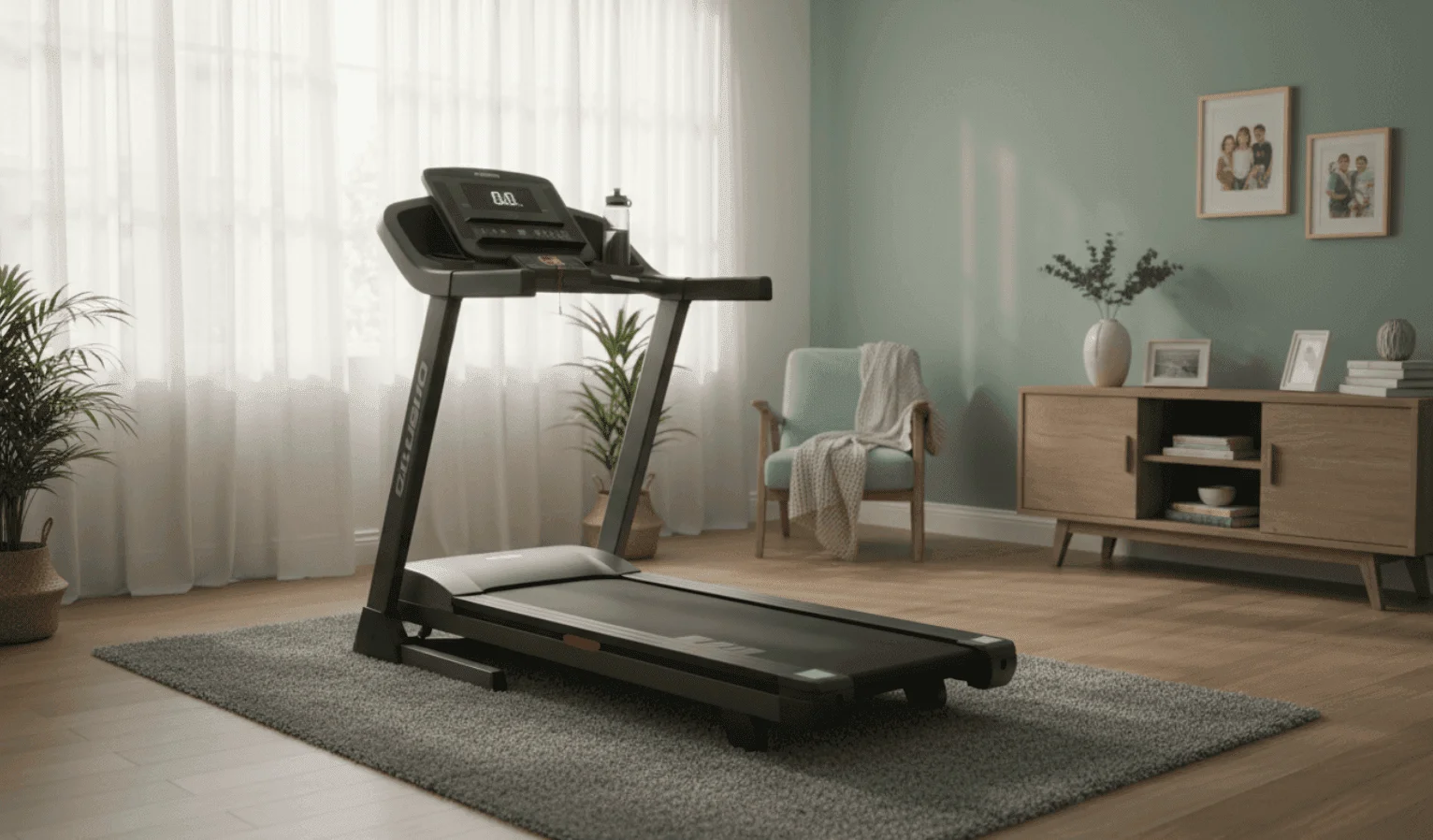
A treadmill is one of the most effective and popular tools for home workouts, weight loss, and building fitness. It lets you train anytime, regardless of the weather, time of day, or how safe it is outside. You get perfectly controlled conditions, accurate performance tracking, and, above all, the comfort and privacy of your own home. Whether you’re a beginner starting with regular walking or an experienced runner, a quality treadmill can become your best training partner.
Did you know that running on a well-cushioned treadmill can reduce the impact on your joints by up to 40% compared to running on asphalt?
Types of treadmills
On the market you’ll come across two main technologies. Each works on a different principle and suits a different type of user.
Motorized treadmills
This is by far the most common and most popular type, used by the vast majority of people, from complete beginners to professional athletes. As the name suggests, the running belt is powered by an integrated electric motor. On the control panel, you simply set the desired speed and incline, and the belt starts moving on its own.
The advantage is that you can precisely set and maintain a constant pace, use preset training programs, and enjoy smooth, comfortable operation. It’s an ideal solution for walking, jogging, and intense endurance running. On the downside, it usually comes with a higher purchase price, power consumption, and generally larger size and weight.
Non-motorized (manual) treadmills
A non-motorized treadmill does not have an electric motor, and the running belt moves only thanks to the push-off force of your own legs. You set the speed entirely by your own pace – when you speed up, the belt spins faster; when you slow down, the belt slows as well. This setup is ideal for experienced athletes for specific training, such as sprints and high-intensity intervals (HIIT), because it allows instant changes of pace.
Thanks to zero energy consumption and smaller dimensions, it’s also an eco-friendly and space-saving option. On the other hand, it’s not very suitable for classic steady-state endurance running, which is noticeably more demanding and less comfortable on this type of treadmill.
Key parameters for choosing the right treadmill
This is the most important part of the entire guide. Carefully considering the following parameters is the key to long-term satisfaction and regular use of the machine.
Motor power (HP)
Motor strength is the most important parameter of a motorized treadmill. It directly affects how smooth it runs, how long it will last, and what type of training it can handle. Power is given in horsepower (HP), and it’s crucial to focus on the value of the continuous power, not the maximum (peak) power, which the motor can deliver only for a short time.
- For walking and rehabilitation: A motor with continuous power of at least 1.5 HP is sufficient.
- For fitness running and jogging: Choose a motor with 2–3 HP.
- For intense and frequent training: Look for a treadmill with a motor of 3 HP or more.
Running area size (length x width)
The size of the running area is crucial for your comfort and safety. On a belt that’s too short or too narrow, you’ll feel cramped, you’ll need to watch your steps constantly, and there’s a higher risk of stepping off the belt.
- For walking: An area of around 130x45 cm is enough.
- For fitness running: The minimum for comfortable running is 140x50 cm.
- For fast running and users taller than 185 cm: We recommend an area of 150x50 cm or larger.
Maximum user weight and frame stability
The maximum user weight is a direct indicator of the overall robustness, material quality, and stability of the frame. Always choose a treadmill whose weight capacity is at least 20% higher than the heaviest user’s weight. A machine with enough reserve will be more stable and quieter when running, and it will last significantly longer.
Running deck cushioning system
This is a key element for protecting your joints (ankles, knees, hips, and back). A quality cushioning system effectively absorbs the impact that occurs when your foot strikes the belt, making running much gentler than on hard outdoor surfaces. Manufacturers use various technologies, from simple rubber shock absorbers to sophisticated multi-zone systems.
Maximum speed and electronic incline
- Speed: For regular fitness running, a treadmill with a top speed of up to 16–18 km/h is more than enough. Ambitious runners should look for models with a maximum of 20–22 km/h.
- Incline: Electronically adjustable incline is now standard on quality treadmills. It allows you to simulate uphill running, which significantly increases training intensity, engages different muscle groups (especially glutes and thighs), and burns more calories. A typical incline range is 0–15%.
Console, features, and connectivity
The display is your training hub. Basic models show time, speed, distance, calories burned, and heart rate. More advanced treadmills offer preset programs (interval, endurance), HRC programs that adjust the load according to your heart rate, and user programs. Bluetooth connectivity is increasingly popular, letting you pair the treadmill with training apps like Zwift or Kinomap and turn your workout into an interactive experience.
Choosing a treadmill by user type
For home walking and seniors
Here, the focus is on maximum stability, a low step-up height, clear and simple controls, and long side handrails for a secure feeling. A motor with around 1.5 HP continuous power and a smaller running area is enough, as walking strides are shorter.
For fitness running and weight loss
This is the sweet spot for most users. The key is a motor with continuous power of 2.5–3 HP, a sufficiently large running area of at least 140x50 cm, quality cushioning, and a good range of programs with incline adjustment for varied and effective training.
For advanced and performance runners
Demanding runners need a no-compromise machine. That means a robust, heavy frame with a high weight capacity, a motor with continuous power of over 3 HP, a generous running area (ideally 150x55 cm), a high top speed (up to 22 km/h), and a wide incline range.
Maintenance and safe use
- Safety first: Always use the safety key! It’s a small magnetic key with a cord that you clip to your clothing. If you fall or trip, the key detaches and the treadmill stops immediately.
- Belt lubrication: This is the most important maintenance task. The deck under the belt must be regularly lubricated with a special silicone oil (follow the manufacturer’s instructions, usually after about 20–30 hours of use). This prevents excessive friction that strains the motor and wears out the belt.
- Cleaning: Keep the treadmill, especially the area underneath it, clean. Dust drawn into the motor can cause overheating and damage.
- Belt alignment and tension: Occasionally check that the belt runs in the center of the deck and is neither too loose nor too tight. Adjustment is simple and described in the manual.
Most popular brands
| Brand | Focus |
|---|---|
| inSPORTline | A very wide range of models from entry-level to commercial, great value for money, and strong service support in the Czech Republic. |
| Housefit | A traditional brand focused on reliable, proven home fitness machines with simple, intuitive controls. |
| NordicTrack | Premium segment with cutting-edge technology, a leader in interactive training (iFit platform), high performance, and robust build quality. |
| Tunturi | High-quality, stylish machines with an emphasis on refined ergonomics and reliability for demanding home users. |
Budget categories
- Entry-level (up to 15,000 CZK): These treadmills are suitable mainly for walking. For regular running, they often have a weak motor, a small running area, and insufficient cushioning.
- Mid-range (15,000 – 30,000 CZK): The ideal choice for the vast majority of home runners. In this category you’ll find reliable machines with enough power, size, and features for regular, full-fledged training.
- Premium (over 30,000 CZK): Machines designed for demanding athletes and very frequent use. They offer uncompromising performance, maximum robustness, a generous running area, and advanced training features.
Summary and final tip
When choosing a treadmill, focus on three main pillars: adequate continuous motor power, a generously sized running area, and a robust frame with high weight capacity. Keep in mind that a treadmill is not the place to cut corners. A quality machine is an investment in your health and, with proper maintenance, will serve you reliably for many years. Before you make the final decision, carefully measure the space where you plan to place the treadmill, and allow for enough free room on the sides and at least one meter behind the treadmill for safe use.
Frequently asked questions (FAQ)
What is the difference between continuous and maximum motor power, and which one should you focus on?
Continuous power (continuous horsepower – HP) is the power the motor can deliver continuously throughout your workout. Maximum power (peak horsepower) is the peak output the motor can reach only for a very short time (for example, during start-up). Always focus on the continuous power value, because it reflects the motor’s real strength and durability.
Can you use a treadmill in an apartment building, or will it disturb the neighbors?
Quality modern treadmills are relatively quiet. The motor itself is insulated, and most of the noise comes from your feet hitting the belt. This noise can be significantly reduced by using a special shock-absorbing mat under the treadmill. With considerate use (for example, not in the late evening or at night), using a treadmill in an apartment building is absolutely realistic.
3. Is it necessary to use a special mat under a treadmill?
Yes, it’s highly recommended. A protective mat has several roles: it protects your floor from damage and dents, significantly reduces vibrations and noise, and, last but not least, prevents dust and dirt from being drawn into the motor compartment, which extends the treadmill’s lifespan.