What materials are used to make jewellery?
The material you choose for your jewellery is absolutely crucial. It’s not just about how it looks, but also about durability, price, comfort when wearing and even your health. While the jewellery world may seem simple at first glance, the internal chemistry and physical properties of metals and other materials determine how long a piece will last, how much care it needs and how well it holds its value. This article walks you through classic precious metals, modern hypoallergenic alternatives and unique natural materials. The goal is to help you understand why material knowledge matters – it can help you avoid allergic reactions, choose the right care and understand the real value of your purchase.
Fun fact: Did you know that all the platinum ever mined would fit into an average-sized living room? That really shows how rare it is!
Precious metals: Timeless classics and an investment
Precious metals are valued for their rarity, natural shine and resistance to corrosion, which makes them ideal for jewellery with lasting value. When buying precious metals, it’s essential to understand hallmarking – these are legally defined marks that guarantee the purity of the metal (the proportion of precious metal in the alloy).
Gold
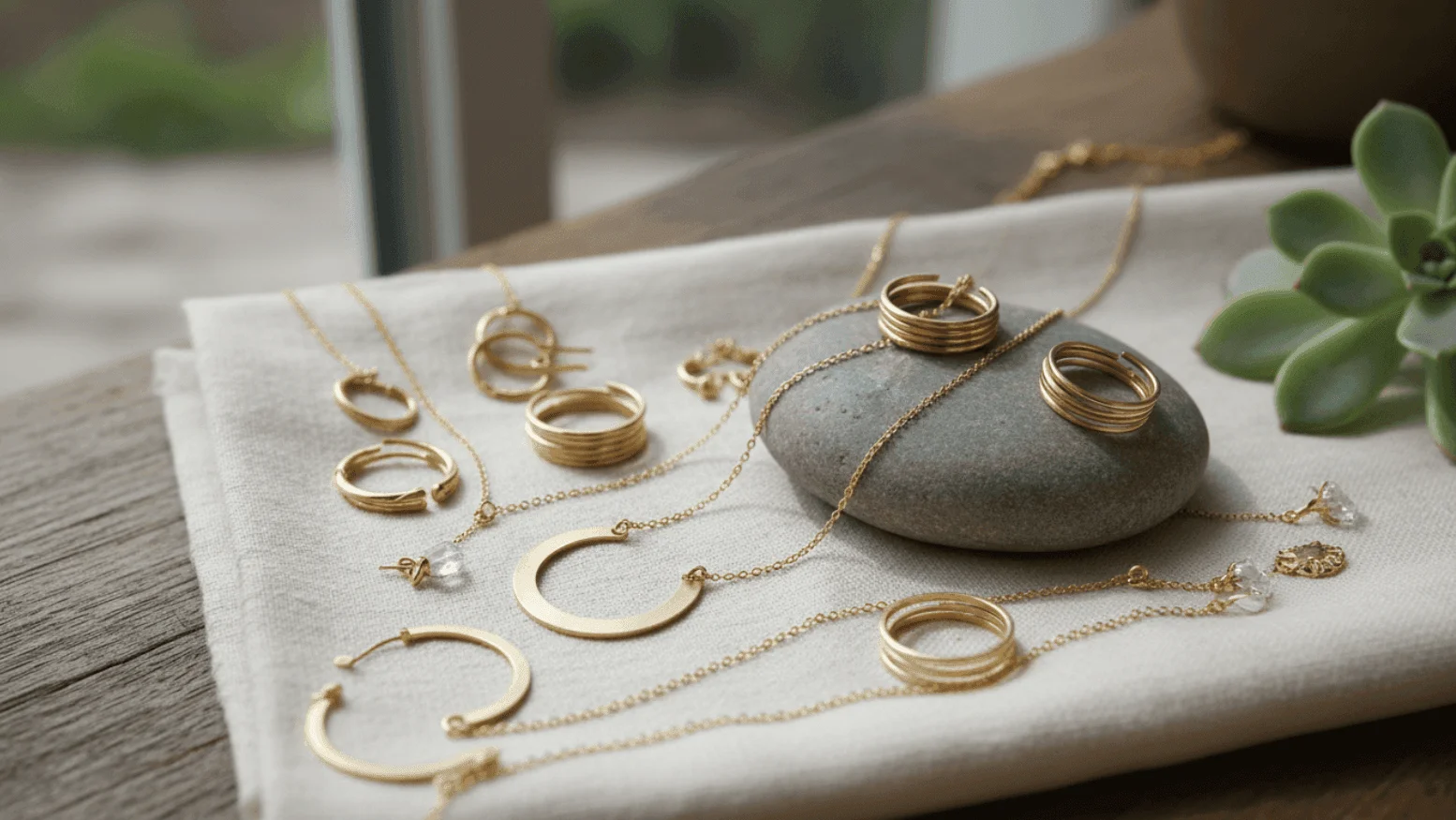
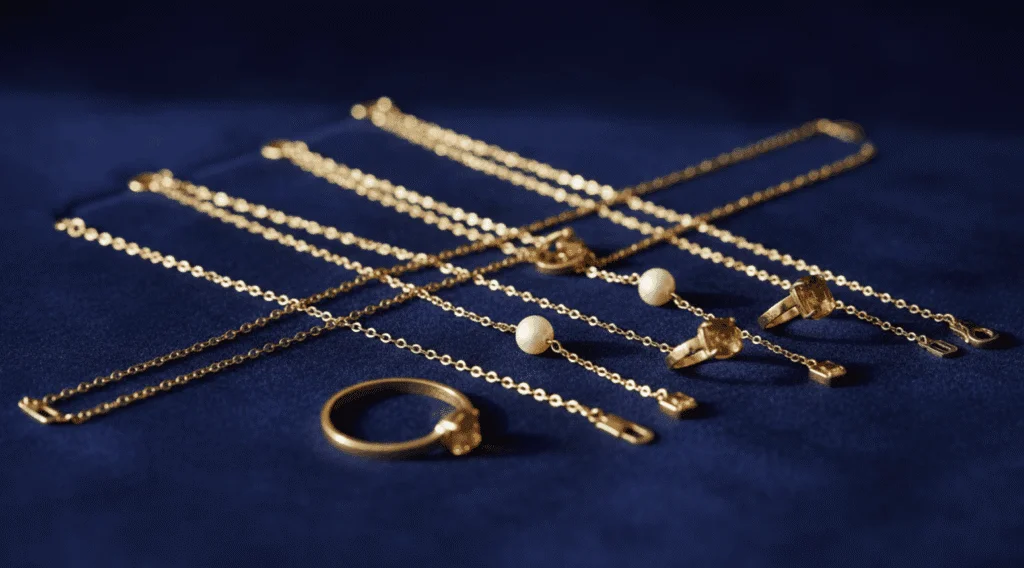
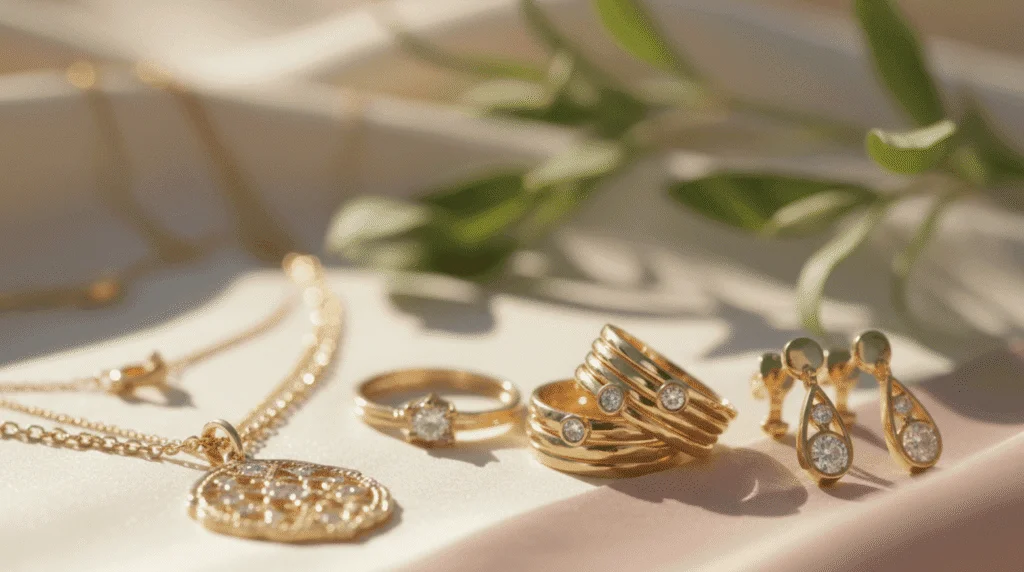
Gold is the archetype of luxury and a symbol of lasting value. Its properties are influenced by alloying elements that give it different colours, such as yellow (alloyed with silver and copper), white (with silver, palladium, zinc) and rose/red (with a higher copper content). Purity is expressed in carats (24k is pure gold, 14k means 585 parts of gold out of 1000, i.e. a 58.5% share). Its main advantages include long-term value, colour stability because it doesn’t tarnish, and excellent malleability. On the other hand, it’s expensive and at higher purities (e.g. 18k or 24k) the metal is quite soft and more prone to scratching. Gold is a great choice if you’re looking for an investment and traditional, eye-catching elegance.
Silver
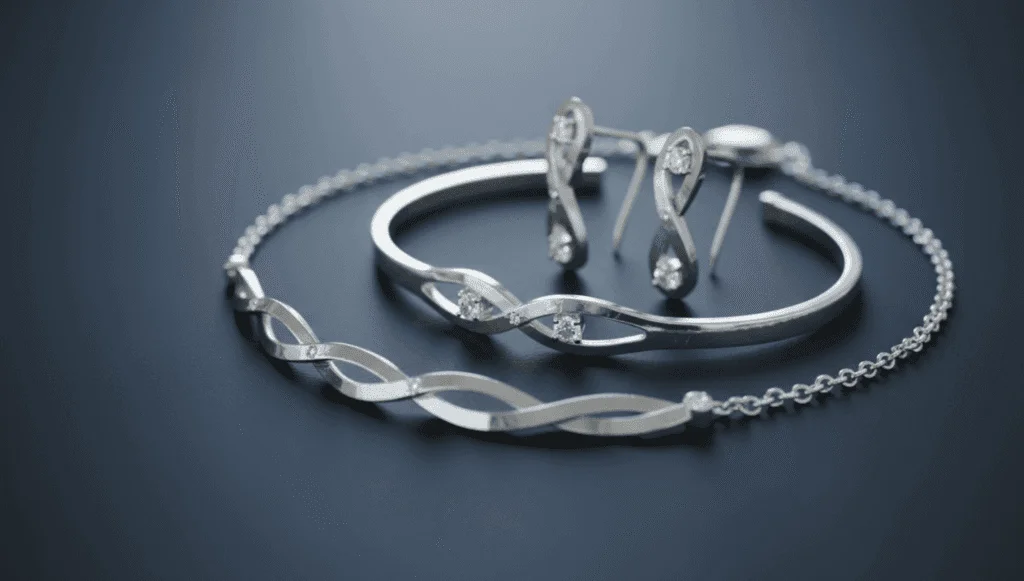
Silver is the most affordable precious metal, yet it still offers a beautiful shine. It’s most often used in an alloy known as Sterling silver (Ag 925/1000), which contains 92.5% pure silver and 7.5% other metals (usually copper) to increase hardness. It’s known for its brilliant lustre, but also for its tendency to tarnish, especially when exposed to air, sweat or cosmetics. Its key advantage is affordability and a huge range of designs, but it does need regular care and cleaning because of tarnishing. Silver is ideal for fashionable, affordable jewellery for everyday wear and for anyone who likes to switch up their accessories.
Platinum
Platinum is one of the most luxurious and hard-wearing jewellery metals. It’s significantly denser than gold, so a piece of the same volume feels heavier and more substantial. Its key properties include outstanding wear resistance, high density and a naturally white colour that doesn’t need rhodium plating (unlike white gold). On top of that, it’s completely hypoallergenic. Platinum is considered eternal because the material doesn’t wear away, it only shifts. The downsides are its higher price and weight. It’s a top choice for engagement rings and luxurious, hypoallergenic jewellery designed to last a lifetime.
Palladium
Palladium belongs to the same group of metals as platinum, but has different properties. It’s gaining popularity as a modern alternative to white gold and platinum. It’s lightweight, hypoallergenic and naturally white. Its advantages are comfortable lightness on the body and resistance to scratching and dulling, similar to platinum but at a lower price point. The downsides are lower awareness on the market and more limited availability. Palladium is ideal if you want the benefits of platinum (hypoallergenic, durable) in a lighter and more budget-friendly form.
Steel and alternative metals
This group of metals is known for its extreme durability, affordability and especially excellent hypoallergenic properties. They combine a modern look with high practicality.
Surgical steel (316L)
Surgical steel is a byword for durable, affordable and safe jewellery. The specific 316L grade refers to medical quality that meets strict hygiene standards. Its properties include extreme hardness, colour stability and full resistance to corrosion (sweat, water, cosmetics). Its advantages are hypoallergenic behaviour and a price that can’t be compared with precious metals. The main drawback is that because of the material’s hardness, you can’t resize it (for example, rings), which is important to keep in mind when buying. It’s suitable for people with sensitive skin, bold statement pieces and carefree everyday wear.
Titanium
Titanium is one of the lightest metals used in jewellery. It’s widely used in aviation and medicine, which speaks volumes about its quality. Titanium is incredibly light, strong and 100% hypoallergenic – it doesn’t react with the human body. A major plus is how comfortable it is to wear; titanium jewellery on your wrist or neck often feels almost weightless. It does, however, have a cool grey colour and is difficult to polish and work with, which is a disadvantage. It’s ideal for allergy sufferers, piercings and anyone who dislikes the feel of heavy jewellery.
Tungsten
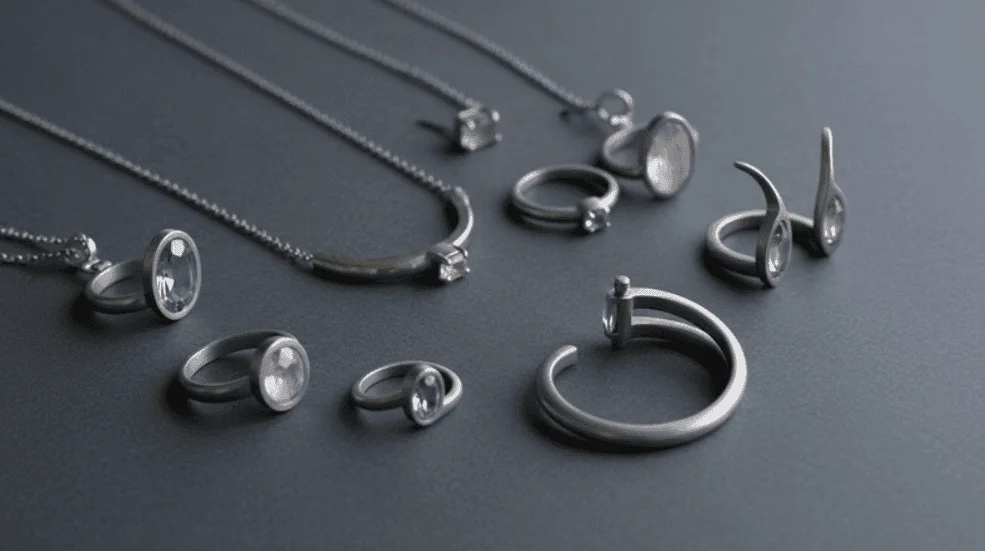
Tungsten is famous for its extreme hardness, which surpasses titanium and most precious metals. It’s the perfect material if you’re tough on your jewellery. Its main property is the highest scratch resistance of all metals and a bright, almost mirror-like shine. It’s practically indestructible in everyday use, and the surface stays intact for a very long time, which is a major benefit. The downside is that it’s brittle – under a strong, focused impact it won’t bend like gold, but can crack (which is, paradoxically, an advantage in emergencies because the ring can be broken off). Tungsten is especially suitable for men’s rings that need to withstand rough handling and tough working conditions.
Natural and other materials: Originality and a link to nature
These materials offer uniqueness and a deeper story. They’re ideal if you appreciate the beauty of imperfection and like to surround yourself with natural textures.
Wood
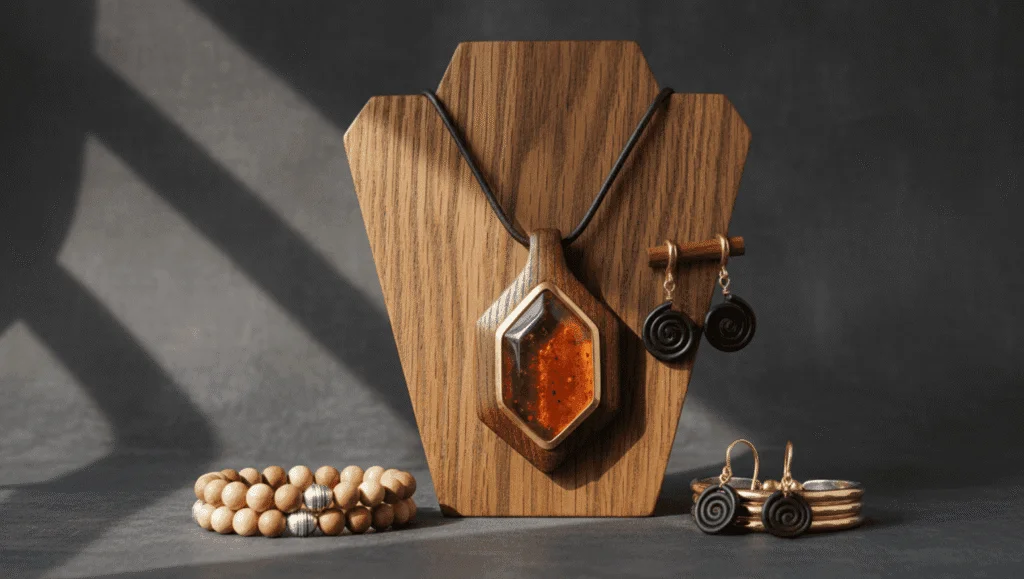
Wooden jewellery, often combined with resin, captivates with its unique grain. Makers use both exotic woods (ebony, wenge) and local species (walnut, maple). Wood is lightweight, warm to the touch and natural, but it needs protection from prolonged exposure to water, which can damage the finish.
Gemstones and minerals
Gemstones and minerals are the crowning detail of any piece of jewellery and significantly increase its value. The best known are diamonds, rubies and sapphires (among the hardest stones), as well as semi-precious stones like agates, turquoise, opals and amethysts – each with its own distinct look and character.
Pearls
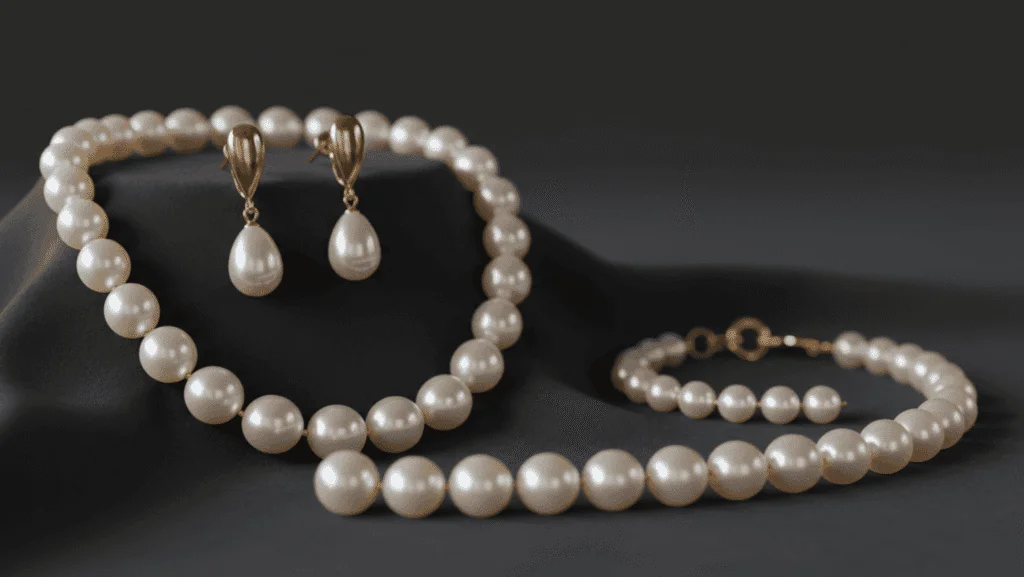
Pearls symbolise elegance and purity. We distinguish between more valuable saltwater pearls (e.g. Akoya, Tahitian) and more affordable freshwater pearls. They are delicate and need specific care – they should be “put on last and taken off first”, because they’re sensitive to cosmetics, perfume and sweat.
Leather and textiles
Leather and textiles are most often used for casual bracelets and necklaces. These materials give jewellery a relaxed yet stylish look. They’re perfect for layering and for a summer, boho-inspired style. They should be protected from moisture and strong sunlight.
Key criteria when choosing a material: How to pick the right one
When you’re deciding which jewellery to buy, you shouldn’t look at appearance alone. These are the most important factors to keep in mind.
Hypoallergenic properties
Metal allergies are common, and the usual culprit is nickel, which is part of some alloys (often in cheap costume jewellery and certain types of white gold). Materials like titanium, platinum, tungsten and certified 316L surgical steel are considered completely safe and do not cause contact dermatitis. If you have sensitive skin, always make sure the jewellery is nickel-free.
Hardness and durability
The hardness of a material determines how suitable it is for everyday wear. For daily use, hard and durable materials like steel, titanium, tungsten or platinum work best. For occasional wear, softer materials such as silver or organic materials like pearls, which scratch more easily, are usually fine.
Care and maintenance
Some materials need more attention than others. Regular cleaning is essential for silver (because of tarnishing) and gold (because of dirt build-up). Metals like surgical steel and titanium are practically maintenance-free and only need an occasional wipe. Organic materials (pearls, wood) require special care and protection from chemicals.
Hallmarks and purity
Hallmarks on precious metals serve as a guarantee of authenticity and quality. This is especially important for gold and platinum. The assay office checks whether the stated purity matches reality (e.g. 585 for 14k gold). Always buy precious metals only with a valid hallmark or a certificate from a reputable seller.
Choosing materials based on lifestyle and occasion
Your choice of jewellery material should be well thought out and based on how and when you’ll actually wear it.
For an active lifestyle
If you play sports, work with your hands or are often in contact with water (pool, sea), go for materials that can handle sweat, water and impacts. Titanium, tungsten or surgical steel are ideal options. Precious metals, especially higher carat gold, scratch easily and are not the best choice for these activities.
For allergy sufferers
If you know you have sensitive skin, avoid cheap costume jewellery and unverified alloys containing nickel. Always choose safe options such as titanium, platinum, palladium or 316L steel. For white gold, always ask about the exact alloy composition.
For elegant and formal occasions
For special events, reach for timeless classics. Gold, platinum and jewellery set with gemstones or pearls take centre stage here. These materials underline a formal, luxurious look and carry the highest social prestige.
For everyday wear to work
Here, you need a balance between elegance and durability. White gold with rhodium plating is an excellent choice for a refined look, or you can opt for a high-quality, minimalist piece in surgical steel that can handle daily wear and still look professional. Look for a good mix of style and practicality.
Quick comparison of materials
| Material | Key property |
|---|---|
| Gold | Lasting value, traditional luxury |
| Silver | Affordability, high shine |
| Platinum | Extreme durability, hypoallergenic |
| Surgical steel | Excellent price/performance ratio, hypoallergenic |
| Titanium | Extremely lightweight, 100% hypoallergenic |
| Tungsten | Maximum scratch resistance |
There is no single “best” material
As you can see, there isn’t one universally best jewellery material. There’s only the one that’s most suitable for a specific person, lifestyle and purpose. The key to a smart purchase is to weigh three main factors: lifestyle (how often and in what conditions you’ll wear the piece), skin sensitivity (focus on hypoallergenic options) and budget (value vs. investment). Don’t be afraid to mix and match.
Modern trends often combine luxurious precious metals with alternative materials, for example pearls on a leather cord or a gold pendant on a steel chain. What matters most is that the jewellery makes you happy and reflects your personality.
Frequently asked questions (FAQ)
What exactly does it mean when jewellery is “rhodium plated”, and why is it done?
Rhodium plating is a process where a thin layer of rhodium, a precious metal from the platinum group, is applied to the surface of the jewellery. It’s mainly used on silver and white gold. On silver it protects against blackening (oxidation), and on white gold it masks its slightly yellowish tone, gives it a brilliant white, platinum-like shine and increases its scratch resistance.
What is the difference between surgical steel and stainless steel?
Surgical steel is a specific type of stainless steel marked as 316L. The main difference lies in its very low nickel content and high resistance to corrosion, which is crucial for skin contact, especially in medicine and jewellery making. Not every stainless steel is suitable for piercings or long-term wear – surgical steel is a guarantee of quality and safety.
Can gold cause an allergic reaction?
Yes, but it’s unlikely with pure gold. Pure gold (24k) itself is hypoallergenic. Allergic reactions are triggered by other metals in the alloy that are added to increase hardness. Most often this is nickel in some older or lower-quality white gold alloys. Today, nickel-free alloys (for example with palladium) are used in the EU, but you should always check the composition of white gold.