Complete Guide to Flours: Everything You Need to Know for Perfect Baking and Cooking
Flour is essentially a finely ground ingredient, most often made from cereal grains. Even though we tend to take it for granted, it is the fundamental building block of baking and cooking. Without it, there would be no bread, dumplings, or cookies. Its key role is to give dough structure, volume, and texture. Only the right choice of flour will ensure your bread is fluffy, your sauce silky smooth, and your dumplings hold together instead of falling apart.
Thanks to huge advances in milling and gastronomy, there is now a vast range of flours that differ not only by the base ingredient (wheat, rye, coconut, chickpea), but also by the way they are milled. Each type has specific properties and needs different handling.
The goal of this guide is to help you navigate the wide selection and always choose the best flour for your specific recipe.
Did you know? While the Czech Republic and most of Europe label flour using the “T-number” system (e.g. T-550), Italy uses a milling-based system (e.g. 00 for extra fine), and in the USA flour is usually named by its use (e.g. All-Purpose Flour). This global lack of consistency is the main reason why it’s so important to understand the key parameters instead of relying only on the name on the package.
Key flour parameters and basic categories: How to read the labels
If you want to buy flour wisely, you need to understand three key parameters that determine how flour is evaluated and chosen.
T-number (ash content) – A measure of wholegrain level
The T-number (Type) on flour packaging actually indicates the mineral content in the flour’s dry matter, known as ash content. It is measured by burning a flour sample and weighing the remaining ash. The higher the T-number, the more minerals, fibre, and bran the flour contains.
- Low T-number (e.g. T-400, T-550): These are white flours that contain only the inner part of the grain (endosperm). They are fine in texture and low in minerals.
- High T-number (e.g. T-1050, T-1600): These are darker and wholegrain flours. They contain more bran, fibre, vitamins, and minerals. Doughs made with them rise less and tend to be denser.
That’s why flours with a higher T-number are often chosen for sourdough bread to achieve better flavour and higher nutritional value.
Gluten (protein) content – The secret of elasticity
Gluten is a protein complex formed when two proteins (gliadin and glutenin) in wheat, rye, spelt, and barley combine with water. Gluten is crucial for baking because it creates an elastic network that traps the gases produced during fermentation (proofing) and gives dough its stretch and strength.
- High gluten (approx. 12–14%): Bread wheat flour. It produces firm, elastic dough, ideal for long proofing and structured bakes (e.g. pizza, sourdough bread).
- Medium gluten (approx. 9–11%): All-purpose flour. Suitable for most cookies, sheet cakes, and bundt cakes.
- Low or no gluten: Rye (contains gluten but weak), rice, corn, chickpea, coconut. These flours work well for shortcrust pastry or gluten-free baking.
Milling grade (hladká, polohrubá, hrubá) – Particle size and texture
The milling grade describes the particle size (granulometry) of the flour, regardless of its T-number or gluten content. This parameter strongly affects how the flour absorbs liquids and what the final texture of the dish will be.
- Hladká (fine): The finest, powdery texture. Absorbs liquid quickly and evenly.
- Polohrubá (medium): A middle ground. Slightly coarser, absorbs more slowly.
- Hrubá (coarse): The largest particles. Absorbs liquid the slowest and most evenly, which is crucial when boiling so the dough does not clump together.
Types and variants – Grain-based and gluten-free ingredients under the microscope
Whether you’re after an all-round staple or a specialist flour for dietary needs, there are dozens of options. Here is an overview of the most important ones.
Wheat flour (classic, spelt)
Classic wheat flour is the most commonly used and most popular thanks to its high gluten content and strength. It is versatile and gives baked goods excellent structure and volume.
Spelt flour comes from an ancient wheat variety. It has a mild nutty flavour and some people find it easier to digest than modern wheat. Its gluten is different, but behaves similarly to wheat gluten, which makes it ideal if you want to move towards healthier baking. It works well in bread, cookies, and for thickening sauces.
Rye flour
Rye is a traditional grain of northern countries and is the foundation of sourdough bread. Its gluten content is lower and weaker than wheat, but rye flour gives bread a distinctive, slightly tangy flavour, a denser crumb, and excellent keeping quality. It is usually sold with a higher T-number.
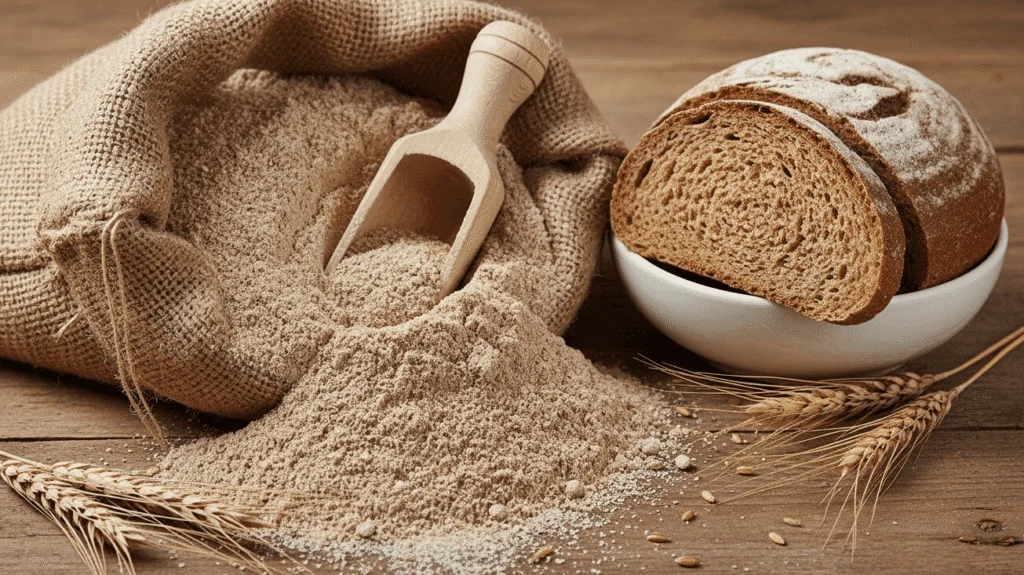
Wholegrain flour (wheat, rye, spelt)
Wholegrain flour is defined by containing the entire grain – endosperm, germ, and bran. The germ supplies fats and the bran provides fibre and minerals. Dough made with wholegrain flour is heavier and rises less, but is significantly richer in nutrients and healthier overall. Because of the fat content, it also has a shorter shelf life.
Flours from ancient grains (einkorn, kamut)
Ancient grains such as einkorn or kamut (khorasan) are making a comeback. They have specific nutritional properties, often lower or weaker gluten, and a distinctive, fuller flavour. They are great if you want to experiment with traditional, less-bred varieties.
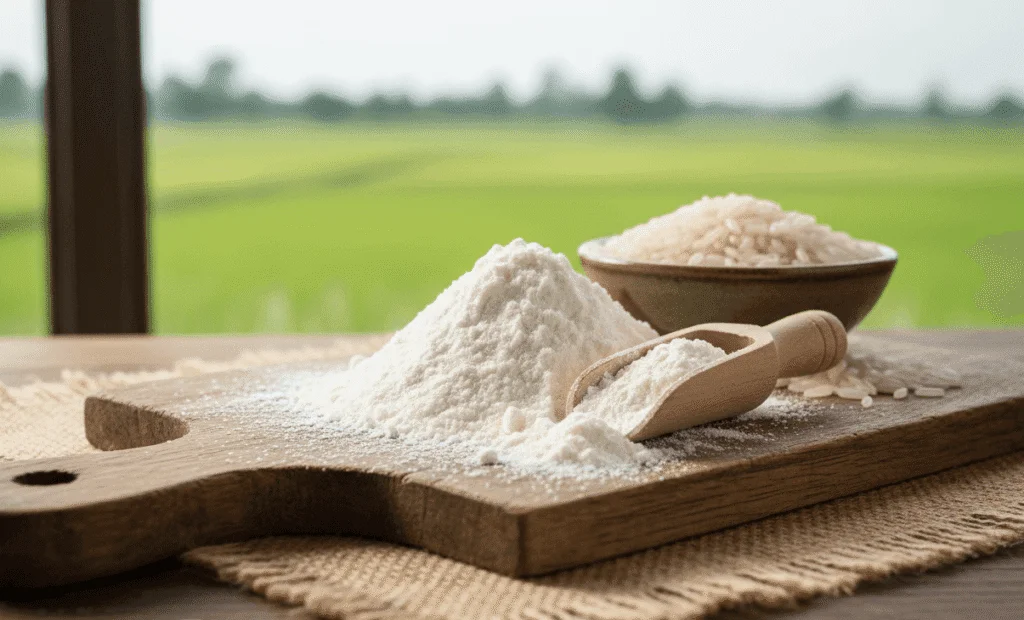
Rice flour
A naturally gluten-free flour with a neutral taste, made from milled rice. It is excellent for thickening sauces and soups (especially for gluten-free diets), and when combined with other flours it gives baked goods a fine, delicate crumb.
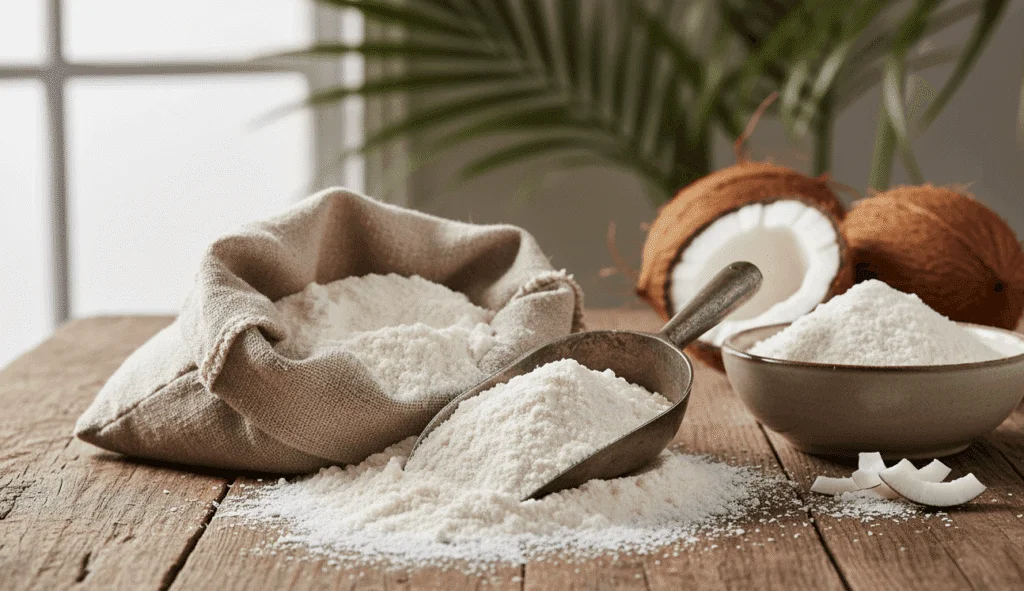
Coconut flour
Made from dried, defatted coconut flesh. It is extremely absorbent, high in fibre and protein, and has a low glycaemic index. When baking with coconut flour, you need to add far more liquid than you would with grain flours. It has a naturally sweet taste.
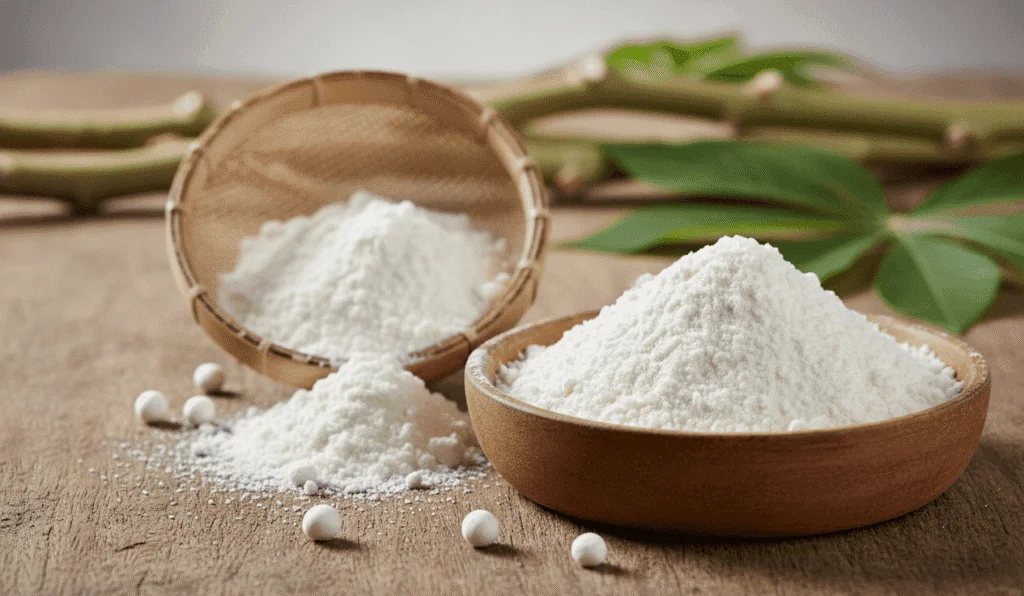
Tapioca flour
Tapioca is a starch extracted from the cassava root. In gluten-free baking it is indispensable for its binding and thickening properties. It gives dough elasticity and a characteristic chewy texture, which is crucial for gluten-free breads or pizza.
Chickpea flour
Legume flour with a high content of protein and fibre. It has a distinct, slightly beany flavour that works best in savoury dishes. It is a traditional ingredient for Mediterranean flatbreads (socca) and a binder in vegetarian patties.
Other gluten-free flours (corn, legume, nut)
- Corn flour: Used for porridge (polenta), tortillas, and thickening.
- Legume (pea, lentil): A great source of plant protein, adds moisture and density.
- Nut (almond, hazelnut): Give bakes a rich flavour, moisture, and healthy fats. Ideal for macarons or keto and low-carb baking.
Table: Overview of all flour types and their main benefits
The table below summarises the most important flour types by base ingredient and milling grade, with a focus on their specific properties and best uses in the kitchen.
| Type of flour | Main benefits and uses |
|---|---|
| Wheat (hladká, T-550) | Very high gluten content and strength, provides structure. Universal for bread, rolls, and most yeasted doughs. |
| Wheat spelt | Delicate nutty flavour, gluten is often easier to digest. Used similarly to wheat, suitable for healthier baking. |
| Rye | Gives bread a distinct tangy flavour and dense crumb. The base for all sourdough breads, excellent shelf life. |
| Wholegrain (general) | High in fibre, minerals, and vitamins (high T-number). For the most nutritious but denser and less airy breads and bakes. |
| Einkorn | One of the oldest wheat species. Pronounced buttery flavour, low and weaker gluten, easier to digest. |
| Kamut (Khorasan) | Ancient grain with high protein and mineral content. Very rich, slightly sweet flavour, ideal for premium baking. |
| Rice | Naturally gluten-free and neutral. Excellent for thickening, Asian noodles, and adding tenderness to gluten-free blends. |
| Coconut | Extremely high fibre content, low glycaemic index. Key for low-carb/keto baking, very absorbent, naturally sweet flavour. |
| Tapioca (starch) | Gluten-free binder and thickener. Gives dough elasticity and a light chewy texture, essential for gluten-free bread. |
| Chickpea | High protein content (distinct legume flavour). Ideal for savoury baking, gluten-free flatbreads (socca), vegan omelette (farinata). |
| Almond | Gluten-free, rich in healthy fats and protein. Adds moisture and a rich flavour, a staple for macarons and keto diets. |
| Corn | Gluten-free. Used for polenta, tortillas, thickening. Gives dough a golden colour. |
| Hladká (fine) | Finest particle size. Universal for pourable batters, cookies, thickening – absorbs liquid quickly and evenly. |
| Polohrubá (medium) | Medium coarse. Ideal for stable yeasted doughs cooked or steamed (yeasted dumplings, fruit dumplings, bundt cakes). |
| Hrubá (coarse) | Largest particles. Best for boiling. Slow, even absorption prevents sticking and overcooking (boiled dumplings, gnocchi). |
Types and variants – Czech classics by milling grade
The Czech classification by milling coarseness is essential for traditional dishes and strongly influences how they turn out.
Hladká flour
Hladká flour is the finest and most versatile. Thanks to its very fine particle size, it creates smooth, lump-free dough and is ideal for recipes where you want lightness and delicacy. It is used for pourable and yeasted cakes as well as for thickening sauces.
Polohrubá flour
Polohrubá flour is a compromise between hladká and hrubá. It works perfectly for yeasted doughs where you want a stable yet soft crumb, but where hladká flour might be too fine and the dough could collapse. It is the traditional choice for bundt cakes and yeasted dumplings.
Hrubá flour
Hrubá flour consists of the largest particles. When boiled, it behaves differently from fine flours – it absorbs liquid slowly and evenly, which prevents the dish from overcooking and sticking together. That is why it is essential for boiled side dishes.
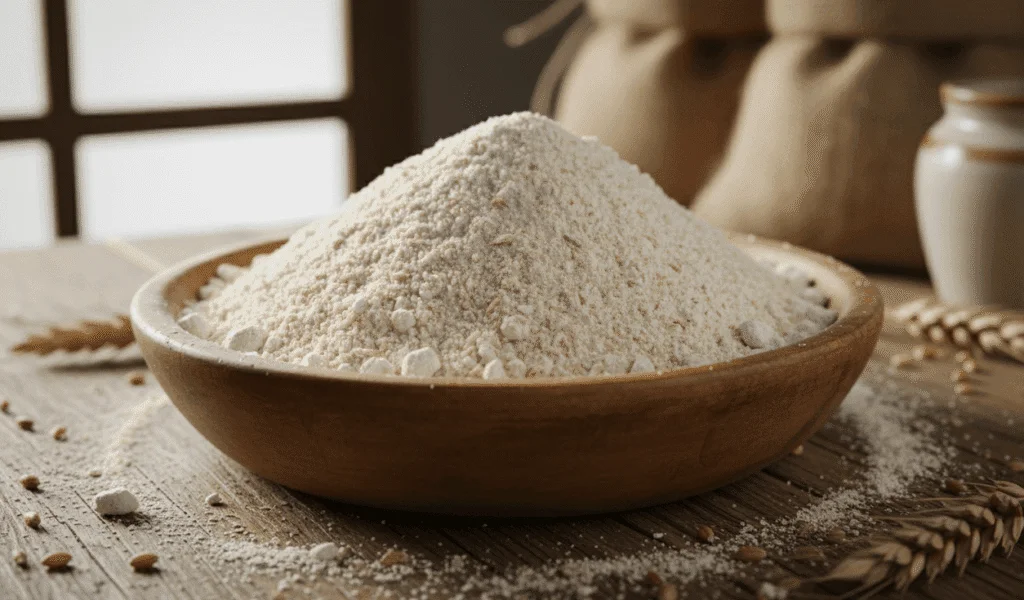
Table: Overview of milling grades and typical uses
| Milling grade | Typical use |
|---|---|
| Hladká | Baking: Bread, rolls, pourable and shortcrust dough, Thickening: sauces, soups. |
| Polohrubá | Yeasted dumplings, bundt cakes, soft yeasted cakes. |
| Hrubá | Boiled dumplings, halušky, gnocchi, pasta. |
Choosing and recommendations: Which flour for which dish?
Choosing the right flour is often what separates an average result from a perfect one.
Baking sourdough bread and rolls
For quality bread you need flour with strong gluten that can hold structure and volume during long proofing. Choose wheat bread flour (T-550 to T-1050) or rye flour (T-960 to T-1370). For wholegrain bread, it’s a good idea to mix part wholegrain flour with hladká flour to improve the dough’s ability to rise.
Making cakes and delicate pastries
Here you need fine hladká flour with a lower gluten content. If the gluten is too strong, the crumb will be tough and chewy instead of tender and airy. Hladká wheat flour (T-400) or a special cake flour is ideal. For extra tenderness, you can replace part of the flour with rice or corn starch.
Thickening sauces and soups
For thickening, hladká wheat flour works best, as it dissolves quickly and doesn’t form lumps. For gluten-free thickening, choose tapioca, corn, or rice flour, which give sauces a nice shine without a milky taste.
Making yeasted dumplings and pasta
For yeasted dumplings, polohrubá flour is the best choice. It offers good structure for rising while still holding together during boiling. For boiled dumplings, halušky, and pasta, hrubá flour is always used, as it keeps its shape and absorbs water evenly.
Gluten-free baking (how to combine gluten-free flours)
The biggest mistake is using only one type of gluten-free flour (for example just rice flour). Gluten-free baking needs a strategy where you replace the different functions of gluten:
- Structure and moisture: Almond, legume, or chickpea flour (proteins and fats).
- Elasticity and binding: Tapioca, potato, or corn starch.
- Volume and neutrality: Rice flour or a dedicated gluten-free blend.
It’s recommended to use ready-made gluten-free blends or your own mixes that always include at least one binder (for example xanthan gum to mimic gluten).
History and development: From stone to roller mills
The history of flour goes back to the Neolithic era, when the first grinding techniques appeared – rubbing grains between stones. These primitive stone mill wheels were slow, labour-intensive, and left coarse pieces and impurities in the flour. The flour was always wholegrain, because the entire grain was ground.
The real breakthrough came in the 19th century with the invention of roller mills and steel rollers. These machines could separate the endosperm from the bran and germ with unprecedented efficiency. This led to mass production of white, refined flour with a longer shelf life, which was seen as a symbol of progress. At the same time, it stripped flour of many valuable nutrients (which is why some flours are now enriched with vitamins). Roller milling also made it possible to define particle size (hladká, hrubá) and T-number precisely.
Regional influences are still visible today. For example, rye is crucial in northern and eastern European countries because it is a hardier crop that copes better with colder, less fertile climates than wheat.
Storage and shelf life: How to keep flour in good condition
Proper storage is essential because flour is sensitive to moisture, heat, and pests. Wholegrain and gluten-free flours in particular need careful handling.
- Airtight containers: Store flour in fully sealed, airtight containers (glass, plastic, tin) to protect it from moisture and odours.
- Temperature and humidity: The ideal is a cool, dry, dark place (below 20 °C). Storing wholegrain and nut flours in the fridge or freezer is recommended.
- Pests: To prevent infestation by moths or beetles, it’s a good idea to freeze newly bought flour for a few days. If pests do appear, the entire contaminated batch needs to be thrown away without hesitation.

Shelf life:
- White/conventional flour: Because the fat-rich germ is removed, it keeps well for 6–12 months under good conditions.
- Wholegrain, nut, and legume flour: The germ and fats turn rancid (oxidise) quickly, so these flours last only 3–6 months. They should be stored in the fridge or freezer.
Prices and budget levels: When it pays to spend more
The price of flour varies widely depending on quality, farming method, and processing.
- Basic/conventional flour (cheapest): Includes standard wheat flour (hladká, polohrubá) from conventional farming. These are affordable, all-purpose flours suitable for everyday cooking and baking.
- Organic/ancient grains (mid-range): More expensive due to stricter growing standards (no synthetic pesticides) or the more demanding processing of ancient grains (spelt, einkorn). It is worth paying extra for better flavour and nutritional value as well as a more sustainable approach to the environment.
- Special and gluten-free blends (most expensive): Gluten-free flours (coconut, chickpea) and ready-made blends are the priciest because of complex production and raw materials. This investment is essential for people with coeliac disease or specific dietary needs.
Most popular brands and producers: Relying on tradition and quality
The brand you choose often reflects your priorities – freshness, tradition, or organic certification.
Regional mills and local producers
Many smaller regional mills offer flour milled in smaller batches, often fresher with a clearly traceable grain origin. Their range usually focuses on traditional T-numbers and local crops. Choosing them supports the regional economy and gives you the assurance of traditional milling quality.
Large brands and conventional producers
Large producers provide a wide range, standardised quality, and good availability in almost every supermarket. They are an ideal choice for everyday use and for those who value consistency and predictable results.
Organic and specialist producers
Some producers focus exclusively on organic-certified grains and flours from ancient varieties or on premium gluten-free blends. Their flours tend to be more expensive, but they offer excellent nutritional value and often very detailed information about the grain’s origin.
Summary and final tip
When choosing flour, always keep in mind that there is no single “best” flour – only the flour that is best suited to a specific purpose. The key is to understand the T-number and gluten content, which determine structure and rising ability. Strong gluten is essential for airy bread, while delicate pastries need weaker gluten. It always pays to invest in fresh flour and store it properly – especially wholegrain types. When making your final choice, focus on what exactly you’re baking and pick not only the base ingredient (wheat, rye, almonds) but also the right milling grade.
Frequently asked questions (FAQ)
What is the difference between hladká flour and bread flour?
Hladká flour refers primarily to the fineness of the milling (granulometry). Bread flour (often with a higher T-number, e.g. T-550 to T-1050) is defined mainly by its higher gluten (protein) content, which is essential for good structure and volume after proofing. Standard hladká flour can have lower gluten and is therefore less suitable for bread.
Why is some flour labelled 00 (for example Italian flour)?
The Italian “Double Zero” (00) label is the equivalent of extra fine hladká flour. It doesn’t mainly describe ash content (T-number) but rather the maximum degree of milling – the flour is extremely fine. This type is ideal for thin doughs with a delicate yet elastic structure, such as fresh pasta or pizza.
Do I need to sift flour before using it?
In a modern kitchen, sifting is not primarily about cleanliness. It is recommended to aerate the flour (and the gluten), remove any lumps, and increase its volume. This helps ensure that when mixed with liquid, you get a lighter, more even batter or dough, which is especially important for fine sponge and creamed cakes.
Kategorie: