France: A Guide to the Land of Wine, Art and History
France is one of the most beautiful and most visited countries in the world, attracting over 90 million tourists every year. It offers a unique mix of elegance, history, natural beauty and culinary artistry that will win you over at first sight.
Whether you’re planning a romantic walk through Paris, sunny days on the French Riviera, historic châteaux in the Loire Valley or charming villages in Provence, France has something for everyone. This guide gives you all the information you need to plan and enjoy your perfect trip to this enchanting country.
History of France
France has one of the richest and most turbulent histories in Europe, which has deeply shaped its modern culture and identity. The original inhabitants of what is now France were the Gauls, a Celtic people who settled here between 1500 and 500 BC. Led by Vercingetorix, they tried to resist but were defeated by the Romans. After the breakup of the Roman and Frankish Empires in 843, the western part gradually evolved into modern France, and in 987 Hugh Capet was crowned the first king of the French dynasty.
A decisive turning point in French history came with the French Revolution in 1789, which overthrew the old absolutist regime and brought the Declaration of the Rights of Man and of the Citizen. The revolution fundamentally reshaped the country’s social, political and cultural structures. In the following years, Napoleon Bonaparte rose to power, becoming First Consul in 1799 and Emperor in 1804 after founding the First French Empire. Napoleon’s military campaigns and reforms affected the whole of Europe, even though his expansionist ambitions ended in defeat.
During the 19th century, France went through a series of revolutions and regime changes. In 1830, the July Revolution broke out and led to the fall of the old dynasty. In the First World War, France became one of the key powers, and the conflict brought enormous losses – over 1.4 million lives, about four percent of the population at the time. After the Treaty of Versailles, France regained the regions of Alsace and Lorraine.
The Second World War marks one of the darkest chapters in French history. After the Germans broke through the Maginot Line and France was quickly defeated, the country entered the period of Vichy France and collaboration. The D-Day landings in Normandy on 6 June 1944 launched the liberation of the country, carried out together with the national army led by future president Charles de Gaulle. After the war, France established itself as a key member of the newly forming European Union and played a central role in European integration.
Location, geography and climate
Location and geography
France, the largest country in the European Union by area, covers 551,500 square kilometers on the European continent and stretches across the southwestern part of Europe. The Atlantic Ocean borders it to the north and west, and the Mediterranean Sea to the south, while Corsica lies further south as part of French territory. France shares borders with several countries: to the northeast with Belgium (620 km) and Luxembourg (73 km), to the east with Germany (450 km) and Switzerland (572 km), to the southeast with Italy (515 km), and to the south with Spain (649 km), Andorra (56.6 km), and Monaco (4.5 km).
Geographically, France is very diverse. The northern and western parts of the country are mostly flat with gently rolling landscapes, while the rest of the territory is hilly and mountainous. The French Alps include Mont Blanc (4,810 meters above sea level), the highest peak in Western Europe and an iconic symbol of alpine scenery. The western part of the country is shaped by its position on the Atlantic Ocean and is home to major rivers such as the Loire, Garonne, and Dordogne. In the south, the Pyrenees dominate, forming a natural border with Spain and creating a stunning mountain range rich in biodiversity.
Climate and weather for travelers
France has three main climate zones, which create very different weather conditions across its regions. In the north and along the Atlantic coast, there is an oceanic climate with mild, wet winters. Central and eastern France have a more continental climate with colder winters and warmer summers. In the south, especially in Provence and along the French Riviera, you’ll find a Mediterranean climate with hot summers and mild winters.
The best time to visit France depends on your preferences and the type of trip you have in mind. Spring (April to May) brings pleasant temperatures and fewer tourists, which is ideal for art and culture lovers. Summer (June to August) is the most popular season, but it also means higher prices and crowded attractions – it is, however, perfect for beaches in the south and high-altitude hiking in the Alps. Autumn (September to October) is often seen as the sweet spot, with comfortable weather and fewer visitors. Winter (November to March) attracts the fewest tourists and offers excellent snow conditions for skiing in the French Alps.
| Month/Period | Typical weather and temperature |
|---|---|
| January to March | Cold, snow in the Alps, average 0–8 °C |
| April to May | Mild, sunny, average 12–18 °C |
| June to September | Warm to hot, average 20–27 °C |
| October to November | Mild, more rainfall, average 10–15 °C |
Regions and types of destinations
Paris and Île-de-France
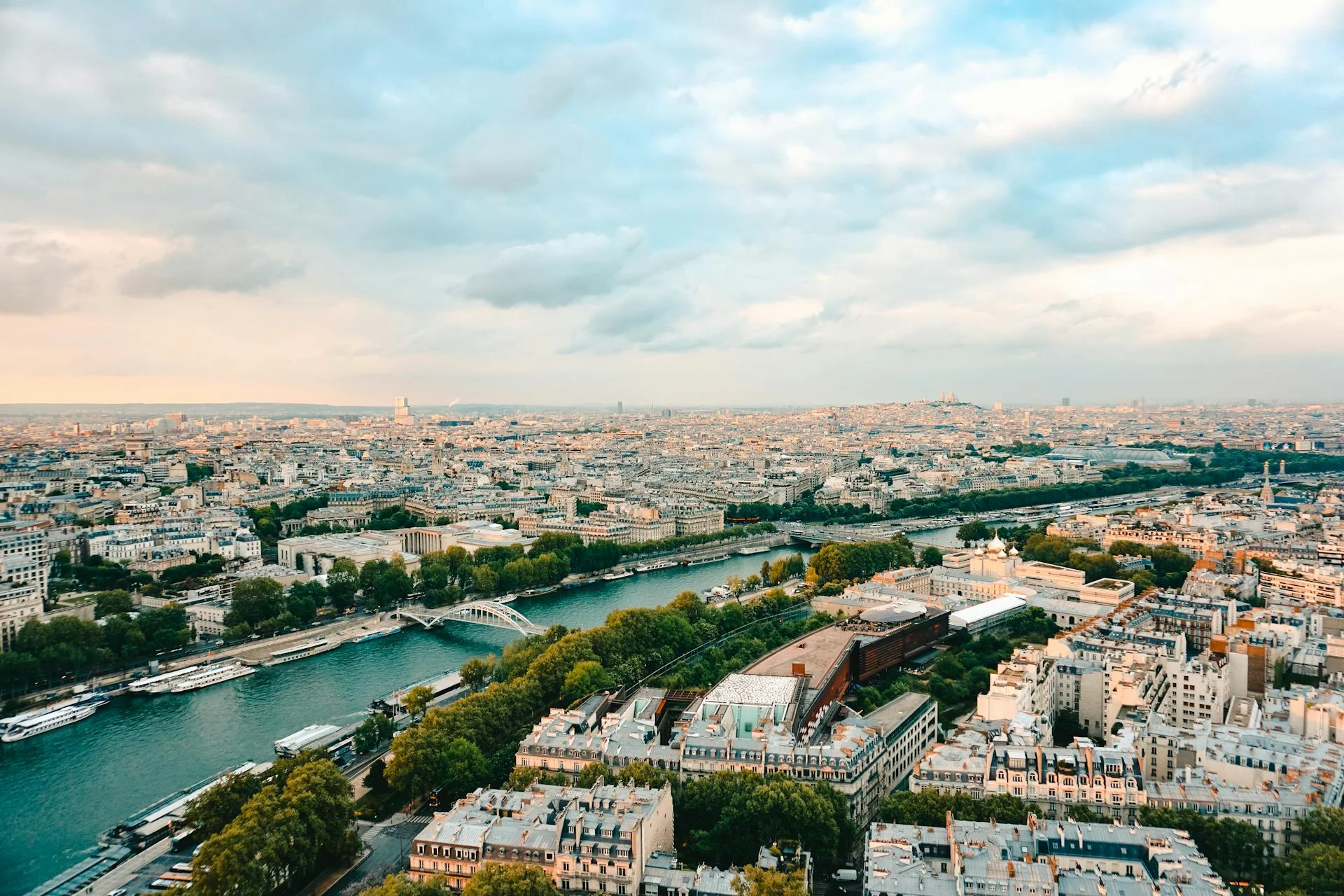
Paris, the capital of France, is a city of lights, art, and romance. This region is the most visited part of France and offers a once-in-a-lifetime experience for millions of people every year. Paris stretches along both banks of the River Seine and is divided into 20 districts (arrondissements), each with its own character and charm. It stands out for its architectural gems, world-famous museums, and endless culinary experiences. The Île-de-France region surrounding the capital gives you the chance to visit the Palace of Versailles and many other historic sites.
Provence-Alpes-Côte d'Azur (PACA)
This southeastern region is one of the most beautiful and fascinating in France. This area has it all – the majestic Alps with glaciers and waterfalls, the fragrant lavender fields of Provence, and the sparkling Mediterranean coastline known as the French Riviera (Côte d'Azur). Provence is synonymous with lavender, traditional villages, and outstanding cuisine. The Côte d'Azur attracts sun and sea lovers, with cities like Nice, Cannes, and Saint-Tropez offering elegance and luxury. The Alps provide excellent conditions for high-altitude hiking, skiing, and getting out into nature.
Loire Valley – The Garden of France
The Loire Valley, also called “The Garden of France”, is the country’s third-largest wine region and is listed as a UNESCO World Heritage Site. This picturesque area stretches along the 600-kilometer-long Loire River and is home to more than 40 châteaux and palaces. Every château tells the story of French royal dynasties and is an architectural masterpiece. The beautiful landscape, combined with ideal conditions for growing grapes and making wine, makes this region perfect for lovers of wine, history, and the outdoors.
Bordeaux and Nouvelle-Aquitaine
The Nouvelle-Aquitaine region, centered around Bordeaux, is a key wine hub for both France and the world. Bordeaux, a UNESCO-listed city, is famous for its renowned red wines, elegant architecture, and rich history. The region stretches along the Atlantic and combines wine-growing areas, beaches, and historic towns. The Dune du Pilat, the highest sand dune in Europe, offers remarkable views over the vineyards and the ocean.
Brittany
Brittany, the westernmost region of France, is defined by its mystical atmosphere, rugged coastal cliffs, and medieval architecture. This region, known for its legends and traditions, offers a magical coastline with dramatic cliffs, charming villages, and a rich Celtic heritage. Vannes, the capital of the Morbihan department, has a historic center full of half-timbered houses and ramparts surrounding its landmarks. The wild coastline (Côte Sauvage) near Quiberon attracts surfers and adrenaline seekers.
Normandy
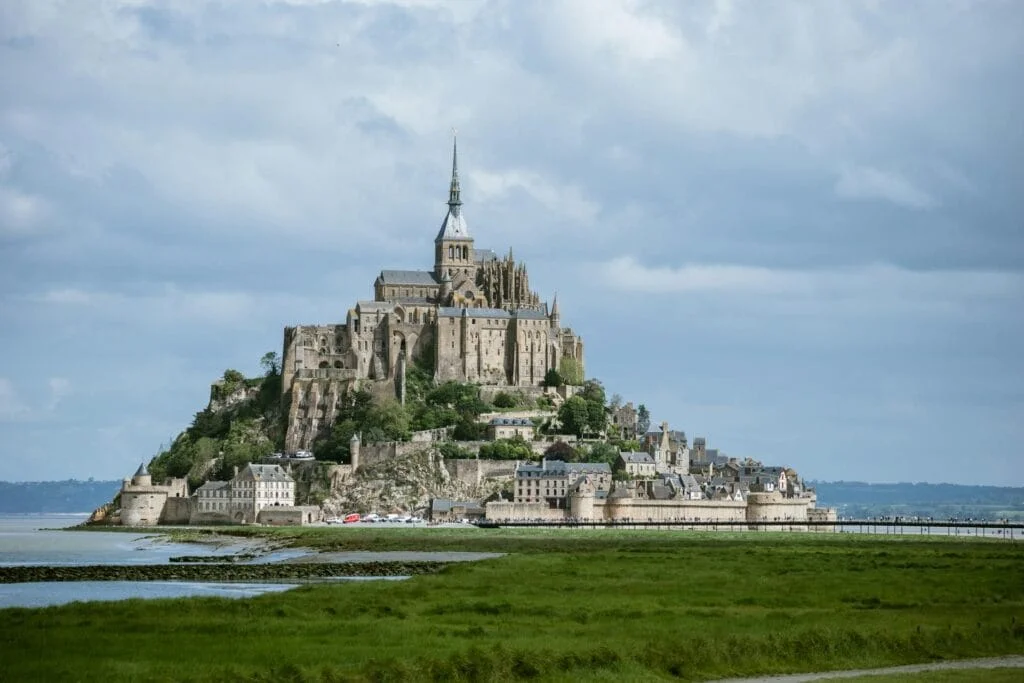
Normandy, a region in northern France, is famous for its beaches, historic towns and Mont-Saint-Michel, one of the most iconic sites in the world. Mont-Saint-Michel, a monastic fortress built on a rock surrounded by the sea, is the symbol of Normandy and one of the most photographed places in France. The region also offers the chalk cliffs of Étretat, which inspired many Impressionist painters. Normandy is also where the Allied landings took place during World War II, blending natural beauty with powerful traces of history.
Most famous landmarks and cities
Eiffel Tower
The Eiffel Tower, built in 1889 for the World’s Fair and to mark the 100th anniversary of the French Revolution, is without a doubt the most famous symbol of Paris and all of France. This iron monument, named after its designer Gustave Eiffel, stands 324 meters tall and offers stunning panoramic views of Paris from the top. Whether you go up by elevator or climb the stairs, the Eiffel Tower delivers an experience you won’t forget.
Notre-Dame Cathedral
Notre-Dame de Paris is one of the most famous Gothic cathedrals in the world and was built in the 12th century as a church dedicated to the Virgin Mary. This architectural gem with its magnificent Gothic design has hosted many major historical events, including the coronation of Napoleon Bonaparte and Henry VI. The cathedral’s towers offer an incredible view of Paris, even though the recent fire in 2019 has required extensive restoration work.
Louvre – The largest museum in the world
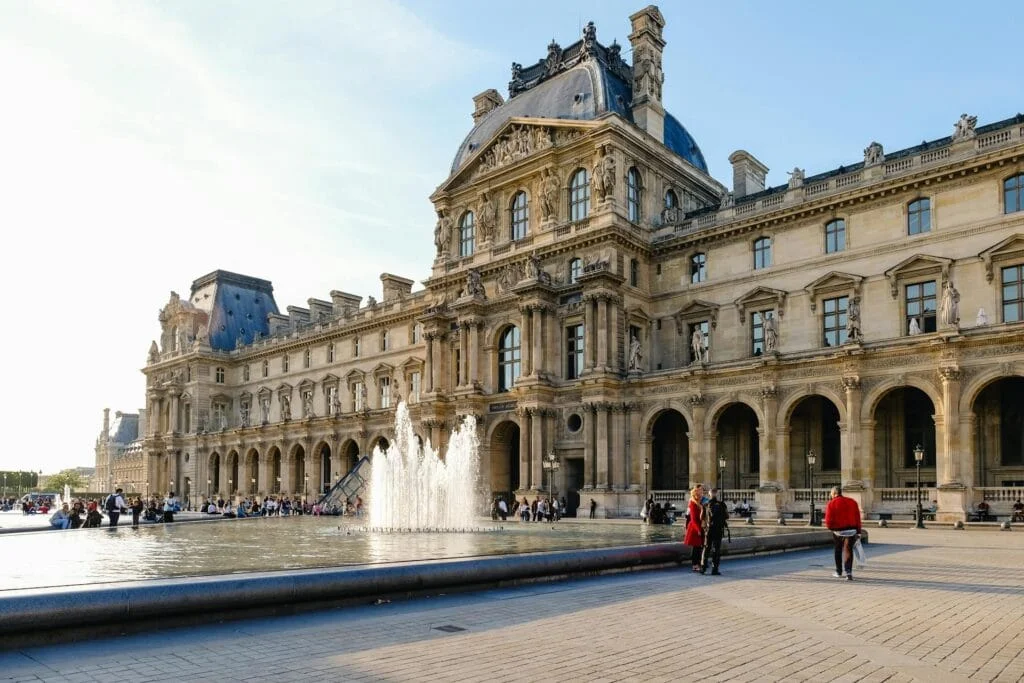
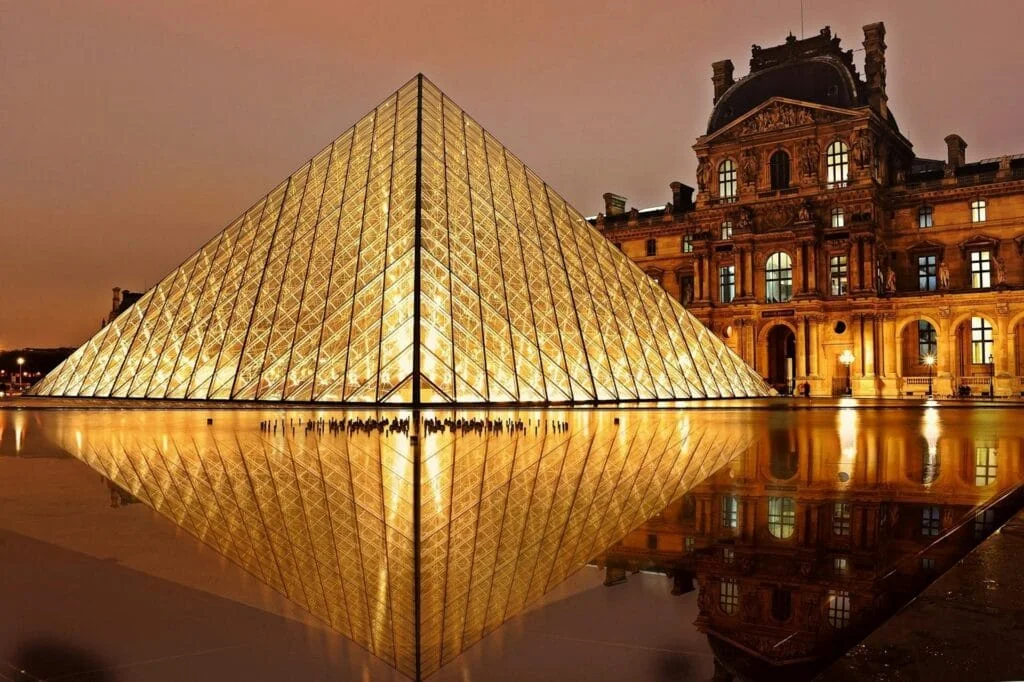
The Louvre is the most visited museum in the world and home to Leonardo da Vinci’s famous Mona Lisa. This former royal palace stretching along the Seine houses more than 35,000 artworks and artifacts from different eras and cultures. A visit to the Louvre takes you on a journey through art history, from Greek sculptures and Egyptian mummies to medieval works and paintings by the great masters.
Palace of Versailles
The Palace of Versailles, built by Louis XIV, known as the “Sun King”, is one of the most spectacular royal residences in the world. This Baroque masterpiece, surrounded by vast gardens, represents the peak of absolutism and French power in the 17th century. The rooms are decorated with stunning architecture, gold and silver details and valuable works of art. The palace gardens, including the famous park and the Grand Trianon, are perfect for leisurely walks and relaxation.
Arc de Triomphe
The Arc de Triomphe, built in 1806, is the largest triumphal arch in the world and a symbol of Napoleon’s military victories. This monumental structure, located on Place Charles de Gaulle, offers a stunning panoramic view of Paris and the twelve main avenues that radiate out from it. Beneath the arch lies the Tomb of the Unknown Soldier and an eternal flame honoring those who died for France.
Sacré-Cœur and Montmartre
Sacré-Cœur, a majestic basilica with a striking white dome, rises above Paris from the hill of Montmartre. The basilica was built to honor the victims of the Franco-Prussian War and offers one of the most beautiful views of Paris. Montmartre, Paris’s bohemian quarter, is home to artists and painters and has kept its charm with narrow streets, old cafés, and historic houses.
Papal Palace in Avignon
The Papal Palace in Avignon is a massive and sprawling complex of medieval buildings that served as the residence of the popes in the 14th century. This Gothic stronghold, listed as a UNESCO World Heritage Site, is one of the largest Gothic structures in Europe and offers a fascinating insight into medieval church power and architectural brilliance.
Mont-Saint-Michel
Mont-Saint-Michel is without a doubt one of the most iconic places in France and a world-renowned architectural and spiritual landmark. This island with its fortress and abbey, surrounded by the waters of the bay, rises from the landscape like something out of a fairy tale. At low tide, you can join a guided walk across the shifting sands around the fortress, which is a truly unique experience.
Chartres Cathedral
Chartres Cathedral, built between the 12th and 13th centuries, is one of the best-preserved examples of Gothic architecture. This monumental building, with its beautifully decorated portals and stained-glass windows, stands out for its architectural perfection and deeply spiritual atmosphere.
Natural beauty and national parks
Mont Blanc and the French Alps
Mont Blanc, at 4,810 meters, is the highest peak in Western Europe and an iconic summit of the Alps. This majestic mountain, surrounded by glaciers and alpine lakes, attracts mountaineers, ski tourers, and lovers of high-altitude wilderness. The French Alps offer breathtaking natural scenery with vast alpine meadows, lakes, and traditional villages built from wood and stone. In the Savoy Alps you’ll find Vanoise National Park and Vercors Regional Natural Park, home to chamois, mouflon, and, more rarely, bears and lynx.
Écrins National Park
Écrins National Park, the second-largest national park in France, showcases outstanding alpine landscapes with glacial valleys, pastures, forests, and lakes. The park is dominated by high mountains, many of them rising above 4,000 meters, creating perfect conditions for trekking, mountaineering, and wildlife watching.
Lake Annecy
Lake Annecy, one of the largest lakes in Savoy, is surrounded by snow-capped peaks and offers an idyllic setting for relaxation and water sports. The town of Annecy, with around 50,000 inhabitants, stretches along the lakeshore and is known for its medieval architecture, canals, and lively atmosphere.
Lakes in the Alps
Among the best-known lakes are Lac Blanc (2,352 m), which lies on the famous Tour du Mont Blanc trekking route, and Lac d'Allos (2,230 m), the largest natural high-altitude lake in Europe. These lakes offer stunning panoramic views and are ideal for trekking and photography.
Verdon Gorge
The Verdon Gorge, the deepest canyon in Europe, is a natural wonder with dramatic cliffs and the crystal-clear turquoise water of the Verdon River. This natural gem provides excellent conditions for hiking, cycling, kayaking, and rafting. Cyclists can ride a loop around the entire gorge, while water lovers can head straight for an adventure on the river.
Camargue Nature Reserve
The Camargue, a protected nature reserve in the Rhône delta, is famous for its white semi-wild horses and black bulls grazing freely in the wetlands. This area is an important breeding ground for many protected bird species, including flamingos and several species of herons. With a bit of luck and quiet behavior, you can observe these beautiful animals from close range.
Best beaches
French Riviera (Côte d'Azur)
The French Riviera, with its crystal-clear water and stylish resorts, is one of the most famous coastal regions in France. Highlights include:
Nice – The largest city on the French Riviera with 347,900 inhabitants is home to the famous 7-kilometre-long Promenade des Anglais lined with a pebble beach. Plage Beau Rivage, one of the best-known beaches in Nice, offers showers, toilets and a restaurant. Plage des Marinières in Villefranche-sur-Mer, on the other hand, stands out for its rare sandy shore in this area.
Cannes – The city famous for its May film festival offers long sandy beaches where you can rent sun loungers with full service. The 2-kilometre-long Boulevard de la Croisette is the main entertainment strip, packed with nightclubs, bars, restaurants and luxury boutiques.
Saint-Tropez – This iconic town is home to the white Pampelonne Beach, stretching for 4.5 kilometres and attracting celebrities and wealthy visitors. Places like Le Suquet, the old harbour with luxury yachts, and the town beach Plage de la Gravette offer an authentic atmosphere.
Plage de Pampelonne
Plage de Pampelonne near Saint-Tropez stretches for 4.5 kilometres and is one of the most beautiful beaches on the French Riviera. This beach is popular with sunseekers and plays a key role in the social life of Saint-Tropez.
Beaches in Cassis and Hyères
Cassis offers small, idyllic coves almost untouched by development, known as the Calanques. Hyères is known for its long sandy beaches and a wide range of water sports.
Activities and entertainment
France offers endless options for all kinds of activities. In Paris you can visit world-famous museums, stroll along the beautiful banks of the Seine and enjoy the nightlife in bars and cafés. In Provence you can head out to lavender fields, explore charming villages and sample local cuisine. The Alps are ideal for high-altitude hiking, skiing in winter and cycling in summer.
Sports enthusiasts can try surfing on the Atlantic coast, water sports on the French Riviera, or play tennis and golf. Culture lovers can visit countless museums, theatre performances, music festivals and art exhibitions.
Gastronomy and culture
Typical food and drink
French cuisine is one of the most famous and respected in the world and is an essential part of French culture and identity. Some of the best-known dishes include Boeuf Bourguignon (beef braised in red wine with onions, carrots and mushrooms), Coq au Vin (chicken stewed in wine) and Ratatouille (a vegetable dish originating in the south of France). Bouillabaisse is a classic French fish soup from Marseille.
Traditional French dishes also include escargots (snails baked in garlic butter), moules-frites (mussels cooked in white wine and served with fries), and pot-au-feu, considered the French national dish.
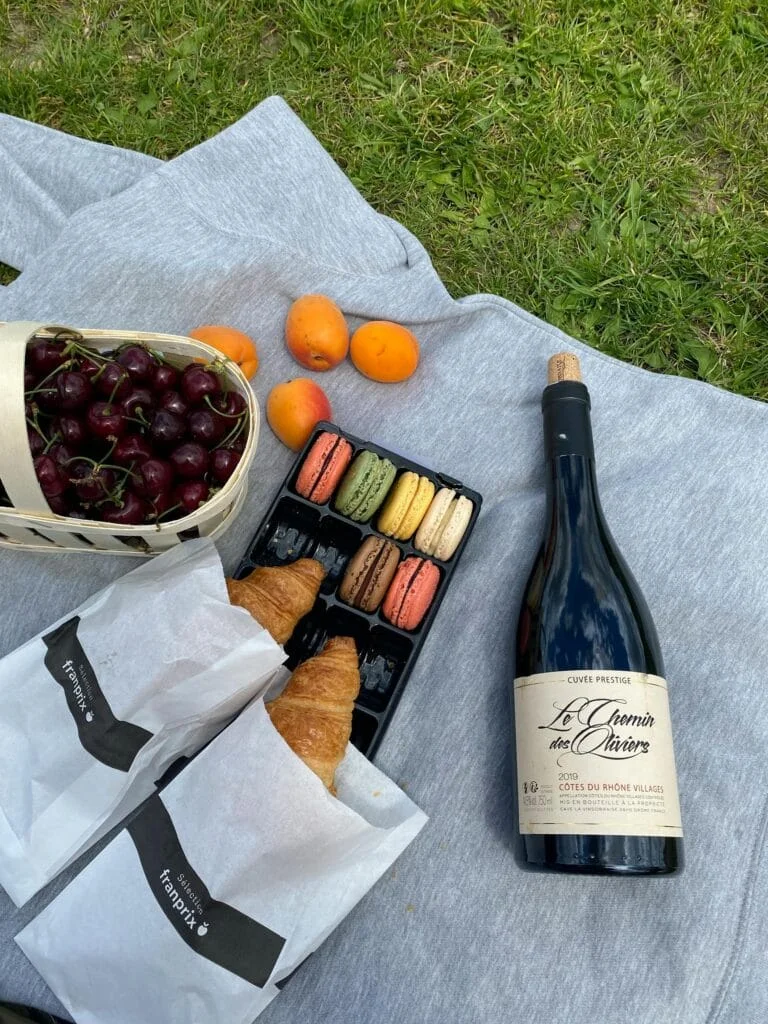
France is also famous for its cheeses, including Camembert and Livarot from Normandy. French pastries, especially croissants and baguettes, are renowned worldwide.
Wine is an essential part of French culture and gastronomy. The most famous wine regions include Bordeaux, Burgundy, Champagne, Provence, and the Loire Valley. Each region produces distinctive wines that reflect the local climate and traditions.
Dining tips
The French usually start the day with a light breakfast that includes pastries, butter, jam, and coffee. Lunch is the main meal of the day and is typically served between 12:00 and 14:00. Dinner is usually lighter and starts around 19:00 to 20:00.
In restaurants, a certain level of etiquette is expected: it is polite to wait until the staff seats you. Leaving a tip (usually 5–10%) is common, but not always required, as service is often already included in the price.
Cultural customs and festivals
French culture and traditions are deeply rooted in history and philosophy. Dozens of cultural events take place in France every year. The most important French holiday is 14 July, Bastille Day, marking the start of the French Revolution. It is celebrated in grand style, with huge fireworks displays in Paris, a military parade, and flyovers.
The Cannes Film Festival, held in May, is one of the most prestigious in the world. The Tour de France, the world’s biggest cycling race, traditionally takes place in July and is a cultural icon of France.
The grape harvest from September to October is a major celebration in many wine regions. Christmas and Easter are also important Christian holidays with traditional food and festivities.
Key practical information
Currency and payments
The official currency of France is the euro (EUR). VISA and Mastercard payment cards are accepted in most places and ATMs are widely available. Traveller’s cheques are now rarely used. Compared with the Czech Republic, prices in France are significantly higher, especially in Paris and on the French Riviera.
Entry requirements and visas
For citizens of the Czech Republic, entry to France is visa-free. A valid passport or national ID card is enough. Your passport must be less than 10 years old and valid for at least 3 months beyond your departure date. From 2025, citizens of non-EU countries who do not need a visa will have to obtain ETIAS travel authorization before their trip.
Anyone crossing the French border must declare to customs any cash or financial assets exceeding 10,000 EUR.
Safety and local customs
There are no specific risks for foreign visitors in France, but as in any country, you should watch out for pickpockets, especially in Paris and other large cities. Because of the risk of terrorist attacks, you should expect various security measures.
The French are proud of their history, language, and culture. They value politeness and respect. When meeting someone, people usually greet each other with a formal “Bonjour”, and it is definitely worth trying to use at least a few basic French phrases.
Healthcare and vaccinations
No vaccinations are mandatory for visiting France. However, travel insurance is recommended to cover any medical expenses. The healthcare system in France is generally of a high standard and medical care is widely available.
Fauna and flora
France is home to classic Central European wildlife. In the wild you can find hares, wild boar, various types of hoofed game, and forest predators. In higher mountain areas you may encounter chamois, ibex, and mouflon, and more rarely bears, wolves, and lynx. In the south, in the Camargue region, flamingos are a common sight.
The flora of France is very diverse, ranging from deciduous and mixed forests in the temperate zone to typical Mediterranean plants in the south, such as pines, stone pines, cedars, cork oaks, and cypresses. In Provence you will often come across lavender, rosemary, thyme, and other fragrant herbs.
Basic phrasebook
| Czech phrase | Translation into French |
|---|---|
| Hello / Good day | Bonjour |
| Good evening | Bonsoir |
| Goodbye | Au revoir |
| Thank you | Merci |
| Please | S'il vous plaît |
| Yes | Oui |
| No | Non |
| I don't speak French | Je ne parle pas français |
| Do you speak English? | Parlez-vous anglais? |
| Where is...? | Où se trouve...? |
| How much is it? | Combien ça coûte? |
| I have a reservation | J'ai une réservation |
| The bill, please | L'addition, s'il vous plaît |
| Help! | Au secours! |
Transport and logistics
How to get to France
Air travel is the fastest and most comfortable way to get to France. The main airports are in Paris (Charles de Gaulle and Orly), Nice, Lyon and other major cities. Both low-cost and traditional airlines offer plenty of connections.
Train travel can be combined with flying, or you can go directly by train from the Czech Republic. The Eurotunnel links France with the United Kingdom.
Bus travel is a cheaper, although more time-consuming, alternative. Companies such as FlixBus and RegioJet run direct routes to France.
Getting around on land
Public transport in France is reliable and efficient. SNCF (Société Nationale des Chemins de fer Français) trains connect all major cities and are ideal for travelling between regions. High-speed TGV trains offer fast and comfortable journeys. Booking online in advance usually means better prices.
Urban public transport in Paris includes the metro, buses and trams, which are efficient and reasonably priced. Similar systems operate in other large cities.
Car rental is a good option for exploring the countryside and smaller villages. Parking in city centres, however, is difficult and expensive. The driver must have a valid driving licence and the vehicle must have mandatory insurance.
Prices and trip budget
France is noticeably more expensive than the Czech Republic. A rough daily budget for two people ranges from about $70 to $400, depending on the level of comfort.
Budget trip: Hostel or budget hotel (from about $25), public transport ($6), meals in smaller restaurants ($20) and local attractions ($16).
Mid-range trip: Modern hotel (from about $45), a mix of public and private transport ($16), mid-range restaurants ($40) and paid attractions ($36).
Luxury trip: Luxury hotel (from about $145), private transport ($60), meals in top restaurants ($100) and exclusive experiences ($80).
Indicative restaurant prices: A meal in a cheaper restaurant costs around $15, while a three-course menu in a mid-range restaurant is roughly $30.
How to plan the perfect trip
Choosing the right region for your travel style
First-time visitors should start in Paris and the surrounding area, where you’ll find the most famous sights and the easiest navigation. The Loire Valley is ideal if you want to combine culture, wine, and history.
Families with children will love Paris for Disneyland, its many museums, and parks. Provence offers a safe countryside setting and easy access to swimming on the French Riviera.
Solo travelers can head to smaller towns in Provence, the Loire Valley, or Brittany, where it’s easy to meet locals as well as other travelers.
Senior travelers should look for more comfortable accommodation, less physically demanding activities, and a more relaxed schedule. Paris, Provence, and the French Riviera are all good options.
Planning mistakes and how to avoid them
Book in advance, especially in summer, when France is at its busiest. Prices for flights, trains, and hotels go up as the date gets closer.
Don’t rush each destination. It’s better to visit fewer places and explore them properly than to try to see everything in a short time.
Major attractions like the Eiffel Tower and the Louvre often have long lines. Book your tickets online in advance with a specific entry time.
Don’t assume everyone in France speaks English. Try to learn at least the basics of French – locals will appreciate the effort.
Sample itineraries
A week in the cities: Paris – Bordeaux – Lyon
- Day 1–3: Paris (Eiffel Tower, Louvre, Notre-Dame, Sacré-Cœur)
- Day 4: Train to Bordeaux
- Day 4–5: Bordeaux (historic center, museums, wineries)
- Day 6: Travel to Lyon
- Day 7: Lyon (Vieux Lyon, basilica, museums)
10 days on the French Riviera and in Provence
- Day 1–2: Nice (Promenade des Anglais, Old Town, museums)
- Day 3: Cannes (Film Festival Palace, beaches, shopping)
- Day 4: Saint-Tropez (harbor, beaches, nightlife)
- Day 5: Marseille (Old Port, cathedral, Calanques)
- Day 6: Aix-en-Provence (Cours Mirabeau, markets, Cézanne’s studio)
- Day 7: Avignon (Papal Palace, Pont du Gard)
- Day 8: Provence (lavender fields, Les Baux-de-Provence, Gordes)
- Day 9: Return to Nice or Cannes, depending on your plans
- Day 10: Relaxation and shopping
5 days in the Loire Valley – Châteaux and wine
- Day 1: Tours (city, markets, cathedral)
- Day 2: Château de Chambord, Château de Cheverny
- Day 3: Château de Chenonceau (stunning gardens)
- Day 4: Vendôme, vineyard visit with wine tasting
- Day 5: Blois, return to Tours or Paris
Summary and final tip
France is a country that offers endless options for every traveler. Whether you choose a romantic walk along the Seine in Paris, exploring picture-perfect villages in Provence, sunny days on the French Riviera, or high mountain scenery in the Alps, France is sure to win you over.
The country’s history, stretching from medieval monasteries and Gothic cathedrals to impressionist landscapes, draws you into a world of art and beauty. Food and wine, from traditional dishes to world-famous labels, bring flavors you won’t forget. Nature, from the majestic Alps to idyllic Mediterranean beaches, offers both relaxation and adventure.
When you make your final decision about the trip, think about what attracts you most – history and culture, nature and sports, food and wine, or ideally a mix of everything. France is the largest country in the European Union, and its size makes it easy to visit several regions in one trip. Book everything in advance to avoid long lines and high prices. Don’t rush and leave room for spontaneous discoveries and chats with locals.
Whether you’re planning a short weekend break or a longer trip, France will give you unforgettable memories and remind you why it’s considered one of the most beautiful countries in the world. So pack your bags, book your flights, and get ready for a journey that has changed thousands of lives. France is waiting.
Kategorie: