Complete Expert Guide: How to Choose the Best Food for Rodents and Rabbits
Looking for the ideal food for your little companion may seem like a simple task at first glance. Store shelves are full of colourful mixes and attractive packaging. The truth is that proper nutrition is absolutely essential for a long, healthy and happy life for rodents and rabbits. Food is not just fuel – it is the main tool for keeping digestion healthy and for properly grinding down their constantly growing teeth. By choosing high-quality feed, you can prevent most common health issues, from digestive troubles to overgrown teeth.
Remember, there is no universal “rodent” food. A key difference in nutritional needs comes from the simple fact that a rabbit is not a rodent but a lagomorph, and its diet must be made up predominantly of fibre! This guide walks you through all the important aspects so you can navigate the options and pick the best one.
Basic nutritional needs: Why small mammals have such a specific digestive system
The digestive system of small herbivorous mammals such as rabbits, guinea pigs or chinchillas is extremely sensitive and specialised. It needs a constant supply of fibre to maintain proper gut motility. On top of that, their teeth (both incisors and molars) grow throughout their whole life, so they must be worn down continuously – which is exactly what chewing hay does. Guinea pigs and rabbits also have a unique ability called caecotrophy: they produce soft night droppings (caecotrophs), which they eat again to absorb key nutrients and vitamins that were not taken up during the first pass.
Fibre (Hay) as the foundation
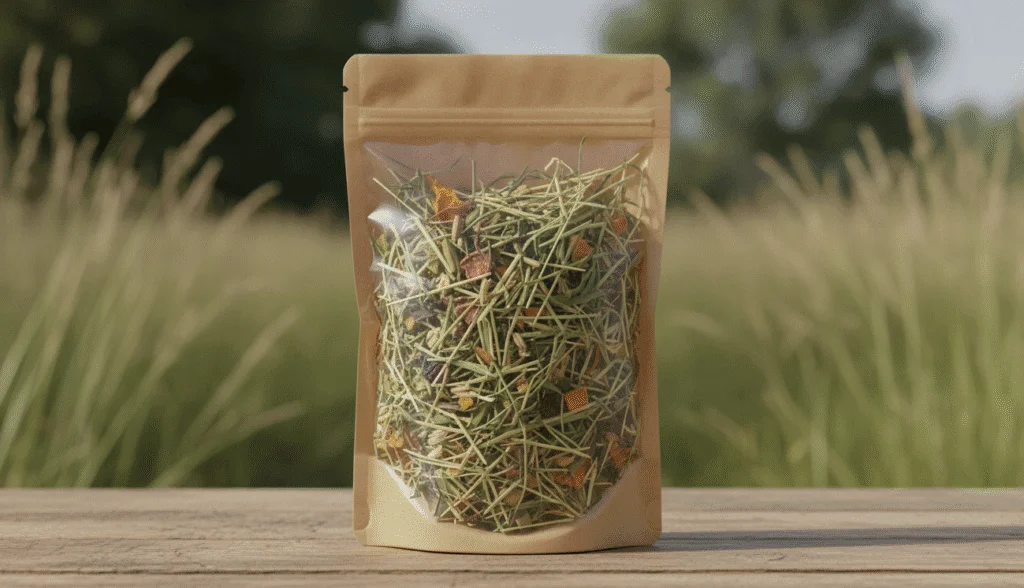
Fibre is the most important component in the diet of rabbits, guinea pigs and chinchillas. Hay should make up 80–90% of their daily intake. It supports mechanical digestion, gut motility (prevents stasis) and, most importantly, wears down the teeth. A lack of hay leads to serious digestive problems and overgrown teeth, which then require veterinary treatment.
Protein
Protein plays a key role in growth and in maintaining muscles and tissues. The right protein level is crucial, especially for youngsters, pregnant females and nursing mothers, who need more of it. For adult animals without high energy expenditure, the protein level needs to be controlled so the kidneys are not overloaded.
Fats and oils
Fats are a concentrated source of energy and are essential for absorbing fat-soluble vitamins (A, D, E, K). However, small mammals are prone to obesity. Excess fat intake is a major risk, especially for chinchillas and degus, and should be kept to a minimum unless the animal is very active.
Vitamins and minerals
A good complementary feed should provide a full range of vitamins. Vitamin C is absolutely crucial for guinea pigs. Unlike other species, they cannot synthesise Vitamin C in their bodies and must get it from food, otherwise they are at risk of developing scurvy.
Types of feed by format: Pellets, mixes and hay under the microscope
Describe the main formats sold on the market, with a focus on their pros and cons.
Pellets / Extruded feed
Description: Pellets are uniform pieces made from ingredients that have been mixed and processed under pressure. Extruded feed (extrudates) is often lighter and easier for the animal to digest.
Use: Pellets are the best option for ensuring a balanced intake of nutrients because they prevent selective feeding (the animal cannot pick out only the tasty but often fatty and unhealthy bits). They are ideal for rabbits, guinea pigs and chinchillas as a supplement to hay.
Mixes (Muesli)
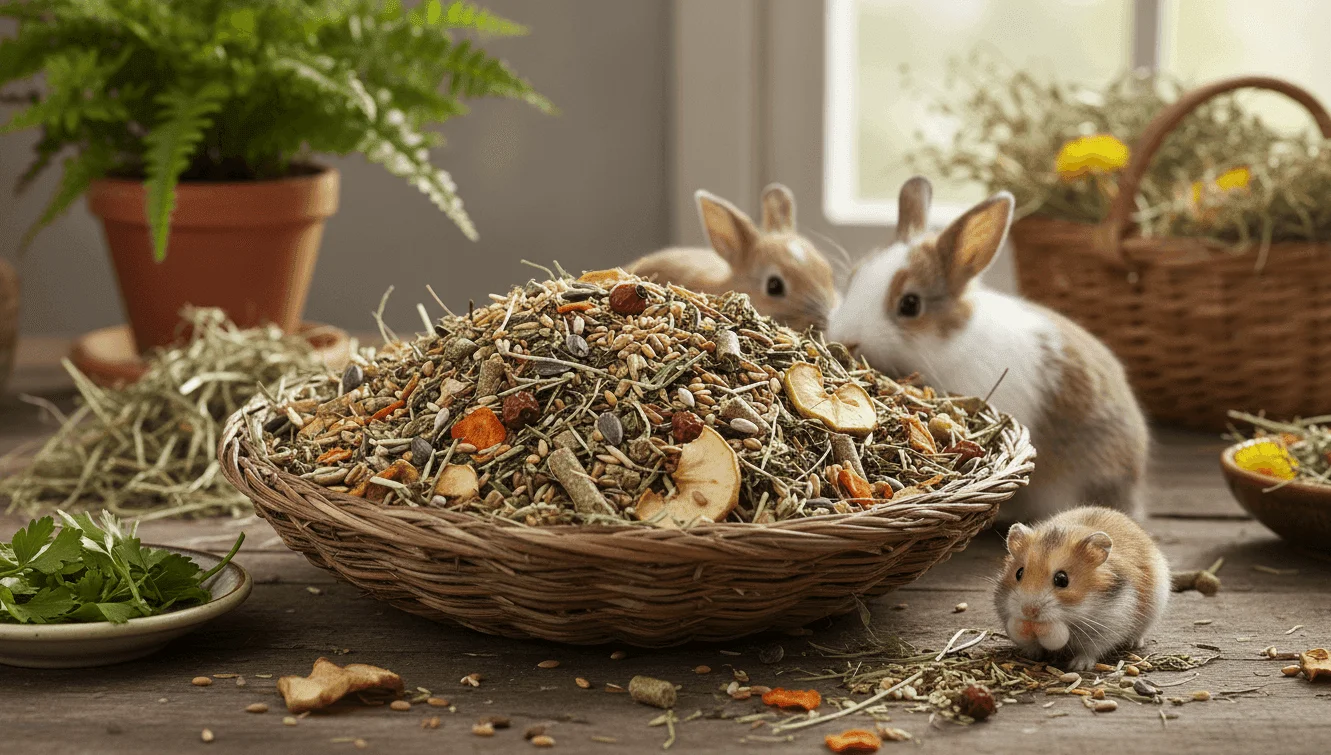
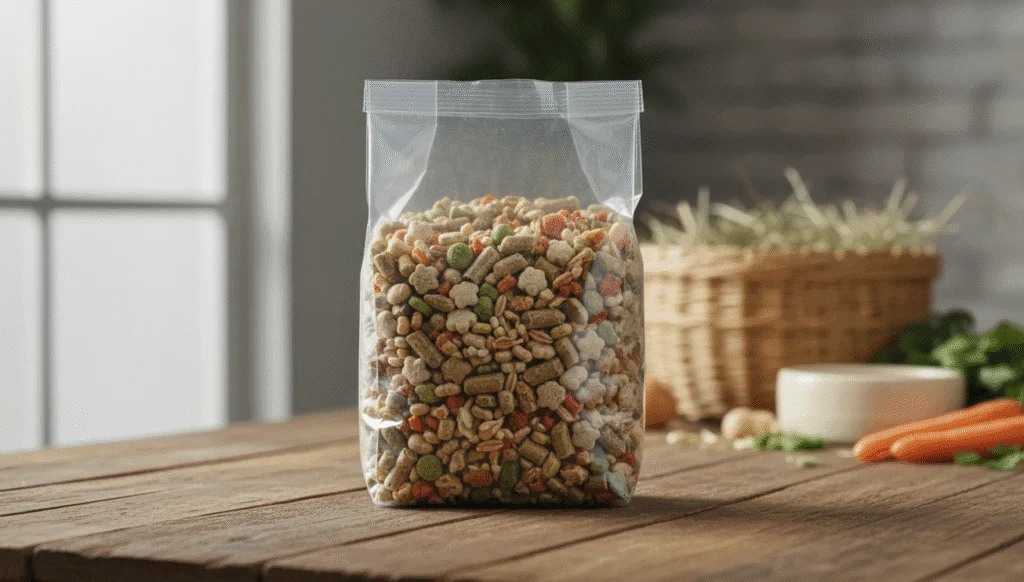
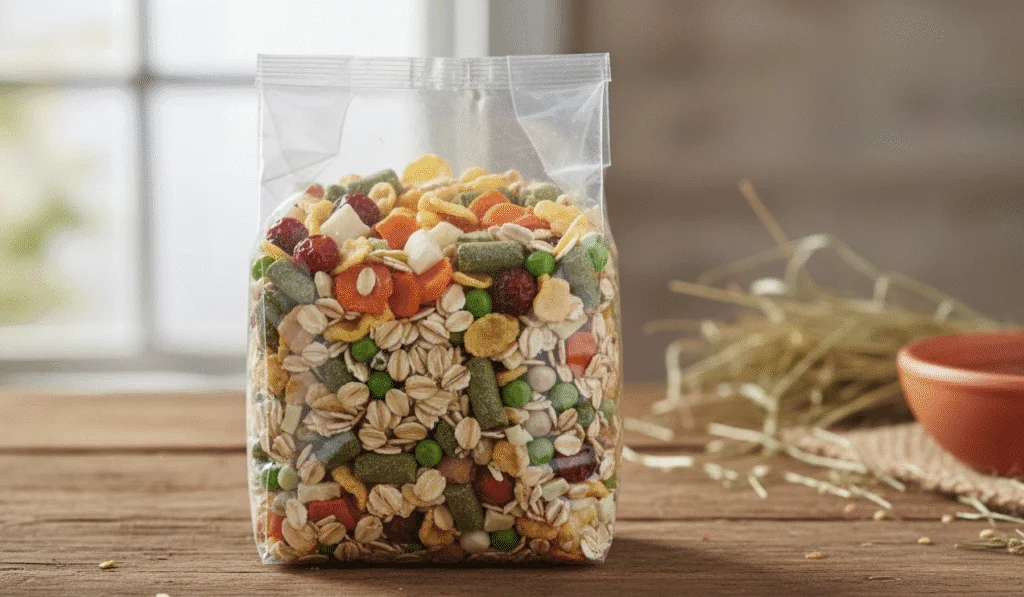
Description: Mixes contain various components – grains, seeds, dried vegetables, fruit and extruded pieces. They may look appealing to the owner, but they pose a risk for the animal.
Use: Mixes are suitable only as a supplement or for species with high energy needs (e.g. hamsters). The main drawback is the high risk of selective feeding, where the animal picks out fatty nuts and seeds and leaves the healthier, fibre-rich parts behind. Long-term feeding of mixes to herbivores leads to obesity, a lack of fibre and dental problems.
Hay (Diet staple)
Description: Hay is dried forage. The most common types are meadow hay or Timothy Hay. Alfalfa hay is recommended only for youngsters and pregnant or nursing females because of its higher calcium and protein content.
Use: Hay is absolutely essential for rabbits and guinea pigs and must be available ALL THE TIME. For hamsters and rats it has little nutritional value, but it works as nesting material and for occasional chewing. High-quality hay smells pleasant, is fresh green (not yellow) and should not be dusty.
Complementary feed and treats
Description: Treats include various drops, molasses-coated sticks, dried fruit or yoghurt snacks.
Use: They should be given only as a reward and in very small amounts. Most treats are high in sugar, fat or molasses, which burdens the herbivore’s digestive system and leads to obesity and a higher risk of diabetes.
Key label parameters: Learn how to read the ingredients
Learning to read the analytical constituents on a feed label is the most important thing you can do for your pet’s health. Ignore marketing slogans and focus on the actual values that reveal the real quality of the feed.
Fibre content
Fibre is crucial for herbivores such as rabbits, guinea pigs and chinchillas. An ideal feed should contain at least 20% fibre to support proper gut motility and help wear down the teeth. Anything lower is a red flag for poor-quality feed.
Analytical constituents (Protein, Fat)
These values show the ratio of key nutrients in the feed. Young animals and pregnant females need a higher protein content (16–18%), while adults and less active animals should have feed with lower fat (up to 3%) and protein (13–15%) to prevent obesity and kidney overload.
Natural vs. artificial ingredients
The ideal feed is based on herbs – hay, meadow grasses, herbs – without artificial colours, flavours and preservatives. These additives may improve the look and smell, but they bring no benefit to the animal and can put unnecessary strain on the body.
Sugar and molasses content
Molasses and other sweeteners are often used to bind pellets or sticks, but they increase the risk of obesity, diabetes and digestive issues, especially in degus. Avoid feeds with added sugars or syrups.
Presence of grains and seeds
Grains and seeds are high in starch and fat – suitable for hamsters and rats, but not for herbivores. In rabbits, guinea pigs and chinchillas, larger amounts can disrupt gut microflora and cause digestive problems, so they should only be a minimal part of the feed.
Choosing feed tailored to the species: Key differences
Rabbits (Lagomorphs)
As lagomorphs, rabbits have specific and very high fibre requirements. Hay (ideally Timothy or high-quality meadow hay) must make up at least 80% of their diet and must be available at all times. Alongside hay, you should feed a small, measured amount of high-quality extruded pellets with very high fibre content (20%+) and low fat. Most health issues, including overgrown teeth and gut stasis, are caused by insufficient fibre intake, so it is essential to avoid mixes and sugary or starchy treats.
Guinea pigs
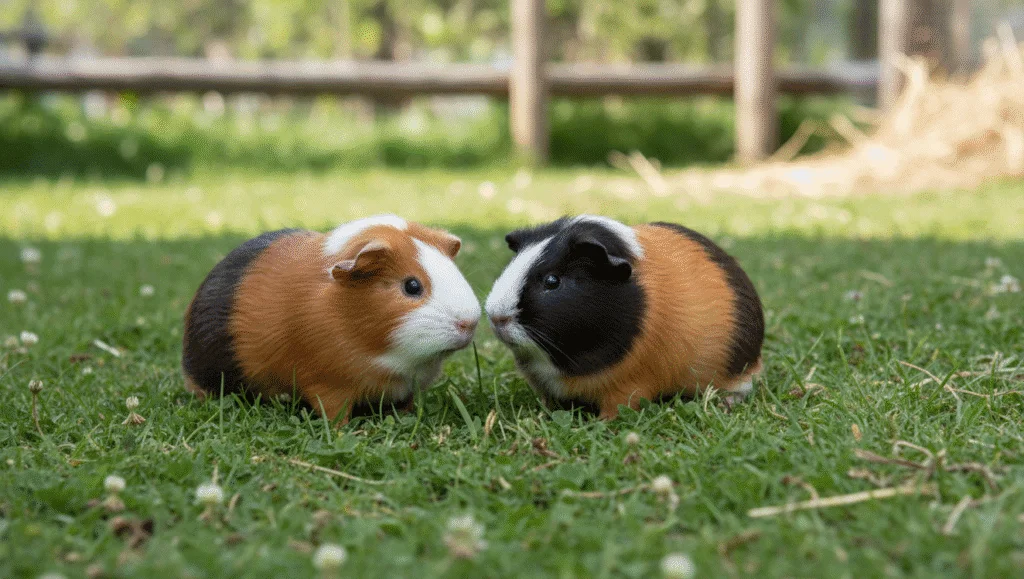
The nutritional needs of guinea pigs are very similar to those of rabbits – their digestive system needs a constant supply of hay (80% of the diet) and quality pellets. Guinea pigs differ in one critical aspect: they cannot synthesise Vitamin C on their own. It is therefore absolutely essential that their diet (whether pellets or a daily portion of vegetables such as bell pepper or parsley) contains enough stabilised Vitamin C. A deficiency leads to a serious disease – scurvy.
Hamsters and gerbils
Unlike herbivores, hamsters and gerbils are granivores and omnivores. Their diet should be more energy-dense, with a higher content of seeds and grains and a higher protein level. Mixes (muesli) are often recommended, as they are more natural for them and encourage their typical behaviour of collecting and storing food. Even so, the mix should be varied and should not contain too many fatty nuts and sunflower seeds.
Rats and mice
Rats and mice are classic omnivores and need a higher protein content (around 18–20%) to maintain good condition and growth. Their feed should be grain-based, enriched with vitamins and minerals and often with some animal protein. To ensure complete and balanced nutrition, extruded feed blocks (so-called lab blocks) are often recommended, as they prevent selective feeding and make sure the animal gets all the nutrients it needs.
Chinchillas and degus
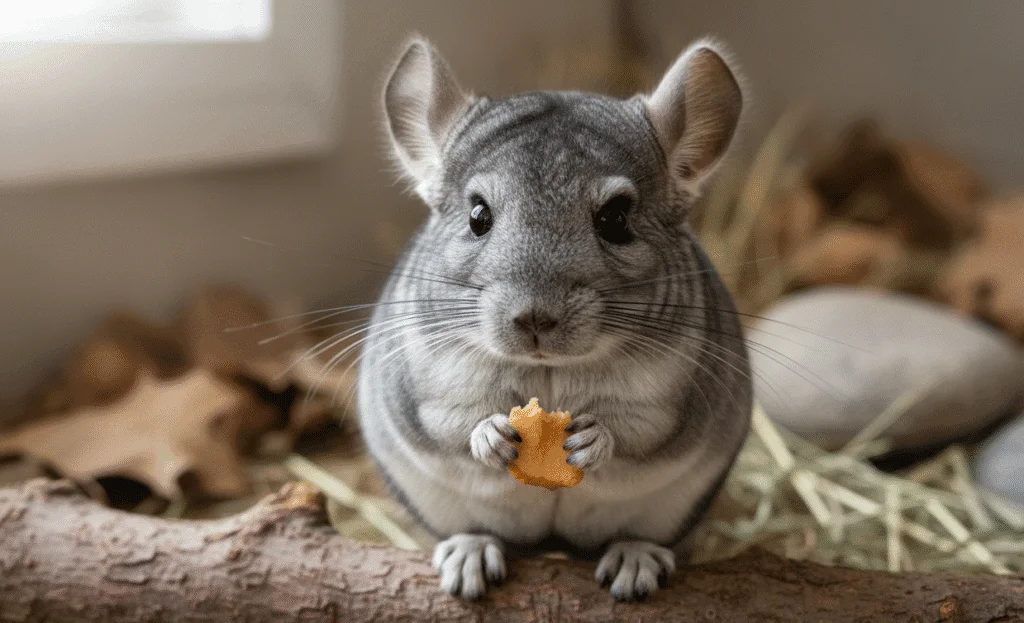
Both species are herbivores with extremely sensitive digestion and a strong sensitivity to sugars and fats. Their diet must consist of high-quality hay and pellets with the highest possible fibre content (25% and more) and minimal fat. For degus in particular, there is zero tolerance for any added sugar, molasses or fruit, as they are very prone to diabetes. For these animals, it is worth choosing the most expensive but cleanest grain-free and unsweetened feeds.
What to watch out for when buying
When shopping, be cautious about so-called “premium” mixes packed with colourful pieces or sweetened extrudates. Colours and sugars are a marketing trick designed to attract the owner, but they are completely unnecessary and often harmful to the animal’s health. Always read the ingredients list and look for a high proportion of hay, herbs and fibre, not grains, dried fruit or molasses.
Proper storage and feeding amounts
Storage to keep feed fresh
Feed should be stored in a dry, dark and cool place. Keep pellets and mixes in airtight containers to prevent fat oxidation, vitamin loss and infestation by insects or mould. Hay should be stored with good air circulation to avoid heating and mould growth, ideally in a breathable bag.
Feeding rules and switching to a new feed
The daily pellet portion should be moderate – usually 1–2 tablespoons of pellets per day per 1 kg of the animal’s body weight. The rest of the diet should consist of hay and a small amount of fresh vegetables. Switching to a new type of feed should always be gradual. Mix the new feed into the old one, starting at a ratio of 1:3, and slowly reverse the ratio over 7–10 days. A sudden change can cause serious digestive issues, especially in rabbits and guinea pigs.
Most popular and trusted brands
| Brand | Main focus and characteristics |
|---|---|
| Oxbow | Premium quality, high proportion of Timothy Hay, special veterinary ranges for different ages and health issues. |
| Supreme Science Selective | Monocomponent extrudates, prevent selective feeding, focus on high fibre and grain-free recipes. |
| Versele-Laga (Cuni/Nature) | Wide product range (from lower to higher tiers), the Nature line offers grain-free formulas with a focus on natural ingredients. |
| JR Farm | Natural products, herbal mixes, grain-free supplements. |
Price ranges and value for money: When it pays to spend more
Budget feed
What to expect: These are usually classic mixes (muesli) with a high proportion of grains and lower-quality fillers. They are affordable, but for herbivores they often lead to selective feeding and health problems due to low fibre and high starch/sugar content.
When it makes sense: Suitable only for some rodent species that tolerate grains well (hamsters, rats), or as a limited supplement, but not recommended for rabbits and guinea pigs.
Mid-range
What to expect: In this category you will find quality pellets (extrudates) with balanced analytical values, higher fibre content and safe formulas, often without unnecessary colourants. They offer good value for money.
When it makes sense: Suitable for most healthy adult animals as a reliable daily supplement to hay.
Premium / Veterinary feed
What to expect: Feed with the highest nutritional standard, targeting specific health issues (e.g. obesity, age, digestive sensitivity) or offering the cleanest possible composition, often herb-based with little to no grain.
When it pays to spend more: Whenever you are dealing with health problems, or for guinea pigs and rabbits if you want maximum prevention of digestive issues and to support longevity. With premium brands, you pay for high-quality ingredients and veterinary-backed formulas.
Summary and final tip
Feed for rodents and rabbits is the cornerstone of their health. The best feed is always the one tailored to the specific species and age of your pet. Never choose only by price or by how colourful the mix looks.
Before making your final choice, check the label: Fibre content should be as high as possible and sugars or molasses should not be listed at all. Keep in mind that a healthy rabbit or guinea pig is 80% hay and only a small, measured portion of pellets. With the right care and nutrition, you give your pet the best chance for a long and active life.
Frequently asked questions
Can I feed rabbit pellets to a guinea pig as well?
No, this is not recommended. Rabbit pellets do not contain enough Vitamin C because rabbits can synthesise it themselves. Guinea pigs cannot produce Vitamin C and must get it from their diet, otherwise they are at risk of developing scurvy. Guinea pigs therefore need special pellets with a high content of stabilised Vitamin C.
How do I know if my pet does not like the feed or if it does not agree with them?
If your pet does not like the feed, it will either refuse it or pick through it selectively (especially with mixes). If the feed does not agree with them, it usually shows as digestive problems – soft stool, diarrhoea, bloating or loss of appetite. In herbivores, any change in digestive comfort is a warning sign and calls for a change in diet.
Is it necessary to give rodents fresh vegetables?
Yes, fresh vegetables (mainly leafy and root vegetables) are an important dietary supplement for most small mammals. They provide extra fibre, vitamins (including natural Vitamin C for guinea pigs) and are important for hydration. Always introduce them in small amounts and gradually to avoid digestive upsets, and avoid fruit because of its high sugar content.
Kategorie: