How to Choose Children’s Teas: A Parent’s Guide
Children’s tea is an essential helper for many parents. Whether you need to soothe a tummy ache, keep your child hydrated during illness, or simply add some variety to their daily fluids, the right tea can be a real benefit. In this comprehensive guide, you’ll find everything in one place — from when to start offering tea, to an overview of the different types, and practical tips for preparing it properly.
Why give tea to children, and what are its benefits?
Children’s teas are specially blended drinks made from herbs and fruit, with ingredients tailored to a child’s sensitive system. They are a popular and practical part of a child’s daily fluid intake, offering a range of benefits. The main ones include hydration, especially during times when a child refuses plain water, as well as targeted support for common childhood issues. A good-quality tea can help relieve bloating and tummy aches, support the body during colds and coughs, or promote better, more restful sleep. The goal is to show that the right tea can be not only tasty for a child, but beneficial too.
Did you know……fennel, one of the most common ingredients in children’s teas, has been used for centuries to soothe digestion? Its ability to ease bloating has been proven across generations.
When to start giving children tea? Why age matters
Timing matters. Experts agree that for exclusively breastfed babies up to 6 months of age, breast milk is the best and only source of fluids they need. The same applies to formula-fed babies, as milk covers all their hydration needs. It’s best to start offering tea no earlier than when you introduce first solid foods, which is around 6 months of age.
Exceptions may include specific situations such as colic or bloating, when, after consulting a pediatrician, you can give a very small amount of a suitable herbal tea (for example, fennel tea) even to younger infants, as early as after the end of the first week of life. However, it is always essential to follow the manufacturer’s instructions on the packaging, which clearly state the age group the tea is intended for.
For the youngest children, single-herb herbal teas such as fennel or chamomile are a good choice. On the other hand, it’s important to avoid strong herbs, teas that contain caffeine (black or green tea), and larger amounts of peppermint, which can cause breathing problems in infants.
Types of Children’s Teas by Purpose and Ingredients
There is a wide range of teas on the market, and they can be divided into several main categories based on their purpose and ingredients.
Herbal teas for digestion and an upset stomach
These teas are intended mainly for infants and toddlers struggling with bloating, colic, and digestive discomfort. They typically contain herbs known for their soothing and antispasmodic effects, such as fennel, anise, caraway, or chamomile. They offer natural, gentle relief, but it is essential to follow the recommended dosage, because even herbs can cause unwanted side effects when overused. Be especially careful with chamomile, as it can be an allergen for some children.
Fruit teas for everyday drinking and hydration
Fruit teas are ideal for toddlers and older children as a healthier, tasty alternative to sugary juices and fizzy drinks. These are blends of dried fruit such as apples, rosehips, raspberries, or strawberries, which are naturally sweet. They have a great flavor that children love and can help support a good fluid intake. One major downside of lower-quality products, however, is the presence of added sugar, glucose syrups, or artificial flavorings. That’s why it’s always worth checking the ingredients carefully.
Teas for colds and respiratory support
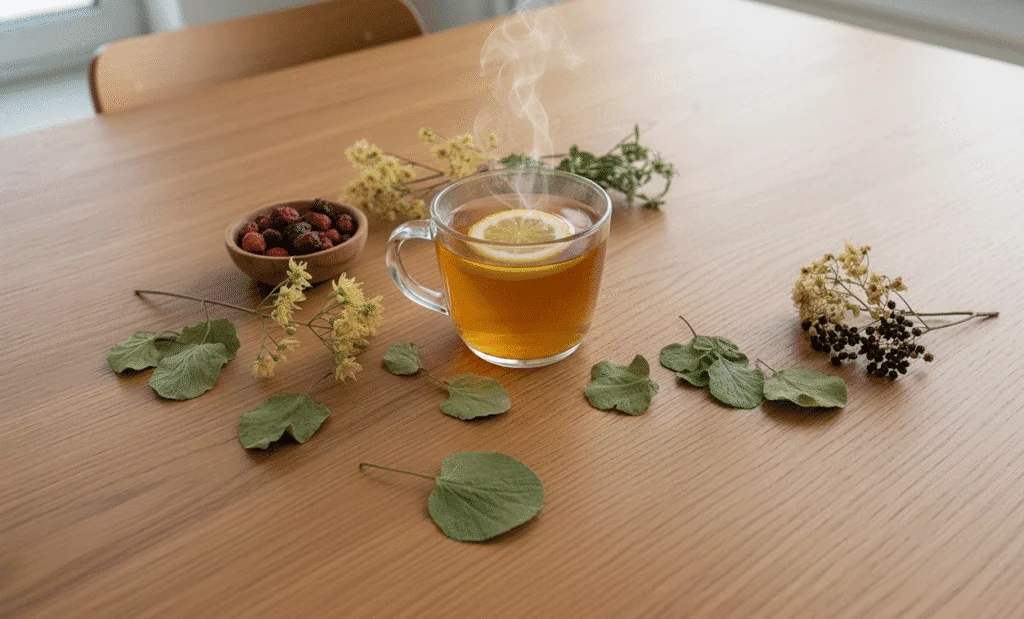
This type of tea is suitable for children dealing with a runny nose, cough, or symptoms of a common cold. It contains herbs that support the immune system and respiratory health, such as rose hips (rich in vitamin C), linden blossom (helps promote sweating), plantain, or elderflower. These ingredients help loosen mucus and make it easier to cough up. They provide targeted support during illness, but it is important to check whether the herbs included are suitable for your child’s age.
Teas for Relaxation and Better Sleep
They are intended for children who have trouble falling asleep, are restless or irritable, for example during teething. The blends contain herbs with relaxing and calming effects, most often lemon balm, chamomile, linden, or lavender. They offer gentle, natural support for a bedtime routine, but their effect is highly individual and may not work the same way for every child.
Key factors to consider when choosing tea for children
When buying tea for children, don’t be swayed by the colorful packaging alone. The most important information is on the back of the box.
Composition and Types of Herbs
Always read the ingredients carefully. For the youngest children, single-ingredient teas are the best choice, for example pure fennel tea, because it’s easier to spot any possible reaction. With blends, make sure all the herbs included are safe for the child’s age. Safe herbs include fennel, chamomile, lemon balm, linden, and rosehip. On the other hand, avoid teas that contain theine (caffeine), such as black or green tea, as these are completely unsuitable for children. Extra caution is also needed with peppermint in infants.
Tea form
- Tea bags: They’re the most convenient and quickest to prepare.
- Loose-leaf teas: They often offer better-quality herbs and fruit because the ingredients are not ground as finely. They take a bit more effort to prepare, but the flavor is usually fuller.
- Instant (granulated) teas: Their main advantage is that they dissolve quickly, even in lukewarm water. The downside, though, is their often high sugar content or use of artificial sweeteners, which makes them the least suitable option.
Sweeteners and Added Ingredients
The best choice is tea without any added sugars, glucose syrups, flavorings, or colorings. That way, your child won’t get used to an overly sweet taste for no reason. If you still want to add a bit of flavor, you can steep the tea with a piece of apple or lightly sweeten it with good-quality honey once it has cooled down (only give honey to children over one year old due to the risk of botulism).
Certification (Organic Quality)
The organic label guarantees that the ingredients used to make the tea were grown using organic farming methods, without pesticides or chemical fertilizers. For products intended for the youngest children, organic quality is a major advantage because their bodies are much more sensitive to the presence of foreign substances.
How to Choose the Right Tea for Your Child’s Needs
Now let’s sum up some practical recommendations for specific situations.
Choosing for Newborns and Infants
For the youngest children (always after consulting a pediatrician), choose only single-ingredient, unsweetened organic teas that are clearly labeled as suitable from birth or from the 1st week. Most often, these are fennel or chamomile teas.
Choosing a cup for your toddler’s everyday drinking
For older infants and toddlers who already need extra fluids, high-quality fruit teas with no added sugar are an ideal choice. They taste great, contain no stimulating substances, and are a healthy alternative to sugary drinks. Rooibos is also an excellent option, as it is naturally sweet and caffeine-free.
What should you watch out for when buying?
Don’t be fooled by marketing tricks. A cheerful package with a picture doesn’t guarantee quality ingredients. A common issue is hidden sugar, including under names like fructose or glucose syrup. Choose products with the simplest, cleanest ingredient list possible.
Proper preparation, serving, and storage
- Preparation: Always make the tea fresh. Use good-quality water, ideally water suitable for infants. Bring the water to a boil, then let it cool to the temperature recommended by the manufacturer, usually around 80–90 °C. Steeping time matters — for herbal teas, it is typically 5–10 minutes. Steeping for too long can release bitter compounds.
- Serving: Before serving, let the tea cool to a comfortable drinking temperature. For infants, give the tea by spoon or from a small cup. Avoid long-term use of a bottle with a teat, as this can contribute to tooth decay, especially if the tea is sweetened.
- Recommended amount: For infants, the daily amount is around 100–150 ml. For older children, the amount may be higher, but tea should still only be a supplement to their fluid intake, which should be based mainly on plain water. Follow the recommendation on the product packaging.
- Storage: Store teas in a dry, dark place and in a tightly sealed container to preserve their aroma and active compounds.
Price and Budget Categories
Prices of children’s teas vary depending on quality, ingredients, and certification.
- Budget category (around $2–$3): Standard tea bags from mainstream brands. They usually offer good value for money.
- Mid-range category (about $3–$3.50): This is where you’ll find most organic teas and special functional blends.
- Premium category (about $3 and up): Premium organic brands and loose-leaf teas with a higher share of quality ingredients.
When is it worth paying extra? Especially for teas intended for the youngest infants, where guaranteed organic quality and a clean ingredient profile are essential. A higher price often means greater confidence that the tea is free from pesticides, heavy metals, and other unwanted substances.
Summary and a Final Tip
Choosing a tea for your child can seem complicated, but a few simple guidelines are all you need. Always check the ingredients, choose tea based on your child’s current age and needs, and avoid added sugar without exception. Keep in mind that herbal teas are more of a supplement for specific issues and should not replace water in your child’s regular fluid intake. What matters most is that your child enjoys the tea and that it suits them well, whether it helps with a tummy ache, keeps them warm during illness, or simply makes shared moments throughout the day more pleasant.
Frequently Asked Questions (FAQ)
Can children’s tea replace other fluids, such as water or milk?
No. For infants, breast milk or infant formula should always be the foundation. For older children, plain water should be the main part of their fluid intake. Children’s tea, especially herbal tea, is a supplement, not the main source of hydration.
How can I tell if my infant is allergic to one of the herbs in the tea?
An allergic reaction may show up as a skin rash (hives, eczema), digestive issues (diarrhea, vomiting), or restlessness and irritability. If you notice any of these symptoms after giving a new type of tea, stop serving it and consult your pediatrician. That’s why it’s best to start with single-ingredient teas.
Can I combine different kinds of herbal teas for children during the same day?
For older children, and in small amounts, this is usually not a problem (for example, fruit tea in the morning and a calming tea in the evening). For infants, and when addressing a specific issue, it is better to stick to one type of tea so you do not combine too many active ingredients. Always follow the recommended daily dosage stated on the packaging.
Kategorie:
Články (Nejnovější / Podobné)

Argentina: Wild Nature, Bold Flavors and the Rhythm of Tango
8/5/2026
How to choose the best cat food for your cat
7/29/2026
Complete Expert Guide: How to Choose the Best Food for Rodents and Rabbits
6/29/2026
Do You Know the Difference Between Vitamin D2 and D3?
6/26/2026
Kefir vs. Acidophilus Milk: The Complete Guide to Probiotics, Choosing, and Health
6/19/2026