Choosing the right kibble for your dog step by step

The food in your dog’s bowl is much more than just a meal – it’s the fuel for their health, energy, and vitality. Choosing the right kibble is therefore one of the most important decisions you make as an owner. Today’s market offers hundreds of options: for puppies, canine athletes, seniors, or allergy sufferers. It’s easy to get lost in such a wide selection. This guide walks you through everything that matters and shows you how to choose food that will help your companion live a long and happy life.
Did you know that high-quality kibble can influence not only your dog’s coat and energy levels, but also their behaviour? A balanced diet without irritating ingredients can help your dog stay calmer and more focused.
Types of kibble: Categories and variants
To choose the right kibble, it’s important to understand how it’s categorized. Each group is designed to match the specific needs of a particular type of dog as closely as possible.
By age
Puppy: A growing puppy’s body has extremely high nutritional demands. Puppy kibble therefore contains a higher proportion of quality protein and fat, which are crucial for proper development of muscles, bones, and organs. It also includes an optimal ratio of calcium and phosphorus for healthy skeletal growth. The kibble pieces are smaller so the puppy can chew them easily.

Adult: Once a dog is fully grown, their nutritional needs stabilise. Adult formulas are designed to maintain ideal body condition, energy, and overall health. They offer a balanced ratio of protein, fat, and carbohydrates that covers the normal energy requirements of an adult dog.
Senior: Older dogs tend to be less active and their metabolism slows down. Senior kibble therefore has fewer calories to help prevent excess weight that would put unnecessary strain on the joints. It’s often enriched with joint-support supplements (chondroitin and glucosamine) to support the musculoskeletal system and antioxidants to boost the immune system.

By breed size
Small breeds (Small/Mini): Small dogs have a fast metabolism and, relative to their size, use more energy. Their kibble is therefore more energy-dense and comes in smaller pieces so they can chew it comfortably.
Medium breeds (Medium): This is the most universal category. Both the formula and kibble size are tailored to the average needs of dogs that weigh roughly 10 to 25 kg as adults.
Large breeds (Large/Maxi): Large and giant breeds grow very quickly, which puts huge demands on their joints and bones. Kibble for large breeds has a specific formula focused on joint health support and often includes chondroprotective substances. The pieces are larger, which forces the dog to chew more and helps reduce gulping and related digestive issues.
By special needs
Grain-Free: These recipes do not contain grains such as wheat, corn, or soy, which can be harder to digest for some dogs or may trigger allergic reactions. They are an ideal choice for dogs with sensitive digestion or gluten intolerance. Carbohydrates usually come from potatoes, sweet potatoes, or legumes.
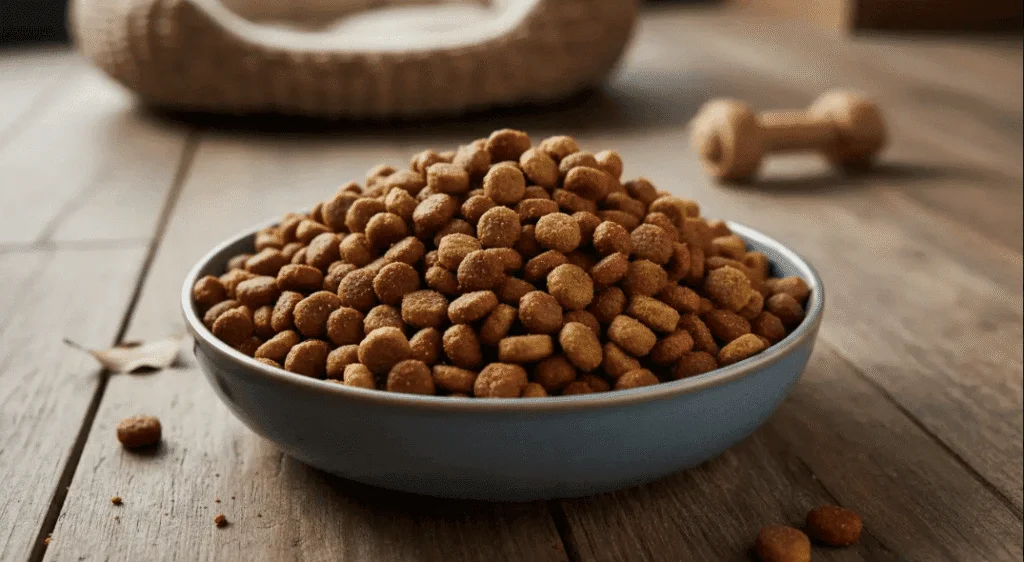
Hypoallergenic: These are designed for dogs suffering from food allergies. They most often contain only one type of animal protein (monoprotein), such as lamb or fish, to minimise the risk of an allergic reaction.
Diet / for overweight dogs (Light/Weight Control): Formulas for overweight dogs have a reduced fat and calorie content, but a higher proportion of fibre. Fibre helps your dog feel full without taking in excess energy and also supports healthy digestion.
For active and working dogs (Active/Energy): Sporting and working dogs burn a huge amount of energy. Their food literally has to be “packed with fuel”. These kibbles are characterised by a high content of fats and proteins, which provide the energy needed for top performance and quick muscle recovery.
How to read the label: Key factors when choosing
Packaging sells, but the ingredient list decides the quality. Learning how to read it is the most important skill when choosing kibble. Ingredients are listed in descending order according to how much of each is in the food.
Protein sources and content
Protein is the basic building block for muscles, organs, and the immune system. Quality meat should always be listed first in the ingredients. Pay attention to wording. “Fresh chicken meat” sounds great, but it can contain up to 70% water. After processing, its actual share in the kibble drops significantly. That’s why it’s ideal if the label also lists dried meat or meat meal, which are concentrated protein sources. On the other hand, avoid vague terms like “meat and animal by-products”, which may hide lower-quality ingredients such as skin or beaks.
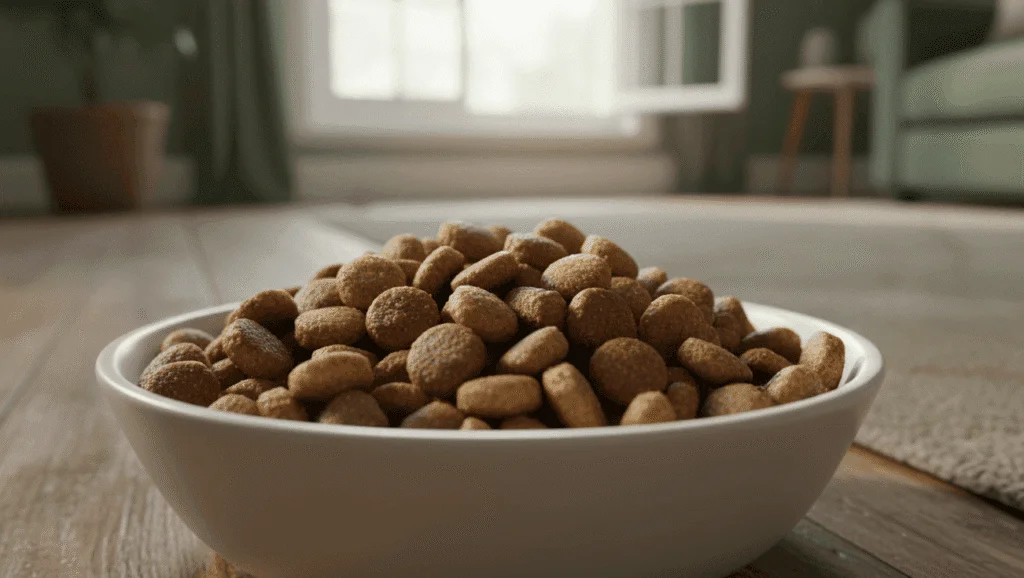
Fats
Fats are the main source of energy and are essential for healthy skin and a shiny coat. Beneficial fats include animal fats (e.g. chicken fat) and fish oils (such as salmon oil), which are rich in Omega-3 and Omega-6 fatty acids. These support the nervous system and immune function and have anti-inflammatory effects.
Carbohydrates
Carbohydrates provide your dog with quick energy. Good sources include potatoes, sweet potatoes, peas, and rice. Wheat and corn, especially when listed near the top of the ingredient list, can be harder to digest for many dogs and often serve mainly as cheap fillers.
Fibre
Fibre is crucial for proper digestive function. It supports bowel movement and helps maintain a healthy gut microbiome. Common fibre sources include beet pulp, apples, or chicory.
Additives
High-quality kibble also contains a range of beneficial additives. For large breeds and seniors, joint-support supplements such as chondroitin and glucosamine are important. You’ll also find vitamins, minerals in chelated (better-absorbed) form, and natural antioxidants (e.g. vitamin E, rosemary), which protect cells from damage and support immunity.
What to avoid in kibble
When reading the label, focus as well on what shouldn’t be there. Avoid kibble that contains artificial colours, flavour enhancers, and chemical preservatives (BHA, BHT). Likewise, quality dog food should not contain added sugars or excessive amounts of salt, which only make the food more appealing but can harm your dog in the long run.
How to choose kibble tailored to your dog
There is no one-size-fits-all kibble for every dog. Every dog is unique and their needs differ.
By age and life stage
It’s essential to respect your dog’s age. A puppy needs far more energy and nutrients for growth than a senior dog. Feeding a puppy senior kibble would lead to undernutrition and poor development, while a senior fed puppy food would quickly gain excess weight.
By size and breed
As mentioned earlier, the needs of small and large breeds differ dramatically. Small breeds need energy-rich food in small kibble pieces, while large breeds require formulas that support healthy joint development and larger kibble that encourages chewing.
By activity level
The needs of a couch potato and a dog that runs dozens of kilometres a day are worlds apart. A less active dog will do well on a standard adult formula, whereas a canine athlete needs a highly energy-dense food with more fat and protein to have enough strength and to support proper muscle recovery.

If your dog has health issues
If your dog has allergies, a sensitive stomach, excess weight, or other health problems, choosing the right food is absolutely crucial. For allergy-prone dogs, opt for hypoallergenic or monoprotein kibble. Dogs with sensitive digestion often do better on grain-free formulas. For overweight dogs, look for foods labelled “Light” or “Weight Control”. It’s always best to discuss your choice with your vet.
What to watch out for when buying
Don’t be fooled by attractive packaging and marketing slogans. A claim like “beef-flavoured” may mean the kibble contains only a tiny amount of meat or just artificial flavouring. Look for wording such as “with beef” and always check the percentage of meat listed on the back of the bag.
Proper feeding and storage
Choosing the right kibble is only half the battle. Proper feeding and storage are just as important.

How to determine the right daily amount
Every bag of kibble includes a feeding chart recommending the daily amount based on your dog’s weight. Treat it as a guideline, not a strict rule. The actual portion has to be adjusted to your dog’s individual needs – their age, activity level, metabolism, and body condition. Weigh your dog regularly and watch their shape. A properly fed dog should have a visible waist and a tucked-up abdomen when viewed from the side.
How to switch to a new kibble
Switching to a new food must be gradual so your dog’s digestive system has time to adapt. Ideally, make the change over 7–10 days. Start by mixing a small amount of the new kibble into the old one (around 25%). Gradually increase the share of the new kibble until it completely replaces the original food. This helps prevent digestive issues such as diarrhoea or vomiting.
How to store kibble
To keep kibble fresh, tasty, and nutritionally valuable, proper storage is essential. Store it in a dry, dark, and cool place, ideally in the original bag, which is designed to protect the contents from external factors. After opening, always close the bag carefully or pour the kibble into an airtight container. An opened bag should ideally be used within 2–3 months.
Overview of brands and manufacturers
The pet food market can be divided into three basic categories according to quality and price.
Economy class
These kibbles are the most affordable. However, their formulas often contain less meat and a higher share of grains such as wheat or corn. They frequently include artificial colours and preservatives. They can work for owners with a very tight budget, but in the long run they may not provide optimal nutrition.
Premium class
This is the golden middle ground with a good price-to-performance ratio. These foods contain better-quality ingredients, a higher meat content, and more digestible carbohydrate sources. They are a solid choice for most healthy dogs without specific dietary needs.
Superpremium and holistic class
This category offers the highest quality. These kibbles contain a high proportion of fresh meat, are often grain-free, and enriched with functional extras such as herbs, fruit, vegetables, and joint-support supplements. A holistic approach means the food is formulated with your dog’s overall health and wellbeing in mind. It’s ideal for dogs with higher demands, sensitive digestion, or for owners who simply want to give their dog the very best.
| Category | Typical brands (examples) |
|---|---|
| Superpremium / Holistic | Acana, Orijen, Carnilove, Brit Care |
| Premium | Brit Premium, Purina Pro Plan, Royal Canin |
| Economy | Pedigree, Chappi, some private-label brands |
Summary
When choosing kibble, focus on three key things: carefully check the ingredients (meat must come first), choose according to your dog’s individual needs (age, size, activity level), and don’t be afraid to invest in quality. The best indicator that you’ve chosen well is your dog’s condition. A shiny coat, plenty of energy, small firm stools, and overall vitality all show that the food suits them. Picking the right kibble is one of the biggest expressions of love you can show your dog. We wish you a good choice – and your dog a great appetite!
Frequently asked questions (FAQ)
Are grain-free kibbles really better for every dog?
Not necessarily. They’re a great option for dogs with gluten allergies or sensitive digestion. For a healthy dog with no issues, a quality kibble with rice or oats can be perfectly fine as well. It always depends on the individual dog.
How do I know the chosen kibble doesn’t suit my dog?
Watch for several warning signs: poorer coat quality (dandruff, hair loss), digestive problems (diarrhoea, constipation, gas), excessive scratching, ear infections, loss of energy, or, on the contrary, hyperactivity. If these symptoms persist after switching to a new food, it’s time to consider a change.
Can I rotate different kibble brands?
Yes, rotation can be beneficial for some dogs because it offers a more varied intake of nutrients. It’s important, however, to switch gradually between brands and ideally stay within the same quality tier (for example, rotating different superpremium brands). Some experts still recommend sticking with a proven food that works, because frequent changes can disrupt the gut microbiome.
Kategorie:
Články (Nejnovější / Podobné)

Amino acids that drive performance – how they work and why they matter
5/8/2026
What creatine does to your body – facts every athlete should know
5/4/2026

Complete guide to choosing a dog collar: Everything you need to know
4/3/2026

How to Choose Children’s Teas: A Parent’s Guide
3/16/2026

How to Choose Contact Lenses: Types, Care, and Common Mistakes V5
3/6/2026