How to Choose Contact Lenses: Types, Care, and Common Mistakes V5
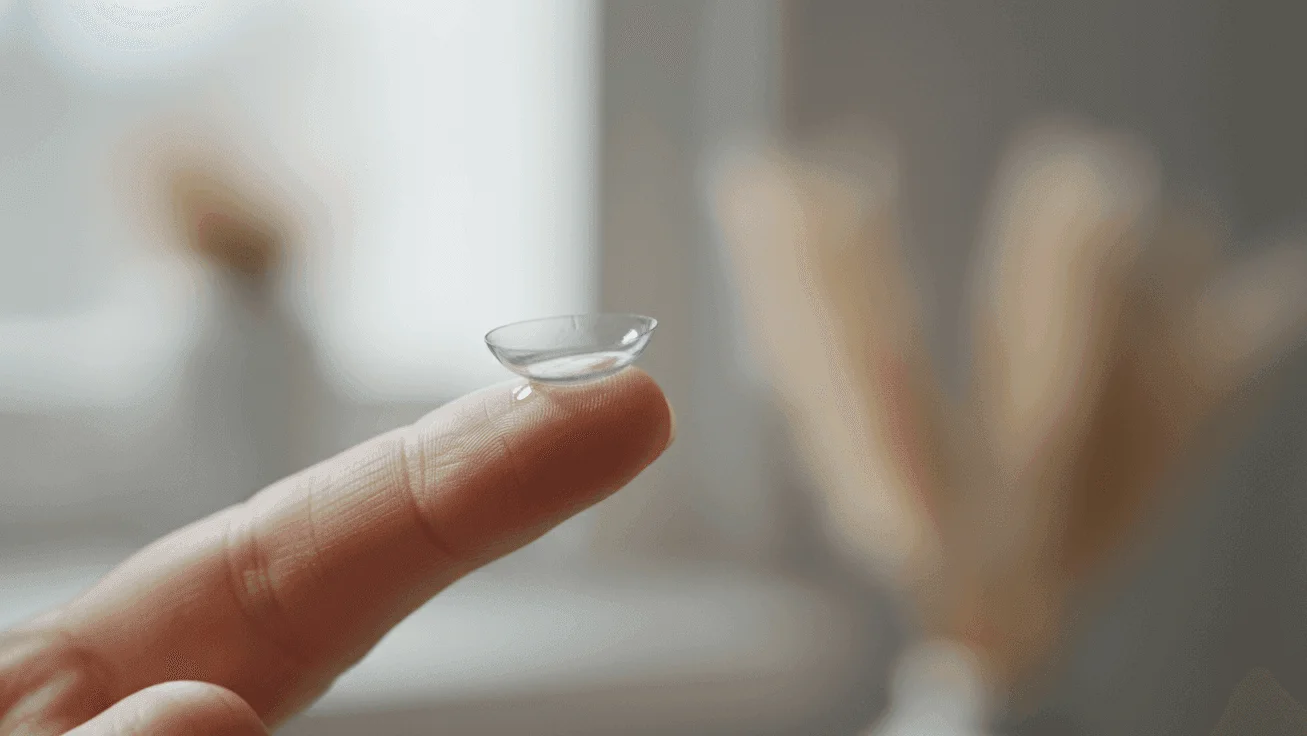
Imagine a world where rain doesn’t drip onto your lenses, your glasses don’t fog up in winter, and you can fully enjoy sport without worrying about broken frames. Contact lenses are a modern, comfortable and safe alternative that gives you exactly that. They offer perfectly sharp vision without limiting your field of view, keep your natural appearance and can correct even complex eye conditions. They’re a great option for almost anyone who wants freedom from glasses.
Did you know that the first soft contact lenses were invented by Czech scientist Otto Wichterle on Christmas Eve 1961 using a Merkur construction kit?
Before you start: Why is a visit to a specialist essential?
Before you dive into the world of contact lenses, it’s absolutely crucial to understand one thing: contact lenses are a medical device and choosing them belongs solely in the hands of an eye doctor or optometrist. Buying lenses “on your own” based only on your glasses prescription is a gamble with your eye health.
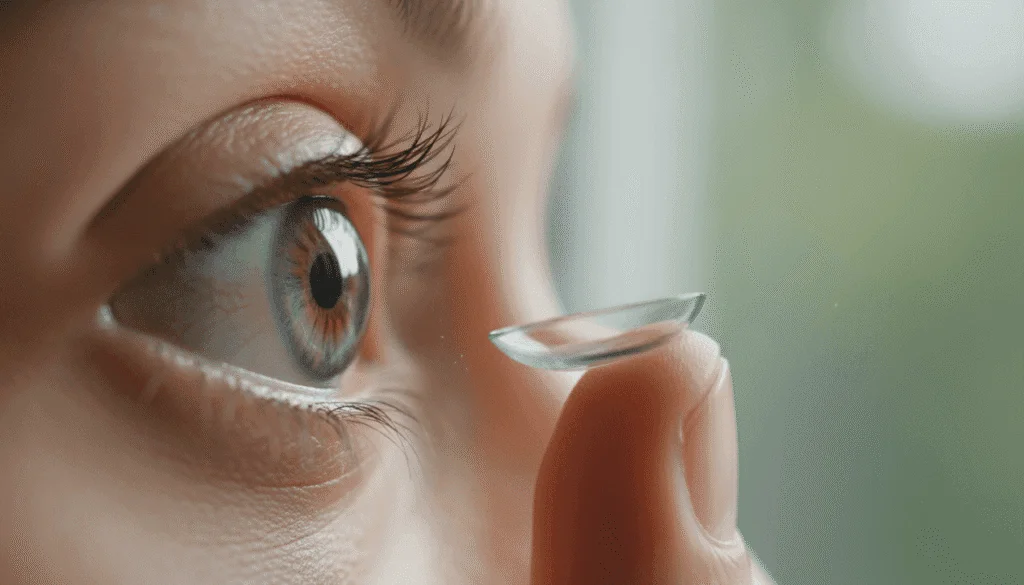
During a professional fitting, the specialist doesn’t just measure your prescription. They also carry out several other important tests. They check the overall health of your eyes, measure the curvature and diameter of the cornea so the lens fits perfectly, and assess the quality of your tear film. Based on these results, they recommend the most suitable type of lenses specifically for you. The first fitting also includes training in proper handling – inserting, removing and caring for your lenses, so you can manage everything safely and confidently.
Types of lenses by wearing and replacement schedule
Lenses are most often divided by how long you can wear them and when they need to be replaced with a new pair. Each type has its own advantages and suits a different lifestyle.
Daily disposable lenses
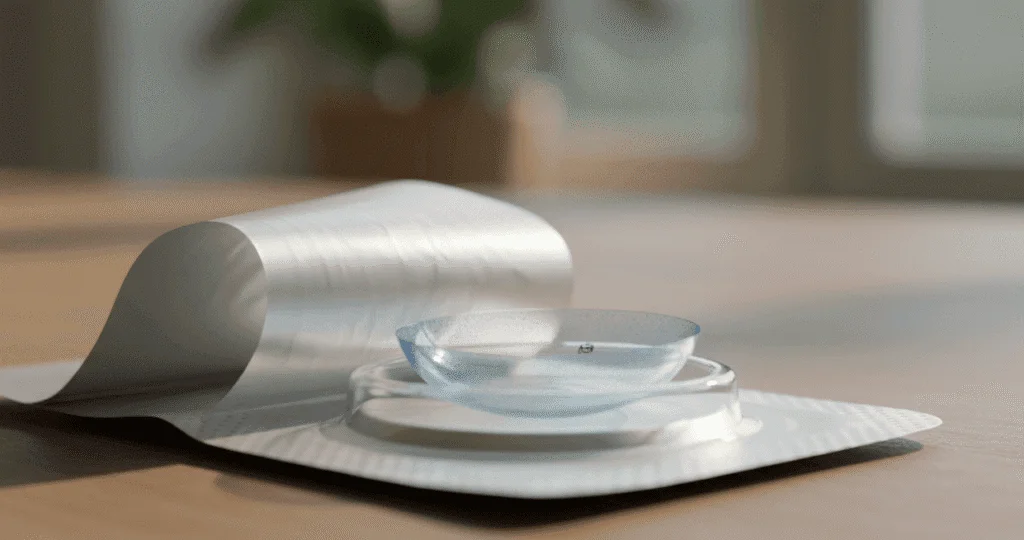
As the name suggests, you put in a completely new, sterile pair of lenses every day and simply throw them away in the evening. This is the most convenient and healthiest way to wear lenses. They’re ideal for athletes, allergy sufferers who are bothered by deposits on lenses, occasional wearers (for example only for sport or social events), and anyone who wants maximum hygiene and comfort with zero fuss.
| Advantages | Disadvantages |
|---|---|
| Maximum hygiene and eye health | Higher cost if worn every day |
| No cleaning, no solutions needed | You need a fresh pair available every day |
| Ideal for allergy sufferers and sensitive eyes |
Two‑week and monthly lenses
These lenses are designed to be reused for two weeks or one month. That means you must take care of them every single day. Every evening after removing them from your eyes, you need to clean them mechanically, rinse them and store them in a special disinfecting solution. They’re a more economical choice for regular, experienced wearers who are used to a daily care routine.
| Advantages | Disadvantages |
|---|---|
| Significantly lower cost than daily disposables | Requires careful daily hygiene |
| More eco‑friendly (less waste) | Risk of infection if care is neglected |
| Deposits can build up on the lens surface |
Extended (continuous) wear
There are also special lenses with extremely high oxygen permeability that, once approved by a specialist, can be worn continuously, including overnight, for several days. This option is only suitable for specific cases and requires very healthy eyes plus thorough assessment and ongoing supervision by an eye care professional.
Types of lenses by vision correction
Modern contact lenses can handle almost all common vision problems.
Spherical lenses
This is the most common type of lens. It corrects short‑sightedness (myopia), where you see poorly in the distance, and long‑sightedness (hypermetropia), where you struggle to focus up close and sometimes also far away.
Toric (astigmatic) lenses
These are designed for people with astigmatism. This condition is caused by an uneven curvature of the cornea, which leads to blurred and distorted vision at all distances. Toric lenses have a special shape that compensates for this irregularity.
Multifocal (presbyopic) lenses
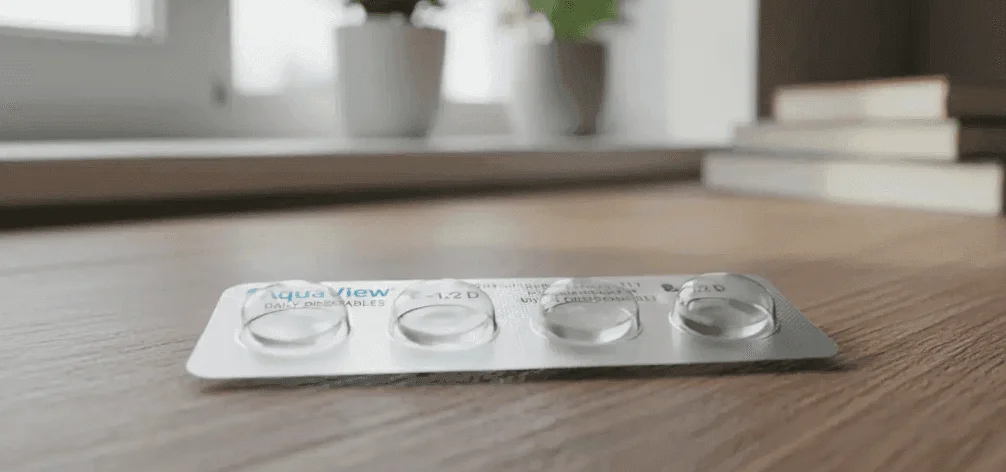
These are a modern solution for people over 40 who suffer from presbyopia. This age‑related condition makes near vision more difficult, typically when reading. Multifocal lenses contain several zones with different powers, allowing you to see clearly up close, at intermediate distances and far away at the same time.
Key parameters: How to read your prescription and lens box
On the lens box and in your prescription you’ll find several abbreviations and numbers that define the exact properties of your lenses.
- Dioptres (PWR or SPH): Indicates the strength of correction. A minus sign (–) means correction for short‑sightedness, a plus sign (+) for long‑sightedness.
- Base curve (BC): Indicates the radius of the inner curve of the lens in millimetres. This parameter is crucial for the lens to “sit” properly on the eye and feel comfortable.
- Diameter (DIA): Shows the overall size of the lens in millimetres. Together with the base curve, it determines how the lens adheres to the eye.
- Cylinder (CYL) and Axis (AXIS): You’ll see these two parameters only on toric lenses. Cylinder indicates the strength of astigmatism correction and axis its orientation in degrees.
- Oxygen transmissibility (Dk/t): A key value for eye health. It shows how well the lens “breathes”, i.e. how much oxygen passes through to the cornea. The higher this number, the better for your eye.
- Water content: Expresses the percentage of water in the lens material. Higher water content can provide better initial comfort, but for people with dry eyes, lenses with lower water content are often more suitable, as they don’t draw as many tears from the eye.
Proper care and hygiene: Golden rules of lens wear
Safety and comfort with reusable lenses stand and fall on good hygiene.
Inserting and removing lenses
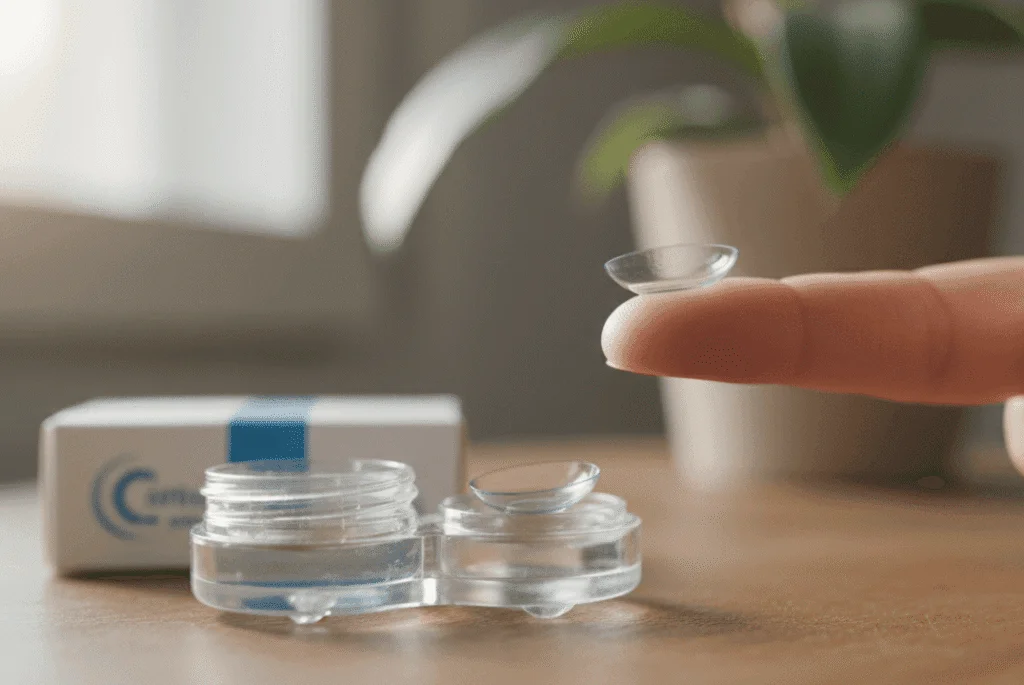
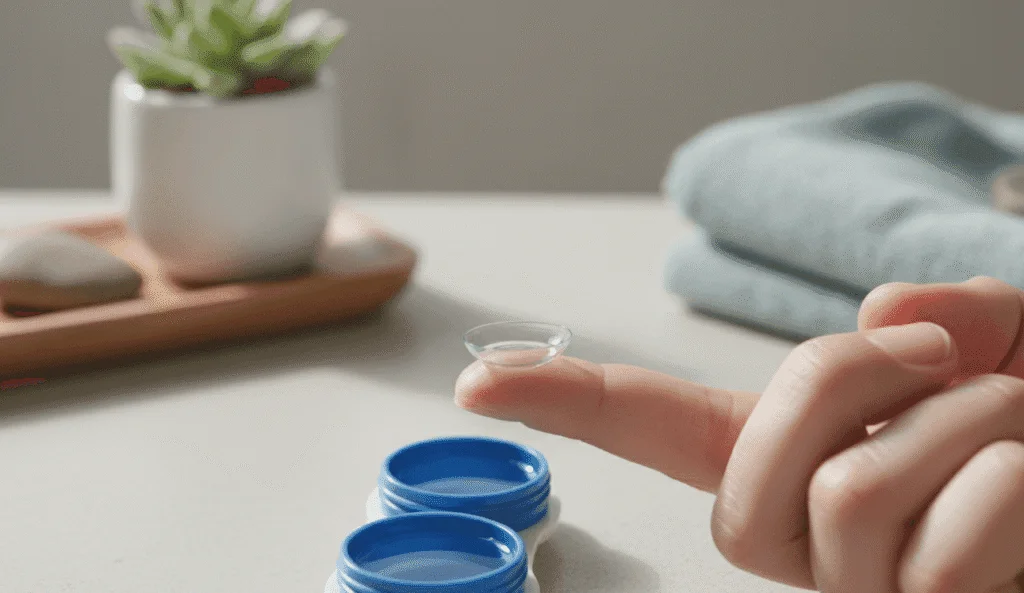
Before you touch your eyes or lenses, always wash your hands thoroughly with soap and dry them with a lint‑free towel. Place the lens on the tip of your index finger, use the other hand to hold your eyelids and gently place the lens on your eye. When removing it, again hold your eyelids and gently pinch the edges of the lens between your index finger and thumb, then slide it off the eye.
Cleaning and storage
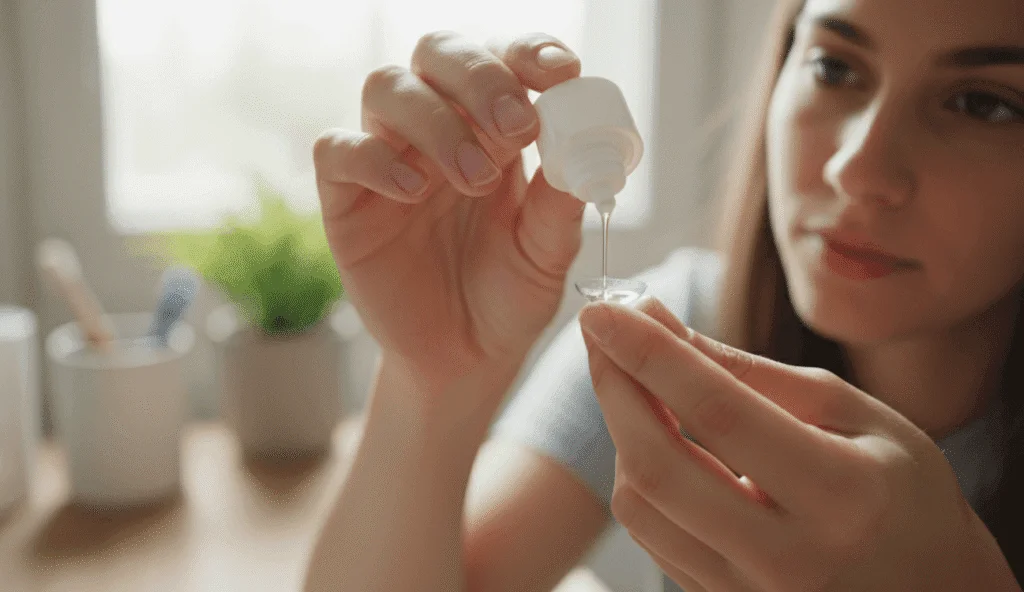
After removal, place the lens in your palm, apply a few drops of fresh solution and gently rub it mechanically on both sides with the fingertip of your other hand for about 15 seconds. This removes deposits. Then rinse the lens with solution and place it in a clean case filled with a completely fresh dose of solution. Never reuse solution that’s already been in the case!
What to watch out for
Never – really never use tap water to clean or store your lenses. It contains microorganisms that can cause serious infections. Do not sleep in your lenses unless they are specifically designed for continuous wear and approved for that use by your specialist. Also avoid swimming or showering while wearing contact lenses.
Most popular brands and manufacturers
The contact lens market is dominated by a few major manufacturers who offer a wide range of products.
- Acuvue (Johnson & Johnson): One of the best‑known manufacturers, strongly focused on comfort, innovation and eye health. Many of their lenses include a UV filter.
- Air Optix / Dailies (Alcon): This brand puts a strong emphasis on materials with high oxygen permeability, which supports long‑term corneal health.
- Biofinity / Proclear (CooperVision): Offers a very wide range of lenses for different types of correction, including special lenses for wearers with dry eye syndrome.
- Bausch + Lomb (Ultra, PureVision): A long‑established and trusted manufacturer that combines decades of experience with cutting‑edge technology to deliver comfort and sharp vision.
Prices and where you should (not) save
The price of lenses depends on the type, material and complexity of the correction. Daily disposables are the most expensive per day of wear, but you don’t pay extra for solutions. With monthly lenses, the daily cost is lower, but you need to add the price of a good solution and a case. Toric and multifocal lenses are always more expensive than standard spherical lenses because they are more complex to manufacture.
What you definitely shouldn’t skimp on is a quality solution and regular eye check‑ups. Cheap solutions may not disinfect properly, and regular visits to a specialist (usually once a year) are key to monitoring the health of your eyes and adjusting your lens parameters if needed. Think of it as an investment in your vision.
Summary and a final tip
Your journey to contact lenses always starts with an eye care specialist. They’re the only one who can assess whether lenses are suitable for you and choose ones that match both your eye health and your lifestyle. Whether you go for daily disposables for maximum comfort or monthlies for budget reasons, the key to success is always sticking to hygiene rules.
Remember, the most comfortable lens is the one you forget you’re even wearing. If a lens presses, irritates, feels scratchy, or your vision isn’t perfectly sharp, something is wrong and it’s time to see your specialist.
Frequently asked questions (FAQ)
Can a contact lens get lost behind the eye?
No, it cannot. Anatomically, it’s impossible. The space behind the eye is closed off by a thin membrane called the conjunctiva, which continues from the inside of the eyelid directly onto the eyeball. So the lens has nowhere to "get lost". In the worst case, it can slide up under the upper eyelid, from where it can be easily removed.
What should I do if I accidentally put a lens in inside out?
Nothing serious will happen. A lens that is inside out will feel uncomfortable in the eye, will probably press, irritate and may move around more. Your vision through it also won’t be completely sharp. Simply remove the lens, rinse it with solution, check that it’s the right way round (a correctly oriented lens has the shape of a bowl; inside out it looks more like a plate with the edges flaring out) and put it back in.
Can I wear contact lenses if I have dry eye syndrome?
Yes, in many cases it’s possible. There are special contact lenses for people with dry eye syndrome made from modern materials that retain moisture better, or lenses with lower water content that don’t draw as many tears from the eye. Daily disposable lenses are also often recommended. However, you always need to consult an eye care specialist, who will assess your condition and recommend the best solution, including suitable lubricating drops if needed.
Kategorie:
Články (Nejnovější / Podobné)

Do You Know the Difference Between Vitamin D2 and D3?
6/26/2026

Kefir vs. Acidophilus Milk: The Complete Guide to Probiotics, Choosing, and Health
6/19/2026
Hair Oils: A Complete Guide to Healthy Hair and Styling
6/10/2026
Work Safety Glasses: Complete Eye Protection Guide and Buying Advice
6/1/2026

Protein without the confusion: from choosing the right one to proper dosing
5/15/2026