Work Safety Glasses: Complete Eye Protection Guide and Buying Advice
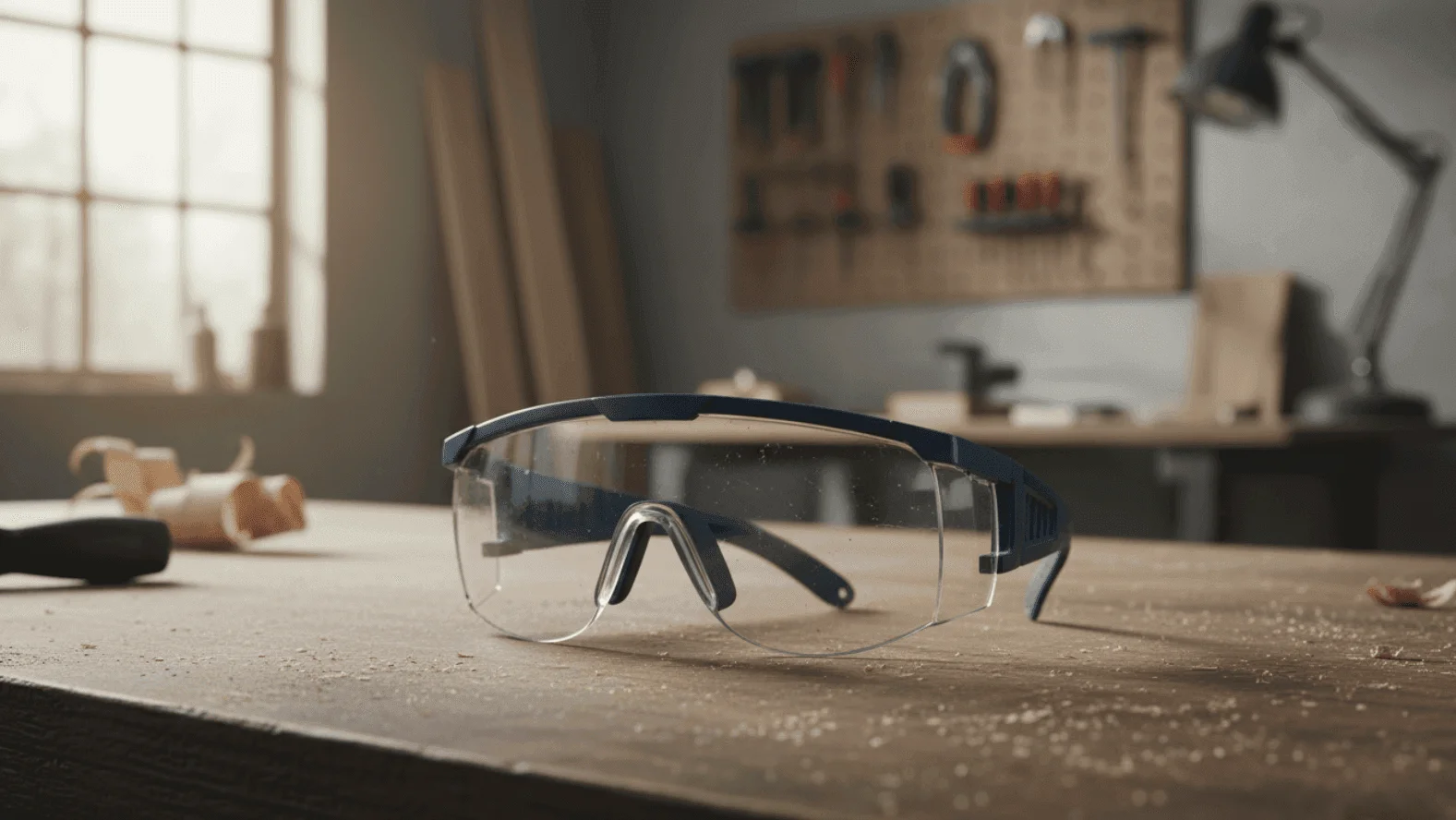
Welcome to a detailed guide to the world of safety glasses, a key part of Personal Protective Equipment (PPE). Safety glasses are not just an accessory; they are an essential barrier between your most important sense and potential hazards. They protect your eyes from flying debris, dust, chemicals, splashes, and harmful radiation.
Eye protection is critical. Unfortunately, statistics show that eye injuries are among the most common workplace accidents, and the vast majority of them could be prevented by using certified safety glasses correctly.
Did you know that the most common eye injuries at work are caused by fragments and particles that can travel at speeds of up to 80 km/h? In such cases, that split second is decisive, and only glasses that meet strict standards can provide reliable protection.
The right choice is not just about price and style, but mainly about compliance with the key EN 166 standard and the type of risk you are exposed to. Read on to find out what the symbols on the frame really mean, which lens materials perform best, and when it makes sense to invest in premium coatings.
Key standards and certifications: The foundation of safety
For protective work equipment, standards define the basic principle of how protection actually works. It is not just a piece of plastic, but a guaranteed level of resistance.
EN 166
EN 166 is a harmonised European standard that sets out the general requirements for personal eye protection equipment. It defines basic requirements for materials, design, optical quality, and resistance to ageing. Every pair of glasses that complies with this standard offers a guaranteed minimum level of safety.
Optical class
This indicates the optical quality of the lens and how long you can wear the glasses safely and comfortably.
Class 1 offers the highest optical quality and is the most important class for most users. The lenses do not distort vision and are suitable for continuous wear without causing eye strain or headaches. Most professional safety glasses fall into this category.
Lenses with lower optical quality, suitable for occasional wear or short tasks.
The lowest optical quality, intended only for very short-term use (for example in emergency situations).
Mechanical resistance markings
These markings on the lens and frame show what impact speed and energy the glasses can absorb.
Low energy impact (a steel ball with a diameter of 6 mm and weight of 0.86 g travelling at 45 m/s). This is the minimum standard for classic safety glasses with side protection.
Medium energy impact (a ball travelling at 120 m/s). Typical for fully enclosed safety glasses, also known as Goggles.
High energy impact (a ball travelling at 190 m/s). The highest level of protection, usually required for face shields.
This symbol is crucial if you work in changing temperatures. The letter T (for Temperature) is added after the impact rating (for example FT or BT) and confirms that the glasses maintain their resistance in extreme temperatures from -5°C to +55°C. Without this symbol, protection in extreme temperatures is not guaranteed.
Types and variants: Choose the right style for your job
Different types of safety glasses are chosen based on the level of protection required and the nature of the work.
Safety glasses with side protection (classic frame)
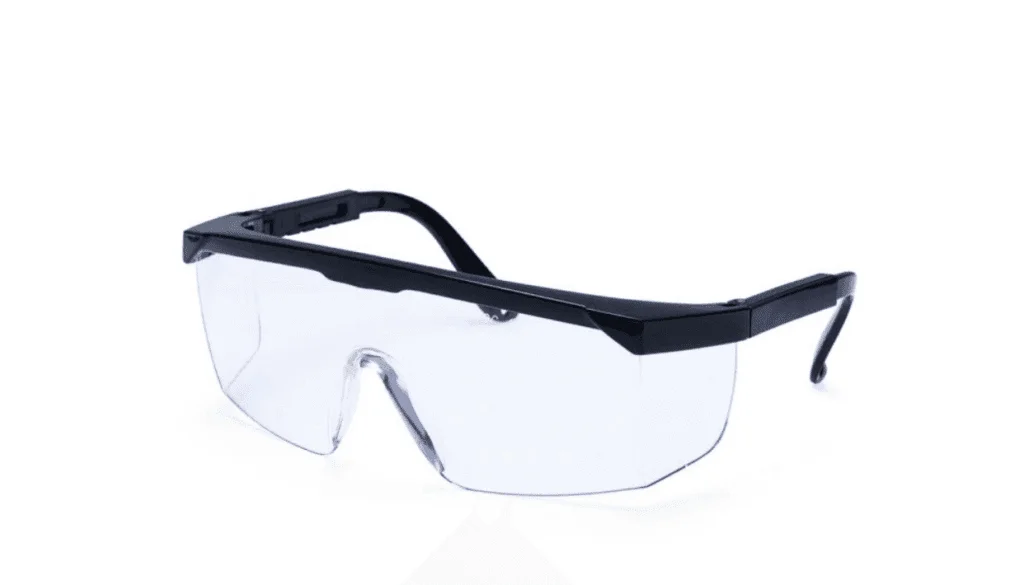
This is the most common and popular type, similar to sports glasses. They are used for light assembly, DIY jobs, and general protection against dust and flying debris with low impact energy (rating F). Their main advantages are low weight, comfort for all-day wear, and often adjustable temples.
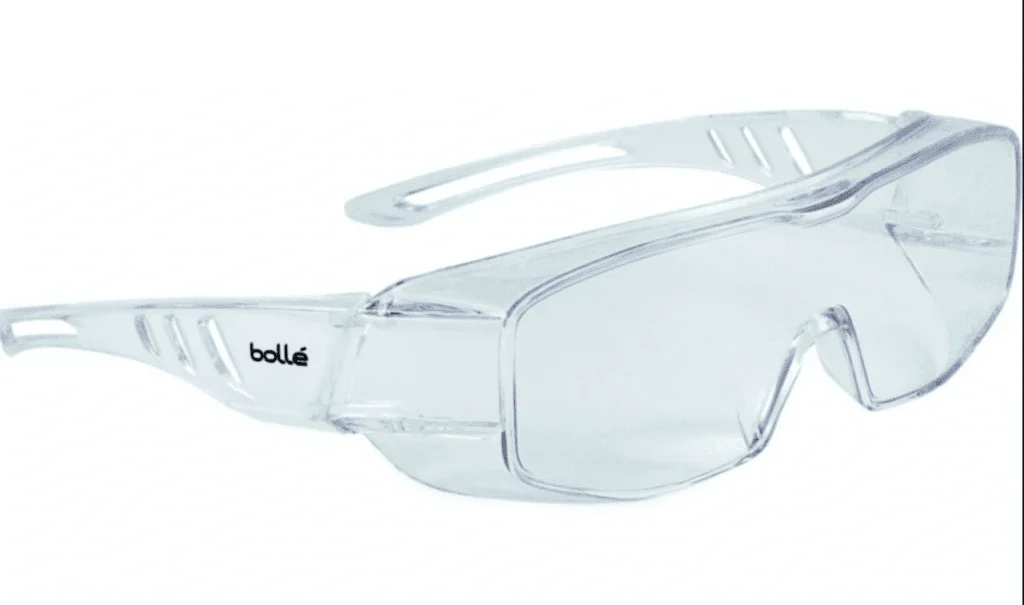
Over-the-glasses safety eyewear
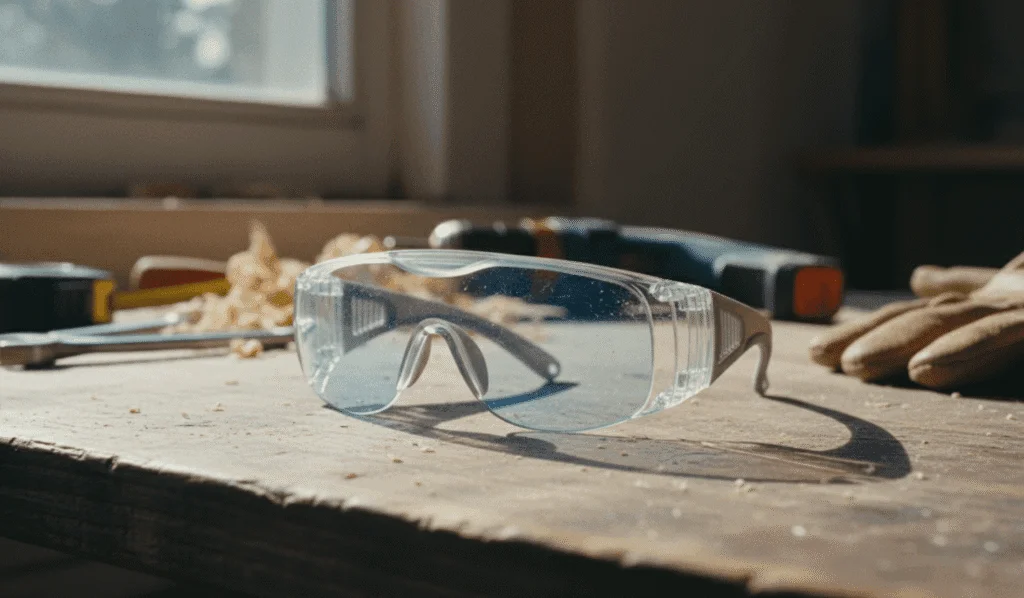
These are specially designed with a large lens so you can wear them over your regular prescription glasses. They are a quick and cost-effective solution for prescription wearers in environments where only low-level protection is required. Keep in mind, though, that they can be heavier and less comfortable than dedicated models with a prescription insert.
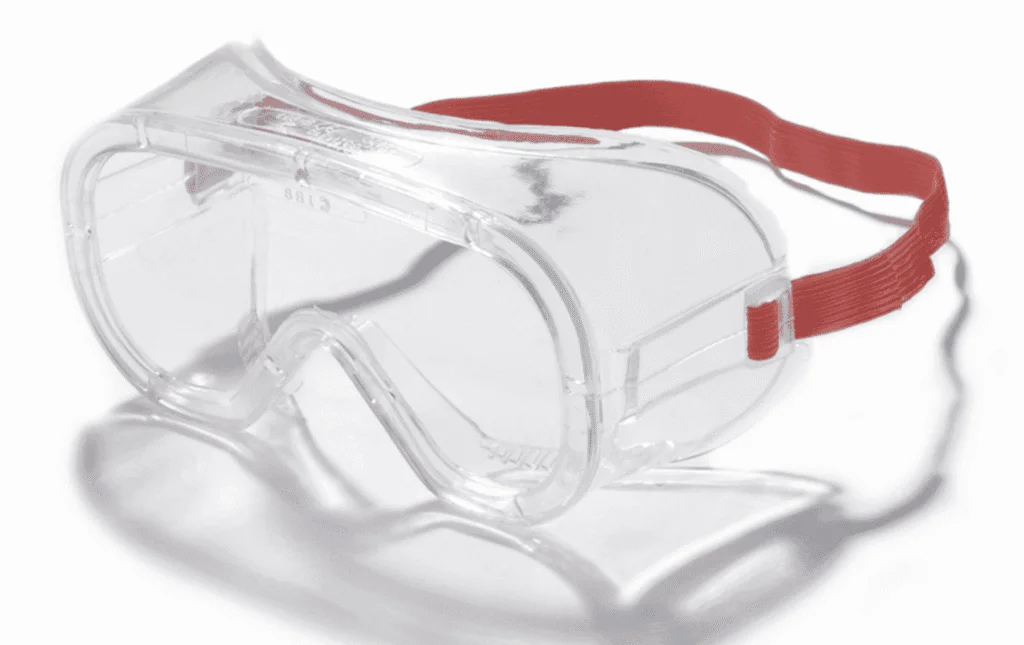
Fully enclosed safety glasses (Goggles)
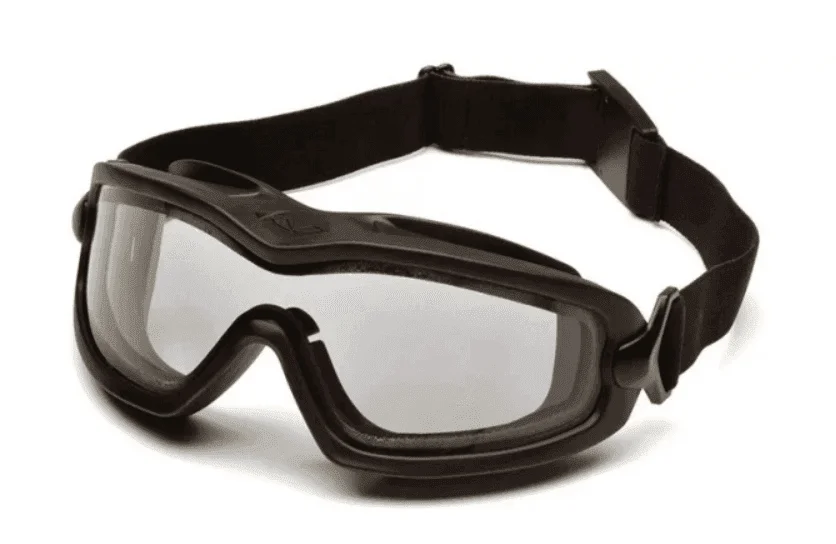
These have a sealed frame that fits tightly to the face with an elastic strap. They are used for work with chemicals, spraying, heavy dust, or in environments with a high risk of liquid splashes. They provide protection with higher impact energy (rating B), shield your eyes from all directions, and often feature indirect vents to reduce fogging.
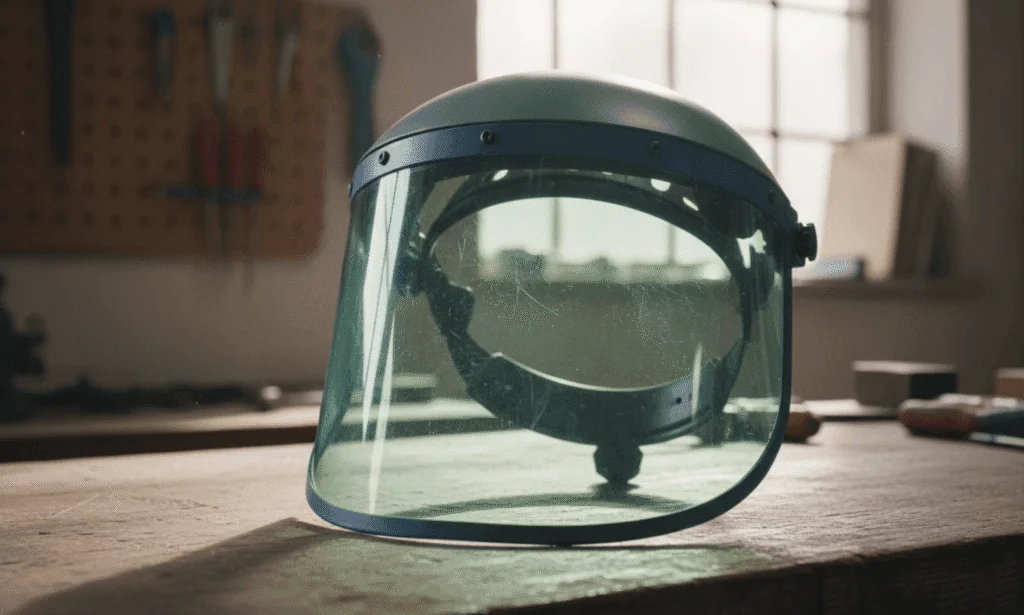
Face shields and helmets with integrated visors
These protect not only your eyes but also your entire face and head. They are used with angle grinders, for welding, and for high-speed metalworking where the highest impact protection (rating A) is required. They are often combined with a helmet for integrated head protection.
Key parameters – Materials and coatings
Whatever type of glasses you choose, durability, comfort, and performance all depend on the lens material and the quality of the coatings.
Lens material
Impact resistance is crucial. Modern eye protection uses only plastic materials. Polycarbonate is the most common choice, offering excellent impact resistance while staying very light. Because it is relatively soft, it always needs an Anti-scratch (AS) coating. Trivex is less common but optically clearer and lighter than polycarbonate. It is more expensive and in industry tends to appear only in premium models.
Anti-scratch (AS) coating
Polycarbonate is impact-resistant but prone to scratching. The Anti-scratch coating is a hardened layer that extends the life of the glasses and keeps your vision clear. This coating is now considered standard.
Anti-fog (AF) coating
The Anti-fog coating is essential if you work in changing temperatures, in a humid environment, or with a respirator. It works by breaking the surface tension of water droplets and preventing condensation on the lens.
UV filter
Your safety glasses should always have a built-in UV filter, even if the lenses are clear. UV 400 protection blocks up to 99.9% of harmful UVA and UVB radiation, protects the retina, and reduces the risk of long-term eye damage.
Lens colour/tint
The lens colour should match your working environment.
- Clear lenses are ideal for indoor work and general use.
- Smoke/Grey lenses are designed for outdoor work in direct sunlight and reduce glare without distorting colours.
- Yellow/Orange lenses boost contrast and brightness, making them suitable for poor light conditions such as dusk, fog, or dark rooms. And finally,
- Mirror lenses provide very strong glare protection in extremely bright outdoor environments (for example on snow or near water), where the reflective coating cuts down the amount of light reaching the eye.
Design and ventilation
For comfortable all-day wear, ergonomics are essential. Look for adjustable temples and soft nose pads. Ventilation is critical for Goggles and supports the Anti-fog coating by preventing moisture build-up inside the frame.
Choosing by work environment: Targeted recommendations
The right choice of safety glasses should always be based on a workplace risk assessment.
For mechanical work and construction
Here, mechanical resistance is the top priority. We recommend glasses rated F (classic frame) or B (Goggles) with an AS (Anti-scratch) coating.
For work with chemicals and splashing liquids
Seal and tightness are the most important factors. We recommend Goggles with indirect ventilation that protect against splashes and fumes. Focus on leak-tightness and rating B (medium impact).
For outdoor work and sun protection
You need a combination of impact protection and UV protection. Choose smoke or mirror lenses, always with a UV 400 filter. The T marking (for example FT) is also important, so that the impact resistance is maintained even at low temperatures.
For humid and dusty environments
Comfort and clear vision are key here. We recommend glasses with a high-quality Anti-fog (AF) coating and good ventilation. In very dusty environments, Goggles with a proper seal are a better option.
For prescription wearers
You have three options: choose Over-the-glasses eyewear (fast and affordable), use prescription inserts – small inner frames that clip into standard safety glasses, which is the most professional and comfortable long-term solution – or order special safety glasses with built-in prescription lenses.
Care, use, and lifespan: Look after your protection
The lifespan and performance of your safety glasses depend on proper care.
Correct lens cleaning
To keep the AS and AF coatings effective, use clean water and a mild soapy solution or dedicated optical cleaning sprays. Warning: Never use paper towels, rough cloths, or strong solvents, as they can damage the sensitive Anti-fog and Anti-scratch layers.
Damage inspection
Safety glasses are consumables. Even a small crack, deep scratch, or visible damage to the lens reduces the guaranteed impact resistance. If you notice any of these, replace the glasses immediately.
Proper storage
Store your glasses in a hard case or soft pouch to prevent accidental scratching. Protect them from prolonged exposure to direct sunlight or high temperatures (for example on a car dashboard), which can warp the frame and reduce their effectiveness.
Most popular brands and manufacturers
The PPE market includes a number of specialists offering safety glasses for different industries.
| Brand | Specialisation |
|---|---|
| 3M | Comprehensive range, strong innovation in AF technologies, wide choice of models. |
| Uvex | Premium quality and ergonomics, focus on design and long-term comfort. |
| Bollé Safety | Combines performance with a modern, sporty look. Excellent price-to-performance ratio in the mid-range segment. |
| Honeywell (Sperian) | Wide range from basic models to specialised solutions for demanding industries. |
History and development
The history of eye protection mirrors the history of industrial development. Early safety glasses were made from heavy glass with wire frames and offered only basic protection against larger particles. A major breakthrough came at the end of the 20th century with modern polymers. The shift from glass to polycarbonate was a revolution – glasses suddenly became much lighter, optically clearer, and far more impact-resistant. This made it possible to meet strict standards such as EN 166. Ongoing development now focuses on better ergonomics and design. Modern safety glasses no longer look like bulky, uncomfortable gear. Current trends emphasise adjustability, lightweight materials, and ever more effective Anti-fog coatings for maximum comfort during continuous wear.
Price ranges: When is it worth paying more?
The price of safety glasses mainly reflects the optical quality, build quality, and especially the performance of the AF and AS coatings.
Basic/DIY (100 – 250 Kč)
In this range you can expect Class 2 or Class 1 lenses with a basic AS coating, so they are suitable only for short and occasional tasks. They are not ideal for all-day wear because of the risk of eye fatigue and faster scratching.
Mid-range/Professional (250 – 700 Kč)
Here you can expect Class 1 lenses, reliable AF and AS coatings from well-known brands, and good ergonomics and comfort. This is the best choice for all-day wear and professional use, offering the strongest value for money.
Premium/Specialised (700+ Kč)
Premium models offer Class 1 optics, top-tier AF technologies (often with extended durability), special certifications (B or A), excellent ergonomics, and adjustable features. It is worth paying more for a high-quality AF coating (for safer work in demanding conditions) and for higher impact resistance (rating B or A) if your job calls for it.
Summary and final tip: Three pillars of the right choice
When choosing safety glasses, stick to these three pillars: Standard – always look for glasses certified to EN 166 with Class 1 optics for continuous wear. Then Risk – choose the right type for the hazard (frame with F rating for low risk, Goggles with B rating for chemicals and splashes). And finally, Material – prioritise polycarbonate with a high-quality Anti-fog coating for warm or humid environments. The most important tip: The best safety glasses are the ones you will actually wear. Invest in a model that is genuinely comfortable and fits you well, so you are not tempted to take it off, even for a moment. Your eyesight is worth it.
Frequently asked questions
Can I wear sunglasses instead of safety glasses?
NO! Standard sunglasses, even with a UV filter, are not tested or certified to EN 166. They do not have hardened lenses and, most importantly, they do not provide guaranteed impact protection. Their lenses can shatter when hit by debris and cause serious eye injuries. Always use glasses marked with symbol F, B, or A.
What is the main difference between safety glasses (frame) and fully enclosed Goggles?
The main difference lies in the seal and the level of resistance. Classic safety glasses (frame) protect only from the front and sides (F – low impact). Fully enclosed Goggles fit tightly to the face, protect from all directions, and often have higher mechanical resistance (B – medium impact). Goggles are used where there is a risk of dust, fumes, or liquid splashes.
How can I tell if my safety glasses are truly certified?
The certification must be marked on both the lens and the frame/temple of the glasses. Look for a combination of symbols such as: 2C-1.2 [Manufacturer brand] 1 FT CE. Here, 2C-1.2 indicates the shade number and UV protection, the number 1 is the optical class (Class 1 for continuous wear), F/B/A is the mechanical resistance symbol, T confirms resistance at extreme temperatures, and CE indicates compliance with European regulations.
Kategorie: