Colombia: The Complete Destination Guide for Travelers
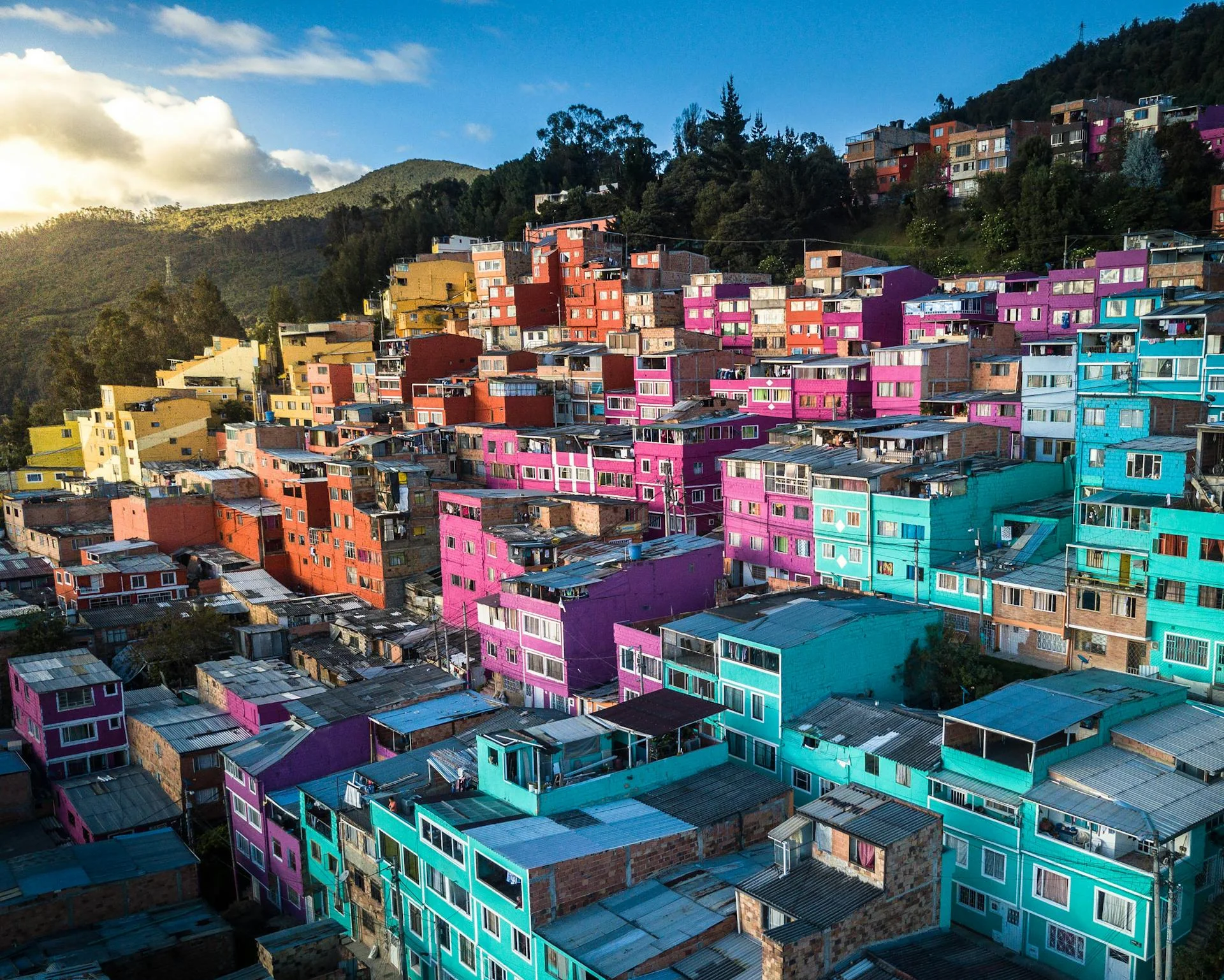
Colombia is one of the most magical and least explored countries in South America, offering a stunning mix of mountain landscapes, tropical coastlines, rich traditions, and vibrant culture. Did you know that Colombia is the country with the greatest biological diversity in the world? Although for many years it was seen in a negative light because of its historic struggle with drug-related crime, today’s Colombia has transformed into a safe and welcoming destination visited by thousands of travelers every year.
From the high Andes and rainforests to Caribbean beaches, this country has something for every type of traveler. Whether you’re after cultural immersion, outdoor adventure, historical discoveries, or simply relaxing by the sea, Colombia delivers on all fronts.
History of Colombia
Colombia has one of the most turbulent and complex histories in Latin America, which is reflected in its multicultural identity. The country’s name comes directly from Christopher Columbus, the discoverer of the New World, and symbolizes his crucial influence on the development of the continent. Long before Europeans arrived, advanced Indigenous cultures lived here, including the native Tairona, Muisca (Chibcha), and many other tribes that built sophisticated societies. These civilizations were gradually destroyed or assimilated during Spanish colonization, which began in the 16th century.
Spanish rule shaped Colombia for more than three hundred years under the Viceroyalty of New Granada. In 1538, conquistador Gonzalo Jiménez de Quesada founded the city of Bogotá, which became the center of colonial administration. During the colonial era, Colombia grew into one of the most important trade hubs in the Americas, but it was also a place where brutal slave labor took root. African slaves were brought in large numbers, especially to the coastal regions, and their contribution to Colombian culture is undeniable. This process created a unique blend of European, Indigenous American, and Afro-Caribbean influences.
Colombia gained its independence in 1819 after the famous Battle of Boyacá, led by national hero Simón Bolívar. This marked the beginning of a turbulent era in which the young nation struggled with political instability. The 19th century was marked by at least 52 civil wars, often fought between centralist and federalist forces. These conflicts had devastating consequences: hundreds of thousands of deaths, constantly changing constitutions, and ongoing political chaos. It was not until 1886 that a new political order took hold in Colombia, when a more conservative constitution was adopted that centralized power. However, in the same period Colombia lost the Panama Canal Zone, which became an independent state under the influence of the United States.
The rise and production of cocaine in the 1970s and 1980s changed the course of the country’s history, leading to the growth of powerful drug cartels and a period of extreme violence. The combination of the drug trade, guerrilla groups, and state forces created a complex and bloody situation that lasted for decades. Still, over the last two decades, security has gradually improved, especially after the launch of peace processes with revolutionary groups.
Location, geography and climate
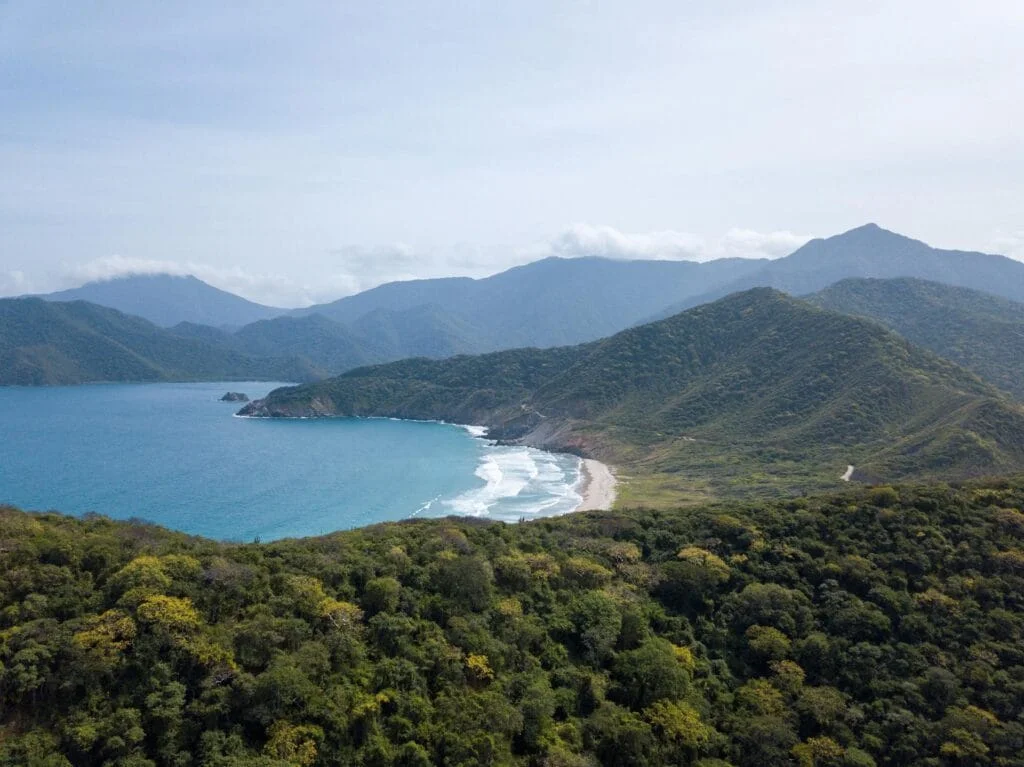
Colombia is located in the northern part of South America, in a unique position where the South American and Central American continents meet. It borders five countries: Venezuela to the east, Brazil and Peru to the southeast, Ecuador to the south and Panama to the northwest. It is washed by two seas – the Caribbean Sea to the north and the Pacific Ocean to the west, making it the only South American country with access to both oceans. Colombia covers roughly 1.14 million square kilometers, which makes it the third-largest country in South America after Brazil and Argentina.
Colombia’s geography is dominated by three main Andean mountain ranges that run from south to north and divide the country into several distinct regions. The Western Cordillera stretches along the western coast, the Central Cordillera lies in the middle, and the Eastern Cordillera forms the range on the eastern side. Between these mountain masses lie fertile valleys and lowlands that are home to major cities. In the northeast rises the Sierra Nevada de Santa Marta, the second-highest coastal mountain range in the world, which climbs straight up from the shoreline. The eastern part of the country is taken up by the vast lowlands of the Amazon and the Llanos (tropical savannas).
Colombia is also a country of many rivers. The Magdalena River is the most important one and has historically been a lifeline for transport and trade. The Cauca, Guaviare and Putumayo rivers are other key waterways. In the northwest you’ll find several archipelagos, including the San Andrés and Providencia islands in the Caribbean Sea.
Colombia lies close to the equator in the tropical climate zone, which means there is no classic shift between four seasons like in temperate regions. Instead, the climate is shaped by the alternation of rainy and dry periods. Temperatures change only slightly throughout the year, but they vary a lot with altitude. There are three main climate zones: hot lands (up to 900 m), temperate lands (900 to 2,000 m) and cold lands (above 2,000 m).
On the coast and in lower altitudes, temperatures are high all year round, often above 28 to 30 °C. In Bogotá, which sits at 2,640 m, the climate is cooler and more pleasant, with average temperatures around 15 to 20 °C. The key thing to understand is that seasons in Colombia are defined by rainfall, not by temperature. Dry periods (verano) usually run from December to March and from July to August. Rainy periods (invierno) typically occur from April to May and from September to November.
| Month | Typical weather/Temperature (Description) |
|---|---|
| January–March | Very dry, perfect for beaches and trekking, temperatures 25–32 °C in lower areas |
| April–May | Rainy season, fewer tourists, lower prices, temperatures 22–28 °C |
| June–August | Dry in the mountains, tropical showers on the Pacific coast |
| September–November | Rainy season, especially in the tropics and coastal areas |
| December | Dry weather returns, Christmas and New Year, high prices |
The best time to visit Colombia is from December to March, when the weather is dry across most of the country, temperatures are pleasant and conditions are stable. This is also peak tourist season, so hotel and flight prices are at their highest. A good alternative is July and August, when it is also dry in the mountains, although the Pacific coast sees more rain.
| Month | Average daytime temperature (°C) | Average night-time temperature (°C) | Sea temperature (°C) | Note |
|---|---|---|---|---|
| January | 27 | 20 | 27 | Dry, ideal |
| February | 28 | 21 | 27 | Dry, ideal |
| March | 27 | 21 | 27 | Start of the rains |
| April | 27 | 20 | 28 | Rainy, lower prices |
| May | 27 | 20 | 28 | Rainy, fewer tourists |
| June | 27 | 19 | 28 | Dry in the mountains |
| July | 26 | 19 | 28 | Dry, warm month |
| August | 27 | 19 | 29 | Dry, hottest period |
| September | 27 | 20 | 28 | Start of the rains |
| October | 28 | 21 | 28 | Rainy, very humid |
| November | 28 | 21 | 28 | Rains ease off |
| December | 28 | 20 | 27 | Dry season begins |
Regions and types of destinations
Colombia naturally breaks down into several distinct regions, each with its own character, climate and appeal. The right choice depends on your travel style, fitness level, and whether you prefer mountains, the sea, or city life.
The Andean region is the heart of Colombia and home to most of its population. The vast mountain valleys are perfect for anyone who wants to experience real Colombian culture. Bogotá, the capital city, sits at 2,640 meters above sea level and is definitely the key destination in this area. The city is known as a cultural hub, packed with museums, galleries and historic landmarks. The La Candelaria district is the old historic core, full of colorful houses and centered around Plaza de Bolívar. Although Bogotá is not usually a place for a long stay, it deserves at least 2–3 days so you can visit its famous Gold Museum (Museo del Oro) and enjoy the views from the Monserrate monastery.
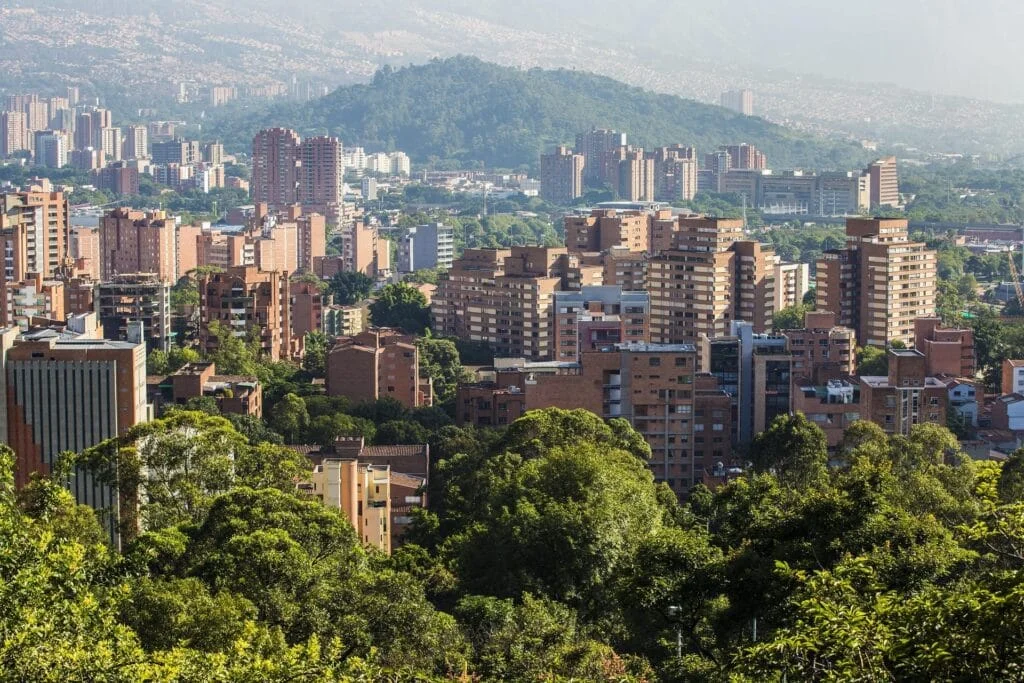
Medellín, the second-largest city, lies in the Aburrá Valley and is famous for its transformation from one of the most dangerous cities in the world into a modern, innovative metropolis. Today it stands as a showcase of successful urban planning and social projects. The El Poblado neighborhood is the main tourist area, with cozy streets, great restaurants and lively nightlife. Medellín is also known as the “City of Eternal Spring” thanks to its pleasant year-round climate (around 20–30 °C). The local public transport system includes cable cars (teleféricos), which serve not only as transport, but also offer fantastic views.
Salento is a charming small mountain town in the Coffee Region, known for its colorful houses and relaxed vibe. It’s the ideal base for visiting the nearby Cocora Valley, home to the tallest palm trees in the world and one of the most photogenic places in Colombia. Salento is also a great starting point for tours of traditional coffee farms.
Cali is the third-largest city in the country and is famous as the “world capital of salsa”. The city pulses with music and dance and is full of nightclubs and restaurants. If you love dancing and live music, Cali will win you over.
The Caribbean coast is home to some of the most beautiful places in Colombia. Cartagena de Indias is without a doubt the most stunning colonial city in the country and is listed as a UNESCO World Heritage Site. The old town, with its stone fortifications, narrow streets and colorful houses, looks like something out of a storybook. Cartagena was a major center of slavery and trade during colonial times, and every corner of the city has a story to tell. Evening walks along the defensive walls (Muralla), with views of the sea, are unforgettable. From Cartagena you can also reach nearby island groups that offer beautiful beaches and a quieter escape.
Taganga is a small fishing village near Santa Marta with a laid-back vibe and a strong appeal for diving enthusiasts. The beach itself is not the most spectacular, but the atmosphere is authentic and very traveler-friendly.
Islands like San Andrés and Providencia are a paradise for anyone looking for an unspoiled Caribbean. They offer beautiful beaches, warm sea, and far fewer tourist crowds.
In the north lies Tayrona National Park, which combines tropical rainforest, wildlife, high mountains, and stunning beaches. This is one of the best places in Colombia for travelers who want everything in one place – natural beauty, adventure, and history. The park is home to the remains of the ancient Tairona civilization.
To the west stretches the Pacific Ocean, which is far less visited than the Caribbean Sea. The Pacific coast is dominated by rainforest and is one of the rainiest places on Earth. Destinations like Buenaventura are not classic tourist hotspots, but they offer a very authentic experience.
The southeastern part of Colombia is covered by the vast Amazon rainforest, the most diverse ecosystem in the world. Destinations like Leticia (at the border triangle of Brazil, Peru, and Colombia) are gateways for exploring the Amazon. It is an ideal area for anyone interested in nature and wildlife watching.
Most famous landmarks and cities
Cartagena de Indias is one of the best-preserved colonial cities in South America. The old town as a whole is remarkably intact – stone gates, wooden balconies draped with flowers, and squares lined with historic buildings. The historic center is listed as a UNESCO World Heritage Site, and every alley has its own story to tell. Cartagena was a key hub of colonial trade and played a tragic role in the slave trade. Thousands of enslaved people were sold here. Today, the city is admired for its art, culture, and unique atmosphere. Evening walks along the city walls (Muralla) are especially magical.
La Candelaria, Bogotá’s historic center, is where you’ll find the main museums, monuments, and institutions. Plaza de Bolívar is the heart of the city, with the cathedral, presidential palace, and government buildings. The Museo del Oro (Gold Museum) is one of the largest gold museums in the world, with more than 35,000 pieces on display. The Monserrate monastery rises to 3,152 meters above sea level and offers spectacular views over Bogotá. There is a church at the top, and it is a popular pilgrimage site. You can hike up the stairs or take the cable car.
El Poblado is the tourist and cultural hub of Medellín, with pleasant streets, cafés, and a lively nightlife. Plaza Botero is home to a collection of sculptures by the famous artist Fernando Botero, known for his oversized, voluminous figures.
Comuna 13 used to be one of the most dangerous neighborhoods in Medellín, but over the last decade it has turned into an epicenter of street art. Today it’s full of positive energy and creativity, covered in colorful graffiti and street art. Visiting with a guide is safe and genuinely inspiring.
Ciudad Perdida (The Lost City) is one of the most impressive archaeological sites in South America and is often called the “Colombian Machu Picchu”. This ancient city was founded around the year 800 AD by the Tairona people and stayed hidden in the jungle for more than a thousand years. It was discovered by treasure hunters by accident in 1972. The city is made up of 169 stone terraces built on the slopes of the Sierra Nevada mountains. Getting there is physically demanding – the route is 52 km long and includes thousands of steps up and down – but the experience is unforgettable. The trek usually takes 4–5 days and must be done with a certified guide.
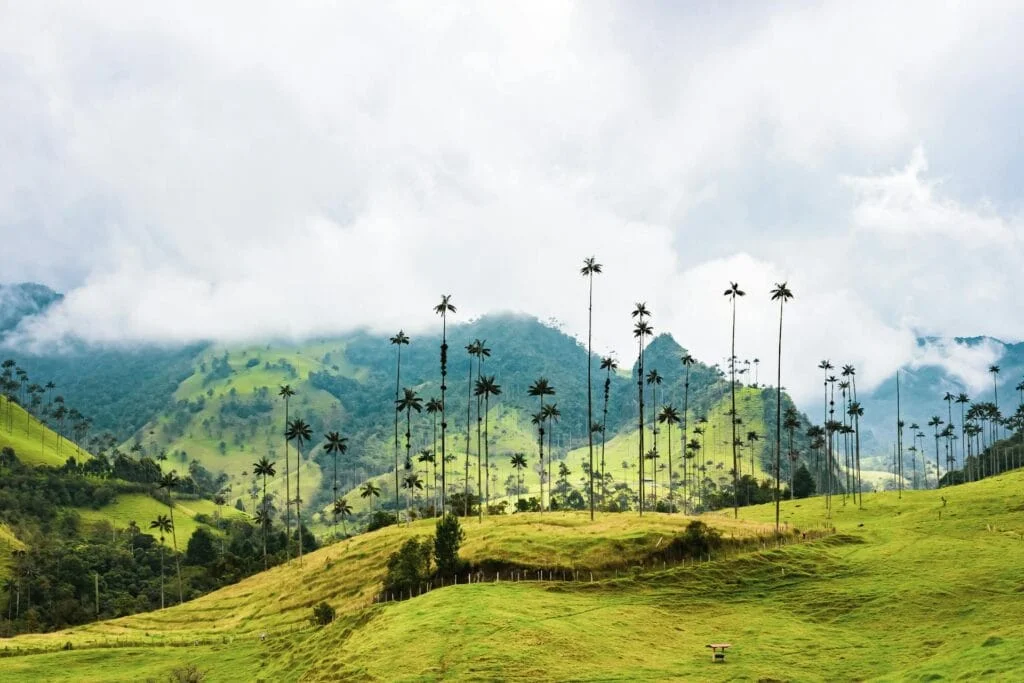
Salento is a charming small town in the Coffee Region with traditional Colombian-style architecture. Colorful houses, pretty streets and a friendly vibe make it an ideal place to stay. From Salento it’s just a short trip to the Cocora Valley, home to the tallest palm trees in the world (up to 60 meters). The valley hike usually takes about half a day and leads through lush greenery, with the chance to spot hummingbirds and other tropical wildlife.
Natural wonders and national parks
Los Nevados National Natural Park is one of the most beautiful and most accessible national parks in Colombia. It lies in the Andes and is home to several volcanoes, including the highest one, Nevado del Ruiz (5,321 meters). The park was established in 1974 and covers more than 583 square kilometers. Its landscape includes volcanic peaks, mountain lakes, glaciers and high-altitude páramo grasslands. The main highlight is Laguna del Otún, a stunning glacial lake. The park shelters endangered species such as the Andean condor, spectacled bear and mountain tapir. Trekking in Los Nevados is an excellent way to experience Colombia’s mountain wilderness. The most common routes start from the cities of Manizales or Pereira and cross the park.
Tayrona National Park is one of Colombia’s most stunning destinations, where tropical rainforest meets the Caribbean Sea. It lies close to Santa Marta on the northern coast and is home to the remains of the ancient Tairona civilization. The park covers roughly 190 square kilometers and includes a wide range of ecosystems. Wildlife is abundant – monkeys, toucans, parrots, jaguars and many other species. The plant life is just as impressive, with dense jungle throughout. The park has several entrance gates and a number of hiking routes: Arrecifes, Piscinita and the iconic Cabo San Juan del Guía are the best-known beaches. Each beach requires some level of trekking through the jungle, but the reward is worth it. The best time to visit is during the dry months (December–March and July–August).
Cocora Valley is not a traditional national park, but it is a protected area famous for its giant wax palms. The most popular route is the trek through the Cocora Valley, which usually takes 4–6 hours. The trail leads through misty mountain terrain and feels like walking in the clouds. The wax palms (Palmas de Cera) here grow to heights of over 60 meters and rank among the tallest trees of their kind. The trek is physically easier than many other mountain routes, but the weather can change quickly.
South-eastern Colombia includes the vast Amazon rainforest, one of the largest and most important ecosystems on the planet. The town of Leticia sits at the tri-border of Colombia, Brazil and Peru and serves as the main gateway to the Amazon. From Leticia, you can join guided trips into the jungle with specialized local guides. The Amazon region is home to countless animal and plant species, many of which have not yet been described by science.
Most beautiful beaches
Playa Blanca Beach is one of the most famous and beautiful beaches near Cartagena. It is located on Barú Island and is known for its white sand and turquoise water. The beach is popular thanks to its calm sea, which is ideal for swimming. You usually get here by boat from Cartagena in about half an hour.
Taganga is a small village with a beach that may not be the most beautiful, but it has a charming, laid-back vibe. The beach is lined with bars and is a favorite spot for backpackers and independent travelers. It’s ideal for a relaxed day out or a swim at the end of a trek.
The best beaches in Tayrona are Arrecifes, La Piscina, and Cabo San Juan del Guía. Each one requires a jungle hike, but the payoff is worth it. Arrecifes is closer to the main entrance and works well if you want something less physically demanding. La Piscina is smaller and more peaceful. Cabo San Juan is the most dramatic, with huge boulders and a scenic viewpoint, but it also involves the longest hike.
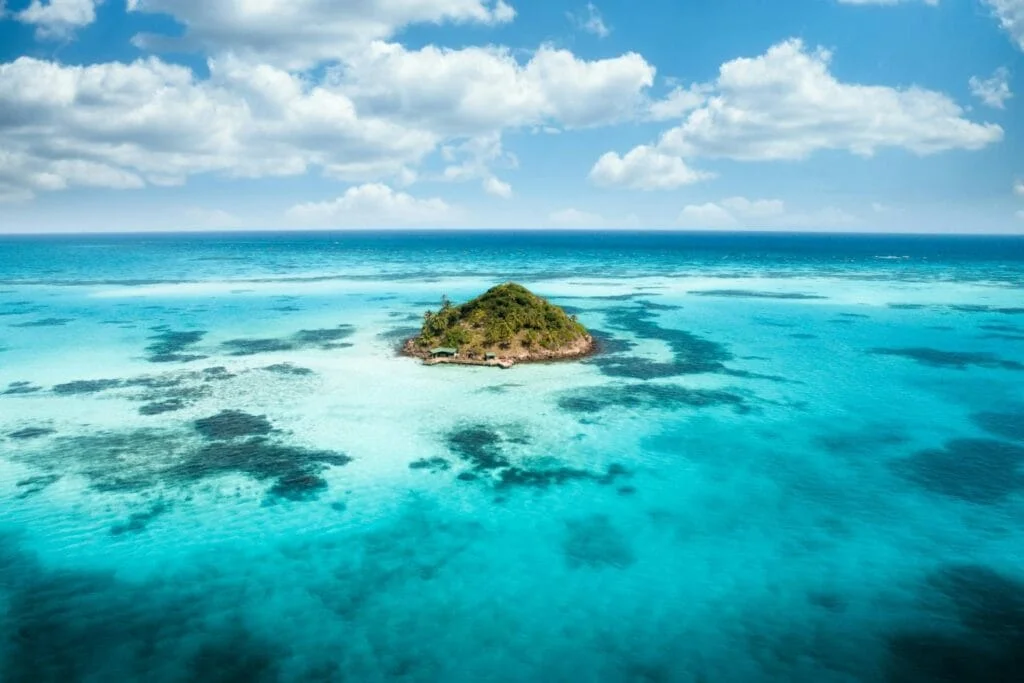
San Andrés and Providencia are Caribbean islands that belong to Colombia. They offer an authentic island vibe with soft sandy beaches, crystal-clear water, and fewer tourists. It’s a classic Caribbean setting with coral reefs, ideal for snorkeling and scuba diving.
Activities and entertainment
Colombia offers a wide range of activities for every type of traveler. Trekking is one of the most popular options – from day hikes in the Cocora Valley to multi-day expeditions in Los Nevados and Tayrona. Local carnivals and cultural festivals are very diverse and give you a deeper insight into Colombian culture. You can join the Carnival of Barranquilla, the Flower Festival in Medellín, or the Blacks and Whites’ Carnival in Pasto.
Sports activities include paragliding, especially around Medellín, where you can soar above the city. Water sports, including snorkeling and diving, are available along the coast, particularly around Taganga and on the islands. Experiential tourism often focuses on visiting coffee farms in the Salento area, where you can see the full process of growing and preparing coffee. Salsa dancing is especially popular in Cali, where you can experience this quintessential Latin American dance culture in local nightclubs. Historical tours include visits to colonial towns such as Cartagena and Villa de Leyva, where you can wander through well-preserved historic centers. You can also go wildlife and nature watching in the Amazon or in various nature reserves.
Gastronomy and culture
Colombian cuisine is diverse and reflects local craftsmanship, social traditions, and strong regional differences. Unlike in many other Latin American countries, Colombians are not big on vegetarian food – meat plays a major role in everyday cooking. Dishes are often simple but full of flavor, usually based on rice, beans, potatoes, and meat with vegetables.
- Ajiaco is Bogotá’s most famous dish – a hearty chicken soup made with two or three types of potatoes, corn, sour cream, and avocado. It’s a classic local meal and every restaurant has its own recipe.
- Bandeja Paisa is a traditional dish from the Antioquia region and it’s a huge platter made up of grilled steak, fried pork rind, chorizo sausage, rice, red beans, a fried egg, avocado, and fried plantains. It’s probably the best-known dish in Colombia.
- Arepa is a staple food in Colombia – a flatbread made from a mix of corn flour, water, and salt. It’s served with almost every meal and can be stuffed with a variety of fillings.
- Empanadas are fried pastries filled with meat, cheese, rice, and cilantro. They’re popular as a snack or a light meal.
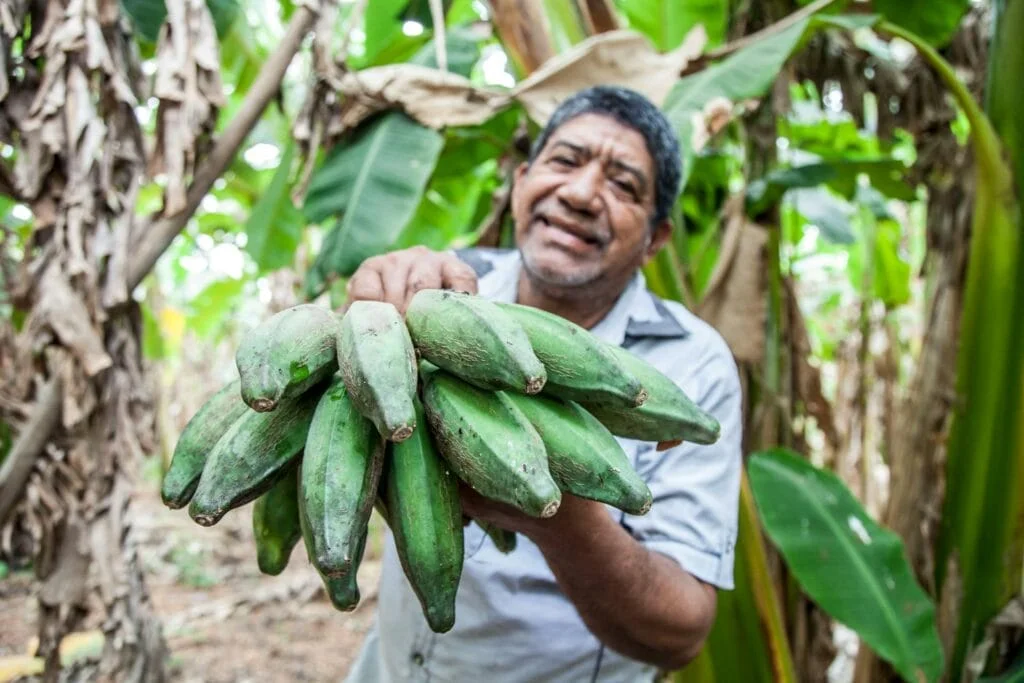
- Patacones are patties made from green plantains that are fried and served as a side dish. They’re crispy and incredibly tasty.
- Morcilla is a traditional blood sausage, usually served grilled or fried. It’s not for everyone, but it’s an important part of Colombian cuisine.
- Tamales are made from corn dough filled with meat and vegetables, wrapped in a banana leaf and cooked. They’re a traditional dish and are most often eaten for breakfast or as a light meal.
- Fresh fruit and smoothies are fantastic – mango, papaya, guanábana, passion fruit, and many other types of fruit that are not common in Europe.
- Tinto is usually a traditional sweetened black coffee that Colombians drink for breakfast. It’s strong and sweet, but very tasty. Since Colombia is one of the world’s largest coffee exporters, it’s no surprise that the coffee culture here is very strong.
- Aguardiente is a traditional alcoholic drink made from sugarcane – strong, with an anise flavor and an alcohol content typically around 29–30%. It’s a popular drink at celebrations and festivals.
- Canelazo is a traditional hot drink made from aguardiente, sugar, cinnamon, and other spices. It’s often served warm, especially in the mountains.
Meal times in Colombia are slightly different from those in Central Europe. Breakfast (Desayuno) is usually served from 7 to 9 a.m. and typically includes coffee, bread or arepas with cheese. Lunch (Almuerzo) is the main meal of the day and is served from 12 to 2 p.m. Restaurants often offer a “Menu del Día” – a fixed menu with soup, a main course, a drink and dessert at a good price. Afternoon snack (Merienda) is usually around 4 p.m., with coffee and a light bite. Dinner (Cena) is usually lighter and is served from 7 to 9 p.m.
Restaurant etiquette in Colombia is relaxed. Staff will greet you with “Qué va a tomar?” or “Qué desea comer?”. Tipping (propina) is not mandatory, but it’s customary to leave 5–10% in better restaurants. Restaurants range from cheap “comedores” or “fondas” (simple local eateries) to upscale venues in city centers. Tap water is safe to drink in large cities, but in smaller villages it’s better to buy bottled water.
Colombia is a culturally rich country with long-standing traditions and celebrations. The Carnival in Barranquilla is one of the biggest and most colorful carnivals in the world, second only to Rio de Janeiro’s. It takes place during the four days before Ash Wednesday, when the whole city turns into one huge party with parades, dancing, music and costumes.
Feria de las Flores (Flower Festival) in Medellín is held in August and celebrates flowers and local culture. The highlight is the parade of the so‑called “silleteros”, who carry huge flower arrangements on their backs. It’s a stunning visual experience.
Carnaval de Negros y Blancos (Carnival of Blacks and Whites) in Pasto takes place from January 2 to 7 and is based on a tradition from the time when African slaves were given one day off a year. The festival is known for people painting each other’s faces black and white. It’s a joyful celebration of diversity and freedom.
Semana Santa (Holy Week) before Easter is the most important religious holiday. The best-known celebrations are in Popayán, famous for its night processions.
Feria de Cali (Cali Fair) runs from December 25 to New Year’s Eve and is a full-on salsa marathon. All-night dancing in bars and clubs makes this period an exciting time to visit.
Key practical information
The official currency of Colombia is the Colombian peso (COP). One US dollar is roughly 4,000 pesos, and one Czech crown is about 170 pesos (rates change over time). Coins in circulation are 50, 100, 200, 500 and 1,000 pesos, and banknotes are 2,000, 5,000, 10,000, 20,000, 50,000 and 100,000 pesos.
Cash withdrawals are available from ATMs (cajeros) in towns and cities. The largest banks and shopping malls usually have ATMs, but in rural areas they can be hard to find. ATM withdrawals typically come with a fee of around 6,000–8,000 pesos per transaction.
Card payments are accepted in many shops, restaurants and hotels in cities, but in smaller villages and at street stalls you will need cash. Visa and Mastercard are the most widely accepted cards.
Currency exchange is available at the airport, in banks and at official exchange offices. Rates vary, but you usually get the best deal in the centres of large cities.
Tipping (Propina) is not mandatory, but it is customary in restaurants. In higher-end restaurants people usually leave 5–10 %, in cheaper places 3–5 %, or they simply round the bill up to the nearest thousand pesos.
Czech citizens do not need a visa to enter Colombia for tourist stays of up to 90 days. You can travel with a passport that is valid for at least 6 months after your planned departure and has at least 2 blank pages.
An entry stamp is issued at the border and automatically grants tourists a 90-day stay. It is very important to make sure this stamp is placed in your passport, as immigration officers will check it when you leave. If the stamp is missing, it can cause problems and you may be fined.
Required documents may include a return or onward ticket, proof of sufficient funds for your stay, and travel insurance.
Travel insurance is strongly recommended and should cover medical expenses, accident insurance and possible trip cancellation.
The security situation in Colombia has improved significantly, but you still need to be cautious. Large cities such as Bogotá, Medellín, Cali and Cartagena have higher levels of street crime. It is advisable to limit walking around at night, avoid wearing visible valuables and not use your mobile phone on the street in quiet or remote areas.
Mass protests sometimes take place in Colombia and they can turn violent. It is best to avoid demonstrations and stay alert.
The drug scopolamine is known to be used in some cases to incapacitate tourists and rob them. Do not accept drinks from strangers and be careful in bars.
Long-distance bus travel is generally safe, but it is recommended to travel during the day and use reputable companies.
Areas that are safe for travellers – major tourist destinations such as Cartagena, Medellín, central Bogotá, Salento and the national parks are relatively safe, especially if you follow basic safety rules.
Vaccinations: No mandatory vaccinations are required to enter Colombia, but a yellow fever shot is recommended, especially if you plan to visit the Amazon region or areas below 2,300 meters above sea level. Vaccines against Hepatitis A, Hepatitis B, and typhoid are also recommended.
Safe water: In major cities, tap water is generally safe to drink, but in smaller villages and rural areas it’s best to stick to bottled water only.
Malaria medication: If you’re traveling to lowland areas (below 2,000 m a.s.l.), especially to the Amazon, talk to your doctor about taking antimalarial medication.
Insects: Mosquitoes and other insects can transmit dengue fever and other diseases. It’s recommended to use a repellent that contains DEET.
Healthcare: In Bogotá, Medellín, and Cartagena, healthcare is generally good, but outside the big cities, medical services are limited. Private clinics usually offer better care.
Animals: Colombia is home to an incredible variety of animal species. In the jungle you may come across monkeys, toucans, parrots, crocodiles, and snakes. In the mountains you can spot spectacled bears, tapirs, and highland birds. These encounters usually happen naturally, most often during guided treks. Venomous snakes are the most feared, but encounters are rare if you act sensibly and stay alert.
Plants: Colombia’s plant biodiversity is stunning. There are thousands of species of orchids, bromeliads, and other flowers. The giant wax palms in the Cocora Valley are particularly impressive.
Basic Phrasebook
| Czech phrase | Translation |
|---|---|
| Dobrý den | Buenos días (morning) / Buenas tardes (afternoon) / Buenas noches (evening) |
| Ahoj | Hola / Adiós |
| Děkuji | Gracias |
| Prosím | Por favor |
| Ano / Ne | Sí / No |
| Mluvíte anglicky? | ¿Habla inglés? |
| Kolik to stojí? | ¿Cuánto cuesta? |
| Kde je toaleta? | ¿Dónde está el baño? |
| Pomoc! | ¡Ayuda! |
| Jak se jmenujete? | ¿Cómo se llama? |
| Mám rád(a)... | Me gusta... |
| Kde je hotel/hostel? | ¿Dónde está el hotel / hostal? |
| Jednu kávu, prosím | Un café, por favor |
| Máte menu? | ¿Tiene el menú? |
| Vrátím se za 3 dny | Vuelvo en 3 días |
Transport and Logistics
Main airports: Colombia has two major international airports. El Dorado in Bogotá (BOG) is the largest and most important one, and it’s the main entry point for international flights from Europe. José María Córdova in Medellín (MDE) is the second-largest airport. Cartagena (CTG) also has an international airport. Most flights from Europe to Colombia land in Bogotá. Flight time from the Czech Republic is usually 12–15 hours with one or two layovers.
Bus connections: You can’t get to Colombia from Europe by bus, but there are international bus routes from neighboring countries such as Venezuela, Ecuador, and Peru.
Air travel: Given Colombia’s size and varied landscape, domestic flights between cities are very common and relatively cheap. Airlines like Avianca, LATAM and Wingo offer low-cost tickets between major cities. The flight from Bogotá to Medellín takes about 1 hour.
Long-distance buses: The long-distance bus network is very well developed and it’s the cheapest way to get around. Bus terminals (Terminal de Transporte) are located in every larger city. Journeys are fairly comfortable, but it’s a good idea to choose a company with better reviews. The trip from Bogotá to Medellín usually takes 9–10 hours. Prices are low, but rides can be long.
Taxis: Taxis are cheap and convenient in cities. Yellow taxis are the most common. It’s recommended to ask for the price in advance or insist on using the meter. Apps like Uber, Didi and Cabify also operate in major cities.
Metro: Medellín has a modern metro system. Bogotá, the largest city without a metro, uses the TransMilenio bus rapid transit system with dedicated lanes, paid by card.
Car rental: Renting a car is possible, but driving in Colombia is chaotic, especially in cities. Roads are often in poor condition and local drivers are not always careful. If you rent a car, it’s best to drive during the day and avoid night driving.
Costs and travel budget
Colombia is one of the more affordable destinations in South America. Your travel budget will vary a lot depending on your travel style and the level of comfort you want. In general, there are three budget levels.
If you travel on a tight budget, you can get by on about $26–$35 per day. This covers hostel accommodation, meals in cheap restaurants or street food, local transport and basic entrance fees. Sharing rooms and cooking your own meals is common.
Travel with a mid-range level of comfort costs around $52–$87 per day. This includes a 3-star hotel, meals in good restaurants, occasional taxis or domestic flights, and most attractions.
Traveling in style will cost you $120 and more per day. This covers stays in 4–5-star hotels, meals in top restaurants, private transport, domestic flights, and all attractions without limits, including private guides.
| Item | Price (COP) | Price ($) |
|---|---|---|
| Hostel accommodation (per night) | 50 000 – 80 000 | $12 – $19 |
| 3* hotel accommodation (per night) | 150 000 – 250 000 | $36 – $60 |
| Menu del Día (lunch) | 15 000 – 25 000 | $3.60 – $6 |
| Dinner in a good restaurant | 40 000 – 80 000 | $9.60 – $19 |
| City bus ride | 2 500 – 3 000 | $0.60 – $0.70 |
| Taxi (short ride in the city) | 10 000 – 15 000 | $2.40 – $3.60 |
| Long-distance bus | 50 000 – 150 000 | $12 – $36 |
| Domestic flight | 150 000 – 400 000 | $36 – $96 |
| National park entrance fee | 30 000 – 70 000 | $7.20 – $17 |
| Coffee in a café | 4 000 – 8 000 | $1 – $1.90 |
- Domestic flights: If your time is limited, it’s worth paying for a flight instead of spending long hours on a bus.
- Quality accommodation: Especially in remote areas (jungle, mountains), it’s better to invest in higher-quality lodging for comfort and safety.
- Guide: For trekking in national parks, a skilled and certified guide is essential for a safe and rewarding experience.
How to plan the perfect trip
- Beginners and families: It’s best to start in Bogotá and Cartagena. Bogotá offers culture and museums, while Cartagena is beautiful and laid-back. Avoid the Amazon region and demanding treks.
- Solo travellers: Salento and Medellín are ideal for younger travellers looking for a social vibe. Staying in hostels is a great way to meet other travellers. Trekking in Los Nevados and Ciudad Perdida is a good fit for more active solo travellers.
- Active travellers: Los Nevados, Tayrona and Ciudad Perdida are perfect. Trekking, paragliding in Medellín and exploring the Amazon are ideal activities.
- Couples and romantic trips: Cartagena, Salento and Medellín all offer a romantic atmosphere. The beaches in Tayrona and on the San Andrés islands are perfect for couples.
- Seniors: Cartagena, Bogotá and Medellín are the best choices. Avoid long treks and very high altitudes.
- Allow enough time: Colombia is a large country and getting between destinations takes time. For a decent overview, plan at least 2 weeks.
- Acclimatisation: Bogotá (2,640 m) and mountain areas can cause altitude sickness (soroche). Keep one day free to acclimatise.
- Seasonality: The dry season (December–March) is the best, but also the most expensive. The rainy season comes with lower prices and fewer tourists, but the weather is less predictable.
- Booking in advance: In peak season, book flights and accommodation well ahead.
- Vaccinations: Discuss vaccinations with your doctor, especially yellow fever.
- Travel insurance: Don’t travel without it.
- Travelling too fast – trying to see everything in a short time.
- Underestimating treks – they are more physically demanding than they look.
- Ignoring safety advice – Colombia has improved, but you still need to stay cautious.
- Disrespecting local culture – especially in indigenous areas.
| Day | Activity |
|---|---|
| 1–2 | Bogotá – Museo del Oro, La Candelaria, Monserrate |
| 3–5 | Cartagena – old town, islands, beach time |
| 6–7 | Medellín – El Poblado, museums, Arví park |
| Day | Activity |
|---|---|
| 1 | Bogotá (evening arrival) |
| 2–3 | Salento – coffee farms, Cocora Valley |
| 4–6 | Los Nevados – trekking |
| 7–8 | Medellín – relaxation and culture |
| 9–10 | Cartagena – beach relaxation |
| Day | Activity |
|---|---|
| 1 | Bogotá – museums and culture |
| 2–3 | Flight to Santa Marta, Taganga – snorkeling |
| 4–7 | Trek to Ciudad Perdida |
| 8 | Cartagena – relaxation |
| 9–11 | Medellín – city, paragliding, trip to Guatapé |
| 12–14 | Salento – coffee farms, relaxation |
Summary and final tip
Colombia has changed a lot and today offers some of the most diverse and impressive travel experiences in South America. From the high Andes to tropical rainforests and Caribbean beaches, from vibrant city life to quiet indigenous cultures – Colombia has it all. The country is safer than many people think and is ready to welcome travelers. Whether you’re after adventure, culture, natural beauty, or simple downtime, Colombia will reward you with unforgettable memories and a deeper understanding of this dynamic and beautiful country. The key to a great trip is to give yourself enough time, respect the local culture, and stay open to new experiences. Whichever region you choose, the main thing is that it helps you relax, explore, and grow personally. Don’t stay only in the main tourist hotspots – head to lesser-known areas and discover the real Colombia that locals love.
Kategorie: