Crete: A Guide to the Greek Island of the Gods
Crete, the largest and southernmost Greek island, is a unique destination that blends thousands of years of history with natural beauty, exotic beaches, and authentic Mediterranean culture. With more than 300 sunny days a year, it’s an ideal place for a holiday at any point during the tourist season. The island has something for everyone – from lovers of ancient sites and fans of lazy beach days to active travellers looking for mountain hikes and wild gorges.
Did you know that the first advanced European civilization was born on Crete? The Minoan culture flourished here more than 4,000 years ago and built monumental palaces that still fascinate archaeologists and visitors from all over the world.
History of the island
Crete has one of the richest histories in the entire Mediterranean, reaching deep into prehistory. The island became the cradle of the Minoan civilization, the oldest advanced culture in Europe, which emerged roughly between 2700 and 1450 BC. The Minoans built a sophisticated palace system centred on Knossos, created their own script (Linear A, which remains undeciphered to this day), and controlled trade across the Mediterranean. Their culture stood out for its advanced administration, stunning art, and impressive architecture.
The Minoan civilization reached the height of its power around 1700 BC, when Crete dominated the Aegean as a major naval power. This golden age ended dramatically – around 1500 BC a massive volcanic eruption on the nearby island of Santorini (Thera) triggered a huge tsunami and covered Crete’s coastline in ash and debris. This disaster severely weakened the Minoans and opened the door for an invasion by the Mycenaean Greeks from the mainland, who took control of the island around 1450 BC and brought a new cultural layer.
After the decline of Mycenaean culture came a dark age, but by the Archaic and Classical periods Crete had once again become an important player. The island was divided into independent city-states, and Cretans were renowned as excellent archers and seafarers. In the following centuries the island was shaped by the Romans, Byzantines, and Arabs, then by the Republic of Venice (which ruled here from the 13th to the 17th century and left architectural landmarks still visible today), and later by the Ottoman Empire. Each of these cultures left its mark on Crete’s architecture, cuisine, and traditions.
It was only in 1913 that Crete officially became part of modern Greece after centuries of foreign rule. During World War II, the island witnessed the dramatic Battle of Crete in 1941, when German forces captured it after brutal fighting. The local population played an active role in the resistance, and Crete still proudly holds on to its strong tradition of independence and defiance.
Location, geography and climate
Location and geography
Crete lies in the southeast of Europe, at the crossroads of three continents – Europe, Asia and Africa. With an area of 8,261 to 8,336 km² (depending on the source), it is the largest Greek island and the fifth-largest island in the Mediterranean, right after Sicily, Sardinia, Cyprus and Corsica. The island stretches 254 kilometers from west to east, while its width ranges from just 12 kilometers at its narrowest point near Ierapetra to 62 kilometers at its widest point near Heraklion.
Crete is bordered in the north by the Cretan Sea (part of the Aegean Sea) and in the south by the Libyan Sea. The island lies on the fault line between the Eurasian and African tectonic plates, which makes it one of the most seismically active areas in the region. The whole island is defined by its mountainous terrain – four massive mountain ranges run along its entire length, some of them rising above 2,400 meters.
The most important ranges are Lefka Ori (White Mountains) in the west with the highest peak Pachnes (2,453 m a.s.l.), Psiloritis (also known as the Ida Mountains) in the central part with Crete’s highest mountain Psiloritis/Ida (2,456 m a.s.l.) and Dikti in the east with its highest peak Spathi (2,148 m a.s.l.). These powerful mountain ranges form natural barriers between the northern and southern parts of the island and are responsible for the marked climate differences between the two coasts.
The northern coast is gentler and more densely populated, with most of the major towns and tourist resorts. In contrast, the southern coast is steeper, wilder and less accessible, with dramatic cliffs and remote beaches. The interior is made up of karst mountain ridges with many caves and gorges, and the Samaria Gorge in the White Mountains is the longest in Europe.
Climate and weather for travelers
Crete has a classic Mediterranean climate with hot, dry summers and mild, wetter winters. The island enjoys an average of 300 sunny days a year, making it one of the sunniest islands in the Mediterranean. High summer temperatures are often moderated by a northerly wind called Meltemi, which brings refreshing breezes to the north coast especially in July and August and creates ideal conditions for windsurfing and kitesurfing.
Because of the high mountain ranges, there are clear temperature and weather contrasts between the north and south of the island. The north is generally windier, while the south coast is sheltered by the mountains and tends to be calmer and warmer. During the summer months (June to September) it hardly ever rains and temperatures usually range between 26–29 °C, with the hottest months easily climbing above 35 °C.
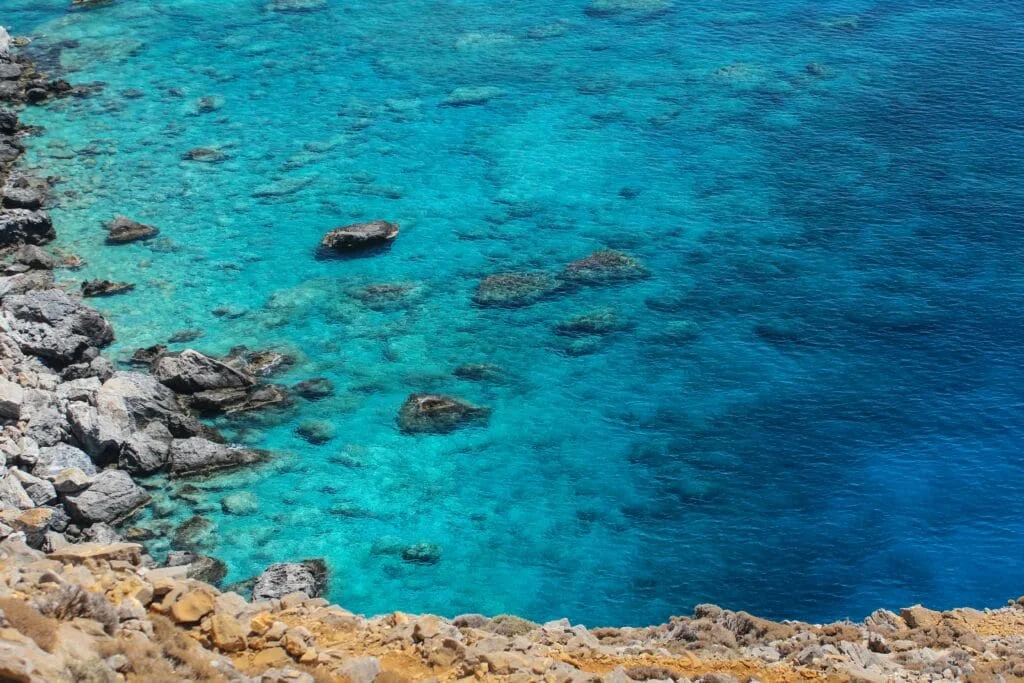
The best time for a beach holiday is from June to mid-September, when the sea is at its warmest (22–25 °C) and the weather is reliably sunny. Even in October, the sea is still pleasant for swimming (around 22 °C), but the days are shorter and the first showers may appear. For a sightseeing trip and active hiking, the best months are April, May and September to mid-October, when temperatures are milder (20–24 °C) and nature is either beautifully in bloom (spring) or still green after the summer drought (autumn).
Winter months (November to March) are mild in Crete, with temperatures around 15–16 °C on the coast, but it can snow in higher elevations and the mountain peaks are often covered in snow. Major towns like Heraklion, Chania and Rethymno offer plenty to do all year round, but many smaller tourist facilities are closed outside the main season.
Rhodes, one of the sunniest islands in the Mediterranean, enjoys a pleasant Mediterranean climate with hot, dry summers and mild, wetter winters. The weather and the best time to visit depend on what you want from your holiday.
Weather and when to go
Spring (March – May)
Spring on Rhodes is fresh, green and full of flowers. Temperatures gradually rise from 17 °C in March to a comfortable 24 °C in May. There can still be occasional showers, but sunny days become more frequent. The sea warms up slowly and reaches around 20 °C in May, which suits the first keen swimmers. This period is ideal for sightseeing and hiking, when the island is full of colour and the temperatures are very pleasant.
Summer (June – August)
Summer is the peak tourist season, drawing visitors with hot, dry weather. Average daytime temperatures range from 28 to 31 °C, but on the sheltered east coast highs can climb to 35–40 °C. Fortunately, the northwesterly “meltemi” wind often blows here, taking the edge off the heat and creating excellent conditions for windsurfing and kitesurfing. August is the hottest month, with average temperatures between 29 and 34 °C. It hardly ever rains in summer and the sea is at its warmest, reaching 25–27 °C in August, which is perfect for swimming and water sports.
Autumn (September – November)
Many travellers consider autumn the best time to visit. In September, the weather still feels like summer, with daytime temperatures around 28 °C and the sea heated to 25 °C. In October, temperatures drop to an average of 24 °C and the sea remains a pleasant 22–23 °C. You should, however, expect more frequent showers. November is cooler, with temperatures around 17–19 °C, but the sea is still swimmable for hardier visitors at around 20 °C.
Winter (December – February)
Winters on Rhodes are mild but rainy. December is actually the wettest month of the year. Average daytime temperatures are around 13–15 °C and drop to about 8 °C at night. Sea temperatures range between 16 and 18 °C. Snow is rare in the lower areas.
Best time to visit:
- For a beach holiday: The best months are June to August, when you can count on sunny weather and warm sea.
- For sightseeing and hiking: Spring (April, May) and autumn (September, October) are ideal, with more comfortable temperatures and fewer tourists on the island.
- For a mix of swimming and trips: The first half of June and September offer the perfect balance, with pleasant air and sea temperatures and smaller crowds than in peak season.
Average temperatures throughout the year
| Month | Average daytime temperature | Average night-time temperature | Sea temperature |
|---|---|---|---|
| January | 15 °C | 8 °C | 17 °C |
| February | 15 °C | 8 °C | 16 °C |
| March | 17 °C | 11 °C | 17 °C |
| April | 20 °C | 14 °C | 18 °C |
| May | 24 °C | 17 °C | 20 °C |
| June | 28 °C | 21 °C | 23 °C |
| July | 30 °C | 23 °C | 24 °C |
| August | 31 °C | 24 °C | 25 °C |
| September | 28 °C | 22 °C | 25 °C |
| October | 24 °C | 18 °C | 23 °C |
| November | 19 °C | 14 °C | 20 °C |
| December | 16 °C | 12 °C | 18 °C |
Regions and types of destinations
Crete is administratively divided into four regions (prefectures): Chania, Rethymno, Heraklion and Lassithi. Each region has its own capital and distinctive tourist attractions that appeal to different types of travellers.
Chania (western Crete)
The Chania region in the west of the island is considered a paradise for lovers of Cretan cuisine, wine and architecture. The capital city of Chania is one of the most beautiful towns in Greece, with its historic Venetian harbour, narrow old-town streets and rich history. The area is home to the island’s wildest mountain ranges, including the White Mountains (Lefka Ori) with more than 40 peaks over 2,000 metres.
Chania is home to Crete’s most famous beaches, including the pink Elafonisi Beach, the exotic Balos Lagoon, and the sandy Falassarna. The region also includes the Samaria Gorge – the longest in Europe – and three large peninsulas: Gramvousa, Rodopou, and Akrotiri.
Rethymno (central west)
Rethymno lies in the middle of the island and covers almost a quarter of all Crete. The town of the same name is a charming destination with more than 30,000 residents, a Venetian harbor, and the massive 16th‑century Fortezza citadel. Rethymno boasts the longest continuous stretch of beaches on Crete, running from the old harbor eastwards.
The area offers an ideal mix of a lively, touristy north and a quiet, authentic south. Above the town rises the island’s highest mountain, Psiloritis (2,456 m). The Bay of Rethymno is also an important habitat for loggerhead turtles – an endangered species of sea turtle.
Heraklion (central Crete)
Heraklion is the capital and economic hub of Crete. This region is home to the island’s top archaeological site – the Palace of Knossos, the political center of the Minoan civilization. The Heraklion prefecture is the most developed for tourism, with a densely populated northern coast and a number of popular resorts such as Hersonissos, Stalida, Malia, Agia Pelagia, and Amoudara.
The region also includes the vast Messara Plain – the largest in all of Greece – which is a fertile agricultural area. The southern part of the prefecture is quieter, with traditional villages and historic sites such as Faistos and Gortyna.
Lassithi (eastern Crete)
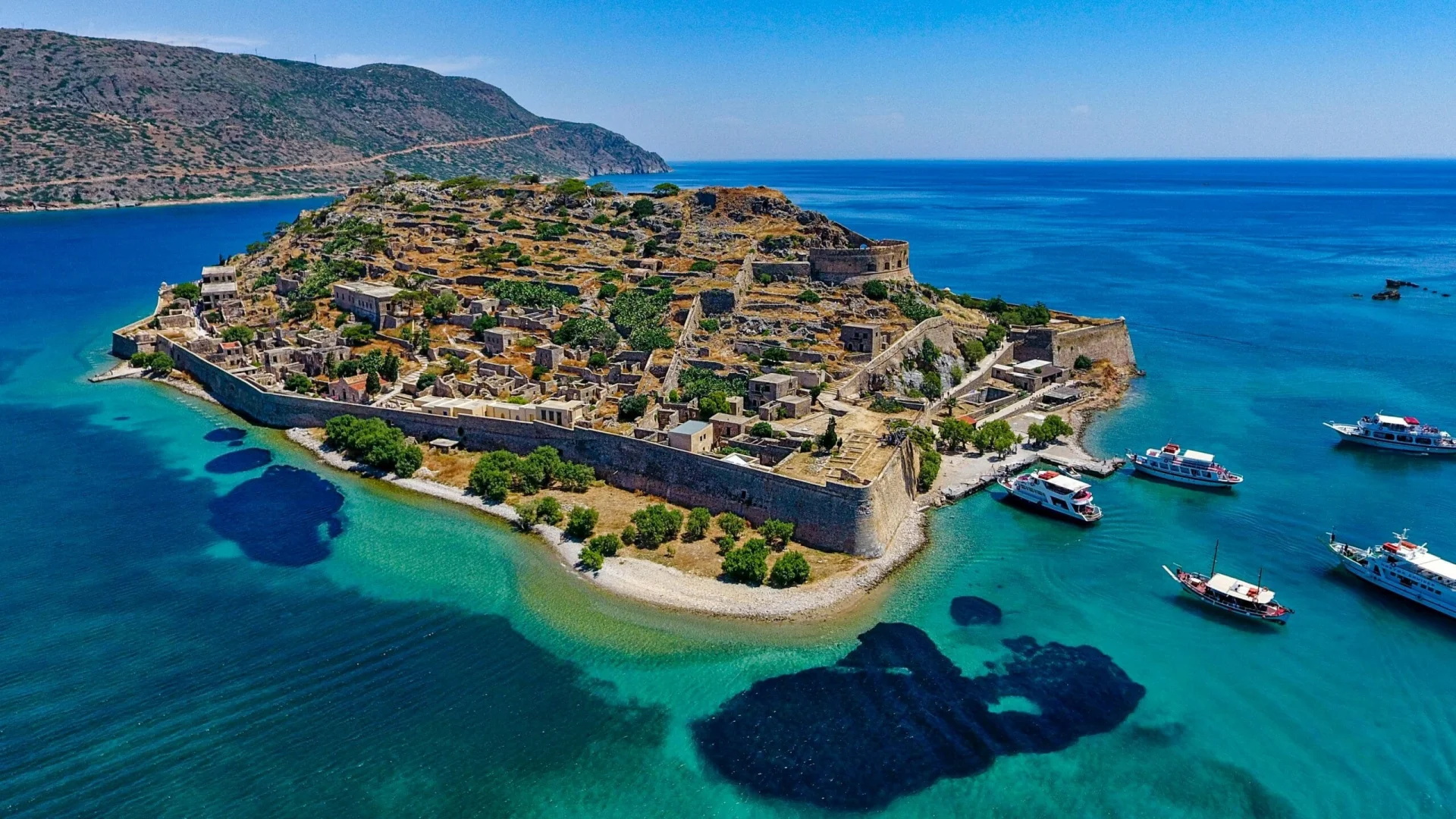
Lassithi in the east is the least mountainous of all the regions and offers a calmer atmosphere than the busy west and center. Its capital is Agios Nikolaos, which blends a cosmopolitan feel with a strong fishing tradition. The region is home to the famous Vai Palm Beach with the largest natural palm grove in Europe (over 5,000 palm trees), the island of Spinalonga with its impressive Venetian fortress and tragic leper colony history, and the Dikteon Cave, where Zeus was said to have been born.
Lassithi is ideal if you’re looking for peace, authenticity, and the chance to explore less touristy places. The Lassithi Plateau, with its traditional windmills, is one of the island’s most iconic spots.
Most famous sights and towns
Palace of Knossos
Knossos Palace is without doubt the most important archaeological site on Crete and one of the key remains of Minoan civilization in Europe. It lies about 5 km southeast of Heraklion and forms a vast complex dating roughly from 2000–1450 BC. The palace is believed to have had up to 1,400 rooms and was probably the political and religious heart of the entire Minoan world.
Knossos is closely linked to the myths of King Minos, the Labyrinth and the Minotaur. At the beginning of the 20th century, British archaeologist Arthur Evans carried out extensive reconstruction work here. It helps visitors picture the former glory of the palace, but it is also controversial because of the use of modern materials. Every year, hundreds of thousands of visitors come to admire the frescoes, the large central courtyard, the throne room, and the sophisticated water supply and drainage system.
Faistos
Faistos (also Festos or Phaistos) was the second-largest Minoan city and an important administrative center for south-central Crete. The palace was built on a hill with a stunning panoramic view of the Mesara Plain and the surrounding mountains. The famous Phaistos Disc comes from Faistos – a clay tablet covered with mysterious script, now on display in the Archaeological Museum in Heraklion.
Faistos does not attract as many visitors as Knossos, which means you can explore it in a calmer, more authentic atmosphere.
Heraklion
The capital city Heraklion, with more than 170,000 inhabitants, is the economic and cultural hub of Crete. Its rich history is visible in the Venetian fortifications, fountains, and the Koules fortress in the harbor. Heraklion is home to the island’s two most important museums – the Archaeological Museum, where you can see the most valuable artifacts from the Minoan era including the Phaistos Disc, and the Historical Museum of Crete, which traces the island’s development from prehistory to the present day.
The city is also a key transport hub, with the island’s largest airport and main port.
Chania
Chania on the west coast is the second-largest city on Crete and is considered one of the most beautiful cities in Greece. The old Venetian town with its picturesque harbor, narrow lanes full of tavernas and shops, and a lighthouse built by the Egyptians in the 19th century creates a very romantic atmosphere. A massive fortress rises above the city and the whole area is framed by the dramatic landscape of the White Mountains.
Rethymno
Rethymno lies almost halfway between Heraklion and Chania and boasts a beautiful old harbor, a compact historic center, and the largest Venetian fortress on Crete – the Fortezza fortress. The town is also home to the 17th-century Rimondi Fountain and some of the longest continuous beaches on the island.
Spinalonga Island
Spinalonga is a small island in the Lassithi region with an impressive 16th‑century Venetian fortress. However, the island is best known for its tragic past as a leprosarium – from 1903 to 1957, people with leprosy from all over Greece were isolated here. Today, Spinalonga is a popular tourist attraction, accessible by boat from Agios Nikolaos or Elounda.
Natural beauty and national parks
Samaria Gorge
Samaria Gorge is one of the most beautiful and most visited natural sites in Crete and is probably the longest gorge in Europe (16 km, with the gorge itself stretching for 13 km). It lies in the southwest of the island in the Lefka Ori mountains and is part of the national park of the same name, established in 1962.
The hiking trail starts on the Omalos plateau at an altitude of 1,250 meters and descends through forested slopes into a deep canyon whose walls rise up to 500 meters high. The narrowest point of the gorge is called the Iron Gates (Sideroportes) and is only 3–4 meters wide. Walking the whole route usually takes 5–7 hours and ends in the village of Agia Roumeli on the coast of the Libyan Sea.
The national park is home to more than 450 plant species (70 of them endemic) and the rare Cretan wild goat kri-kri, which has become the symbol of the gorge. Samaria is open from May to October and visitors must complete the entire route in a single day – overnight stays in the park are not allowed. The entrance fee is about $5 and you should bring plenty of water and sturdy footwear.
Other gorges
Besides Samaria, Crete offers several other beautiful, less demanding gorges such as Imbros (a shorter and easier alternative to Samaria), Kourtaliotiko, Aradena with the highest bungee bridge in Greece (138 m), or the Gorge of the Dead (Zakros).
Lassithi Plateau
The Lassithi Plateau in the eastern part of the island is a mountain plain at an altitude of about 850 meters, surrounded by the peaks of the Dikti range. The area is known for its traditional white windmills and the Dikteon Cave, where, according to Greek mythology, Zeus was born.
Lake Kournas
Lake Kournas is the only freshwater lake in Crete, located not far from Chania. It is a great spot to relax, swim, and rent pedal boats.
Best beaches
Crete has over 1,000 kilometers of coastline and offers an incredible variety of beaches – from exotic lagoons to secluded coves that you can only reach by boat. More than a hundred Cretan beaches have been awarded the prestigious Blue Flag for cleanliness and overall quality.
Balos Beach
Balos Lagoon in northwestern Crete (Gramvousa Peninsula) is one of the most photogenic spots on the island and looks like something straight out of the Caribbean. The mix of shallow turquoise water and white to slightly pink sand creates a breathtaking scene.
You can get to Balos in two ways – either by boat from the port of Kissamos (the trip often includes a stop at the island of Imeri Gramvousa with its Venetian fortress) or by car along a several-kilometer gravel road, followed by a 20-minute walk down to the beach. Parking costs about $5. There is a small bar on site and a limited number of sunbeds. Thanks to its very gentle entry into the water and warm shallows, the lagoon is perfect for families with children.
Elafonisi Beach
Elafonisi in southwestern Crete is often nicknamed the “European Pacific” and is considered one of the most beautiful beaches in the world. Its signature feature is the fine pink sand, which gets its color from crushed shells and coral.
Elafonisi is actually a sandbar that links the Cretan coast with a small island of the same name, creating a unique landscape with shallow lagoon-like waters that are ideal for kids. The beach is about 80 km from Chania and is easy to reach by car or regular buses. Because it is so popular, it can get very crowded in peak season.
Vai Palm Beach
Vai on the eastern tip of the island (Lassithi region) is a unique sandy beach surrounded by the largest natural palm grove in Europe, with more than 5,000 fully grown palm trees. The palms grew here naturally and create an exotic, almost tropical feel. The beach is easy to access, has parking available, and lies about 24 km from Sitia.
Preveli Beach
Preveli on the south coast is a striking mix of a river flowing into the sea, a palm grove, and a dramatic rocky backdrop. The river forms a freshwater pool where you can swim before heading into the sea. The area is surrounded by lush greenery and features an iconic heart-shaped rock.
Falassarna
Falassarna on the west coast is known for its wide sandy beaches and some of the most beautiful sunsets in Crete. The beaches stretch for several kilometers and are covered with fine golden sand.
Voulisma Beach (Golden Beach)
Voulisma in the Lassithi region is nicknamed the “Golden Beach” thanks to its golden sand and turquoise water that looks a lot like the Maldives. The beach has a calmer vibe than the crowded west coast.
Activities and entertainment
Crete offers a wide range of activities for every type of traveler – from water sports and mountain hiking to cultural experiences.
Hiking and mountain treks
Crete is a paradise for hiking enthusiasts of all levels. Besides the famous Samaria Gorge, there are dozens of marked trails, including the ascent to the highest peak Psiloritis (2,456 m), routes through smaller gorges (Imbros, Aradena, Kourtaliotiko) and coastal walks. Spring is the best time to go – nature is in full bloom and the temperatures are ideal for hiking.
Water sports
Thanks to its windy climate, Crete is an excellent destination for windsurfing and kitesurfing. Top spots include Palekastro, Falasarna, Elafonisi, Stavros, Elounda, Kouremenos, Amoudara, Kokkini Hani and Hersonissos. The northern Meltemi wind creates ideal conditions in July and August.
The island also offers surf courses for beginners (usually around $105 for a 2-hour lesson), diving (especially around Agia Pelagia, Bali, Chania, Mochlos and the southern beaches with underwater caves), snorkeling, water skiing, wakeboarding, jet ski rides (from about $65 per hour) and paddleboarding.
Cycling
Bikes can be rented in most larger resorts, although dedicated cycle paths are not common and cyclists often ride on main roads. The mountainous terrain makes cycling more physically demanding.
Nightlife and culture
Bigger cities like Heraklion, Chania, Rethymno and resorts such as Malia and Hersonissos offer a vibrant nightlife with bars, clubs and restaurants. For a more relaxed evening, head to traditional tavernas in the old town areas, where you can listen to live Cretan music played on instruments like the lyra and laouto.
Key practical information
Currency and payments
The official currency in Crete is the euro (€). Banknotes come in denominations of 5, 10, 20, 50, 100, 200 and 500 € (however, 200 and 500 € notes are rarely used in everyday payments and some businesses do not accept them).
International payment cards like Visa and Mastercard are accepted almost everywhere in tourist areas. Contactless payments are standard, although some smaller businesses may set a minimum amount for card payments (usually around €10). American Express and Diners Club are accepted less often.
Many ATMs in Crete charge high withdrawal fees – sometimes up to €5 per transaction. It’s better to withdraw cash from ATMs of Greek banks (Alpha Bank, Piraeus Bank), which usually have lower fees than independent ATMs such as Euronet. Important: When withdrawing money, always choose to be charged in euros without dynamic currency conversion, as the exchange rate offered by ATMs is usually poor.
Tipping is not mandatory in Crete, but it’s seen as a nice way to show appreciation for good service. In restaurants and tavernas, it’s common to leave 5–10% of the bill if you were happy with everything. In bars and cafés, people usually leave €1 or round the bill up. In hotels, it’s appropriate to give housekeeping €1–2 per night and porters €1–2 per bag.
Entry formalities and visas
Czech citizens (and all EU nationals) can enter and stay in Crete (and the whole of Greece) without a visa with a valid passport or national ID card. Both documents are fully equivalent and accepted whether you arrive by plane, ferry, or car. Your travel document must be valid for at least the entire duration of your stay.
Since 26 June 2012, every Czech citizen (including minors) must have their own travel document to travel abroad – children can no longer be listed in their parents’ passports. For stays longer than 3 months, you must visit the local immigration police office and apply for a residence permit for EU citizens.
For driving a car, a standard Czech driving licence is sufficient – an international driving permit is no longer required.
Safety and local customs
Crete is generally a very safe destination with low crime rates. The island is very different from large Greek cities and the atmosphere is friendly. Violent crime is extremely rare, and crimes targeting tourists are even less common.
The most common issue is pickpocketing, but it occurs only occasionally in busy spots such as the port in Heraklion, the old town in Chania, and nightlife areas. It’s wise to be very careful with your belongings, especially travel documents, cash, and bank cards.
Important safety tips:
- Do not leave valuables and documents unattended in your car or on the beach
- To reduce the impact of theft, do not carry all your ID documents (passport, ID card) together
- Use hotel safes for larger amounts of cash
- Thefts have also been reported in accommodation facilities, so always lock your room
On Crete there is an old tradition called balothies – during weddings and birthdays, locals fire shots into the air as a sign of joy. Most of the time they use blank cartridges, but not always. The Greek police condemn this practice, but it remains part of Cretan culture.
If you run into trouble, you can contact the tourist police on 171, where help is available in several languages.
Prohibited activities with severe penalties:
- Transporting and possessing drugs (many years in prison)
- Using metal detectors (up to five years in prison)
- Wild camping outside designated campsites (strictly prohibited)
- Collecting archaeological artefacts (a criminal offence with possible imprisonment)
- Assisting in smuggling illegal migrants (can lead to many years in prison)
Healthcare and vaccinations
No mandatory vaccinations are required for travel to Crete. However, it is recommended to be vaccinated against tetanus and hepatitis A, and possibly B – just as for trips to other southern countries. Your routine vaccinations (tetanus, diphtheria, measles, mumps) should be up to date.
Czech citizens are entitled to necessary and urgent medical care in Greece based on the European Health Insurance Card (EHIC). This care is provided under the same conditions as for local insured residents, which often means a co-payment. In practice, you usually have to pay on the spot first and only claim reimbursement from your health insurance company after you return to the Czech Republic.
Important notice: EHIC only covers urgent care in public facilities. Many tourist areas are served mainly by private clinics, where EHIC is not accepted. EHIC also does not cover medical repatriation, which can cost tens of thousands of dollars. That is why travel insurance is strongly recommended.
Indicative prices of medical care without insurance:
- Visit to a private doctor: €50–100
- Treatment in a private hospital: €200–500 per day
- ICU hospitalization: €1,000–2,000 per day
- Helicopter transport: from €5,000 (between islands up to €15,000)
- Repatriation to the Czech Republic: €30,000–150,000
Health risks:
- Heatstroke and sunburn – the most common problem for tourists. Use high-SPF sunscreen, wear a hat, and drink plenty of fluids
- Marine life – jellyfish, moray eels, stingrays, and sea urchins. Wear water shoes and avoid remote parts of the sea
- Vipers, scorpions, and centipedes – found across the island. Their bites can be painful but are usually not life-threatening
You can find medical care in every larger town. In case of an accident, you can arrange a visit to an I.K.A. doctor by calling 184, where you can also get more detailed information.
Fauna and flora
Cretan fauna is not as rich as its flora. The most important and best-known animal is the Cretan bezoar goat, known as the kri-kri goat (Capra aegagrus cretica). It is an endemic species with reddish-brown coloring and long horns that lives only on Crete. Unfortunately, the original pure kri-kri has gradually crossbred with common goats and now survives only in a few areas – mainly in the Samaria Gorge and on the island of Dia.
Other wild animals include weasels, badgers, rabbits, wild cats, and in remote areas also wild goats (agrími). Among birds, you can spot peregrine falcons, hawks, and occasionally bearded vultures in the mountains. Crete is also an important stopover on the migration routes of many bird species.
The sea and coastline are home to large numbers of turtles (including the endangered loggerhead turtle) as well as snakes, lizards, and frogs. In underground caves you can find various species of bats.
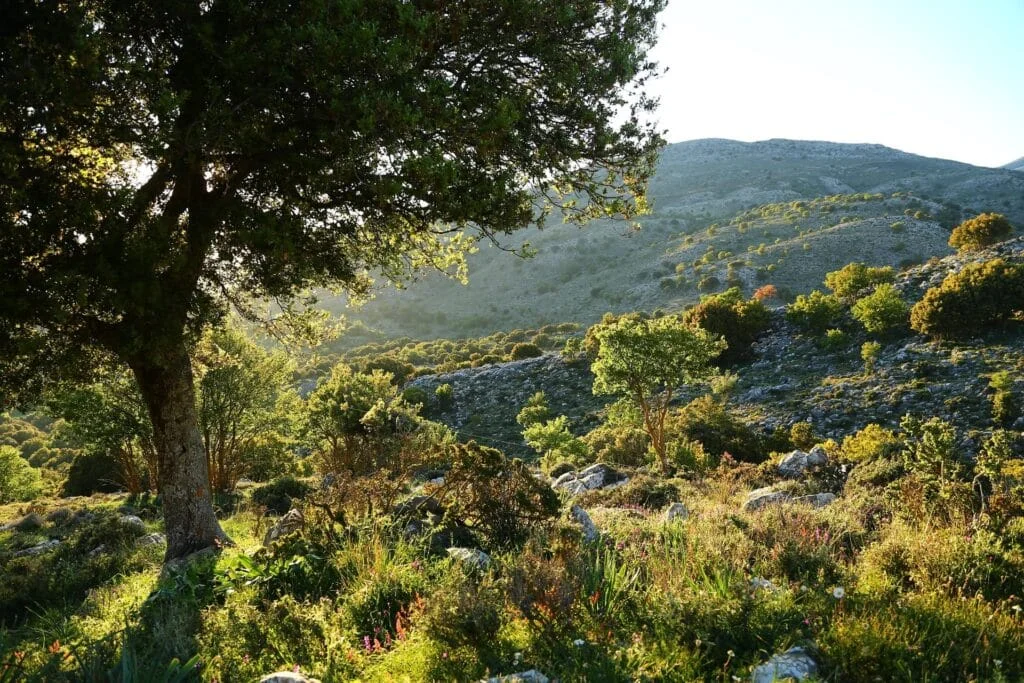
Cretan flora is far richer than its fauna. More than 450 plant species grow on the island, of which 70 are endemic – they occur only on Crete. At higher altitudes you will find cypresses, pines, oleanders, and a huge variety of herbs and wild greens such as stifnos, askolymbri, and stamnagathi, which are staples of Cretan cuisine. In spring, the landscape is beautifully in bloom.
Along the coast you will see palm trees (naturally at Vai and Preveli), and a defining feature of the landscape are the olive trees that cover large areas of the interior. Crete is one of the largest olive oil producers in Greece.
Transport and logistics
How to get to the country
The most efficient way to get to Crete is by air. Crete has three international airports:
Heraklion Airport (HER) – the largest airport on the island, located about 5 km from the city centre. Flight time from the Czech Republic is roughly 2–3 hours. During the tourist season there are direct flights to Crete from Prague, Brno and Ostrava.
Chania Airport (CHQ) – the second largest airport, on the western side of the island, about 14 km from the town of Chania. It also handles international charter flights in the high season.
Sitia Airport (JSH) – a small airport in the eastern part of the island with limited traffic.
In peak season (June–September), there are plenty of charter flights directly from the Czech Republic. Outside the main season you usually need a connecting flight via Athens, from where domestic flights to Crete run daily with Olympic Air, Aegean Airlines and Sky Express.
Alternatively, you can get to Crete by ferry from Piraeus (the port of Athens), but the journey takes about 8–10 hours overnight.
Transport within the country
In larger cities such as Heraklion, Chania and Rethymno, there is a city bus network that is cheap, reliable and well signposted. From Heraklion Airport you can reach the city centre by city buses (blue Astiko) on lines 5, 6, 10, 11 or 12. You pay the fare in cash to the driver.
Intercity bus transport is provided by KTEL, which connects most major places on the island. The buses are modern, clean, air-conditioned and surprisingly punctual. Between the main cities they run several times a day; to smaller villages usually twice a day.
The busiest route runs along the entire north coast on the main road – the Chania – Rethymno – Heraklion – Agios Nikolaos – Sitia line. The bus ride from Heraklion to Chania takes 2–3 hours and costs 10–15 €. Tickets can be bought directly from the driver or at bus stations.
You can look up connections on ktelherlas.gr and e-ktel.com.
Taxis are available in all major towns and resorts. For longer journeys, it’s a good idea to agree on the price in advance. A taxi transfer from Heraklion to Chania is the fastest and most comfortable option, but also the most expensive one.
To really get to know Crete, renting a car is the best option, giving you freedom and flexibility. You’ll find car rental companies at all airports and in larger towns. The range of vehicles is wide – from small city cars to SUVs and off-road vehicles.
Car rental tips:
- Book your car online in advance to get better rates (off-season around $55 per week, in high season from $70 per day or $295 per week)
- Choose a car with air conditioning and higher ground clearance, especially if you plan to drive in the mountains or on unpaved roads
- Take out full insurance and check the rental terms carefully
- Airport pick-up is usually free of charge
- An international driving licence is not required – a valid Czech driving licence is enough
Driving warnings:
- Roads are often narrow, winding, with no shoulders and limited signage
- Driving can be demanding, especially in the mountains and in the south
- The driving style of some locals (speeding, risky overtaking, ignoring rules) can be stressful
- Always park in designated areas – parking in towns is limited
- At higher altitudes (especially in the White Mountains), snow can lie from November to April
Traffic offences: Greece has strict fines for breaking traffic rules. Not wearing a seat belt can cost you up to €350 and your licence plates can be removed for 10 days.
On the southwest coast of the island, there is a network of local ferry services with stops in Hora Sfakion, Loutro, Agia Roumeli, Sougia and Paleochora. This way of getting around is especially popular after hiking the Samaria Gorge.
Gastronomy and culture
Typical food and drink
Cretan cuisine is at the heart of the famous Mediterranean diet, which is listed as UNESCO Intangible Cultural Heritage. Local dishes are based on fresh olive oil, vegetables, herbs, seafood and free-range meat. The local gastronomy is not just about food – it’s a way of life and a reflection of the island’s culture.
The secret of the Cretan diet is simple: plenty of olive oil, vegetables (eggplant, pumpkin, beans, tomatoes), legumes (peas, lentils), wholegrain products and wild herbs. On top of that, smaller amounts of meat (lamb, chicken, rabbit) and fish.
Dakos – barley rusk (paximadi) drizzled with olive oil and topped with tomatoes, mizithra cheese, oregano and olives. Paximadi was created by mountain shepherds who needed food with a long shelf life.
Tzatziki – the famous starter made from Greek yogurt, cucumber, garlic, spices and sometimes dill. It is eaten with white or brown bread and can sometimes be served as part of a main course.
Horiatiki (Greek salad) – fresh vegetables, tomatoes, cucumbers, onions, peppers, olives and feta cheese.
Chochlioi boubouristi – snails fried in olive oil with rosemary and vinegar, an inland delicacy.
Kleftiko – lamb baked in paper with potatoes, garlic and herbs.
Stamnagathi with lamb – wild chicory (found only in Crete) cooked with lamb.
Gyros – the best-known fast food: slices of meat (often lamb) skewered, roasted and served in pita bread with plain yogurt (instead of tzatziki as in the rest of Greece). It costs about $4.
Souvlaki – pita bread filled with tender meat, served with Greek yogurt, tomatoes and oregano.
Moussaka – traditional baked layered vegetables with meat, in a budget taverna for about $8.
- Mizithra – soft fresh cheese
- Graviera – salty, harder cheese
- Kefalotyri – aged hard cheese
Raki (also called tsikoudia) – a strong grape spirit that is an essential part of Cretan culture. In many restaurants in Rethymno, you get a small bottle of raki and a dessert on the house after your meal.
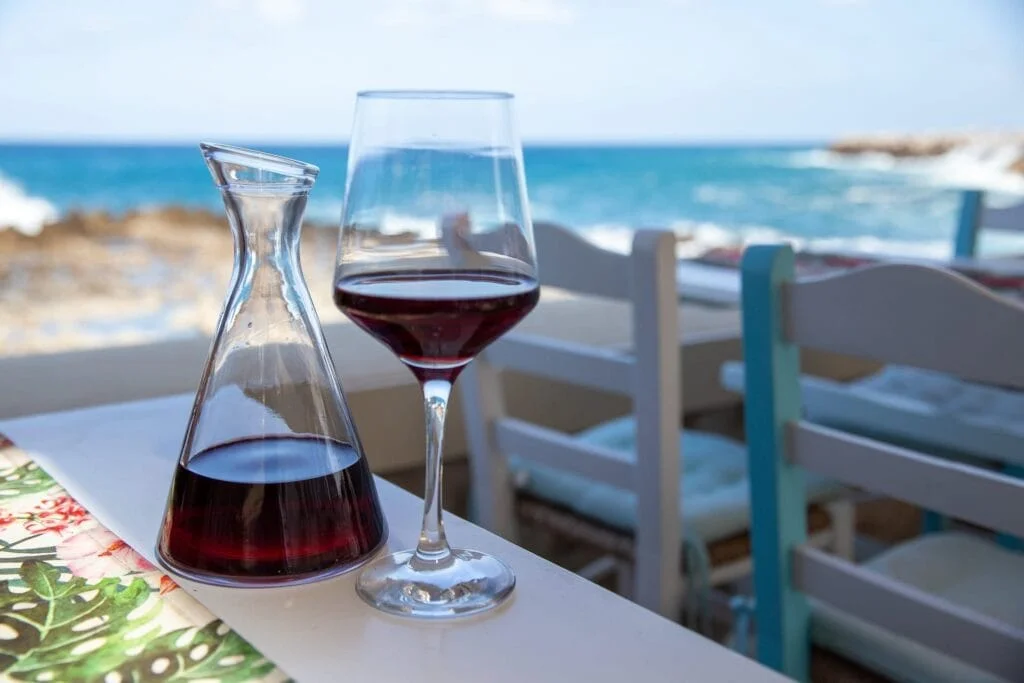
Cretan wine – the island has a long winemaking tradition and produces quality red and white wines. A bottle of local wine costs $4–15.
Greek coffee (ellinikos kafes) – strong coffee prepared in the traditional way, costing $2–2.5.
Beer – the local brand Mythos costs about €1.30 in supermarkets and €4–5 in restaurants.
- In Greece, lunch is usually served between 2–3 p.m. and dinner around 9–10 p.m.
- Tap water is safe to drink
- You’ll pay around €10–20 for a main course in a restaurant, and the value for money is better than in Prague
- If you eat in local tavernas rather than touristy spots, prices will be much lower
- In tourist restaurants, service is often included in the price, but it’s still customary to at least round the bill up
Cultural customs and festivals
Greek society is built on tradition and places strong emphasis on the family. Cretans are hospitable and welcoming to visitors. Locals love to spend time in tavernas, enjoying traditional dishes and drinking wine or raki – every meal is a small ritual for them.
Easter – the most important Christian holiday in Greece. Preparations start during Holy Week and peak at midnight on Holy Saturday with festive processions carrying icons.
Carnival (Apokries) – three weeks of lively celebrations before the start of the Easter fast. The most spectacular carnival takes place in Rethymno, where more than 15,000 costumed participants gather every year. The program includes concerts, theatre performances, children’s events and parades with floats.
Feast of St. John the Baptist (24 June) – an important holiday with folk dancing, music and communal feasting.
Feast of the Assumption of the Virgin Mary (15 August) – the most important religious event in Crete, marked by religious processions in which icons of the Virgin Mary are carried through the streets.
Epiphany (Theofania) (6 January) – priests throw a cross into the sea and local men dive into the cold water to retrieve it. The person who brings the cross back is believed to have good luck in the coming year.
Houdetsi Festival – an annual music event showcasing traditional Cretan music and dance with historic instruments including the lyra, laouto and mandolin.
Matala Festival – a celebration of the 1960s counterculture movement, filled with music and art.
Raki Festival (Kazanema) – a popular festival in October and November celebrating raki distillation. Villages across Crete host events with tastings of freshly distilled raki and traditional dishes.
Chestnut Festival – an annual celebration of the chestnut harvest, a key ingredient in Cretan cuisine.
Prices and travel budget
Crete caters to every type of traveller – from backpackers to luxury holidaymakers. On average, the cost of living in Crete in 2025 is about 20% higher than in the Czech Republic, but still noticeably lower than in Western Europe.
Approximate budgets:
Low budget (backpacker):
- Hostel accommodation: 15–25 € per person per night ($13–$25)
- Food: self-catering or cheap tavernas, $13 per person/day
- Transport: KTEL buses
- Activities: free (beaches, shorter hikes)
- Total budget: around $62 per person/day
Mid-range budget (standard traveller):
- Accommodation: studios and rooms 40–60 € per night ($42–$63)
- Food: eating out in local tavernas, $31 per person/day
- Transport: rental of a small car (from 50 € per week in low season, 270 € per week in high season)
- Activities: paid trips and entrance fees, $8 per person/day
- Total budget: around $98 per person/day
High budget (luxury traveller):
- Accommodation: 4–5* hotels from 100 € per night ($105+)
- Food: higher-end restaurants, $49 per person/day
- Transport: rental of a larger/more premium car or private transfers
- Activities: private tours, water sports, wellness, $16 per person/day
- Total budget: around $128+ per person/day
Examples of specific prices:
Food:
- Coffee: €2.0–2.5
- Beer in supermarket: €1.30
- Beer in a restaurant: €4–5
- Bottle of water: €0.20
- Gyros pita: €3–3.50
- Main course in a restaurant: €10–20
- Salad in a fine-dining restaurant: €10–12
- Fresh seafood: €15–18
Transport:
- Bus ticket Heraklion–Chania: €13.80
- Taxi transfer Heraklion–Chania: about €120–240
- Car rental: €50–270 per week (depending on the season)
- Parking: a few euros per day in the cities
Activities:
- Entrance to Samaria Gorge: €5
- Surfing lesson (2 hours): €95
- Jet ski (per hour): €60–75
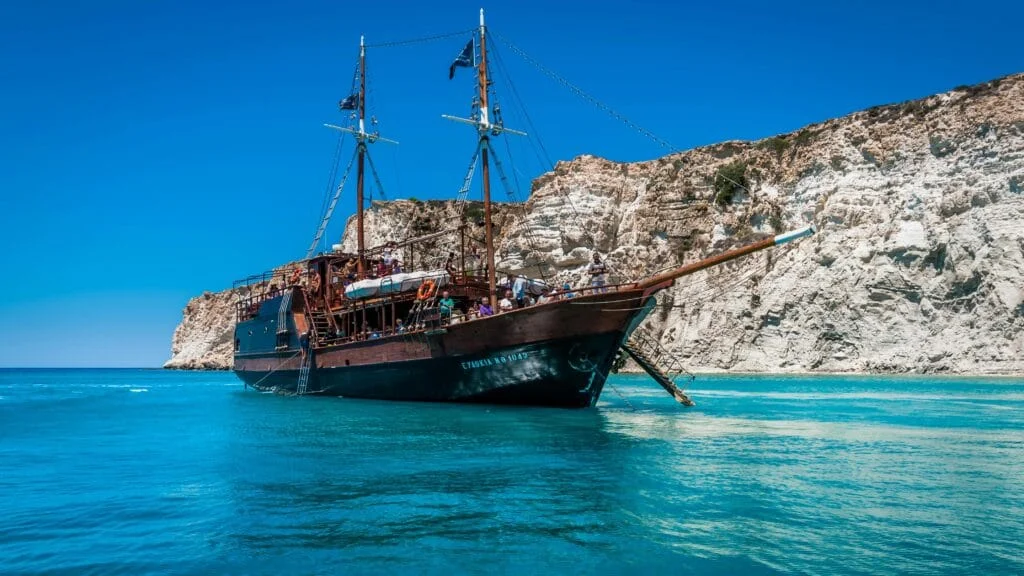
- Boat trip to Balos Lagoon: price varies by provider
Accommodation:
- Hostel: €15–25 per night
- Studios and rooms: €40–60 per night
- Mid-range hotel: €60–100 per night
- Luxury hotel: €100+ per night
Money-saving tips:
- Travel outside the peak season (April–May, September–October) – hotels are much cheaper and the weather is still great
- Choose local tavernas instead of touristy restaurants
- Buy food in supermarkets – groceries are about 20–30% cheaper than in Athens
- Use a multi-currency card (Revolut, Wise) for good exchange rates and minimal fees
- Travelling by bus is the most cost-effective option if you’re on your own
- Renting a car pays off if you’re in a larger group
Basic phrasebook
How to plan the perfect trip
Choosing the right region for your travel style
For first-timers and beginners:
The best choice is western and central Crete with the main towns of Chania, Rethymno and Heraklion. This area has the best infrastructure, the most sights and the easiest access. It’s ideal to focus on the Chania – Rethymno – Heraklion triangle and take trips to the most famous beaches (Balos, Elafonisi) and the palace of Knossos.
For families with children:
The north coast with gently shelving sandy beaches such as Amoudara, Hersonissos, Stalida, Malia. The Balos lagoon and Elafonisi are also great thanks to their shallow, warm waters. Avoid demanding mountain hikes and the wild beaches of the south coast.
For active holiday lovers:
Western Crete with options like the Samaria Gorge hike, climbing Psiloritis, diving, windsurfing and other water sports. Staying around Plakias or Paleochora on the south coast gives you peace and easy access to unspoiled nature.
For seniors:
Quieter areas such as Agios Nikolaos in the Lassithi region, or smaller resorts on the north coast. Good access to healthcare in the larger towns. Avoid demanding mountain routes and extreme heat in July and August.
For adventurers and independent travelers:
Eastern Crete (Lassithi) with fewer tourists, the Vai palm beach, the island of Spinalonga, the Dikteon Cave and traditional villages. The south coast offers wild beaches and dramatic gorges.
What to watch out for when planning
Common mistakes:
- Not booking early enough in peak season (July–August) – accommodation and car rentals can be fully booked
- Underestimating distances – Crete is a large island (254 km long) and travelling between regions can take several hours
- Overpacked itinerary – plan fewer places and leave room to relax
- Ignoring siesta hours – many shops and offices close in the afternoon (2–5 p.m.)
- Choosing the wrong month – July and August are crowded and extremely hot, while April and October can have unstable weather
Booking in advance:
- Book your car rental online in advance to get better rates
- In peak season, book your accommodation well ahead of time
- For the Samaria Gorge, set off early in the morning (the park opens at 6 a.m.) to avoid the crowds
- It’s better to book the boat to Balos Lagoon in advance
Sample itineraries
A week in towns and on the beach (for first-timers):
- Day 1–2: Heraklion + Knossos Palace + Archaeological Museum
- Day 3: Rethymno (Old Town, Fortezza fortress)
- Day 4: Chania (Venetian harbor, markets)
- Day 5: Trip to Balos Lagoon
- Day 6: Elafonisi Beach
- Day 7: Relax on local beaches, fly home
10 days of active holiday (mountains + sea):
- Day 1: Arrival in Heraklion, transfer to Plakias
- Day 2: Preveli Beach
- Day 3: Hike through the Samaria Gorge
- Day 4: Elafonisi Beach
- Day 5: Chania (city sightseeing)
- Day 6: Balos Lagoon
- Day 7: Rethymno
- Day 8: Heraklion + Knossos
- Day 9: Matala Beach + Aradena Gorge
- Day 10: Departure
A week in eastern Crete (for experienced travelers):
- Day 1: Heraklion + Knossos
- Day 2: Transfer to Agios Nikolaos
- Day 3: Spinalonga Island
- Day 4: Vai palm beach
- Day 5: Lassithi Plateau + Dikteon Cave
- Day 6: Sitia + local beaches
- Day 7: Return to Heraklion
Summary and final tip
Crete is a remarkable destination that can satisfy almost every type of traveler. Its main strengths lie in a unique blend of rich history reaching back to the first European civilization, stunning natural scenery from exotic pink beaches and dramatic mountain gorges to traditional hilltop villages, and an authentic Mediterranean culture with outstanding food and genuinely welcoming locals.
The island enjoys more than 300 sunny days a year, making it an ideal choice not only for a classic summer holiday, but also for spring and autumn trips, when the temperatures are milder and perfect for sightseeing and outdoor activities. Thanks to its four distinct regions, each with its own character, everyone can find their ideal spot – from lively tourist resorts to remote, quiet beaches that you can only reach by boat.
When making your final decision, think mainly about the time of year, how long you want to stay, and what your priorities are. If you’re after swimming in the sea and lazy days on the beach, choose June to September and stay on the north coast. History and culture lovers will appreciate spring or autumn with accommodation in Heraklion, Chania, or Rethymno, giving you easy access to major sights. Active travelers and adventure seekers should focus on western Crete, where you can hike through gorges and enjoy a wide range of water sports.
Don’t forget to rent a car so you can really explore the island and reach places off the main tourist routes. And most importantly, give yourself enough time to soak up the unhurried Cretan “sigu-sigu” (slowly-slowly) vibe, with long evenings in tavernas, tasting local raki and watching the sun set over the Aegean Sea. Whatever region or travel style you choose, Crete will reward you with unforgettable experiences, authentic culture, and a slice of Greek paradise you’ll want to come back to again and again.
Kategorie: