Everything You Need to Know About Choosing and Maintaining an Axe
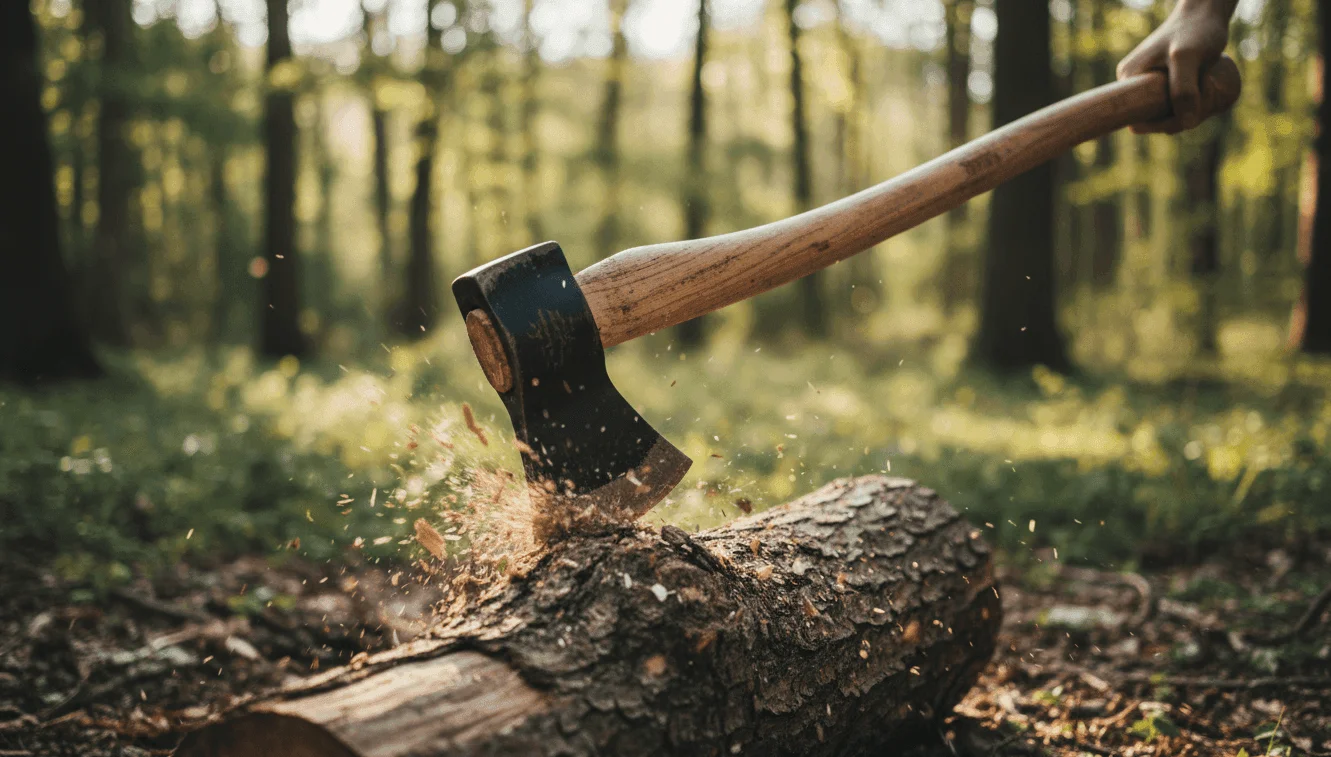
An axe is more than just a piece of metal on a handle; it is one of the oldest and most important tools in human history. It serves a wide range of tasks – from preparing firewood (splitting) and felling trees in the forest, through fine carpentry and carving work, all the way to essential gear for camping and survival.
The key to its effectiveness is the geometry of the head, which turns human strength into focused kinetic energy. A well-chosen, sharp axe should not feel like a burden in your hands, but like a natural extension of your arm.
The fundamental principle of an axe is the combination of a lever (handle) and a wedge (head). The wedge is what spreads the impact force into enormous pressure that tears or splits the wood. Choosing the right wedge (geometry) is critical for efficient and safe work.
Which axe for which job?
There are many types of axes, but each one is optimised for a specific task, which is reflected in the unique geometry of its head.
Splitting axe – The queen of firewood
Splitting axes are built for a single purpose: to split logs. Their typical feature is a wide, highly convex wedge that does not cut, but pushes the wood fibres apart. The wedge shape ensures that the head widens immediately after entering the wood and generates maximum splitting force. They are heavy (often 2–3 kg) and have a long handle for maximum leverage and acceleration. They are ideal for anyone who regularly prepares a large amount of wood for a fireplace or boiler.
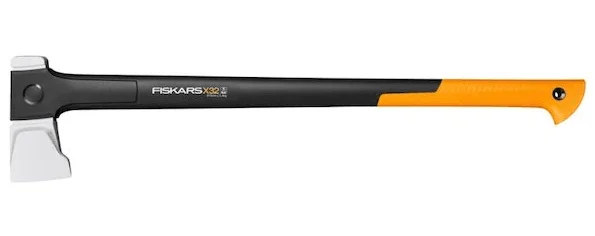
Universal axe – A versatile helper
The universal axe (also called a farmer’s axe) is a compromise between splitting and chopping. Its geometry is medium – the wedge is narrower than on a splitting axe, but wider than on a felling axe. This allows it to efficiently split smaller logs, trim branches and handle general jobs around the house. It is the best choice for readers who want a single tool for versatile, occasional use and do not want to invest in several specialised models.
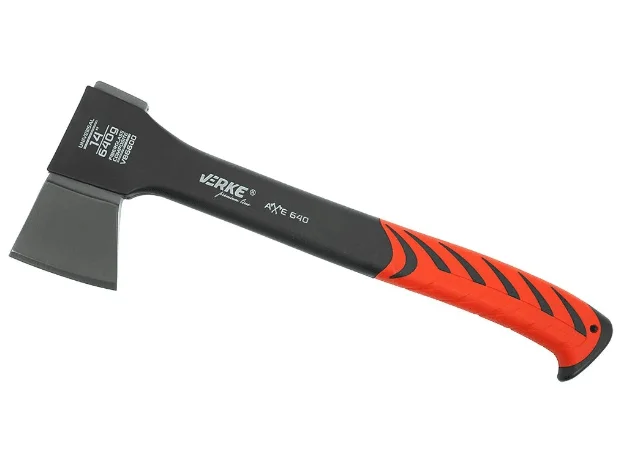
Maul – When strength alone is not enough
The maul is essentially an axe on steroids. It has a very heavy, massive head (often over 3 kg) with an exceptionally blunt and wide wedge whose primary job is to shock-split huge rounds with nasty knots. A key feature is the flat striking face on the back of the head, which lets you hit it with a hammer or sledge (in combination with splitting wedges) for maximum control and power. Warning: A maul is intended for strong and experienced users, as it requires proper technique and good physical condition.
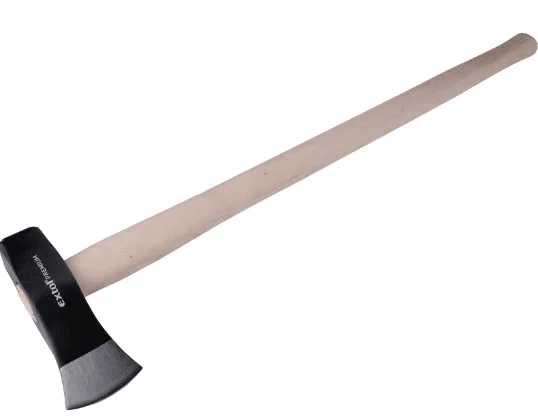
Camping axe – Light and easy to carry
Camping axes (also called hiking axes) are defined by their low weight and short handle (often under 40 cm). They are designed for easy packing and carrying on hikes or to camp. Their main use is making kindling, light limbing and chopping smaller pieces of wood. The geometry is often universal, but the smaller size puts the emphasis on precision and control rather than brute force.
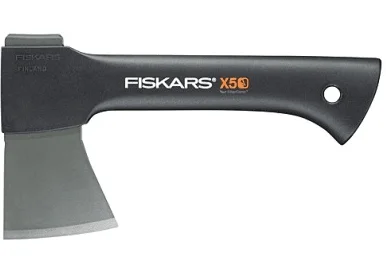
Carpenter’s axe – The art of precise hewing
Carpenter’s axes are highly specialised tools for shaping wood, cutting tenons, grooves and precise hewing. They usually have a straight handle for better control of the blow and an extremely sharp edge angle for a clean cut. A key feature is the flat side (cheek) of the head, which lets you guide the axe accurately along the wood. Many carpenter’s models also have a beard (an extended lower corner of the head) that improves grip close to the head for fine work.
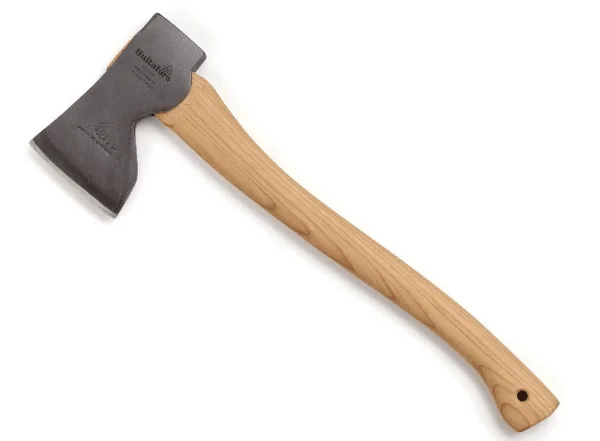
Forestry and felling axe – Cutting power
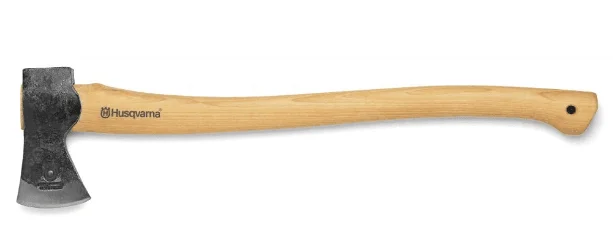
The forestry (or felling) axe is designed for cutting wood fibres when felling trees and limbing. Its head is narrow and long with an edge in the shape of a sharp “V”. This geometry bites deeper with less resistance, but is less effective for splitting because it lacks a widening wedge. These axes usually have a long handle and are popular with professional loggers for their high speed and efficiency.
| Axe type | Key head geometry | Best use |
|---|---|---|
| Splitting | Wide, highly convex wedge, high weight | Splitting a large amount of firewood (logs). |
| Universal | Medium geometry, balanced wedge angle | Versatile use: chopping, splitting smaller logs, general work around the house. |
| Splitting maul | Heavy, solid head with a blunt, wide wedge, flat striking surface | Breaking apart huge logs with tough knots, used together with wedges. |
| Camping | Small, light, short handle, more universal geometry | Hiking, camping, making kindling and light chopping. |
| Carpenter’s | Flat side of the head (cheek), very sharp low-angle edge, straight handle | Precise shaping, trimming, making tenons and carpentry joints. |
| Forestry / Felling | Narrow, long head with a sharp “V”-shaped edge | Tree felling, limbing, cutting through wood fibers. |
How to choose an axe?
Several criteria come into play when choosing an axe. They determine how the tool will perform and how long it will last.
Head weight and handle length
The length of the handle works as a lever. A longer handle generates higher speed at the end of the swing, which means more kinetic energy – ideal for heavy splitting (100 cm and more). The weight of the head directly affects the splitting power. A heavier head (2+ kg) is essential for splitting, while camping axes (0.5–1 kg) prioritise easy handling and accuracy over raw power. For efficient splitting, it is best if the head weight and handle length are matched to your build and strength.
Handle material
There are three main materials to choose from. A wooden handle (often ash or hickory) offers the best vibration damping, a great feel in the hand and a traditional look; plus, if it breaks it is easy to replace. Fiberglass is extremely resistant to moisture, weather and impacts, but absorbs vibrations less effectively. Modern composites (often a mix of plastic and glass fibres) are light and almost indestructible. The head attachment is also crucial – with wood it is fixed using wedges (wooden and metal), while with composites the head is usually moulded or injected onto the handle.
Head steel and its quality
Steel quality is essential. Most good axes use carbon steel, which sharpens well and holds an edge, but needs protection against rust. Even more important is the hardness (measured in HRC – Rockwell scale). The ideal range is usually 50–60 HRC; steel that is too hard can chip, while steel that is too soft will quickly lose its edge. Hand forging (traditional brands) usually means higher precision and optimal material distribution, while machine forging offers an excellent price-to-performance ratio.
Geometry and edge / wedge angle
The edge angle determines sharpness – a small angle (20–30°) is suitable for cutting (carpenter’s, forestry axes), while a large angle (35–45° and more) is better for splitting, where edge durability and fast wedge expansion matter more. The wedge shape determines whether the axe mainly splits fibres apart (wide convex wedge, splitting axes) or cuts them (narrow, flat wedge, forestry axes).
Ergonomics, construction and safety features
Ergonomics includes the shape of the handle and its end, which must provide a secure grip and prevent slipping even with sweaty hands. The construction can be two-piece (head and handle are separate and joined) or one-piece (on composites, where head and handle are moulded as one), which increases durability. A safety sheath is essential to protect both the edge and the user during transport and storage.
Choosing and recommendations: How to find the right one?
The right axe affects not only how efficiently you work, but also your health and safety.
Choosing by wood type and task
For softwood (spruce, pine), an axe with a less aggressive wedge or a lighter universal model is enough. Hardwood (oak, beech, acacia) calls for a heavy splitting axe with a wide, powerful wedge. Fresh (green) wood is more demanding because of its moisture content, so it needs more power and a sharper edge. For limbing, choose a forestry/felling axe with a sharp “V” wedge that does not get stuck. Splitting large rounds is where the maul really shines.
Recommendations by user strength and experience
Beginners and users with less strength should choose lighter axes (universal models up to 1.5 kg), which are easier to control and reduce fatigue and injury risk. Experienced and strong users can make full use of heavy splitting axes (over 2 kg) with a long handle, which maximise splitting performance. It always holds true: it is better to aim well and use proper technique than to rely only on brute force.
What to watch out for when buying
Carefully check how the head is seated on the handle. The joint must be solid and without any play – on a wooden handle, make sure the wedge is properly driven in. Check the straightness and symmetry of the edge; it should be free of chips and cracks. Hold the axe in your hand and test its balance – the head should be dominant, but the tool should still feel balanced for a smooth swing.
Safety at work
Never underestimate safety! Always chop on a clear surface without obstacles and make sure you have a safety zone around you (a radius of 2.5 times the axe length). Always wear protective gloves and safety glasses. When splitting, use a chopping block and stand with your feet slightly apart. Always carry the axe with the sheath on and with the edge pointing down and away from your body.
Maintenance, use and axe lifespan
A sharp axe is a safe axe. Proper maintenance extends the life of the tool and makes your work easier.
Grinding and sharpening
We distinguish between grinding (restoring the primary bevel, often using a grinder or coarse stone) and sharpening (regular maintenance and smoothing of the edge using a fine stone). For splitting axes, a water or oil stone with lower grit is suitable for quick restoration. For carpenter’s axes, you need a fine stone to achieve a mirror edge. Never remove too much material and always maintain a convex (rounded) or flat edge profile.
Handle maintenance and checking the joint
Wooden handles require regular care – impregnation with linseed oil (or another natural oil) to prevent drying and cracking. Regularly check the connection between head and handle. If the head starts to loosen, you need to tighten the wedge (or add a new one) – a loose head is one of the biggest safety risks.
Storage and rust protection
Store axes in a dry place with a stable temperature, away from moisture and direct sunlight. Before storing, always oil the head (for example with Ballistol or a gun/tool oil) to protect the carbon steel from rust. Always use a protective sheath on the edge to protect both the edge and yourself.
Most popular brands and manufacturers
When choosing an axe, you can rely on proven brands that focus on quality and long service life.
Fiskars
Fiskars is synonymous with modern design and composite materials. The brand stands out with its splitting axes (X series), which offer an excellent balance of price, performance and durability thanks to their rustproof, lightweight handles. They are a great choice for users who prefer long life and minimal maintenance.
Gränsfors Bruks and Hultafors
These are representatives of traditional hand forging from Sweden. Their axes are premium tools, sought after for their outstanding ergonomics, steel quality and precise geometry. They are intended for lovers of tradition, craftsmen and anyone who wants a tool that will last for generations (often backed by a lifetime warranty).
Husqvarna and Stihl
These brands, best known for forestry equipment, also offer a wide range of axes for professional and hobby use. Their axes are typically robust and reliable, with a focus on forestry work. The range includes both traditional forged axes and modern designs.
When is it worth investing in an axe?
The price of an axe depends on the quality of the steel, the handle material and the manufacturing method (hand forging versus machine pressing).
Hobby category (approx. 22 – 65 $)
In this category you will find basic universal axes and cheaper splitting axes. Expect lower-grade steel, often only machine pressed. Handles are usually made from lower-quality wood or cheaper fibreglass. They are fine for occasional work (a few times a year), but will need more frequent edge maintenance.
Mid-range (approx. 65 – 150 $ CZK)
This is where you get the best price/performance ratio. You get quality hardened steel from reputable manufacturers (Fiskars, Husqvarna), excellent ergonomics and long service life. Axes in this class are ideal for regular, moderately demanding use (for example, yearly firewood preparation for the heating season).
Premium / Hand-forged (approx. 155 $ and up)
This category is home to hand-forged axes. The investment pays off if you use an axe daily, professionally (for example carpenters, loggers) or if you see the tool as a heirloom and a piece of craftsmanship. You get the best steel quality, the best damping from a wooden handle and precise geometry. It is worth paying extra here if you want uncompromising performance and a lifespan spanning many generations.
Final summary
When choosing an axe, the most important step is to honestly define its purpose. Is your main goal splitting firewood? Go for a heavy axe with a wide wedge. Do you need a universal tool for a cottage? A mid-sized axe with compromise geometry is ideal. Always check steel quality and how the head is seated, regardless of price. Keep in mind that a well-balanced tool reduces fatigue and increases safety. In the long run, investing in a quality mid-range or hand-forged axe pays off thanks to its lifespan and efficiency. Focus on a handle that fits your hand and the right wedge geometry, because those make the biggest difference in real-world use.
Frequently asked questions
Can you sharpen an axe with an angle grinder?
Yes, but only with extreme care! An angle grinder with a flap disc removes material very quickly, but it can easily overheat the edge, which leads to a loss of temper (the steel “softens”) and the edge immediately loses hardness. You can use it for rough grinding of the wedge body, but final sharpening should always be done on a water stone or a slow-speed grinder with cooling to preserve the steel quality.
How can you tell the real quality of forged steel?
Besides the smith’s “signature” (on premium brands), the quality of forged steel is mainly shown by how well it holds an edge and its resistance to chipping. Quality forging has different hardness levels in different parts of the head – the edge is harder for better sharpness, while the rest of the head is softer to absorb shocks and resist breaking. You will not find this kind of graduated hardening in standard mass production.
Is a flat or a convex edge better on an axe?
It depends on how you use it. A convex (rounded) edge is the most common on axes because it handles impacts better and works brilliantly on splitting axes (the wedge widens faster). A flat edge (scandi grind) is extremely sharp and ideal for carpentry and carving work, where a clean cut and easy sharpening are the priority, but it is more prone to damage when it hits hard wood.
Kategorie: