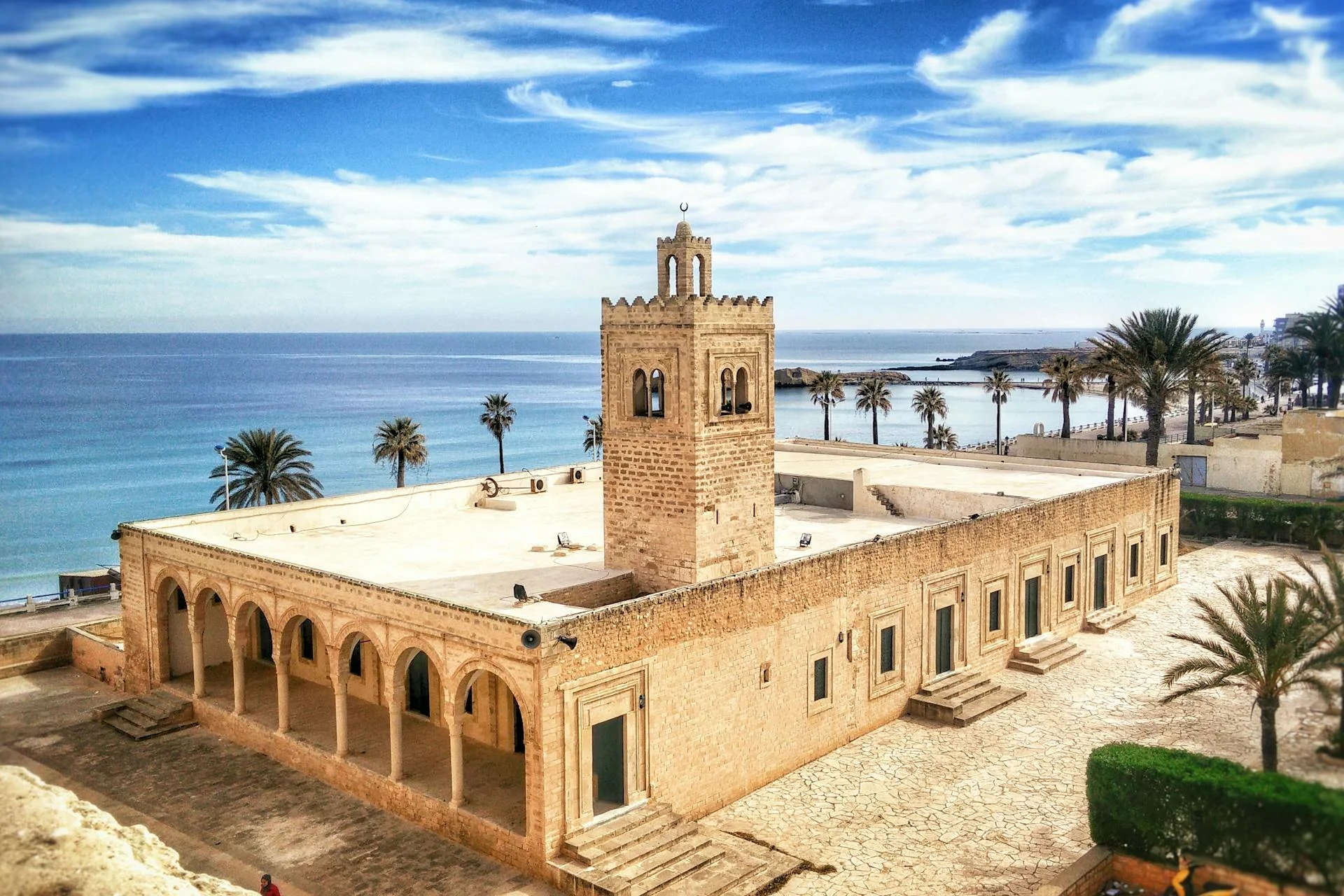
Turkey: A Guide to Unforgettable Experiences
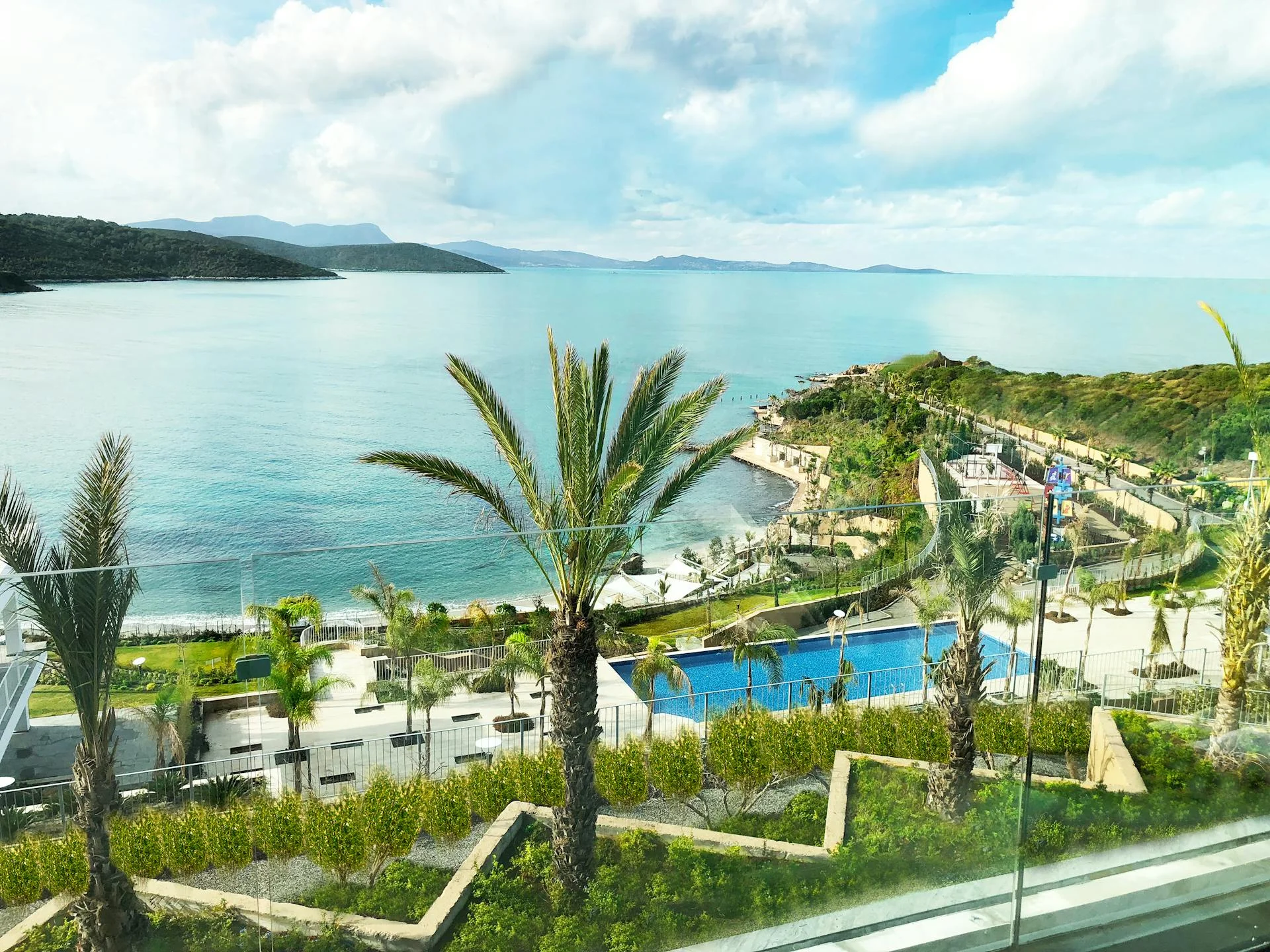
Turkey is one of the most remarkable destinations in the world – a country where three continents meet, where rich history blends with modern energy, and where every type of traveler finds what they’re looking for. Whether you choose to dive into the history of Istanbul, relax on the beaches of the Aegean or Mediterranean Sea, enjoy a breathtaking hot-air balloon flight over Cappadocia, or discover hidden natural gems, you’re in for unforgettable experiences.
Did you know that Turkey is home to three of the 34 most important biodiversity hotspots in the world? This country offers endless possibilities for every traveler.
The fascinating history of Turkey: From Byzantium to the Ottoman Empire
Turkey is not just a tourist destination – it’s an open book recording the stories of three great civilizations. To understand today’s culture and atmosphere of the country, it’s essential to know its historical roots.
The territory of modern Turkey was for centuries the center of highly influential empires. The earliest traces of civilization in Anatolia reach far back into the past, but for travelers the most important periods are the Byzantine and later the Ottoman eras. The Byzantine Empire, which emerged from the division of the Roman Empire, had its heart in Constantinople (today’s Istanbul) and lasted there for more than a thousand years. Hagia Sophia, the majestic 6th-century basilica, is a living witness of this era and remains one of the most impressive buildings humanity has ever created.
At the end of the 13th century, the Ottomans arrived. Osman I, the founder of the dynasty, led his warriors from Söğüt and gradually took control of territories in northwestern Anatolia. A key moment came in 1453, when Mehmed II the Conqueror captured Constantinople with overwhelming force. The fall of Constantinople marked the end of the Byzantine Empire, and Istanbul became the capital of the new, powerful Ottoman Empire. This moment was crucial – the Ottomans not only seized the city, they reshaped it. They converted Byzantine churches into mosques, built new palaces, and within two centuries became one of the dominant powers of the East. The Ottoman heritage you see today in Turkish traditions, cuisine, and architecture is rooted in this deep historical background.
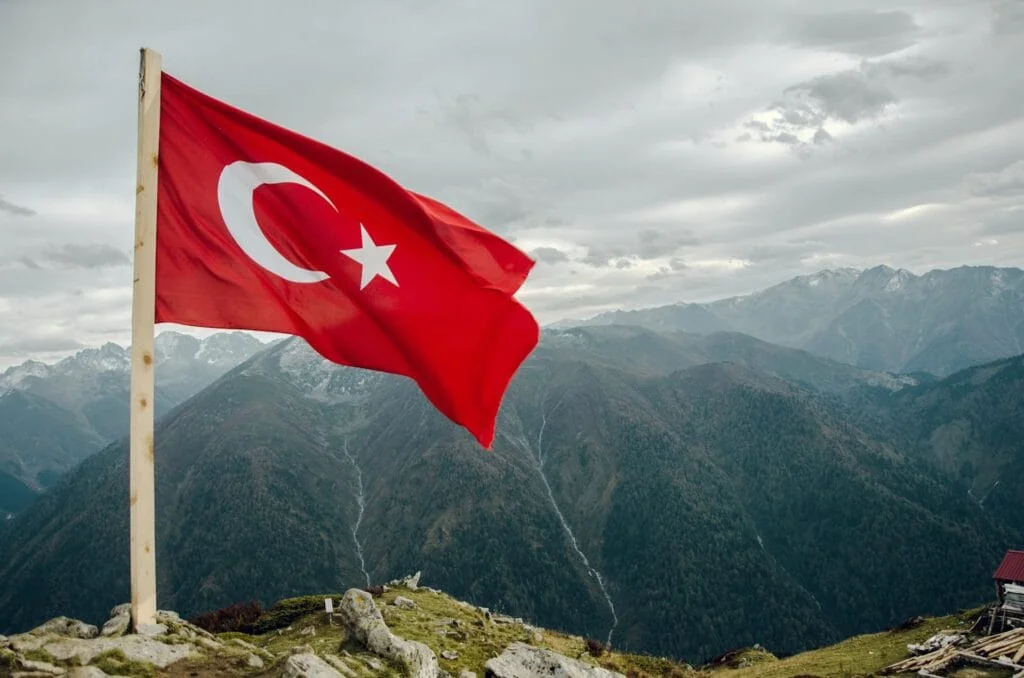
At the beginning of the 20th century, Turkey went through a profound transformation. After the fall of the Ottoman Empire and the end of World War I, Mustafa Kemal Atatürk came to the forefront – a leader who completely reshaped Turkish society. In 1923, the Republic of Turkey was proclaimed and Ankara replaced Istanbul as the capital. Atatürk introduced a series of groundbreaking reforms – from implementing a new legal system and banning traditional fezzes to changing the alphabet from Arabic script to Latin. These decisions turned Turkey into the only Muslim-majority country with a strictly secular state system.
Location, geography and climate: The heart of three continents
Location and geographical foundations
Turkey occupies a unique geopolitical position. It lies on the border between Europe and Asia, with the Bosphorus – a stunning strait – splitting Istanbul into two parts. The country covers an area of roughly 783,000 square kilometres, making it larger than any individual European state. It is bordered by the Black Sea to the north, the Aegean Sea to the west and the Mediterranean Sea to the south, giving it more than 8,000 kilometres of coastline.
It shares borders with eight countries: Greece and Bulgaria to the west, Georgia and Armenia to the east, and Iran, Iraq and Syria to the southeast. On the map, Turkey is not just another country – it is a crossroads, a bridge, a place where cultures and natural regions differ in a fundamental way.
Geographically, Turkey is divided into several distinctive regions. The Marmara Sea region links the European and Asian parts. The Aegean region in the west is known for its ancient ruins and classic Mediterranean vibe. The Mediterranean region, home to resorts such as Antalya and Alanya, offers beautiful beaches and high-end tourism. In the centre lies the Anatolian plateau, an inland continental area with a cooler climate and a strong farming tradition. The most unique area is Cappadocia, a landscape shaped by volcanic activity, where rock formations and underground cities were carved into soft tuff. To the east stretches Eastern Anatolia with its high plateaus and mountains, a region with the harshest conditions.
Turkey is far from flat. The Taurus Mountains run along the south, the Pontic Mountains along the north, and between them lie fertile lowlands. The best-known peaks include Erciyes Dağı (3,916 metres) in Cappadocia and the Ala Dağları range in the Taurus. The Euphrates and Tigris rivers rise in the eastern Turkish mountains and become the lifelines of Mesopotamia. Pamukkale, with its white travertine terraces, is a true natural wonder.
Climate and weather: A guide to the best time to visit
Turkey has an extremely diverse climate. You cannot sum it up in a single word – it is more like a mosaic of different climate zones, each offering something a little different.
- Western and southern coast – the Aegean and Mediterranean Seas – enjoy a classic Mediterranean climate. Summers are long, dry, and hot, with average temperatures above 30 °C. The sea is pleasantly warm from May through October. Winters are mild with occasional rain and average temperatures of 10–15 °C. This region is ideal for a holiday from May to September.
- Black Sea coast in the north is completely different – it has a milder, wetter climate with higher rainfall throughout the year. Summer is shorter and less hot, winters are rainy. The area is green and fertile, perfect for anyone who wants lush scenery and doesn’t want to “roast” in the sun.
- Inland areas and the Anatolian plateau have a continental climate with sharp contrasts. Summers are hot but dry, with cooler nights. Winters are freezing with snow. The differences between day and night can be dramatic.
- Eastern Anatolia and the mountain regions have the harshest climate. Winters are long and very severe – temperatures drop well below zero and snow stays on the ground for months. Summers are short but pleasant, with clear, fresh air.
| Month | Average daytime temperature (coast) | Average night temperature (coast) | Sea temperature | Best activity |
|---|---|---|---|---|
| January | 9°C | 5°C | 16°C | Sightseeing |
| February | 10°C | 6°C | 17°C | Sightseeing, hiking |
| March | 13°C | 8°C | 18°C | Hiking, city breaks |
| April | 19°C | 12°C | 19°C | Hiking, blooming nature, light swimming |
| May | 25°C | 17°C | 21°C | Beach, hiking, prime time to visit |
| June | 30°C | 21°C | 23°C | Beach, swimming, summer festivals |
| July | 33°C | 24°C | 26°C | Beach, sea (very hot) |
| August | 33°C | 24°C | 27°C | Beach, sea (very hot) |
| September | 29°C | 20°C | 26°C | Beach, hiking, ideal time to visit |
| October | 24°C | 15°C | 24°C | Beach, hiking, photography |
| November | 18°C | 11°C | 22°C | City breaks, hiking |
| December | 12°C | 7°C | 19°C | Sightseeing |
When is the best time to visit? In general, May, June, September and October offer more bearable temperatures and more predictable weather. May and June are ideal if you want to combine warm weather with sightseeing – the heat is not overwhelming yet and nature is at its best. September and October feel almost luxurious – the heat eases off, the sea is still pleasantly warm and the main resorts are not packed with tourists. July and August are the months when temperatures climb to 38 °C and above – perfect if you enjoy extreme heat and spending most of your time in the sea. Winter (December to February) is surprisingly pleasant – the coastal areas have mild winters that are great for exploring culture and hiking. The only exception is Eastern Anatolia, where the winter climate is very harsh.
Regions and types of destinations: Choose according to your dreams
Turkey is divided into several key regions, each offering a completely different kind of holiday.
Istanbul and the European side: The heart of history and modern life
Istanbul is not just a city – it is an emotional experience. With more than 15 million inhabitants, it is Turkey’s largest and most visited city. It stretches across the Bosphorus Strait, which gives it a unique look and atmosphere. This is where Europe quite literally meets Asia.
The historic centre, called Sultanahmet, is the heart of cultural tourism. Hagia Sophia towering into the sky, the Blue Mosque with its blue tiles and six minarets, and Topkapi Palace – these are three places you simply have to see. Hagia Sophia is an architectural marvel and one of Istanbul’s main landmarks. It was originally the cathedral of the Byzantine Empire, later a mosque and today it again serves as a mosque. When you step inside, a huge dome opens above you, almost as if it were floating. The Sultan Ahmed Mosque (the Blue Mosque), with its blue geometric ornaments, feels more like a dream from a fairy tale than a real building. Topkapi Palace was home to Ottoman sultans for more than 400 years – history was written in its rooms and fateful decisions were made in its gardens.
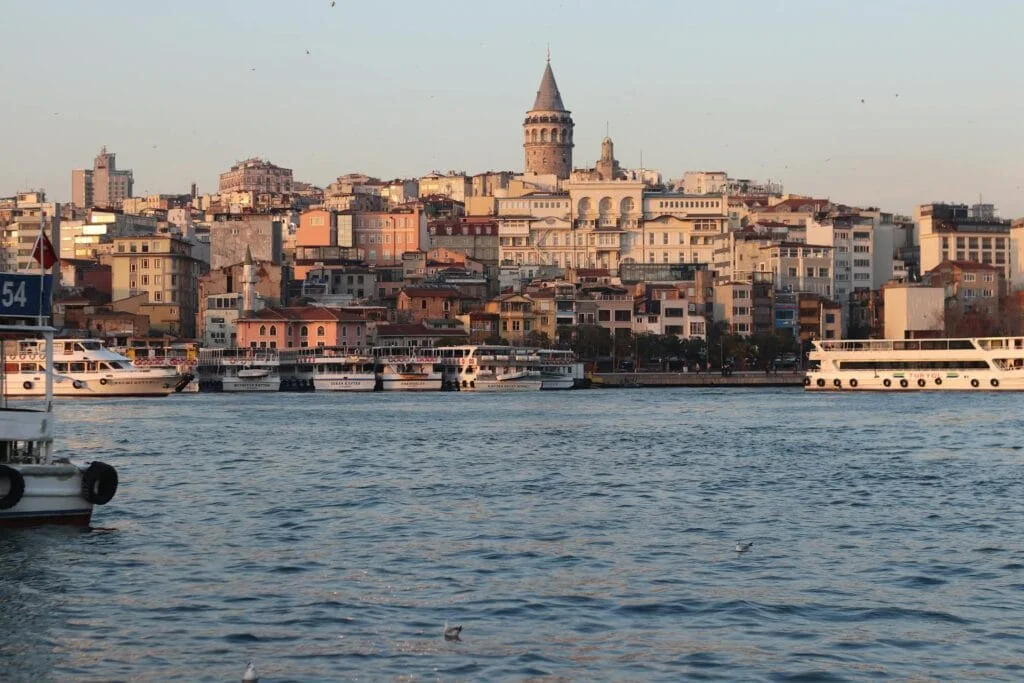
Another place you should not miss is the Grand Bazaar – one of the oldest and largest covered markets in the world. You can buy almost anything here: carpets, ceramics, gold, spices, textiles. The atmosphere is busy, loud, pleasantly chaotic and completely authentic. Dolmabahçe Palace on the other side of the Bosphorus is the complete opposite – a grand residence of the late Ottoman Empire, where you walk among gold and fountains and feel as if you have stepped into a fairy tale. A boat trip on the Bosphorus is a must for every visitor to Istanbul – you see the city from the water and understand why this spot was chosen for such a magnificent metropolis.
Aegean Coast: Ancient ruins and beautiful beaches
The Aegean coast stretches south of the city of Izmir and is famous for its ancient sites. It’s less hectic than the Mediterranean, but just as enchanting.
- Ephesus is one of the best-preserved ancient cities in Europe. It was once one of the most important cities of Greece and a showcase of sculptural and architectural masterpieces. You walk along streets where people lived two thousand years ago and see the remains of temples and the Library of Celsus with its remarkably intact façade. The atmosphere here feels magical and timeless.
- Pergamon, located near Izmir, was a major Hellenistic city in antiquity. Its amphitheatre is one of the most dramatic structures – built on a steep slope so that spectators looked down at the stage and the landscape beyond. It’s a brilliant piece of design.
- Kuşadası is a pleasant port town with a long beach and a great base for visiting the surrounding ruins.
- Bodrum, formerly ancient Halicarnassus, is home to a charming high medieval castle built by the Knights of Rhodes. The town is known as the most stylish and vibrant place on the Aegean coast.
Mediterranean: Beaches and resorts of the Turkish Riviera
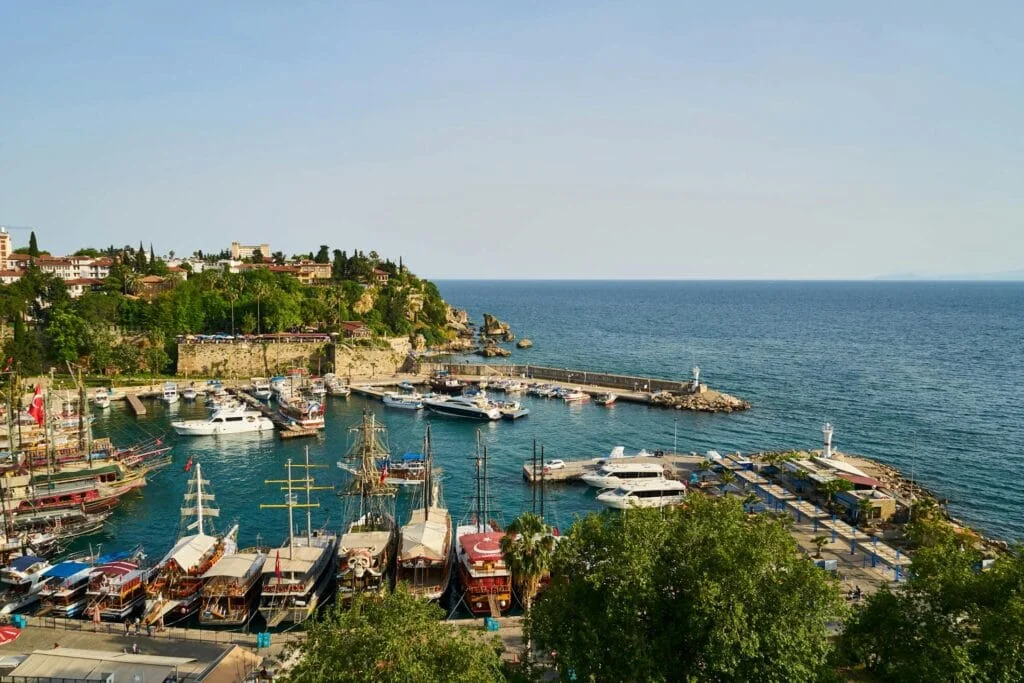
The Turkish Riviera stretches around the cities of Antalya and Alanya and offers the cleanest and most beautiful sea in Turkey. The beaches are long, sandy, and great for swimming with children.
- Antalya is a modern resort with a historic old town. The seafront promenade is perfect for evening strolls and relaxing in cafés or bars. The old market and historic buildings give the city real character.
- Alanya is famous for Cleopatra Beach, which, according to legend, was visited by the queen herself. The beach is 4 kilometres long and renowned for its fine sand.
- Side is a town that blends ancient monuments and ruins with modern resort facilities. It’s ideal if you want to combine beach time with exploring history.
Cappadocia: Rock formations and underground cities
Cappadocia is one of the most unique places on Earth. Volcanic activity over millions of years has shaped a landscape that feels almost otherworldly. These are tuffs, soft volcanic rocks into which people carved their homes and churches.
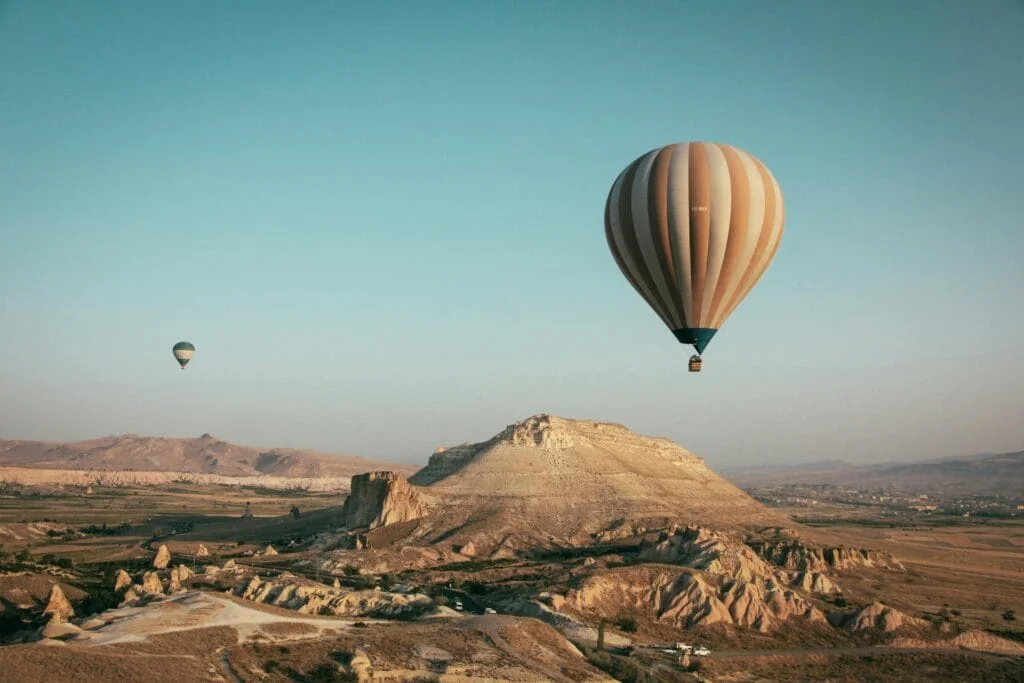
Göreme Valley is the heart of Cappadocia. Walking through it feels like strolling across the surface of the moon. Rock-cut churches with frescoes and unusual geological formations called “fairy chimneys” – tall rock pillars standing on wide bases – all come together to create a surreal landscape. A hot-air balloon flight over Cappadocia is an experience you remember for the rest of your life – you see the landscape from a bird’s-eye view and watch the sun rise over the rocks.
Derinkuyu and Kaymaklı are underground cities. No one knows exactly when they were built – they were probably created by the ancient Hittites or later by Christians. Descending into these cities feels like stepping into another era. You’ll see sleeping quarters, storage rooms, and even chapels.
Most famous UNESCO sites and cities: Global treasures
Turkey is home to 21 UNESCO World Heritage Sites, which makes it one of the richest countries in Europe in this respect.
- Hagia Sophia in Istanbul: This 6th-century building is a masterpiece of Byzantine architecture. It was originally a cathedral, later a mosque, then a museum, and now once again serves as a mosque. Its huge dome with no visible support seems to defy physics. The mosaics and frescoes are incredibly beautiful. Visiting this place feels almost like a ritual and is a deeply moving experience.
- Göreme National Park and Cappadocia: UNESCO listed it in 1985 as an outstanding example of human settlements in a rock landscape. The rock-cut churches with original frescoes are unique examples of Byzantine art and human creativity.
- Great Mosque and Hospital of Divriği: This mosque from 1228 is a masterpiece of Islamic architecture. The sculptural decoration is highly sophisticated and the details are breathtaking.
- Hierapolis-Pamukkale: Pamukkale is a natural wonder – travertine terraces that look like snow or cotton rise above the landscape. The ancient city of Hierapolis was built on these mineral springs. Walking across the white terraces formed by warm water is a surreal experience.
- Ephesus: This ancient city, founded in the 10th century BC, is one of the best-preserved cities in the Mediterranean. The Library of Celsus with its striking façade is an architectural gem.
- Nemrut Dağ: At the summit of this mountain lies the funerary complex of King Antiochus I from the 1st century BC. The colossal statues and ruins offer a glimpse into Hellenistic culture.
- Xanthos-Letoon: These archaeological sites were major centers of ancient Lycia. The epigraphic inscriptions are crucial for understanding the history of this people.
- Safranbolu: This town is a textbook example of Ottoman architecture. Historic houses with red roofs and traditional gardens have been preserved in their original form.
Natural wonders and national parks: Exploring the wild
Turkey is a hotspot of biodiversity, home to three of the 34 most important life diversity centers on the planet.
- Köprülü Canyon: This 14-kilometer-long canyon was carved by the Köprüçay River in the Taurus Mountains. In some places, the walls narrow to just a few meters and rise up to 400 meters high. Rafting on the river is a real adrenaline rush.
- Manavgat Waterfall: The waterfall is only 3 kilometers from the town of Side and is easy to reach by bus. The water drops into an emerald pool and creates a magical atmosphere.
- Lake in the Altınbeşik Cave: Mount Altınbeşik hides the largest underground lake in Turkey and the third largest in Europe. The journey into its depths feels like entering another world.
- Green Canyon: The Oymapınar Dam created a lake with water in shades from green to turquoise, contrasting beautifully with the blue sky and dark green forests.
- Spil Dağı National Park: Not far from Izmir rises a mountain known for its rare wild tulips. Local wildlife includes bears, wildcats, goats, roe deer, and red deer. Birdlife is rich here too – you can spot falcons, kestrels, and many more species.
Best beaches: Swimming in paradise
With more than 8,000 kilometers of coastline, Turkey offers some of the most beautiful beaches in the Mediterranean and the Aegean Sea.
- Ölüdeniz (Blue Lagoon): A beach near Fethiye overlooking the Mediterranean Sea, surrounded by green mountains. The wide bay with shallow water is ideal for families. The Blue Lagoon and the surrounding nature park make it one of the most photogenic beaches in Turkey.
- Cleopatra Beach in Alanya: Legend says it was visited by Queen Cleopatra herself. The beach stretches for several kilometers, with fine sand and crystal-clear water. Beneath the ancient Alanya castle, it offers a stunning backdrop.
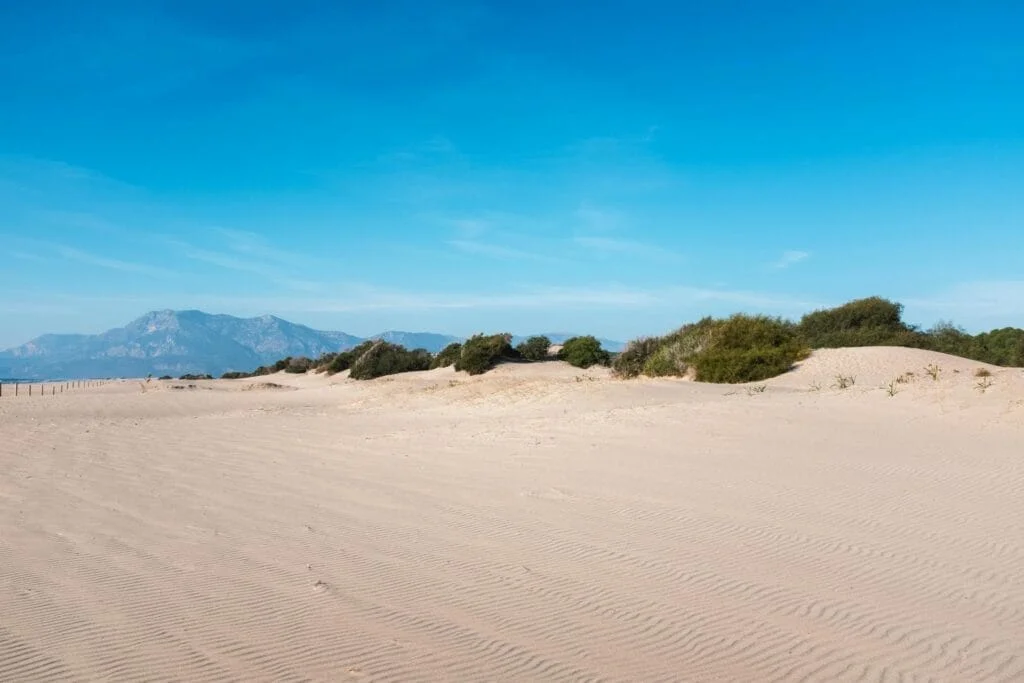
- Patara: The longest sandy beach in Turkey – 18 kilometers. Completely unspoiled, with sea turtles that hatch here.
- Iztuzu (Turtle Beach): A protected reserve where rare loggerhead sea turtles hatch. The beach is 4.5 kilometers long and is a great example of tourism and nature conservation working hand in hand.
- Butterfly Valley: Accessible only by boat, this beach near Fethiye is a peaceful hideaway with beautifully clear water. The valley, framed by towering cliffs, meets a sea in an almost unreal shade of blue.
- Konyaaltı in Antalya: A long beach right next to the resort with modern facilities. Its edges are quieter, while the northern part is wilder and more scenic.
- Icmeler: A pebble beach with views of mountains and islands. Its clean water and strong focus on environmental protection make it popular with eco-conscious travelers.
Activities and fun: From sun loungers to adrenaline
Turkey offers an endless range of activities for every type of traveler.
For those looking for pure relaxation, it is the perfect place. Sun loungers on long beaches, warm and crystal-clear water. Beach services are top-notch – you can rent loungers, umbrellas and enjoy snacks and drinks brought right to your spot on the sand.
For adrenaline lovers, there is rafting in the Köprülü Canyon, where fast-flowing water and steep rock walls create an intense experience. Paragliding in Ölüdeniz or near Fethiye gives you a bird’s-eye view of the landscape. Diving near Bodrum, Kuşadası or around Marmaris reveals rich marine life – corals, fish and even submerged ruins.
For culture enthusiasts, museum visits in Istanbul, archaeological sites in Ephesus or walks through the medieval streets of Safranbolu are deeply rewarding. Bazaars – the Grand Bazaar in Istanbul and local markets in small towns – are an experience in themselves and a great place to practice the art of haggling.
Trips into the countryside are easy here. Hiking in the Taurus Mountains, horse riding in Cappadocia, cycling along the coast or walking through the valleys – it’s all on offer. A hot-air balloon flight over Cappadocia is a must-do experience for everyone.
Gastronomy and culture: The taste of tradition
Typical dishes: Stories on a plate
Turkish cuisine is one of the healthiest and most diverse in the world. It combines Mediterranean and Arabic culinary traditions.
- Döner Kebab – the most famous Turkish dish – is made from marinated meat (beef or chicken) roasted on a vertical rotisserie. The meat is shaved off and served with bread and a variety of sauces. It’s simple, delicious and available almost everywhere.
- Şiş Kebap – chunks of meat on a skewer grilled over an open flame – is a Turkish classic. The meat is often alternated with peppers, tomatoes and onions.
- Adana Kebap – minced meat on a skewer, usually spicy and heavily seasoned – comes from southeastern Turkey.
- Börek – flaky pastry filled with cheese, meat or vegetables – is a typical breakfast dish or appetizer.
- Meze – small appetizers – are served before the main course. They include hummus, baba ghanoush (eggplant purée), olive tapenade, herb yoghurt, cheeses and vegetables.
- Baklava – a dessert made from many layers of thin filo pastry, filled with nuts and soaked in sugar or honey syrup – is a Turkish specialty you’ll find hard to stop eating.
- Künefe – a warm dessert made from fine kadayıf pastry strands, filled with cheese and drenched in sweet syrup – offers a truly unique flavour experience.
Drinks: Everyday rituals
- Turkish tea (Çay) – the most common drink – is served in small tulip-shaped glasses. It is prepared in a two-tier teapot, which lets you control how strong the tea is. People drink it all day long and it plays an important role in social life.
- Turkish coffee (Türk Kahvesi) – strong, unfiltered coffee prepared in a small metal pot called a cezve – is served in tiny cups. It is a cultural ritual dating back to the Ottoman Empire.
- Ayran – a salty yoghurt drink – is popular on hot days. Some people love it, others tend to avoid it.
Mealtimes and restaurant etiquette
Turks usually have breakfast early, around 7–8 a.m. Breakfast typically includes bread, butter, honey, cheese, olives, and tea. Lunch is the main meal of the day, usually around 12–1 p.m. Dinner tends to be lighter and is usually served between 7–8 p.m.
In restaurants, it’s common to stay for a long time, talk, and enjoy the atmosphere. A tip of 10–15% of the bill is standard. The staff are generally helpful and friendly.
Cultural customs and festivals
Turkey is a Muslim country with a rich cultural tradition. One of the most important customs is Ramadan – a 30-day month of fasting when Muslims refrain from eating and drinking from sunrise to sunset. In the evening, families gather for a traditional festive dinner called iftar. After Ramadan, people celebrate the Sugar Feast (Şeker Bayramı), when families come together and children receive sweets.
Another major holiday is the Feast of Sacrifice (Kurban Bayramı), when Turks sacrifice a sheep or a goat and share the meat between the family and the poor.
The Turkish Theatre Festival takes place in the summer months and attracts artists from all over the world. The Istanbul International Film Festival is another key cultural event. In the southeast, the International Culture and Arts Festival in Gaziantep celebrates local traditions and crafts.
Turks are known for their hospitality. When you visit a local home, you can look forward to a cup of strong Turkish coffee or tea and traditional sweets such as baklava. People often greet each other by touching cheeks. In homes, shops, or buses you will often see the Nazar boncuğu – the blue eye – which is believed to protect against evil forces.
Key practical information: Logistics guide
Currency and payments
The currency of Turkey is the Turkish lira (TRY). Exchange rates change, but overall prices in Turkey are very budget-friendly. Credit cards are accepted in most hotels, restaurants, and shops, but in small stores or at street stalls you will often need cash.
The easiest place to exchange money is at the airport or in banks. In tourist areas, ATMs are on almost every corner. Tipping is not mandatory, but 10–15% is considered standard practice.
Entry requirements and visas
Czech citizens can enter Turkey without a visa for up to 90 days for tourism. A valid passport is required – you cannot travel with just an ID card. The passport must be valid for at least 150 days from the date of entry into Turkey. It must also contain at least one blank page for entry and exit stamps.
Citizens travelling for purposes other than tourism must obtain a visa from the Embassy of the Republic of Turkey in Prague.
Safety and local customs
Turkey is generally a safe country for travelers. Istanbul and the coastal resorts are well monitored by the police and tourists are not at high risk there. Standard precautions apply as everywhere else – don’t carry large amounts of cash, don’t show off expensive jewelry or electronics, and avoid sketchy areas.
What to watch out for: In Turkey, it’s important to respect local laws and customs. Avoid negative comments about the country or its politics. Alcohol is less culturally accepted in some regions. Taking photos of military sites or borders is prohibited. Possession and use of drugs is strictly punished.
If you run into trouble, it’s a good idea to contact the Czech embassy in Ankara or the Consulate General in Istanbul.
Healthcare and vaccinations
Healthcare in Turkey is of good quality, especially in large cities. Medical care is widely available and doctors often speak English. In tourist areas, you’ll find pharmacies on almost every corner.
For travelers from Europe, no mandatory vaccinations are usually required. It’s recommended to have solid travel insurance that will cover medical expenses in case of an emergency. Tap water in cities is generally safe, but it’s still better to drink bottled water.
Fauna and flora: Nature of Turkey
Turkey is home to around 80,000 animal species – more than the whole of Europe combined. The country boasts three of the world’s 34 key biodiversity hotspots.
In the mountains you can find bears, wild cats, goats, roe deer, and deer. Various reptiles – lizards, geckos, and vipers – live in the warmer regions. Birdlife is rich, especially falcons and kestrels.
The flora is just as impressive. Turkey has the richest plant life in the temperate zone, with roughly 10,000 plant species, almost 3,000 of which are endemic – meaning they grow only in Turkey. In the south you’ll see olive trees, hibiscus, bay laurel, and palm trees. Sandy beaches are lined with orange groves and pine forests. In Cappadocia, rare Turkish plants grow that are studied by doctors and botanists.
Basic phrasebook: Words that will help you
| Czech phrase | Turkish translation |
|---|---|
| Hello / Good day | Merhaba / Selam |
| Thank you | Teşekkür ederim |
| Please | Lütfen |
| How much is it? | Kaç para? |
| Goodbye | Hoşça kalın |
| Beer | Bira |
| Water | Su |
| Bread | Ekmek |
| Meat | Et |
| Fish | Balık |
| Restaurant | Restoran |
| Hotel | Otel |
| Airport | Havalimanı |
| Bus station | Otogar |
| Taxi | Taksi |
| Yes | Evet |
| No | Hayır |
| I don’t speak Turkish | Türkçe konuşmuyorum |
| Do you speak English? | İngilizce biliyor musunuz? |
| Help! | İmdat! |
Transport and logistics: How to get around
How to get to the country
By plane is the fastest and most comfortable option. From Prague, there are direct flights to both Istanbul airports (Istanbul Airport and Sabiha Gökçen). Turkish Airlines and Pegasus Airlines operate regular flights. The cheapest return tickets usually start at around $220–$350 (sometimes less during sales).
The journey by train to Turkey is time-consuming – it takes roughly 40 hours via Hungary, Serbia, and Bulgaria. It’s an adventure, but not very practical for most travelers.
The bus trip from Central Europe takes about 36 hours and costs around $65. The buses are comfortable and modern.
By car – the drive takes roughly 36 hours with stops, and you’ll need international car insurance (a green card).
Transport within the country
- Buses are the most common way to get around. Turkey has an extensive network of intercity buses that are comfortable, air-conditioned, and affordable. Companies like Metro Turizm and Pamukkale Turizm run routes between all major cities. Tickets can be bought online or at the station. A ticket from Istanbul to Ankara (6 hours) costs around $18–$23.
- Trains connect the main cities (Istanbul, Ankara, Konya). High-speed trains (YHT) between these cities are modern and comfortable. Regional trains are cheaper but slower.
- Flights between major cities are fast and fairly cheap. Turkish Airlines and Pegasus Airlines operate domestic routes. A flight from Istanbul to Antalya costs around $14–$27, with a flight time of about 1 hour.
- Car rental is available from international companies (Avis, Hertz). You need all the key documents – driving licence, passport, and a credit card. Roads are in good condition, but driving in Turkey has its quirks – local drivers tend to be quite assertive. Parking in city centres is difficult. Rental prices start at around $18–$27 per day.
- Public transport in Istanbul includes the metro, trams, buses, and ferries. The Istanbulkart system (a plastic card) makes getting around easier. A single ride costs around $1–$2, depending on the type of transport. Ferries across the Bosphorus are both scenic and inexpensive.
- Dolmuş – small minibuses that stop on request – are the most common way to get around in smaller towns. They are often crowded and the fare is around $0.40–$0.90, depending on the distance.
- Boat connections: Some destinations are accessible by boat. Ferries across the Bosphorus link the Asian and European sides of Istanbul. Boat trips to the islands near Bodrum or Kuşadası are very popular.
Prices and budget: How to spend wisely
Turkey is one of the more affordable destinations in Europe. Prices vary by season (May–September is more expensive), by type of destination (Istanbul and the coast are pricier than the interior), and by type of accommodation.
Approximate daily budget (per person)
| Category | Accommodation | Food | Transport | Attractions | Total per day |
|---|---|---|---|---|---|
| Budget | $11–$18 | $9–$14 | $2–$5 | $5–$9 | $27–$45 |
| Mid-range | $27–$45 | $18–$32 | $5–$9 | $9–$18 | $59–$104 |
| Luxury | $90–$225+ | $36–$68 | $14–$45 | $23–$68 | $163–$405+ |
Specific prices
- Accommodation: Bed in a hostel dorm – $10–$16/night. Budget hotel – $20–$36/night. Mid-range hotel – $40–$80/night. Luxury resort – $120+/night. Off-season (November–April) prices are roughly half.
- Food: Street food (kebab, börek) – $1.60–$4. Lunch in a simple restaurant – $8–$16. Dinner in a good restaurant – $16–$32. Coffee/tea – $0.40–$1.20. One liter of water in a shop – $0.25–$0.60.
- Entrance fees: Ancient ruins (Ephesus, Pergamon) – $8–$12. Sultan Ahmed Mosque – free (visits outside prayer times). Museums – $6–$12. Hot air balloon flight in Cappadocia – $100–$160.
- Transport: Domestic bus (400 km) – $12–$20. Domestic flight – $20–$60. Car rental – $16–$32/day. Taxi in Istanbul – $4–$12/ride.
How to plan the perfect trip: Strategies for different types of travelers
For first-time visitors
A first-time visitor should start with Istanbul – the city is safe, the infrastructure is excellent, and there is plenty to do. Then it’s worth heading to one of the coasts (Aegean or Mediterranean), where you can relax, explore history (Ephesus, Pergamon), and unwind by the sea. A typical two-week itinerary: 4 days in Istanbul, 3 days on the Aegean coast (Kuşadası/Ephesus), 4 days on the Turkish Riviera (Antalya/Side), 2 days in Cappadocia (balloon flight, historical sites).
For families
Families with children usually love seaside resorts with long beaches and reliable, safe infrastructure. Antalya, Side, and Kemer are ideal – they offer hotels with kids’ pools, safe beaches, tasty food, and good prices. A trip to Cappadocia (horse riding, balloon flight) and to a waterfall (Manavgat) are experiences children tend to enjoy. It’s better to avoid Istanbul’s busy nightlife and overly complex historical tours – kids can get bored quickly.
For solo travelers
A solo traveler has full freedom. You can stay longer in one place, try local spots, and meet new people. Istanbul is perfect for connecting with other travelers. The Turkish Riviera has a lively nightlife scene. Cappadocia is ideal for photographers and nature lovers. Hostels in all major cities welcome solo travelers and often organize group trips.
For seniors
Seniors should choose a slower travel pace with more time in each place. Istanbul – 4 days with time to rest, then a flight to Antalya (no long bus rides). Antalya – 3 days of a relaxed holiday. Cappadocia – 2 days (without too much physical activity, more cultural experiences). Aegean coast – 3 days. The key is to avoid too many cities and focus more on the quality of experiences than on the quantity.
Typical itineraries
- A week of cities and history: Day 1–3 Istanbul (Hagia Sophia, Topkapi, Blue Mosque). Day 4–5 domestic flight to Izmir, visit Ephesus. Day 6–7 Ankara – the capital with its museums.
- 10-day combo: Day 1–4 Istanbul. Day 5 domestic flight to Antalya. Day 5–8 Turkish Riviera (Side, Alanya, waterfall). Day 9–10 Cappadocia (balloon flight, Göreme Valley).
- Two weeks by the sea: Day 1–3 Istanbul (flight). Day 4–7 Aegean coast (Kuşadası, Ephesus). Day 8–14 Turkish Riviera (Antalya, Alanya, Kemer) – relaxation, beaches, day trips.
What to watch out for when planning
- Booking in advance: In peak season (July–August) you need to buy flights and book accommodation well ahead of time. Prices can double. May, June, September and October are ideal – fewer tourists, better weather, lower prices.
- Common mistakes: Underestimating distances – Turkey is bigger than it looks. Overestimating your ability to handle a 12-hour bus ride. Not asking for local recommendations – locals will point you to places you will not find in guidebooks. Ignoring Ramadan – it is an important cultural period, not an obstacle, but it is good to be aware of it.
- Myths: That Turkey is dangerous – it is not. That you need Turkish – you do not, English is usually enough. That it is too expensive – it is a very affordable country.
Final summary and recommendations
Turkey is a country worth visiting no matter what type of traveler you are. Whether you are drawn to the history of Hagia Sophia, the crystal-clear water of Aegean beaches, the surreal landscape of Cappadocia, or simply the traditions and hospitality of the Turkish people, Turkey has something for you. This country connects Europe and Asia, tradition and modern life, beaches and mountains, ancient ruins and vibrant culture in one package.
Main highlights in a nutshell: Istanbul, where more than a thousand years of history meet. Countless ancient sites that tell stories of Greek and Roman wars and everyday life. Beaches with crystal-clear water, among the cleanest in Europe. Cappadocia, shaped by nature as if it were made for travelers. A strong tradition of hospitality and authentic encounters with local people.
When you’re making your final decision, focus on what truly appeals to you. Love history? Head to Istanbul and the Aegean coast. Craving beaches and pure relaxation? The Turkish Riviera is waiting for you. Looking for something out of the ordinary? Cappadocia will sweep you off your feet. No matter which region you choose, one thing is certain: Turkey will open your eyes and your heart. Whatever itinerary you go for, the main thing is that it helps you unwind, explore, and create unforgettable moments you’ll carry with you for the rest of your life.
Kategorie: