Norway: Fjords, Mountains and Northern Adventures
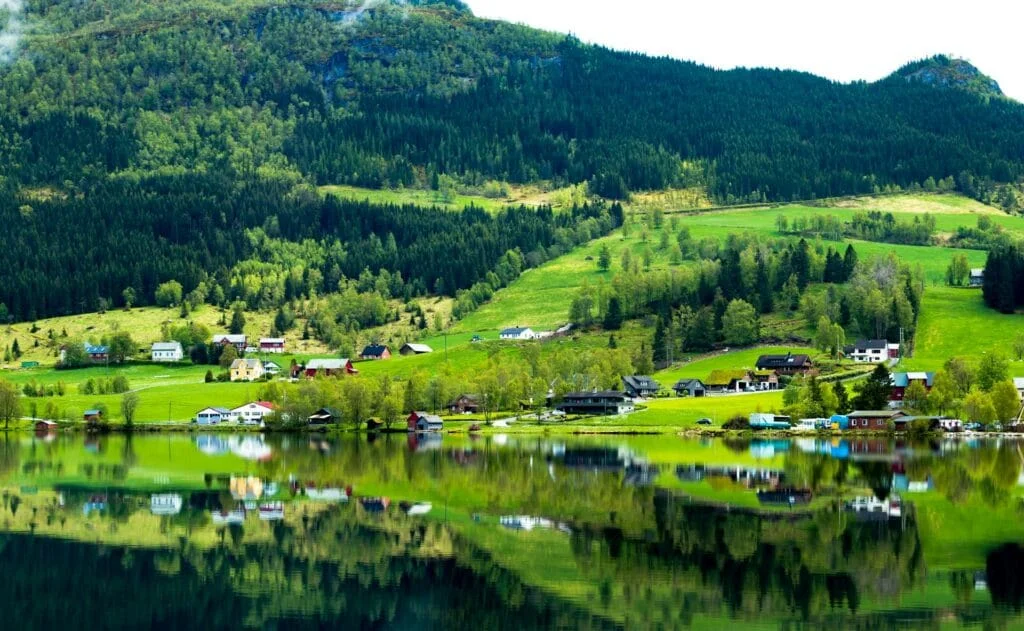
Norway is one of the most unspoiled and most visited destinations in Europe, and it will instantly win you over with its raw natural beauty and perfect blend of wild landscapes and modern infrastructure. This Nordic country offers a breathtaking world of glacial fjords, majestic mountains, cascading waterfalls, and picturesque villages with typical white houses reflected in deep blue waters. Whether you choose a relaxing stay in the sunny south, chasing the Northern Lights in the north, or a demanding high-altitude trekking adventure, Norway has something appealing for every type of traveler.
Did you know that Norway has the longest coastline in Europe? Thanks to its thousands of islands and deep fjords, the coastline stretches for an incredible 83,000+ kilometers, making Norway a true star of world geography and one of the most beautiful destinations on the planet.
History of Norway: From Vikings to a modern state
Norway has one of the richest and most fascinating histories in Europe, reaching from the Ice Age all the way to today’s prosperous Nordic democracy. The beginnings of Norwegian civilization go back to the time when hunter-gatherer communities settled here, but the real “Norway” only started to take shape with the arrival of Germanic peoples in the late Stone Age. During the Middle Ages, Norway’s small kingdoms gradually began to unite under a single ruler, and in 872 Harald I Fairhair attempted to unite all Norwegian principalities after his victory at the Battle of Hafrsfjord.
Norway truly entered the global spotlight with the arrival of the Vikings, the legendary seafaring warriors from the north who struck fear across Europe between the 8th and 11th centuries. The Vikings, coming from the coasts of what is now Norway, Sweden, and Denmark, set out across the seas in their distinctive ships known as longships and drakkars. Their expansion was remarkable – they reached France, Britain, the Mediterranean, and even became the first Europeans to set foot in North America. Their raids and colonization were partly driven by the poor quality of Scandinavian soil and the lack of land for farming, but they were also an expression of the extraordinary adventurous spirit and pragmatism of these northern peoples. As a result of this contact and expansion, Norway gradually integrated into Christian Europe, and its individual regions merged into a single entity.
After the Middle Ages and in the later part of the modern era, Norway went through a long period under the influence and administration of other states – from personal unions with neighboring countries (which, with interruptions, lasted until 1905) to the German occupation during World War II. World War II was a turning point for Norway, when the country was liberated and began building its modern state institutions. After the war, Norway quickly transformed into a prosperous industrial and energy-rich state, partly thanks to the huge oil and natural gas reserves on the Norwegian continental shelf of the North Sea. Today, Norway is one of the wealthiest and most stable countries in the world, which has kept its independence outside the European Union, even though it is part of the Schengen Area.
Location, geography and climate
Location and geography
Norway stretches along the western side of the Scandinavian Peninsula in Northern Europe, with its mainland lying between the 58th and 71st parallels north. It is one of the northernmost countries in the world with a total area of 385,203 square kilometers – larger than Finland but smaller than Sweden. Norway borders Finland, Russia and Sweden to the east and northeast, and its shores are washed by the North Sea, the Norwegian Sea, the Barents Sea and the Arctic Ocean to the west and north.
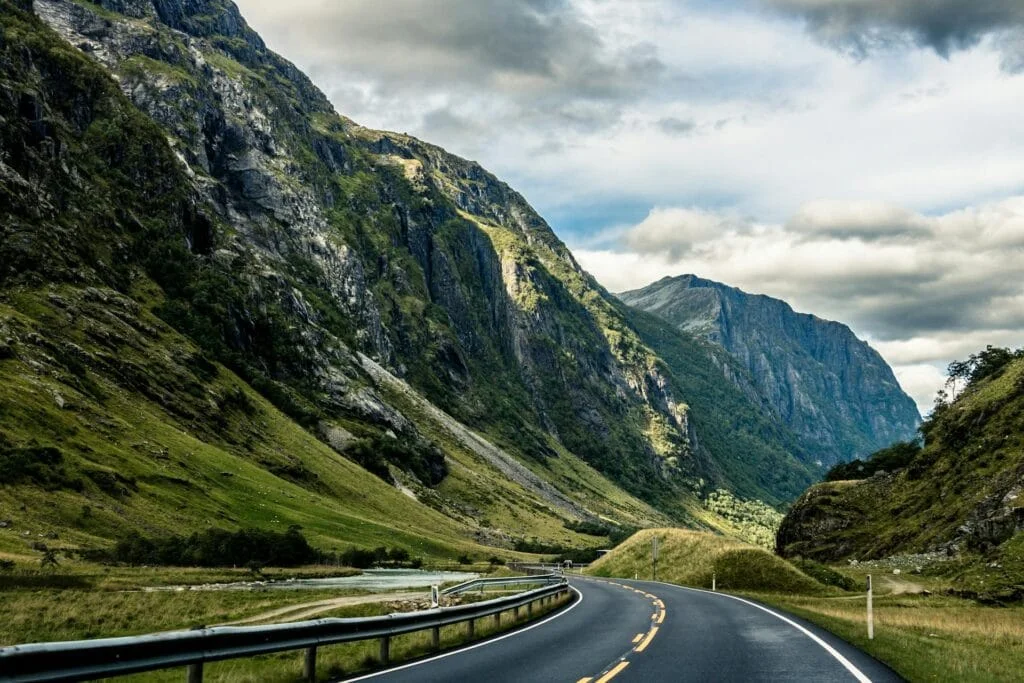
The geography of Norway is exceptionally dramatic and varied. The vast majority of the country is covered by mountain ranges – the best known is the Scandinavian Mountains, which run across almost the entire country. The highest mountain in Norway is Galdhøpiggen at 2,469 meters above sea level, which is also the highest peak in all of Scandinavia. Besides the mountains, Norway is famous for its iconic fjords – deep sea inlets that cut sharply into the land and rank among the country’s most visited attractions. The longest Norwegian fjord is Sognefjord, 206 kilometers long and 1,308 meters deep, while Geirangerfjord is often considered the most beautiful. Norway also has an enormous number of islands – estimates put the figure at more than 50,000 – with the most famous being the Lofoten Islands and Vesterålen in the north.
The Norwegian landscape is a mosaic of forests, glaciers, lakes and rivers. Around 32 percent of the mainland lies above the tree line, which means a large part of the country is covered by high mountain tundra and alpine vegetation. The number of lakes in Norway is staggering – the country is dotted with thousands of lakes of all sizes. The average elevation is 460 meters, making Norway one of the most mountainous countries in Europe.
Climate and weather for travelers
Norway has a very diverse climate that varies significantly depending on location. While the coastal areas are influenced by the Gulf Stream and the ocean, which bring relatively mild temperatures, the inland and northern regions have a more continental character with colder winters and greater temperature swings.
In the south and in the coastal areas around Bergen and Oslo, winters are relatively mild with temperatures between -2 and 0 °C, while summers are pleasantly moderate with temperatures between 15 and 22 °C. In the north and in the mountains, winter temperatures can drop to -10 °C and below, and average summer temperatures range from 12 to 16 °C. Norway is also a very wet country – annual rainfall is around 2,000 millimetres, with the western regions around Bergen and the fjords being the rainiest.
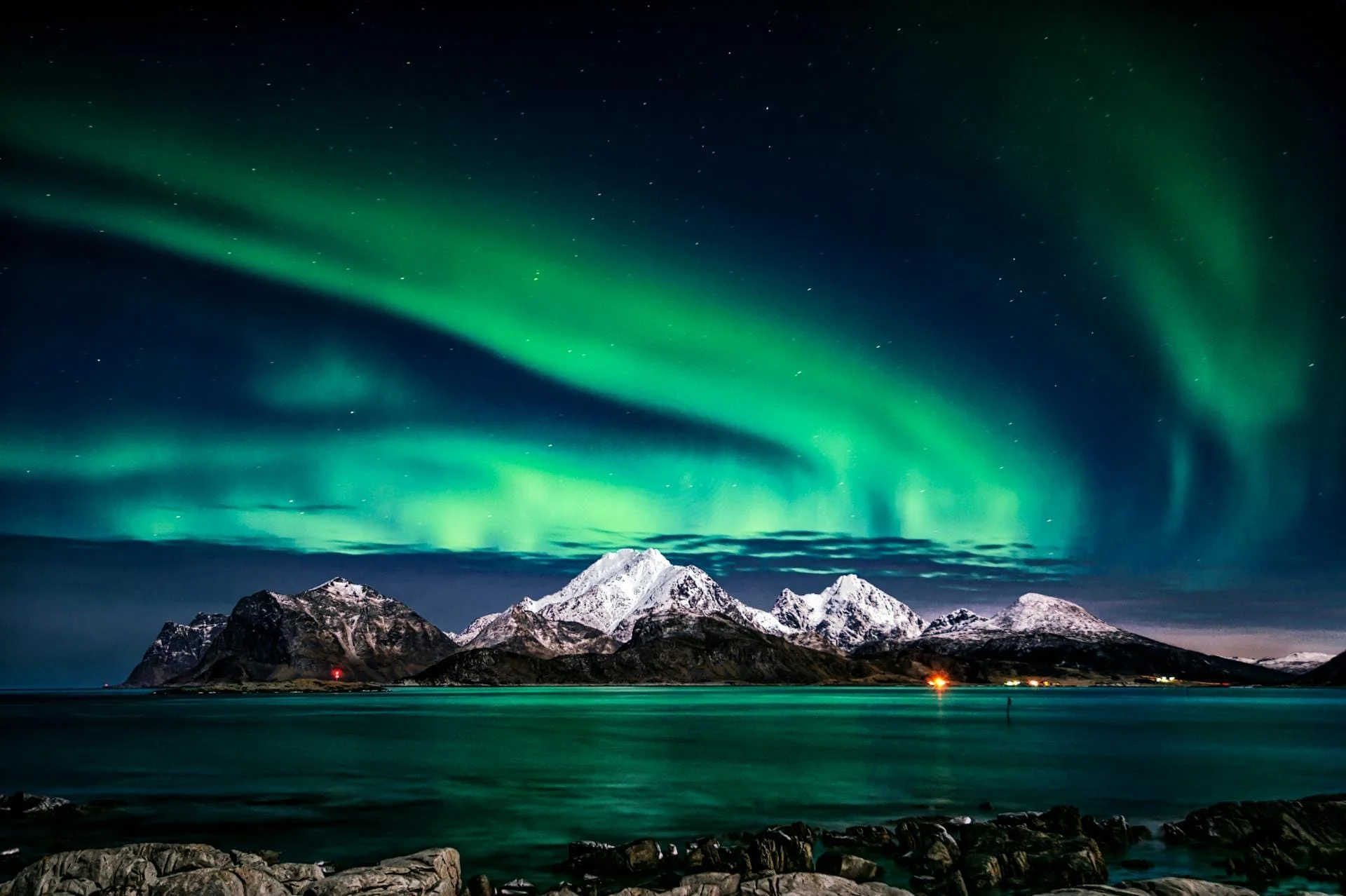
Polar phenomena play a major role in Norway’s climate, bringing the polar day (midnight sun) in summer and the polar night in winter. In northern Norway, especially around Nordkapp and the Lofoten Islands, the sun does not set below the horizon from May to July, creating a fascinating period of continuous daylight. In contrast, in winter, especially from November to January, these areas experience a long stretch of darkness, during which you can often see the northern lights (aurora borealis).
| Month | Average daytime temperature (Oslo) | Average night-time temperature (Oslo) | Sea temperature (Oslo) |
|---|---|---|---|
| January | -2°C | -7°C | 3°C |
| February | -1°C | -6°C | 2°C |
| March | 4°C | -2°C | 3°C |
| April | 10°C | 4°C | 5°C |
| May | 16°C | 9°C | 9°C |
| June | 20°C | 13°C | 13°C |
| July | 22°C | 15°C | 16°C |
| August | 21°C | 14°C | 16°C |
| September | 16°C | 10°C | 13°C |
| October | 9°C | 5°C | 10°C |
| November | 3°C | 0°C | 7°C |
| December | 0°C | -4°C | 5°C |
When is the best time to visit Norway?
The best time to visit Norway depends on your preferences and the kind of activities you have in mind. The summer season (June to August) is the most popular time – the weather is at its most stable, temperatures reach their peak (15–22 °C), and in the north you can experience the midnight sun. This is the ideal time for hiking, visiting fjords and exploring coastal towns. However, Norway is quite crowded with tourists at this time and accommodation and service prices are at their highest. Autumn (September to October) offers beautiful weather with colourful forests, temperatures still hover around 10–15 °C and tourist numbers drop significantly. Winter (November to March) brings the polar night and with it the chance to see the northern lights, especially in the northern regions. Spring (April to May) is a less common time to visit, but it has a special charm – glaciers start to melt, nature wakes up and the weather gradually improves.
Regions and types of destinations in Norway
Norway can be divided into five main regions, each with its own character and a different range of experiences for travelers.
Southern Norway (Sørlandet)
Southern Norway is the sunniest and most accessible part of the country, with a milder climate and summer temperatures often reaching 20–22 °C. Thanks to its white wooden houses and relaxed holiday vibe, this region is often called the Norwegian Riviera. The main city of the region is Stavanger, Norway’s fourth-largest city, which combines a rich history with modern amenities.
Western Norway (Vestland)
Western Norway is without a doubt the most attractive area for visiting fjords and dramatic mountain scenery. The regions around Bergen and the world-famous fjords Sognefjord and Geirangerfjord are listed as UNESCO World Heritage Sites. This area is the heart of Norwegian tourism and offers an endless choice of activities – from fjord cruises to mountain hiking. Bergen is Norway’s second-largest city, known for its rich history and beautiful harbor.
Northern Norway (Nord-Norge)
Northern Norway is the right destination if you’re after something truly special – the Northern Lights, unspoiled nature, and Arctic wilderness. This region includes the iconic Nordkapp (the northernmost point of Europe), the Lofoten archipelago with its dramatic rocky peaks and picturesque fishing villages, and the city of Tromsø, often called the “Gateway to the Arctic”. It’s the most sought-after part of Norway for winter trips and Northern Lights tours.
Central Norway (Trøndelag)
Central Norway is defined by its farmland, rolling hills, and historic towns. The main hub is Trondheim, Norway’s third-largest city, famous for the impressive Nidaros Cathedral and its role as a historic center of Norwegian culture. The area is also a paradise for salmon fishing and a less crowded alternative to Western Norway.
Eastern Norway (Østlandet)
Eastern Norway, including the capital city Oslo, is the country’s commercial and administrative hub. While you won’t find the iconic fjords here, the region offers excellent access to hiking in the national parks Jotunheimen and Rondane, which rank among Norway’s top trekking destinations. Oslo itself is one of Europe’s most pleasant cities, with a rich cultural scene.
Most famous landmarks and cities
Oslo – the capital of Nordic elegance
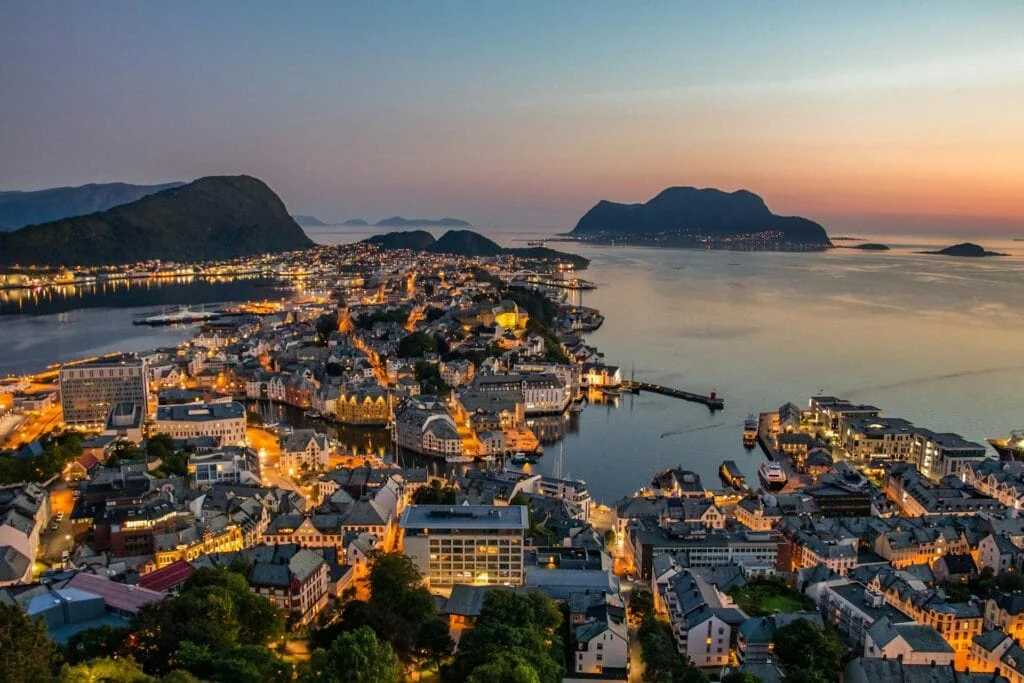
Oslo is the capital and largest city of Norway, with a population of roughly 1.5 million people in the metropolitan area. The city lies in the southeast of the country on the shores of the Oslofjord and offers a great mix of a modern Scandinavian metropolis and historic sights. Vigelandsparken (Vigeland Park) is the largest sculpture park in the world created by a single artist – Gustav Vigeland – and features 212 bronze and granite statues. Other highlights in Oslo include the Opera House – an architecturally iconic building, the National Museum of Norway, and the Viking Ship Museum (Vikingskipshuset), home to three 9th‑century Viking ships.
Bergen – Norway’s second-largest city with a Hanseatic past
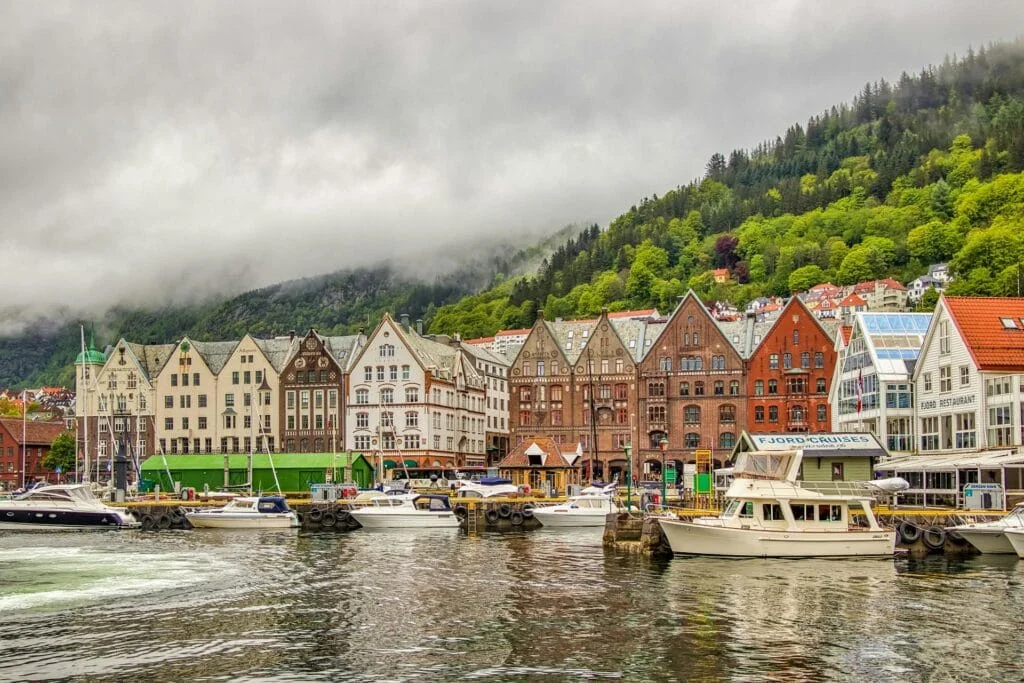
Bergen is the second-largest city in Norway and one of the most beautiful ports in Northern Europe. It is best known for its historic district Bryggen, which is listed as a UNESCO World Heritage Site. Bryggen consists of 58 preserved wooden Hanseatic houses from the 18th and 19th centuries that once formed the trading hub of Northern Europe. Today, Bryggen is a lively open-air museum packed with museums, shops, restaurants, and cafés.
Bergen is an ideal starting point for fjord cruises and trips to the surrounding mountains. The city is nestled beneath seven hills, one of which, Fløyen (399 meters high), offers stunning views of the city and harbor. The Fløibanen funicular takes you to the top in just a few minutes, where a breathtaking panorama opens up in front of you.
Stavanger – southern port city
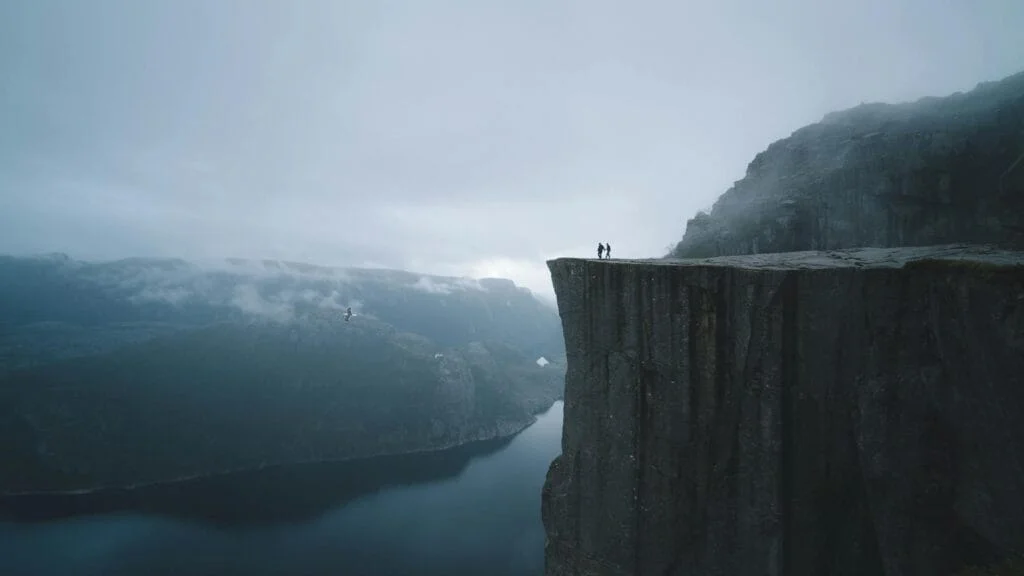
Stavanger is Norway’s fourth-largest city and the center of the Norwegian oil industry. Although it is an industrial city, it has surprisingly rich cultural and historical roots. It is known for its old wooden quarter with white houses and is a perfect base for visiting the famous rock plateau Preikestolen (Pulpit Rock).
Lillehammer – the city of winter sports
Lillehammer became famous as the host of the 1994 Winter Olympic Games. The city is still known for winter sports, nearby ski resorts, and as an ideal starting point for high‑mountain trekking in the Jotunheimen range. Lillehammer has preserved traditional Norwegian architecture and is home to several glassworks and craft workshops.
Trondheim – Norway’s historic heart
Trondheim is Norway’s third-largest city and a long-standing center of Norwegian culture and religion. The city is dominated by the impressive Nidaros Cathedral (Nidaros Domkirke), one of the largest Gothic buildings in Scandinavia, built in the 11th century. The cathedral is an important pilgrimage site.
Natural wonders and national parks
Fjords – Norway’s natural arenas
Fjords are the soul of the Norwegian landscape and the country’s most famous natural attractions. They are sea inlets that cut deep into the mainland and are lined with almost vertical rock walls.
- Sognefjord is the longest and deepest fjord in Norway, stretching 206 kilometers.
- Geirangerfjord is considered the most beautiful fjord and is listed as a UNESCO World Heritage Site.
- Hardangerfjord is the second-longest fjord and is famous for its orchards, which are stunning in bloom in spring.
- Lysefjord is home to two of Norway’s most iconic rock formations – Preikestolen (Pulpit Rock) and Kjeragbolten (a boulder wedged between cliffs).
National parks and nature reserves
- Hardangervidda National Park is the largest national park in Norway. It is home to the biggest wild herd of reindeer in Europe.
- Jotunheimen National Park, whose name means “Home of the Giants”, is the center of high-mountain hiking in Norway and home to the highest peak in Scandinavia – Galdhøpiggen.
- Rondane National Park has 24 peaks over 2,000 meters and is known as one of the most accessible high-mountain areas for hiking.
- Femundsmarka National Park lies on the border with Sweden and is the largest protected wilderness area in southern Scandinavia.
Waterfalls – nature’s water shows
Norway is a land of waterfalls and torrents of water plunging from high mountains. Vøringsfossen is one of the country’s best-known waterfalls. Kjosfossen is a dramatic waterfall visible from the train window on the Flåmsbana line. Steinsdalsfossen is unique for its easy access – it is one of the few Norwegian waterfalls you can actually walk behind.
Glaciers – remnants of the Ice Age
Norway has a number of easily accessible glaciers. Nigardsbreen is the most visited arm of the vast Jostedalsbreen glacier, the largest glacier in continental Europe. Briksdalsbreen is another popular and easy-to-reach glacier.
The most beautiful beaches in Norway
Although Norway is not known as a classic beach destination, it actually offers a surprising number of beautiful beaches in different styles and climate zones.
Southern Norway – Sandy beaches
The Sjøsanden beach near the town of Mandal is one of the longest sandy beaches in Norway. Orrestranda near Stavanger is another popular sandy beach with a relaxed, welcoming vibe.
Northern Norway – Natural scenery
The Lofoten and Vesterålen islands are home to several stunning natural beaches with white sand. Ramberstranda in Lofoten is a world-famous surf beach and offers a breathtaking panorama. Skagsanden and Flakstadsanden are two more beaches with exceptional natural charm.
Activities and things to do in Norway
Norway is a playground for every kind of activity, from quiet time in nature to full-on adrenaline sports.
Summer activities
Hiking and trekking are the most popular summer activities in Norway. Marked trails take you through national parks, valleys, and mountain terrain. Fjord cruises are also very popular, whether on large cruise ships or small sightseeing boats. Norway’s rivers and lakes are ideal for canoeing and kayaking. Fishing is a real highlight here; you can fish in rivers, lakes, and out at sea.
Winter activities
Skiing and snowboarding – Norway has plenty of winter resorts. Cross-country skiing is a traditional winter sport that lets you explore the Norwegian winter at a slower pace. Northern lights watching is the main draw from November to March in northern Norway. In the Arctic regions, you can also try dog sledding.
Year-round activities
The Trollstigen Road (Trolls’ Road) is one of the most dramatic mountain roads in Norway, with 11 sharp hairpin bends and stunning views. The Flåmsbana Railway is considered one of the most beautiful train routes in the world. A trip to the Lofoten Islands – this northern archipelago offers breathtaking scenery, picturesque fishing villages, and the chance to see the Northern Lights in winter and the midnight sun in summer.
Norwegian gastronomy and culture
Typical Norwegian food and drink
Norwegian cuisine is traditionally based on fishing and is defined by the freshness of its ingredients, respect for raw produce, and simple, straightforward preparation.
- Smoked salmon (Røkt Laks) is Norway’s national dish and one of its best-known delicacies.
- Fårikål is one of the most popular Norwegian dishes – slow-braised lamb with cabbage.
- Rakfisk is a traditional dish made from fish fermented for several months, especially popular in the north.
- Lutefisk is a very traditional dish made from dried fish soaked in lye. It is a classic Christmas meal.
- Koldtbord (cold buffet) is the Norwegian way of serving food – the table is laid with a selection of cold and hot dishes including fish, meat, salads, and baked goods.
When it comes to drinks, beer is traditionally the go-to choice in Norway. Akvavit – a traditional Norwegian spirit flavored with caraway – is also very popular.
Safety and etiquette in restaurants
In Norwegian restaurants, you usually wait to be seated by the staff. Meals are enjoyed slowly, without rushing. Tipping is not mandatory, but if you are happy with the service, you can leave 5–10%. Many restaurants accept card payments. Norwegians are not very loud, so quiet, calm behavior is expected.
Cultural customs and festivals
- Constitution Day (Syttende Mai) – 17 May is by far the most important holiday in the Norwegian calendar. The streets fill with parades and many Norwegians wear traditional national costumes called bunad.
- Christmas is the second most important holiday and is celebrated with family and friends.
- Midsummer Night (23 June) is one of the oldest Scandinavian holidays with pagan roots. The celebration usually includes bonfires and barbecues.
- Sami National Day (6 February) is celebrated in northern Norway with parades, traditional Sami games and tastings of local specialties.
Key practical information
Currency and payments
The currency of Norway is the Norwegian krone (NOK). Although Norway has a reputation for being expensive, prices are comparable to other Western countries and the quality of services is high. In Norway you can pay by card almost everywhere – cash is not as common as in many other countries.
Entry requirements and visas
For citizens of the Czech Republic, travelling to Norway is very straightforward. Norway is part of the Schengen Area, so you do not need a visa for stays of up to three months. A valid national ID card or a passport is sufficient.
Safety and local customs
Norway is exceptionally safe and ranks among the safest countries in the world. Crime rates are low and serious offences are rare. The only realistic risk is the occasional pickpocketing in larger cities. When travelling around Norway, you should respect “friluftsliv” – the Norwegian cultural tradition of spending free time in nature.
Healthcare and vaccinations
Norway has excellent healthcare and hygiene standards are very high. No special vaccinations are mandatory. However, if you plan to spend a long time outdoors in the summer months, vaccination against tick-borne encephalitis is recommended. Treatment can be expensive, so it is wise to have travel insurance.
Norwegian wildlife and nature
Norwegian wildlife is rich in northern species. Typical animals include the elk (moose), brown bear, wolf, lynx and reindeer. In forests and open countryside you can pick mushrooms, blueberries and lingonberries in season.
Basic phrasebook
| Czech phrase | Norwegian translation |
|---|---|
| Hello / Good day | Hallo / Hei |
| Thank you | Takk |
| Please / Here you go | Vær så god |
| How much does it cost? | Hvor mye koster det? |
| I don’t speak Norwegian | Jeg snakker ikke norsk |
| Do you speak English? | Snakker du engelsk? |
| Where is the toilet? | Hvor er toalettet? |
| Help! | Hjelp! |
| Restaurant | Restaurant |
| Hotel | Hotell |
| Water | Vann |
| Beer | Øl |
| Food | Mat |
| Doctor | Lege |
| Bus station | Busstasjonen |
| Train station | Jernbanestasjon |
| Airport | Lufthavn |
| Ticket | Billett |
| Goodbye | Ha det |
Transport and logistics
How to get to Norway
Flying is the fastest and most common way to get to Norway. The main airport is Oslo Gardermoen Airport (OSL). From the airport, the quickest way to reach downtown Oslo is by train, which takes about 23 minutes.
Getting around Norway
Norway has an excellent public transport network, including trains, buses and ferries. Although transport is more expensive, it is very reliable. For long-distance travel, trains are ideal, especially the route from Oslo to Bergen, which is considered one of the most beautiful rail journeys in Europe. Hurtigruten is an iconic coastal service that sails along almost the entire Norwegian coastline from Bergen to Kirkenes and is seen as one of the most spectacular sea voyages in the world.
Car rental
Renting a car in Norway is relatively expensive, but it gives you a lot of flexibility. In Norway, people drive on the right. The roads are in excellent condition. Some roads and tunnels are subject to tolls. In winter, winter tyres are mandatory or strongly recommended on many routes.
Prices and travel budget
Norway is a more expensive destination, but with good planning you can keep your costs under control. Prices vary a lot depending on your travel style and the region you visit.
| Category | Low budget | Mid-range budget | Luxury budget |
|---|---|---|---|
| Accommodation (2 people/night) | $80 | $160 | $280 |
| Food (2 people/day) | $24 | $48 | $120 |
| Transport | $20 | $40 | $80 |
| Attractions and entertainment | $20 | $40 | $80 |
| Total per day | $144 | $288 | $560 |
Accommodation – Campsites are the cheapest option. Hostels and budget hotels start at $28–$40 per night.
Food – Buying groceries in supermarkets is affordable, but eating out in restaurants is significantly more expensive.
Attractions – Museum tickets usually cost around $6–$10. Many natural attractions, such as national parks, are free.
How to plan the perfect trip
When planning a trip to Norway, you should consider your travel style, how much time you have, your budget, and the season.
By type of traveler
- First-time visitor – A week in Oslo and Western Norway is ideal, including at least one of the major fjords (Geirangerfjord or Sognefjord).
- Family with children – Southern Norway is a great choice thanks to its milder climate, beaches, and easier terrain.
- Nature lovers and trekkers – High-mountain trekking in the Jotunheimen range or in national parks like Rondane offers the most rewarding experiences.
- Seniors – Hurtigruten cruises or scenic fjord cruises provide comfort without physical strain.
- Photography enthusiasts – Western Norway with its fjords is a photographer’s paradise. For the Northern Lights, the best spots are Tromsø and the Lofoten Islands.
Common planning mistakes
- Too little time – Norway is a large country and travelling between regions takes a lot of time. Plan at least a week to properly explore a single region.
- Underestimating distances – An itinerary that tries to cover five cities in a week is unrealistic.
- Driving too fast from place to place – It’s better to stay at least 2–3 days in one area so you can really enjoy the scenery.
- Ignoring the weather – Weather in Norway is unpredictable. Always pack layers, even in summer.
Sample itineraries
7 days – Classic Norway for first-timers
- Days 1–2: Oslo (Vigeland Park, Opera House, museums)
- Days 3–4: Bergen (Bryggen, Fløyen, fjord trip)
- Days 5–6: Geirangerfjord or Sognefjord (cruise or road trip)
- Day 7: Return to Oslo and departure
10 days – Northern Norway and the Northern Lights
- Days 1–2: Oslo
- Days 3–5: Domestic flight or train to Tromsø
- Days 6–7: Northern Lights watching, dog sledding
- Days 8–9: Lofoten (visiting villages like Reine or Svolvær)
- Day 10: Return to Oslo and departure
14 days – A full-on Norwegian adventure
- Days 1–2: Oslo
- Days 3–5: Bergen and Bryggen
- Days 6–8: Geirangerfjord and the Trollstigen road
- Days 9–10: High-mountain trekking in Jotunheimen
- Days 11–13: Lofoten or a trip to Nordkapp
- Day 14: Return to Oslo and departure
Summary and final tips
Norway is one of the most beautiful and most visited destinations in Europe, offering breathtaking natural scenery, rich history, and welcoming locals. Whether you go for a relaxing fjord cruise, a high-adrenaline mountain trek, winter Northern Lights hunting, or a simple stroll through historic towns, Norway has something special for every type of traveler. The real key to enjoying it is time – if you rush, you’ll miss the very best of what Norway has to offer.
Practical tips to wrap up: Always pack in layers, no matter the season, because Norwegian weather is unpredictable. Bring solid hiking gear if you’re planning any trekking. Learn at least a few words in Norwegian – locals will really appreciate the effort.
Norway isn’t cheap, but the quality of the experiences and the landscapes more than make up for the higher prices. You may be surprised how quickly you fall for Norway and start planning your next trip back. Locals often say that Norway isn’t just a destination – it’s a way of life. After spending some time here, you’ll understand exactly what they mean. Whichever region you choose, the main thing is that your trip helps you unwind, explore, and create unforgettable memories in one of the most stunning countries in Europe.
Kategorie: