From Surfing to Diving: Everything You Need to Know About Wetsuits
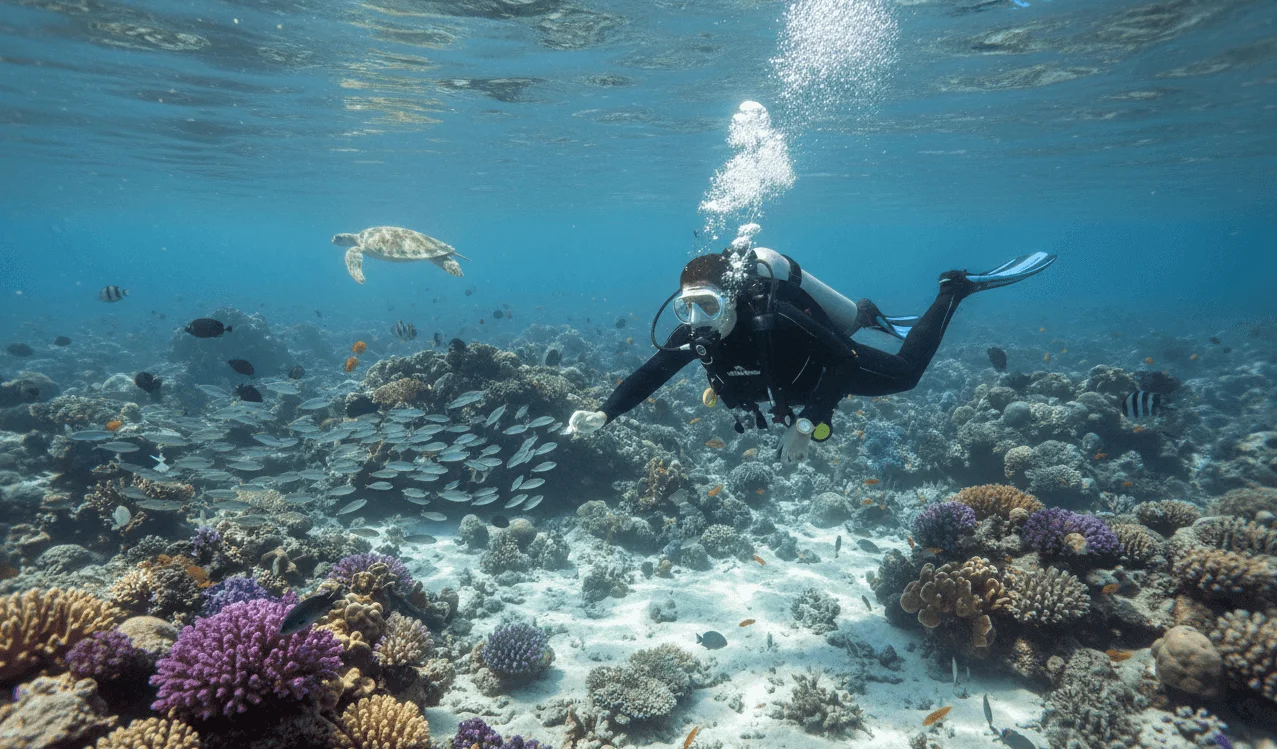
A wetsuit, often simply called neoprene, is a specialised suit made from synthetic foam rubber, chemically known as polychloroprene. It’s not just a piece of rubber; it’s a smart insulating layer filled with millions of tiny closed air (more precisely nitrogen) bubbles.
The main purpose of neoprene is threefold: thermal insulation, protection and buoyancy. Without it, staying in water below 20 °C for a longer time would be uncomfortable or even dangerous. A wetsuit significantly improves safety and comfort in the water because it slows down heat loss and adds extra buoyancy, which is especially important for triathletes and divers.
It’s used across a wide range of water sports – from diving and surfing through triathlon and freediving to increasingly popular cold-water swimming and paddleboarding. There are several basic constructions that differ in insulation level: wet (wetsuit), semi-dry and dry (drysuit).
Did you know: The name Neoprene is actually a registered trademark of chemical giant DuPont for the synthetic rubber they invented back in the 1930s. The first commercial use of the material for wetsuits is linked to pioneers Jack O’Neill and Hugh Bradner in the 1950s.
From early dive rubber to high-tech material
The history of the wetsuit started modestly in the 1950s, when scientists and diving enthusiasts were looking for a way to extend the time spent underwater in cold conditions. The first suits were simple, thick and very stiff, often made from relatively heavy foam rubber with limited insulation.
A major breakthrough came with the arrival of lighter and more flexible synthetic foam. Development sped up with the surfing boom, which required greater flexibility and freedom of movement than static diving. Innovation focused on:
- Materials: Moving from oil-based neoprene to more eco-friendly and much lighter limestone-based neoprene, such as Yamamoto neoprene. These materials offer an outstanding balance of warmth, stretch and low weight. Today you’ll also find ethical and sustainable alternatives such as Yulex (natural rubber).
- Seam construction: From simple seams that pierced the material and let water in, to fully sealed techniques like GBS (Glued and Blind Stitched) and taped seams (Taping), which block water entry and improve durability.
- Design and cut: Development of sport-specific cuts – for example wetsuits with thinner shoulder panels for triathlon to maximise shoulder mobility, or rugged suits for deep diving. Zip placement has also changed, from the back to the chest (Chest Zip) for better sealing.
Core principles: Thermal insulation and buoyancy
Understanding how neoprene works is key to choosing the right suit.
How thermal insulation works
Neoprene insulates in two ways:
Material insulation: Neoprene itself is a closed-cell foam filled with tiny nitrogen bubbles. Nitrogen (air) is a great insulator that significantly slows heat transfer from your body to the cold water. The thicker and higher quality the material, the better the insulation.
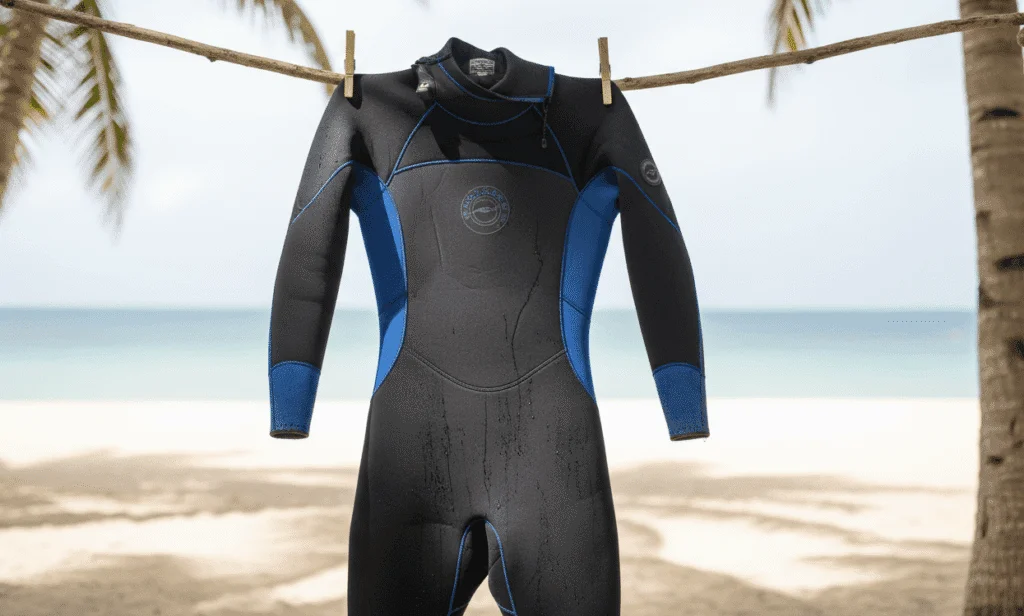
The role of the thin water layer (in wetsuits): A properly fitting wetsuit lets in only a very thin layer of water, which gets trapped between the inside of the suit and your skin. Your body warms this water quickly and the neoprene then holds this warm layer in place. That’s why the fit is so important – a loose wetsuit allows constant water exchange (so-called flushing), which leads to rapid cooling.
Buoyancy and why it matters
The nitrogen bubbles in the material also provide high buoyancy. This is crucial especially for:
Triathletes and swimmers: Increased buoyancy helps you maintain an ideal swimming position (hips and legs higher in the water), reduces drag and saves energy.
Divers: When diving, buoyancy needs to be offset with weights, but it also acts as a safety feature during an emergency ascent. (Keep in mind that neoprene loses buoyancy at depth as the cells compress under pressure.)
Key construction elements
The quality of a wetsuit is defined by how several panels with different properties are combined:
Panels: The suit is made from multiple pieces of material with different thicknesses and stretch. For example, the shoulders use the most flexible and often thinnest neoprene for freedom of movement, while the torso uses thicker panels for maximum insulation.
Seams: Seams are the most critical point for thermal performance. Many heat-loss issues are caused by the wrong seam type or poor workmanship (see section 5).
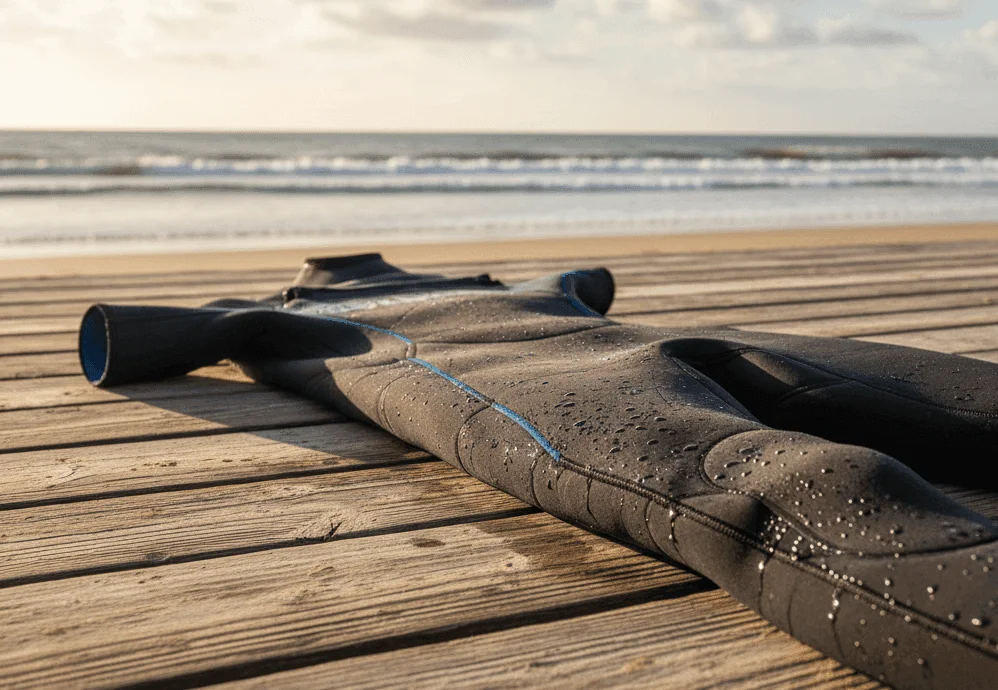
Seals: Key areas such as the neck, wrists and ankles have special seals (often made from smooth neoprene – GlideSkin) that minimise water flow in and out of the suit.
Overview of the most important cuts and constructions
Types of wetsuits are mainly divided by how they keep you warm and by their cut.
Wetsuit (wet suit)
The most common and most versatile type. It insulates thanks to a thin layer of warmed water inside the suit. Ideal for surfers, recreational divers, paddleboarders and swimmers.
- Pros: Easy to get in and out of (Back Zip), wide range of thicknesses.
- Cons: Limited thermal protection in very cold water due to slight water circulation.
Semi-dry suit
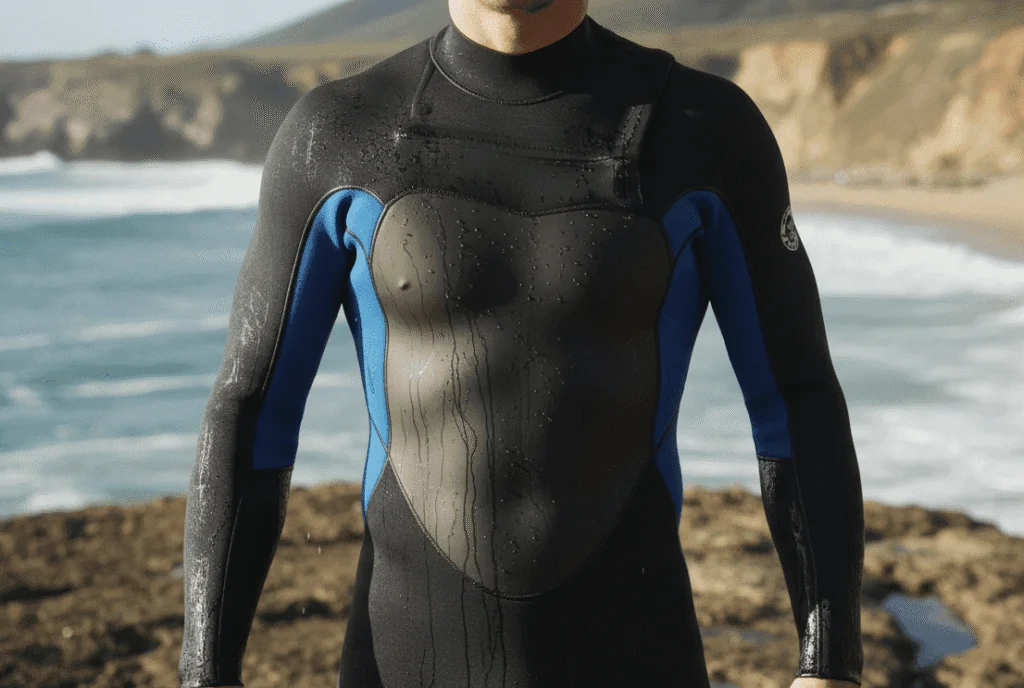
In terms of construction, this is a wetsuit with much better sealing. The key features are sealing cuffs (at the neck, wrists and ankles) and a waterproof zip, which reduce water circulation to an absolute minimum. Water does get in, but it stays inside almost the entire time.
Best for: Diving in cold water (below 15 °C) or longer dives, where a standard wetsuit would no longer be enough.
Drysuit
A drysuit insulates with air and base layers, not water. The goal is to keep your body completely dry. It requires a special waterproof zip and perfectly sealing latex or neoprene cuffs at the neck and wrists.
When you need one: For diving in extremely cold water (below 10 °C) or for long dives where the risk of hypothermia is high. It requires training to manage buoyancy correctly.
Shorty vs. Fullsuit
Shorty: A suit with short legs and sleeves. It offers maximum freedom of movement and protects the core, but with limited thermal insulation. Suitable for warm summer water (above 22 °C).
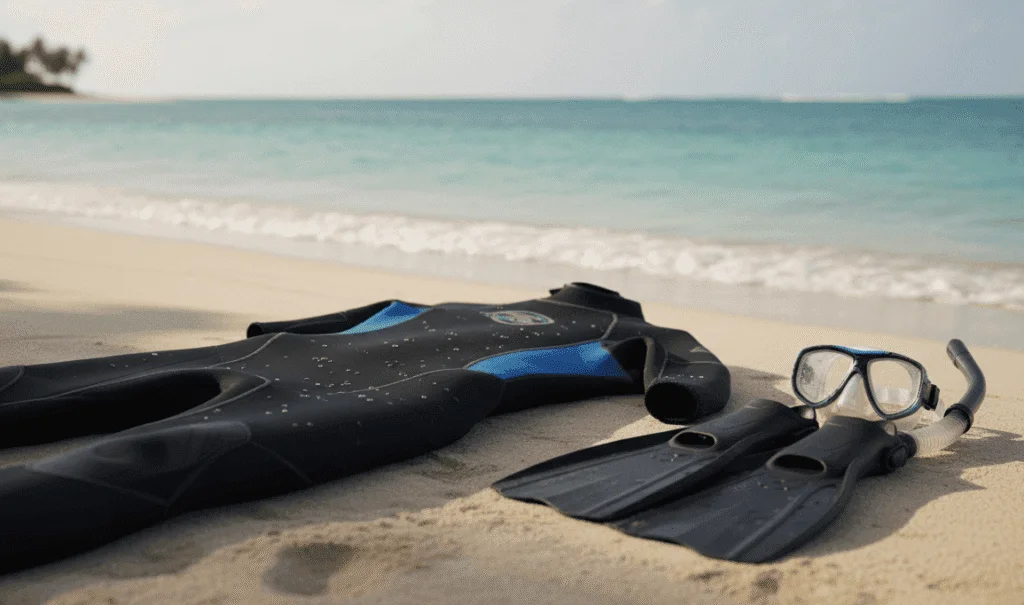
Fullsuit: Covers the whole body down to the ankles and wrists. Provides maximum thermal protection and shields you from scrapes and abrasions. Essential for most activities in cooler water.
Diving vs. triathlon wetsuit
These two wetsuit types differ a lot in what they prioritise:
Diving wetsuit: The focus is on durability, thermal insulation and resistance to compression at depth. It is less stretchy to withstand heavy use.
Triathlon/Swimming wetsuit: The priority is maximum shoulder flexibility (often 1–2 mm thickness) and strategically placed buoyancy panels (thicker neoprene on the hips and thighs) for an optimal swimming position and minimal drag. These suits are usually very prone to nail damage.
Details that make or break your comfort
Choosing the right wetsuit comes down to several key technical parameters. These features really matter.
Thickness (mm)
Neoprene thickness, given in millimetres (mm), is the main factor that determines warmth. You’ll often see two numbers separated by a slash (e.g. 5/3 mm), where the first number is the thickness on the torso (where you need the most warmth) and the second number is the thickness on the limbs (where you need more flexibility).
Use the table below to choose thickness based on water temperature:
| Thickness (mm) | Recommended water temperature |
|---|---|
| 2/1 mm | 22 °C and above (warm water) |
| 3/2 mm | 17 °C – 22 °C (mild water) |
| 4/3 mm | 12 °C – 17 °C (cold water – most versatile) |
| 5/4 mm | 8 °C – 12 °C (cold water) |
| 6/5 mm (and thicker) | Below 8 °C (very cold, extra gear required) |
Material and neoprene type
The quality of the neoprene affects flexibility, warmth and durability:
- Standard neoprene: Original oil-based materials, usually stiffer and more durable, but less stretchy.
- Super-stretch / Ultra-Flex neoprene: Highly flexible materials (e.g. Yamamoto) that allow almost unrestricted movement. Ideal for surfing and triathlon. Higher price, typically shorter lifespan.
- Open-cell vs. Closed-cell: Closed-cell is the standard neoprene. Open-cell is sometimes used on the inside for maximum grip on the skin (and therefore maximum sealing and warmth), but it is extremely hard to put on and very prone to tearing.
Seam construction (the most important factor!)
Seams are a critical point for insulation. Poor seams mean heat loss.
- Flatlock seams: Panels are stitched all the way through. The seam is comfortable and durable, but it lets water in. Suitable only for warm water (above 20 °C) and summer Shorty suits.
- GBS (Glued and Blind Stitched): The neoprene panels are first glued and then stitched from one side only (the needle doesn’t go all the way through). This creates a water-resistant seam. The absolute minimum for cold water.
- Tape (taped seams): This is a GBS seam additionally taped on the inside (or both sides). It ensures 100% waterproofing, maximum durability and is essential for suits designed for very cold water.
Zip type and placement
The zip affects sealing and how easy the suit is to put on:
Back Zip: Most popular with beginners and divers. Very easy to get in and out of, but creates a longer path where water can seep in. It also reduces flexibility in the back panel.
Chest Zip: A short zip placed on the chest. Tighter seal (less flushing), more flexibility in the back and shoulders. The downside is more difficult entry, but it’s the go-to choice for surfers and advanced swimmers in colder water.
Cut and sizing
The right size is crucial for a wetsuit to work properly. A suit that’s too big will let in too much water, destroying its insulation (flushing). A suit that’s too small will restrict blood flow, reduce flexibility and make you get cold faster.
How it should fit: Snug, but not choking. Once you put it on, there should be no big loose folds around the hips, armpits or lower back. When trying it on, do some swimming strokes and squats. The suit should feel slightly tight when dry, as it will loosen a bit in the water.
Buying guide and key decisions
Choosing the right wetsuit mainly depends on two factors: your activity and the water temperature.
Choosing by activity
| Activity | Key features |
|---|---|
| Diving | Compression resistance, durability, sealing cuffs, 5–7 mm thickness. |
| Surfing | Maximum flexibility (Super-stretch), GBS + taped seams, often Chest Zip. |
| Triathlon / Swimming | High buoyancy and extreme shoulder flexibility (thinner 1–2 mm neoprene), hydrodynamic surface coating (e.g. SCS coating). |
| Cold-water swimming | Thermal performance, reliable GBS seams and good sealing at the cuffs. |
Water temperature is the deciding factor
When buying a wetsuit, always start with the coldest water temperature you plan to use it in. Most people buy a suit that’s too thin and end up disappointed. For typical Czech waters, a 4/3 mm or 5/4 mm suit is often ideal.
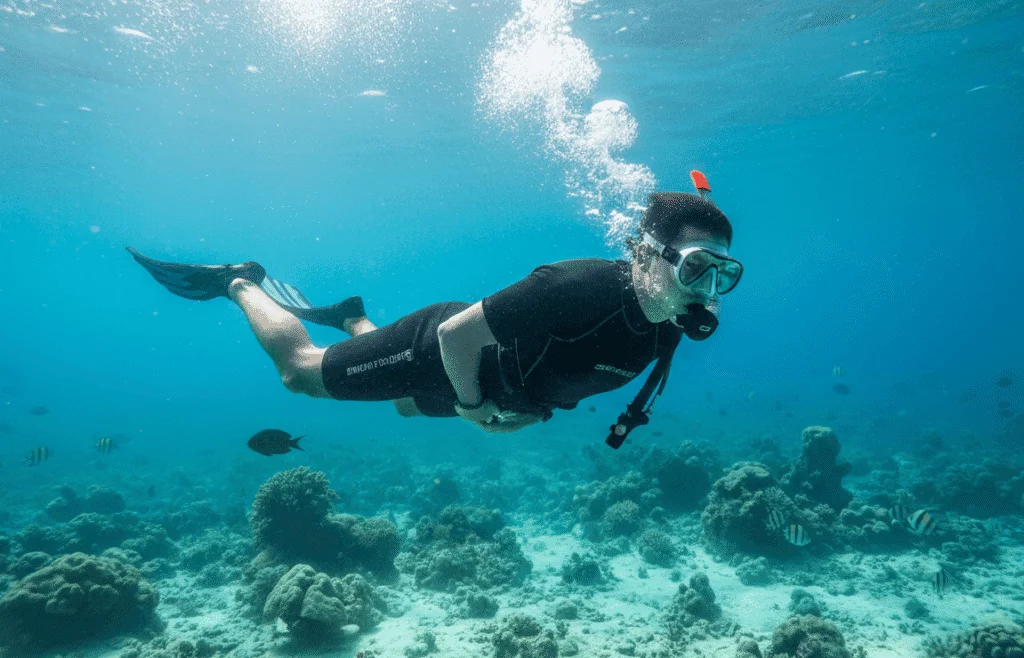
Fitting tips
- It should be a bit of a struggle: If it takes a bit of effort to put the wetsuit on, that’s a good sign. If it slides on very easily, it’s usually too big.
- Loose area on the back/lower back: The most common mistake. There should be no loose pockets of material here. Water will pool in these spots and cause flushing (heat loss).
- Movement: Do a few squats and mimic your swimming stroke. The suit must not restrict your movement or feel like it’s squeezing your chest.
What to watch out for when buying
- Beware of Flatlock seams: If you want to use the suit outside of warm summer conditions, avoid Flatlock seams.
- Don’t buy by clothing size alone: Wetsuit sizing varies a lot. Follow the manufacturer’s height and weight chart.
- Loose cuffs: Loose cuffs at the wrists and ankles are a clear sign that cold water will constantly flush through the suit.
How much does a quality wetsuit cost and what are you paying for?
The price of a wetsuit mainly reflects the quality of the neoprene, the seam technology and how specialised the cut is.
| Category | Approximate price range | What to expect |
|---|---|---|
| Entry-level | 130 – 260 $ | Basic neoprene, Flatlock seams (warm water only), Back Zip, lower flexibility. |
| Mid-range | 260 – 520 $ | GBS seams, super-stretch panels in key areas (shoulders, armpits), good durability, solid value for money. |
| Premium | 12 000 $ and up | GBS + taped seams (for the coldest water), top-quality limestone neoprene (Yamamoto), Chest Zip, sport-specific cut (Triathlon, Cold Water Surfing). |
When it pays to spend more
If you dive, surf or swim regularly in colder water (below 17 °C), it really pays to invest in a suit with GBS or taped seams. The extra cost comes back in the form of better comfort, longer sessions in the water and a longer-lasting suit (GBS seams are more durable). The most expensive suits offer the most flexible materials, which is crucial for triathletes.
How to extend the life of your wetsuit
Neoprene is a sensitive material, but with the right care you can significantly extend its lifespan (often to 5–7 years).
Essential care tips
- Rinse immediately: After every use, rinse your wetsuit straight away in cold or lukewarm fresh water, both inside and out. Rinsing removes salt, chlorine and dirt that break down neoprene and reduce its stretch.
- Dry inside out and in the shade: Never dry neoprene in direct sunlight! UV rays damage the material. Let it dry inside out first (also in the shade) and only then turn it right side out. Never use a tumble dryer.
- Store on a wide hanger: Hang the suit on a wide hanger (like a coat hanger), ideally folded over the waist rather than by the shoulders (constant pull on the shoulders can deform the neoprene over time). Never store it folded, as creases damage the foam structure.
- Use gentle cleaners: Occasionally you can wash the suit with a dedicated wetsuit shampoo that neutralises odours and disinfects. Do not use regular detergents or fabric softeners.
Repair vs. replacement
Small nicks and tears in the material can be easily repaired with a special neoprene glue. If the tear is on a seam, it needs to be stitched and re-taped.
You should replace your wetsuit if:
- It has lost its stretch: The neoprene feels brittle and stiff.
- It has compressed: On diving suits, the material has thinned due to repeated pressure at depth.
Trusted names on the market
Choosing a reputable brand helps ensure you’re investing in proven quality, innovation and sport-specific expertise.
Surfing and watersports
- O'Neill: A heritage brand and industry pioneer. Known for innovative seam and zip technologies.
- Rip Curl: Strong focus on super-stretch neoprene and exceptional flexibility, aimed at performance surfers.
- Billabong / Hurley: Popular brands offering good value for money with a strong emphasis on style and design.
Diving
- Scubapro: Premium brand focused on compression resistance, durability and excellent sealing.
- Mares / Cressi: Established diving brands with a wide range for all levels, specialising in rugged suits and cuffs.
Triathlon and swimming
- HUUB / Orca: Highly specialised brands focused on maximum buoyancy and outstanding shoulder flexibility (thin and flexible panels) for top swimming performance.
A wetsuit as an investment in your time on the water
A wetsuit is more than just a piece of gear – it’s an investment in your comfort and safety in the water. Whether you’re heading out for autumn surf, planning deeper dives or starting with cold-water swimming, keep these three points in mind:
- Thickness: It has to match the coldest water you’ll be in.
- Seams: For any kind of cold water, go for GBS or taped seams.
- Proper fit: The wetsuit should fit like a second skin – snug but not restrictive, to keep water movement to a minimum.
If you’re unsure, it’s usually better to spend a bit more on better seams and slightly thicker neoprene, so you can stay in the water longer and enjoy it more.
FAQ – quick answers to common questions
How long does a wetsuit last and when should I replace it?
The lifespan of a wetsuit is usually around 3 to 7 years, depending on how often you use it and how well you look after it. You should replace it once it loses its stretch (it becomes hard and cracks), or when you notice that you start getting cold quickly in water where you used to feel fine (loss of insulating properties).
Can I wash my wetsuit in a washing machine?
Absolutely not. Machine washing, especially at higher temperatures, will irreversibly damage the neoprene foam structure and cause seams to come apart. Clean your wetsuit only by rinsing it in fresh water and occasionally using a special wetsuit shampoo to remove odours and bacteria.
How do I know if my wetsuit is leaking or too loose?
The main sign is so-called flushing. If a sudden rush of cold water floods into the torso area and you feel it flowing out at the bottom or around the neck, the suit is too loose or has poor or damaged seams. A properly fitting wetsuit lets in only a thin layer of water, which warms up quickly and then stays in place.
Kategorie:
Články (Nejnovější / Podobné)
Mauritius: A Guide to Paradise with White Beaches and Turquoise Water
9/28/2026

Cape Verde: Islands of Sun, Sand and Wind
9/23/2026

Seychelles: An Island Paradise in One Guide
9/21/2026

Japan: A Guide Between Geisha and Robots
9/14/2026

Vietnam: The Secrets of Phở, Strong Coffee, and Chaotic Streets
9/11/2026