A Journey into the World of Whisky for Beginners and Seasoned Tasters
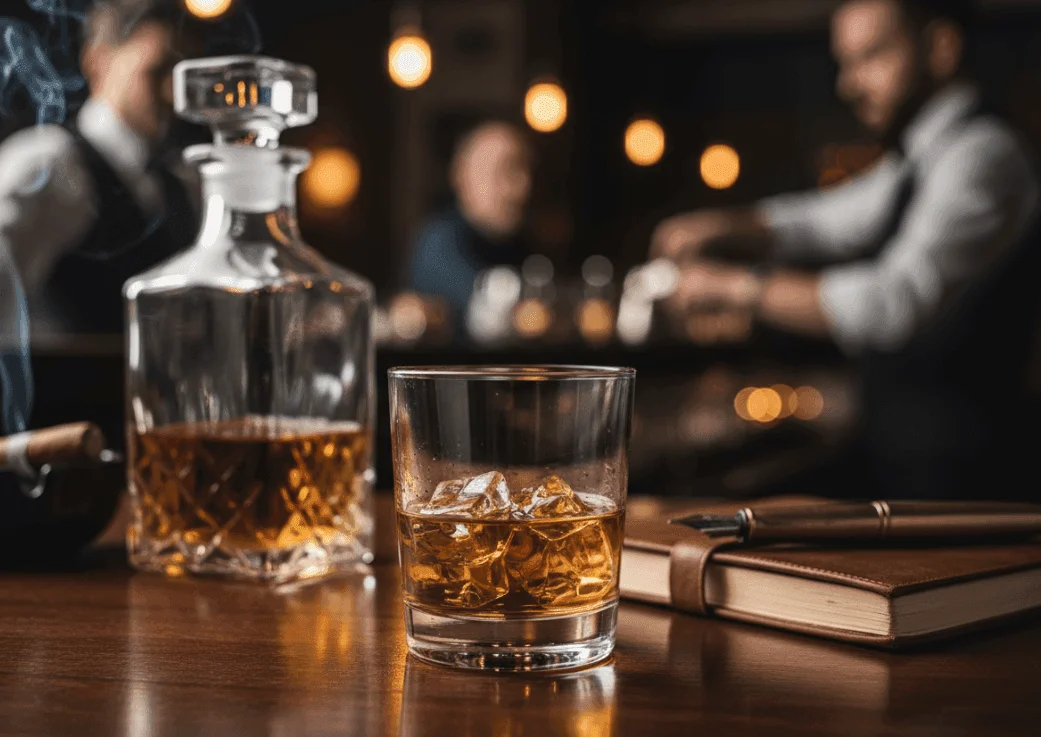
Step into a world where grain, pure water and time transform into liquid gold. Whisky is far more than just an alcoholic drink; it’s a complex spirit with a fascinating history, incredible variety and countless flavour profiles waiting to be explored. Whether you’re a complete beginner or a seasoned enthusiast, this guide will walk you through everything you need to know. It will help you find your bearings, pick the right bottle and enjoy it to the fullest.
The world of whisky is incredibly diverse and this guide will help you navigate it. The goal is to draw you in and show you that whisky isn’t just one type of drink, but an entire universe of flavours.
What is whisky and how is it made?
Understanding the basic production process is the key to unlocking the flavour secrets in every drop. Each step has a major impact on how the final spirit smells, tastes and what impression it leaves.
Ingredients: The holy trinity of whisky
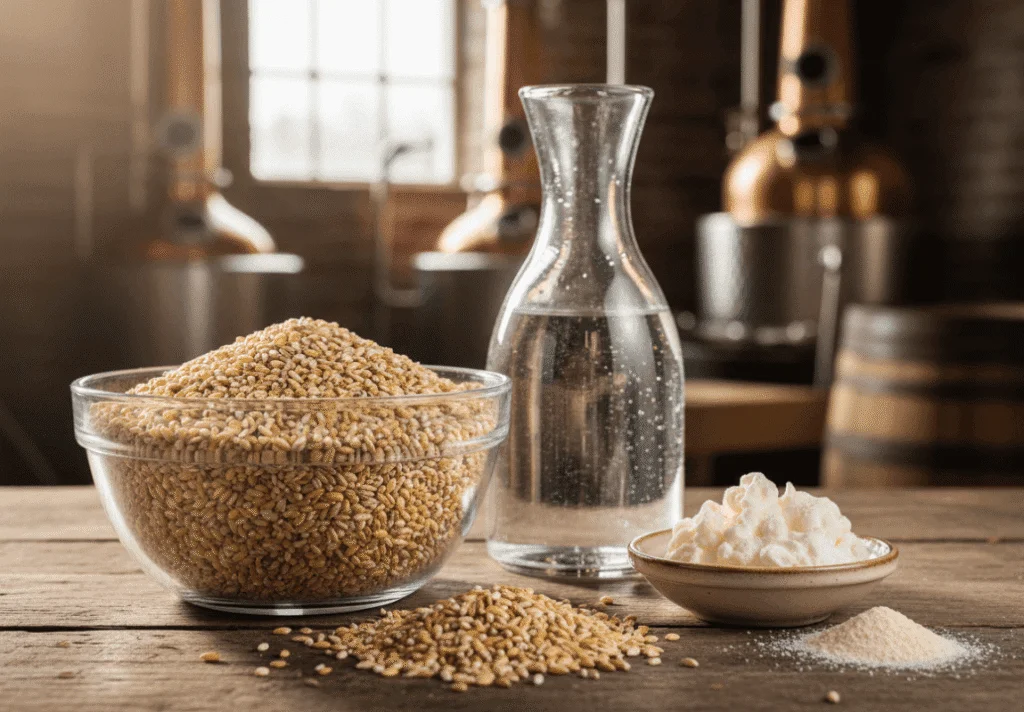
Everything starts with three core ingredients: grain, water and yeast. Barley, corn, rye or wheat are used most often. In Scotch Single Malt whisky, malting barley plays a crucial role. This is the process where the grain is allowed to germinate and is then dried. This is where one of the most distinctive flavour profiles is born – smokiness. If burning peat is used for drying, its typical smoke penetrates the grain and leaves an indelible mark.
Mashing and fermentation: Where alcohol is born
The malted barley (or other grain) is then milled and mixed with hot water in a process called mashing. This activates enzymes that convert starches into fermentable sugars. A sweet liquid called wort is created, and yeast is added to it. During fermentation, which lasts several days, the yeast converts the sugars into alcohol and carbon dioxide. The result is a beer‑like liquid, usually around 7–10% alcohol.
Distillation: Concentrating flavour and strength
The next step is distillation, which separates alcohol and desirable aromatic compounds from water. Traditional production uses copper pot stills. Their shape and size have a major influence on the character of the spirit.
- Pot Still (batch still): Used to produce single malt whisky in Scotland and Ireland. Distillation takes place in batches (twice or three times) and the result is a rich, complex spirit.
- Column Still (continuous still): A more efficient method used to produce grain whisky and many American whiskeys. It produces a smoother, lighter spirit.
Maturation: Where the magic happens
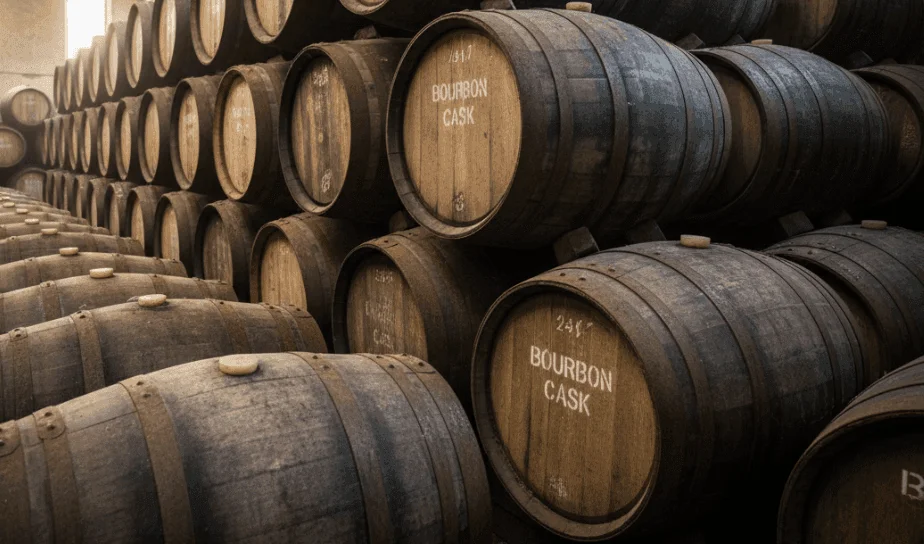
The most important phase of the whole process is ageing in wooden casks. Whisky gets up to 80% of its final flavour and all of its colour from the barrel. In most countries, the law sets a minimum maturation period (for example 3 years in Scotland). The type of cask is absolutely crucial:
- Ex‑bourbon casks: The most commonly used, they give whisky sweet notes of vanilla, caramel and coconut.
- Ex‑sherry casks: European oak that previously held Spanish sherry (such as Oloroso or Pedro Ximénez) imparts notes of dried fruit, spice, chocolate and nuts.
- Other cask types: Experiments with casks that held port, rum, red wine or beer are increasingly popular and add unique extra layers of flavour.
Did you know that the difference between “whisky” and “whiskey” is not just one letter, but also points to the country of origin and different production traditions? While Scotland, Japan and Canada use the spelling “whisky”, Ireland and the United States traditionally write “whiskey”.
The main whisky styles around the world
Every country and region gives its whisky a unique character. Let’s look at the most famous ones.
Scotch Whisky
Scotland is without question a whisky superpower. It offers an incredible range of flavours and styles, often divided by region.
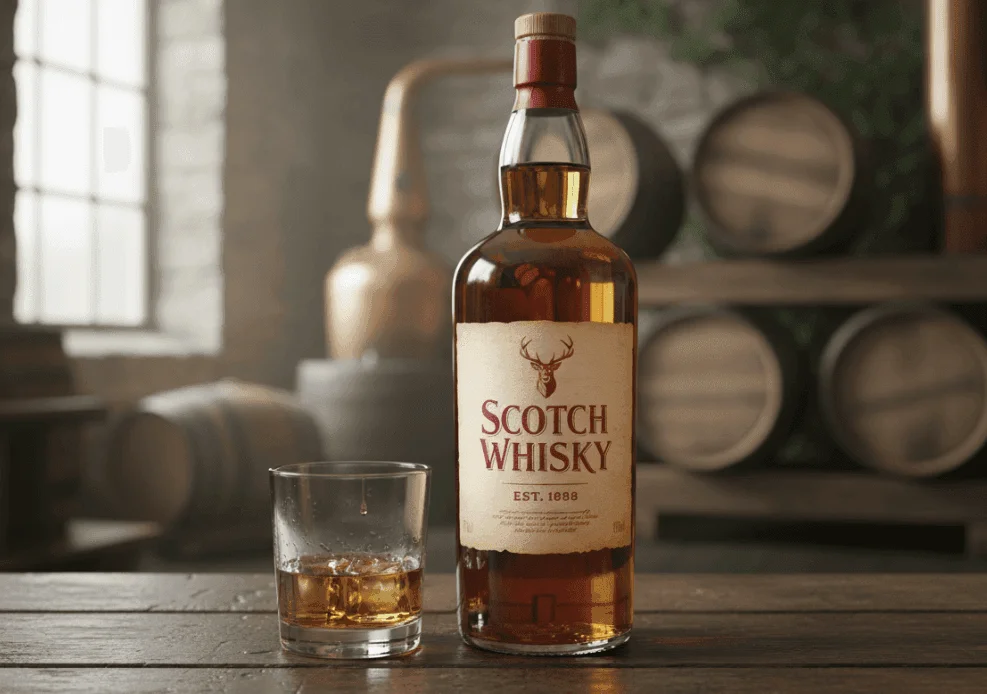
Single Malt whisky: Considered the queen of whisky. It must be produced at a single distillery and made only from 100% malted barley. This is where you’ll find the greatest diversity.
- Speyside: The heart of Scotland, known for elegant, fruity and often slightly sweet whiskies (think apples, pears, honey). Ideal if you’re after something gentle and approachable.
- Islay: An island famous for its heavily peated and smoky whiskies with notes of iodine, sea salt and tar. It’s a love‑it‑or‑hate‑it style.
- Highlands: The largest region, offering a wide spectrum of flavours from light and floral to robust and full‑bodied.
Blended whisky: A blend of one or more single malt whiskies and one or more grain whiskies (made from grains other than barley). It accounts for over 90% of global Scotch production and is ideal for beginners or for mixing in cocktails thanks to its smooth, consistent profile.
Irish Whiskey
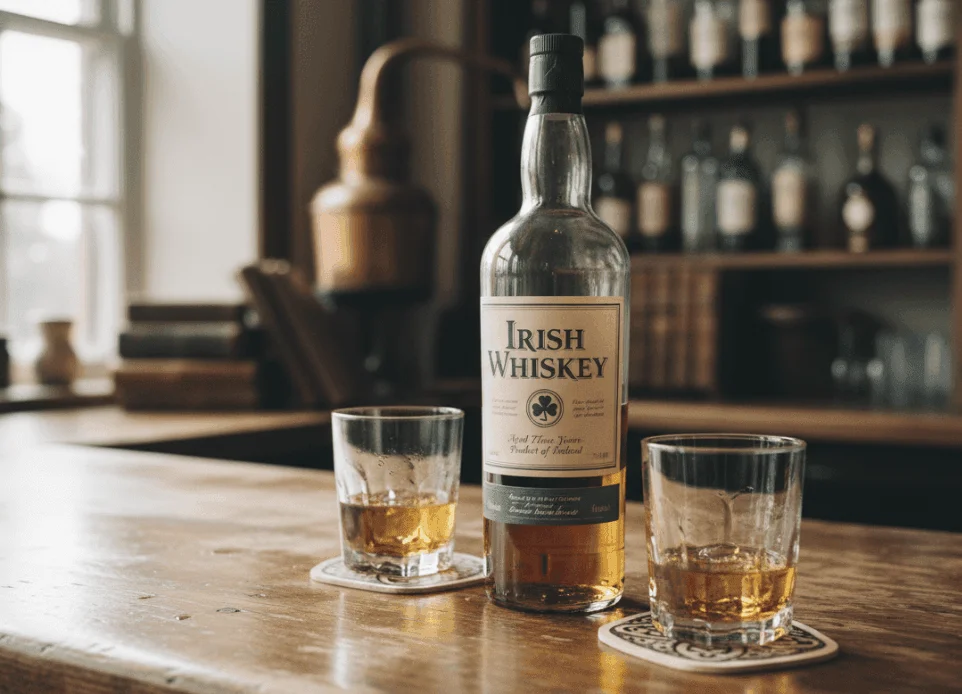
Irish whiskey is renowned for its exceptional smoothness, achieved mainly through traditional triple distillation. Most Irish whiskeys are not dried over peat smoke, so they lack a smoky character. They are typically light, slightly sweet, with notes of fresh fruit, vanilla and gentle spice. A great choice if you’re just getting into whisky.
American Whiskey
American whiskey is bold, sweet and full of character, shaped mainly by corn and ageing in new, heavily charred oak barrels.
- Bourbon: Must contain at least 51% corn and age in new charred oak barrels. This makes it distinctly sweeter, with dominant notes of caramel, vanilla, cinnamon and oak.
- Rye whiskey: As the name suggests, it must contain at least 51% rye. It is spicier, more peppery and generally drier than bourbon, with notes of pepper, anise and herbs.
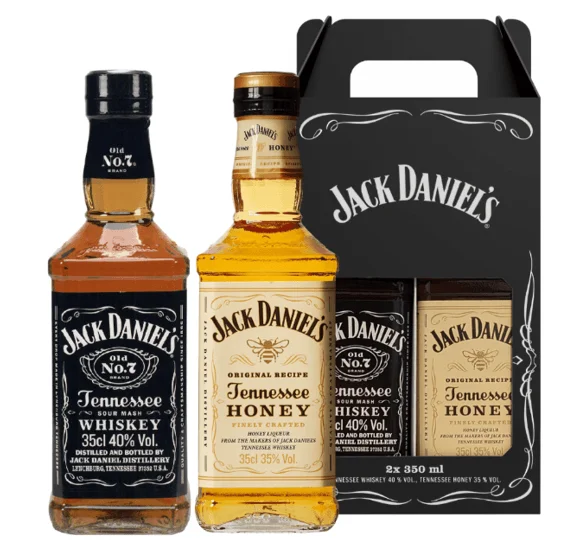
- Tennessee Whiskey: Essentially bourbon that also goes through a specific filtration step through a thick layer of sugar maple charcoal (the Lincoln County Process). This significantly smooths it out and gives it a slightly sweet, rounded character.
Japanese whisky
Japanese producers took inspiration from the Scottish style of production and refined it to absolute perfection. Their whisky is synonymous with precision, harmony and beautifully balanced flavour. It is often very smooth, complex and layered, with delicate notes of flowers, fruit and subtle spice.
How to read the label: The key to choosing the right bottle
The label on a bottle of whisky isn’t just decoration, it’s a valuable source of information. Once you learn how to read it, choosing a bottle becomes much easier.
The number on the label (for example 12, 15, 18 years) indicates the age of the youngest component in the blend. The whisky has matured in casks for at least the stated time. Is older always better? Not necessarily. A higher age usually means a more complex and smoother taste, but also a stronger influence of the wood, which not everyone enjoys. Some younger whiskies can be wonderfully vibrant and energetic.
Most whisky is bottled at 40–43% alcohol (ABV – Alcohol by Volume). Stronger versions labelled “Cask Strength” are not diluted with water before bottling and typically sit at 50–65% ABV. They offer a more intense, undiluted flavour experience, but can be too powerful for beginners.
Information such as “Sherry Cask Finish” or “Matured in Port Pipes” tells you that after its primary maturation (usually in ex‑bourbon casks), the whisky spent extra time in a different type of cask. This additional “finishing” adds another layer of flavour – sherry casks, for example, bring dried fruit and spice notes, while rum casks add sweetness and tropical tones.
The term “Single Cask” means that all the liquid in the bottle comes from one specific cask. Every barrel is unique, so these whiskies are highly valued for their individual character and are usually available only in limited quantities.
These terms are seen by enthusiasts as a mark of quality. “Non‑Chill Filtered” means the whisky has not been chill‑filtered, so it retains more natural oils and esters that contribute to a fuller flavour and mouthfeel (it may go slightly cloudy when diluted or chilled). “Natural Colour” guarantees that no caramel colouring has been added to standardise the shade.
How to choose whisky for yourself or as a gift
The right choice depends on who the bottle is for and what flavours they enjoy.
For complete beginners
Look for gentle, approachable, non‑smoky styles. A great option is a smooth Irish whiskey (for example Jameson, Bushmills), a sweeter American bourbon (for example Maker's Mark) or a light, fruity Scotch from Speyside (for example Glenfiddich 12, Glenlivet Founder's Reserve).
For smoke lovers
If you’re drawn to intense campfire and coastal aromas, reach for whisky from the Scottish island of Islay. Brands like Laphroaig, Ardbeg or Lagavulin are a safe bet and deliver big, peaty flavour.
For explorers
Want to try something different? Look for whiskies with unusual cask finishes, such as rum, port or sauternes casks. Another great choice is a precise, harmonious Japanese whisky, which offers a different, beautifully balanced experience.
As a premium gift
If you want to impress, focus on a single malt Scotch with an age statement (for example 15 or 18 years) from a respected distillery. Limited editions, Single Cask bottlings or elegantly packaged Japanese whiskies are also excellent, highly presentable gifts.
How to taste and store whisky properly
To get the most out of your whisky, you only need to follow a few simple rules.
The right glass is essential
Forget the wide tumbler. That’s better suited to cocktails or whisky on the rocks. For proper tasting, use a tulip‑shaped glass (such as a Glencairn). Its shape concentrates the aromas and lets you pick up far more nuance on the nose.
With or without ice?
Ice can be refreshing on a hot day, but remember that cold and dilution mute both flavour and aroma. If you want to cool your whisky slightly without watering it down, use stone or stainless‑steel chilling cubes.
The magic drop of water
It may sound strange, but adding a few drops of water (ideally still and at room temperature) can literally “open up” a whisky. The water slightly lowers the alcohol content and helps release extra layers of aroma and flavour that would otherwise stay hidden. This is especially useful for whiskies bottled at cask strength.
Storage to preserve quality
Unlike wine, whisky does not continue to age in the bottle. To keep an opened bottle in good condition for as long as possible, store it upright (so the alcohol doesn’t damage the cork), in the dark and at a stable room temperature. After opening, it’s best to finish the bottle within one to two years, as ongoing oxidation slowly changes its character.
Overview of well‑known brands by style
This quick overview of popular, widely available brands will help you when shopping.
| Style | Example brands |
|---|---|
| Gentle, fruity Scotch | Glenfiddich, Glenlivet, Glenmorangie, Aberlour |
| Smoky, peaty Scotch | Laphroaig, Ardbeg, Lagavulin, Talisker, Caol Ila |
| Irish whiskey | Jameson, Bushmills, Tullamore D.E.W., Redbreast |
| American Bourbon and Tennessee | Jack Daniel's, Jim Beam, Maker's Mark, Wild Turkey, Woodford Reserve |
Prices and what to expect
The price of whisky depends on many factors: age, brand, exclusivity and style. Here’s a basic guide.
- Up to $45: In this range you’ll mainly find quality blended Scotch, entry‑level Irish whiskeys and standard American bourbons. These are great starter bottles, ideal for cocktails or everyday sipping. You’ll also come across some basic single malt Scotch (often without an age statement).
- $45 – $110: Here you enter the world of premium single malts, usually around 10 to 15 years old. You can expect more complex flavours, interesting cask finishes and a deeper overall experience. In this price bracket you’ll also find premium bourbons and good‑quality Japanese whiskies.
- Over $110: This category is aimed at connoisseurs and collectors. You’ll find older whiskies (18 years and up), limited editions, Single Cask bottlings and rare bottles from Japan. The investment pays off if you’re looking for a truly unique and memorable tasting experience.
Summary and final tip
The world of whisky is wonderfully diverse and full of stories. We hope this guide has helped you find your way around it. Don’t be afraid to start with softer, more approachable styles, pay close attention to the information on the label and, above all, don’t be afraid to experiment. Every bottle offers a different experience and only by tasting will you discover what suits you best. Remember, there is no universally good or bad whisky – the best whisky is simply the one you enjoy the most.
Whether you savour your dram quietly after a long day or share it with friends, keep in mind that every sip tells a story. Go and discover them. Cheers!
Frequently asked questions (FAQ)
What is the difference between Single Malt and Blended Scotch whisky?
Single Malt whisky has to come from a single distillery and be made only from malted barley. It is a product with a unique character that reflects that distillery. Blended whisky, on the other hand, is a mix of single malt whiskies (from several distilleries) and cheaper grain whisky (made from wheat or corn). The goal with blended whisky is to achieve a consistent, well‑balanced flavour.
Does whisky continue to age in the bottle like wine?
No. Once whisky is bottled, the ageing process stops completely. Contact with the wood of the cask is over. This means a twelve‑year‑old whisky will still be twelve years old, even if you open it fifty years later.
What exactly does it mean when a whisky is “peaty”?
It means the barley malt, the key raw material, was dried over a fire fuelled by burning peat. The peat smoke penetrates the grain and gives the final whisky its characteristic smoky, earthy and sometimes even medicinal (resembling disinfectant) aroma and taste, which is especially typical of whiskies from the island of Islay.
Kategorie:
Články (Nejnovější / Podobné)

Spain: A Land of Passion, Sunshine and Unforgettable Experiences
8/28/2026
Italy: Complete Destination Guide
8/24/2026
Poland: Complete Destination Guide
8/17/2026
The Complete Guide to Brandy: Cognac, Armagnac, and Buying Tips for Everyone
8/14/2026
Argentina: Wild Nature, Bold Flavors and the Rhythm of Tango
8/5/2026