Spain: A Land of Passion, Sunshine and Unforgettable Experiences
Let yourself be drawn into one of the most captivating and diverse countries in Europe, where history blends with modern life, traditional flamenco with a vibrant urban scene, and mountain peaks with the azure blue Mediterranean Sea. Spain is not just a destination – it’s a lifelong experience that can easily turn into a recurring passion. Whether you’re after historical treasures, natural wonders, cultural gems, or simply a place to switch off from everyday worries, Spain offers all of it at once.
Did you know that Spain ranks among the most visited tourist countries in the world, yet still manages to keep its authenticity and unique character in every corner?
History of Spain: From antiquity to the modern state
The Iberian Peninsula became home to humans more than 35,000 years ago, when the first tribes settled in its fertile regions and along the coast. Over the centuries, different peoples and cultures gradually arrived here – the Phoenicians, Greeks, Carthaginians, and finally the Romans, who built one of their most important provinces in this area. Each of these civilizations left a deep mark on the landscape, architecture, and spirit of Mediterranean culture, which we can still see today.
One of the most crucial turning points in Spanish history is the period of Arab rule, which lasted for more than 700 years. Muslims from Africa brought not only their faith, but also advanced science, mathematics, architecture, and philosophy. The creation of the Alhambra in Granada, the most beautiful building of Islamic Spain, still stands as a reminder of this rich cultural legacy.
Reconquista – the gradual reconquest of the territory by the Christian kingdoms of Castile and Aragon – lasted an incredible 800 years. The final chapter of this epic saga closed in 1492, when the Catholic Monarchs Ferdinand and Isabella captured Granada, the last Muslim kingdom. That same year, history was made again – Christopher Columbus, funded by Queen Isabella, discovered the New World and laid the foundations for Spain to become the world’s leading power for the next three centuries.
The marriage of Ferdinand and Isabella in 1469 united the two kingdoms and led to the creation of a single Spanish state. Their reign is often seen as the beginning of modern Spain, even though the actual unification process continued for many years afterward.
The Golden Age of Spain in the 16th and 17th centuries brought immense wealth from its colonies in the Americas, but also feudal conflicts between powerful noble families and a gradual decline in military dominance. The Civil War from 1936 to 1939 split the nation and tragically ended in the violent dictatorship of General Francisco Franco, which lasted until his death in 1975.
The accession of King Juan Carlos I in 1975 marked the birth of a democratic constitutional monarchy and a smooth transition to the freedom the Spanish people so badly needed. Joining the European Union in 1986 completely transformed the country and turned it into a modern, prosperous state full of innovation and culture. Today, Spain is one of the most fascinating places in Europe, where ancient traditions meet bold futurism.
Location, geography and climate
Location and geographical features
Spain stretches across the Iberian Peninsula in southwestern Europe, bordered by the Atlantic Ocean to the north and west and the Mediterranean Sea to the south and east. It shares borders with France, Andorra, Portugal and Gibraltar, giving it a unique position at the crossroads of several cultural influences. The total area of the country is roughly 505,000 square kilometres, making it the second-largest country in the European Union.
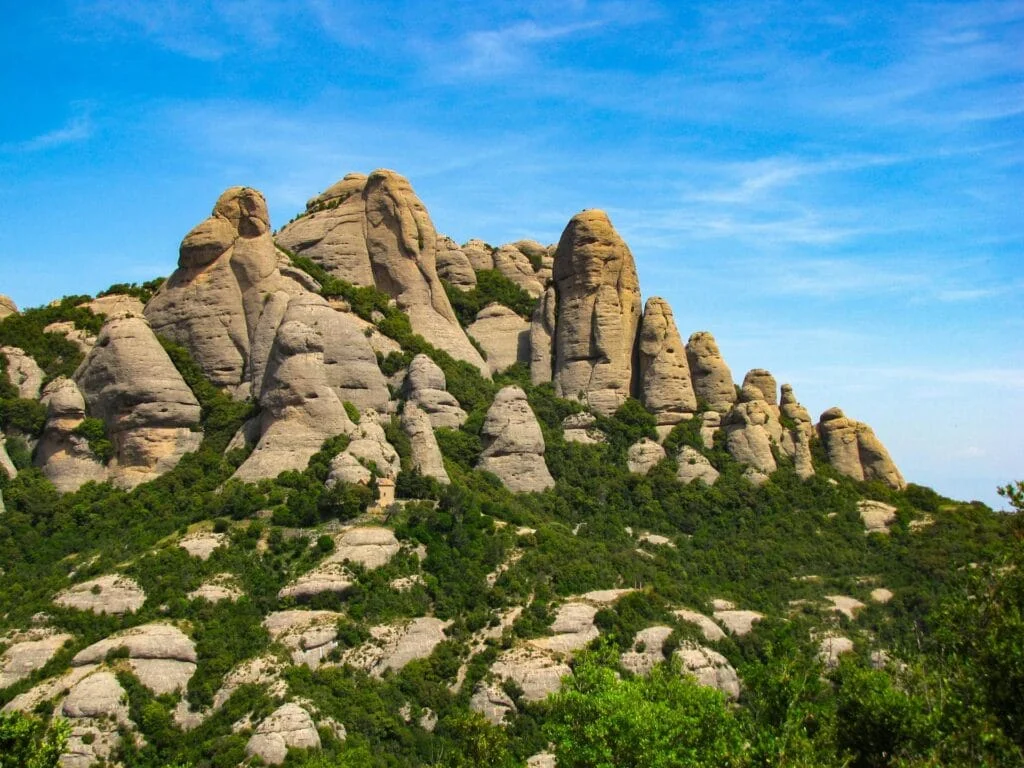
Spain is primarily a mountainous country, defined by a vast plateau known as the Meseta Central in the heart of the country, almost entirely encircled by mountain ranges. The best-known include the Pyrenees in the north, which separate Spain from France and rise like a natural fortress, the Cantabrian Mountains in the northwest, and the Baetic Cordillera in the south. In the southeast, the Iberian System stands out with its striking limestone massifs.
The most important rivers are the Tajo (the longest at 1,008 km), the Ebro and the Guadalquivir, which form fertile valleys and supply the country with vital water resources. The coastline is remarkably varied and rugged – from the dramatic cliffs of the Costa Brava in the east to the calm sandy beaches of the Costa del Sol in the south.
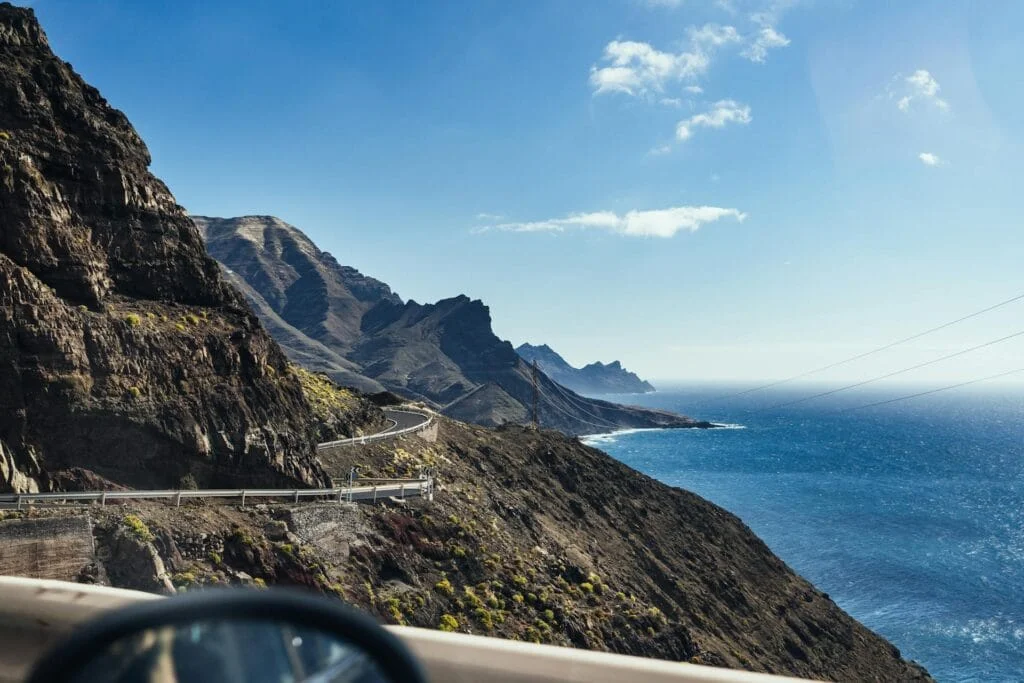
Spain also includes the Balearic Islands (Mallorca, Menorca, Ibiza and Formentera) in the Mediterranean Sea and the distant Canary Islands in the Atlantic, which lie close to Africa and offer a subtropical climate and unique volcanic landscapes. Teide on Tenerife, at 3,718 metres, is the highest mountain in Spain.
Climate and weather for travellers
Spain boasts three main climate zones, which strongly shape your travel experience depending on where you are.
In the north and northwest (regions such as Galicia and Asturias), you’ll find an oceanic climate with mild winters, warm but not excessively hot summers, and plenty of rainfall throughout the year. This area is often called “Green Spain” and is ideal for travellers who love lush, nature-rich landscapes.
The central part of the country, especially the Meseta Central and its surroundings, has a distinctly continental climate with large temperature differences between summer and winter. Winters can be cold with snow and temperatures dropping below freezing, while summers are hot, dry, and humid.
The southern and eastern coast falls under a Mediterranean climate with typical features: mild winters, hot summers with very little rainfall, and generally stable temperatures. This climate is ideal for beach holidays and relaxing in the sun.
The southeast of the country (areas such as Almería and Murcia) has a semi-arid to desert climate with extremely low rainfall (in some places barely 150 mm per year) and very hot summers, making it the driest region not only in Spain, but probably in all of Europe.
The Canary Islands enjoy a year-round subtropical climate with stable and pleasant temperatures between 18 and 24 °C, which has earned them the nickname “islands of eternal spring”.
Monthly weather and temperature overview
| Month | Average daytime temperature (°C) | Average night-time temperature (°C) | Sea temperature (°C) | Characteristics |
|---|---|---|---|---|
| January | 8–15 | 3–8 | 14–15 | Coldest month, snow in the mountains, rain in the north |
| February | 9–16 | 4–8 | 14–15 | Still chilly, ideal for city breaks |
| March | 12–18 | 6–10 | 14–16 | Spring arrives, temperatures rise, occasional showers |
| April | 15–21 | 9–13 | 16–17 | Lovely spring weather, only rare showers |
| May | 19–25 | 13–18 | 18–19 | Warm and dry, perfect for trips and travelling |
| June | 24–29 | 17–22 | 23–24 | Start of the summer season, hardly any rain |
| July | 27–32 | 20–25 | 23–25 | Hottest month, peak holiday season |
| August | 27–32 | 20–25 | 25–26 | Extreme heat (30–40 °C), height of the season |
| September | 24–29 | 17–22 | 24–25 | Still warm, first rains start |
| October | 18–24 | 12–17 | 21–23 | Autumn, mild temperatures, more rainfall |
| November | 12–18 | 7–11 | 18–20 | Rainy period, especially in the north |
| December | 8–14 | 3–7 | 15–17 | Cool and rainy, leading into winter |
The best time to visit Spain depends on what you are looking for. If you want pleasant weather without extremes, choose April to May and September to October – temperatures are mild, it is sunny, and there are fewer tourists. If you love heat and the sea, then June, July, and August are ideal, but be ready for crowds and higher prices. Winter (December–February) is perfect if you want to explore cities without the heat and do not mind the chance of seeing snow in the mountains.
Regions and unique destinations of Spain
Andalusia: The heart of Spain full of romance and tradition
Andalusia is the southernmost region of Spain, stretching along the shores of the Mediterranean Sea and the Atlantic Ocean. It is a legendary landscape of Mediterranean beauty, where Arab influences blend with Spanish traditions to create a unique mix of culture, architecture, and lifestyle. The Andalusian plain is one of the most fertile areas in Europe, filled with olive groves, vineyards, and sun-drenched fields.
The main cities of Andalusia – Seville, Córdoba, Granada, and Málaga – are hubs of endless artistic and cultural wealth. Flamenco, Spain’s most famous dance tradition, was born here around the 15th century, when the Roma settled in the region.
Catalonia: The progressive heart of Spain
On the eastern side of Spain lies Catalonia, a region that has long nurtured its own national identity, language, and cultural traditions. Barcelona, the capital of Catalonia, is a vibrant metropolis full of innovation, cutting-edge architecture, and rich historical heritage. Catalans are known for their entrepreneurial spirit and strong sense of pride, which you can feel at every turn.
The Catalan coastline known as the Costa Brava offers one of the most dramatic and rugged coastal landscapes in Europe, with deep coves framed by pine trees, beaches with crystal-clear turquoise water, and charming villages tucked into the cliffs. This area is a paradise for anyone looking to combine beach time, nature, and active holidays.
The Basque Country: A mystical land with its own character
Northern Basque Country is a place full of mystery and individuality. The Basques are one of the oldest peoples in Europe – DNA tests show they have lived here continuously for more than 30,000 years, which is unique among European nations. Basque, their language, does not belong to the Indo-European language family and remains one of the most fascinating linguistic phenomena in the world.
The Basque territory is divided into a northern (French) and southern (Spanish) part. The Spanish Basque Country stretches along the Bay of Biscay and combines modern industry in Bilbao with traditional rural cuisine and picturesque countryside.
Galicia: The magical beauty of the northwest
Galicia in the northwest of Spain is a land of green, misty, and romantic landscapes that feels more like the Irish or Scottish countryside than typical Mediterranean Spain. It is often called “Green Spain”, known for its dense forests, dramatic coastline, medieval towns, and deep-rooted local culture and food traditions. The region is also home to the famous Way of St. James pilgrimage route (Camino de Santiago), one of the best-known routes in Europe.
The most famous landmarks and cities in Spain
Sagrada Família – Gaudí’s masterpiece in Barcelona
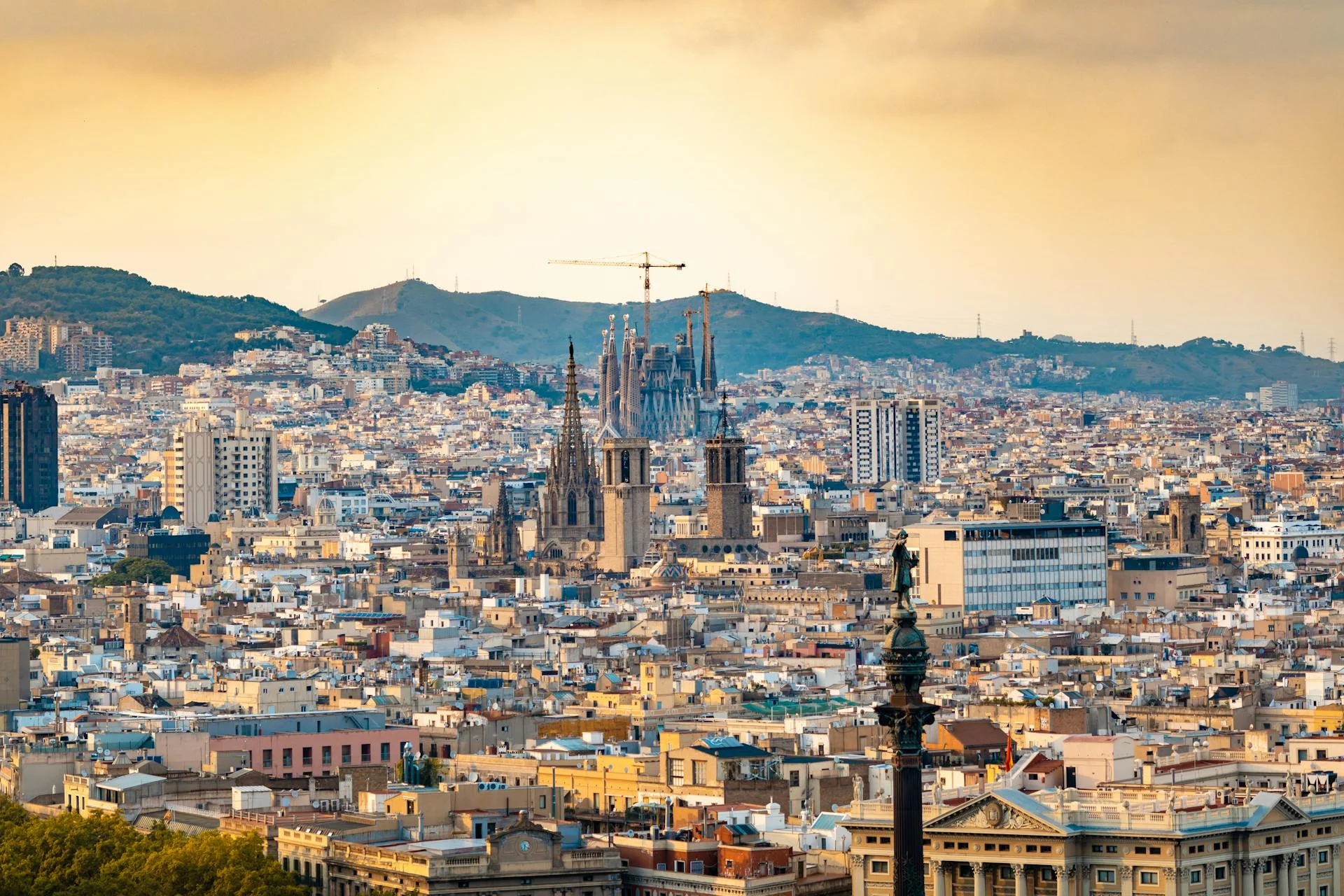
The Sagrada Família (Basilica of the Holy Family) stands in Barcelona as one of the most ambitious and longest-running building projects in the history of architecture. Construction began in 1882 and, although it is still unfinished, it is already the tallest church in the world.
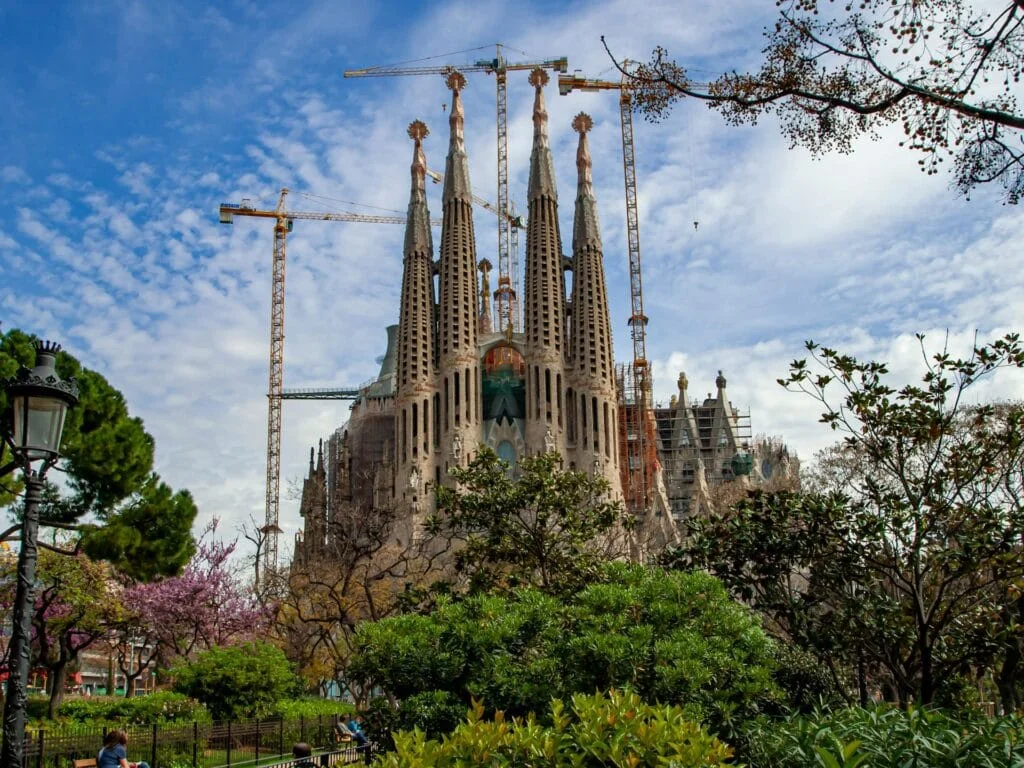
In 1883, the project was taken over by the famous Catalan architect Antoni Gaudí, who poured into the building not only technical brilliance, but also deep spirituality and an organic style that feels almost alive rather than constructed. The design of the basilica includes a total of 18 towers, representing the Virgin Mary, the four evangelists and the 12 apostles, while the central tower symbolising Jesus will reach a height of 172.5 metres.
The building is fascinating not only for its architectural concept, but also for how it has evolved over the centuries. The Passion façade, depicting Christ’s suffering and created by sculptor José María Subirachs, was completed in 1978. The main nave was roofed and consecrated by Pope Benedict XVI in 2010.
The full completion of the basilica is planned for 2026, marking the 100th anniversary of Gaudí’s death, although some estimates suggest that work may continue beyond this date. Visiting the Sagrada Família is a must for anyone travelling to Barcelona – it is a place where architecture turns into a spiritual experience.
The Alhambra in Granada – Moorish mastery
The Alhambra in Granada is one of the most impressive historic complexes in Europe and one of the most visited sites in Spain. The name Alhambra comes from Arabic (Al-Hamrā) and means “Red Castle”.
This palace and fortress complex was built from the 13th century onwards to serve as the lavish residence of the last Muslim dynasty on the Iberian Peninsula – the Nasrids. Since 1984, the Alhambra has been listed as a UNESCO World Heritage Site.
The complex is made up of several parts – the palace itself with its beautifully decorated interiors, defensive walls, gardens (especially the famous Generalife gardens with their fountains and lush greenery) and baths. Every corner of the Alhambra reflects the richness of Islamic culture, mathematical precision and artistic perfection.
A visit to the Alhambra is an absolute must for anyone who wants to understand Spanish history and the influence of Islamic civilisation on the Iberian Peninsula. It is strongly recommended to book your ticket well in advance, as the site is extremely popular and daily visitor numbers are limited.
Madrid – A vibrant capital bursting with energy
Madrid, the capital of Spain with a population of more than 3 million people, is a lively metropolis packed with museums, culture, food, art, and fashion. The Royal Palace (Palacio Real) is one of the largest palaces in Europe and serves as the official residence of the royal family, although today it is used mainly for state ceremonies.
Plaza Mayor, the heart of old Madrid, is a stunning square surrounded by historic buildings. Other major highlights include the modern art museum Reina Sofía, home to Picasso’s famous painting Guernica, and the Prado museum, filled with Spanish and European masterpieces.
Barcelona – The brilliant heart of Catalonia
Barcelona is not only the second-largest city in Spain, but also a global hub for design, food, and modern architecture. The city is famous for the winding streets of the old Gothic Quarter (Barri Gòtic), where medieval secrets hide around every corner, and for its vibrant, forward-thinking culture.
Beyond the Sagrada Família, Barcelona offers Park Güell, another Gaudí masterpiece that was also added to the UNESCO World Heritage List in 1984. This park is a fantastic blend of natural landscape and artistic architecture, where flowing lines and colorful mosaics create harmony with the surroundings. The Barcelona Cathedral boasts striking Gothic architecture and a beautiful cloister where you can happily lose track of time for hours.
Granada – Where the Moors left their final traces
Granada, set below the Sierra Nevada mountains, is a city with a strong Arab heritage and the place where the era of Islamic rule in Spain came to an end in 1492. Beyond the Alhambra, Granada is home to the beautiful Royal Chapel (Capilla Real), where the Catholic Monarchs Ferdinand and Isabella are buried.
The Albaicín district is a medieval maze of narrow streets that in many parts has remained virtually unchanged since the Middle Ages. Walking through this maze feels like stepping back in time, with small shops, tea houses, and unexpected viewpoints overlooking the Alhambra and the mountains behind it.
Seville – A romantic city where flamenco lives
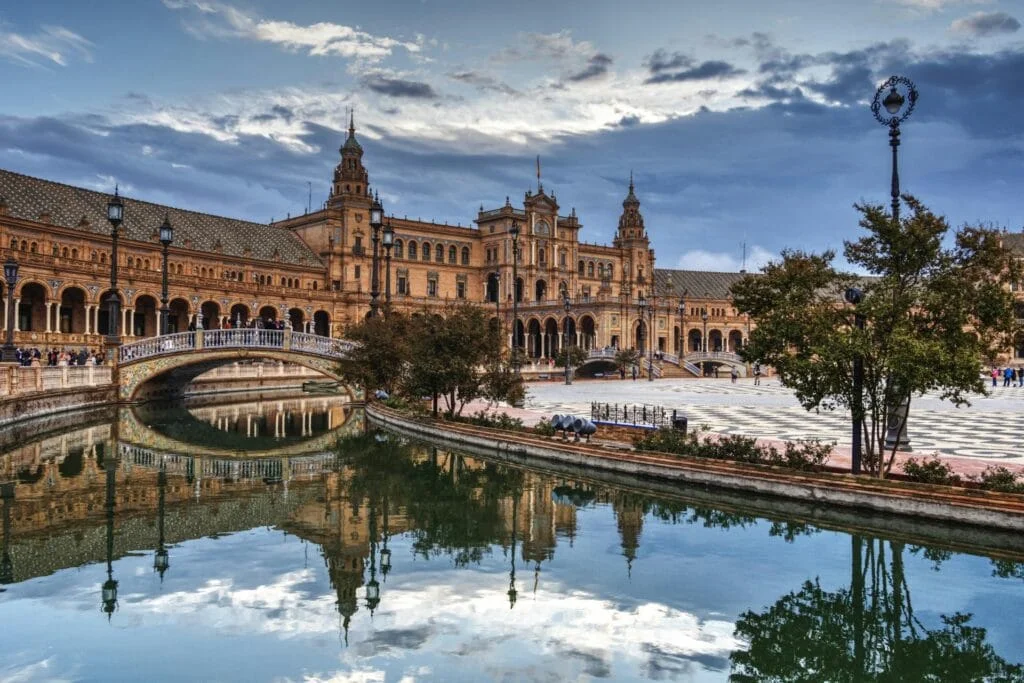
Seville, the capital of Andalusia, is the city of Don Juan, flamenco, beauty, and passion. Seville Cathedral is one of the largest Gothic cathedrals in the world and is said to hold the tomb of the famous explorer Christopher Columbus, whose remains were moved here from Cuba at the end of the 19th century.
The cathedral complex includes the famous Giralda bell tower, originally a minaret, which rises 104 meters high and is a true gem combining Islamic and Christian architecture. Seville is a place where flamenco is danced from the heart, where blood seems to mix with sangria, and where every evening can turn into a celebration.
Valencia – City of science, paella, and modern art
Valencia, the third-largest city in Spain, is famous as the home of paella and as the place where one of Europe’s biggest festivals – Las Fallas – takes place every March. Over the last few decades, the city has transformed and is now home to the architectural marvel known as the City of Arts and Sciences (Ciudad de las Artes y las Ciencias), a futuristic complex with buildings that look like organic, living structures.
Natural beauty and national parks
Picos de Europa – Peaks of Europe in the heart of Cantabria
Picos de Europa (Peaks of Europe) is Spain’s oldest national park, established in 1918. Covering 671 square kilometers, it ranks among the best-known and most visited nature reserves in Europe. The mountain range is made up of three limestone massifs separated by the Duje and Cares rivers, offering a dramatic alpine landscape with an elevation difference of more than 2,500 meters (from the Deva River at 75 meters above sea level up to the summit of Torre de Cerredo at 2,648 meters).
The central massif, called Masivo de los Urrieles, is the most popular and visually striking area for visitors, dominated by the iconic peak Naranjo de Bulnes (2,519 meters), easily recognizable from afar thanks to its distinctive shape and steep slopes.
In 2002, the park was designated a UNESCO Biosphere Reserve, which means it protects unique habitats with rare plant and animal species. There are more than 200 peaks over 2,000 meters here, making the park an ideal destination for mountaineering, demanding hikes, and adventurous expeditions.
One of the best ways to experience Picos de Europa without tackling exhausting ridge traverses is to take the Fuente Dé cable car, which carries you to an altitude of over 1,800 meters and rewards you with fantastic views of the entire mountain range.
Other natural highlights
Beyond Picos de Europa, Spain is home to the Garajonay National Park on the island of La Gomera in the Canary Islands, where you’ll find dense laurel forests and lush trails that are perfect for hiking. The Caldera de Taburiente National Park on the island of La Palma is another volcanic gem, with stunning routes overlooking a dramatic volcanic caldera.
Teide National Park on Tenerife is home to Spain’s highest mountain – the Teide volcano (3,718 meters). The volcanic rock formations and lava fields here look more like an alien lunar landscape than a typical countryside view.
Spain’s most beautiful beaches
Costa del Sol – The sunny coast of Andalusia
Costa del Sol (the Sunshine Coast) stretches for up to 200 km along the south of Andalusia and is one of the most famous holiday destinations in Europe. Beach resorts like Málaga, Marbella, Fuengirola and Nerja offer a mix of stunning beaches, modern infrastructure, excellent food and a vibrant nightlife. Costa del Sol is the perfect choice if you want a blend of relaxation and entertainment.
Costa Brava – Dramatic coastline of Catalonia
Costa Brava runs along the northeastern coast of Catalonia from Barcelona to the French border and is known for its dramatic cliffs, deep coves and crystal-clear blue water. Some of the most beautiful beaches include Cala Treumal, Cala Giverola and Cala Sant Francesc, which are smaller and more intimate than the large, open beaches.
The towns of Lloret de Mar and Tossa de Mar are popular bases for trips to the surrounding coves. Barceloneta Beach right in Barcelona offers golden sand and a lively atmosphere, although it is busier than the more remote beaches.
Balearic Islands – A paradise with crystal-clear water
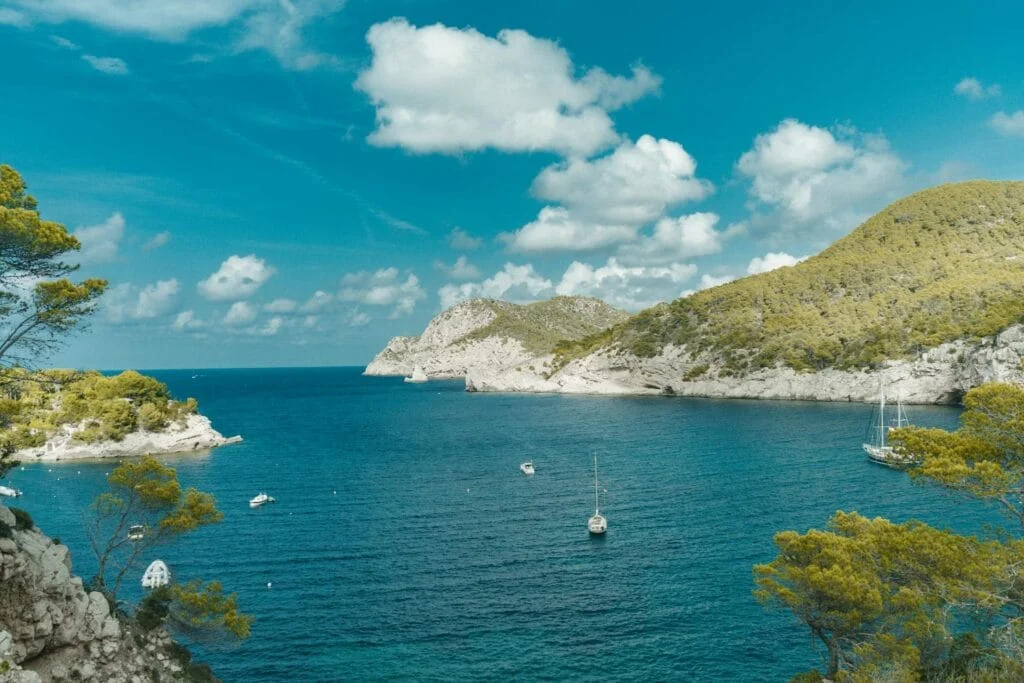
Mallorca, the largest of the Balearic Islands, has more than 50 kilometers of beaches with very different characters. Formentor Beach in the north of the island is famous for its fine sand, turquoise water and shady pine trees. Cala Millor on the east coast is popular with families thanks to its easy access and relaxed atmosphere.
Menorca is a quieter alternative to Mallorca. Cala Mitjaneta is one of the island’s gems, with white sand and dramatic cliffs. Cala Escorxada, which you reach after about a 45-minute walk, is loved for its rocky caves and peaceful setting.
Ibiza, although famous for its nightlife, also has beautiful beaches. Caló des Moro is renowned for its stunning sunsets. Cala Bassa on the west coast is gorgeous, with crystal-clear water. Cala Comte stands out because there are no large hotels here, just unspoiled nature and clear sea.
Formentera, the smallest of the main Balearic Islands, is a nudist haven with a number of beautiful beaches.
Canary Islands – Volcanic beauty with a subtropical climate
Tenerife, the largest of the Canary Islands, offers a wide range of beaches – from Las Teresitas with imported Saharan sand to Playa de las Américas with black volcanic sand. All of these beaches offer warm water and sunshine all year round.
Gran Canaria is popular for its exotic setting and stunning sandy beaches such as Maspalomas and Playa del Inglés. The island is also famous for Dunas de Maspalomas, dune formations that look like the African desert.
Activities and entertainment
Spain offers such a wide range of activities that you will want to keep coming back. Hikers and climbers can head to the Picos de Europa or the Pyrenees. Fans of water sports can surf on the Costa Brava, snorkel in the crystal-clear waters of the Balearic Islands, or enjoy windsurfing in the Canary Islands.
Culturally minded travellers can enjoy a flamenco show in Seville, visit museums in Madrid and Barcelona, or explore medieval towns such as Ronda or Oviedo. Sports enthusiasts can choose from golf courses, horse riding, cycling, and paragliding. The nightlife ranges from traditional flamenco taverns in Seville to electrifying clubs in Ibiza and Madrid.
All these activities go hand in hand with great food – try paella in Valencia, eat fresh fish by the sea in Barcelona, sample jamón (the famous Spanish cured ham) where it comes from in Andalusia, or enjoy tapas in bars where the locals meet.
Gastronomy and Spanish culture
Typical food and drinks
Paella is Spain’s most famous dish and comes from Valencia. It is traditionally cooked in large iron pans, often over an open fire. Authentic paella valenciana is made with chicken and rabbit, not seafood as many people mistakenly think. Its golden colour comes from saffron.
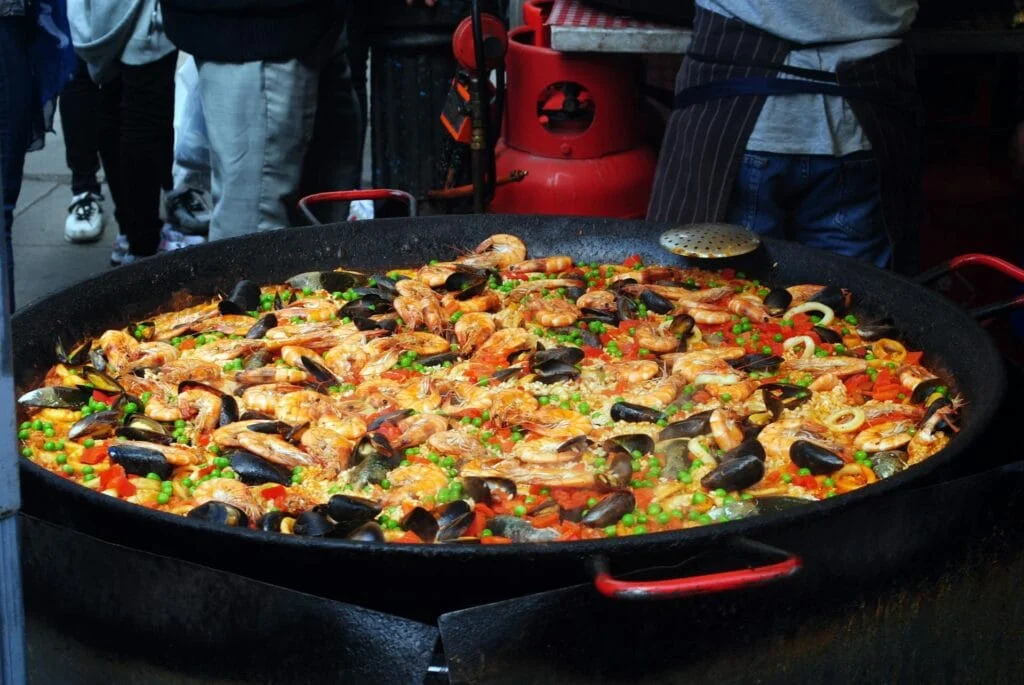
There are many versions of paella, each specific to its region. The key ingredient is always medium-grain round rice (ideally the Bomba variety), which stays firm and separate as it cooks. Another essential element is the sofrito – a base made from olive oil, onion, garlic, and tomatoes.
Tapas are small appetizers or sharing plates that are a cornerstone of Spanish social life. They range from simple options like olives to more elaborate bites such as potato croquettes (croquetas) or fried calamari (calamares a la romana). Going out for tapas in local bars is a truly authentic Spanish experience.
Jamón, Spanish dry-cured ham, is one of Spain’s most prized food products. The best known is Jamón Ibérico de Pata Negra, made from Iberian pigs with black hooves that feed on acorns. Slices of this ham literally melt on your tongue and offer a deep, complex flavor.
Gazpacho is a chilled tomato soup from southern Spain, popular during the hot months. It’s a cooling, refreshing dish, perfect for summer lunches or dinners.
Sangria is a traditional Spanish drink made with wine, fruit, sugar and sometimes brandy. There are countless recipes and every restaurant has its own secret mix. Sangria is the perfect companion to a summer meal and any social gathering.
Cultural customs and festivals
Flamenco is without a doubt Spain’s most famous cultural tradition. It’s a music and dance culture that originated in Andalusia among the Roma (gitanos), whose culture blended with Spanish, Indian, Jewish and Arab traditions.
Flamenco dance is all about passion, fire and elegance. It typically combines hand clapping (palmas), guitar playing (toque), drumming on a wooden box (cajón), singing (cante) and the dance itself (baile). Every movement is charged with emotion and duende (a hard-to-translate term for soul, expressiveness and deep spirituality).
Las Fallas in Valencia takes place every year from 1 to 19 March. During this festival, up to 800 giant statues called “fallas” appear in the streets – impressive and often satirical figures made of wood and paper. The celebration includes a daily pyrotechnic show (mascletà) and ends with the burning of all the statues on the night known as La Cremà.
La Tomatina in Buñol is the largest food fight in the world. It takes place every year on the last Wednesday in August, and for one hour participants throw tens of tons of overripe tomatoes at each other.
The Running of the Bulls (Encierro) in Pamplona during the San Fermín festival in July is one of the most famous and most dangerous festivals in Europe, where dozens of bulls charge through the city streets and people try to dodge them.
Key practical information for travelers
Currency and payments
Spain uses the euro (EUR), which you can exchange at home or simply withdraw from an ATM in Spain, which is usually the most cost-effective option.
When exchanging money, avoid exchange offices in tourist hotspots, as they often offer worse rates. ATMs (marked as "Cajero") are everywhere. In restaurants and shops, card payments are standard, but in smaller villages it’s wise to carry some cash.
Tipping (propina) in Spain is not mandatory, but it’s common for good service. You usually leave 5 to 10% of the bill, and sometimes it’s enough just to round the amount up. In bars, you can leave a few coins.
Entry formalities and visas
Czech citizens can travel to Spain without a visa because it is part of the Schengen Area. You only need a valid ID card or a passport, which must be valid for the entire duration of your stay.
Children must have their own travel document. Be careful with ID cards that have a cut-off corner – in practice, you may run into problems at the border with them.
If you are travelling with a pet, it needs its own passport, valid rabies vaccination, and an identification microchip.
Safety and local customs
Spain is a relatively safe country, but you still need to stay alert. The biggest risk is pickpocketing, especially in tourist areas, on beaches, and on public transport.
Safety tips:
- Do not carry all your cash with you; lock the rest in the hotel safe.
- Do not leave valuables unattended on the beach.
- Be careful at night in the centres of unfamiliar cities.
- Keep a photocopy of your passport and important documents with you.
- Keep an eye on your drinks in bars.
Spaniards are generally friendly towards tourists. They are proud of their culture and traditions. Their communication style is often louder and more emotional, which is not a sign of aggression but simply part of their culture. Even if they do not speak English (which is especially true in smaller towns), they usually try to help. Learning a few Spanish phrases is always appreciated because it shows respect for the local culture.
Healthcare and vaccinations
Spain has an excellent healthcare system. No special vaccinations are required for your visit.
As an EU citizen, you are entitled to necessary medical care through the European Health Insurance Card (EHIC). Before you leave, request it free of charge from your health insurance provider. Still, it is strongly recommended to take out private travel insurance that will also cover possible repatriation.
In an emergency, call the pan-European emergency number 112.
Fauna and flora
Spain is home to a wide range of wildlife and plants. In the waters of the Mediterranean Sea you can spot dolphins and whales. On the beaches you may come across jellyfish (mainly in the warmer months), crabs, and other marine animals.
In the Picos de Europa mountains and other nature reserves you can find bears, wild boars, lynx, and various species of high‑altitude birds. Mediterranean flora includes olive groves, pines, cypresses, and herbs such as rosemary and lavender.
Basic glossary of key phrases
| Czech phrase | Spanish translation |
|---|---|
| Hello / Good day | Hola / Buenos días (dopoledne) / Buenas tardes (odpoledne) |
| Good night | Buenas noches |
| Goodbye | Adiós / Hasta luego |
| Please | Por favor |
| Thank you | Gracias |
| You’re welcome | De nada |
| Excuse me / I’m sorry | Lo siento / Perdón |
| I don’t speak Spanish | No hablo español |
| Do you speak English? | ¿Habla inglés? |
| I don’t understand | No entiendo |
| Yes / No | Sí / No |
| How are you? | ¿Cómo está? (formálně) / ¿Cómo estás? (neformálně) |
| My name is... | Me llamo... |
| Where are you from? | ¿De dónde es? |
| I’m from the Czech Republic | Soy de la República Checa |
| How much is it? | ¿Cuánto cuesta? |
| It’s too expensive | Es muy caro |
| Where is the toilet? | ¿Dónde está el servicio? |
| Where is the airport? | ¿Dónde está el aeropuerto? |
| Help! | ¡Ayuda! |
| Call the police | Llame a la policía |
| I need a doctor | Necesito un médico |
| I’ve lost my passport | He perdido el pasaporte |
| Nice to meet you | Mucho gusto |
| What is this? | ¿Qué es esto? |
| How long does it take? | ¿Cuánto tiempo se tarda? |
Transport and logistics
How to get to Spain
By plane: The main airports in Spain are Adolfo Suárez Madrid-Barajas (the largest), Josep Tarradellas Barcelona-El Prat, Málaga-Costa del Sol, and Valencia. There are direct flights from the Czech Republic, usually taking 2 to 3 hours.
By train: If you are travelling from neighbouring countries, you can get to Spain by modern trains. The main railway stations are Estación de Atocha in Madrid and Sants in Barcelona.
By car: Driving from the Czech Republic takes roughly 18 to 24 hours, depending on your final destination.
Transport within Spain
Railways: Spain has one of the best rail networks in Europe. RENFE is the main rail company. It offers different types of trains – from local services (Cercanías) to high-speed AVE trains, which connect major cities very efficiently. The AVE train from Barcelona to Madrid takes about 2.5 hours.
Buses: Buses are often a cheaper alternative to trains. Companies like Alsa and others operate across Spain and offer comfortable connections.
Public transport in cities: All larger cities have metro, tram and bus systems. Tickets can be bought from machines at stations or via mobile apps.
Car rental: If you want to explore the countryside or remote areas, renting a car is ideal. Prices vary by season, and booking online in advance is usually the cheapest option. Be careful with parking in city centres – it’s often limited and expensive.
Taxis and ride-hailing services: Metered taxis are available in every city. Apps like Uber work in major cities, but availability can be limited.
Costs and travel budget
Budget categories
Budget traveller (backpacker): 45–70 EUR per day – Hostels (20–40 EUR/night), food from markets and supermarkets, public transport and free attractions.
Mid-range traveller: 90–150 EUR per day – Three-star hotels (80–130 EUR/night), meals in local restaurants, regional train travel, some paid attractions.
Luxury traveller: 200+ EUR per day – Boutique hotels (180–300+ EUR/night), dinners in renowned restaurants, private tours and taxis.
Typical prices in Spain
Accommodation:
- Hostel bed: 20–40 EUR/night
- Double room in a guesthouse or budget hotel: 60–100 EUR/night
- Three-star hotel: 80–130 EUR/night
- Luxury hotel: from 180 EUR/night
Food:
- Meal in an inexpensive restaurant (daily menu): 12–15 EUR
- Three-course menu for two in a mid-range restaurant: 50–60 EUR
- Local beer 0.5 l: 2.5–3 EUR
- Cappuccino: 1.7–2 EUR
- Bottle of water 0.33 l: 1.2–1.5 EUR
Transport:
- Small car rental: from 25 EUR/day (off-season and with advance booking)
- Ticket for local train/public transport: 1.5–5 EUR
- AVE high-speed train (e.g. Madrid–Barcelona): 40–100 EUR
Attractions:
- Sagrada Família (basic ticket): from 26 EUR
- Alhambra: from 19 EUR
- Prado Museum: 15 EUR
When it pays to spend a bit more
- AVE train: If you’re travelling between major cities, it will save you a lot of time.
- Quality accommodation in a good location: You’ll save both time and money on transport.
- Guide: If you want a deeper understanding of the history and culture, hiring a guide is often worth it.
- Better restaurants: Spanish cuisine is an experience in itself, so treat yourself to at least one dinner in a renowned restaurant.
How to plan the perfect trip
Choosing a region based on your travel style
First-time visitor: If you’re visiting Spain for the first time, start with Barcelona and Madrid. They offer a great introduction to Spanish culture and have the best infrastructure. You can add the Costa Brava or Costa del Sol coast for some beach downtime.
Family with children: The Balearic Islands (Mallorca, Menorca) are ideal thanks to their family-friendly beaches, or head to the Canary Islands for year-round warmth. A great city-and-beach combo is Barcelona + Costa Brava.
Solo traveller: Go for Andalusia with its rich history, or Barcelona and Catalonia with their vibrant culture. Big cities give you anonymity, but also plenty of chances to meet other travellers.
Seniors and anyone looking to unwind: The Canary Islands with their mild year-round climate or the Costa del Sol coastline are ideal. Choose a comfortable hotel and enjoy a relaxed stay without rushing around.
Typical mistakes and myths
- Myth: Paella is eaten everywhere and always tastes the same. In reality, the best paella is in Valencia and there are many different versions.
- Mistake: Traveling in August. Cities are packed with tourists, temperatures are extreme (up to 40+ °C) and prices are at their highest.
- Mistake: Planning without reservations. You need to book popular attractions (Sagrada Família, Alhambra) weeks, sometimes even months in advance.
- Mistake: Too many cities in a short time. It’s better to spend more time in fewer places than exhaust yourself by constantly moving around.
Sample itineraries
A week in the big cities:
- Day 1–3: Barcelona (Sagrada Família, Park Güell, Gothic Quarter)
- Day 4: AVE train to Madrid
- Day 4–6: Madrid (Royal Palace, Prado and Reina Sofía museums)
- Day 7: Flight back home
10 days: The best of Andalusia:
- Day 1–3: Seville (flamenco, cathedral, Santa Cruz district)
- Day 4–5: Córdoba (Mezquita, old town)
- Day 6–7: Granada (Alhambra, Albaicín district)
- Day 8–10: Costa del Sol (Málaga, beach relaxation)
A week on the islands (example: Mallorca):
- Day 1–4: Palma de Mallorca, Formentor beach, mountain village Valldemossa
- Day 5–7: East coast, Dragon Caves, beach downtime
- Alternative: Ibiza (nightlife, beaches like Cala Comte and Cala Bassa)
2 weeks: A mix of culture and nature:
- Day 1–3: Barcelona (city and architecture)
- Day 4–6: Flight to Asturias, hiking in Picos de Europa National Park
- Day 7–10: Flight to Andalusia (Seville, Granada)
- Day 11–14: Flight to the Canary Islands – Tenerife (Teide volcano, beaches)
Summary and final tips
Spain is a country full of endless options for every traveler. Whether you go for the historic sights of Barcelona and Madrid, romantic sunsets in Ibiza, the natural wonders of the Picos de Europa, or simply want to spend your days on the beaches of the Costa del Sol, Spain will treat you to unforgettable experiences. The key to a great trip is planning – book tickets for popular attractions in advance, choose the right time of year based on what you like, and don’t try to squeeze too many places into a short stay.
Remember that Spain is much more than pop culture, flamenco, and paella. It’s a country with thousands of years of history, where every narrow street hides a story, where you’ll find great food on almost every corner, and where you’ll meet friendly people who value their traditions. Whether you’re drawn to lively festivals full of color and energy, or to quiet, peaceful beaches, the main thing is that Spain helps you relax, explore, and create memories you’ll carry with you for the rest of your life. ¡Ándale, discover the magical country called Spain
Kategorie: