Peru: Complete Guide for Travelers
Peru is one of the most fascinating places in the world for travelers. This South American country offers an incredible variety of experiences – from magical ruins of Inca cities and the wild Amazon jungle, to the calm beaches of the northern coast and the icy peaks of the Andes. Peru is not just about visiting the famous Machu Picchu; it’s a country where history comes alive in every colonial street, where ancient traditions blend with modern life, and where nature shows off its raw power.
Did you know that Peru is home to 13% of the entire Amazon rainforest and more than 1,800 bird species – more than in all of Europe and North America combined? This fact alone shows why Peru deserves a spot on every traveler’s bucket list.
History of Peru: From the Incas to today
Peru has one of the richest and most intriguing histories in the world. The country was the center of one of the most powerful pre-Columbian civilizations – the Great Inca Empire of Tahuantinsuyo, which, before the arrival of the Spanish, covered large parts of what is now South America. This strong cultural foundation is the bedrock on which modern Peru still stands.
Pre-Columbian civilizations
Long before the Incas appeared, Peru was home to several advanced cultures. The first settlers arrived in the region thousands of years ago and gradually developed sophisticated farming techniques and trade networks. Over time, these early inhabitants built civilizations with their own social structures, architecture, and belief systems. The Inca dynasty finally emerged around the year 1200 AD. Step by step, the Incas expanded their territory through conquest or diplomacy until they created a vast empire.
The turning point: Pachacútec and the rise of the Incas
Around 1438, one of the most important leaders in Inca history came to power – Pachacútec. He is usually credited with transforming a small Inca state into a sprawling empire. After defeating their rivals, especially in the battle with the Chanka people, Pachacútec expanded Inca territory from the Cusco Valley across lands stretching from present-day Colombia to Argentina. During his reign, remarkable structures were built, including the legendary Machu Picchu, which today stand as proof of Inca engineering genius and cultural sophistication.
Spanish conquest and colonialism
The arrival of the Spanish conquistadors in 1532 brought a sudden end to the Inca Empire. Francisco Pizarro led a small group of armed men who clashed with a much larger Inca army. The main reason for the Spaniards’ surprising success lay in the internal civil war between the two brothers, Atahualpa and Huáscar, which had severely weakened the imperial structure. Pizarro also took advantage of his steel weapons and metal armor, which the Incas had never encountered before. Atahualpa was captured in November 1532 in Cajamarca, marking the beginning of the end of Inca rule.
After forty years of resistance, during which the Incas fought under Manco Inca and his successors, his last son Túpac Amaru I was executed in 1572, which marked the definitive end of independent Inca rule. The Incas, however, resisted with remarkable determination: even though many Inca shrines were rebuilt as churches, Inca traditions, the Quechua language, and Inca culture have survived and are still alive today.
The colonial era and modern Peru
The Spanish colonial period lasted three centuries. During this time, Peru became one of Spain’s most important colonies thanks to its rich deposits of silver and other minerals. Lima was founded in 1535 as the center of the colonial empire. This period saw intense cultural mixing between the Indigenous population, Spanish settlers, and enslaved people brought from Africa. This created a new, complex, and racially mixed society.
At the beginning of the 19th century, Peru became part of the South American independence movement. José de San Martín and Simón Bolívar led the struggle for independence, which was achieved in 1821. Since then, Peru has developed into a nation-state that has alternated between periods of stability and political turmoil. Modern Peru preserves its rich cultural heritage while striving for economic and social development.
Location, geography, and climate of Peru
Where Peru is located and how big it is
Peru is the third-largest country in South America and lies on the western side of the continent. It covers a vast area of roughly 1,285,000 square kilometers. It borders five countries: Ecuador and Colombia to the north, Brazil to the east, Bolivia to the southeast, and Chile to the south. Peru’s western border is formed by the Pacific Ocean, with a coastline stretching almost 2,414 kilometers.
Peru’s geography is extremely varied and rugged. It can be divided into three main regions. The first is called the Costa (coast), a narrow desert strip running along the Pacific Ocean. The Sechura Desert in the north is one of the driest deserts in the world. The second region is the Sierra (highlands), dominated by the Andes – the longest mountain range on the planet. The third region is the Selva (jungle), which covers more than 60% of Peru’s territory and forms part of the Amazon rainforest. This remarkable diversity creates completely different climate zones, ecosystems, and ways of life within relatively short distances.
Climate and weather in Peru
The climate in Peru is as diverse as its geography. Because the country stretches from sea level up to peaks over 6,700 meters, temperatures and rainfall vary dramatically depending on altitude and location. The coast is extremely dry – average annual rainfall is often less than 30 millimeters. The high Andes have a cool climate with temperatures between 6 °C and 16 °C, and night temperatures can drop below freezing. The Amazon lowlands are hot and humid with heavy rainfall throughout the year.
Although Peru lies in the tropics, it has three main climate zones. The coast is defined by cool, overcast and misty conditions thanks to the cold Humboldt Current. The high Andes have two clearly defined seasons – dry and rainy. The Amazon region has a tropical climate with high temperatures and high humidity all year round.
| Month / Season | Average daytime temperature | Average night temperature | Typical weather |
|---|---|---|---|
| January – March (Summer) | 22–28 °C | 12–18 °C | Rainy, especially in the mountains |
| April – May (Autumn) | 19–25 °C | 9–14 °C | Transitional period, showers in some areas |
| June – August (Winter) | 15–21 °C | 5–10 °C | Dry, cool, ideal for trekking |
| September – November (Spring) | 18–24 °C | 8–12 °C | Dry, gradually warming up |
Best time to visit Peru by activity
The best time to visit Peru depends on what you want to do and which regions you plan to see. In general, the best period is the dry season from May to October, which coincides with winter in the Southern Hemisphere. During these months you can enjoy clear skies, sunny days and cool nights – perfect conditions for trekking, visiting Machu Picchu and exploring historical sites. This is considered peak tourist season, especially in June, July and August, when crowds flock to Peru and accommodation is busier and more expensive.
If you prefer lower prices and fewer crowds, it’s worth considering a trip in May or between September and October, when it’s still the dry season but there are fewer visitors. These months offer pleasant weather and the tourist infrastructure is still running smoothly.
For travelers planning a visit to the Amazon, the better time is from December to April, during the rainy season, when rivers are high and wildlife is more active.
For coastal regions, especially northern Mancora and the surrounding beaches, the ideal time is from December to February, which is summer in the Southern Hemisphere. During this period there are more sunny days, rain is rare and temperatures are pleasantly warm.
| Month | Avg. daytime temperature (°C) | Avg. night-time temperature (°C) | Sea temperature (°C) | Best for | Notes |
|---|---|---|---|---|---|
| January | 26 | 16 | 22 | Beaches, Amazon | Rainy in the mountains |
| February | 25 | 15 | 23 | Beaches, Amazon | Wettest month in the mountains |
| March | 24 | 15 | 23 | Beaches, Amazon | Dry season begins |
| April | 22 | 13 | 22 | All regions | Transitional month |
| May | 19 | 10 | 21 | Trekking, sights | Start of the dry season |
| June | 17 | 8 | 19 | Trekking, Inti Raymi | Coldest and driest |
| July | 17 | 8 | 18 | Trekking, Machu Picchu | Peak tourist season |
| August | 18 | 9 | 18 | Trekking, all regions | Still dry, starting to warm up |
| September | 21 | 11 | 19 | Trekking, all regions | Getting warmer, remains dry |
| October | 24 | 13 | 21 | Trekking, all regions | Rains start, end of dry season |
| November | 25 | 14 | 22 | Beaches, lower altitudes | Rainfall increases |
| December | 26 | 15 | 23 | Beaches, Amazon | Rainy in the mountains, warm on the coast |
Main regions of Peru: Key destinations for travelers
Peru can be logically divided into five main travel regions, each offering completely different experiences. When planning a trip, travelers usually choose based on their interests and how much time they have.
Cusco, the Sacred Valley and Machu Picchu: The heart of the Inca Empire
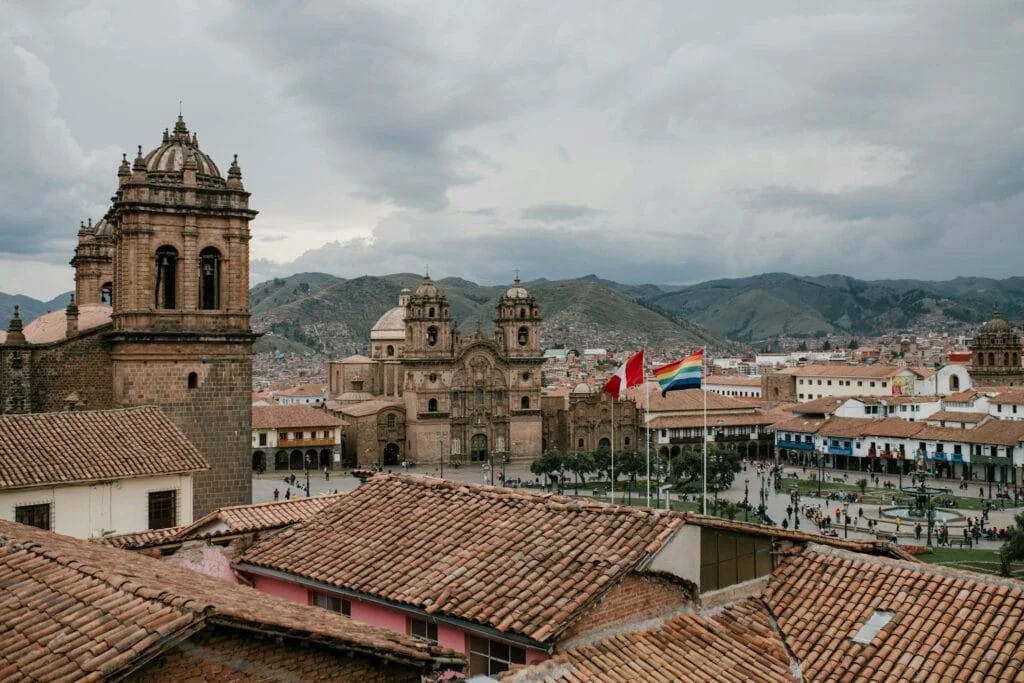
Cusco is the most fascinating travel destination in Peru and arguably in all of South America. Built at an altitude of 3,400 meters in the heart of the Andes, Cusco was once the capital of the Inca Empire. Today it’s a city where centuries of history come alive at every turn – in the stone Inca walls supporting Spanish colonial buildings, in dancers wearing traditional costumes, and in the echoes of ancient dialects.
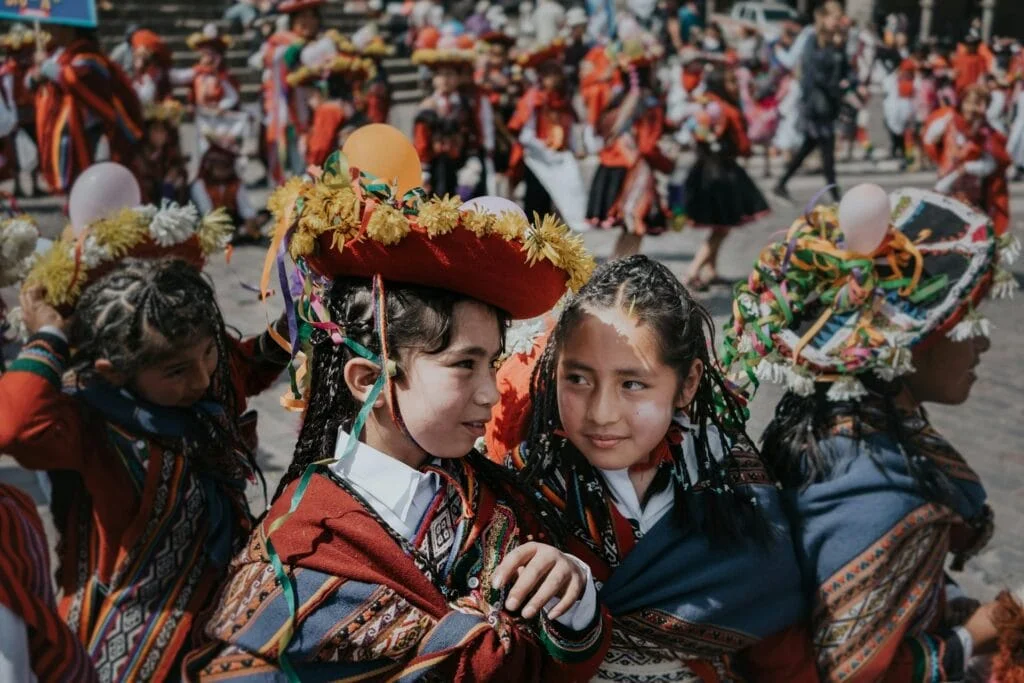
Cusco is an ideal place to acclimatize. Its center is the Plaza de Armas – the main square, lined with colonial buildings including a stunning cathedral. Close by is the Coricancha Temple (Temple of the Sun), once the most sacred site in the Inca Empire. The charming San Blas district, with its narrow cobbled streets and inviting cafés, offers beautiful views over the city.
On the hill above Cusco lies Sacsayhuamán, a massive Inca fortress complex with huge stone walls built from giant blocks fitted so precisely that you can’t even slide a knife between them.
The Sacred Valley stretches north of Cusco and is one of the most beautiful regions in the world. Key stops here include Pisac, famous for its markets and Inca ruins, and Ollantaytambo, an ancient Inca town where trains depart for Machu Picchu.
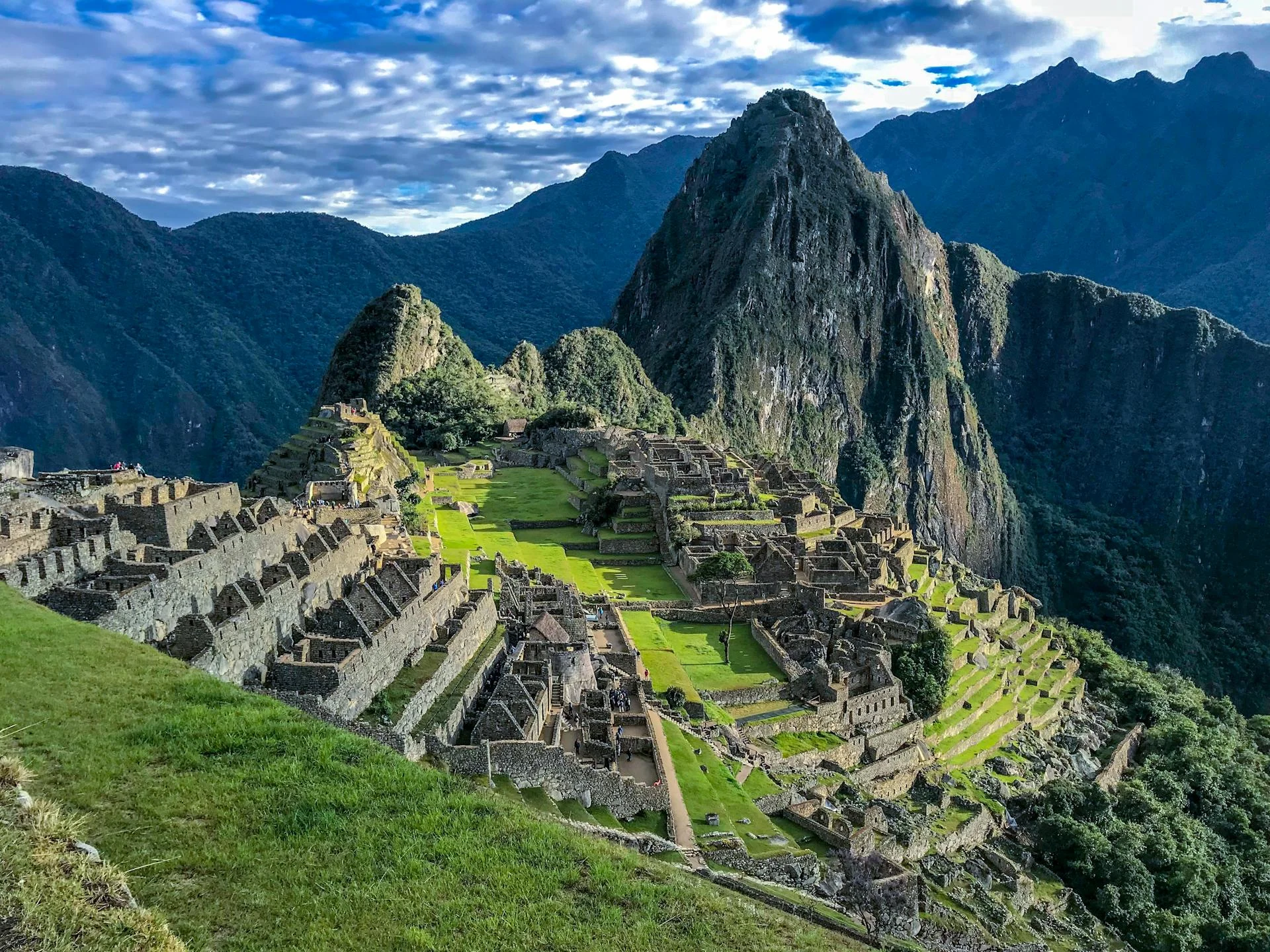
Machu Picchu is a legendary Inca city perched high in the mountains and considered one of the New Seven Wonders of the World. This ancient site was forgotten for centuries and only rediscovered in 1911. Today, thousands of visitors come every day to admire its mysterious beauty. You can get there either by train from Ollantaytambo or by hiking the famous Inca Trail, a four-day trek along original Inca routes.
Iquitos and the Peruvian Amazon: The heart of the jungle
Iquitos is the gateway to the Peruvian Amazon and the largest city in the world that cannot be reached by road – you can only get there by plane or boat. Iquitos is a vibrant place where modern city life blends with traditional Amazonian culture.
Travellers come here for intense Amazon experiences – river cruises deep in the rainforest, where you can spot pink river dolphins, brightly coloured parrots, monkeys, and occasionally even jaguars or harpy eagles, the largest eagles in the world. The Pacaya-Samiria Reserve near Iquitos is the second-largest protected area in Peru and home to an incredible variety of wildlife and plant species.
Arequipa, Colca Canyon and Lake Titicaca: Andean valleys in southern Peru
Arequipa, Peru’s second-largest city, sits at an altitude of 2,340 metres. Surrounded by volcanoes and built largely from white volcanic stone, it’s known as the “White City”. Its colonial centre is listed as a UNESCO World Heritage Site.
Not far from Arequipa lies Colca Canyon – one of the deepest canyons in the world. The viewpoint Mirador Cruz del Condor is a famous spot where you can watch Andean condors, the largest flying birds on Earth, soaring below you from a height of 1,200 metres.
Lake Titicaca is the highest navigable lake in the world (3,812 m a.s.l.) and stretches between Peru and Bolivia. The lake is home to indigenous communities. The Uros Islands are unique floating islands made from totora reeds. The island of Taquile is renowned for its textile traditions. Puno is a port town on the lakeshore and a great base for trips.
Nazca and the ancient art of the desert
In the southern part of Peru, in the desert, you’ll find the Nasca Lines – giant figures carved into the ground more than 2,000 years ago. These lines depict animals (a condor, spider, hummingbird, monkey) and geometric shapes that are best seen from a plane. No one knows for sure why they were created, although many believe they were part of ritual or astronomical practices.
Northern beaches: Máncora and the coast
Máncora is a small coastal town in northern Peru, famous as a surfer’s paradise and the most popular beach in Peru thanks to its clean white sand and consistent surf-friendly waves. Nearby you’ll find quieter beaches such as Las Pocitas or Punta Sal, known for their warm waters.
Paracas is another coastal destination. The local beaches are not ideal for swimming, but the nearby Ballestas Islands, often called the “Peruvian Galápagos,” are home to sea lions, penguins, and seabirds.
The most famous cities and historical landmarks of Peru
Machu Picchu: The lost city in the clouds
Machu Picchu is the most famous archaeological site in Peru. This ancient city was built around 1450 and remained hidden in the mountains until it was rediscovered in 1911. It is divided into three main sectors: ceremonial, residential, and agricultural. The most fascinating structures are the Temple of the Sun, the Intihuatana stone, and the Temple of the Three Windows. You can reach it either by train from Ollantaytambo or via the famous Inca Trail.
Cusco: City of the Inca Empire
Cusco was the capital of the Inca Empire, and its streets combine Inca and Spanish colonial architecture. Plaza de Armas is the main square, surrounded by colonial buildings. Qorikancha was the most important temple dedicated to the Sun god, on whose foundations the Spanish built the Church of Santo Domingo. Above the city rises the impressive Sacsayhuamán fortress.
Lima: The City of Kings
Lima was founded in 1535 as the “City of Kings” and became the capital of the Spanish colony. Its historic center is listed as a UNESCO World Heritage Site. The heart of the city is Plaza de Armas. The Church of San Francisco hides striking underground catacombs. The modern and upscale district is Miraflores, perched on cliffs above the Pacific Ocean. Barranco is the neighboring bohemian district full of cafés and bars.
Arequipa: The White City
Arequipa sits at an altitude of 2,340 meters and is surrounded by three volcanoes. The historic center is built from white volcanic stone, which is why the city is called the “White City.” The architecture here is a showcase of Spanish-Indigenous Baroque. The main square, Plaza de Armas, is lined with a cathedral and colonial arcades. The Santa Catalina Monastery is a fascinating “city within a city” with wide corridors and beautiful courtyards.
Natural wonders and national parks
Colca Canyon: One of the deepest in the world
Colca Canyon, located south of Arequipa, is one of the deepest canyons in the world – it is twice as deep as the Grand Canyon. The view from the Cruz del Condor lookout is absolutely breathtaking, and from here you can watch Andean condors as they glide majestically on thermal currents. The canyon is also an excellent spot for trekking.
Lake Titicaca: The highest navigable lake
Titicaca, lying at an altitude of 3,812 meters, is the largest lake in South America. It is home to indigenous communities who still live here in a traditional way. The floating Uros Islands are truly unique; their inhabitants build them from totora reeds. Taquile Island is famous for its colorful textile traditions.
The Amazon: The richest ecosystem
The Peruvian Amazon covers more than 60% of Peru’s territory. It is home to over 500 species of mammals, more than 1,800 species of birds, and thousands of other animals. The most famous include pink river dolphins, jaguars, harpy eagles, monkeys, and anacondas. The best starting point for exploring the Amazon is Iquitos.
Cordillera Blanca: The White Range
Cordillera Blanca is a mountain range in northern Peru with more than twenty peaks over 6,000 meters. Nevado Huascarán (6,768 m) is the highest mountain in Peru. This region is a paradise for trekking and mountaineering.
Ballestas Islands: The Galápagos of Peru
The Ballestas Islands lie close to the coastal town of Paracas and are home to huge colonies of sea lions, Humboldt penguins, and seabirds. Travelers can reach them by boat and watch these animals from very close range.
The most beautiful beaches in Peru
Máncora: The best surfing beach
Máncora in northern Peru is famous for its clean sandy beaches and powerful waves that are perfect for surfing. The town has a lively vibe with plenty of restaurants and bars. Nearby you’ll find quieter beaches such as Punta Sal and Los Órganos.
Paracas: Nature and wildlife
Paracas lies on the central coast and is part of the Paracas National Reserve. The beaches here are not ideal for swimming, but they offer stunning ocean views and easy access to the Ballestas Islands, which are packed with marine life.
Playas del Norte: Warm waters and peaceful beaches
Las Pocitas, close to Máncora, is popular with families and travelers looking for a more relaxed atmosphere. Punta Sal lies further north and offers warm waters thanks to the El Niño current. The northern beaches are ideal for unwinding and are less crowded than Máncora.
Activities and entertainment in Peru
Peru offers an incredible range of activities. History and archaeology fans can explore Inca ruins and museums. Adrenaline seekers can enjoy mountain treks, paragliding, and white-water rafting. If you’re after relaxation, there are beaches and wellness centers. Nature lovers can head out on Amazon safaris and birdwatching trips.
Trekking is one of the most popular activities. The famous Inca Trail is a four-day trek that ends at Machu Picchu. There are also less crowded alternatives, such as the Salkantay Trek.
Paragliding is popular around Lima. You can go white-water rafting on the Urubamba River in the Sacred Valley. River cruises on the Amazon give you a unique chance to watch life in the rainforest from the comfort of a boat.
Cultural experiences include visiting traditional markets and meeting local communities, where you can learn more about their traditional way of life.
Peruvian gastronomy and culture
Typical Peruvian food and drinks
Peru is one of the world’s best-known gastronomic destinations. Peruvian cuisine stands out for its variety and its use of local ingredients.
- Ceviche: The national dish of Peru that everyone should try. It’s made from raw fish marinated in lime juice and served with onions, sweet potato, and corn.
- Lomo Saltado: Stir-fried beef with onions, tomatoes, peppers, and soy sauce. It’s served with French fries and rice.
- Ají de Gallina: A traditional chicken dish in a creamy sauce made from yellow chili peppers, nuts, and cheese.
- Causa: A cold potato starter made of layers of mashed potatoes and various fillings (tuna, chicken).
- Cuy: Roasted or grilled guinea pig, a traditional Andean specialty.
- Pisco Sour: The national cocktail made with Pisco brandy, lime, sugar, and egg white.
- Chicha de Jora: Traditional corn beer.
- Coca tea (maté de coca): Tea made from coca leaves, traditionally used to ease symptoms of altitude sickness.
Eating habits and etiquette
In Peru, people usually eat three main meals a day. Lunch (almuerzo) is typically the biggest meal. In restaurants, it’s standard to leave a tip of around 10%, unless you’re unhappy with the service. In cheaper places, tipping is not expected.
Cultural customs and festivals
Peru has a rich cultural heritage with plenty of festivals.
- Inti Raymi: The most famous festival, held on June 24 in Cusco. It’s a spectacular celebration of the solstice and the Sun God.
- Carnival: Celebrated in February and March, it’s a lively and colorful event, often featuring playful water fights.
- Corpus Christi: Takes place 60 days after Easter and combines Christian traditions with original Andean elements.
Key practical information for travelers
Currency and payments
The official currency of Peru is the Peruvian sol (PEN). It’s best to exchange money in banks or official exchange offices (casas de cambio). ATMs are widely available in cities and accept international cards. Credit cards are accepted in larger hotels, restaurants, and shops, but in smaller towns and markets you’ll need cash.
Visa requirements and entry formalities
EU citizens, including Czech citizens, do not need a visa for tourist trips to Peru of up to 183 days. You must have a passport valid for at least 6 months from the date you enter the country. On arrival, you will receive a stamp in your passport showing the length of stay you are allowed.
Safety and local customs
Peru is a relatively safe country for tourists, but you still need to follow basic safety rules. Watch out for pickpockets in tourist areas. Do not wear valuables in a visible way and avoid deserted streets at night. When taking photos of local people, especially in traditional communities, it is polite to always ask for permission first.
Healthcare and vaccinations
Tap water is generally not recommended for drinking, drink only bottled or boiled water. Basic travel vaccinations are recommended (hepatitis A and B, typhoid). Vaccination against yellow fever is recommended for trips to the Amazon jungle. Before you travel, consult your doctor or a travel medicine clinic. Good travel insurance is absolutely essential.
Peru’s fauna and flora
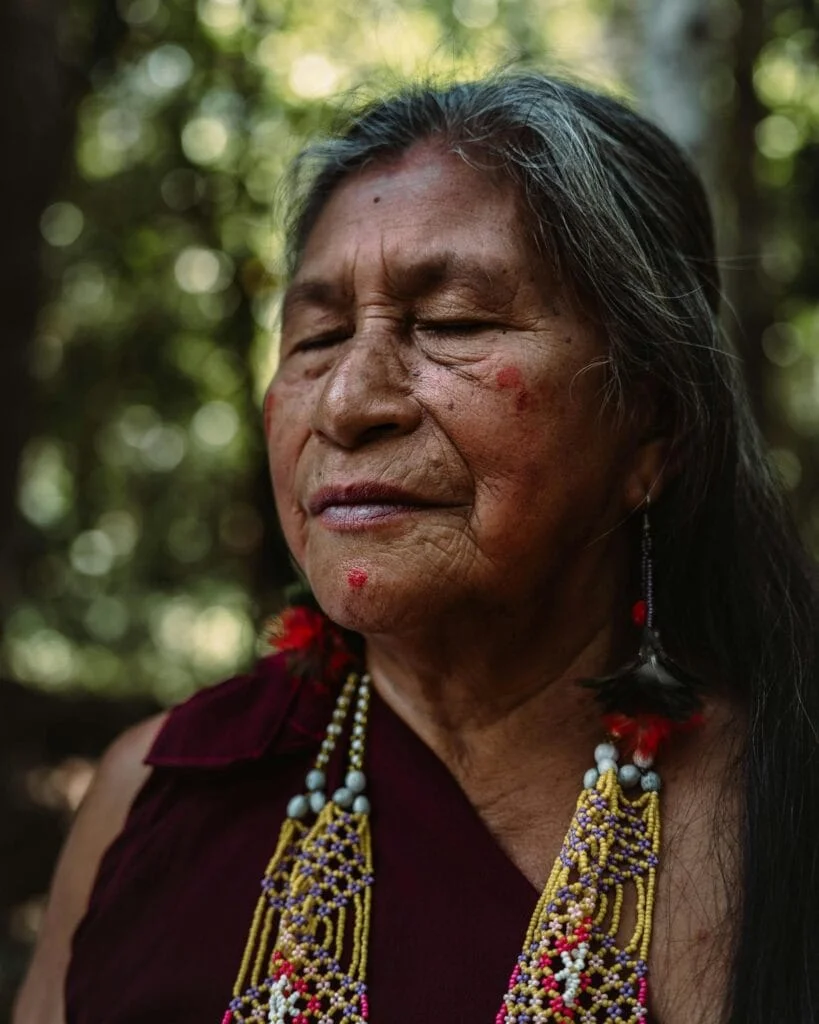
Peru is one of the most biodiverse countries in the world. In the Amazon you can find jaguars, monkeys, river dolphins and countless bird species. In the Andes you may see condors, llamas, alpacas and vicuñas. Along the coast there are penguins, sea lions and many seabirds.
Basic phrasebook for travelers
| Czech phrase | Spanish translation |
|---|---|
| Hello / Good day | Buenos días |
| Good evening / Good night | Buenas noches |
| Thank you | Gracias |
| Thank you very much | Muchas gracias |
| Please | Por favor |
| Excuse me / I’m sorry | Disculpe / Perdón |
| I don’t speak Spanish | No hablo español |
| Do you speak English? | ¿Habla inglés? |
| How much is it? | ¿Cuánto cuesta? |
| Where is the toilet? | ¿Dónde está el baño? |
| The bill, please. | La cuenta, por favor. |
| I’m hungry | Tengo hambre |
| I’m thirsty | Tengo sed |
| Help! | ¡Ayuda! |
| I like it | Me gusta |
| I don’t like it | No me gusta |
Transport and logistics in Peru
How to get to Peru
Most travelers arrive at Jorge Chávez International Airport in Lima (LIM). Flights from Europe usually include one layover. You can also enter Peru overland from neighboring countries (Ecuador, Bolivia, Chile).
Transport within Peru
- Buses: The most popular and cheapest way to travel long distances. Companies like Cruz del Sur or Oltursa offer comfortable and safe services. It’s best to buy tickets in advance, especially in peak season.
- Planes: The fastest way to travel between distant cities. Domestic flights are offered by airlines such as LATAM or Sky Airline.
- Trains: The rail network is limited but offers unique experiences. The most famous routes are from Ollantaytambo to Machu Picchu and the scenic ride from Cusco to Puno by Lake Titicaca.
- Taxis: Available in all cities. Always agree on the price in advance, as taximeters are not common. In large cities like Lima and Cusco, apps such as Uber also operate.
- Car rental: Possible, but not recommended for inexperienced drivers due to the different driving style and the condition of some roads. In Peru, people drive on the right.
Prices and budget for a trip to Peru
Peru is an affordable destination for travelers from Western countries.
- Budget travelers: Can get by on 25–35 USD per day. This includes hostel accommodation, meals at markets or cheap restaurants, and using local transport.
- Mid-range travelers: Should plan for 75–120 USD per day. This covers a private hotel room, meals in restaurants, and a mix of bus and air travel.
- Luxury travelers: Can spend from 200 USD per day and up on luxury hotels, private guides, and premium experiences.
When planning your budget, here are a few items that are worth booking well in advance:
- Tickets to Machu Picchu
- Train tickets to Machu Picchu
- Permits and a guide for the Inca Trail (often sold out months ahead)
- Accommodation in Cusco during peak season (June–August)
How to plan the perfect trip to Peru
Choose the right region for your travel style
- Beginners and families: The classic route Lima – Cusco – Sacred Valley – Machu Picchu. This is the most popular circuit with reliable infrastructure.
- Nature lovers and photographers: The Amazon, the Cordillera Blanca mountains for trekking, and the Ballestas Islands for wildlife photography.
- History and archaeology enthusiasts: Besides Cusco and Machu Picchu, also the Nazca Lines and museums in Lima.
- Sports and adrenaline fans: The Inca Trail or Salkantay Trek, paragliding in Lima, rafting on the Urubamba River, and Amazon jungle adventures.
- Travelers looking to relax: Northern beaches (Máncora, Punta Sal), Lake Titicaca, and hot springs in the Colca Valley.
What to watch out for when planning
- High season: June to August. The best weather, but also the most tourists and the highest prices. Book everything well in advance.
- Shoulder season: April, May, September, October. Still good weather and fewer people.
- Rainy season: November to March. Rainy in the mountains, but an ideal time to visit the Amazon and enjoy lower prices.
- Inca Trail: It is closed every year in February for maintenance.
- Acclimatization: It’s crucial. Spend at least two days in Cusco (3,400 m a.s.l.) before heading to higher altitudes or starting a demanding trek. Drink plenty of water, eat light meals, and avoid alcohol.
Sample itineraries
One week in Peru (7 days)
- Day 1–2: Arrival in Cusco, acclimatization, city sightseeing.
- Day 3–4: Sacred Valley (Pisac, Ollantaytambo).
- Day 5: Train to Machu Picchu, guided visit.
- Day 6: Return to Cusco.
- Day 7: Departure from Cusco.
Two weeks in Peru (14 days)
- Day 1–2: Lima – Historic center, Miraflores, Barranco.
- Day 3: Flight to Arequipa, city tour.
- Day 4–5: Trip to the Colca Canyon.
- Day 6: Transfer to Puno by Lake Titicaca.
- Day 7–8: Lake Titicaca – Uros and Taquile islands.
- Day 9: Journey to Cusco.
- Day 10–11: Cusco and surroundings (acclimatization, Sacsayhuamán).
- Day 12–13: Sacred Valley and Machu Picchu.
- Day 14: Departure from Cusco.
Summary and final travel tips
Peru is one of the most amazing countries in the world for all kinds of travelers. Whether you’re into history, nature, or just relaxing on the beach, Peru has plenty to offer. The key attractions are easy to reach and getting around the country is relatively straightforward. Peruvian culture is vibrant and welcoming, and locals are happy to share their traditions with visitors.
The most important thing is to plan your trip around your interests and the time you have. If you only have a week, focus on the Cusco area. If you have two weeks, add Lake Titicaca, Arequipa, or the Amazon.
Remember to allow time for acclimatization, book key tickets and transport in advance (especially in high season), drink plenty of water at higher altitudes, and take care of your safety. With these tips, you’ll enjoy an unforgettable holiday in Peru.
Kategorie: