Uruguay: A Complete Guide to the South American Travel Dream
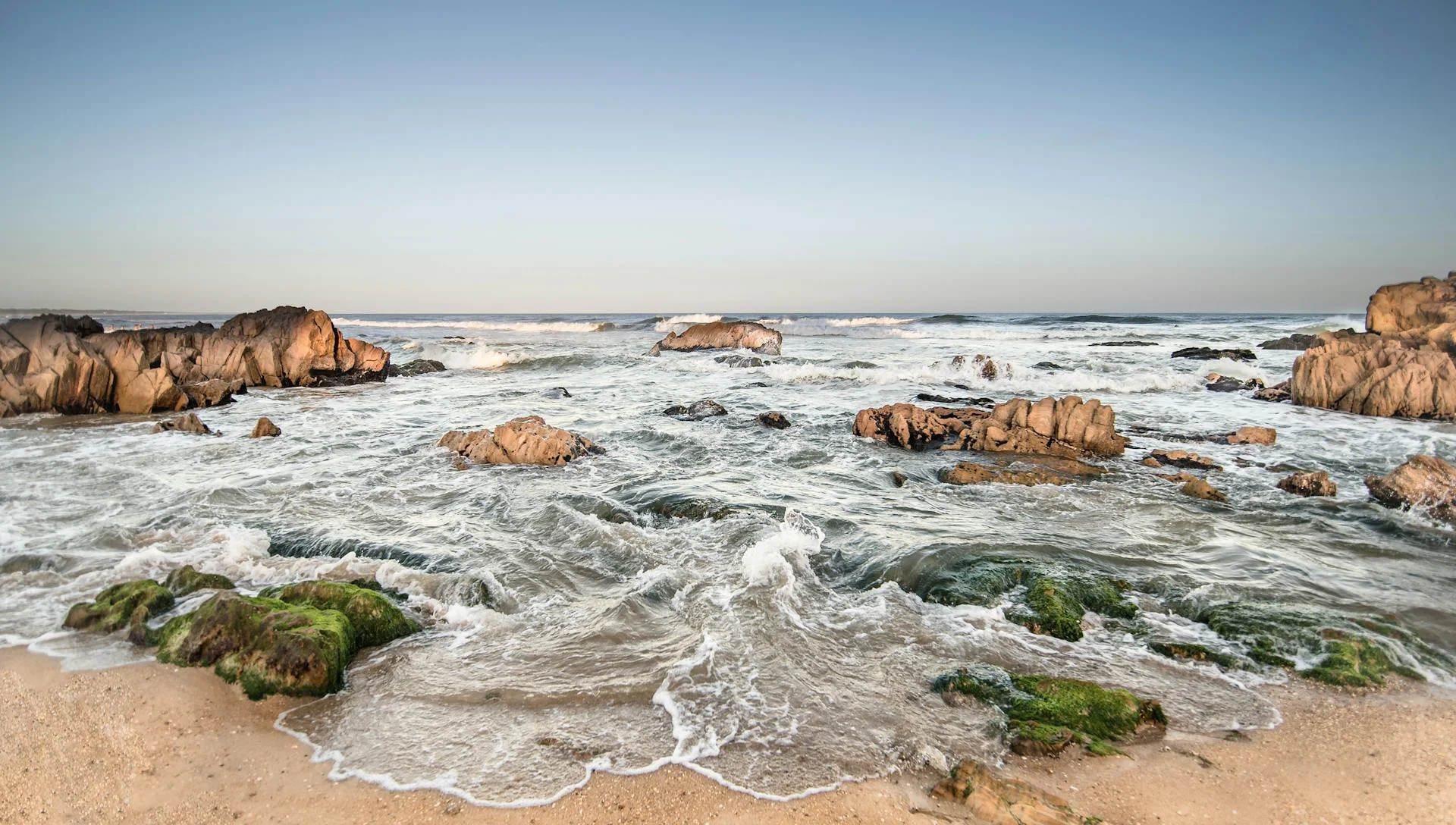
Uruguay is one of those destinations you don’t realize you’ve been missing until you actually get there. This small country, tucked between Brazil and Argentina, is the second smallest country in South America, yet it offers countless experiences that will take you by surprise. From charming colonial towns with European-inspired architecture and endless peaceful beaches to a vibrant capital packed with culture and food experiences – Uruguay has a way of impressing you at every turn.
It’s the safest and most developed country on the continent, where you can travel around feeling relaxed and at ease. What makes Uruguay so special? Above all, you won’t find crowds or over-the-top resort complexes here – instead, you’ll discover authenticity, a genuine zest for life, and warm hospitality that really gets under your skin.
Did you know that Uruguay has the highest beef consumption per capita in the world and that local asado is legendary?
History of the country and its development
Uruguay has a rich and dramatic history that has shaped the country you see today. The territory of modern Uruguay was first inhabited by indigenous tribes, mainly the Charrúa and Guaraní. These original inhabitants were gradually pushed out, and their culture disappeared with the arrival of European colonizers.
The first Europeans arrived in what is now Uruguay at the beginning of the 16th century, when Spanish and Portuguese adventurers reached the area. In 1680, the Portuguese founded the town of Colonia del Sacramento on the banks of the Río de la Plata, which is the oldest town on Uruguayan soil. It soon became an important trading hub and strategic point, sparking a rivalry between Spain and Portugal. In 1726, the Spanish decided to establish Montevideo as a military fortress and buffer against Portuguese expansion from the north.
During the 18th and 19th centuries, the territory of Uruguay became the scene of intense clashes between colonial powers. From the early 19th century, ideas of independence began to spread across the region. A key figure was José Artigas, who emerged as the leading voice in the struggle for freedom. His efforts led to war between Brazil and the United Provinces of the Río de la Plata. The conflict only ended after mediation by Great Britain, which sought to maintain a balance of power in the region.
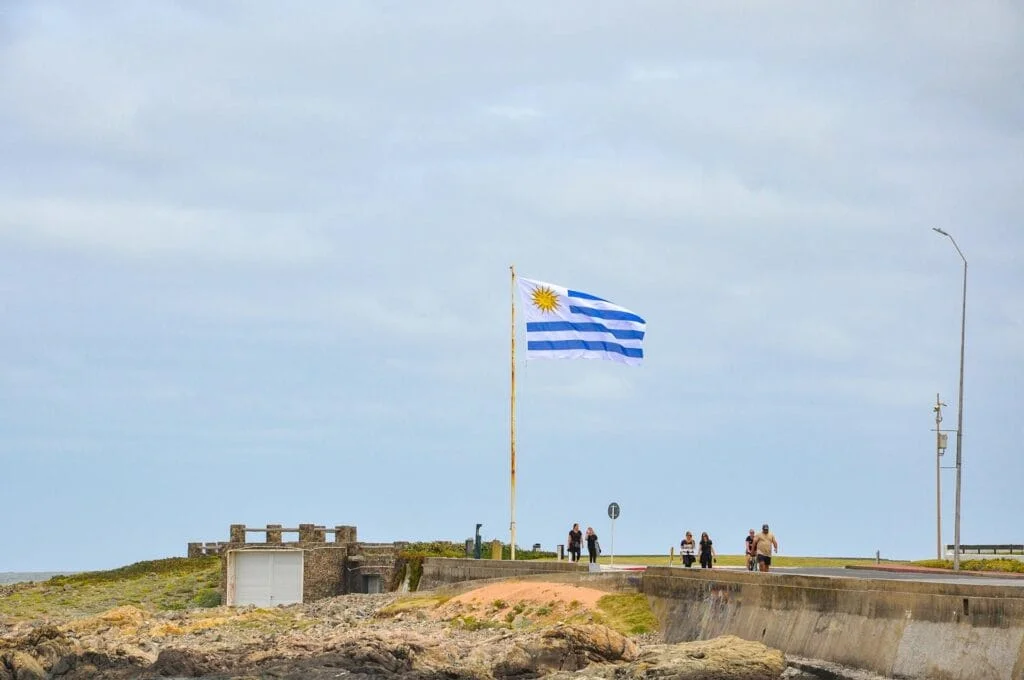
Based on the 1828 peace agreement between Argentina and Brazil, the independent Oriental Republic of Uruguay was created. At first, the country remained under the influence of foreign powers and went through a series of internal conflicts, but from the second half of the 19th century it began to stabilize. A turning point was the so-called Great War (Guerra Grande) (1839–1851), a civil conflict between two main political factions. After overcoming this crisis, Uruguay gradually evolved into a modern state.
At the turn of the 19th and 20th centuries, Uruguay went through an extraordinary period of development and social progress. A massive wave of immigration from Europe (mainly from Spain, Italy, France and Germany) turned Montevideo into a cosmopolitan metropolis that looked and felt like a European city. Uruguay became a showcase of a modern Latin American state, offering unique social security and progressive policies. In the 20th century, the country established itself as a cultural and political leader in the region, although it later faced many of the same challenges as other countries on the continent.
Location, geography and climate
Uruguay lies in the southeast of South America, in a region known as the Cono Sur (Southern Cone). The country borders Brazil to the north and northeast, with a shared border of roughly 1,068 kilometers. To the west it borders Argentina, with a 580-kilometer frontier formed by the Uruguay River, which gave the country its name. To the south and southeast, Uruguay stretches along the Atlantic Ocean, with a coastline about 660 kilometers long. The southern border is also marked by the vast estuary of the Río de la Plata.
Uruguay covers an area of about 176,000 square kilometers, making it the second smallest independent country in South America after Suriname. Despite its modest size, Uruguay is home to around 3.5 million people, and more than half of them live in the metropolitan area of the capital, Montevideo.
Geographically, Uruguay is a largely flat country with gentle rolling hills. The landscape forms a transition from the Argentine pampas in the south to the hilly highlands along the Brazilian border in the north. The highest point in the country is Cerro Catedral, with an elevation of just 514 meters. The land is crisscrossed by many rivers, the most important being the Río de la Plata, the Uruguay River in the west, and the Río Negro, which flows through the center of the country. Large parts of the territory are covered by natural grasslands known as pampas, traditionally used for cattle grazing.
Uruguay has a mild subtropical climate with a strong oceanic influence and only moderate temperature changes throughout the year. Because Uruguay is in the Southern Hemisphere, the seasons are the reverse of Europe – summer runs from December to February and winter from June to August.
In summer (December to February), average daytime temperatures are around 25–30 °C, and can sometimes climb higher. January is usually the hottest month. In winter (June to August), temperatures are much milder than in most of Europe – they typically range from about 6–15 °C. The shoulder seasons (March–May and September–November) are very pleasant, with temperatures around 17–22 °C.
Rainfall in Uruguay is fairly evenly spread throughout the year, with an annual average of around 1,000 millimeters. The rainiest areas are in the north. A typical feature of the local climate is the occasional strong wind, especially along the coast.
| Month | Average daytime temperature | Average night-time temperature | Sea temperature |
|---|---|---|---|
| January | 32°C | 21°C | 21°C |
| February | 31°C | 20°C | 20°C |
| March | 28°C | 18°C | 19°C |
| April | 24°C | 14°C | 17°C |
| May | 20°C | 11°C | 15°C |
| June | 17°C | 8°C | 13°C |
| July | 16°C | 6°C | 12°C |
| August | 18°C | 7°C | 13°C |
| September | 20°C | 10°C | 14°C |
| October | 24°C | 13°C | 16°C |
| November | 27°C | 16°C | 17°C |
| December | 30°C | 19°C | 20°C |
The best time to visit is from September to April, when the weather is warm and sunny. If you want to spend most of your time by the sea and enjoy peak summer days, plan your trip from mid-December to mid-February, when the local summer is in full swing. During these months, the beaches are at their busiest and the weather is perfect for swimming.
For travelers who prefer milder temperatures and are planning a more active holiday (such as hiking, surfing, or exploring nature), September, October, March, and April are an excellent choice. At these times, temperatures usually sit at a comfortable 20–25 °C.
The months from May to August make up the winter season. Temperatures are lower (around 6–18 °C), but winter in Uruguay is still much milder than in the Czech Republic. However, people usually do not swim in the sea during this period.
Regions and types of destinations
Uruguay is divided into several distinct regions, each offering a different kind of experience. Once you understand what sets them apart, it becomes much easier to plan your trip around what you enjoy most.
Montevideo is the capital and by far the largest city in Uruguay, home to more than 1.3 million people out of the country’s total population of 3.5 million. It is the center of political, economic, and cultural life. Montevideo is a diverse city that blends colonial architecture with modern buildings, bustling markets with quiet parks, and a cosmopolitan vibe with a strong local character.
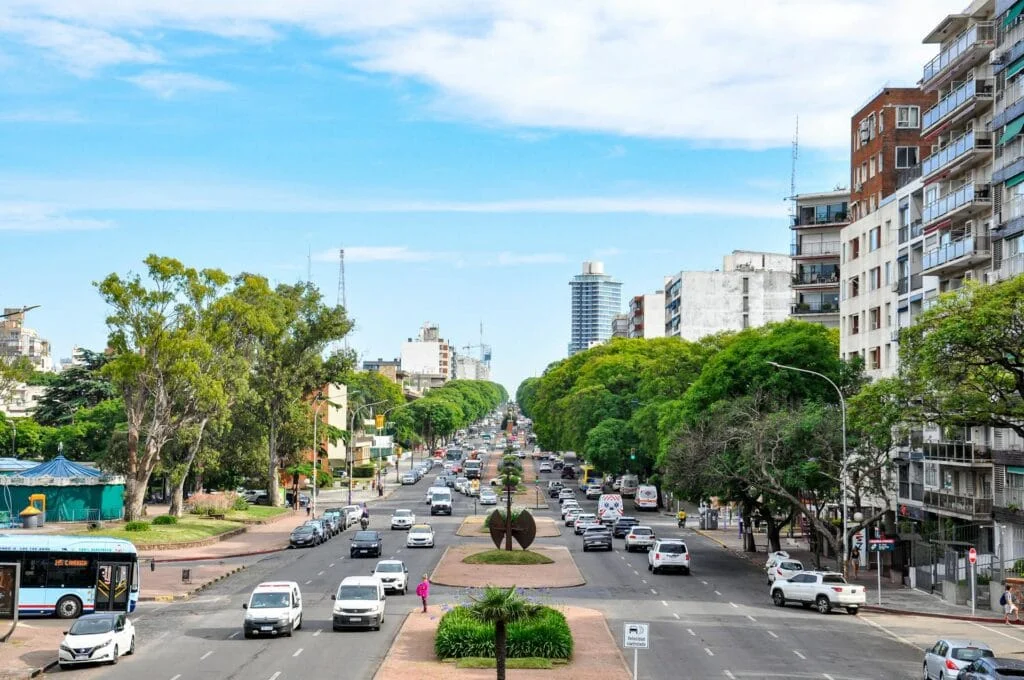
The main attractions in Montevideo are concentrated in the historic Old Town (Ciudad Vieja), where you can stroll along narrow cobbled streets and admire 18th- and 19th-century buildings. The best-known landmarks include Plaza Independencia, the main square with the monumental Palacio Salvo, and Teatro Solís, a beautiful opera house dating back to 1856.
Other highlights include the Palacio Legislativo, home to the Uruguayan parliament, and Palacio Estévez, the former presidential residence. The Old Town is also home to the famous Mercado del Puerto, a bustling market with great food and a lively atmosphere. The Rambla promenade runs along the coast and is a popular place for walks.
Colonia del Sacramento sits on the banks of the Río de la Plata, roughly 180 kilometers from Montevideo and just 50 kilometers from Buenos Aires. It is the oldest settlement in Uruguay, founded by the Portuguese in 1680. Colonia is listed as a UNESCO World Heritage Site and, thanks to its colonial charm, is one of the most attractive places in the country.
The historic center is magical, with narrow cobbled lanes where time seems to have stood still. Streets like Calle de los Suspiros (Street of Sighs) are lined with old stone houses that feel authentic and romantic. Top sights include the lighthouse (Faro de Colonia), built on the ruins of an old fortress, which offers stunning views of the town and the river.
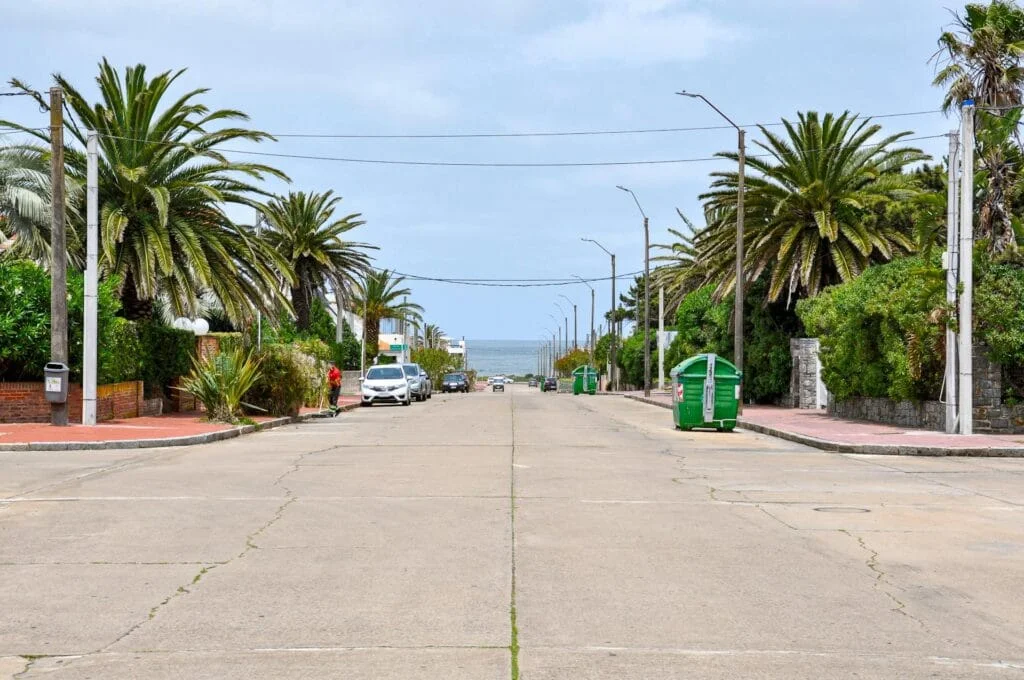
Punta del Este is the most famous and most upscale beach resort in Uruguay. The town lies on a peninsula between the Atlantic Ocean and the Río de la Plata. Punta del Este has two main beaches: Playa Brava (Wild Beach) on the ocean side with bigger waves, and Playa Mansa (Calm Beach) on the more sheltered side of the bay.
The symbol of the town is the sculpture La Mano en la Arena (The Hand in the Sand), a huge artwork of five fingers rising out of the sand. This monument is one of the most photographed sights in Uruguay. Punta del Este is a social hotspot, packed with luxury hotels, high-end casinos, and expensive restaurants.
On the eastern side of Uruguay stretches an Atlantic coastline full of beautiful beaches and laid-back towns. Punta del Diablo is a small fishing village that has kept its authentic, bohemian vibe. Most of the streets are unpaved and wind past colorful cabins and small restaurants. It’s an ideal spot for anyone looking to relax and escape the tourist crowds.
La Paloma is a larger town in the Rocha department and a popular choice for family holidays. It offers better infrastructure, including hotels, restaurants, and shops. La Pedrera is located nearby and is a bit quieter and more refined, popular with artists and travelers who value peace and quiet.
Most famous landmarks and cities
Colonia del Sacramento is the only UNESCO-listed site in Uruguay. The city’s historic center is a unique example of how Portuguese and Spanish colonial architecture from the 17th and 18th centuries blend together.
In Montevideo, you’ll find several historic neighborhoods. Ciudad Vieja was the original heart of the city. Plaza Independencia square separates the old town from the new and is dominated by a statue of national hero José Artigas.
Teatro Solís is Montevideo’s most famous cultural institution. This stunning theater opened in 1856. Palacio Legislativo, the seat of parliament, is a masterpiece of neoclassical architecture with monumental columns and a magnificent interior.
Natural beauty and national parks
Although Uruguay is a small country, it offers rich natural diversity protected in several national parks and reserves.
Esteros de Farrapos National Park is located in the northwest of Uruguay and forms one of the largest and most important wetland areas in the country. This reserve is home to many species of migratory birds.
Laguna de Rocha stretches along the Atlantic coast. This lagoon is part of a protected natural system and is home to flamingos, black-necked swans, and other waterbirds.
More than 85% of Uruguay’s territory is covered by natural grasslands (pampas), which support a wide range of species. Typical animals include the capybara (the largest rodent in the world), which lives mainly in wetland areas. Other animals you can spot are the pampas deer (an endangered species), armadillos and various birds of prey. The local flora is dominated by pampas grasses with scattered groups of trees in the valleys.
Best beaches
Uruguay boasts 660 kilometers of beautiful coastline with a wide variety of beaches.
Playa Brava in Punta del Este is famous for its powerful waves, which makes it ideal for surfers. The beach has clean white sand, but the water is colder and the sea rougher than on the calmer side of the peninsula.
Playa Mansa in Punta del Este is a more peaceful option for anyone who wants to enjoy relaxed swimming. The water is warmer here, the waves are small, and the beach is lined with hotels and restaurants. It’s an ideal spot for families with children.
The beaches in Punta del Diablo rank among the most beautiful and authentic in Uruguay. Playa de los Pescadores (Fishermen’s Beach) is the heart of the village. Playa del Rivero is popular with surfers and younger visitors, while Playa la Viuda is known for its strong waves and is suited to experienced surfers.
The beaches in La Paloma offer a comfortable, laid‑back experience. Playa del Barco is popular with younger visitors, while Playa La Aguada is more family‑oriented and quiet, with gentler waves.
Activities and entertainment
Uruguay offers countless options for active travelers.
Besides classic swimming and sunbathing, you can enjoy surfing (especially in Punta del Este and Punta del Diablo), kitesurfing, kayaking and fishing. The coastline is also a great place for whale watching, particularly from July to November.
Uruguay is ideal for hiking through unspoiled landscapes. You can walk across the pampas, visit national parks and reserves, or head out on cycling trips. Santa Teresa National Park in the Rocha department offers beautiful trails.
In Montevideo and Colonia del Sacramento, you can visit museums, galleries, and theatres. Tango is the soul of Uruguayan culture, and you can enjoy dance performances in various milongas (dance halls) or at dedicated tango shows.
Uruguay is a paradise for food lovers. You can join a traditional asado (barbecue), visit classic countryside taverns (pulperías), taste local wines, or sign up for food tours.
In Montevideo and Punta del Este, you’ll find modern bars, clubs, and casinos. In smaller towns, nightlife revolves around bars and restaurants where locals meet up and enjoy themselves.
Gastronomy and culture
Uruguayan cuisine is rooted in European traditions (mainly Spanish and Italian), but it also reflects local habits. Uruguay proudly claims to have the highest beef consumption per capita in the world.
- Asado is the most famous Uruguayan dish – meat grilled on a special grill called a parrilla. Asado is not just food, it’s a social ritual that brings family and friends together.
- Chivito is a famous Uruguayan sandwich made with a slice of grilled beef, bacon, cheese, ham, fried egg, lettuce, and tomato, all in a soft bun.
- Empanadas are baked or fried pastries filled with meat, cheese, or other fillings. They’re perfect as a quick snack.
- Milanesa is a breaded and fried meat cutlet similar to a schnitzel, usually served with fries or salad.
The most important drink is maté. It’s a stimulating drink made from yerba maté leaves that people of all ages sip throughout the day. Sharing maté with friends is an important social ritual. Uruguayan wines are also well known, especially the Tannat variety.
Restaurants in Uruguay usually open for lunch around noon and for dinner around 8:00 p.m. People eat later than in the Czech Republic – dinner is typically served between 8:00 p.m. and 10:00 p.m. A tip of about 10% of the bill is expected. Paying by card is common, but it’s still a good idea to carry some cash.
Uruguay is a proudly cultural country with a strong tango tradition. The Carnival in Uruguay is the longest in the world and lasts for more than a month, usually from late January to early March. During Carnival there are parades, dance competitions and celebrations linked to the traditional dance candombe, which has African roots. The country is also one of the most progressive in Latin America when it comes to civil rights, which shows in its tolerant and open atmosphere.
Key practical information
The local currency is the Uruguayan peso (UYU), written as
U∗∗nebojen∗∗U** nebo jen **U∗∗nebojen∗∗
. You can exchange euros or US dollars at the airport, in banks or at exchange offices. Card payments (Visa, Mastercard) are widely accepted in Montevideo and other larger cities. Small restaurants and street stalls often take cash only. When you pay with a foreign card in restaurants and car rentals, you can often get an automatic partial VAT refund. Withdrawing money from ATMs is usually straightforward.
Approximate prices in Uruguay: A cup of coffee costs about $1.80–3.60, a beer in a restaurant $3.20–5.40, a mid-range double room around $68, hostel accommodation from $16 per person per night, and car rental per day $45–110.
Czech citizens need a valid passport to enter the country, valid for at least the duration of their stay. Czech nationals do not need a visa for tourist stays of up to 90 days.
In the Latin American context, Uruguay is a very safe country with low crime rates. It is one of the safest and most developed countries on the continent. Still, it’s wise to follow basic safety rules. Travelers should be more careful in some neighborhoods of Montevideo, especially at night. Standard safety precautions: leave valuables in the hotel safe, don’t carry large amounts of cash, and avoid deserted areas after dark.
No mandatory vaccinations are required to enter the country unless you are arriving from a yellow fever endemic area. Recommended vaccines include standard travel shots such as hepatitis A, typhoid fever, and tetanus. Healthcare in Uruguay is of good quality. However, it is absolutely essential to have reliable travel insurance.
Basic phrasebook
| Czech phrase | Translation into Spanish |
|---|---|
| Hello / Good day | Buenos días (morning), Buenas tardes (afternoon) |
| Good evening | Buenas noches |
| Thank you | Gracias |
| Please | Por favor |
| Yes / No | Sí / No |
| How much does it cost? | ¿Cuánto cuesta? |
| Where is…? | ¿Dónde está…? |
| Do you speak English? | ¿Habla inglés? |
| Help! | ¡Ayuda! |
| Nice to meet you | Encantado (man), Encantada (woman) |
| Cheers! | ¡Salud! |
| Enjoy your meal | Buen provecho |
Transport and logistics
By air: The main gateway to the country is Carrasco International Airport (MVD) in Montevideo. From Europe, there are direct flights from Madrid. With one stop (for example in São Paulo, Rio de Janeiro, or Buenos Aires), you can fly with many airlines. Return tickets usually start at around $880.
By ferry: From Buenos Aires, the easiest way to reach Colonia del Sacramento is by ferry (the journey takes roughly 1–3 hours). From Colonia, frequent buses run to Montevideo.
By car: The best way to explore Uruguay is to rent a car. An international driving licence is usually not required; a valid Czech driving licence is enough. The road network is good and traffic is calmer compared to Europe. On some highways you will need to pay tolls in cash.
Buses: Buses connect all major cities and are comfortable, safe, and affordable. The biggest operators are COT and Turil. In Montevideo, all long-distance routes depart from the Tres Cruces terminal.
Trains: Passenger train services in Uruguay are virtually non-existent, except for a short suburban line from Montevideo.
Taxis: Taxis are widely available in cities, use taximeters, and are relatively cheap.
Prices and travel budget
Travel in Uruguay is more expensive compared to other South American countries, but prices are similar to, or slightly lower than, those in the Czech Republic.
- Budget travel:
- Total: approx. $50 – $75 per day (hostel accommodation, food from markets, bus transport)
- Total: approx. $50 – $75 per day (hostel accommodation, food from markets, bus transport)
- Mid-range budget:
- Total: approx. $105 – $165 per day (small hotels, restaurant meals, occasional taxi rides)
- Total: approx. $105 – $165 per day (small hotels, restaurant meals, occasional taxi rides)
- Luxury budget:
- Total: from $210 per day (4–5-star hotels, high-quality restaurants, car rental)
- Total: from $210 per day (4–5-star hotels, high-quality restaurants, car rental)
- Car rental: If you plan to visit several regions, renting a car is worth it. You gain flexibility and can reach places off the main routes.
- Hotel with a view: In Punta del Este or along the coast, it’s worth paying extra for a room with an ocean view.
- Quality restaurants: Uruguayan cuisine is excellent, and a dinner in a good restaurant with a glass of local Tannat wine is well worth the money.
How to plan the perfect trip
- First-time visitors: Start in Montevideo (2–3 days), continue to Colonia del Sacramento (1–2 days), and finish in Punta del Este (2–3 days).
- Families with kids: A great mix is Montevideo (museums, waterfront promenade), the quieter beaches in La Paloma, and the resort town of Piriápolis.
- Solo travelers: You’ll enjoy the authenticity of Punta del Diablo, the cultural scene in Montevideo, and the chance to meet locals at a tango class.
- Seniors: Visit the charming and peaceful Colonia del Sacramento, the spa town of Piriápolis, and soak up the laid-back atmosphere of Montevideo.
- Book in advance: In peak season (December–February), places fill up fast, especially in coastal resorts. It’s a good idea to secure your accommodation well ahead of time.
- Weather: The best weather is in summer, but it’s also the most expensive time. In the shoulder seasons (September–November, March–April) there are fewer tourists and the weather is still pleasant.
- A week of cities and beaches:
- Day 1–2: Montevideo (Plaza Independencia, Ciudad Vieja, Mercado del Puerto)
- Day 3–4: Colonia del Sacramento (historic center, lighthouse)
- Day 5–6: Punta del Este (beaches, La Mano, Casapueblo)
- Day 7: Return to Montevideo and departure
- Day 1–2: Montevideo (Plaza Independencia, Ciudad Vieja, Mercado del Puerto)
- Day 3–4: Colonia del Sacramento (historic center, lighthouse)
- Day 5–6: Punta del Este (beaches, La Mano, Casapueblo)
- Day 7: Return to Montevideo and departure
- 10 days by the sea and in nature:
- Day 1–2: Montevideo
- Day 3–4: Punta del Este
- Day 5–6: Punta del Diablo (authentic coastline, relaxation)
- Day 7–8: La Paloma and Santa Teresa National Park
- Day 9–10: Return through the inland to Montevideo
- Day 1–2: Montevideo
- Day 3–4: Punta del Este
- Day 5–6: Punta del Diablo (authentic coastline, relaxation)
- Day 7–8: La Paloma and Santa Teresa National Park
- Day 9–10: Return through the inland to Montevideo
- 14 days in depth:
- Day 1–3: Montevideo
- Day 4–5: Colonia del Sacramento
- Day 6–8: Punta del Este and surroundings (José Ignacio, La Barra)
- Day 9–11: Rocha coast (Punta del Diablo, La Paloma, Cabo Polonio)
- Day 12–13: Inland (pampas region, wineries)
- Day 14: Relax in Montevideo or departure
- Day 1–3: Montevideo
- Day 4–5: Colonia del Sacramento
- Day 6–8: Punta del Este and surroundings (José Ignacio, La Barra)
- Day 9–11: Rocha coast (Punta del Diablo, La Paloma, Cabo Polonio)
- Day 12–13: Inland (pampas region, wineries)
- Day 14: Relax in Montevideo or departure
Summary and final tip
Uruguay is a country that truly deserves to be on your travel radar, even though it’s talked about less than its bigger neighbors. This small country offers a unique mix of a laid-back vibe, beautiful beaches, rich culture, excellent food, and a level of safety that’s quite rare in Latin America.
Whether you go for a luxury holiday in Punta del Este or choose an authentic stay in Punta del Diablo among local fishermen, Uruguay has something special in store for you. Colonia del Sacramento takes you back in time, while Montevideo shows you a vibrant, modern city.
Traveling around Uruguay isn’t about ticking off every sight, but about soaking up the atmosphere, meeting local people, tasting fantastic food, and taking a real break from everyday rush. Whichever region you choose, Uruguay makes it easy to explore, unwind, and connect with a new culture more smoothly than you might expect.
Note: This guide was created using information available as of 2025. Before you travel, we recommend checking the latest conditions, exchange rates, and transport options, as prices and other details may change.
Kategorie: